Hotels in Astana

A futuristic capital in the middle of the steppe, built from scratch in 30 years

Astana

LanguageKazakh / Russian
CurrencyKZT
TimezoneAsia/Almaty
Temperature-15-30 °C
Dial Code+7
Population19.4M
Area2,724,900 km²
SocketsType C / Type F
Tap waterNot drinkable

Discover Astana

Astana is one of the youngest capital cities in the world, and one of the strangest. When Kazakhstan's government relocated here from Almaty in 1997, this was the provincial Soviet town of Tselinograd, set in the middle of endless steppe. In under 30 years a metropolis of over a million people has grown up here, with architecture that looks like it's from a film about the future: the golden orb atop the Bayterek tower, a giant transparent tent with beaches inside, Norman Foster's glass pyramid, the sphere from Expo 2017, and one of the largest mosques in Central Asia. The city has changed its name several times — Akmola, Astana, Nur-Sultan, and since 2022 Astana again, Kazakh simply for capital. For visitors, it's above all an experience of architecture and of modern Kazakhstan, which differs sharply from Soviet-era Almaty. The climate is extreme: winters rank among the coldest of any capital in the world, and summer is short and hot. Visitors from many countries can enter without a visa, and flights from Europe connect with a single stopover.

What to see

The places worth your time in Astana, and what to expect at each

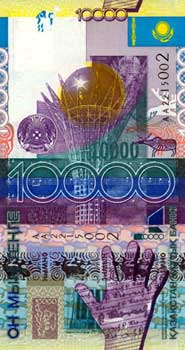
Bayterek Tower

Bayterek Tower

Бәйтерек

Left Bank / Nurzhol

The symbol of Astana and the new Kazakhstan: a white tower 97 metres tall, topped with a golden glass sphere. The height refers to 1997, the year the capital moved here. Legend has it that the tower represents the tree of life, into whose crown the mythical bird Samruk lays a golden egg.

Tip: Inside the sphere there's a viewing deck looking down the whole city axis, and a gilded handprint of first president Nazarbayev — pressing your hand to it is said to grant a wish. You go up by lift, and sunset is best. Queues form on weekends, so come on a weekday. In the evening the tower is lit up, and the best view is from Nurzhol Boulevard.

Admission:
from 1,500 KZT
Time needed:
45 min – 1 h
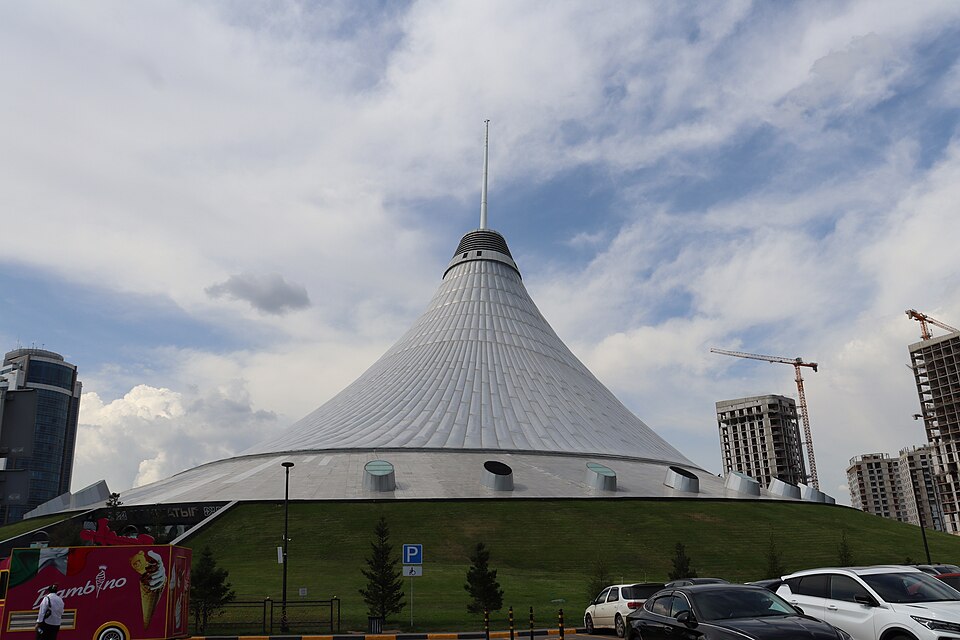
Khan Shatyr

Khan Shatyr

Хан Шатыр

Left Bank

A giant transparent tent 150 metres tall designed by architect Norman Foster, the largest tent structure in the world. Inside is a shopping and entertainment centre kept at a steady temperature of around 25 degrees year-round, even when it's minus 30 outside. The top floor has a beach with sand imported from the Maldives.

Tip: The beach resort on the top floor charges admission, but in winter it's a surreal experience — swimming in the tropics while it's minus 30 outside. The observation tower ride suits kids. The tent is loveliest in the evening, lit from within. It sits at the opposite end of the axis from the presidential palace, so you can walk the whole boulevard.

Admission:
free entry, beach from 10,000 KZT
Time needed:
1–2 h
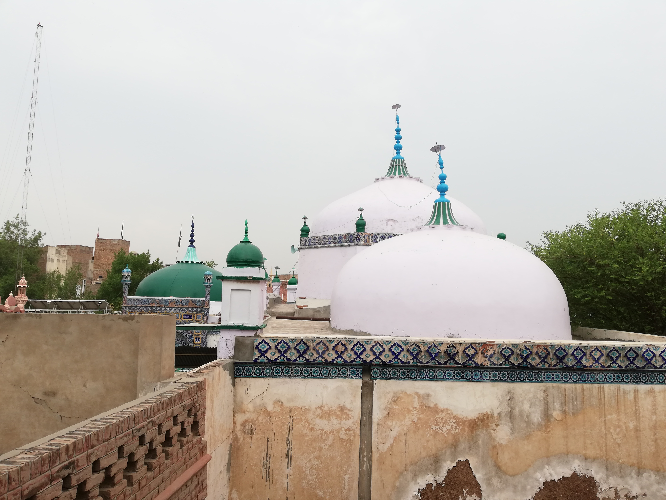
Hazrat Sultan Mosque

Hazrat Sultan Mosque

Әзірет Сұлтан мешіті

Right Bank

One of the largest mosques in Central Asia, opened in 2012, holding 5,000 worshippers inside and tens of thousands in the courtyard. The white structure, with a turquoise dome and 4 minarets 77 metres tall, combines classical Islamic architecture with Kazakh ornamentation.

Tip: The mosque is open to visitors outside prayer times, and women are given a headscarf and robe free at the entrance. Inside is a stunning white interior with a dome and gold decoration. Photography without flash is allowed. It's loveliest at sunset, when the white walls turn golden. It sits on the right bank of the Ishim River, 20 minutes by taxi from Bayterek.

Admission:
free
Time needed:
45 min
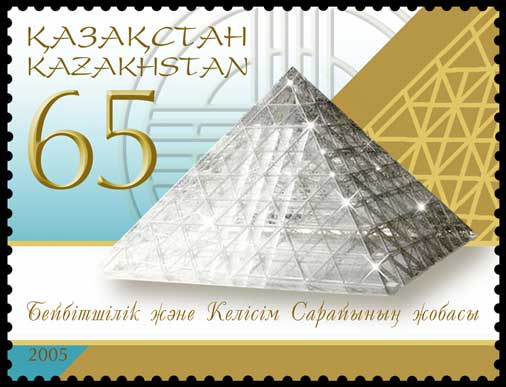
Palace of Peace and Reconciliation

Palace of Peace and Reconciliation

Бейбітшілік және келісім сарайы

Right Bank

A glass pyramid 62 metres tall designed by Norman Foster, built to host gatherings of world religious leaders. Inside is an opera house seating 1,500, exhibition spaces, and a conference hall at the top with a stained-glass ceiling of doves of peace.

Tip: The pyramid can only be visited with a guide; tours run several times a day and last an hour. The upper hall with its stained glass is the main reason to come, and it's loveliest on a sunny day. The pyramid stands in Presidential Park on the Right Bank, next to the Kazakh Eli Monument and the Palace of Independence.

Admission:
from 2,000 KZT
Time needed:
1 h
Nur Alem

Nur Alem

Нұр Әлем

Expo site

A glass sphere 80 metres in diameter, the central pavilion of Expo 2017 on the theme of future energy, and one of the largest spherical structures in the world. Inside is a museum of future energy across 8 floors — covering solar, wind, nuclear and hydro power — with interactive exhibits.

Tip: Start at the top floor, where the viewing deck and a space exhibition are, and work your way down. The interactive displays are fun for kids too. At night the sphere is lit up. The Expo site sits in the south of the Left Bank, 10 minutes by taxi from Khan Shatyr.

Admission:
from 3,000 KZT
Time needed:
1.5–2 h
National Museum of Kazakhstan

National Museum of Kazakhstan

Қазақстан Республикасының Ұлттық музейі

Right Bank / Independence Square

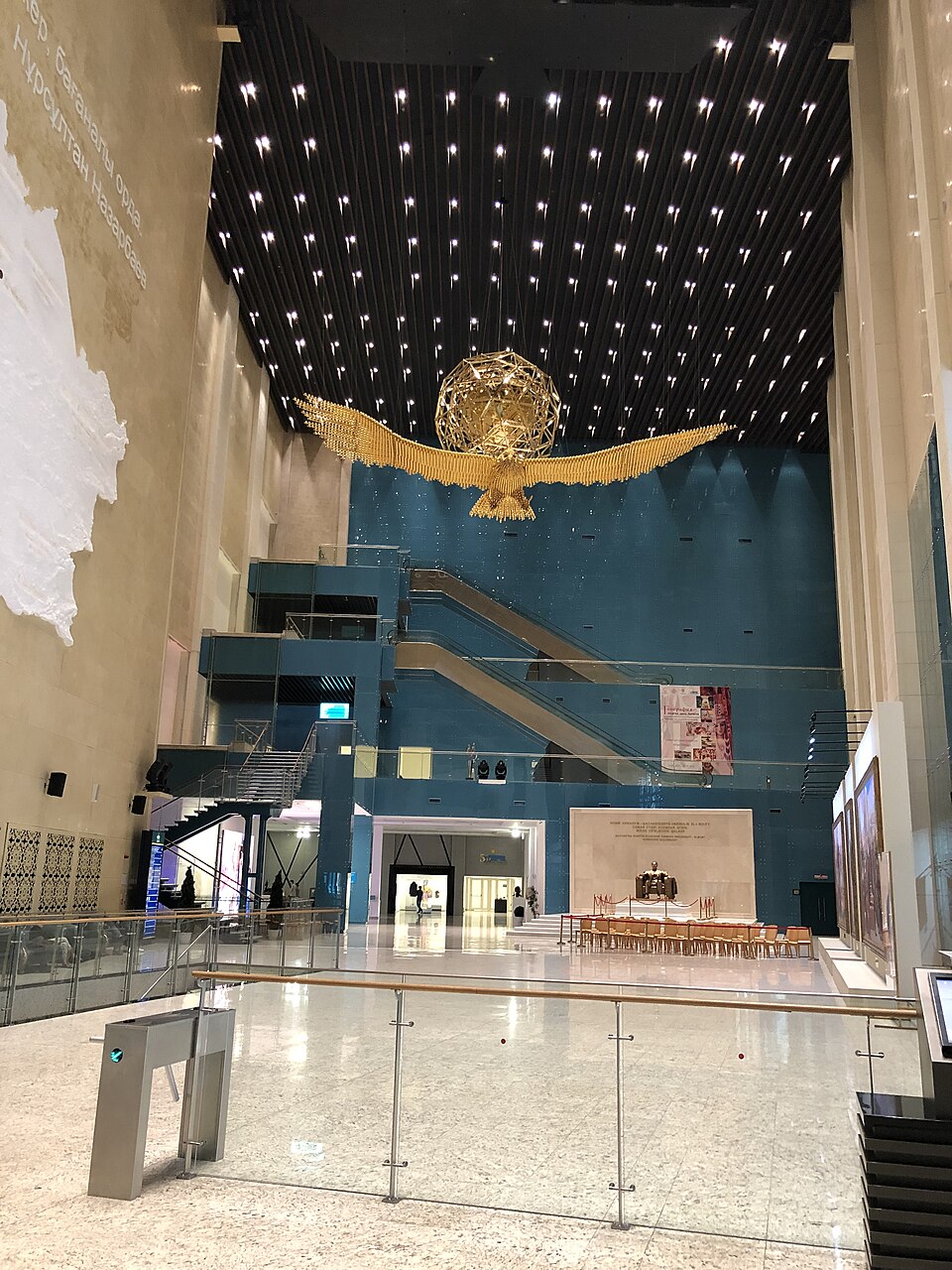
The largest museum in Central Asia, opened in 2014, with exhibitions on Kazakhstan's history, ethnography and art from the Stone Age to the present. The highlight is the Golden Hall, with Saka treasures including replicas and original jewellery of the Golden Man, the golden armour of a Scythian warrior.

Tip: The Golden Hall is the most important section, has a separate admission fee, and is closely guarded. A single day isn't enough for the whole museum, so focus on the Golden Hall, the ethnography section with its yurt, and the independence hall. Closed on Mondays. English captions are available, and an audio guide is worth it.

Admission:
from 1,500 KZT
Time needed:
2–3 h
Astana Opera

Astana Opera

Астана Опера

Right Bank

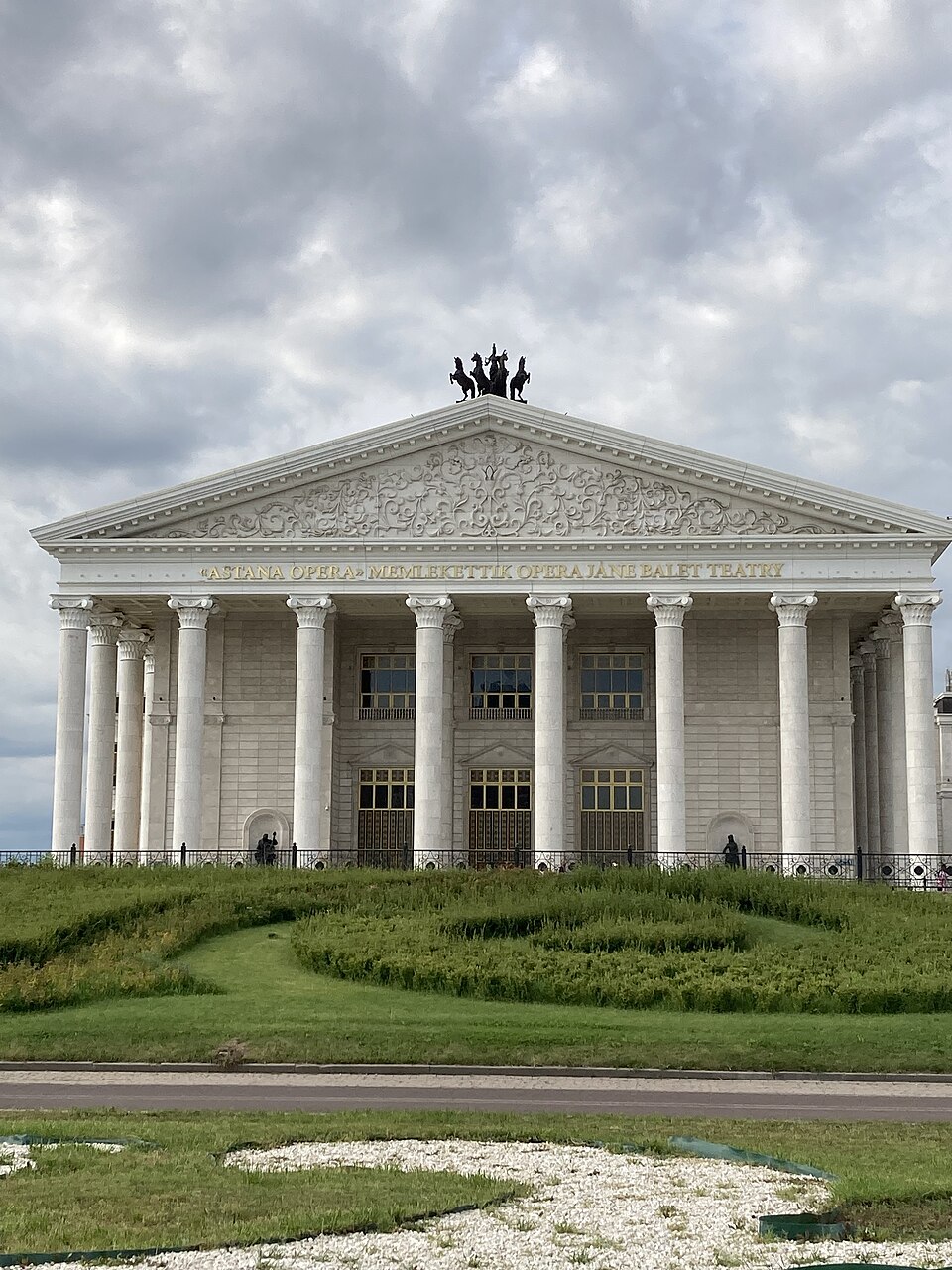
An opera and ballet house opened in 2013, built in neoclassical style with marble, crystal chandeliers and an Italian-crafted interior. It's one of the largest opera houses in the world, with a state-of-the-art stage, hosting opera, ballet and concerts of international quality.

Tip: Tickets are surprisingly cheap compared with European opera houses and are bought online. A performance is the best way to see the stunning interior. Guided tours of the building without a performance are also possible. Smart dress is expected for performances.

Admission:
from 3,000 KZT
Time needed:
2–3 h
Nurzhol Boulevard

Nurzhol Boulevard

Нұржол бульвары

Left Bank

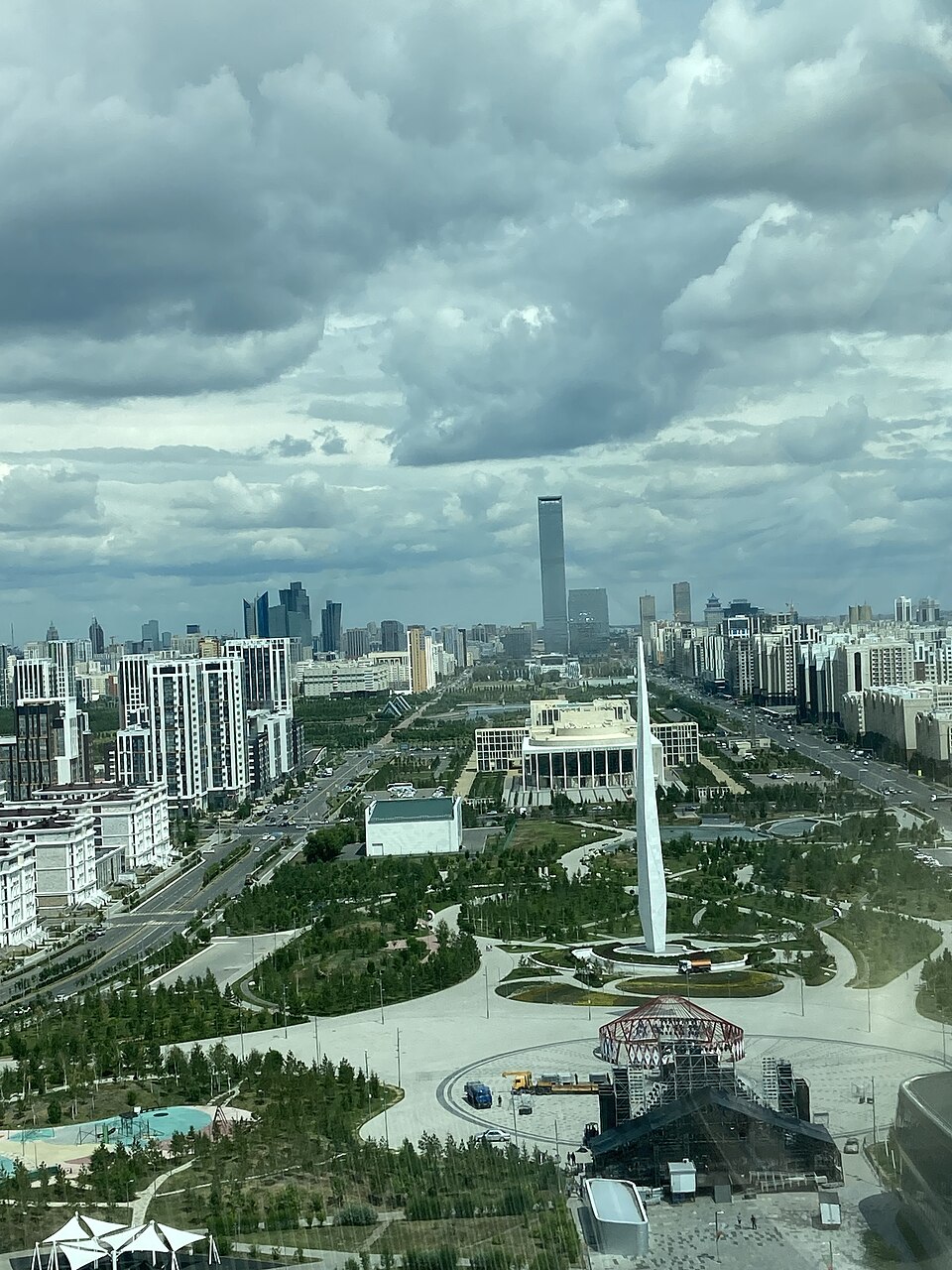
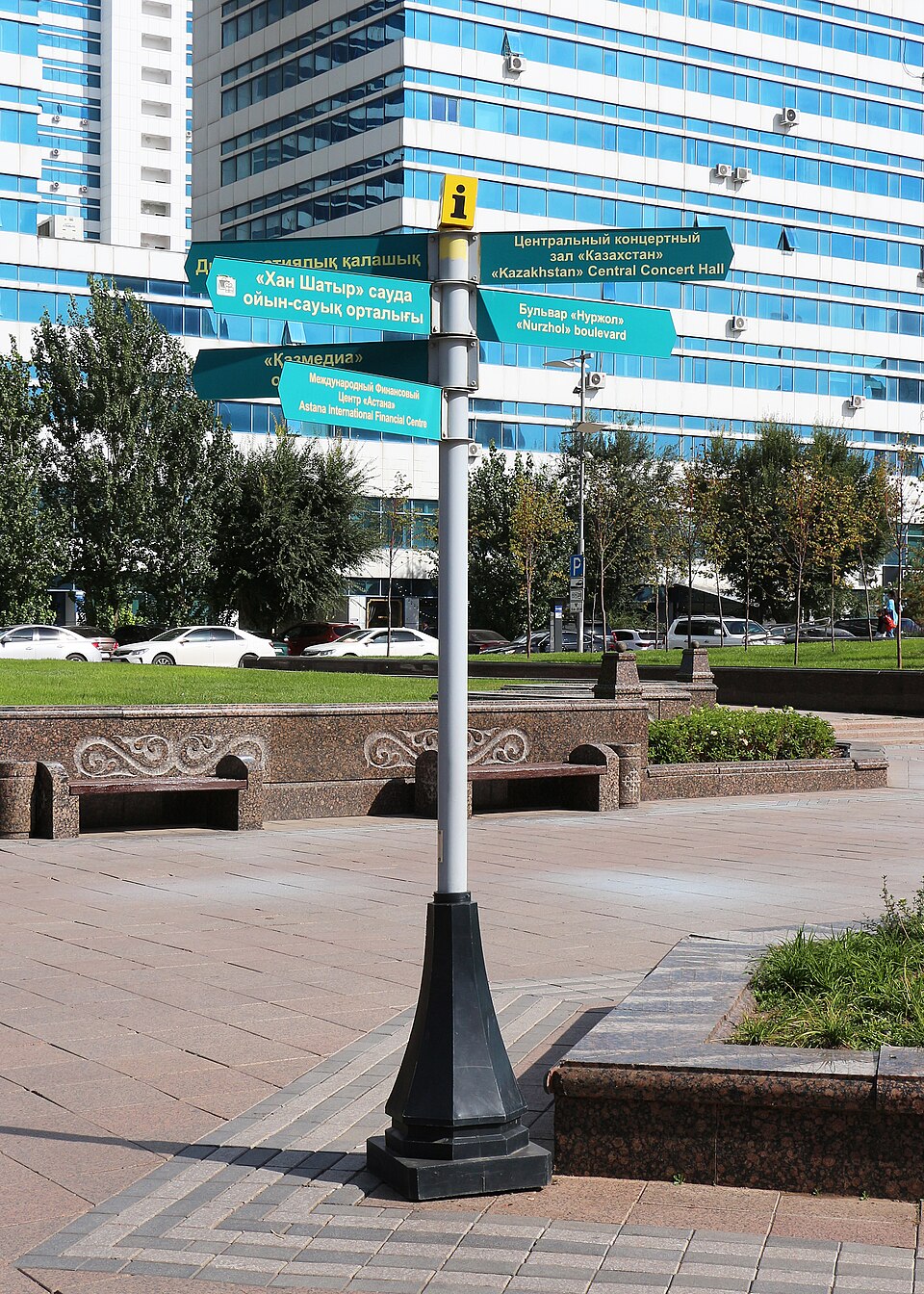
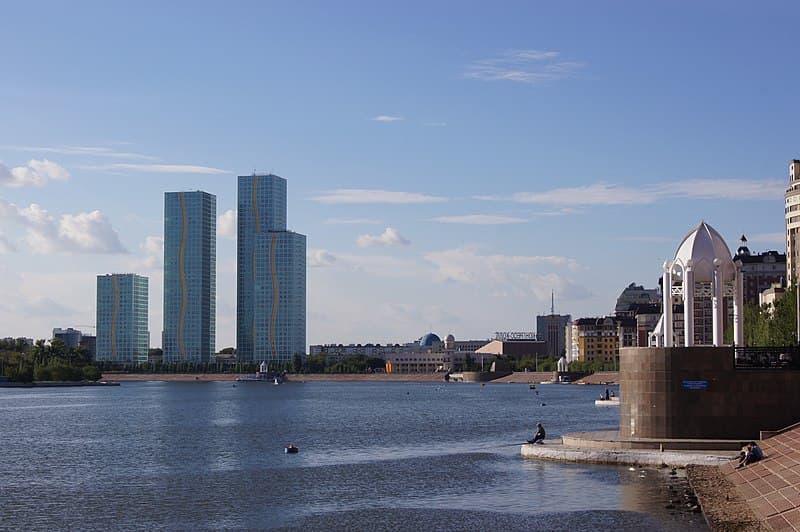
The city's main axis, a 2-kilometre pedestrian boulevard running from Khan Shatyr to the Ak Orda presidential palace, lined with fountains, parks and futuristic buildings. Bayterek stands at its centre. It's the best place to grasp how the new capital was planned.

Tip: Walk the whole boulevard, from Khan Shatyr to Ak Orda; it takes about an hour. It's loveliest at dusk, when the towers and fountains light up. In summer there are cafés and stalls; in winter, ice sculptures. The buildings around it are ministries and government offices — don't photograph police or soldiers near the presidential palace.

Admission:
free
Time needed:
1–1.5 h
Ak Orda Presidential Palace

Ak Orda Presidential Palace

Ақорда

Left Bank, by the river

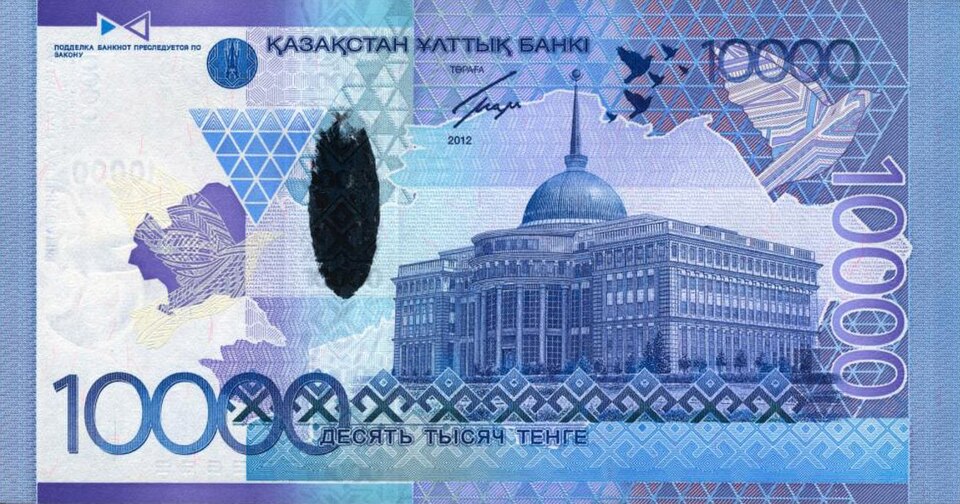
The seat of the President of Kazakhstan, with a blue-and-gold dome and tower, built in 2004 at the end of the Nurzhol axis. The building is inspired by the White House but with Central Asian touches. The palace itself is closed to visitors, but from outside it's one of the city's landmarks.

Tip: The best view of the palace is from the bridge over the Ishim River or from Bayterek. Photographing the building from outside is fine, but don't photograph the guards or security features. Across the river behind the palace are the Palace of Peace and Reconciliation and the Hazrat Sultan Mosque, making it a natural crossing point to the Right Bank.

Admission:
free to view from outside
Time needed:
30 min

Photos: Bayterek Tower — Bank of Kazakhstan (Public domain) · Khan Shatyr — Quarot (CC0) · Hazrat Sultan Mosque — Sultan Nawab Khan (CC BY-SA 4.0) · Palace of Peace and Reconciliation — Post of Kazakhstan (Public domain) · Nur Alem — Nikolamikovic82 (CC0) · National Museum of Kazakhstan — Davide Mauro (CC BY-SA 4.0) · Astana Opera — Nikolamikovic82 (CC0) · Nurzhol Boulevard — Bernard Gagnon (CC0) · Ak Orda Presidential Palace — Қазақстан Ұлттық Банкi (Национальный Банк Республики Казахстан / National Bank of the Republic of Kazakhstan) (Public domain)

Where to stay

Areas and districts, matched to the kind of trip you are taking

Left Bank (Nurzhol)

Best for: a first visit, architecture

The new centre, built after 1997, with Nurzhol Boulevard, Bayterek, Khan Shatyr and luxury hotels. All the main sights are walkable, but distances are greater than they appear. It's the most practical district for visitors, with modern hotels and restaurants.

Right Bank (old town)

Best for: a smaller budget, local life

The original Soviet-era town of Tselinograd, with residential districts, markets, older architecture and cheaper hotels. Life here feels more authentic, and prices are lower, though there are fewer sights. The Hazrat Sultan Mosque and the Palace of Peace sit on its edge. A taxi is needed to reach the centre.

Expo site

Best for: modern hotels, Nur Alem

A new district in the south of the Left Bank, built for Expo 2017, with the Nur Alem sphere, modern buildings and hotels. It's quiet and clean, but has less evening life. The main sights are 10 minutes away by taxi.

Along the Ishim

Best for: riverside walks

The area along the Ishim River, with a promenade, parks and bridges, where locals stroll and take boat trips in summer. Hotels and apartments here have views over the river and city. In winter the river freezes and becomes a skating rink.

Getting around

From the airport

Flights from Europe to Astana connect with a single stopover, most often via Istanbul with Turkish Airlines or Pegasus, via Frankfurt with Air Astana, or via Warsaw; the journey takes 7–9 hours. Visitors from many countries, including EU citizens, do not need a visa for stays of up to 30 days. Nursultan Nazarbayev Airport lies 16 kilometres south of the centre and is modern. A high-speed Talgo train runs from Astana to Almaty in 12 hours, night trains serve other cities, and FlyArystan offers cheap domestic flights. Almaty, with its mountains and lakes, is the country's main tourist city, a 2-hour flight away.

Astana Nursultan Nazarbayev (NQZ) · 16 km

  • Yandex Go / taxi downtown· 20–30 min· 3,000 KZT
  • Bus route 10 or 12· 45 min· 100 KZT
  • Hotel transfer· 25 min· 8,000 KZT

Around town

Astana is a sprawling city built for cars, with wide boulevards and long distances between buildings. The Left Bank around Nurzhol Boulevard is walkable, but the Right Bank and the Expo site require transport. A taxi via Yandex Go is your best option — very cheap, with the price set upfront and no haggling. The bus network is dense and paid by card or QR code, with routes shown in the 2GIS app. A light rail line (LRT) began running in 2024. In winter, with frosts down to minus 30, walking is only for short distances, and taxis cover the gaps between buildings.

Yandex Go / inDriveThe most practical taxi option, with the price shown upfront. · 700 KZT
BusesPaid by card or QR code; routes shown in 2GIS. · 100 KZT
LRTA new light rail line from the airport through the centre. · 150 KZT
On footFine on the Left Bank and Nurzhol Boulevard; distances elsewhere are long. · free

Useful apps: Yandex Go, 2GIS (maps), Kaspi.kz, inDrive, Tickets.kz (trains)

When to go

Astana has an extreme continental climate. The best time is from late May to September, when it's warm at around 25 degrees, days are long, and the city comes alive in its parks and along the river. June is the loveliest month, with the greenery at its most lush. July is warm but can bring heatwaves over 35 degrees and mosquitoes. Autumn is short, and the first snow arrives in October. Winter, from November to March, is among the coldest of any capital in the world: an average of minus 15, commonly minus 30 in January with an icy steppe wind. Winter visitors will see the frozen river with its skating rink and ice sculptures, but won't last long outdoors. Spring is muddy from the thaw.

Best time

June–September

What to avoid

the freezing winter (December–February), the muddy thaw in April

MonthJanFebMarAprMayJunJulAugSepOctNovDec
Day-10°-9°-2°10°20°25°27°25°18°10°-1°-7°
Night-19°-18°-11°0°7°13°15°13°6°0°-9°-16°
Rainy days766688986798

Food & drink

Kazakh cuisine is the cuisine of nomads: plenty of meat, mainly horse and mutton, dairy and dough. The national dish is beshbarmak, boiled meat over noodles, and the festive delicacy is kazy, horse-meat sausage. Astana, though, is a modern capital, and its dining scene is international — Uzbek canteens serving plov and shashlik, Georgian restaurants, Korean and Japanese food, European-style cafés. The best taste of Kazakh cuisine comes at restaurants styled like yurts, serving beshbarmak, kumis and tea with baursaks. Prices are moderate: lunch at a canteen runs 2,000–4,000 tenge, dinner at a restaurant 10,000–20,000. Restaurants add a 10–15 percent service charge.

What to try

Beshbarmak

The national "five fingers" dish: boiled horse or mutton over broad noodles with an onion sauce and a bowl of sorpa broth on the side. Traditionally eaten by hand, with the sheep's head going to the most honoured guest.

Kazy and horse meat

A sausage of horse meat and fat stuffed into casing, served cold in slices. Horse meat is a festive, pricey item in Kazakhstan, sold at markets as a delicacy — try it without prejudice.

Baursaks

Fried pieces of leavened dough that sit on every table alongside tea and soup. Served warm, and their smell signals that the host is expecting guests.

Plov and lagman

Rice with mutton and carrot, and hand-pulled noodles with braised meat, both came from the Uzbeks and Uyghurs and are the cheapest reliable meal at any canteen. A portion runs 2,000–3,000 tenge.

Manty

Large dumplings filled with minced mutton, onion and pumpkin, steamed in a stacked steamer. Eaten by hand with sour cream or with vinegar and pepper.

Kumis and shubat

Fermented mare's milk (kumis) and camel's milk (shubat) are sour, lightly fizzy and mildly alcoholic. Drunk in summer as a cure-all. The first sip is a surprise; the second usually goes down easier.

Milk tea

Kazakhs are among the biggest tea drinkers in the world; strong black tea is drunk with cream or milk, alongside baursaks, dried fruit and kurt — dried, salty balls of soured milk.

What it costs

Coffee at a café

1,000–1,800 KZT

Samsa or street food

500–1,000 KZT

Lunch at a canteen

2,500–4,000 KZT

Dinner at a restaurant

10,000–20,000 KZT

Beer at a bar

1,500–2,500 KZT

Yandex taxi across town

1,000–2,500 KZT

Bayterek admission

from 1,500 KZT

Night at a 3* hotel for 2

25,000–45,000 KZT

Indicative prices that change over time — treat them as a guide, not a price list.

Practical information

SocketsCEuroplug, two round pinsFSchuko
Voltage220V / 50Hz
Tap waterDo not drink tap water — Tap water in big cities is treated, but locals boil it or drink bottled water, and visitors should do the same. A bottle costs 200–300 tenge in a shop. Tea, often with milk, is brought to your table first at restaurants, and the pot is refilled without asking.
TippingRestaurants usually add a 10–15 percent service charge to the bill, after which nothing more is expected; where there's no service charge, around 10 percent is left. Kazakhstan is ahead on cashless payments: cards are accepted almost everywhere, including taxis, markets and small shops, and locals pay by phone through the Kaspi app. ATMs are on every corner. Exchange offices in shopping centres offer better rates than the airport.
Driving on theright
SafetyKazakhstan is calm and safe for tourists, and violent crime against foreigners is rare. The main risks are climate-related: winter frosts below minus 30 with wind, when frostbite can set in within minutes, and icy pavements. Drivers move fast, and pedestrians need to stay alert even at crossings. Don't photograph government buildings, police, or the inside of airports. Police have the right to check your passport, so carry it or at least a copy with your entry stamp. The emergency number is 112.
Opening hoursShopping centres are open from 10am to 10pm, and supermarkets are often open around the clock. Restaurants serve until midnight, later on Fridays and Saturdays. Museums close on Mondays. The main holidays are Nauryz around 21 March, when yurts go up around the cities and the traditional nauryz kozhe soup is cooked, and Independence Day in December. Ramadan doesn't slow city life, as Kazakhstan is a secular state.
Customs & etiquetteKazakh hospitality is a matter of honour: the guest gets the best seat and the best food, and tea is poured only half full so the host can keep refilling it — a full bowl is a signal it's time to leave. Bread is never placed upside down or thrown away. Elders are shown respect, served first, and greeted first. When greeting, men shake hands with both hands. The country is bilingual — Kazakh is the official language, but almost everyone speaks Russian, and in practice you'll get by with it everywhere.
A few local wordsGood day — Sälemetsiz beThank you — RachmetHow much is it? — Qanša turady? / Skolko stoit?The bill, please — Esep, ötinemin / Sčot, požalujstaCheers — Densaulyğyñyz üşinGoodbye — Sau bolyñyz

How to plan your days

1 day

Astana in 1 day

  1. 1Morning at the National Museum and the Golden Hall.
  2. 2A guided visit to the Palace of Peace and Reconciliation.
  3. 3Lunch on beshbarmak at a Kazakh restaurant.
  4. 4Afternoon at the Hazrat Sultan Mosque, then across the river to Ak Orda.
  5. 5Evening on Nurzhol Boulevard, Bayterek at sunset, and Khan Shatyr.

2 days

2 days in Astana

  1. 1Day 1: the National Museum, the pyramid, the Hazrat Sultan Mosque.
  2. 2Day 1 evening: Bayterek and Nurzhol Boulevard.
  3. 3Day 2: Nur Alem and the Expo site.
  4. 4Day 2 afternoon: Khan Shatyr and the Ishim riverside.
  5. 5Day 2 evening: a performance at Astana Opera.

3 days

3 days with Burabay

  1. 1Day 1: the Right Bank, with the museum, the pyramid and the mosque.
  2. 2Day 2: the Left Bank — Bayterek, Khan Shatyr, Nur Alem.
  3. 3Day 2 evening: opera or ballet.
  4. 4Day 3: a full-day trip to Burabay National Park.
  5. 5Day 3 alternative: the ALZHIR camp memorial.

Day trips

Burabay National Park

250 km · 3 h by car or train

Kazakhstan's "Switzerland" — an oasis of forests, granite outcrops and clear lakes in the middle of the steppe. The best known are Lake Burabay, with the Zhumbaktas rock at its centre, and Mount Kokshetau. In summer people swim, hike and cycle here; in winter it's a ski destination. It's too far for a single day, so it's better to stay overnight at a resort. Trains run to Burabay from Astana several times a day.

ALZHIR Memorial

40 km · 45 min by car

A museum and memorial on the site of a Stalinist camp for the wives of "traitors to the motherland", where more than 8,000 women were imprisoned between 1938 and 1953 for being married to arrested men. A powerful exhibition on Soviet repression and deportations to Kazakhstan. It's a solemn, sobering place, but an important one for understanding the country's history. A taxi there and back is inexpensive.

Korgalzhyn Nature Reserve

130 km · 2 h by car

A UNESCO-listed protected area of steppe lakes, home to the northernmost flamingo colony in the world and thousands of migratory birds. The best time is May to August. It's for lovers of nature and birdlife — the steppe here is endless and peaceful. A car with a driver or an organised tour is essential.

Frequently asked questions

Do I need a visa for Kazakhstan?+

Nationals of many countries, including EU member states, the UK and the US, do not need a visa for stays of up to 30 days. Your passport must be valid for at least 6 months. On arrival you'll get a stamp and a card in your passport — keep it until you leave. Staying longer than 30 days requires registration with the migration service.

Why has Astana changed its name several times?+

The Soviet-era city was called Tselinograd, then Akmola after independence, then Astana — Kazakh for "capital" — after the capital moved here in 1998. In 2019 it was renamed Nur-Sultan in honour of the first president, and in 2022 it reverted to Astana. Locals simply call it Astana.

How many days do you need for Astana?+

2 days are enough for the main buildings and museums, 3–4 with a trip to Burabay. Astana works best as a stop on a wider tour of Kazakhstan — most people continue to Almaty, with its mountains, lakes and Charyn Canyon. A high-speed train or a 2-hour flight connects the 2 cities.

How cold does it get in Astana?+

Very. Astana is one of the coldest capital cities in the world — commonly minus 20 to minus 30 in January, with an icy steppe wind that lowers the feels-like temperature further. Winter lasts from November to March. If you're travelling in winter, you need genuinely warm clothing, a hat, gloves and winter boots.

Is Astana safe?+

Yes, Astana is a safe, clean city with low crime and a visible police presence. The main risks are climate-related: frost and ice in winter. Don't photograph government buildings, police or military sites. Carry your passport or a copy, as police can ask to check it.

How do you pay in Kazakhstan?+

By card almost everywhere, including taxis and markets. Kazakhstan is ahead on cashless payments, and locals pay by phone through the Kaspi app. ATMs are everywhere and accept foreign cards. Cash in tenge is only useful for small purchases.

Will English get you by in Astana?+

In hotels, better restaurants and among younger people, yes; otherwise Russian is more useful. Kazakh is the official language, but Russian is widely spoken and will get you by anywhere. Signage is bilingual, often in English too. A translation app on your phone is handy in taxis and markets.

When is the best time to visit Astana?+

From June to September, when it's warm, days are long and the city lives outdoors. June is the loveliest month. Winter is extreme, but anyone after a memorable experience will see the frozen river, ice sculptures and a tropical beach inside the Khan Shatyr while it's minus 30 outside. Spring and autumn are short and raw.

Visa Requirements

Check the latest visa requirements for entering this country. Some nationalities may need to apply for a visa or e-visa before travel.

Check visa requirements

Language

Kazakh / Russian

Currency

KZT

Timezone

Asia/Almaty

Dial Code

+7

Population

19.4M

Area

2,724,900 km²

Voltage

220V / 50Hz

Driving Side

Right

Top Hotels in Astana

Live prices from 500+ properties

Loading hotels...

Planning a trip to Astana?

Compare hundreds of hotels, find the best price, and book with free cancellation on TravelManiac.