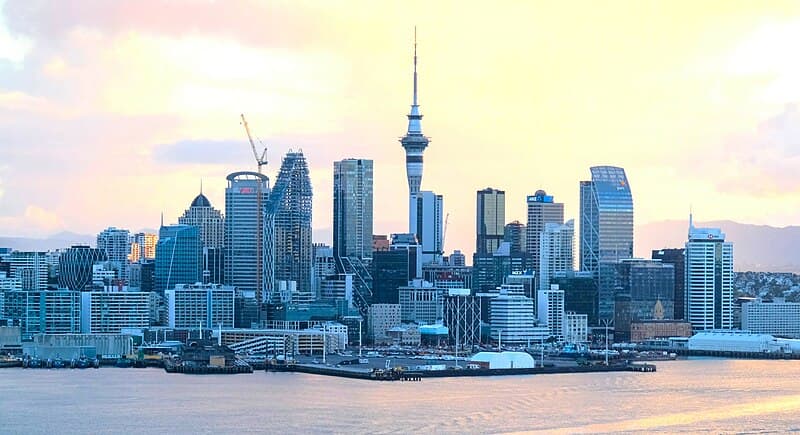
Auckland is New Zealand's largest city and, for most visitors, the first stop in the country. It sits on a narrow isthmus between 2 seas — the Pacific Ocean to the east and the Tasman Sea to the west — and is built across a volcanic field of around 50 extinct cones, many of them now grassy hills with views rising out of the suburbs. Māori called it Tāmaki Makaurau, "Tāmaki desired by many", because its fertile soil 2 harbours drew tribes from all directions. Auckland is known as the City of Sails: it has more boats per capita than anywhere else in the world, and its harbour is full of yachts. Ferries leave the city centre for Waiheke Island with its vineyards and beaches, and for the young volcano of Rangitoto, while an hour's drive takes you to the black-sand beaches of the west coast, where surfers face wild waves. The Auckland Museum holds the finest collection of Māori and Polynesian culture in the world. The city is international and Asian-influenced yet relaxed, and makes an ideal starting point for a trip up the North Island to Hobbiton and Rotorua.
What to see
The places worth your time in Auckland, and what to expect at each
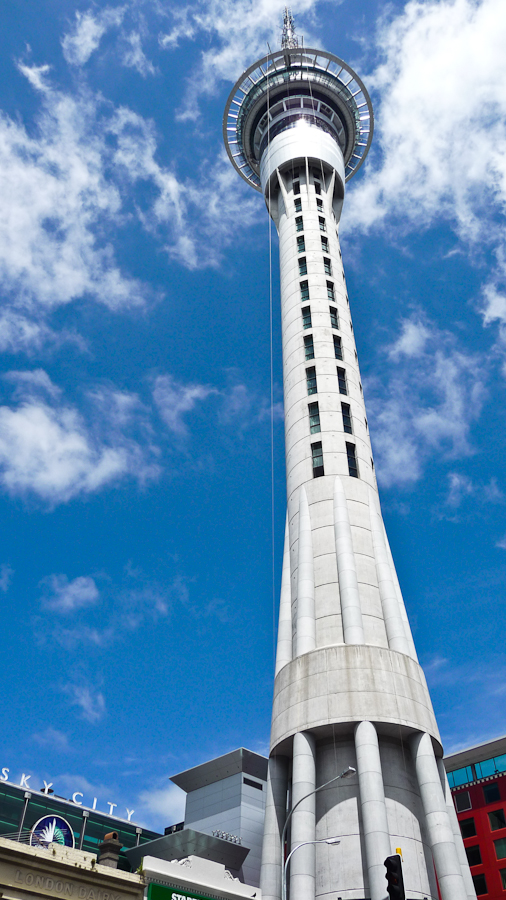
Sky Tower
CBD
The tallest structure in the Southern Hemisphere, a 328-metre tower with observation decks, a revolving restaurant and glass floors. On a clear day you can see 80 kilometres across the harbours and volcanoes.
Tip: The view is best an hour before sunset. Thrill-seekers can jump from 192 metres up on a rope (SkyJump) or walk around a narrow platform circling the tower (SkyWalk). Dinner at the revolving Orbit restaurant includes the view in the price.
Admission:
admission fee
Time needed:
1 h
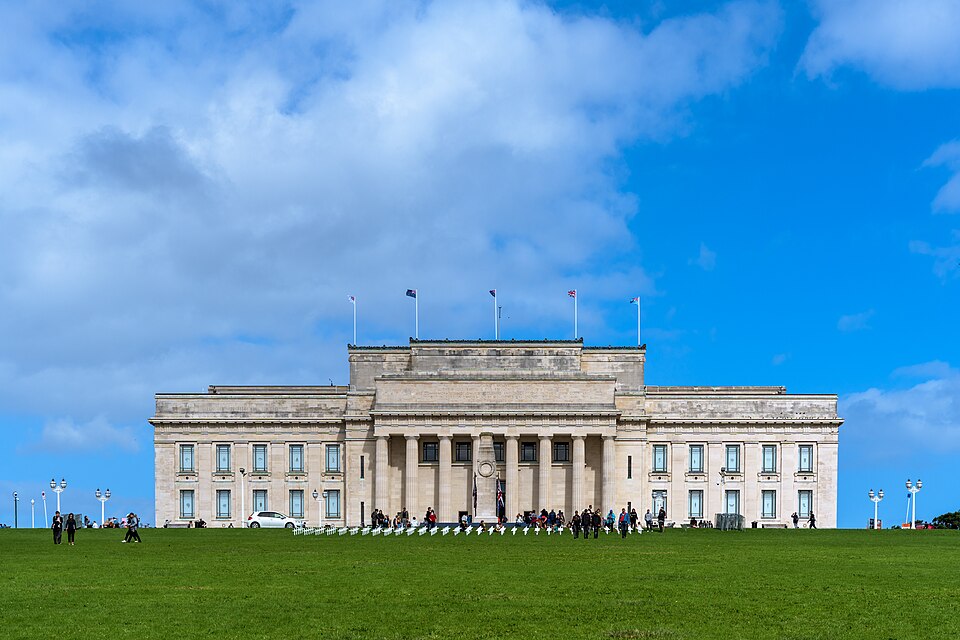
Auckland War Memorial Museum
Parnell
A museum in a neoclassical building in Auckland Domain, holding the world's finest collection of Māori and Polynesian artefacts: a war canoe, an ornately carved meeting house and weaponry. Includes a Māori haka performance.
Tip: The Māori cultural performance runs 3 times a day and is worth the extra cost — the haka up close is powerful. The museum is free for Auckland residents; visitors pay. The surrounding Domain is one of New Zealand's oldest parks and has a free Wintergardens glasshouse.
Admission:
admission fee
Time needed:
2–3 h
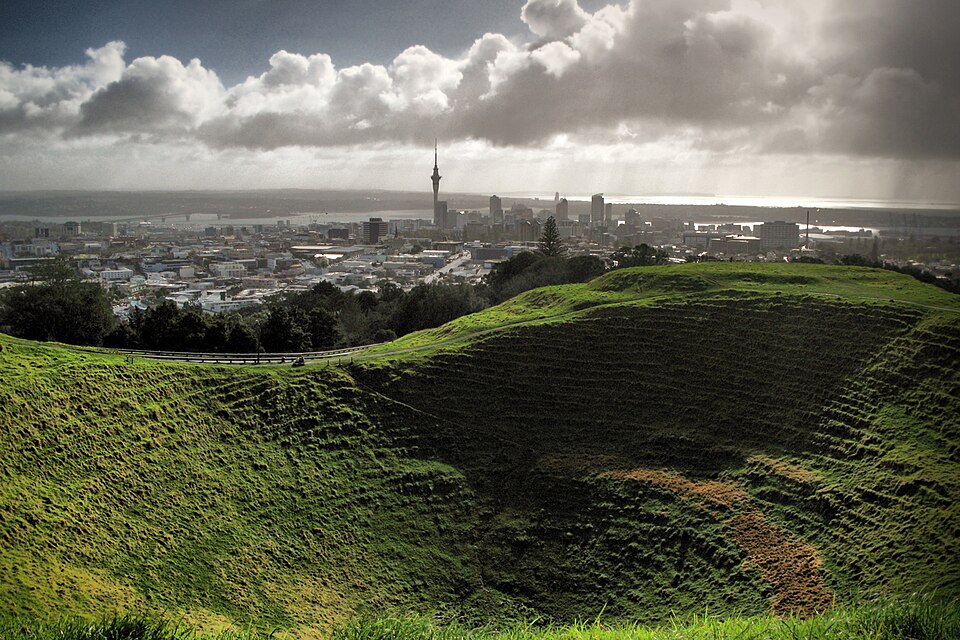
Maungawhau / Mount Eden
Mount Eden
The city's highest volcanic cone, 196 metres tall with a crater 50 metres deep. From the summit there are views across the whole city and the Sky Tower. The slopes still show the terraces of a pre-European Māori pā fortification.
Tip: It's a 15-minute walk up from the car park at the base; cars aren't allowed to the top. Don't enter the crater — it's sacred to Māori. Sunset draws large crowds here.
Admission:
free
Time needed:
1 h
Maungakiekie / One Tree Hill
Epsom
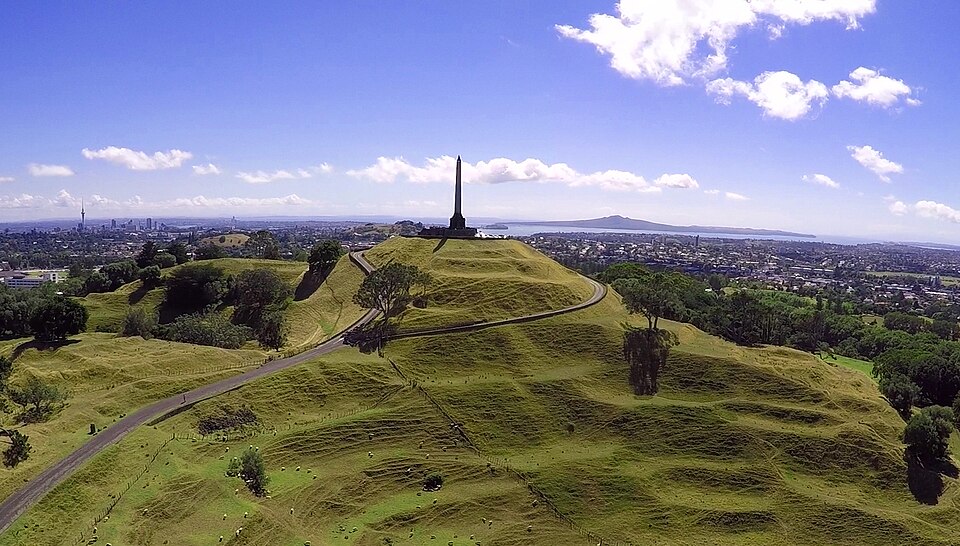
A volcano within Cornwall Park topped by an obelisk, with the remains of a Māori pā fortification — one of the largest in the world. Sheep graze on its slopes, right in the middle of the city.
Tip: The surrounding park is huge and great for a picnic. A single tree once stood at the summit, giving the hill its name and inspiring a U2 song. Parking at the top is limited; it's better to walk up.
Admission:
free
Time needed:
1.5 h
Auckland Art Gallery
CBD
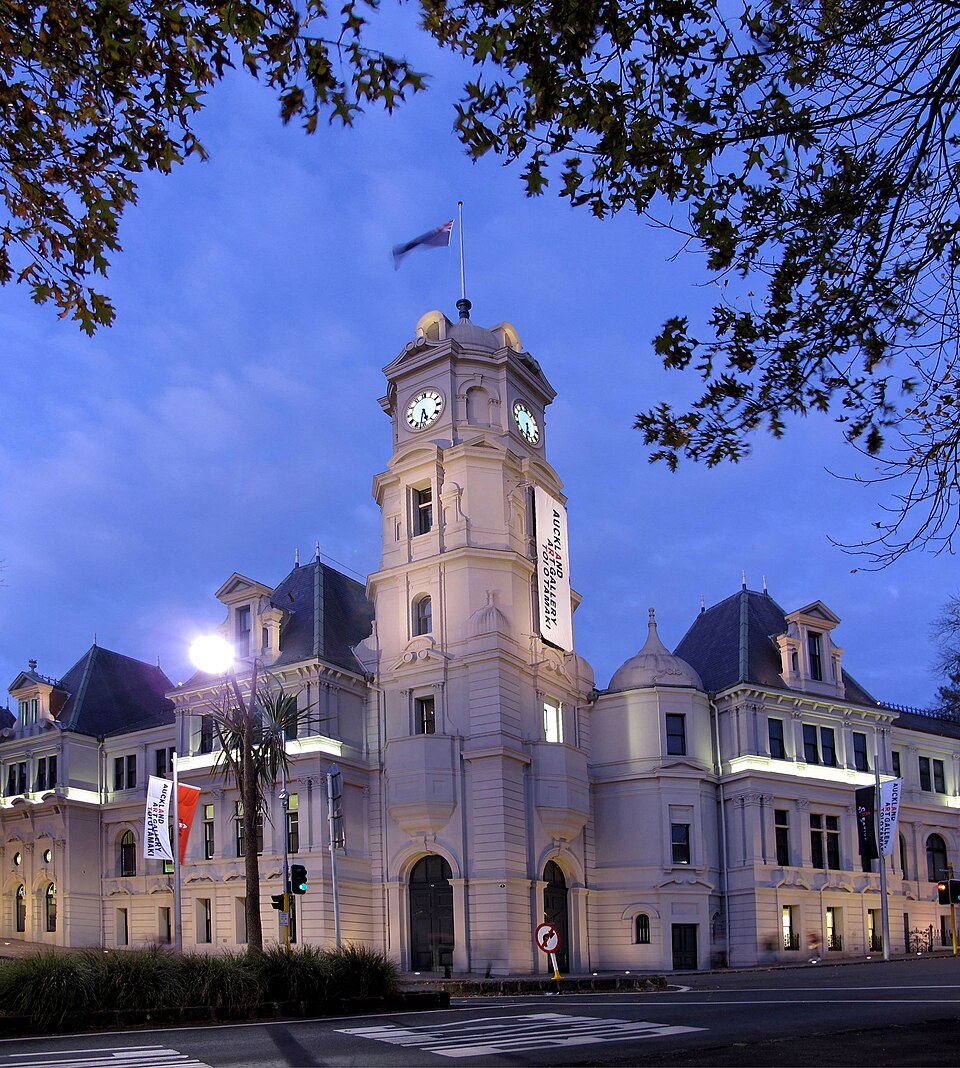
An art gallery holding New Zealand's largest collection of local art, including portraits of Māori chiefs by Gottfried Lindauer and C. F. Goldie. The building's roof design is inspired by tree canopies.
Tip: Entry is free. The Māori portraits are the highlight. The gallery sits next to Albert Park, a pleasant place to sit for a while.
Admission:
free
Time needed:
1.5 h
Wynyard Quarter
Waterfront
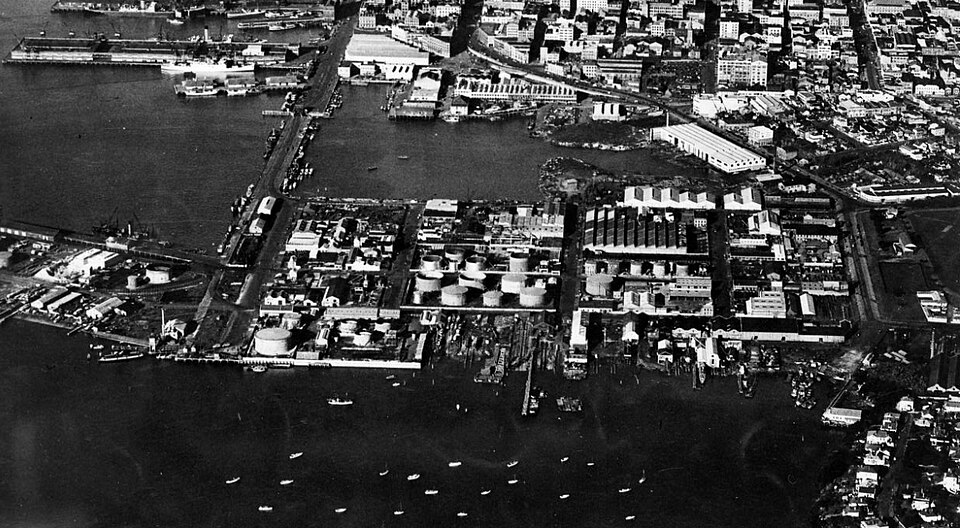
A former industrial harbour reborn as a waterfront district of restaurants, bars, a fish market and a playground. A lifting bridge between Wynyard and Viaduct Harbour opens to let boats through.
Tip: The Auckland Fish Market here has fresh fish and sushi. It's a 10-minute walk along the waterfront to Viaduct Harbour. There's a farmers' market on Sundays.
Admission:
free
Time needed:
1–2 h
Devonport and North Head
Devonport
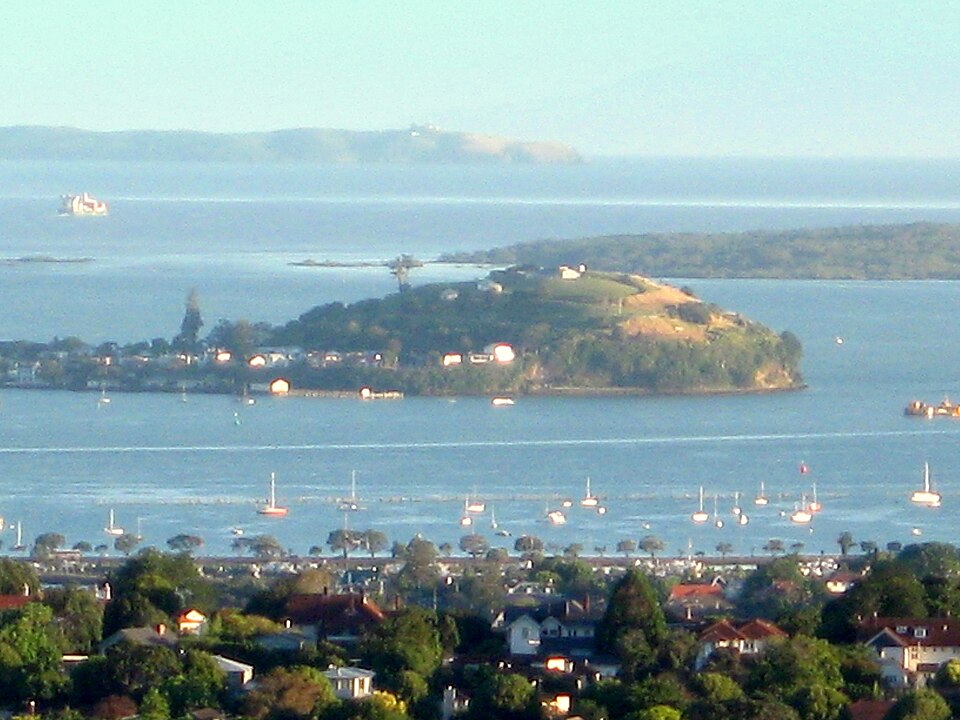
A Victorian suburb on the harbour's north shore, 12 minutes away by ferry. Above it, the North Head volcano holds military tunnels and gun emplacements, with views over the city centre and Rangitoto.
Tip: Ferries run every half hour, and the view of the city from the water is free. The tunnels on North Head are open and can be explored with a torch. Cheltenham Beach, over the hill, is quiet.
Admission:
free
Time needed:
2–3 h
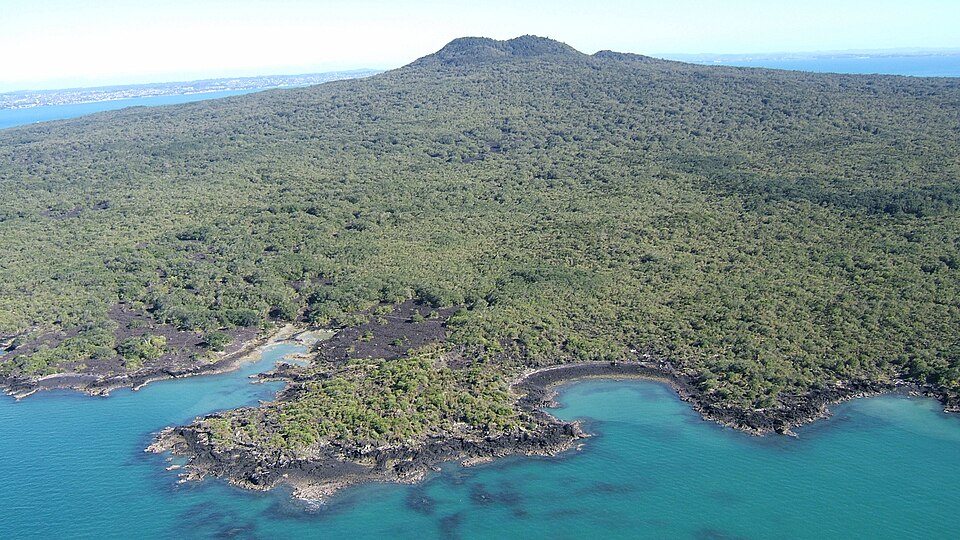
Rangitoto
Hauraki Gulf
A symmetrical volcano that rose from the sea only 600 years ago, making it the youngest in Auckland. A trail crosses the lava fields to the summit, with views over the harbour.
Tip: Ferries run only a few times a day, with the last one back in the afternoon — don't miss it. The climb takes an hour; the lava is sharp and hot in summer, so bring water and sturdy shoes. There are no shops on the island. Shoes are checked before boarding to prevent pests being carried across.
Admission:
ferry fare
Time needed:
4–5 h
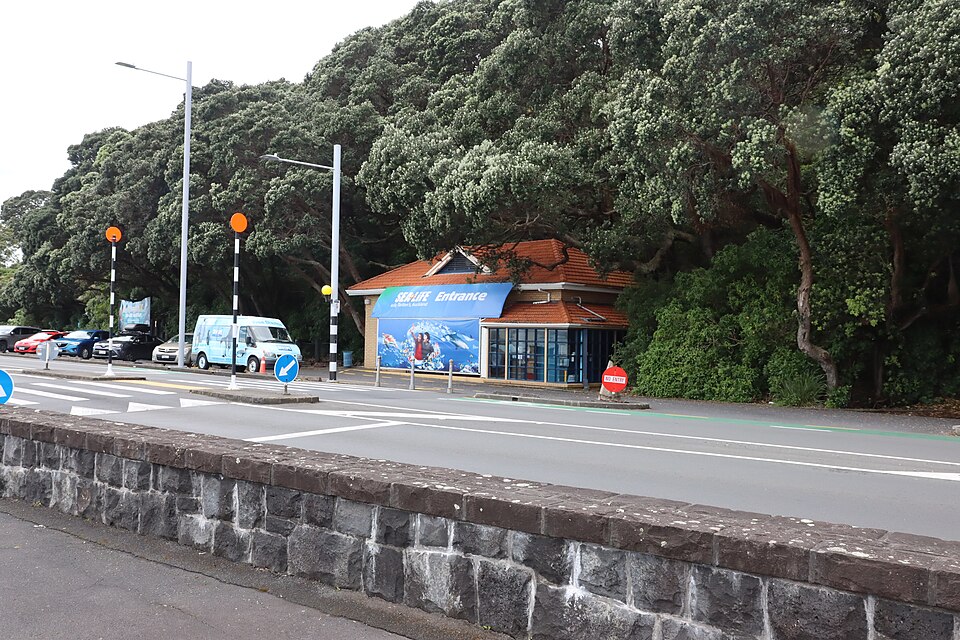
Kelly Tarlton's Sea Life Aquarium
Orakei
An aquarium in former sewage tanks, with a tunnel beneath sharks and rays and the only colony of gentoo and king penguins in an artificial Antarctic setting.
Tip: The aquarium sits on Tamaki Drive, reached by shuttle bus from the city centre. Feeding time is the best moment to see the penguins. Online tickets are cheaper.
Areas and districts, matched to the kind of trip you are taking
CBD and Viaduct
Best for: first visit
The centre, with Queen Street, the Sky Tower and the harbour. Hotels, shops and restaurants by the water. All ferries to the islands and to Devonport leave from here.
Ponsonby
Best for: food and bars
A Victorian villa quarter of restaurants, cafés and boutiques. The best area for an evening out. 10 minutes by bus from the centre along Ponsonby Road.
Parnell
Best for: culture and calm
The oldest suburb, with the museum, the cathedral and galleries. Close to the Domain. Quiet streets, and a 20-minute walk into the centre.
Devonport
Best for: calm and views
A Victorian township across the harbour, with a beach and a volcano. 12 minutes by ferry from the centre. Quiet in the evenings, with skyline views across the water.
Auckland Airport lies 20 kilometres south of the city centre. It's reached from Europe with a stopover in the Middle East or Asia, typically in Dubai, Doha or Singapore, with total travel time of 24 to 30 hours. Emirates and Qatar Airways fly direct from the Middle East, among the longest scheduled flights in the world. An electronic NZeTA authorisation and the IVL tourist levy are required before departure. The SkyBus runs into the city centre.
Auckland Airport (AKL) · 20 km
SkyBus to the centre· 50 min· NZD 18
AirportLink bus and train from Puhinui· 50 min· NZD 5
Taxi / Uber· 30–60 min· NZD 80
Around town
Auckland is a sprawling city with heavy traffic. Auckland Transport buses, trains and ferries are paid for with a HOP card or contactless payment. Ferries from the Ferry Building are the most pleasant option. A car is essential for trips further afield on the North Island.
FerriesFrom the Ferry Building to Devonport, Waiheke and Rangitoto. · from NZD 8
AT buses and trainsPaid with a HOP card or contactless, with a daily cap. · from NZD 2
Uber / taxiFor evenings and airport transfers. · NZD 20 around the centre
Rental carFor the west coast beaches, Hobbiton and road trips. Drive on the left. · NZD 60/day
On footThe centre and waterfront are easily walkable. · free
Useful apps: AT Mobile, Uber, Google Maps, MetService
When to go
The best time is from December to March, when it's summer with temperatures around 25 degrees and warm seas. Spring and autumn are mild and cheaper. Winter, from June to August, is rainy and cool at around 15 degrees, but doesn't freeze. Weather changes through the day, and rain is common even in summer.
Best time
December to March
What to avoid
June to August because of the rain
Month
Jan
Feb
Mar
Apr
May
Jun
Jul
Aug
Sep
Oct
Nov
Dec
Day
24°
25°
23°
21°
18°
16°
15°
15°
17°
18°
20°
22°
Night
16°
17°
15°
13°
11°
9°
8°
8°
10°
11°
13°
15°
Rainy days
8
7
9
11
13
15
16
15
13
12
11
10
Sea
20°
21°
21°
19°
17°
15°
14°
14°
15°
16°
17°
19°
Food & drink
Auckland is New Zealand's most diverse city for food, with large Asian and Polynesian communities. Seafood from the Hauraki Gulf is superb, and wine from Waiheke and Hawke's Bay is world-class. Prices are high, but there's no tipping.
What to try
Greenshell mussels
Large mussels with a green-edged shell, farmed only here. Served steamed in wine or fried in batter, and the portions are huge.
Lamb
New Zealand has more sheep than people, and lamb is cheaper and more common here than in Europe. Roast leg of lamb is the classic Sunday lunch.
Meat pie
A pastry filled with minced beef and gravy; the cheese version is the most popular. Sold at bakeries and petrol stations, and costs around 6 dollars.
Flat white
Espresso with finely microfoamed milk, whose invention New Zealand disputes with Australia. Coffee culture here is excellent and chains are hardly sought out.
Pavlova
A meringue cake with a crisp shell and soft centre, topped with whipped cream and kiwifruit or strawberries. New Zealanders claim they invented it; Australians say the same.
Hokey pokey
Vanilla ice cream with pieces of honeycomb toffee, the country's most popular flavour. Scoops at ice-cream parlours are twice the size of European ones.
Waiheke wine
The island is known for syrah and Bordeaux-style blends. Tastings at wineries cost 20 to 30 dollars.
Fish and chips
Snapper or tarakihi in batter with chips, eaten on the beach out of paper.
What it costs
Flat white
NZD 5–6
Fish and chips
NZD 15–20
Restaurant dinner
NZD 45–80 per person
Beer at a bar
NZD 11–14
Sky Tower
from NZD 38
Ferry to Waiheke and back
from NZD 50
Museum, tourist rate
from NZD 28
Night in a 3* hotel in the centre
NZD 180–280
Indicative prices that change over time — treat them as a guide, not a price list.
Practical information
SocketsIAustralian, angled pins
Voltage230V / 50Hz
Tap waterTap water is drinkable — Tap water is safe to drink across New Zealand and is high quality in cities. Restaurants bring a jug of water to the table free of charge without being asked. On hiking trails and at campsites watch for signs: streams may carry giardia and the water there should be boiled or filtered. Bottled water is expensive, over 3 dollars a bottle.
TippingTipping isn't expected in New Zealand, since staff earn a decent minimum wage. At a nicer restaurant, if you were genuinely happy, it's fine to round up or add 10 percent; elsewhere, nothing. On weekends and public holidays restaurants often add a surcharge of around 15 percent, noted on the menu. Shop prices already include GST. Cards and phone payments are accepted almost everywhere, so cash is barely needed.
Driving on theleft
SafetyNew Zealand is one of the safest countries in the world. The real risks are natural: the weather can change within an hour, UV radiation is unusually strong because of the thin ozone layer and you can burn even on an overcast day, and ocean beaches have strong currents — swim only between the lifeguards' flags. Cars parked at car parks near tourist spots do get broken into. The country sits on a fault line and earthquakes are common. Border checks on food, footwear and equipment are strict; undeclared fruit or muddy shoes bring a 400-dollar fine. The emergency number is 111.
Opening hoursShops are generally open from 9 to 5 or 6, and until 9 in the evening at malls, including weekends. Supermarkets such as Woolworths, New World and Pak'nSave stay open until 10 or 11. Cafés open at 7 close around 3 in the afternoon; dinner is eaten early and kitchens tend to close by around 9. Almost everything closes on Easter Sunday, on Anzac Day (25 April) until midday, and on Christmas Day.
Customs & etiquetteNew Zealanders, known as Kiwis, are informal, modest and not given to boasting. Māori culture is woven into public life: you'll hear the greeting "kia ora" at the bank and on the radio alike, and at a Māori meeting house, or marae, shoes come off and visitors follow their hosts' lead. Comparing Kiwis to Australians is a reliable way to annoy them. Traffic keeps to the left, on the road and on the footpath.
A few local wordsHello (Māori) — Kia oraThank you — Cheers / Thanks, mateGood, all right — Sweet asSweet potato — KūmaraHow are you? — How's it going?The bill, please — Can I get the bill, please?
How to plan your days
1 day
1 day in Auckland
1Morning at Mount Eden for the view.
2Auckland War Memorial Museum and a haka performance.
3Lunch in Ponsonby.
4Afternoon at Viaduct and Wynyard Quarter.
5Sunset from the Sky Tower.
2 days
2 days in Auckland
1Day 1 as in the 1-day itinerary.
2Day 2, ferry to Waiheke.
3Wineries and Onetangi beach.
4Afternoon back to Devonport, North Head.
5Evening at the Wynyard fish market.
3 days
3 days in Auckland
12 days as in the previous itinerary.
2Day 3, drive to the west coast at Piha.
3Beach and Lion Rock.
4Waterfalls in the Waitākere Ranges en route.
5Back in the evening.
Day trips
Waiheke Island
20 km · 40 min by ferry
An island of vineyards, olive groves and white beaches in the Hauraki Gulf. Local buses run around the island, along with a hop-on hop-off winery tour bus. Onetangi is the longest beach.
Piha
40 km · 45 min by car
A surfing beach with black volcanic sand on the west coast, below Lion Rock. Strong currents — swim only between the flags. En route, the rainforest of the Waitākere Ranges with waterfalls.
Hobbiton
170 km · 2 h by car
The Hobbiton movie set from The Lord of the Rings and The Hobbit, on a sheep farm near Matamata. Guided tours through the hobbit holes, plus a beer at the Green Dragon Inn. Tickets sell out days in advance.
Frequently asked questions
How many days do I need in Auckland?+
2 to 3 days, then continue on the North Island to Rotorua and Hobbiton. The city is a good place to start and end a trip because of the airport.
Do I need a visa for New Zealand?+
Many nationalities can enter without a visa, but need an electronic NZeTA authorisation and must pay the IVL tourist levy. Both are arranged through the app.
How do I get from the airport into the city?+
By SkyBus in 50 minutes, or by AirportLink bus connecting to a train. SkyBus runs around the clock and is the easiest option with luggage.
Where should I stay in Auckland?+
In the centre near the harbour, in Ponsonby for restaurants, or in Devonport for quiet. Harbourside hotels have the best ferry connections.
Is Auckland expensive?+
Yes. Museums charge admission, but the volcanoes, parks and beaches are free. Lunch at the fish market works out cheaper than a restaurant.
What shouldn't I bring into New Zealand?+
Food, fruit, honey and muddy shoes that haven't been declared. Checks are strict and fines are high.
Is Auckland safe?+
Yes, very. The main risks are natural: sun and rips at the beaches. Cars parked at beach car parks do get broken into.
When's the best time to visit New Zealand?+
Summer from December to March for the beaches, winter from June to September for skiing on the South Island.
Arrival Card
Fill in the required arrival card before your trip to avoid delays at immigration.