Hotels in Baku

Medieval walls, fiery skyscrapers and a burning mountain on the Caspian shore

Baku

LanguageAzerbaijani
CurrencyAZN
TimezoneAsia/Baku
Temperature5-32 °C
Dial Code+994
Population10.2M
Area86,600 km²
SocketsType C / Type F
Tap waterNot drinkable

Discover Baku

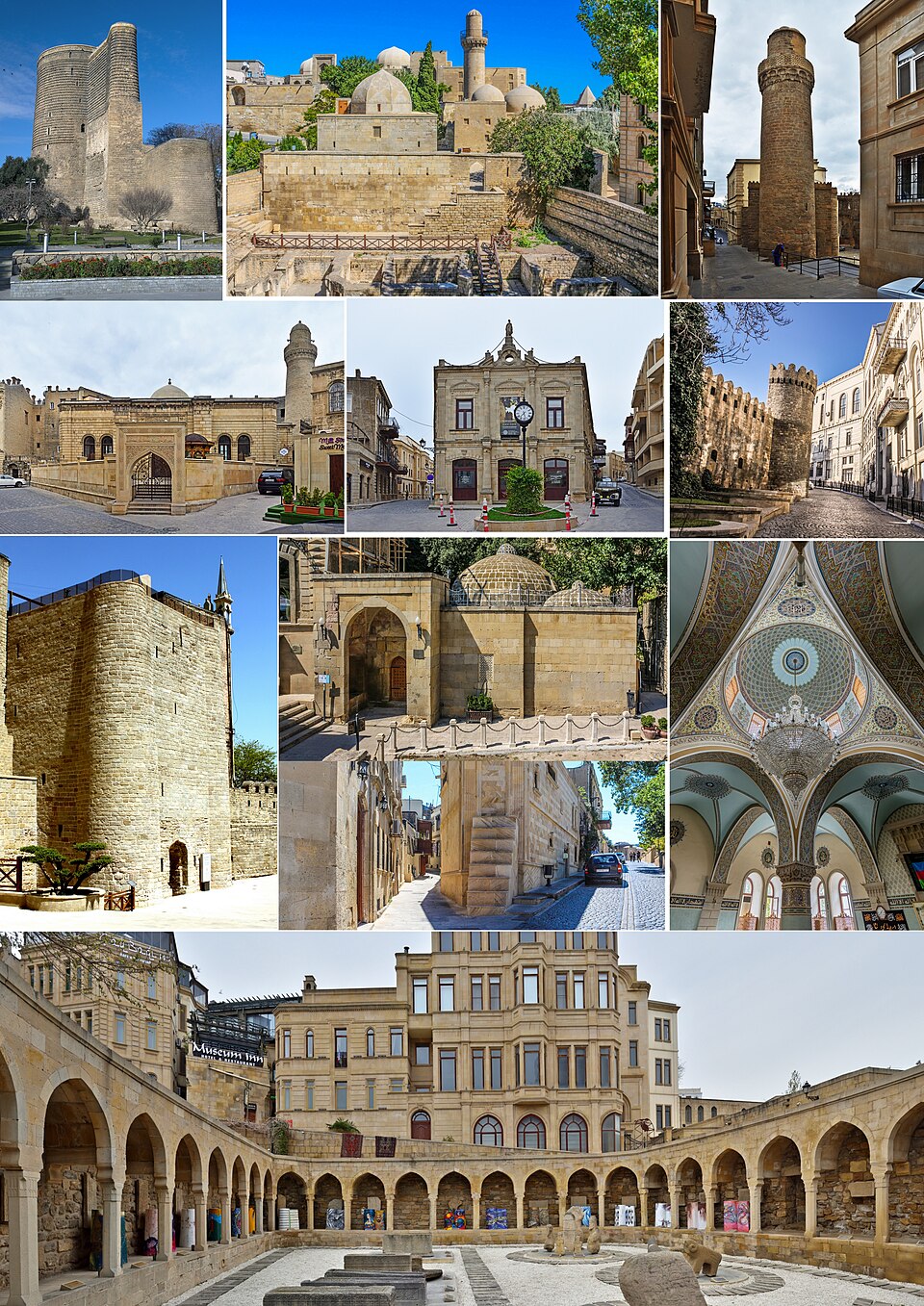
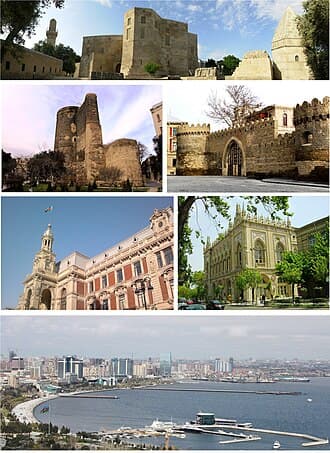
Baku is the capital of Azerbaijan, set on the Absheron Peninsula, and one of the most surprising cities at the crossroads of Europe and Asia. Inside the medieval walls of the UNESCO-listed Old City stand the Maiden Tower and the Palace of the Shirvanshahs, where carpets are sold in the lanes and tea is sipped from tulip-shaped glasses. Around it spreads a city of wide boulevards and palaces from the first oil boom at the turn of the twentieth century, when the Nobels and Rothschilds made fortunes here and Baku produced half the world's oil. And above it all rises the new Baku, built with money from the second oil wave: the 3 flame-shaped Flame Towers skyscrapers, which light up like fire at night, and Zaha Hadid's rippling white Heydar Aliyev Center. Fire is a recurring symbol here — Azerbaijan is called the Land of Fire because of the natural gas that has burned out of the ground around the city for centuries. Baku is compact, safe and easy to reach by direct flight, with an electronic visa issued within 3 days.

What to see

The places worth your time in Baku, and what to expect at each

Old City (Icherisheher)

Old City (Icherisheher)

İçərişəhər

Icherisheher

Baku's fortified historic core, ringed by twelfth-century walls, with narrow lanes, caravanserais, mosques, bathhouses and houses with wooden bay windows. About 3,000 people still live inside. UNESCO-listed along with the Maiden Tower and the Palace of the Shirvanshahs.

Tip: Entry to the Old City is free; only individual sights charge admission. It's loveliest in the morning, when carpet sellers are just opening up and the lanes are empty, or after dark, when the walls are lit up. The Multani and Bukhara caravanserais near the Maiden Tower are now restaurants serving traditional food in their courtyards. When buying a carpet, get an export certificate, or customs at the airport will confiscate it.

Admission:
free
Time needed:
2–3 h
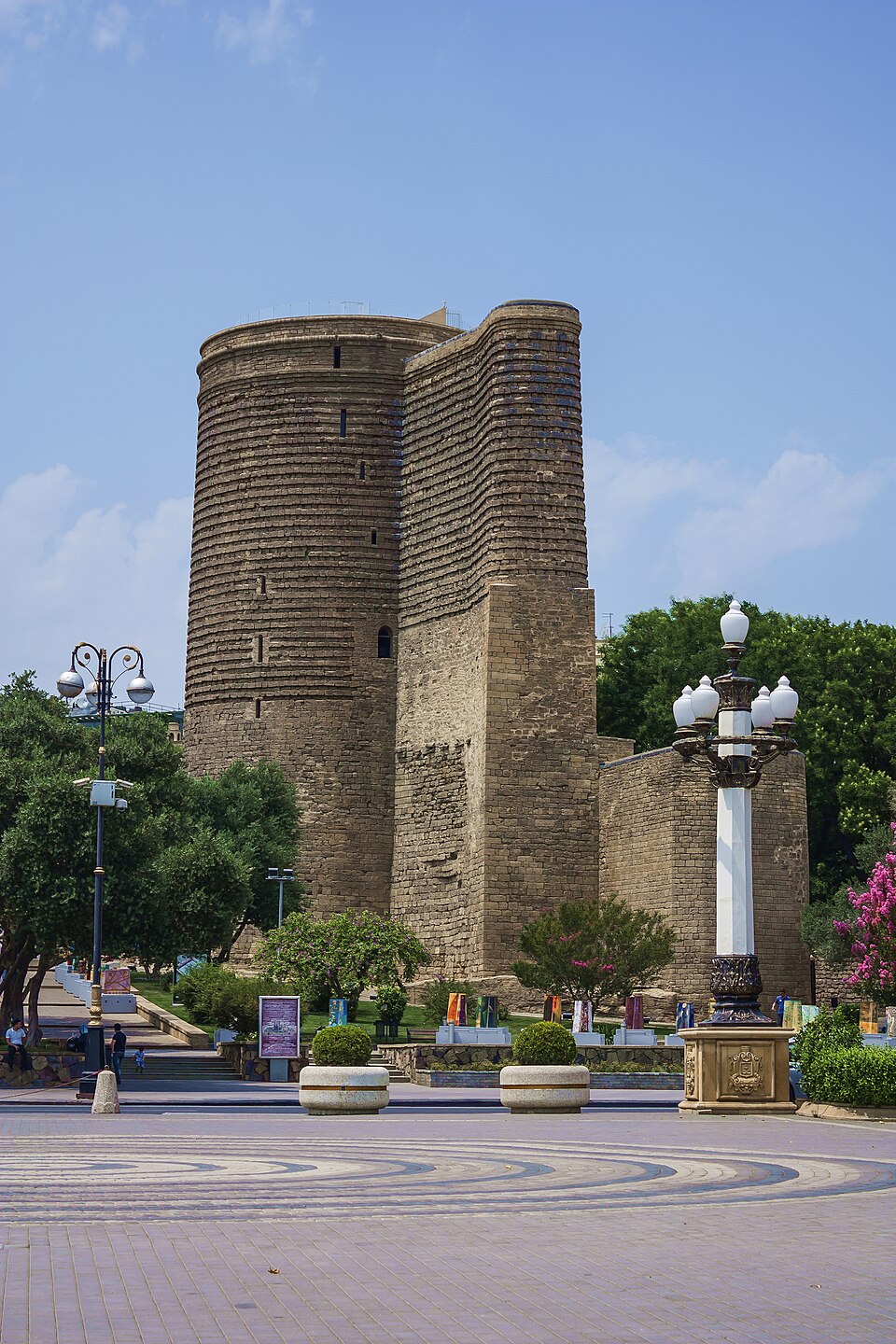
Maiden Tower

Maiden Tower

Qız Qalası

Icherisheher

A mysterious cylindrical tower 29 metres tall with an unusual projection on one side, the symbol of Baku. Its age and purpose remain uncertain — it may have been a fire temple, an observatory or a defensive structure from the twelfth century. Inside is a museum on its legends, and the roof offers a view over the Old City and the sea.

Tip: The legend of a girl who threw herself into the sea from the tower is just one of several stories guides tell. The roof is small and can get a queue in summer, so arrive at opening time. The best photo of the tower is from the Boulevard or the street by the Bukhara caravanserai. A combined ticket with the Palace of the Shirvanshahs is better value.

Admission:
AZN 15
Time needed:
45 min
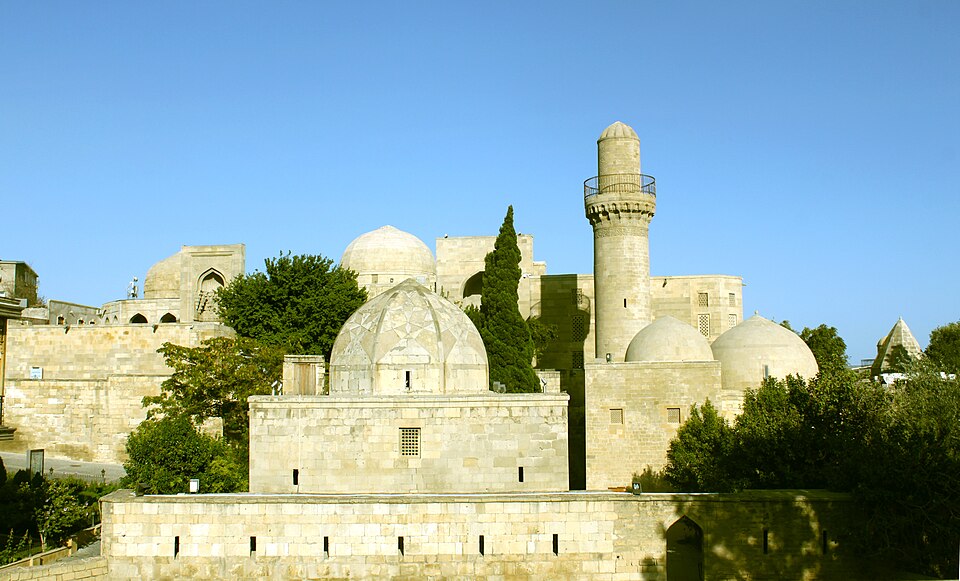
Palace of the Shirvanshahs

Palace of the Shirvanshahs

Şirvanşahlar Sarayı

Icherisheher

A fifteenth-century palace complex of the Shirvanshah dynasty on the Old City's highest point. It comprises the palace, the Divankhana with stone lacework carved into its portal, a mausoleum, a mosque and a bathhouse. Azerbaijan's most significant medieval building.

Tip: The Divankhana, an octagonal pavilion hall with a carved portal, is the architecturally finest part, so give it time. The palace houses a small museum of dynastic objects. The English audio guide is good. After the visit, follow the lanes down to the walls and the Shamakhi Gate, one of the original gates.

Admission:
AZN 15
Time needed:
1–1.5 h
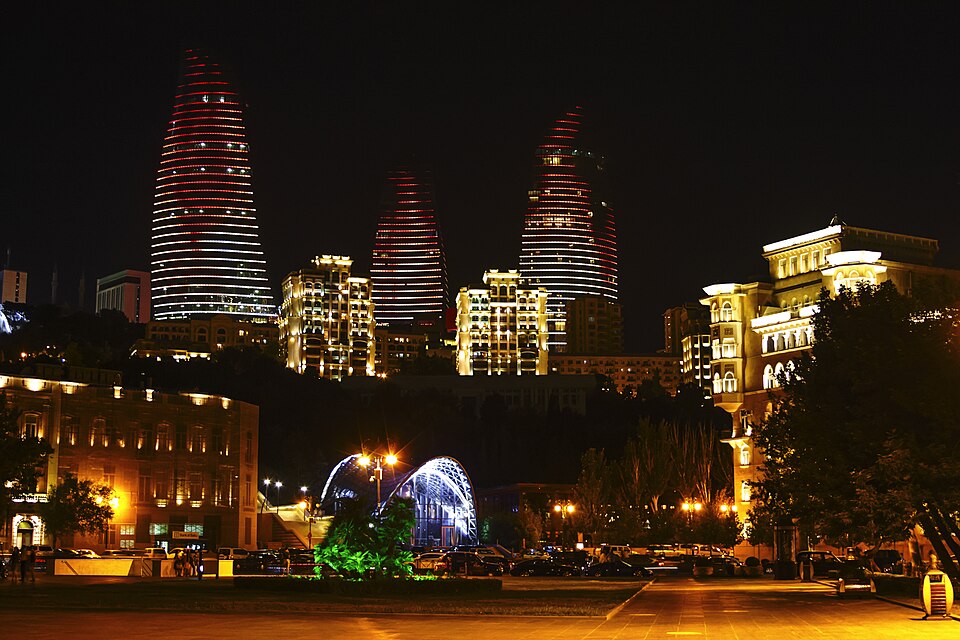
Flame Towers

Flame Towers

Alov Qüllələri

Highland Park

3 flame-shaped skyscrapers on a hill above the city, the tallest standing a 190 metres, built in 2012. Their facades are covered in tens of thousands of LED lights that display flickering fire, a flag and a flag-bearing figure at night. Visible from across Baku.

Tip: The towers light up at dusk and the light show runs until midnight — the best view is from the Boulevard or the viewpoint by Martyrs' Lane right beneath them. A funicular runs up the hill from the Boulevard for a few manats. Inside are the Fairmont hotel, flats and offices; there's no public viewing deck, but the hotel bar is open to visitors.

Admission:
free to view from outside
Time needed:
30 min – 1 h
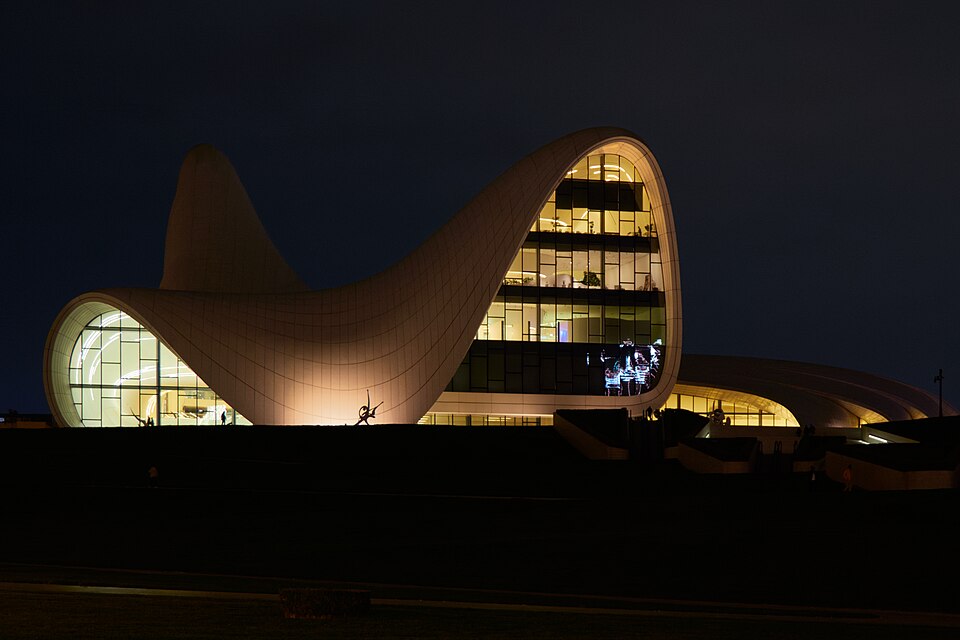
Heydar Aliyev Center

Heydar Aliyev Center

Heydər Əliyev Mərkəzi

Narimanov

A 2012 cultural centre by Zaha Hadid, a rippling white structure without a single sharp corner, rising from the ground like folded fabric and winner of the Design of the Year award. Inside are exhibitions on Azerbaijani history, a collection of traditional musical instruments, models and contemporary art displays.

Tip: The architecture itself is the main reason to come — walk around the building and the surrounding park with its art installations and the I Love Baku sign. The best photo light is morning or late afternoon, when the white facade isn't glaring. Closed on Mondays. The centre is 3 kilometres from the Old City, best reached by Bolt taxi.

Admission:
exterior free, exhibitions AZN 20
Time needed:
1.5–2 h
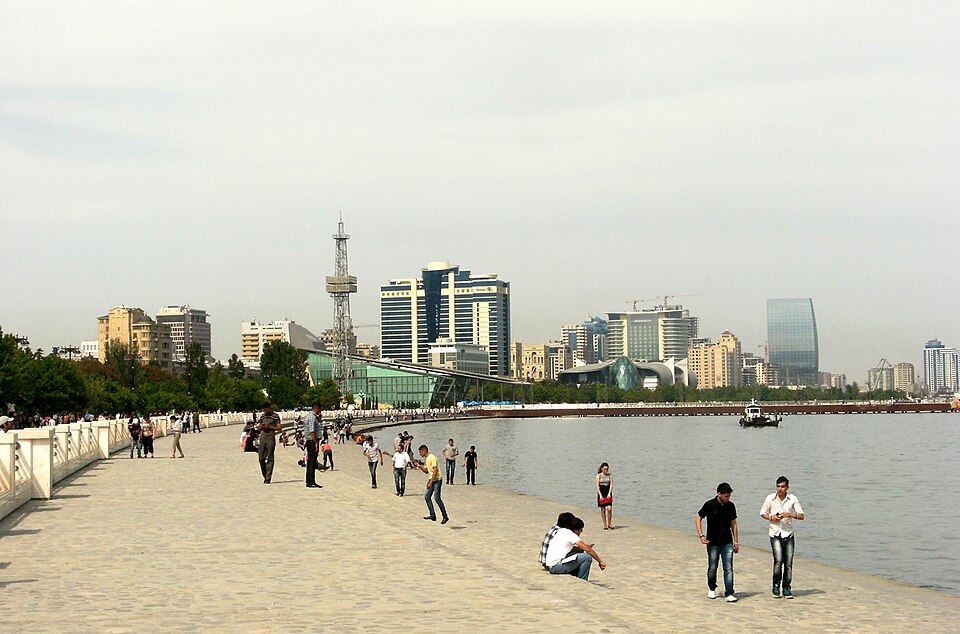
Baku Boulevard

Baku Boulevard

Dənizkənarı Milli Park

Waterfront

A promenade over 25 kilometres long along the Caspian Sea, established in 1909. The liveliest stretch is in the centre, with a park, fountains, cafés, a Ferris wheel, a miniature Venice with canals, and a flower-shaped shopping mall. Locals stroll here every evening.

Tip: It's loveliest in the evening, with the Flame Towers lit up behind you and boats out in the bay. A boat ride around the bay costs a few manats and takes half an hour. In summer there's a pleasant sea breeze. The Carpet Museum, shaped like a rolled-up carpet, sits right on the Boulevard, so the 2 can easily be combined.

Admission:
free
Time needed:
1–2 h
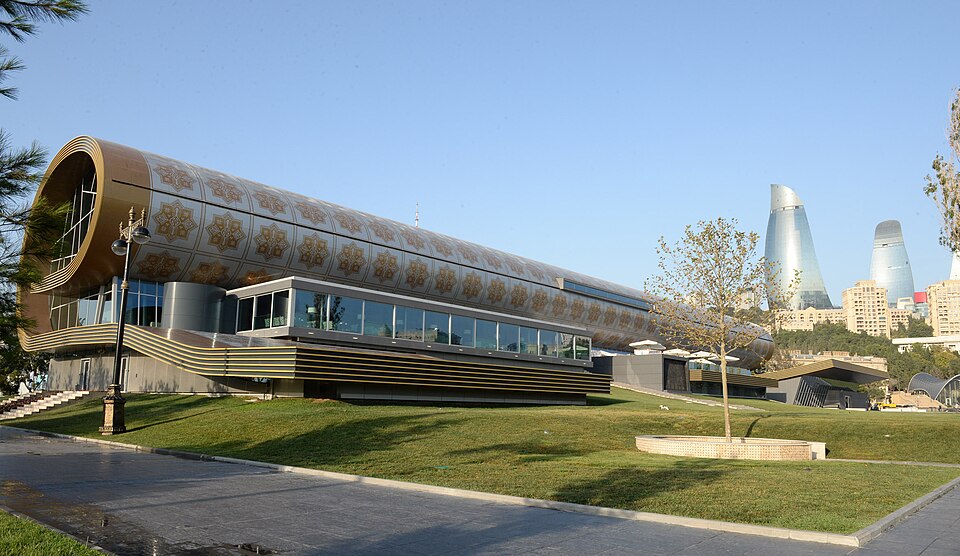
Azerbaijan Carpet Museum

Azerbaijan Carpet Museum

Azərbaycan Xalça Muzeyi

Boulevard

A building shaped like a half-rolled carpet on the Boulevard, housing the world's largest collection of Azerbaijani carpets. Azerbaijani carpet weaving is inscribed on the UNESCO Intangible Cultural Heritage list, and the collection covers regional schools, patterns, techniques and symbolism.

Tip: On the second floor is a workshop where you can watch weavers at work and appreciate how many hours go into a single square metre. If you plan to buy a carpet, the museum will teach you how to judge quality — a genuine hand-woven carpet has the same pattern on the back as on the front. Carpets over 30 years old need an export permit.

Admission:
AZN 10
Time needed:
1–1.5 h
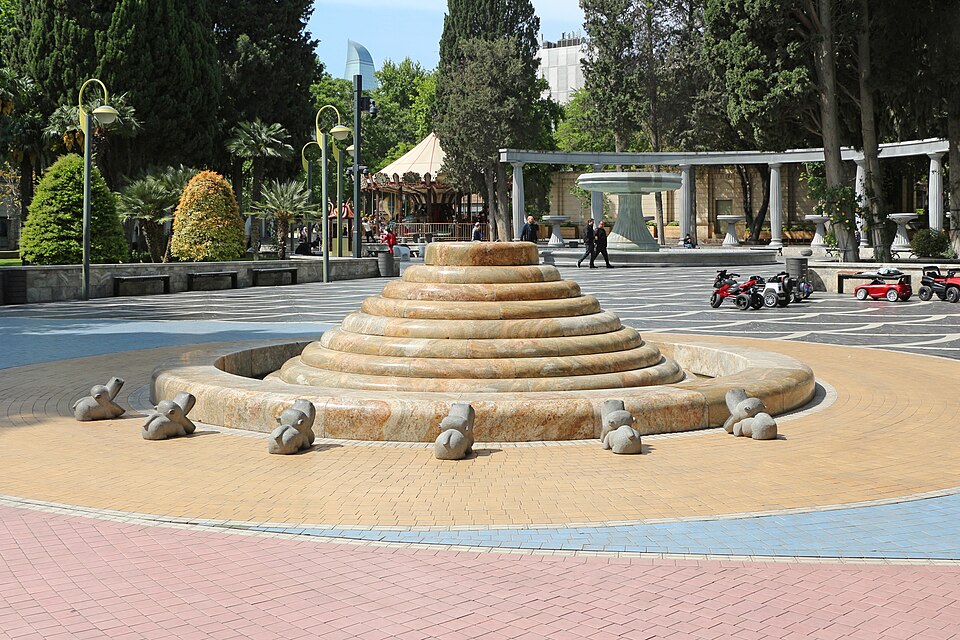
Fountains Square and Nizami Street

Fountains Square and Nizami Street

Fəvvarələr Meydanı

Centre

The main square outside the Old City, with dozens of fountains and cafés, leading onto the pedestrian Nizami Street lined with shops and turn-of-the-century oil-boom buildings. The Neo-Renaissance and Art Nouveau facades recall a time when Baku was one of the richest cities in the world.

Tip: Evenings bring the biggest crowds and best atmosphere. The oil-boom palaces of the Nobels and Taghiyev are scattered through the surrounding streets, including the History Museum in the former palace of oil magnate Taghiyev, with its stunning gilded hall. Nizami Street also has pastry shops selling pakhlava and shekerbura.

Admission:
free
Time needed:
1 h
Highland Park and Martyrs' Lane

Highland Park and Martyrs' Lane

Dağüstü Park / Şəhidlər Xiyabanı

Highland Park

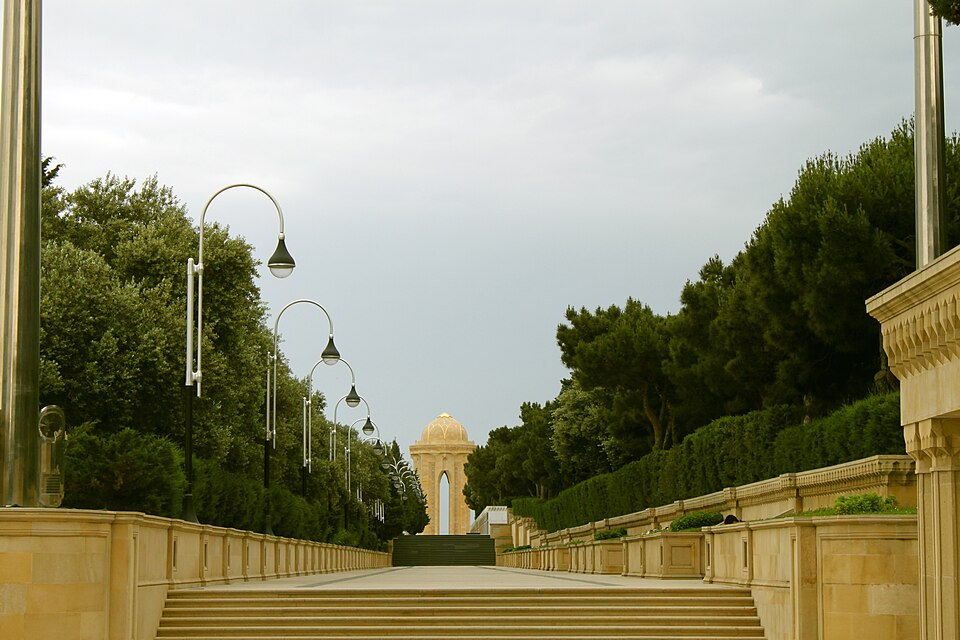
A hilltop park above the bay with the best view over Baku, the Old City and the Caspian Sea. It holds Martyrs' Lane, where victims of the 1990 Soviet crackdown and the Karabakh war are buried beside an eternal flame. Sits just below the Flame Towers.

Tip: Take the funicular up from the Boulevard and stay until dark, when both the towers and the whole bay light up. Martyrs' Lane is a solemn site, so keep quiet; the changing of the guard at the eternal flame happens every hour. For Azerbaijanis, it's the country's most important memorial site.

Admission:
free
Time needed:
1 h

Photos: Old City (Icherisheher) — Sefer azeri (CC BY-SA 4.0) · Maiden Tower — AlixSaz (CC BY-SA 4.0) · Palace of the Shirvanshahs — Urek Meniashvili (CC BY-SA 3.0) · Flame Towers — AlixSaz (CC BY-SA 4.0) · Heydar Aliyev Center — lumoplank (CC0) · Baku Boulevard — Khortan (CC BY-SA 3.0) · Azerbaijan Carpet Museum — Presidential Press and Information Office (CC BY 4.0) · Fountains Square and Nizami Street — Bernard Gagnon (CC BY 4.0) · Highland Park and Martyrs' Lane — Urek Meniashvili (CC BY-SA 3.0)

Where to stay

Areas and districts, matched to the kind of trip you are taking

Old City

Best for: atmosphere, first visit

Hotels and guesthouses in historic houses within the walls, with pedestrian lanes and restaurants set in caravanserais. Everything essential is within walking distance, and evenings here are quiet and romantic. Rooms tend to be smaller and cars can't reach right up to the hotel. The best base for a first visit.

Centre around Fountains Square

Best for: convenience, shopping, evenings

A modern centre of shops, restaurants, hotels and oil-boom-era buildings, a few minutes from both the Old City and the Boulevard. The metro is nearby and the choice of hotels is wide. It stays lively into the night, with bars and cafés everywhere.

The Boulevard and White City

Best for: sea views, luxury

Luxury hotels along the waterfront with views over the Caspian Sea, and the new White City district to the east, built on former oilfields. Quiet, with modern infrastructure. It's a 15- to 30-minute walk along the Boulevard to the Old City.

Around the Flame Towers

Best for: luxury, city views

The Fairmont hotel inside the Flame Towers and other luxury hotels on the hill with views over the whole bay. Better suited to those wanting a standout hotel experience. Reach the centre by funicular or taxi.

Getting around

From the airport

Baku is most easily reached via a connecting flight through Istanbul, served by Turkish Airlines and Pegasus, or via other major hubs; Azerbaijan Airlines (AZAL) is the national carrier. Most visitors need a visa, arranged online through the ASAN Visa portal for around 26 dollars and issued within 3 working days for a 30-day stay. Heydar Aliyev International Airport lies 25 kilometres from the centre and is one of the most modern in the region. A night train runs from Baku to Tbilisi, as well as to Gabala and Sheki in the north. The land border with Armenia is closed, and crossings with Russia and Iran carry their own restrictions.

Baku Heydar Aliyev (GYD) · 25 km

  • Aeroexpress bus H1 to the centre (28 May)· 40 min· AZN 1.30
  • Bolt / taxi to the Old City· 25–35 min· AZN 15
  • Hotel transfer· 30 min· AZN 30

Around town

Central Baku is compact, and the Old City, the Boulevard, Fountains Square and Nizami Street are all walkable. For longer distances, a Bolt or Uber taxi is best — cheap, with the fare fixed upfront and no haggling. Traditional street-hailed taxis run on a meter but cost more. The metro has 3 Soviet-era lines with beautifully decorated stations, and fares cost a few dozen qapik, paid with a BakıKart bought from a machine at the station. Buses also accept the BakıKart. A funicular runs up to the Flame Towers from the Boulevard. Pedestrians should take care: drivers are aggressive, and main roads are crossed via underpasses.

Metro (BakıKart)3 lines, flat fare, card topped up at a station machine. · AZN 0.50
Bolt / UberThe most convenient taxi option, with the fare fixed upfront. · AZN 3
Funicular to Highland ParkFrom the Boulevard up to the Flame Towers. · AZN 1
BusesPaid with a BakıKart; route H1 goes to the airport. · AZN 0.50

Useful apps: Bolt, Uber, Google Maps, Yandex Maps, BakuBus

When to go

The best times are spring, from April to June, and autumn, from September to October, when it's warm at around 20 to 25 degrees and dry. Summer, July to August, is hot and dry at over 30 degrees, though the sea breeze softens it, and the Absheron beaches offer swimming in the Caspian Sea at around 25 degrees. Winter is cold, damp and above all windy — Baku is the City of Winds, and the icy northerly khazri wind can be unpleasant, even though temperatures stay above freezing. Novruz, around 21 March, is the biggest holiday, with street celebrations and sweets. In some years, the Formula 1 Grand Prix runs in June on a street circuit around the Old City, when hotels sell out and prices climb.

Best time

April–June, September–October

What to avoid

windy winter (December–February), the Formula 1 weekend

MonthJanFebMarAprMayJunJulAugSepOctNovDec
Day7°7°10°16°22°27°30°30°25°19°13°9°
Night1°1°3°8°14°19°22°22°18°12°7°3°
Rainy days666432123677
Sea8°7°8°11°16°22°25°26°23°18°13°10°

Food & drink

Azerbaijani cuisine blends Persian, Turkish and Caucasian traditions, with plenty of herbs, saffron, pomegranate, chestnuts and dried fruit. Meat is mostly lamb and mutton, grilled as kebab or stewed. Its signature dish is plov, made differently here than in Central Asia — the rice, meat and fruit are cooked separately and only combined at the table. Traditionally eaten in the Old City's caravanserais and in restaurants with live music, though teahouses and canteens outside the tourist centre offer the best value. Tea is the national drink and is served with everything, alongside jam. Azerbaijan is secular, wine and beer are available everywhere, and local wines from the Shamakhi and Ganja regions are improving. Prices are moderate: lunch at a canteen costs 10 to 15 manats, dinner at a restaurant 30 to 50.

What to try

Plov (shah plov)

Azerbaijani plov is cooked differently from its Central Asian cousin: the rice is prepared separately from the meat with dried fruit and chestnuts, and the 2 are only combined at the table. The festive shah plov is baked in a thin lavash-bread crust and sliced like a cake at the table.

Kebab and lyulya

Mutton or lamb on a skewer; lyulya kebab is minced meat with onion on a flat skewer. Served with sumac, raw onion, herbs and lavash. Meat is ordered by the skewer.

Dolma

Vine leaves, peppers, aubergines or tomatoes stuffed with minced meat, rice and herbs, served with garlic yoghurt. Best made with fresh vegetables in summer, or with pickled leaves in winter.

Qutab

Very thin flatbreads folded in half and filled with herbs, pumpkin or minced meat, cooked on a griddle. Sprinkled with sumac and eaten as a starter or a quick meal for a few manats.

Dushbara

Tiny lamb-filled dumplings, so small that 10 should fit on a spoon, served in a clear broth with mint and vinegar. A test of a cook's skill — the smaller, the better.

Pakhlava and shekerbura

Azerbaijani baklava with walnuts and saffron is cut into diamonds, while shekerbura is a crescent of delicate pastry with a nut filling and an embroidered pattern. Both are baked mainly for Novruz but are available in pastry shops year-round.

Tea and jam

Black tea in a tulip-shaped glass is drunk throughout the day, paired with jam made from white cherries, figs or whole walnuts. The teahouse, or chaykhana, is the social hub of every neighbourhood.

What it costs

Tea at a teahouse

AZN 2–5

Qutab or street food

AZN 2–5

Lunch at a canteen

AZN 10–15

Restaurant dinner

AZN 30–60

Beer at a bar

AZN 5–8

Bolt taxi around the centre

AZN 3–7

Entry to the Maiden Tower

AZN 15

Night in a 3* hotel for 2

AZN 100–180

Indicative prices that change over time — treat them as a guide, not a price list.

Practical information

SocketsCEuroplug, two round pinsFSchuko
Voltage220V / 50Hz
Tap waterDo not drink tap water — Tap water in Azerbaijan is treated, but locals avoid drinking it because of old pipework; use bottled water instead, which costs 60 qapik to 1 manat in shops. In restaurants, tea is the first thing ordered, not water. Badamli and Sirab mineral water from Caucasus springs is a source of national pride and better than imported brands.
TippingBetter restaurants add a 10 percent service charge to the bill; elsewhere, leave 5 to 10 percent. Taxi drivers and full-day tour drivers don't expect a tip, just round up. Cards are accepted at hotels, restaurants and shops in the centre; cash is needed at markets, small teahouses and on village trips. The manat is stable, and ATMs are everywhere in Baku.
Driving on theright
SafetyAzerbaijan is a safe country for tourists, with a visible police presence and low street crime. The real risks lie elsewhere: drivers are fast and aggressive, and pedestrians should use the underpasses, since drivers ignore crossings. Don't photograph government buildings, police or military sites. Anyone with a passport stamp or visa from Nagorno-Karabakh issued by the Armenian side may run into trouble at the border. Topics related to Armenia are highly sensitive, so avoid discussing them with locals. The emergency number is 112.
Opening hoursShops are open from 10 until 10 in the evening, including Sundays, and shopping malls until 11. Restaurants serve from midday until midnight, and teahouses open in the morning. Museums close on Mondays and shut at 6. The main holiday is Novruz around 21 March, when offices close for 5 days and the whole city celebrates in the streets; Ramadan doesn't significantly slow the country down, as Azerbaijan is a secular state.
Customs & etiquetteGuests are always fed, and tea is never refused; it's served in small armudu glasses with cherry or walnut jam and a sugar cube, nibbled alongside the tea. Azerbaijan is secular, women in Baku dress in a Western style and alcohol is sold freely; in the countryside and at mosques, though, covering shoulders and knees is expected, and women cover their hair inside a mosque. Men shake hands when greeting; a hand is offered to women only if they extend theirs first. The word "Armenia" is best avoided in conversation.
A few local wordsHello — SalamThank you — Sağ olun / Təşəkkür edirəmHow much does it cost? — Neçəyədir?The bill, please — Hesab, zəhmət olmasaDelicious — DadlıdırGoodbye — Sağ olun

How to plan your days

1 day

Baku in 1 day

  1. 1Morning in the Old City, the Palace of the Shirvanshahs and the Maiden Tower.
  2. 2Lunch at the Multani caravanserai.
  3. 3Afternoon at the Carpet Museum and the Boulevard.
  4. 4Funicular up to Highland Park for sunset.
  5. 5Evening view of the Flame Towers from the Boulevard, dinner near Fountains Square.

2 days

2 days in Baku

  1. 1Day 1: Old City, Maiden Tower, Palace of the Shirvanshahs.
  2. 2Day 1 evening: the Boulevard and the Flame Towers.
  3. 3Day 2: Heydar Aliyev Center.
  4. 4Day 2 afternoon: Gobustan and the mud volcanoes.
  5. 5Day 2 evening: Yanar Dag at dusk, then back to Baku.

3 days

3 days including Absheron

  1. 1Day 1: Old City and the Boulevard.
  2. 2Day 2: Gobustan's petroglyphs and mud volcanoes.
  3. 3Day 2 afternoon: Heydar Aliyev Center.
  4. 4Day 3: the Ateshgah fire temple and Yanar Dag burning mountain.
  5. 5Day 3 evening: Fountains Square and Highland Park.

Day trips

Gobustan and the mud volcanoes

65 km · 1 h by car

A national park with more than 6,000 rock carvings up to 40,000 years old, UNESCO-listed — hunters, boats, animals and dancers etched into the stone. A modern museum at the entrance explains the context. Nearby are the mud volcanoes, small craters bubbling with grey cold mud; Azerbaijan has more of them than anywhere else in the world. A dirt track leads to the volcanoes, reached only by local Lada taxis.

Ateshgah and Yanar Dag

30 km · 40 min by car

2 places that show why Azerbaijan is called the Land of Fire. Ateshgah is a seventeenth-century fire temple where Hindu and Zoroastrian pilgrims once prayed by a flame fed by escaping gas. Yanar Dag, the burning mountain, is a hillside where fire from underground gas has flickered continuously for decades. Best seen at dusk, when the flames stand out most.

Shamakhi and Lahij

120 km · 2 h by car

Shamakhi was once the capital of the Shirvanshahs and holds the Juma Mosque from 743, one of the oldest in the Caucasus, and is a centre of Azerbaijani winemaking. En route lies the rock-cut Diri Baba mausoleum. The mountain village of Lahij in the Caucasus is famous for its coppersmiths and stone houses, but it's too far for a single day — better to stay overnight.

Frequently asked questions

Do I need a visa for Azerbaijan?+

Most visitors need an electronic visa, arranged online through the official ASAN Visa portal. It costs around 26 dollars, is issued within 3 working days, and covers a 30-day stay. An express option is available for an extra fee. Print the visa, as passport control checks it.

How many days do I need in Baku?+

2 to 3 days for the city plus Absheron with Gobustan, the mud volcanoes and the fire. With a trip into the mountains north to Sheki or Qabala, 5 to 7 days. Baku is often combined with Georgia — a night train runs between Baku and Tbilisi.

Is Baku expensive?+

Mid-range, with prices similar to a mid-sized European capital. Food at local canteens is cheap, while restaurants in the Old City and on the Boulevard are pricier. Taxis via Bolt are very cheap. Hotels are more expensive than in Georgia, especially during events such as Formula 1. Admission to sights is reasonable.

Is Baku safe?+

Yes, Baku is a safe city with low crime and a visible police presence. The main risk is traffic — drivers are aggressive and pedestrians should use the underpasses. Don't photograph government buildings or police. Political topics and Armenia are sensitive, so avoid them in conversation.

What is Yanar Dag?+

A burning hillside on the Absheron Peninsula, where flames from escaping natural gas flicker continuously along the slope. It has been burning for decades, and legend has it a shepherd set it alight in the 1950s. The flames are most striking at dusk and in winter. It's 30 minutes by car from Baku.

Can I bring a carpet back from Baku?+

Yes, but hand-woven carpets need an export certificate, issued by the shop or the Carpet Museum. Carpets over 30 years old or historic pieces require special permission, and without it customs at the airport will confiscate them. Buy from shops that issue the certificate automatically.

Can you swim in the sea at Baku?+

Yes, but not right in the centre — the water in the bay is polluted by the oil industry. The beaches are on the north of the Absheron Peninsula, 30 to 40 minutes by car, best at Mardakan, Nardaran and Shikhov. The season runs from June to September, with the sea around 25 degrees.

When is the weather best in Baku?+

Spring from April to June and autumn from September to October, with temperatures around 20 to 25 degrees and little rain. Summer is hot and dry, over 30 degrees, though the wind helps. Winter is cold and very windy, though it doesn't freeze — Baku is known as the City of Winds.

Visa Requirements

Check the latest visa requirements for entering this country. Some nationalities may need to apply for a visa or e-visa before travel.

Check visa requirements

Language

Azerbaijani

Currency

AZN

Timezone

Asia/Baku

Dial Code

+994

Population

10.2M

Area

86,600 km²

Voltage

220V / 50Hz

Driving Side

Right

Top Hotels in Baku

Live prices from 500+ properties

Loading hotels...

Planning a trip to Baku?

Compare hundreds of hotels, find the best price, and book with free cancellation on TravelManiac.