A Caribbean port for trips to jaguars, Maya ruins and the coral reef
Belize City
LanguageEnglish
CurrencyBZD
TimezoneAmerica/Belize
Temperature24-32 °C
Dial Code+501
Population410K
Area22,966 km²
SocketsType A / Type B / Type G
Tap waterNot drinkable
Discover Belize City
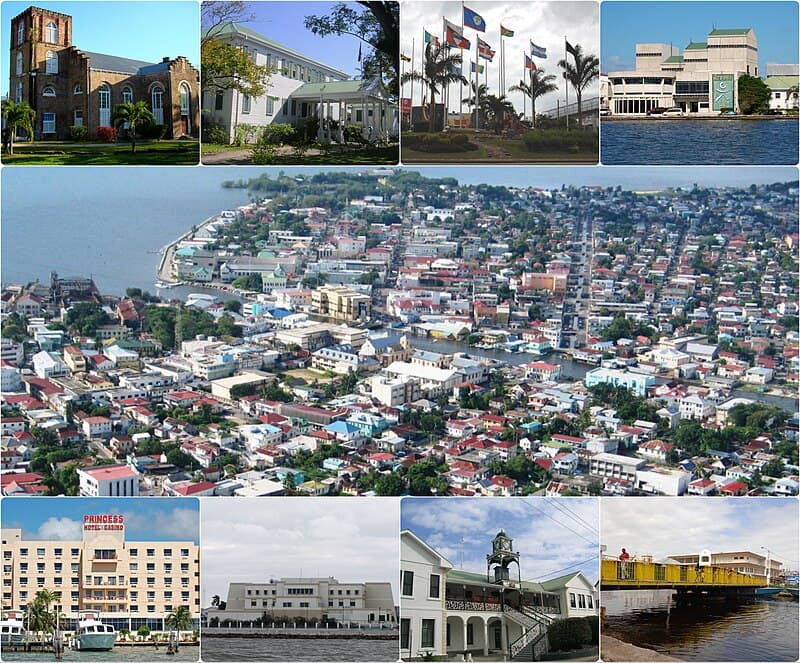
Belize City is the largest city in Belize, the only country in Central America where English is the official language — until 1981 it was the British colony of British Honduras. It was founded in the 17th century by British privateers and logwood cutters at the mouth of the Belize River, built on swamps and mangrove shallows barely a metre above sea level, and remained the capital until 1961, when Hurricane Hattie destroyed it and the government moved inland to Belmopan. Today Belize City has around 60,000 residents, wooden colonial houses on stilts, a busy harbour, and a reputation that calls for caution: some neighbourhoods struggle with gang activity. For travellers, though, the city is mainly a crossroads. Water taxis leave from here for the islands of Caye Caulker and Ambergris Caye, by the world's second-largest coral reef; roads lead to the Maya pyramids of Altun Ha and Lamanai, to caves explored by inner tube, and to a zoo with rescued jaguars. A single day is enough for the city itself, but it's worth seeing Central America's oldest Anglican cathedral, a hand-cranked swing bridge, and the atmosphere of a Caribbean city where Creole, Maya, Garifuna and Mestizo cultures mix.
What to see
The places worth your time in Belize City, and what to expect at each
Swing Bridge
Downtown
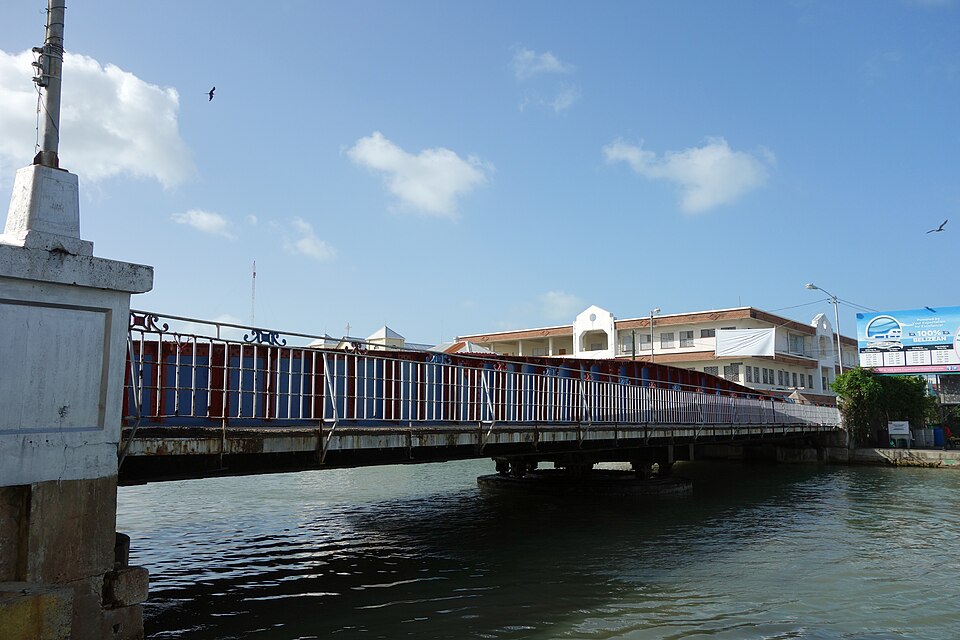
A steel swing bridge from 1923 across Haulover Creek in the very centre, one of the last bridges in the world still turned by hand — operators crank it open with long levers to let taller boats through. Around the bridge is the liveliest part of the city, with a market, water taxi terminals and fishing boats.
Tip: The bridge is only swung occasionally today, usually early morning or late afternoon; ask at the information centre by the water taxi terminal if you want to see it. The area around the bridge is safe and busy by day; after dark, only pass through it on the way to your hotel or from the terminal.
Admission:
free
Time needed:
20 min
St. John's Cathedral
Southside / Regent Street
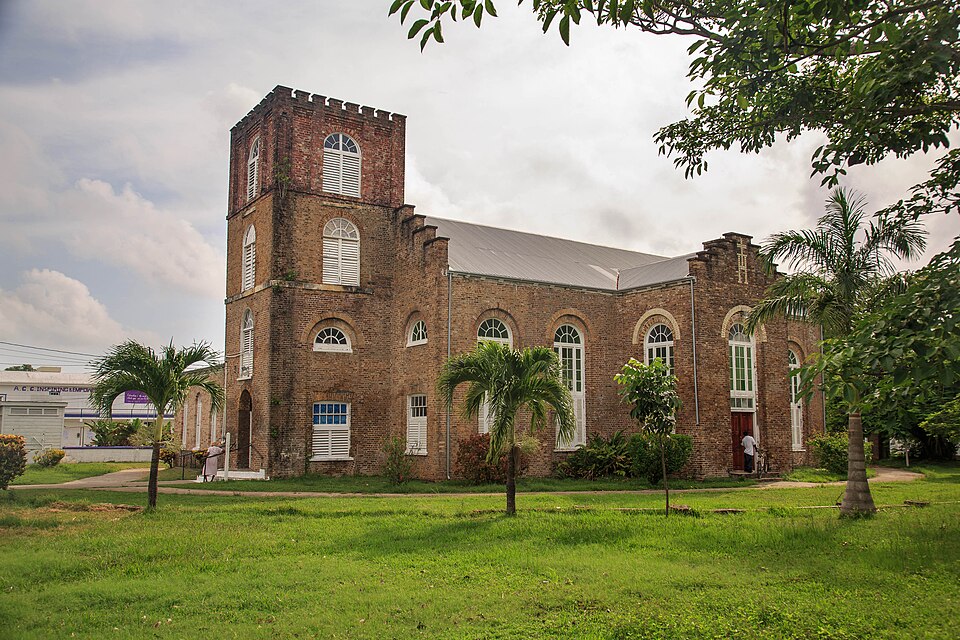
The oldest Anglican church in Central America, built between 1812 and 1820 from bricks shipped from England as ballast, using enslaved labour. 4 kings of the Miskito people of the Mosquito Coast were crowned in this cathedral. Inside are a mahogany wooden ceiling and memorial plaques to British colonists.
Tip: The cathedral is open during the day, entry is free, and there's a donation box by the door for repairs. Just behind it lie the old Yarborough cemeteries, with the graves of colonists and pirates. From the cathedral it's a 10-minute walk along Regent Street to the House of Culture, passing the finest colonial houses in the centre.
Admission:
free
Time needed:
30 min
Museum of Belize
Fort George
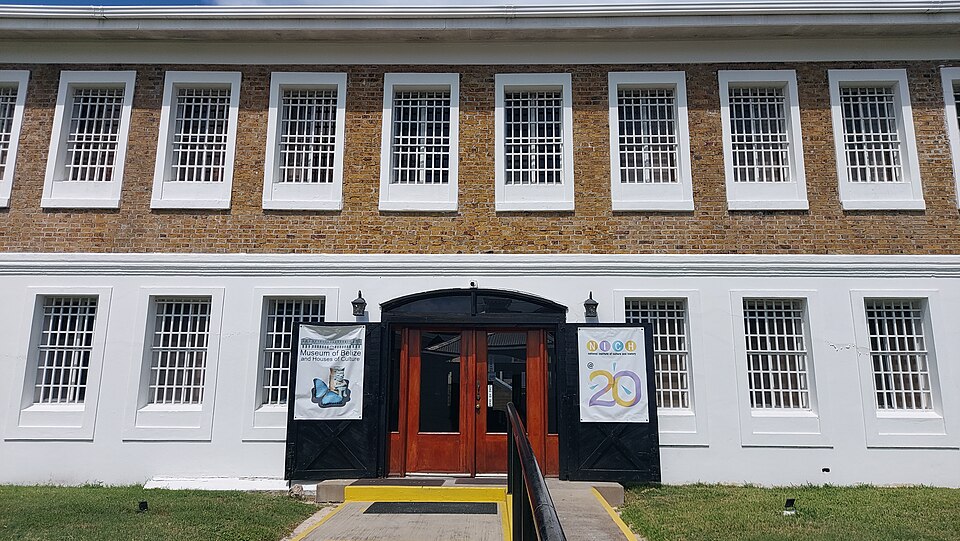
A museum housed in a former colonial prison from 1857, whose cells survive on the ground floor. The exhibits trace the country's history from Maya kings through logging and slavery to independence, alongside a collection of Maya pottery and jade jewellery, and a display of Belizean postage stamps and coins once ranked among the finest in the British Empire.
Tip: The museum is small, and an hour is enough — ideally visit before a trip to Altun Ha or Lamanai, so you'll better understand what you see there. It's often closed on Sundays and Mondays. It sits in the Fort George district a short walk from the water taxi terminal, so it's handy while waiting for a boat.
Admission:
around 10 BZD
Time needed:
1 h
House of Culture
Government House
Southside / Regent Street
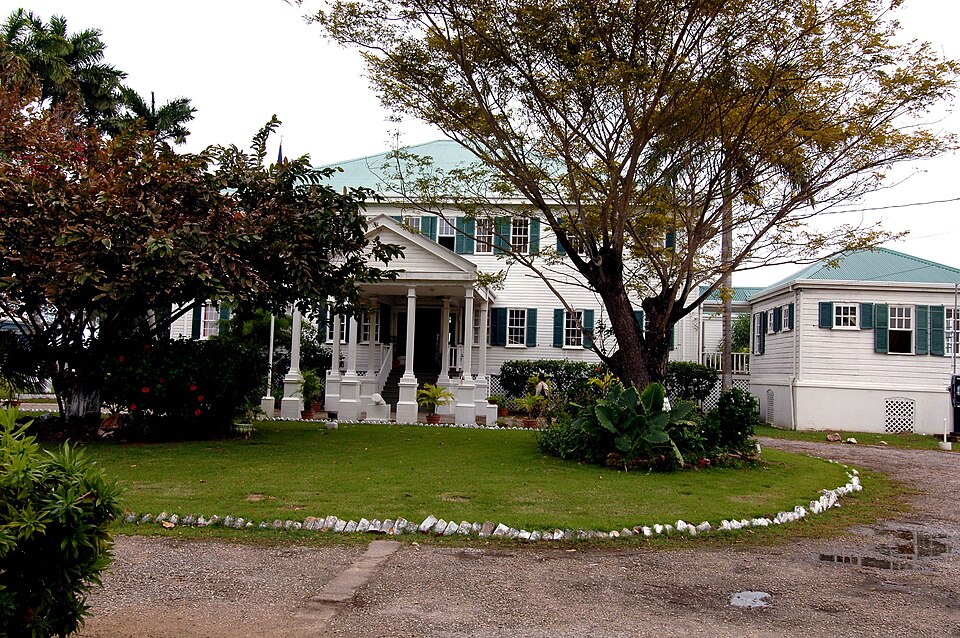
A white wooden colonial residence from 1814 on the waterfront, home to the British governors until the capital moved inland; Queen Elizabeth II stayed here on her visit. It's now a cultural centre with colonial-era furniture, silverware and paintings, and a seafront garden where orchids bloom and pelicans perch.
Tip: The garden behind the house is the calmest spot in the city, and in the early evening you can sit here with a view of the sea and passing boats. The building occasionally hosts concerts and exhibitions by Belizean artists; the schedule is posted at the entrance. It's a 5-minute walk from St. John's Cathedral.
Admission:
around 10 BZD
Time needed:
45 min
Fort George Lighthouse and Baron Bliss's Tomb
Fort George
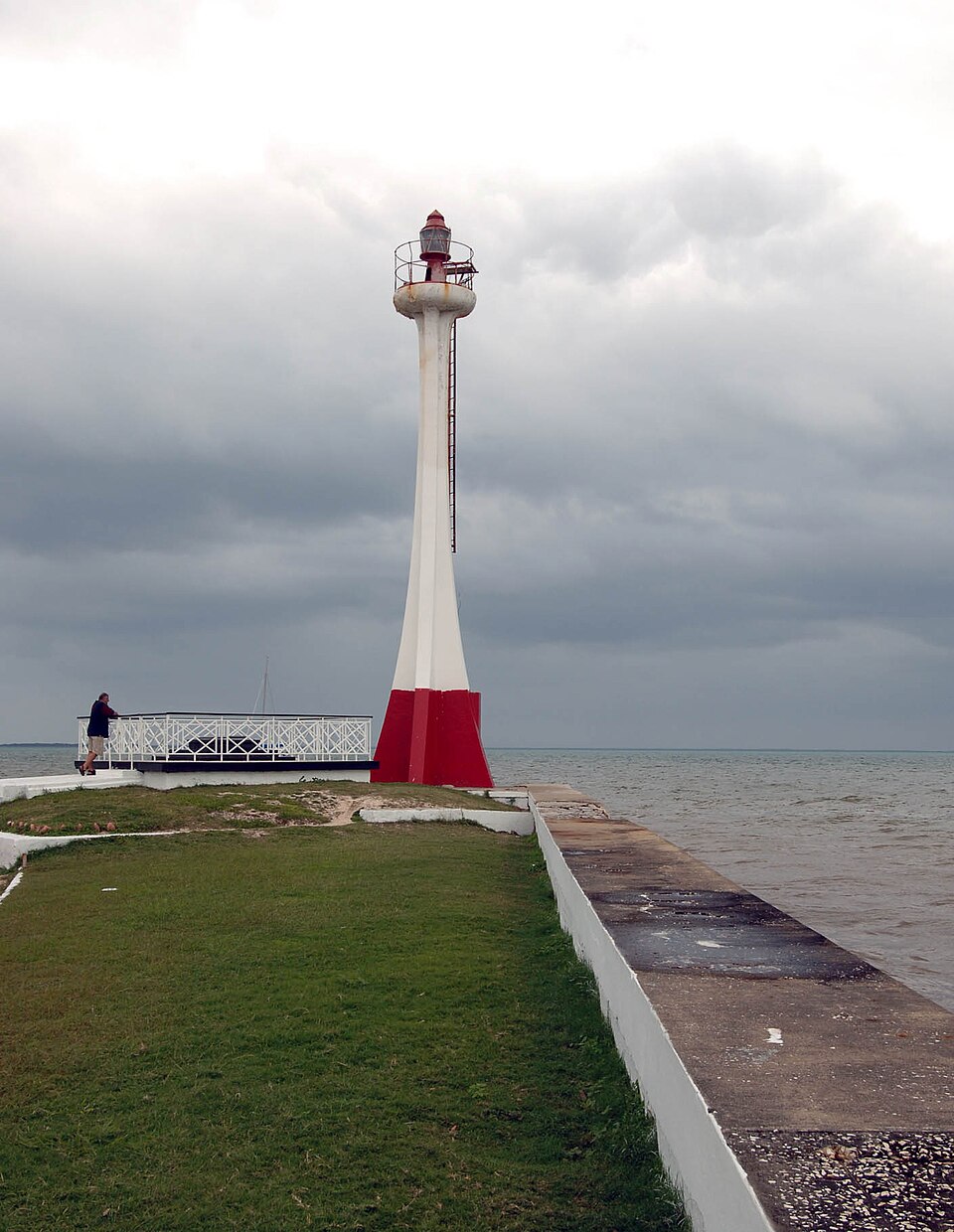
A white lighthouse at the tip of the Fort George peninsula, by the harbour entrance, next to the tomb of the English aristocrat Baron Bliss, who left his entire fortune to Belize in 1926 despite never setting foot on the mainland — he only fished from his yacht in the bay. His money funded markets, libraries and waterworks, and Belize celebrates Baron Bliss Day in his honour.
Tip: The Memorial Park promenade runs along the sea from the lighthouse, a favourite spot for the evening sea breeze. On Baron Bliss Day in March, sailing regattas are held here. Fort George is Belize City's safest and most attractive neighbourhood, with older villas and hotels, and it's fine to stroll here in the early evening.
Admission:
free
Time needed:
30 min
Belize Zoo
George Price Highway
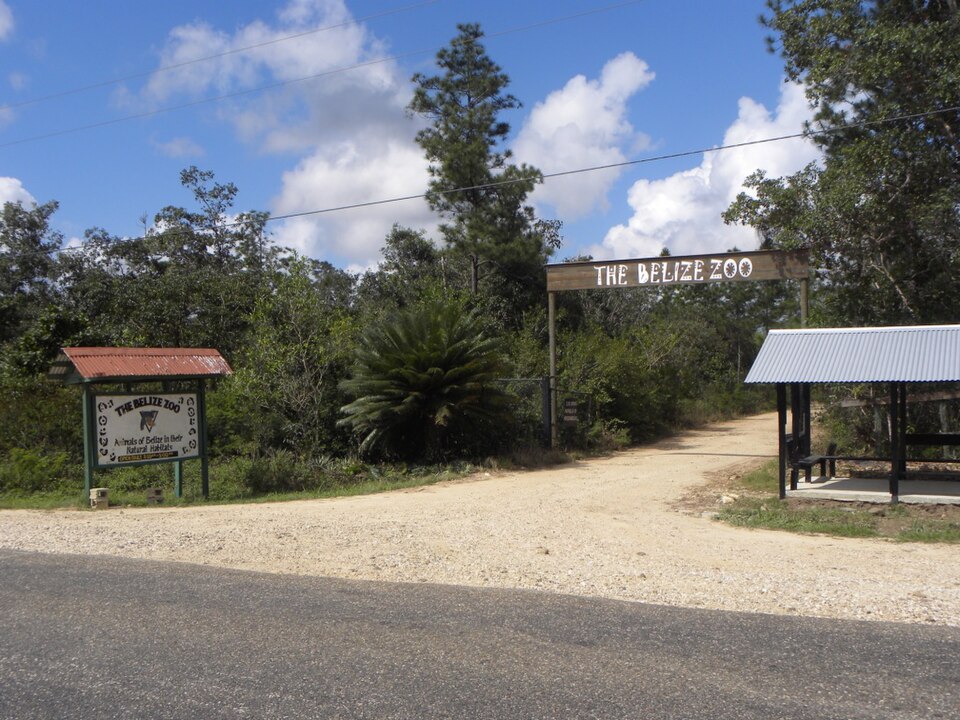
A zoo set in savanna 47 km west of the city, home only to animals native to Belize — jaguars, pumas, ocelots, harpy eagles and the tapir, Belize's national animal. All are rescued, orphaned or hand-reared and couldn't survive in the wild. The enclosures sit within tropical forest, and the signs are handwritten and witty.
Tip: The zoo runs guided night tours, when the jaguars and ocelots, asleep during the day, wake up and become active — the best chance to see them up close; book ahead. In the morning at opening time, the animals are also more active than in the midday heat. The zoo sits on the George Price Highway, where buses to Belmopan stop.
Admission:
around 60 BZD
Time needed:
2 h
Altun Ha
Belize District
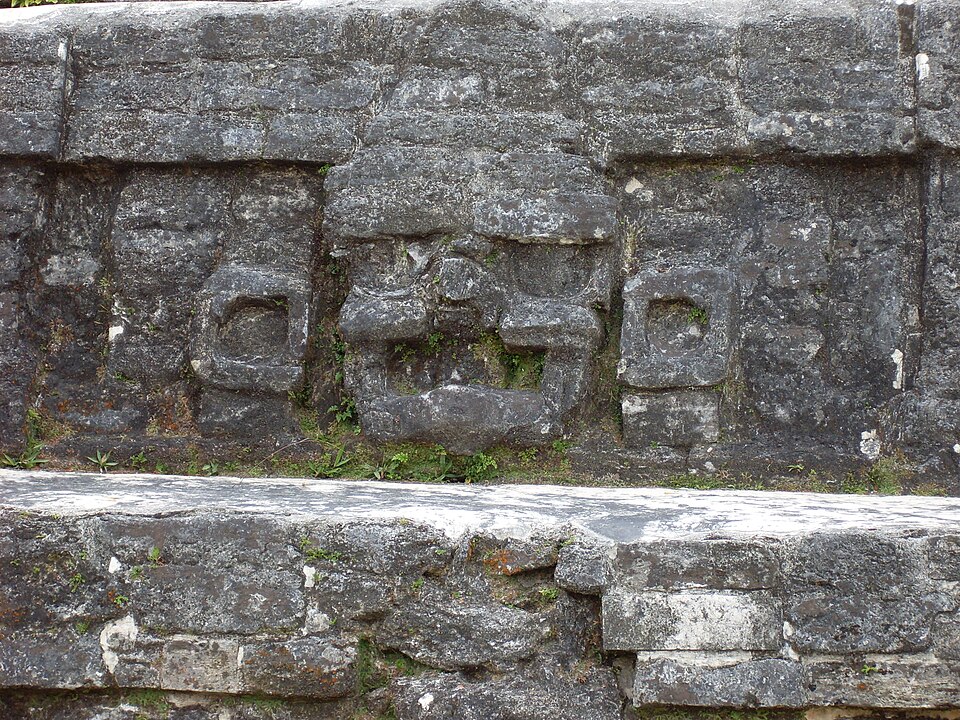
A Maya ceremonial centre 50 km north of the city, occupied from around 200 BCE and peaking around 600 CE. The main temple of masonry altars, 16 metres high, appears on the Belikin beer label. In 1968, archaeologists found here the largest carved jade head in the Maya world, now kept in the central bank's vault.
Tip: Altun Ha is the closest Maya site to Belize City, and on days when cruise ships are in port, it's packed with hundreds of visitors — check the cruise ship schedule and go on a different day, or first thing in the morning. The site is small, and 1.5 hours is enough. It's poorly served by bus; a taxi or organised trip works better.
Admission:
around 10 BZD
Time needed:
1.5 h
Community Baboon Sanctuary
Bermudian Landing
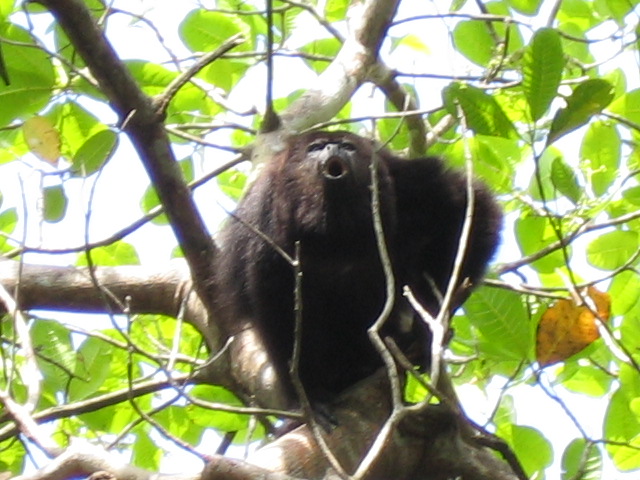
A community reserve around the village of Bermudian Landing on the Belize River, where local farmers agreed in 1985 to leave strips of forest on their land for black howler monkeys, known locally as baboons. A guide from the village leads you into the forest, where troops of howlers sit in the treetops and their roar carries for kilometres.
Tip: Howler monkeys are most active early in the morning and late afternoon, and their roar carries furthest at dawn. Admission goes directly to the community and includes a guide. For the full experience, stay overnight in the village in simple accommodation with a local family and wake to the sound of howlers.
Admission:
around 15 USD with a guide
Time needed:
1.5 h
Cave Tubing
Nohoch Che'en
Caves Branch / Cayo
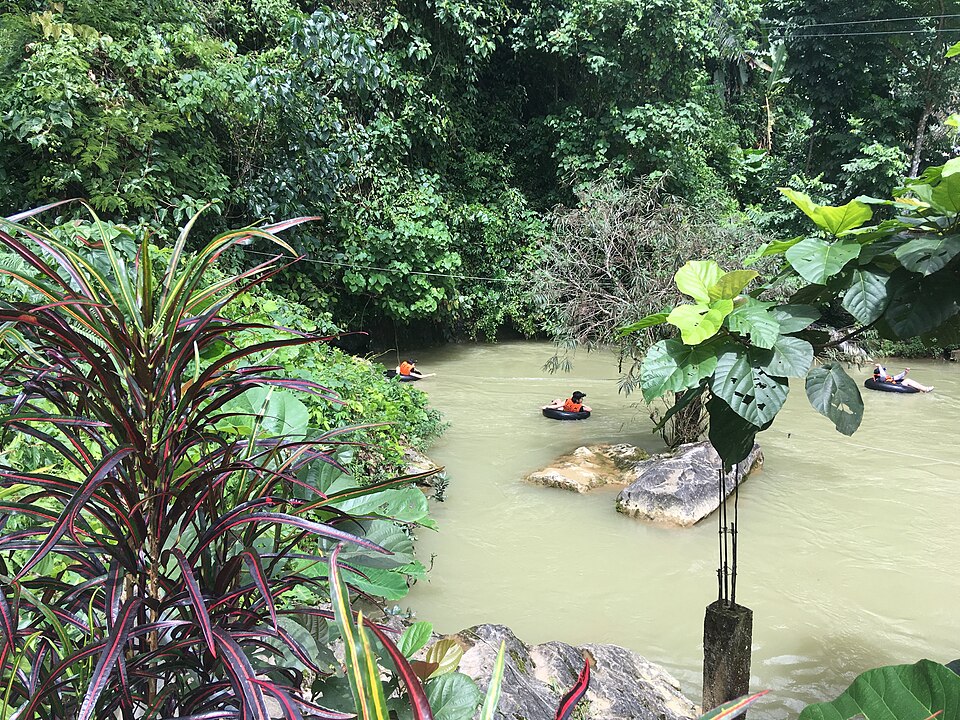
The Nohoch Che'en cave system in the karst along the Caves Branch river, explored by floating through on inner tubes with a headlamp. The Maya considered these caves an entrance to the underworld, Xibalba, and traces of rituals remain on the walls and ledges. The current is gentle and manageable even for children; the walk between caves passes through rainforest.
Tip: Cave tubing is the most popular trip from the cruise ships, and when a ship is in port, the river has hundreds of tubes lined up one after another — ask about departures on other days, or about alternative caves further upriver. Bring water shoes and nothing that shouldn't get wet. It's often combined with a zipline over the rainforest.
Areas and districts, matched to the kind of trip you are taking
Fort George
Best for: safe accommodation and a first visit
A peninsula on the north side of the Swing Bridge with colonial villas, the lighthouse, the museum, water taxi terminals and the best hotels in the city. It's Belize City's safest neighbourhood and the only one that's comfortable to walk through in the evening too. If you're staying here before heading to the islands, you can walk to the boat.
Downtown around Albert Street
Best for: markets and shopping
The commercial centre on the south side of the bridge, with Albert and Regent streets, the market, shops selling rice and beans, banks and old colonial buildings. It's busy and safe during the day; don't linger here at night. Hotels are few and mostly business-oriented.
Northside and Kings Park
Best for: quiet and guesthouses
Residential neighbourhoods north of Fort George with wooden houses on stilts, gardens and smaller guesthouses. It's a quiet and relatively safe part of the city, 10 minutes from the centre by taxi. Locals live here and restaurants are cheaper.
Ladyville and the airport
Best for: a night before your flight
A suburb by the international airport, 15 km from the centre, with a few hotels and resorts on the river. It makes sense to stay here after a late arrival or before an early departure, avoiding a night-time crossing of the city. It's also closer to Altun Ha and the howler monkey sanctuary.
There are no direct flights to Belize from Europe. Most travellers fly via the United States — from Miami, Houston, Atlanta or Dallas it's about 2 hours — which requires an ESTA even for a connecting flight. The alternative is to fly into Cancún, Mexico, and continue by bus via Chetumal, a journey of 8 to 9 hours, or by air with Tropic Air. Philip Goldson International Airport lies 16 km north of the centre in Ladyville, and a fixed-price taxi to the centre costs around US$25–35. There's no bus service from the airport. Small domestic airlines, Tropic Air and Maya Island Air, fly from both the international airport and the small municipal airport by the sea to the islands and the interior. Many nationalities, including EU and US citizens, don't need a visa for a tourist stay.
Philip S. W. Goldson International (BZE) · 16 km
Fixed-price taxi· 25–30 min· around 25 USD
Domestic flight to Ambergris Caye· 15–20 min· from 90 USD
Belize City Municipal (TZA) · 3 km
Taxi to the centre· 10 min· around 10 USD
Around town
Belize City is small, and the centre around the Swing Bridge, Fort George and Regent Street can be covered on foot during the day. In the evening, and for outlying neighbourhoods, take a taxi — recognisable by its green licence plate; they have no meter, so agree the fare beforehand, usually around 10 Belize dollars around town. Cheap buses run to the rest of the country from the main terminal on Canal Street — old American school buses that stop anywhere on a wave. Water taxis to the islands leave from 2 terminals by the Swing Bridge. For trips into the interior, renting a car is worthwhile; the roads are mostly good and traffic is light, and driving is on the right.
Water taxi to the islandsSan Pedro Belize Express and Ocean Ferry depart from the terminals by the Swing Bridge several times a day: 45 minutes to Caye Caulker, 1.5 hours to Ambergris Caye. A return ticket is cheaper. · from 20 USD
TaxiGreen licence plates, fare agreed before the ride. Around 10 Belize dollars around town, fixed price from the airport. In the evening, only use a taxi booked through your hotel. · 10 BZD
Long-distance busesColourful retired American school buses run from the terminal on Canal Street to Belmopan, San Ignacio, Orange Walk and Dangriga. Cheap and slow; keep an eye on your luggage at the terminal. · from 5 BZD
Car rentalThe most comfortable way to visit the zoo, Altun Ha, the caves and San Ignacio. Rental desks are at the airport; the roads are good, but watch for speed bumps ("sleeping policemen") at every village. · from 60 USD / day
Domestic flightsTropic Air and Maya Island Air fly small planes to Ambergris Caye, Caye Caulker, Placencia and Dangriga. The flight over the reef is an experience in itself. · from 80 USD
Useful apps: Google Maps, Maps.me, WhatsApp
When to go
The best time is the dry season from December to April: little rain, temperatures around 28°C, calm seas and good underwater visibility. March to May is the hottest and driest, but also the busiest with tourists. June to November is the rainy and hurricane season, with the highest risk in September and October; rain usually comes as short, heavy downpours with sunshine in between, prices are lower and there are fewer tourists. Year-round, Belize City is humid, with mosquitoes and sandflies near the water — repellent helps. The September holidays marking independence and the Battle of St George's Caye are among the liveliest days of the year.
Best time
December to April
What to avoid
September and October, for the hurricane risk
Month
Jan
Feb
Mar
Apr
May
Jun
Jul
Aug
Sep
Oct
Nov
Dec
Day
28°
28°
30°
31°
32°
32°
32°
32°
32°
30°
29°
28°
Night
20°
21°
22°
24°
25°
25°
25°
25°
24°
23°
22°
21°
Rainy days
12
7
5
4
6
14
17
16
17
16
14
14
Sea
26°
26°
27°
28°
29°
29°
29°
30°
30°
29°
28°
27°
Food & drink
Belizean cuisine blends Creole, Maya, Mestizo and Garifuna traditions, and its base is simple: rice and beans in coconut milk, stewed chicken and fried plantain. Fry jacks are eaten for breakfast, and lunch means a small eatery where a plate costs around $10. Mestizo cooking in the north brought tamales, salbutes and panades — small fried tortillas with meat or fish — while Garifuna cooking in the south brought hudut and fish soups in coconut milk. Along the coast there's lobster, conch and reef fish, though seasons are regulated by law. Marie Sharp's hot sauce sits on every table. There's 1 beer, Belikin, and One Barrel rum is the local classic.
What to try
Rice and beans
Rice cooked in coconut milk with red beans, served with stewed chicken, potato salad and fried plantain. The whole country's Sunday lunch and the cheapest full meal, around 10 Belize dollars at a local eatery.
Fry jacks
Fried pockets of leavened dough, puffed and hollow inside, eaten for breakfast with beans, eggs and cheese, or with honey. Best eaten hot straight from the pan — after half an hour they're not worth much.
Salbutes and panades
Mestizo street food: salbutes are puffed fried tortillas with chicken, cabbage and tomato, panades are fried pockets with fish or beans. Sold 4 at a time for a couple of dollars at stalls in the morning and evening.
Hudut
A Garifuna fish soup in coconut milk, served with mashed plantain on the side. The plantain is torn off by hand and dipped in. Best in the Garifuna villages of the south; only a handful of places in Belize City serve it.
Conch fritters and ceviche
Conch meat sliced into ceviche with lime or fried in batter. The season runs from October to June; outside it, fishing conch is banned.
Lobster
Clawless Caribbean lobster, grilled with garlic butter. The season runs from mid-June to mid-February, and Caye Caulker celebrates Lobsterfest in June. Outside the season, it can't be caught or served.
Marie Sharp's
A habanero and carrot hot sauce from a factory in Dangriga, found on the table in every Belizean eatery. It comes in several strengths from mild to "Beware"; a bottle is the best souvenir.
Belikin
The one Belizean beer brand, a pale lager with a Maya temple on the label. Belikin Stout is stronger and sweeter. Bottles are returnable — the deposit is deducted at the shop.
What it costs
Rice and beans with chicken
10–15 BZD
Breakfast with fry jacks
8–14 BZD
Belikin beer at a bar
5–8 BZD
Lunch at a restaurant
20–35 BZD
Dinner at a restaurant
50–90 BZD per person
Taxi around town
10 BZD
Water taxi to Caye Caulker
from 40 BZD
Night in a 3* hotel for 2
180–320 BZD
Indicative prices that change over time — treat them as a guide, not a price list.
Practical information
SocketsAtwo flat pins (US/JP)Btwo flat pins plus ground (US)GBritish, three rectangular pins
Voltage110V / 60Hz
Tap waterDo not drink tap water — Tap water isn't drunk in Belize City or on the islands, even though it's treated in the city. Hotels keep barrels of drinking water in the hallway, and a gallon costs around 4 Belize dollars in a shop. Ice in bars and restaurants is made from purchased water and is safe. River water in the jungle and caves shouldn't be drunk.
Tipping10 to 15% is left at restaurants unless it's already added to the bill as a service charge — common on the islands and at better places. Guides on tours are given US$10–20 per person per day, and boat captains a similar amount. The Belize dollar is fixed to the US dollar at 2 to 1, and US dollars are accepted everywhere, but change is given in Belize dollars. Prices are quoted in both currencies, so always ask which one — BZ$50 and US$50 differ by double. A 12.5% sales tax is added to the price.
Driving on theright
SafetyBelize City has a high crime rate, but it's concentrated in a handful of neighbourhoods on the south side and west of the centre, which tourists have no reason to visit. The centre around the Swing Bridge, Fort George and the water taxi terminals is safe by day; after dark, take a taxi rather than walking, even for a kilometre. Ask your hotel which streets are fine — the line is sharp. On the islands of Caye Caulker and Ambergris Caye, the situation is far calmer. The emergency number is 911, and tourist police have a post by the harbour.
Opening hoursShops are open from 8am to 5pm, until noon on Saturdays, and on Sundays Belize City is practically shut. Banks operate until 3pm. Restaurants in the centre close early, around 8pm, and evening life happens in hotel bars and on the islands. Eateries and kiosks open from 6am, since breakfast is eaten early here. Around Christmas and on 10 September, marking the Battle of St George's Caye, most businesses are closed.
Customs & etiquetteBelize is the only country in Central America with English as an official language, but among themselves people speak Kriol and Spanish, and there are also Garifuna, Maya and Mennonite communities. The pace is slow, and "go slow" is a way of life, not an excuse. A greeting before a question is expected. Photographing people, especially Mennonites and Maya villages, without permission is not acceptable. Don't touch coral, and don't feed marine animals. Swimwear isn't worn around town.
A few local wordsHello — Gud mawninHow are you? — Weh di go aan?Thank you — TanksTake it easy — Go slowHow much is it? — How much it cost?See you later — Lata
How to plan your days
1 day
A Day in Belize City
1Morning at the Swing Bridge and the harbour market.
2The Museum of Belize in Fort George.
3The lighthouse and Baron Bliss's tomb.
4Afternoon along Regent Street to St. John's Cathedral and the House of Culture.
5Sunset in Memorial Park and dinner in Fort George.
2 days
2 Days: City and Wildlife
1Day 1 as above.
2Day 2 morning: the howler monkey sanctuary at Bermudian Landing.
3Afternoon at Altun Ha.
4Return to the city, or an evening night tour at Belize Zoo.
5Night in Belize City or near the zoo.
3 days
3 Days with Caves and an Island
1The first 2 days as above.
2Day 3 morning: cave tubing at Nohoch Che'en.
3Afternoon return and a water taxi to Caye Caulker.
4Evening on the island at The Split.
5Further days snorkelling on the reef and a trip to the Blue Hole.
Day trips
Caye Caulker
33 km · 45 min by water taxi
A small, car-free island with sandy streets, colourful wooden houses and the motto "go slow", where people get around by bike and golf cart. At the north end is The Split, a channel carved by a hurricane, where people swim and sit at the bar until sunset. Boats leave the island for snorkelling on the reef and at the Hol Chan Marine Reserve, with its sharks and rays. A day is enough, but most people stay longer.
Lamanai
90 km · 1.5 h by car and 1.5 h by boat
One of the longest continuously inhabited Maya cities, settled for over 3,000 years until the arrival of the Spanish, deep in the rainforest on the bank of the New River Lagoon. The journey there is half the appeal: from Orange Walk, it's a 1.5-hour boat ride up the river through mangroves, crocodiles, iguanas and birds. On site stand the Mask Temple, with its giant carved stone faces, and the High Temple, from whose top you rise above the treetops and hear howler monkeys.
San Ignacio and Xunantunich
115 km · 2 h by car
San Ignacio is a small town in the hilly Cayo district near the Guatemalan border and a base for adventure trips. The Maya city of Xunantunich, on a hill above the river, is reached via a hand-cranked ferry, and from its main pyramid, El Castillo, you can see into Guatemala. Nearby is the Actun Tunichil Muknal cave, with the skeletons of sacrificial victims, explored on foot and by swimming with a guide — one of the most powerful experiences in Belize. It's a lot for 1 day; staying overnight is better.
Frequently asked questions
Is Belize City safe?+
The city has a high crime rate, but it's concentrated in a handful of neighbourhoods on the south and west sides that tourists have no reason to visit. Fort George and the centre around the Swing Bridge are safe during the day. After dark, get around by taxi booked through your hotel, even for a short distance. Most visitors spend 1 night here and move on to the islands or the interior, where the situation is far calmer.
Should I stay in Belize City or on the islands?+
On the islands or in San Ignacio. Belize City is a transport hub, and a day is enough to see it. Anyone after coral reef and beaches heads to Caye Caulker or Ambergris Caye; anyone after rainforest and Maya ruins heads to Cayo. A night in Belize City makes sense before an early ferry or after a late flight.
Do I need a visa for Belize?+
Visa requirements depend on nationality — many nationalities, including EU and US citizens, don't need a visa for a tourist stay, and an entry stamp is usually issued for 30 days with the option to extend. If you're transiting through the United States, you'll need an ESTA even for a connecting flight. Leaving Belize overland for Mexico or Guatemala carries an exit fee of around US$20.
How do I get to the Blue Hole?+
The Great Blue Hole, a circular sinkhole in the coral reef 100 km offshore, is visited on full-day boat trips from Ambergris Caye and Caye Caulker. Divers descend to 40 metres to see the stalactites; for snorkellers, the trip is less rewarding. The best view is from the air — scenic flights depart from Ambergris Caye and San Pedro.
Which currency should I use?+
The Belize dollar is fixed to the US dollar at 2 to 1, and US dollars are accepted everywhere. Always ask which currency a price is quoted in — the difference is double. Cards are accepted at hotels and better restaurants; at markets and in taxis, pay cash. ATMs are found in the centre and at the airport.
Is English spoken in Belize?+
Yes, English is the official language and you'll get by with it everywhere. Among themselves, though, people speak Kriol, a Creole derived from English that you won't understand at first hearing, and Spanish, spoken by nearly half the population. Garifuna is spoken in the south, and Maya languages in Maya villages.
When is hurricane season?+
From June to November, with the highest risk in September and October. A hurricane hits Belize directly roughly once every few years, but forecasts give days of warning. During this period it's worth having travel insurance that covers weather-related cancellations and booking flexible accommodation on the islands.
What's a cruise-ship day like in Belize City?+
Cruise ships anchor offshore and tender passengers into the Tourism Village terminal. On those days, Altun Ha, the cave tubing sites and Belize Zoo are packed with organised groups and taxi prices rise. Check the cruise ship schedule at the port and plan your trips for other days — the difference is huge.
Visa Requirements
Check the latest visa requirements for entering this country. Some nationalities may need to apply for a visa or e-visa before travel.