Hotels in Bucharest

The world's second-largest building, belle époque boulevards and monasteries hidden among apartment blocks

Bucharest

LanguageEnglish
CurrencyRON
TimezoneGMT+2
Temperature2-28 °C
Dial Code+40
Population19.1M
Area238,397 km²
SocketsType C / Type F
Tap waterBottled advised

Discover Bucharest

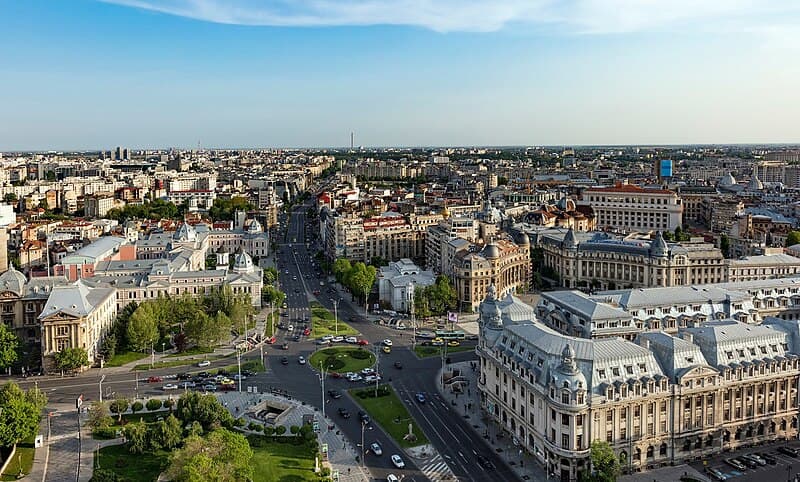
Bucharest is the capital of Romania and a city of contrasts unlike any other. At the turn of the 20th century it was known as Little Paris: French architects built palaces here, the Calea Victoriei boulevard was lined with cafés, and the city even has its own triumphal arch. Then came Ceaușescu, who demolished a fifth of the historic centre and built the Palace of the Parliament, the world's second-largest administrative building, along a boulevard meant to outdo the Champs-Élysées. In between, small Orthodox monasteries survived — engineers moved them on rails behind apartment blocks — along with Art Nouveau villas with gardens and the Lipscani Old Town with bars and restaurants in old merchants' houses. Bucharest isn't pretty at first glance, but it's lively, cheap and full of surprises — an evening in Lipscani, the cafés in the lanes around Dacia, and Herăstrău Park with its lake show why people keep coming back. An hour and a half out of the city, the Carpathians begin, with Peleș Castle and Bran, Dracula's Castle.

What to see

The places worth your time in Bucharest, and what to expect at each

Palace of the Parliament

Palace of the Parliament

Palatul Parlamentului

Izvor

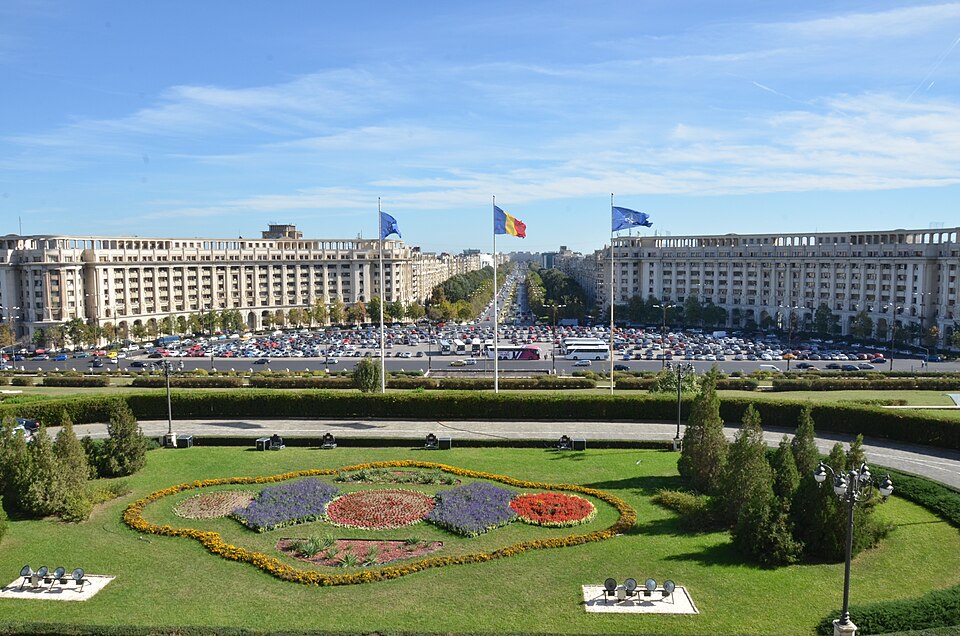
A monumental building with over 1,000 rooms, built from 1984 under Nicolae Ceaușescu as the House of the People. It's the world's second-largest administrative building after the Pentagon and the heaviest building on the planet. It houses the parliament and a museum of contemporary art.

Tip: You can only go inside on a guided tour, which must be booked 1–2 days ahead by phone or email, and you'll need a passport at the entrance. The standard tour lasts an hour and covers only around 5% of the building. The tour with the terrace offers a view over Bulevardul Unirii, which Ceaușescu built as an answer to the Champs-Élysées, deliberately a little longer. The entrance is on the side, on Izvor Street.

Admission:
around 50 lei
Time needed:
1–1.5 h
Romanian Athenaeum

Romanian Athenaeum

Ateneul Român

Piața Revoluției

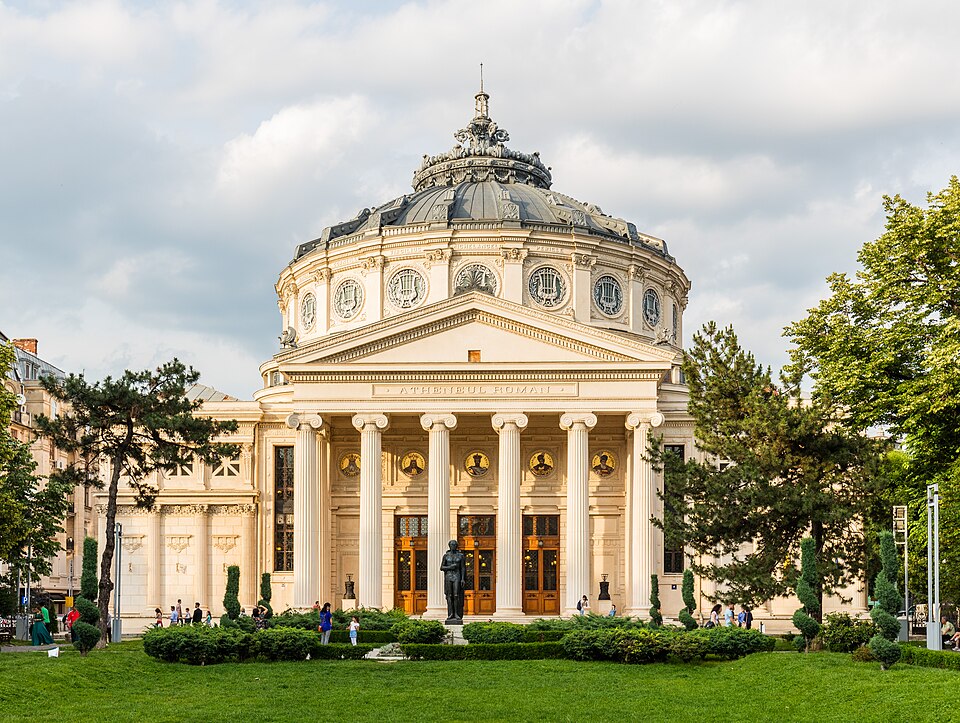
A concert hall from 1888 with a dome and Ionic columns, a symbol of Bucharest and home to the George Enescu Philharmonic. The main hall is covered by a 70-metre-long fresco depicting the history of the Romanian nation.

Tip: The best way to see the hall is to buy a ticket for a concert — in season, from September to June, there's a performance almost every evening and tickets are cheap. Tours run only at set times. Every two years in September, the George Enescu Festival, one of Europe's best classical music festivals, is held here. The building stands on Revolution Square, where Calea Victoriei begins.

Admission:
tour around 25 lei, concerts from 40 lei
Time needed:
1 h
Lipscani Old Town

Lipscani Old Town

Centrul Vechi

Old Town

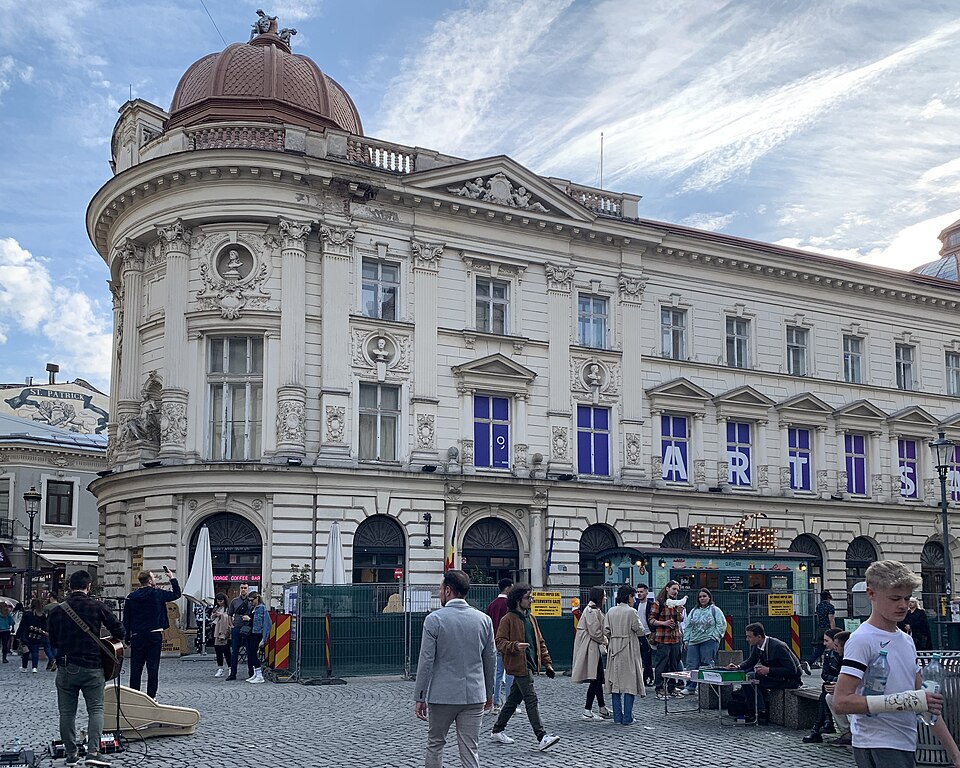
The historic merchants' quarter around Lipscani street, which survived Ceaușescu's demolitions and today is the main district for bars, restaurants and clubs. Among them are merchants' palaces, the 1808 Hanul lui Manuc caravanserai, and the ruins of the Curtea Veche princely court, once home to Vlad the Impaler.

Tip: By day the district is calm and pleasant for a stroll; by evening and at night it belongs to bars and loud music. The best restaurants for traditional food are Caru' cu Bere, in a neo-Gothic beer hall, and Hanul lui Manuc, in a caravanserai courtyard. Watch out for touts steering people into strip bars with inflated bills. The small, inexpensive Curtea Veche Museum, with palace ruins, is worth a quick look.

Admission:
free
Time needed:
2 h
Stavropoleos Monastery

Stavropoleos Monastery

Mănăstirea Stavropoleos

Old Town

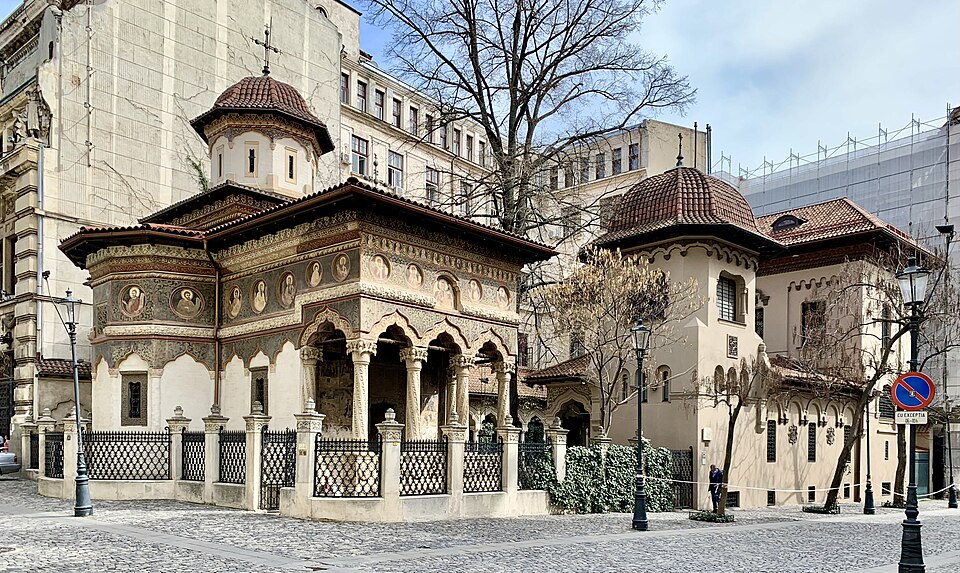
A small church from 1724 in the heart of the Old Town, one of the finest examples of Brâncoveanu style, with stone lace-carved columns, frescoes and carved wooden doors. Tombstones line the courtyard, and nuns sing Byzantine chants inside.

Tip: Admission is free — behave quietly, as this is a working monastery. Stone tombstones from demolished churches stand in the courtyard. The nuns sing at evening service around 6pm. The monastery has a library of Byzantine manuscripts and a collection of icons. It's right next to Caru' cu Bere, so the two are easy to combine.

Admission:
free
Time needed:
20 min
Cărturești Carusel Bookshop

Cărturești Carusel Bookshop

Cărturești Carusel

Old Town

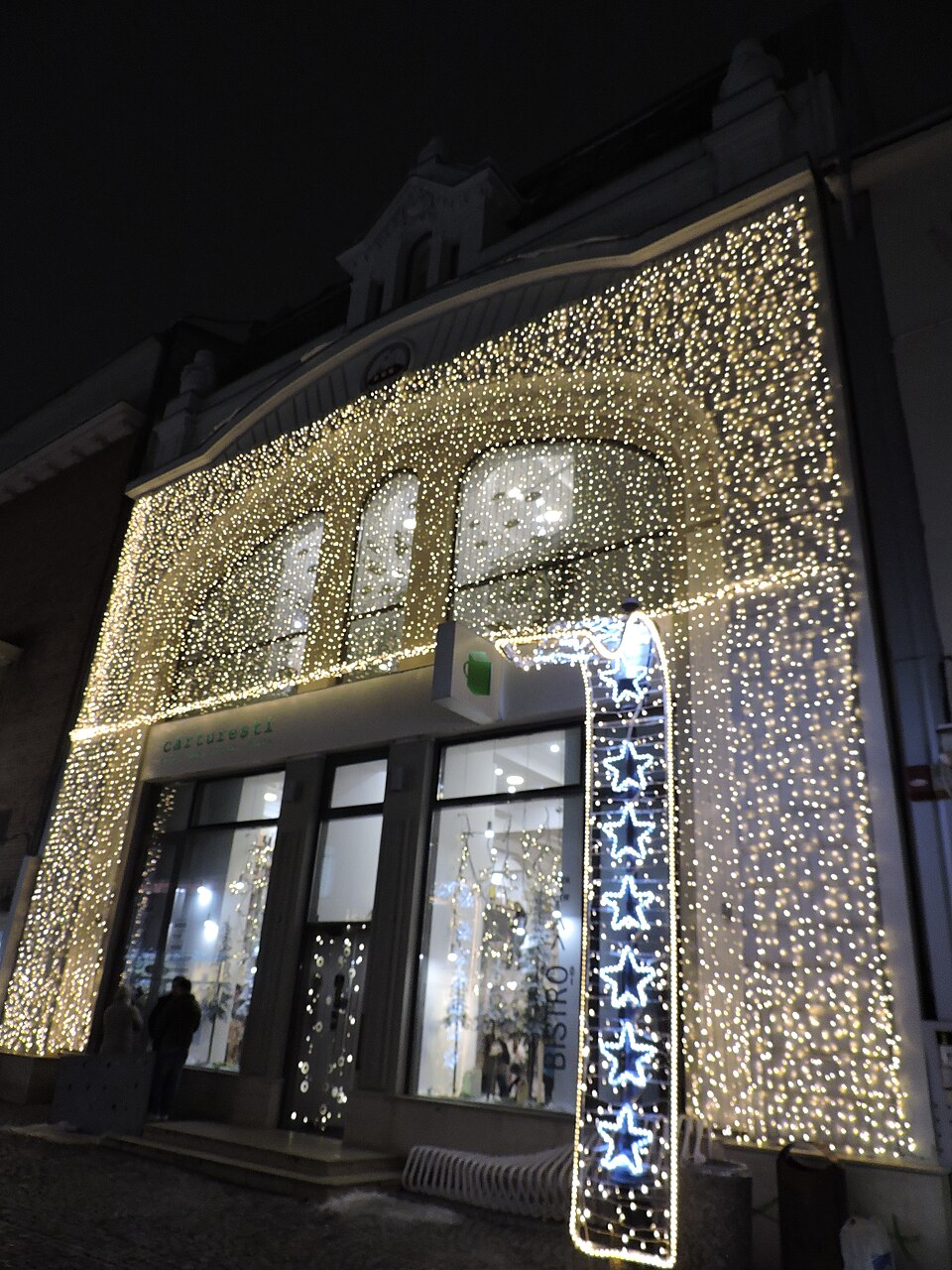
A bookshop in a restored 19th-century palace on Lipscani street, with white spiral balconies rising through six floors, a café at the top and a bistro in the basement. Since opening in 2015, it has become one of the most photographed bookshops in the world.

Tip: Admission is free, and the best light for photos is in the morning, when it's quiet. You'll find good Romanian souvenirs, design items and English-language books. Open daily until evening.

Admission:
free
Time needed:
30 min
Village Museum

Village Museum

Muzeul Satului

Herăstrău

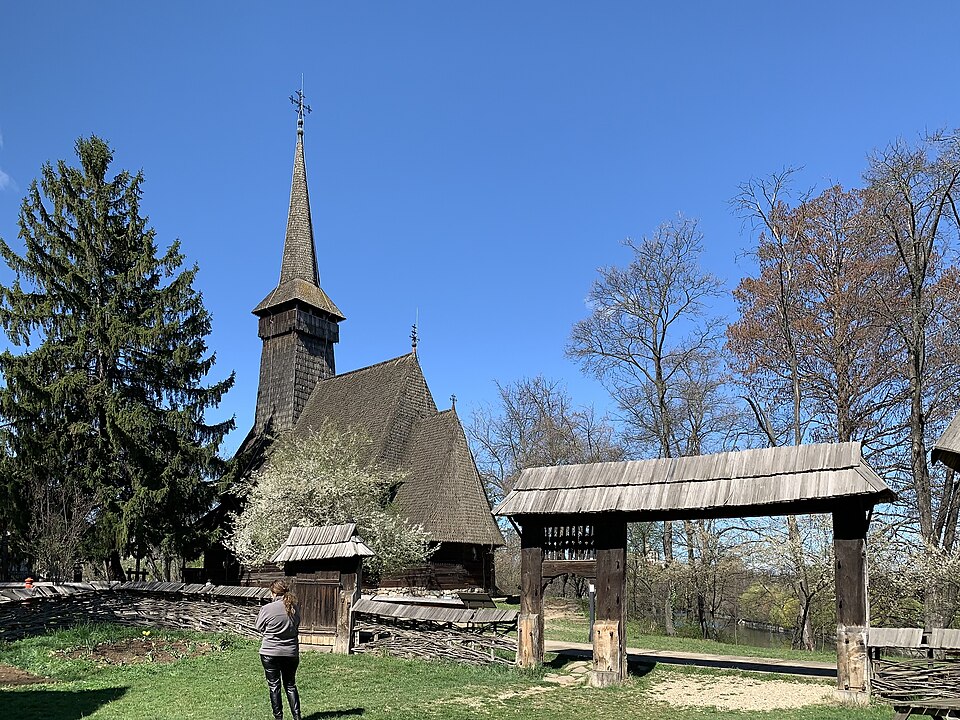
An open-air museum from 1936 in Herăstrău Park, with more than 300 traditional houses, churches, mills and farmsteads from every region of Romania. Wooden churches from Maramureș and houses from Transylvania have been relocated here complete with their furnishings.

Tip: Allow about two hours for a visit. The finest exhibits are the wooden churches from Maramureș and the reed-thatched houses from the Danube Delta. Weekends often bring craft markets and folk performances. The museum sits right on the shore of Lake Herăstrău, so it's easy to combine with a walk in the park and a visit to the Arch of Triumph.

Admission:
around 30 lei
Time needed:
2 h
Herăstrău Park and the Arch of Triumph

Herăstrău Park and the Arch of Triumph

Parcul Regele Mihai I

Herăstrău

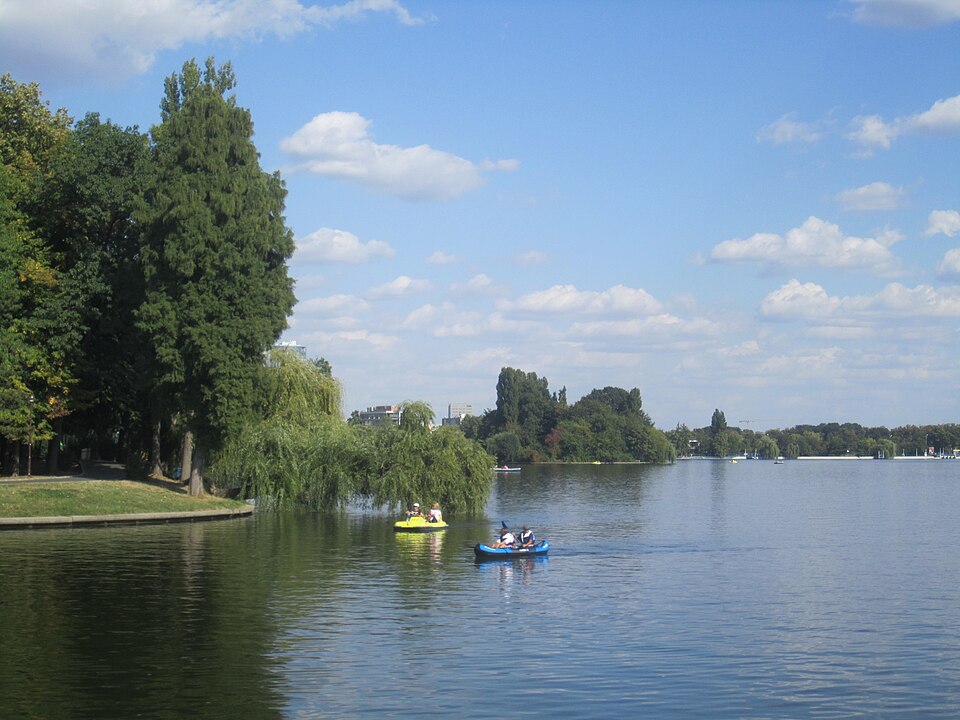
Bucharest's largest park, around Lake Herăstrău, with a promenade, restaurants, boat hire and a Japanese garden. At its southern edge stands the Arcul de Triumf, a triumphal arch from 1936 commemorating Romanian soldiers of the First World War.

Tip: In summer you can hire rowing boats on the lake, and the shore has terrace restaurants and clubs. The Arch of Triumph is only open to climb on public holidays. The park's official name honours King Michael, but locals still call it Herăstrău. Kiseleff Boulevard, lined with villas and embassies, runs alongside it.

Admission:
free
Time needed:
1.5–2 h
Calea Victoriei and Revolution Square

Calea Victoriei and Revolution Square

Calea Victoriei

Centre

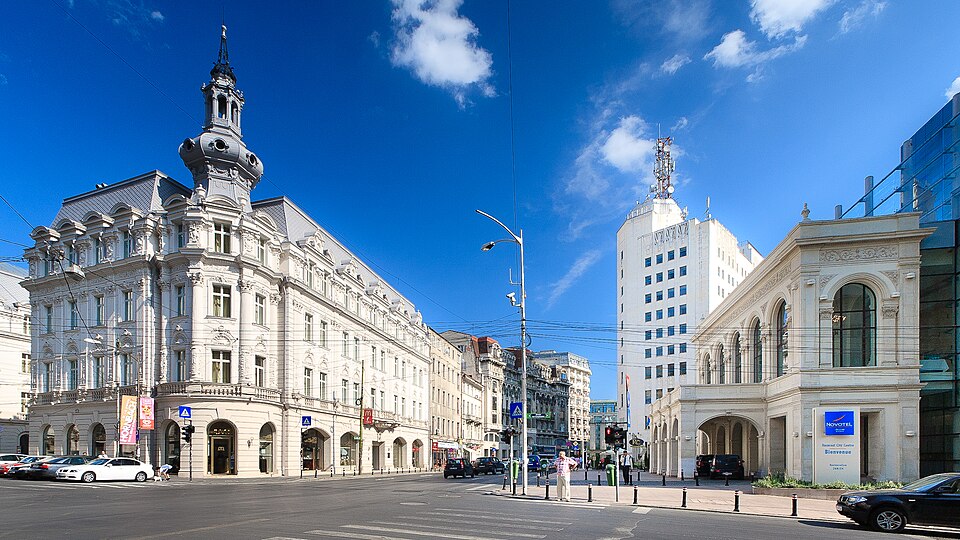
Bucharest's oldest and most elegant avenue, dating from the late 17th century, lined with palaces, churches, cafés and museums. On Revolution Square stands the former Central Committee building, from whose balcony Ceaușescu gave his final speech on 21 December 1989, and the Rebirth Memorial.

Tip: Walk the whole avenue from Victoriei Square to the Dâmbovița river in about an hour and a half. Along the way are the National Museum of Art in the former royal palace, the Athenaeum, the domed CEC Palace, and cafés in the Casa Capșa building. The balcony from which Ceaușescu fled by helicopter is visible from the square. The red-brick Kretzulescu Church stands directly opposite.

Admission:
free
Time needed:
1.5 h
Museum of the Romanian Peasant

Museum of the Romanian Peasant

Muzeul Național al Țăranului Român

Victoriei

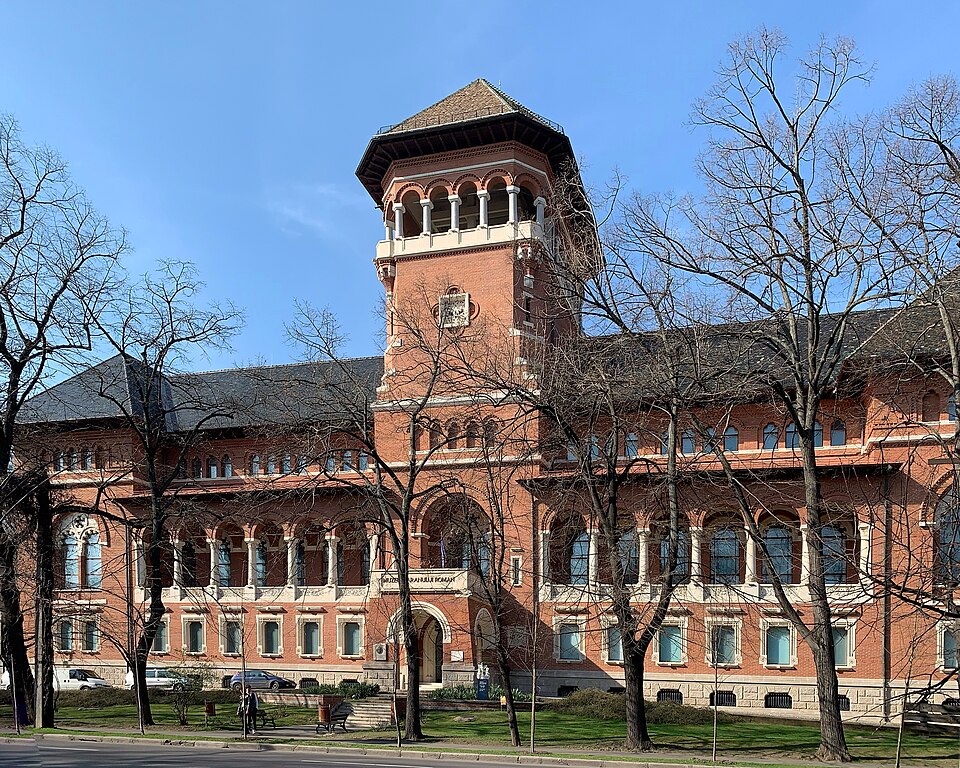
A folk culture museum that won the European Museum of the Year award in 1996 for its original displays — glass icons, folk costumes, ceramics and a wooden church in the courtyard, presented as art installations with hand-written labels.

Tip: The underground hall with its exhibition on communism is the most powerful part and one few visitors know about. In the courtyard is a wooden church from Maramureș, and on Saturdays there's often a market selling folk crafts and food straight from farmers. The museum shop sells the best handmade souvenirs in the city. Closed on Mondays.

Admission:
around 20 lei
Time needed:
1.5 h

Photos: Palace of the Parliament — European People's Party (CC BY 2.0) · Romanian Athenaeum — Diego Delso (CC BY-SA 4.0) · Lipscani Old Town — Chainwit. (CC BY 4.0) · Stavropoleos Monastery — Neoclassicism Enthusiast (Public domain) · Cărturești Carusel Bookshop — Dimitris Kamaras from Athens, Greece (CC BY 2.0) · Village Museum — Chainwit. (CC BY-SA 4.0) · Herăstrău Park and the Arch of Triumph — Crislia (CC BY-SA 4.0) · Calea Victoriei and Revolution Square — Mihai Petre (CC BY-SA 3.0 ro) · Museum of the Romanian Peasant — Chainwit. (CC BY-SA 4.0)

Where to stay

Areas and districts, matched to the kind of trip you are taking

Old Town and Universitate

Best for: nightlife, walkable location

Hotels and apartments in the Old Town and around Universitate Square, within walking distance of most sights. It gets noisy at night because of the bars, so choose a hotel on the edge of the district for a quiet sleep. Universitate and Piața Unirii metro stations connect to the rest of the city.

Calea Victoriei and Piața Romană

Best for: elegance, cafés

Elegant hotels and restaurants along the main avenue and around Piața Romană. Close to the Athenaeum, museums and cafés. Quieter than the Old Town, a 15-minute walk away. Best for a first visit.

Dorobanți and Primăverii

Best for: luxury, quiet

Villa districts in the north with embassies, greenery and the priciest restaurants and cafés. Close to Herăstrău Park and the Village Museum. 20 minutes to the centre by metro or taxi.

Around Gara de Nord

Best for: budget, transport

Cheap hotels and hostels around the main train station, served by the airport train. Convenient for getting around, but the area near the station is less pleasant at night. 10 minutes to the centre by metro.

Getting around

From the airport

Bucharest has direct flights from many European cities, on both low-cost carriers and the national airline TAROM, with journey times of under 2 hours from nearby hubs. Romania has been fully part of the Schengen Area since 2025, and EU citizens can travel with just an ID card. The main airport, Henri Coandă in Otopeni, is 17 kilometres north of the centre. Trains run from Gara de Nord to Brașov and Sinaia, with night trains to Budapest and Vienna.

Henri Coandă (OTP) · 17 km

  • Train to Gara de Nord· 20 min· from 5 lei
  • Express bus 100 to Piața Unirii· 40–60 min· from 3 lei
  • Bolt / Uber· 30–45 min· 60 lei

Around town

Central Bucharest is spread out, but the Old Town, Calea Victoriei and the parks are all walkable. The metro has five lines and is the fastest way to get around; tickets are paid by card at the turnstile. STB buses, trams and trolleybuses run everywhere, with tickets bought via app or by tapping a card. Taxis via Bolt or Uber are cheap and safe. Only take a street taxi if the price is displayed on the door, and never an unofficial car near the airport or station. Traffic jams are bad, so take the metro at rush hour.

MetroFive lines, pay by card at the turnstile. · 5 lei
STB bus and tramContactless or via the 24pay app. · 3 lei
Bolt / UberCheap and safe. · 12 lei
Day ticketUnlimited rides on buses, trams and the metro. · 12 lei

Useful apps: Bolt, Uber, Moovit, 24pay, Google Maps

When to go

The best times are late spring, from May to June, and autumn, from September to October, with temperatures of 20–25°C. Summer is hot, around 30°C and occasionally over 35°C, and the city empties out as locals head to the Black Sea. Winter is cold with snow and frost, but there's a Christmas market on Constituției Square in December. Spring is lovely, with flowering trees in the parks.

Best time

May–June, September–October

What to avoid

January–February, due to freezing temperatures

MonthJanFebMarAprMayJunJulAugSepOctNovDec
Day2°5°12°18°24°28°30°30°25°18°10°4°
Night-5°-3°1°6°11°15°17°16°12°6°2°-3°
Rainy days666788655567

Food & drink

Romanian cuisine is hearty, rustic and meat-heavy, with influences from Turkey, Hungary and the Balkans. Tangy ciorbă soups, sarmale and mămăligă are served at traditional restaurants in the Old Town, with atmosphere and live music. But Bucharest also has an excellent scene of modern bistros, cafés and specialty roasters. Mici and beer are enjoyed in outdoor gardens. Wine from the Dealu Mare and Cotnari regions is good quality and cheap, and the Romanian fetească neagră variety is the best red. Prices are lower than in most Western European capitals.

What to try

Sarmale

Sour cabbage leaves stuffed with minced pork and rice, slow-cooked for hours with smoked meat and served with soured cream and mămăligă. The national dish, a fixture at every wedding.

Mămăligă

Thick cornmeal porridge, Romania's answer to polenta. Served as a side, with cheese and cream, or topped with a fried egg.

Mici

Grilled rolls of minced beef, mutton and pork with garlic and soda water, eaten with mustard and beer. Mici stalls are everywhere people gather.

Ciorbă

A sour soup soured with borș ferment or lemon — the best known are ciorbă de burtă, a tripe soup with cream and garlic, and ciorbă de perișoare with meatballs.

Papanași

Fried doughnuts made from cottage cheese, with a hole and a ball on top, topped with soured cream and blueberry jam. Servings come in twos — one is plenty for two people.

Țuică and pălincă

Plum brandy — țuică distilled once, around 30%, pălincă distilled twice and stronger. It's offered as a welcome drink, and turning down the first shot is considered rude.

Covrigi

Pretzels sprinkled with salt or poppy seeds, baked at stalls across the city and sold warm for a few lei. Bucharest's on-the-go breakfast.

What it costs

Covrigi

2–4 lei

Coffee

10–18 lei

Lunch at a restaurant

40–70 lei

Dinner at Caru' cu Bere

80–150 lei

Beer at a bar

12–20 lei

Metro ticket

5 lei

Palace of the Parliament tour

around 50 lei

Night at a 3-star hotel for two

€60–100

Indicative prices that change over time — treat them as a guide, not a price list.

Practical information

SocketsCEuroplug, two round pinsFSchuko
Voltage230V / 50Hz
Tap waterTap water is treated, bottled is common — Tap water in major cities is drinkable and monitored, but plumbing in older buildings can be rusty, so most Romanians buy bottled water or use a filter. Romania has plenty of mineral springs, and local mineral waters like Borsec or Dorna cost around 3 lei in shops. Restaurants don't routinely bring free tap water — you order 'apă plată' (still) or 'minerală' (sparkling).
TippingIn restaurants, 10% is customary; tips aren't added to the card payment but left in cash on the table or stated directly when paying. In bars and cafés, amounts are rounded up. App-based taxi drivers get nothing extra. Cards are accepted almost everywhere, and the Romanian leu remains the currency — euros are accepted only occasionally and at a poor rate.
Driving on theright
SafetyRomania is safe, and violent crime doesn't affect tourists. In Bucharest, watch for pickpockets on the metro and at Gara de Nord station, and for unofficial taxis near the airport and station that charge several times the going rate — use Bolt or Uber instead. Stray dogs, once notorious, have largely disappeared from the centre. Pedestrians should take care: drivers aren't always quick to stop at crossings. The emergency number is 112.
Opening hoursShops open from 9 or 10am to 8 or 9pm, and shopping centres stay open until 10pm, including Sundays. Museums close on Mondays, some on Tuesdays too, and ticket offices close an hour before closing time. Restaurants serve late, with dinner until 11pm. Around Orthodox Easter and Christmas, more places are closed than you might expect.
Customs & etiquetteRomanians are hospitable and talkative and enjoy discussing history — just avoid comparisons with Hungarians or Roma, both sensitive topics. In Orthodox churches, dress modestly; women may wear a headscarf, and services shouldn't be disrupted by photography. Shoes come off when entering a home. Romanian is a Romance language, so Italian or French can help, and young people generally speak good English.
A few local wordsHello — Bună ziuaThank you — MulțumescPlease — Vă rogHow much does this cost? — Cât costă?The bill, please — Nota, vă rogCheers — Noroc

How to plan your days

1 day

Bucharest in a day

  1. 1Morning: guided tour of the Palace of the Parliament.
  2. 2Old Town, Stavropoleos and Cărturești Carusel.
  3. 3Lunch at Caru' cu Bere.
  4. 4Afternoon: Calea Victoriei and the Athenaeum.
  5. 5Evening: a bar in the Old Town.

2 days

Two days in Bucharest

  1. 1Day 1: Palace of the Parliament, Old Town, Stavropoleos.
  2. 2Day 1 evening: Hanul lui Manuc.
  3. 3Day 2: Museum of the Romanian Peasant and the Village Museum.
  4. 4Day 2 afternoon: Herăstrău Park and the Arch of Triumph.
  5. 5Day 2 evening: a concert at the Athenaeum.

3 days

Three days with the Carpathians

  1. 1Day 1: Palace of the Parliament and the Old Town.
  2. 2Day 2: Peleș Castle in Sinaia and Brașov.
  3. 3Day 2 evening: return by train.
  4. 4Day 3: Village Museum, Herăstrău and Calea Victoriei.

Day trips

Peleș Castle and Sinaia

125 km · 2 h by train

A neo-Renaissance castle built for King Carol I in 1883 in the Carpathian forests, with lavish interiors, an armoury and Romania's first electric lighting. Below it lies the mountain resort of Sinaia, with a monastery and a cable car up to Bucegi. The train from Gara de Nord takes 2 hours. The castle is closed on Mondays.

Bran and Brașov

170 km · 2.5 h by train

Bran Castle, perched on a rocky outcrop, is marketed as Dracula's Castle, though historians say Vlad the Impaler never actually lived there; it's beautiful regardless and has an exhibition on Queen Marie. Brașov is a Saxon town with an Old Town, the Black Church and a sign on Mount Tâmpa. As a day trip from Bucharest it's demanding — better to stay overnight in Brașov.

Snagov Monastery

40 km · 45 min by car

A monastery on an island in Lake Snagov north of Bucharest, where legend has it Vlad the Impaler is buried. A footbridge or a small boat gets you to the island. Villas, restaurants and beaches ring the lake, drawing Bucharest residents for weekend trips.

Frequently asked questions

What currency is used in Romania?+

Romanian lei; euros aren't accepted. Cards work almost everywhere and ATMs are common. Avoid exchange offices at the airport and in the Old Town with poor rates — withdraw from a bank ATM and decline any currency conversion offered.

How many days do you need for Bucharest?+

Two days for the Palace of the Parliament, the Old Town, museums and parks. A third day for a trip to Sinaia and Peleș Castle. Bucharest is often combined with Transylvania — Brașov, Sibiu and Sighișoara — for a week.

Is Bucharest safe?+

Yes, violent crime is low. Watch for pickpockets on the metro and at the train station, dishonest taxi drivers near the airport and station, and touts steering people into bars in the Old Town. Book taxis through Bolt or Uber.

How do you get into the Palace of the Parliament?+

Only on a guided tour, which must be booked in advance by phone or email, usually 1–2 days ahead. You'll need a passport or ID card at the entrance. The entrance is on Izvor Street, not the main boulevard.

Is Bucharest expensive?+

No, it's inexpensive by Western European standards. Dinner for two at a restaurant costs 100–200 lei, a beer 15 lei, a metro ticket 5 lei. Hotels are affordable and there are good apartments in the centre. The priciest restaurants are in Dorobanți.

How do you get from the airport to the centre?+

By train to Gara de Nord in 20 minutes, or on express bus 100 to Piața Unirii in 40–60 minutes. A taxi via Bolt or Uber costs around 60 lei. Order an airport taxi from the touchscreen kiosk in the arrivals hall.

Is Dracula's Castle close to Bucharest?+

Bran Castle is 170 kilometres from Bucharest; the drive takes 2.5–3 hours. As a day trip it makes for a long day — it's better to combine it with Brașov and stay overnight. Vlad the Impaler is more closely associated with Târgoviște and the princely court in Bucharest.

When's the best time to visit Bucharest?+

In spring and autumn, when the weather is pleasantly warm. September brings the George Enescu Festival and the start of the philharmonic season. Summer is hot and the city empties out in August. Winter has Christmas markets, but it's freezing.

Visa Requirements

Check the latest visa requirements for entering this country. Some nationalities may need to apply for a visa or e-visa before travel.

Check visa requirements

Language

Romanian

Currency

RON

Timezone

GMT+2

Dial Code

+40

Population

19.1M

Area

238,397 km²

Voltage

230V / 50Hz

Driving Side

Right

Top Hotels in Bucharest

Live prices from 500+ properties

Loading hotels...

Planning a trip to Bucharest?

Compare hundreds of hotels, find the best price, and book with free cancellation on TravelManiac.