Hotels in Budva

The liveliest resort on the Montenegrin coast

Budva

LanguageMontenegrin
CurrencyEUR
TimezoneEurope/Podgorica
Temperature10-30 °C
Dial Code+382
Population620K
Area13,812 km²
SocketsType C / Type F
Tap waterDrinkable

Discover Budva

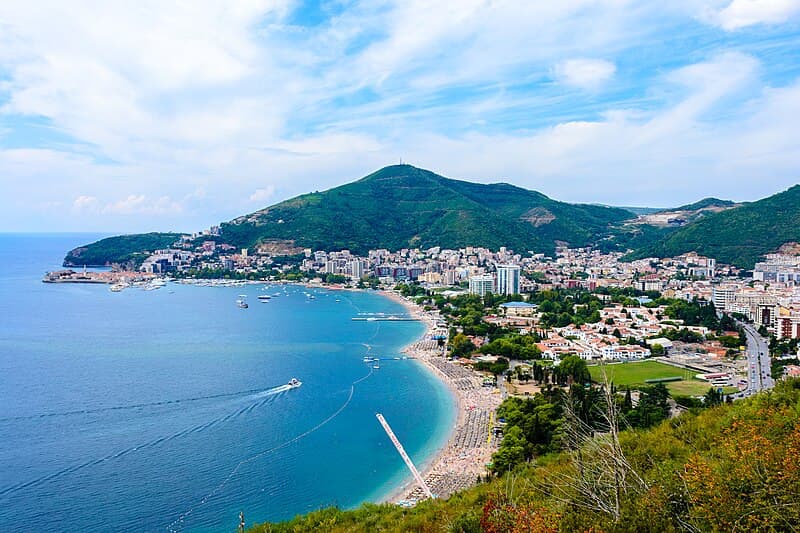
Budva is the oldest settled place on the Adriatic — the Greeks founded it 2,500 years ago, and since then it's been ruled by Romans, Venetians, Austrians and Yugoslavia. What survives from all that is a walled old town of under a hectare, levelled by an earthquake in 1979 and rebuilt stone by stone from the original plans. Around it has grown a resort now known for its nightlife and sometimes called Montenegro's Ibiza: 20,000 residents, several times that in August. The Budva riviera runs 35 kilometres and has more than 30 beaches, from small pebble coves beneath cliffs to the 2-kilometre Slovenska plaža right in the centre. 7 kilometres to the south lies Sveti Stefan, an islet with a stone village turned luxury hotel, Montenegro's most photographed spot. Kotor is half an hour away, and Tivat airport 20 minutes.

What to see

The places worth your time in Budva, and what to expect at each

Old Town

Old Town

Stari grad

Stari grad

The fortified core on a rocky headland, ringed by 15th-century Venetian walls, with 3 churches standing side by side on one square and narrow lanes of white stone. The 1979 earthquake destroyed nearly all of it, and it was rebuilt from original records.

Tip: Admission is free and the gates are open around the clock. The lanes are packed at midday and in the evening, and the stone gets scorching hot by day — the best time is before 9am, when the old town is empty and the white stone glows in the morning light. Restaurants inside charge the highest prices in Budva.

Admission:
free
Time needed:
2 h
Citadel

Citadel

Stari grad

A fortress on the southern tip of the old town above the sea, built in its current form by the Austrians in the 19th century on older Venetian foundations. Inside is a library of nautical charts and ship models, a terrace above the walls, and views of Sveti Nikola island and the whole riviera.

Tip: Admission is a few euros, and the main reason to go up is the terrace — it's the only spot in Budva with a view of both the old town and the sea at once. Go an hour before sunset; it stays open until after dark, unlike most sights nearby.

Admission:
from €3.50
Time needed:
1 h
Mogren Beach

Mogren Beach

1 km west

2 pebble coves beneath a cliff face west of the old town, linked by a passage cut through the rock. The water is noticeably cleaner than in the central part of the riviera, since the coves face away from town and open sea currents pass through.

Tip: The only way in is a narrow clifftop path from the Hotel Avala, a 10-minute walk — there's no road access. Before 10am the beach is nearly empty; after 11am there's nowhere left to lie down. Water shoes help, as the pebbles are coarse and sharp.

Admission:
entry free, sunbeds from €15
Time needed:
half a day
Slovenska plaža

Slovenska plaža

centre

Budva's main beach, nearly 2 kilometres long, starting right behind the old town and running the length of the centre. It's a mix of fine pebbles and sand with a shallow entry, plus beach bars, water slides and water sports rentals along its full length.

Tip: The shallowest section, best for small children, is at the western end near the old town; the quietest is the eastern end towards Bečići. Front-row sunbeds cost twice as much as those in the third row, despite the difference being just 15 metres. A promenade runs along the beach all the way to Bečići, a 30-minute walk.

Admission:
sunbeds from €10
Time needed:
full day
Sveti Stefan

Sveti Stefan

7 km south

An islet linked to the mainland by a narrow sandy spit, home to a 15th-century fishing village turned luxury hotel resort in the 1950s. Guests once included Sophia Loren and Sylvester Stallone, and it's Montenegro's most photographed sight.

Tip: You can no longer reach the island itself since the resort closed to the public — it's private land with a barrier, and photos are taken from the viewpoint on the road above, where there's a car park. The beach on the north side of the spit is public; the south side belongs to the resort. The best light is late afternoon, when the sun lights up the façades.

Admission:
viewpoint free, beach from €20
Time needed:
half a day
Bečići

Bečići

2 km east

A neighbouring resort 2 kilometres east with a nearly 2-kilometre pebble beach that won a prize in Paris in 1936 for Europe's most beautiful beach. It's wider and less crowded than Slovenska plaža, and its hotel complexes are newer.

Tip: A coastal promenade runs from Budva through a tunnel in the rock and takes about 25 minutes to walk — more pleasant than the bus. Bečići suits families better than Budva, since there's no club scene and evenings are calm, though for nightlife you still need to head into Budva.

Admission:
sunbeds from €10
Time needed:
full day
Sveti Nikola Island

Sveti Nikola Island

1 km offshore

An uninhabited island a kilometre off Budva, known locally as the Hawaiian Islands. It has 3 pebble beaches on its landward side, a pine forest, ridge trails and a herd of wild-living deer someone once released there.

Tip: Water taxis leave from the beach by the old town once they're full, and a return ticket costs around €5 — confirm the time of the last return boat, usually around 6pm, with the boatman. The island has only 2 restaurants, and shade is limited to the forest, so bring water and food.

Admission:
boat from €5 return
Time needed:
full day
Petrovac

Petrovac

17 km south

A quieter town 17 kilometres south with a reddish pebble beach between two wooded headlands, a Venetian fort above the harbour and a pine-lined promenade. Two islets lie offshore, one with a 13th-century chapel.

Tip: The best beach isn't the main one, but Lučice, a 10-minute walk south behind the headland — smaller, ringed by pines and shadier, and usually less crowded. Petrovac is the best choice for anyone who finds Budva too loud; buses run every half hour and take half an hour.

Admission:
free
Time needed:
full day
Jaz Beach

Jaz Beach

3 km north-west

A 2-kilometre pebble beach in an open bay 3 kilometres north-west, separated from town by a hill. It's the widest on the riviera, and its eastern section is free of sunbeds — this is exactly where the Rolling Stones and Madonna once played concerts for tens of thousands of people.

Tip: There's no pleasant way here by bus or on foot; go by car or taxi for around €10. Parking is right by the beach and paid. Beyond the campsite at the eastern end, an unofficial naturist section follows. The water here is cooler, as the bay is open to the sea.

Admission:
free section, no charge
Time needed:
full day

Photos: Old Town — Richard Mortel from Riyadh, Saudi Arabia (CC BY 2.0) · Citadel — Falk2 (CC BY-SA 4.0) · Mogren Beach — Milica buha (CC BY-SA 4.0) · Slovenska plaža — Falk2 (CC BY-SA 4.0) · Sveti Stefan — Marcin Konsek (CC BY-SA 4.0) · Bečići — Liilia Moroz (CC0) · Sveti Nikola Island — BuhaM (CC BY-SA 4.0) · Petrovac — Wikiarius (CC BY-SA 4.0) · Jaz Beach — Bratislav Tabaš (Public domain)

Where to stay

Areas and districts, matched to the kind of trip you are taking

Old Town and surroundings

Best for: a first stay and atmosphere

The walled core and the blocks around it, closest to both Mogren and Slovenska plaža, with no need to go anywhere in the evening. Accommodation inside the walls is in small apartments, pricey and noisy at night — bars beneath the windows play until 3am. Cars can't reach it.

Slovenska plaža and the centre

Best for: half-board hotels and beach on your doorstep

The strip between the promenade and the main road, with the highest concentration of hotels and apartments in Budva. The beach is a few dozen metres away, and it's a 10-minute walk to the old town along the promenade. It's the busiest area for package tourists. It's loud and most expensive in August, but out of peak season offers the best value for a location this close to everything.

Bečići and Rafailovići

Best for: families and quieter evenings

Neighbouring resorts 2 kilometres east with a wider beach and newer hotels, linked to Budva by the coastal promenade through the tunnel. Evenings are calm and there's no club scene, which suits families with children. Rafailovići has a string of fish restaurants right over the water and is cheaper than Budva.

Sveti Stefan and Pržno

Best for: peace, views and longer stays

The southern stretch of the riviera, 7 kilometres from Budva, with the loveliest coastal views and the small fishing village of Pržno with its little bay. Accommodation is in villas and apartments on the hillside, with a 20-minute bus ride to central Budva. Without a car it feels a little cut off, but prices are lower than in the centre and it's quiet.

Getting around

From the airport

The nearest airport is Tivat, 20 kilometres north through a tunnel, with seasonal charter flights from various European cities. The second option is Podgorica, 65 kilometres away, with year-round service and connecting flights via hubs such as Belgrade or Vienna. A third option, used by many travellers, is Dubrovnik in Croatia, 100 kilometres to the north — connections from there can be cheaper, but the route crosses a border where queues in season can run to 2 hours. Driving from Central Europe takes the better part of a day or more, via Austria, Croatia and Bosnia.

Tivat (TIV) · 20 km

  • Taxi to Budva· 30 min· €25
  • Hotel transfer· 30 min· €10 per person
  • Bus with a change in Tivat· 1 h· €5

Podgorica (TGD) · 65 km

  • Taxi or transfer· 1 h 15 min· €60
  • Bus from Podgorica to Budva· 1 h 30 min· €7

Dubrovnik (DBV) · 100 km

  • Cross-border transfer· 2–4 h depending on the queue· €90
  • Bus via Herceg Novi· 3–5 h· €20

Around town

Budva is easy to explore on foot: 20 minutes from the old town to the end of Slovenska plaža, 25 minutes to Bečići along the coastal promenade through the tunnel. Local buses run along the riviera roughly every half hour, and a ride to Sveti Stefan or Petrovac costs a few euros, paid in cash to the driver. Long-distance buses from the bus station connect Budva with Kotor, Podgorica and Dubrovnik and are cheap. A car is useful for trips inland, but parking in Budva is difficult in August and paid in the centre. Ride-hailing apps don't work here; taxis are booked by phone, and it's best to agree the price in advance.

Local buses along the rivieraRoutes to Bečići, Sveti Stefan, Petrovac and Kotor, roughly every half hour. Paid in cash to the driver. · €1.50–3
Coastal promenadeRuns from Budva to Bečići along the sea through a tunnel in the rock, a 25-minute walk. The most pleasant link between the two resorts. · free
TaxiBooked by phone or picked up at a rank. Agree the price beforehand — the meter only runs with the larger companies. · €5 per ride in Budva
Water taxiFrom the beach by the old town to Sveti Nikola island and along the coast. Departs once the boat is full. · €5 return
Car hireNeeded for Ostrog, Skadar Lake and Durmitor. Roads are narrow and hairpin bends slow going — allow double the time your navigation app suggests. · €30 per day in season

Useful apps: Google Maps, BusTicket4.me, Maps.me, Vozfront

When to go

The season runs from June to September, with July and August crowded and most expensive — Budva's population multiplies several times over in August and accommodation prices roughly double. The sea warms to a pleasant 22°C by the second half of June and stays warm until early October. The best combination is June and September: warm, full services and manageable prices. Autumn and winter are rainy on the coast — in November and December it rains around half the days, and most hotels and restaurants close. Inland is cooler year-round, and snow lies on Durmitor from November to April.

Best time

June and September

What to avoid

the second half of July and August, when it's crowded and most expensive

MonthJanFebMarAprMayJunJulAugSepOctNovDec
Day12°13°15°18°23°27°30°30°26°22°17°13°
Night5°5°7°10°14°18°21°21°18°14°10°7°
Rainy days1211111197447101313
Sea14°13°14°16°19°23°25°26°24°22°19°16°

Food & drink

The Montenegrin coast cooks like Dalmatia: grilled fish, mussels na buzaru, octopus under the peka lid, and njeguški pršut (prosciutto) from the mountains above the bay. Inland cuisine is heartier and meat-based, with kačamak and lamb. Restaurants in the old town and along the promenade are priced for the August peak; konobas a couple of streets up and in Rafailovići cook just as well for two-thirds of the price. Fish is charged by weight — always ask to see the piece and confirm the price per kilogram beforehand, or it's the most common unpleasant surprise on the bill.

What to try

Riba na žaru (grilled fish)

Grilled fish is charged by weight, not per portion. Always ask to see the piece and agree the price per kilogram first; wild-caught sea bass can cost twice as much as farmed.

Mušle na buzaru (mussels)

Mussels stewed in white wine, garlic and parsley, farmed right in the Bay of Kotor. Eaten by hand, with bread for mopping up the sauce; a portion is usually half a kilo and it's the cheapest seafood lunch in the country.

Njeguški pršut and cheese

Cured ham from the village of Njeguši below Mount Lovćen, dried by mountain and sea winds together, served with a hard cheese aged in olive oil. A standard cold starter; in Njeguši itself it's about half the coastal price.

Ćevapi

Grilled minced-meat rolls in flatbread with onion and kajmak. The cheapest filling lunch, and the only thing you can still get after midnight in a resort; a portion of 10 is enough for 1 adult.

Kačamak and cicvara

A mountain porridge of cornmeal, potatoes, cheese and kajmak, filling enough on its own for a whole meal. Made inland; on the coast you'll only find it at konobas that cook home-style.

Priganice

Fried balls of leavened dough served with honey, cheese or kajmak, served warm. Breakfast and dessert in one; bakeries charge a few euros for a large portion.

Vranac and Krstač

Vranac is a dark, full-bodied red wine from around Podgorica; Krstač is a dry white from the same area. The house version is poured from a demijohn and costs a fraction of a bottle.

Lozova rakija

A grape brandy, often poured on the house at the end of a meal in a konoba. The homemade version can run over 50% — 1 shot is enough, and none if you're driving.

What it costs

Coffee on the promenade

€2–3

Ćevapi with flatbread

€6–8

Lunch at a konoba

€12–18

Fish dinner

€30–45 per person

0.5 l beer

€3–4

Sunbed and umbrella

€10–20 for 2 sunbeds

Boat to Sveti Nikola

from €5 return

Night at a 3-star hotel

€60–120 for a double

Indicative prices that change over time — treat them as a guide, not a price list.

Practical information

SocketsCEuroplug, two round pinsFSchuko
Voltage230V / 50Hz
Tap waterTap water is drinkable — Tap water on the Montenegrin coast is safe to drink and comes from karst springs in the mountains above the bay. In peak season, though, pressure and quality can dip in some resorts as the system struggles to keep up with demand, and the water can taste hard. Bottled water costs around €0.50 for a litre and a half in supermarkets. Restaurants don't offer tap water.
TippingTips are given in cash and rounded up: to the nearest euro at a café, around 10% at a restaurant. Cards are accepted at hotels and larger restaurants, but smaller konobas, market stalls and beach bars want cash, and resort ATMs charge a fee. The currency is the euro, even though Montenegro isn't in the EU.
Driving on theright
SafetyMontenegro is a safe country, and crime barely affects tourists. The real risks are on the road: roads are narrow, signage on hairpin bends is poor and overtaking on blind corners is common — allow at least double the time your navigation app suggests for a drive. Beaches tend to be pebbly, and sea urchins are common in the shallows, so water shoes are worth having. The emergency number 112 works, and English gets you by.
Opening hoursIn season, from June to September, shops in the resorts open from 7am to 11pm, including Sundays, and beach bars run into the night. Out of season the coast shuts down: from November to March most restaurants and hotels are closed, and only supermarkets and a few places for locals stay open. Restaurants serve throughout the day, with the main dinner rush between 8 and 10pm.
Customs & etiquetteThe pace is slow, and rushing isn't the local style — service arrives when it arrives, and hurrying it won't help. Cover shoulders and knees when visiting churches and monasteries; women take a headscarf or wrap at Orthodox monasteries, usually available at the entrance. Swimwear isn't worn around town. Montenegro is sensitive about not being called Croatia or Serbia, and it's best not to be the one to raise the 2006 independence question. Coffee is drunk slowly, and an invitation 'for a coffee' is polite to accept.
A few local wordsHello — Dobar danThank you — HvalaPlease — MolimThe bill, please — Račun, molimCheers — ŽivjeliGoodbye — Doviđenja

How to plan your days

1 day

A day in Budva

  1. 1Before 9am, into the old town while the lanes are still empty.
  2. 2The Citadel and views of Sveti Nikola island.
  3. 3Lunch at a konoba outside the walls, where prices are lower.
  4. 4Afternoon: Mogren Beach, reached along the clifftop path.
  5. 5Sunset from the walls and dinner on the promenade.

2 days

Two days on the riviera

  1. 1Day 1 as above.
  2. 2Morning: boat to Sveti Nikola island, with food and water.
  3. 3Afternoon: bus to the viewpoint above Sveti Stefan.
  4. 4Swim from the public section of the spit below the island.
  5. 5Dinner in Rafailovići on the water, then back to Budva along the promenade.

3 days

Three days with Kotor

  1. 1The first two days as above.
  2. 2Morning: bus to Kotor, reaching St John's Fortress before noon.
  3. 3Lunch in Kotor's old town.
  4. 4Afternoon: boat from Perast to the islet of Our Lady of the Rocks.
  5. 5With a car and a fourth day, head to Lovćen or Ostrog Monastery.

Day trips

Kotor

22 km · 40 min by bus

A medieval town at the head of the Bay of Kotor, a UNESCO World Heritage Site, with walls climbing 400 metres up the slope to St John's Fortress. St Tryphon's Cathedral dates from 1166 and predates most Venetian buildings on the coast. Buses run from Budva every half hour, through a tunnel under the mountain.

Ostrog Monastery

90 km · 2 h by car

An Orthodox monastery carved into a sheer cliff face 900 metres above the valley, Montenegro's most visited pilgrimage site. The upper section is built directly into the rock, and pilgrims walk the final few hundred metres barefoot. Thousands arrive daily, so it's best to go early in the morning; shoulders and knees must be covered to enter the shrine.

Skadar Lake

60 km · 1 h 15 min by car

The largest lake in the Balkans, a third of it in Albania, home to pelican colonies and waterlily fields that cover the whole surface in May and June. Boats leave from Virpazar for multi-hour cruises to island monasteries. Above the lake, the Pavlova Strana viewpoint overlooks a meander of the Rijeka Crnojevića river.

Frequently asked questions

Are the beaches in Budva sandy?+

Mostly not — they're pebble, sometimes mixed with coarse sand. The finest is the western end of Slovenska plaža right in the centre, which has a shallow entry and suits small children. Mogren and Jaz are coarser pebble, and water shoes are worth having there. There's no truly sandy beach on the Budva riviera.

Is Budva noisy?+

In the centre and old town in July and August, yes — bars play music until 3am, and Budva has a reputation as Montenegro's liveliest resort. For a quieter stay, base yourself in Bečići, Rafailovići or near Sveti Stefan, 20 minutes from the centre, where it's quiet at night.

Can I get onto Sveti Stefan island?+

No — the island itself is a private resort with a barrier, closed to the public. Photos are taken from the viewpoint on the road above it, where there's a car park. The beach on the north side of the sandy spit is public and free; the south side belongs to the resort and costs around €20.

What currency is used in Montenegro?+

The euro, even though Montenegro is neither in the EU nor the eurozone — it adopted it unilaterally. Hotels and larger restaurants take cards, but konobas (taverns), market stalls, beach bars and buses want cash, and ATMs charge a fee. Bring cash with you.

Do I need a car in Budva?+

Not for a seaside stay — buses run along the riviera every half hour, and to Kotor too. A car is worth it for trips inland, to Ostrog, Skadar Lake and Durmitor, which public transport reaches poorly. But in August, parking in Budva is difficult and the centre is paid parking.

How far is the airport, and which one should I choose?+

Tivat is 20 kilometres away and the closest — the transfer takes half an hour and costs around €25. Podgorica is 65 kilometres away, with year-round flights. Dubrovnik is 100 kilometres away and cheaper, but the route crosses a border where queues in season can run to 2 hours.

When is the sea warm enough in Budva?+

From the second half of June, when it reaches around 23°C, until early October. It's warmest in August, around 26°C. In May the sea is 19°C, too cool for a long swim, even though the air is already over 20°C.

How many days are enough for Budva?+

The town itself can be covered in half a day. For a seaside stay with day trips, Budva makes a good base for a week: Kotor is 40 minutes by bus, Sveti Stefan 20 minutes, Petrovac half an hour, and with a car Ostrog and Skadar Lake are also within reach.

Visa Requirements

Check the latest visa requirements for entering this country. Some nationalities may need to apply for a visa or e-visa before travel.

Check visa requirements

Language

Montenegrin

Currency

EUR

Timezone

Europe/Podgorica

Dial Code

+382

Population

620K

Area

13,812 km²

Voltage

230V / 50Hz

Driving Side

Right

Top Hotels in Budva

Live prices from 500+ properties

Loading hotels...

More destinations in Montenegro

Planning a trip to Budva?

Compare hundreds of hotels, find the best price, and book with free cancellation on TravelManiac.