The Paris of South America: tango in San Telmo, parrilla steaks and dinner at midnight
Buenos Aires
LanguageEnglish
CurrencyARS
TimezoneGMT-3
Temperature10-30 °C
Dial Code+54
Population46.7M
Area2,780,400 km²
SocketsType C / Type I
Tap waterDrinkable
Discover Buenos Aires
Buenos Aires is the capital of Argentina, and with 15 million people in its metropolitan area, one of the largest cities in South America. At the turn of the twentieth century Argentina was among the wealthiest countries in the world, and its capital built boulevards, palaces and an opera house to match, modelled on Paris and Madrid — hence the nickname "the Paris of South America", even though it was settled mainly by Italians and Spaniards. Tango was born in the dockside neighbourhoods among immigrants, and it's still danced at milongas across the city until dawn today. Porteños, as the city's residents are known, keep late hours: dining after ten, heading to clubs after midnight, and gathering on Sundays at the markets of San Telmo and at backyard asados. The city is huge, but its main visitor districts sit close together — the historic centre around Plaza de Mayo, elegant Recoleta with its cemetery where Evita Perón is buried, colourful La Boca and leafy Palermo with its cafés and parks. Argentina has been through a period of high inflation in recent years and peso prices shift quickly, but for visitors paying in euros or dollars, Buenos Aires remains affordable, and the food and wine are outstanding.
What to see
The places worth your time in Buenos Aires, and what to expect at each
Plaza de Mayo and Casa Rosada
Monserrat / Centro
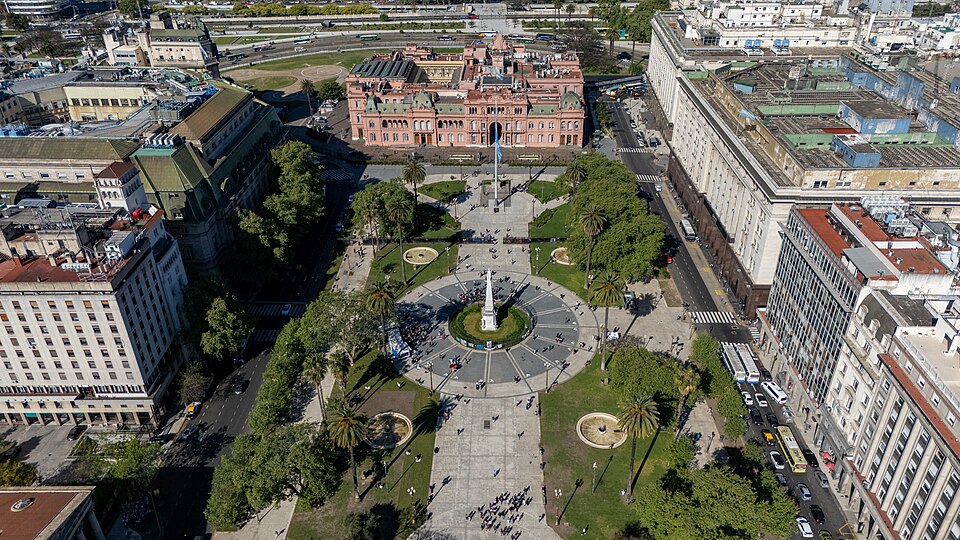
The city's main square, where the Argentine Revolution began in 1810, ringed by the pink presidential palace Casa Rosada, the colonial town hall Cabildo, and the metropolitan cathedral, once led by the archbishop who became Pope Francis. Evita Perón addressed crowds from the Casa Rosada balcony. The Mothers of Plaza de Mayo still march here every Thursday afternoon.
Tip: Casa Rosada offers free guided visits at weekends; online booking is required and slots sell out a week ahead. In the cathedral, grenadier guards in ceremonial uniform watch over General San Martín's mausoleum, with a changing of the guard every 2-hours. The Mothers' march on Thursday at half past three is quiet and moving; photograph from a respectful distance.
Admission:
free
Time needed:
1.5 h
Recoleta Cemetery
Cementerio de la Recoleta
Recoleta
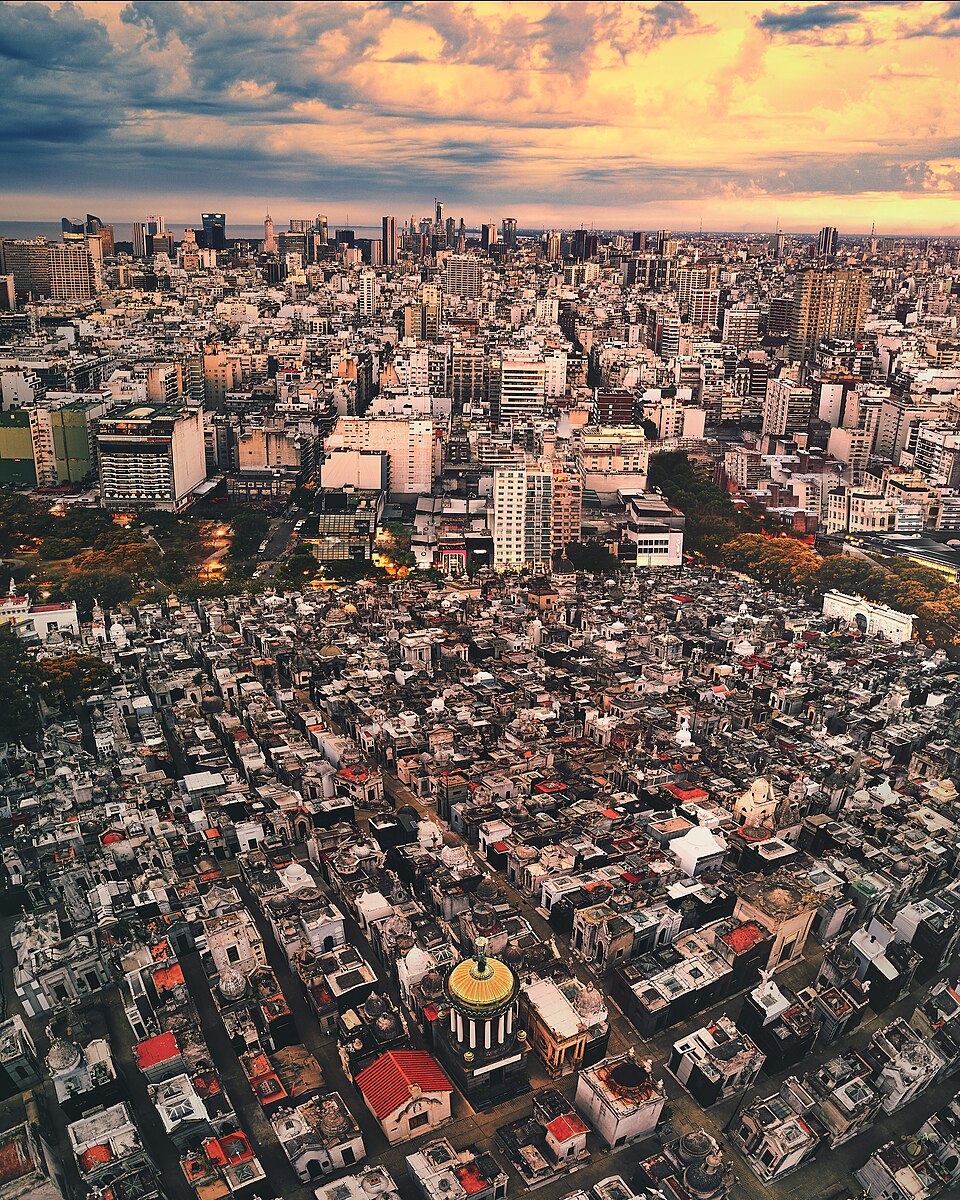
A cemetery dating from 1822, with more than 4,500 tombs of Argentine presidents, generals, scientists and wealthy families, built as small temples and palaces of marble and bronze. The avenues between them form a city of the dead with squares of their own. The most visited is the modest Duarte family tomb, resting place of Evita Perón.
Tip: Foreigners pay admission, locals don't; pick up a map at the entrance, since without one, finding Evita's grave can take half an hour — or just follow the largest crowd. Look out for the tomb of Rufina Cambaceres, a girl legend says was buried alive. Right next door stands the white Nuestra Señora del Pilar basilica, and there's a crafts market at Plaza Francia at weekends.
Admission:
around US$15 for foreigners
Time needed:
1.5 h
Caminito, La Boca
La Boca
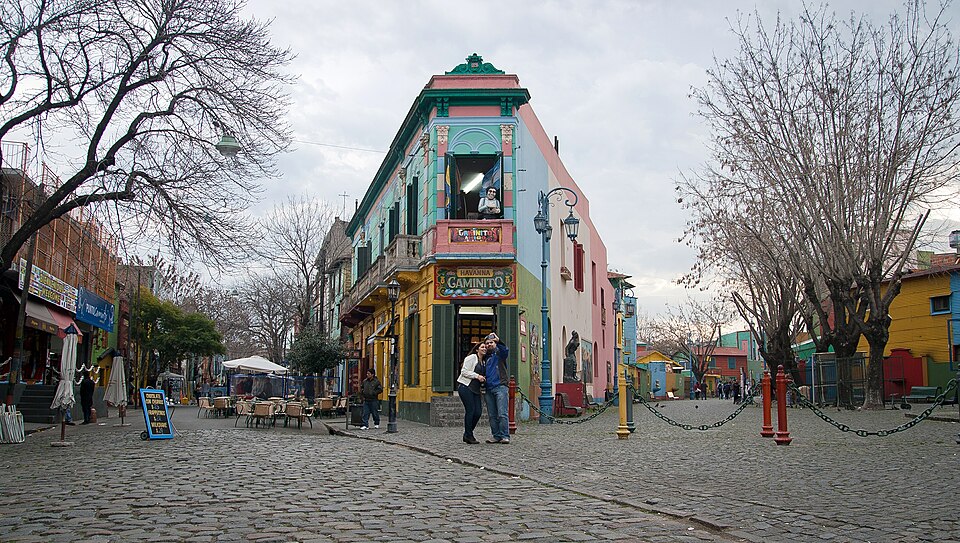
A short street in the old dockside district of La Boca, where Italian immigrants built houses from corrugated iron and painted them with leftover shipyard paint. Today Caminito is a colourful tourist backdrop with tango dancers, painters and restaurants. Nearby stands La Bombonera, the stadium of Boca Juniors, where Maradona started out.
Tip: La Boca is safe only along Caminito and around the stadium, by day and between ten and five; a few blocks further, or after dark, it isn't. Don't walk here from San Telmo — take a taxi or bus. Photos with tango dancers cost money; snap one without asking first and they'll expect payment. The Bombonera stadium museum is worth visiting even if you're not a football fan.
Admission:
free
Time needed:
1.5 h
San Telmo and its Sunday market
San Telmo
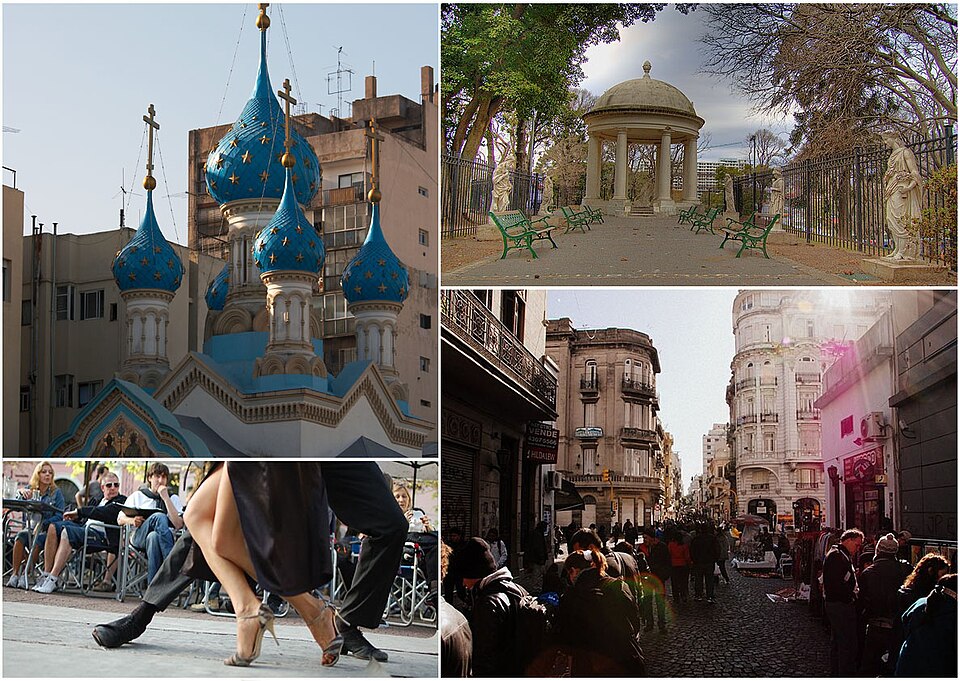
The city's oldest neighbourhood, with cobbled streets, colonial houses with courtyards, antique shops and cafés. Every Sunday the main street, Defensa, turns into the kilometre-long Feria de San Telmo, with antiques, crafts, musicians and tango dancers. The heart of the neighbourhood is Plaza Dorrego and the covered Mercado de San Telmo, built in 1897.
Tip: Arrive before midday for the Sunday market — by afternoon, Calle Defensa is impassable. A public milonga runs in the evening at Plaza Dorrego, and anyone can join in. Inside the Mercado de San Telmo, stalls sell choripán and coffee; among the vegetables and antiques you can eat more cheaply here than on the tourist terraces.
Admission:
free
Time needed:
half a day
Teatro Colón
San Nicolás
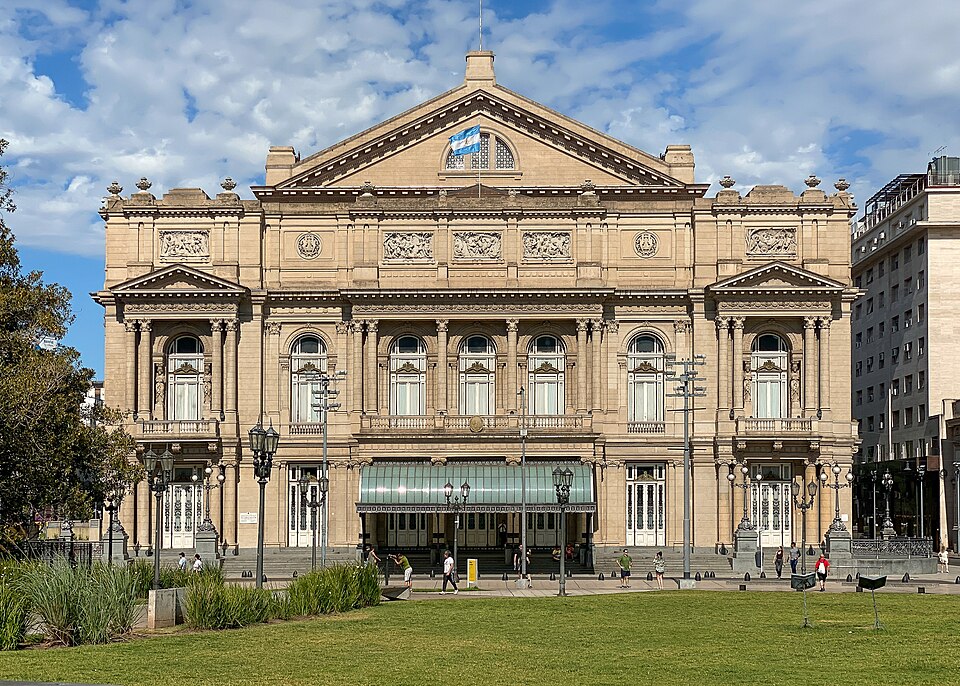
An opera house opened in 1908, whose acoustics rank among the world's three best, alongside Vienna and Amsterdam. The horseshoe-shaped hall seats 2,500 across seven tiers of boxes, beneath a dome painted by Raúl Soldi. Caruso, Callas and Pavarotti have all sung here, and Toscanini has conducted.
Tip: A guided tour costs foreigners more than a ticket to some performances: the cheapest seats are standing room in the upper Paraíso gallery, for just a few dollars. Programme and ticket sales are on the official website. After the tour, walk down Avenida 9 de Julio to the Obelisk, the widest avenue in the world with sixteen lanes.
Admission:
tour around US$30
Time needed:
1 h
El Ateneo Grand Splendid
Barrio Norte / Recoleta
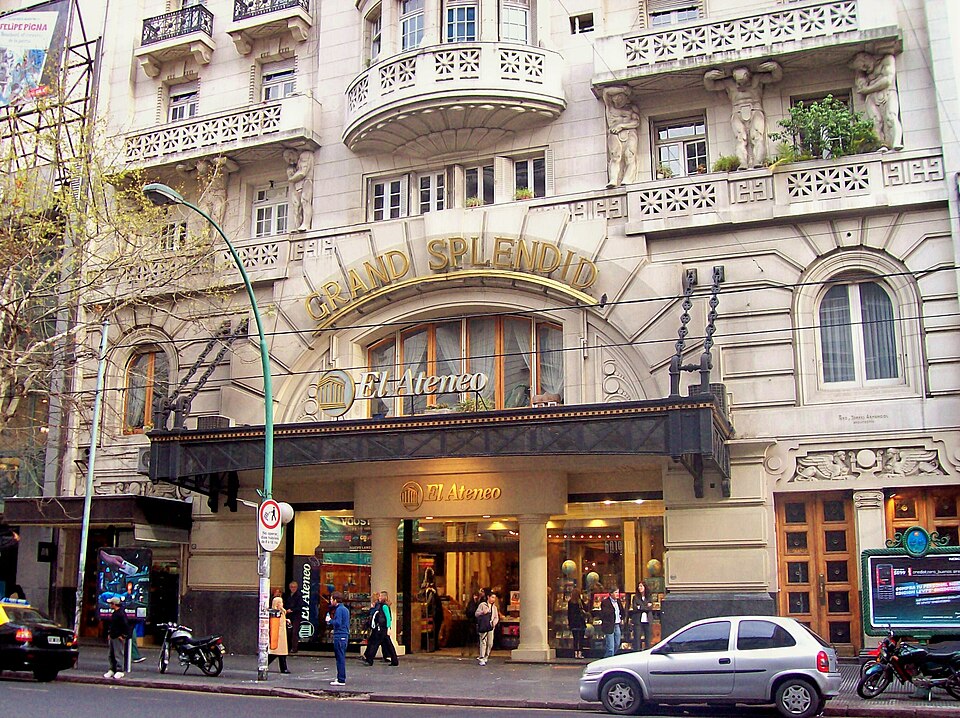
A bookshop inside a former theatre from 1919, with its original boxes, a painted ceiling and a velvet curtain still in place. Books line the shelves on the ground floor and in the galleries, and a café occupies the former stage. The Guardian ranked it among the world's most beautiful bookshops, and it draws three thousand visitors a day.
Tip: You can sit with a coffee and a book on the former stage, though service is slow and tables fill up fast. The best photo is from the top balcony. The bookshop sits on Avenida Santa Fe in Barrio Norte, on the way between Recoleta and Palermo, and stays open late into the evening.
Admission:
free
Time needed:
30–45 min
MALBA
Museo de Arte Latinoamericano de Buenos Aires
Palermo Chico
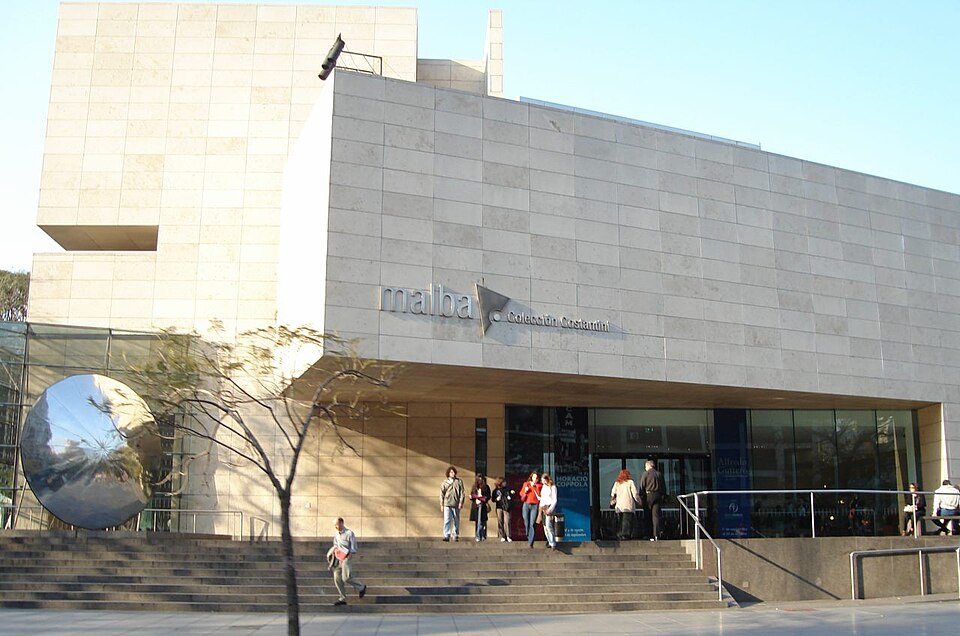
A museum of twentieth-century Latin American art in a modern building in Palermo. The collection includes works by Frida Kahlo, Diego Rivera and Fernando Botero, and above all Tarsila do Amaral's painting Abaporu, the most valuable work of Brazilian art. Compact and well laid out, and the best museum on the continent for getting your bearings in Latin American art.
Tip: Wednesdays often have discounted admission. 90-minutes is enough for the whole collection. The museum sits at the edge of Palermo's parks, so it pairs well with a walk to the Floralis Genérica statue — a giant metal flower that opens each morning and closes at night — and on to the Rosedal rose garden.
Admission:
around US$10–15
Time needed:
1.5–2 h
Puerto Madero
Puerto Madero
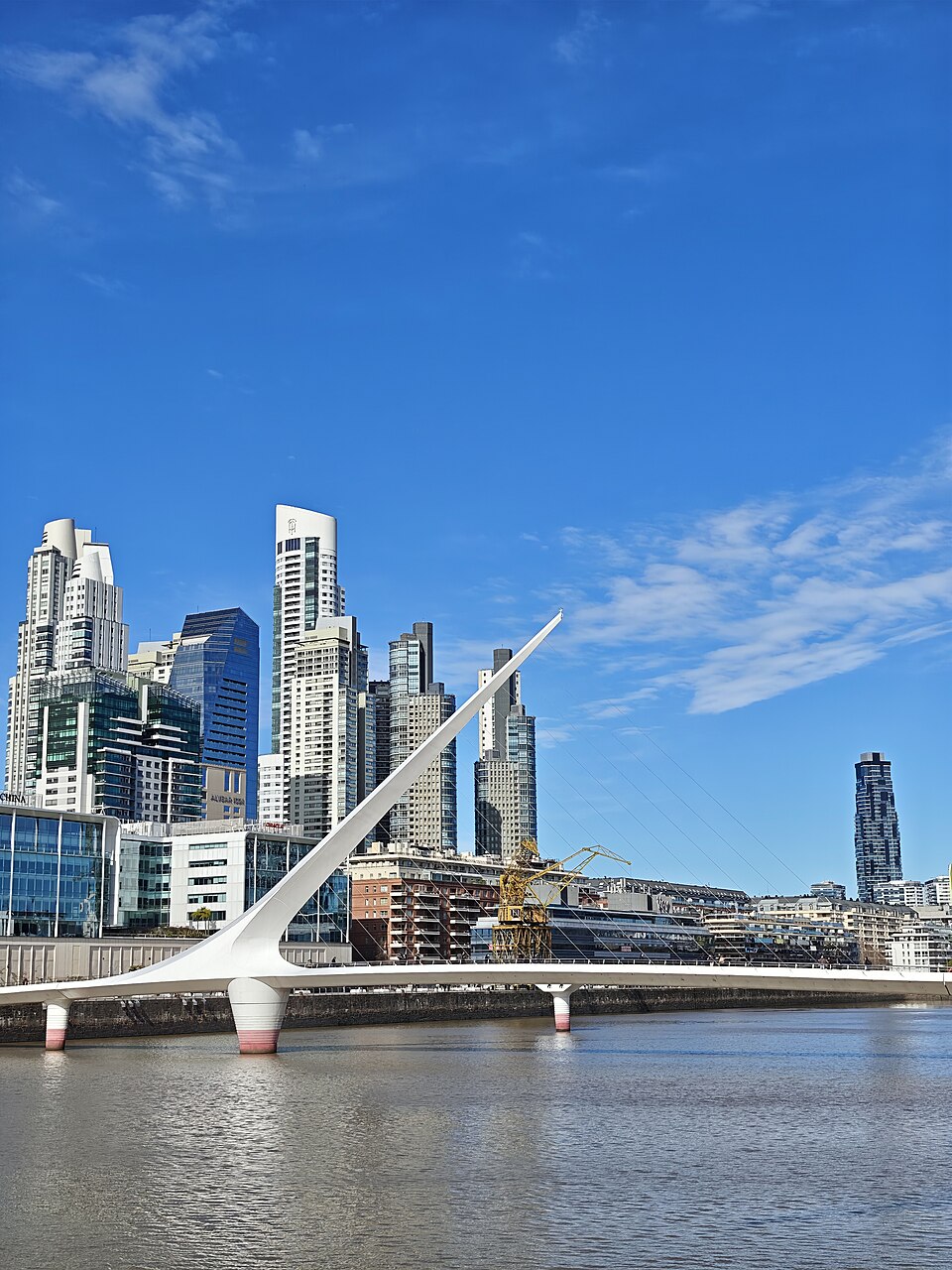
Former late-nineteenth-century port docks, redeveloped in the 1990s into a neighbourhood of restaurants in brick warehouses, skyscrapers and a waterfront promenade. Santiago Calatrava's white swing bridge, Puente de la Mujer, spans the dock. The museum ship Fragata Sarmiento is moored in the harbour, and the Costanera Sur nature reserve stretches out beyond the neighbourhood.
Tip: The waterfront restaurants are expensive and touristy. Beyond Puerto Madero, though, lies the Costanera Sur nature reserve, a former landfill reclaimed by nature — wetlands full of birds where you can walk down to the banks of the vast Río de la Plata. Admission is free, and it's closed on Mondays. Stalls selling grilled choripán line the edge of the reserve.
Admission:
free
Time needed:
2 h
Bosques de Palermo (Palermo Woods)
Bosques de Palermo
Palermo
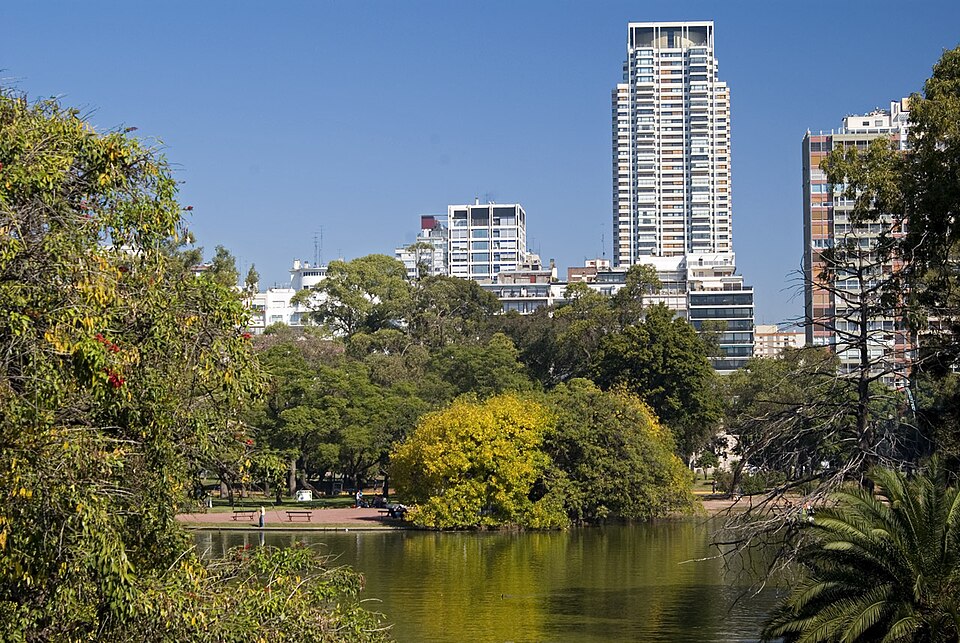
The Tres de Febrero park covers four hundred hectares, with lakes, tree-lined avenues and the Rosedal rose garden, home to eighteen thousand rose bushes in bloom. The park also includes a Japanese garden, a planetarium and a botanical garden. At weekends porteños come here to run, skate, drink maté on the grass and hire pedal boats on the lake.
Tip: The Rosedal is at its best in November and March. On weekday mornings the park is quiet, but weekends get busy. The loop around the lakes is closed to cars and suits a bike from the Ecobici city bike network. After your walk, head to Palermo Soho for lunch, 10-minutes on foot.
Areas and districts, matched to the kind of trip you are taking
Palermo
Best for: first-time visitors, food and nightlife
The city's largest neighbourhood, split into Palermo Soho, with boutiques, cafés and bars in low-rise houses, and Palermo Hollywood, with restaurants and clubs. Lots of trees, parks around every corner, and the most hostels and boutique hotels. It's a quarter of an hour from the centre on metro line D, but you'll end up staying out here in the evening anyway.
Recoleta
Best for: elegance and calm
The most elegant neighbourhood, with French-style palatial buildings, the cemetery, museums and expensive shops along Avenida Alvear. Safe, calm and ideal for older couples and families. The nightlife is quieter here, and it's a 10-minute taxi ride to Palermo.
San Telmo
Best for: tango and history
The old colonial town, with cobbled streets, antique shops and milongas. Stay in boutique hotels in historic houses with courtyards. The atmosphere is wonderful in the evening, but keep an eye out for pickpockets on the side streets and take a taxi back at night.
Centro and Puerto Madero
Best for: sightseeing and business trips
Around Plaza de Mayo and Calle Florida you'll find hotels of every category, landmarks and theatres along Avenida Corrientes. Busy by day, empty in the evening and at weekends. Puerto Madero, right next door, has modern luxury waterfront hotels and is the safest part of the centre.
Direct flights to Buenos Aires from Europe run from Madrid, Barcelona, Rome, Paris, Frankfurt, Amsterdam and London; the flight takes 12–13 hours, and travellers from further afield typically connect through one of these hubs. Most Western passport holders don't need a visa for short tourist stays. The international Ezeiza Airport lies 35 kilometres south-west of the centre, and the journey takes 40 minutes to an hour and a half depending on traffic. The simplest option is a taxi or "remis" booked at the official desk in the arrivals hall for a fixed price; Uber and Cabify are cheaper. Tienda León buses run to a terminal in Puerto Madero. Domestic flights and flights to Uruguay use Aeroparque Jorge Newbery, right on the riverbank in Palermo, 10-minutes from the centre. Uruguay can also be reached by ferry from Puerto Madero.
Ministro Pistarini (Ezeiza) (EZE) · 35 km
Remis or taxi from the official desk· 45–90 min· around US$35
Uber or Cabify· 45–90 min· around US$25
Tienda León bus to Puerto Madero· 60–90 min· around US$15
Aeroparque Jorge Newbery (AEP) · 7 km
Taxi or Uber to Palermo· 10–20 min· around US$6
City bus· 30–40 min· under US$1
Around town
Buenos Aires has six metro lines, known as the Subte, the oldest in Latin America, dating from 1913, plus a dense network of buses called "colectivos" that run around the clock. Both require a SUBE card, bought and topped up at a kiosk or metro station; on the metro and some buses, contactless bank cards also work. A ride costs around 50 cents to a dollar, and prices shift often with inflation. For visitors, the most useful lines are D, running from the centre through Recoleta to Palermo, and C, between Retiro and Constitución stations. Black-and-yellow taxis are cheap, but Cabify or Uber are safer and more straightforward. The city is flat and very walkable, and Palermo and Puerto Madero have cycle paths and free-to-use Ecobici shared bikes.
Subte (metro)Six lines cover the centre, Recoleta and Palermo. Runs roughly from 6am to 11:30pm; pay with a SUBE card or contactless bank card. · around US$0.70
Colectivo busesOver a hundred routes, running all night. Tell the driver your destination as you board and tap your SUBE card. The BA Cómo Llego app finds routes. · around US$0.50
Taxi, Cabify and UberThe apps are cheap and safe, with a ride across the centre costing a few dollars. Only hail black-and-yellow taxis on the street in tourist neighbourhoods, and never accept a driver's offer at the airport outside the official desk. · from US$3
Ecobici bikesShared bikes at hundreds of stations, available to tourists who register in the app. The cycle-path network is best in Palermo, Puerto Madero and along Avenida del Libertador. · from US$1
Train to TigreThe Mitre line from Retiro station takes an hour to Tigre. It's nicer to change at Mitre station onto the scenic Tren de la Costa, which runs along the river. · under US$1
Useful apps: Cabify, Uber, BA Cómo Llego, Google Maps, PedidosYa
When to go
The best time is spring from September to November and autumn from March to May, when temperatures sit around 20°C and the city is in bloom — in October and November, thousands of jacaranda trees turn the streets purple. Summer, from December to February, is hot and humid, with temperatures over 30°C, and in January porteños head off to the beaches of Mar del Plata and Uruguay, leaving the city half-empty and some restaurants closed. Winter, from June to August, is mild, around 15°C by day and 5°C at night, with no snow, just damp and grey — good for tango, theatre and museums, and prices are lower. Watch out for major football fixtures and public strikes, which can bring transport to a halt.
Best time
October and November for the jacarandas, March to May
What to avoid
January, for the heat and closed businesses
Month
Jan
Feb
Mar
Apr
May
Jun
Jul
Aug
Sep
Oct
Nov
Dec
Day
30°
29°
26°
23°
19°
16°
15°
17°
19°
22°
26°
29°
Night
20°
19°
17°
14°
10°
7°
7°
8°
10°
13°
16°
18°
Rainy days
9
8
9
9
7
7
7
7
7
9
9
9
Food & drink
Argentina is a land of beef, and a parrilla, a restaurant with a wood-fired grill, is where you'll understand why. Argentinians eat over 50 kilograms of beef per person a year, and a steak here costs a fraction of the European price. Beyond the meat, Buenos Aires is also an Italian city: thick-crust pizza, pasta and ice-cream parlours with dozens of flavours on every corner. The day starts with coffee and medialunas, lunch runs from one to three, the afternoon calls for maté and something sweet, and dinner doesn't start until after ten. Many good restaurants close on Mondays and Tuesdays. Wine is cheap and excellent, especially malbec from Mendoza and white torrontés from Salta; order it by the bottle in restaurants, since a glass is poor value. The bitter fernet-and-cola is also a local favourite.
What to try
Asado
Grilling over charcoal or wood, with the meat cooked slowly and away from direct heat. It starts with chorizo sausage and blood sausage (morcilla), followed by short ribs (tira de asado), flank steak (vacío) and finally steak. A grill restaurant is called a parrilla.
Bife de chorizo
A thick sirloin steak, Argentina's answer to the sirloin — not a sausage. The beef comes from pasture-raised cattle and tastes richer than its European counterpart, with portions often reaching 400 grams. Order it "a punto" (medium) unless you want a well-done sole delivered to your plate.
Empanadas
Baked or fried pastries filled with minced beef, olive and egg, or with chicken, ham and cheese, or sweetcorn. Every province has its own version, and the best come from Salta and Tucumán. Eaten by hand as a starter or a cheap lunch.
Provoleta
A disc of provolone cheese grilled until crisp outside and molten within, sprinkled with oregano and chilli. A classic parrilla starter, shared before the meat arrives.
Dulce de leche
Milk simmered with sugar into a thick caramel paste. It turns up in pancakes, in alfajor biscuits, in ice cream and on breakfast toast. The Havanna alfajor is a classic souvenir, though smaller bakeries make better ones.
Medialunas
Small sweet croissants glazed with syrup, served with café con leche — the Argentinian breakfast. Depending on the dough, they're either buttery ("de manteca") or savoury ("de grasa"), and cafés typically serve them three at a time.
Malbec
A red wine from a grape brought over from Cahors in France, which found its true home in the high-altitude vineyards of Mendoza. Full-bodied and fruity, it's an ideal match for beef. A bottle in a shop starts at just a few dollars, and even the cheapest are perfectly drinkable.
Maté
An infusion of yerba mate leaves, sipped through a metal straw from a hollowed gourd. Argentinians carry it everywhere with a thermos, to the park or the office. Cafés rarely serve it — you're most likely to try it if invited, or you can buy a set at the supermarket.
What it costs
Coffee and three medialunas
US$3–5
Empanada
US$1.50–2.50
Bife de chorizo at a parrilla
US$15–25
Bottle of malbec at a restaurant
US$12–25
Dinner at a restaurant
US$30–50 per person
Metro ride
around US$0.70
Tango show with dinner
US$60–120
Night in a 3-star hotel for two
US$80–150
Indicative prices that change over time — treat them as a guide, not a price list.
Practical information
SocketsCEuroplug, two round pinsIAustralian, angled pins
Voltage220V / 50Hz
Tap waterTap water is drinkable — Tap water in Buenos Aires is treated and safe to drink, and locals drink it routinely, though it has a strong chlorine taste. Restaurants don't bring it automatically free of charge — you ask for "agua de la canilla", and if a place won't provide it, they'll offer bottled water at two or 3-times the price of a coffee. A soda siphon on the table is an Argentinian tradition, drunk alongside wine.
TippingIn restaurants, ten per cent is standard, given in cash and separately, as card terminals often can't add it. The bill may include a "cubierto" or "servicio de mesa" charge for bread and cutlery — this isn't a tip and is paid on top. Taxi fares are rounded up, and small change is left in cafés. Because of inflation, peso prices shift from month to month, so amounts here are given in dollars. Foreign Visa and Mastercard cards get a rate close to the market one, so paying by card is worthwhile; changing dollars on the street with touts calling out "cambio" isn't worth it and risks counterfeit notes.
Driving on theright
SafetyBuenos Aires is fairly safe for a South American megacity, but pickpocketing and phone-snatching are common, especially on the metro, around Calle Florida in the centre, and in La Boca. Don't leave your phone on a café terrace table. A classic trick involves someone squirting mustard or fake bird droppings on you: a "helpful" stranger cleans you up while an accomplice picks your pockets. La Boca is safe only along the tourist stretch of Caminito during the day; a few blocks further, or after dark, it isn't. Take taxis via an app or a radio-taxi service, never hail one off the street. The emergency number is 911.
Opening hoursArgentina runs on a shifted schedule: shops open at ten and close at eight, lunch runs from one to three, and dining before nine marks you as a tourist — restaurants fill up around ten, and even later on Saturdays. Milongas start after eleven and run until dawn. Museums close on Mondays. On Sundays the centre is dead, with life shifting to the markets of San Telmo and the parks of Palermo.
Customs & etiquetteArgentinians greet each other with a kiss on the right cheek, even men who know each other. Conversation is fast and loud, and sharp political debate is a national sport — don't wade in with an opinion on the Falklands (Malvinas), a sensitive subject for Argentinians. Maté is drunk from a single gourd with one shared metal straw, passed around a circle; when you've had enough, say "gracias", or it keeps getting refilled. Football is a religion, and your answer to Boca or River should be well considered.
A few local wordsHello — Buen díaThank you — GraciasHow much does this cost? — ¿Cuánto sale?The bill, please — La cuenta, por favorSteak medium — Bife a puntoGreat — Bárbaro / Genial
How to plan your days
1 day
1-day in Buenos Aires
1Morning at Plaza de Mayo, the cathedral and Casa Rosada.
2Along Avenida de Mayo to Café Tortoni for coffee.
3Teatro Colón and the Obelisk.
4Afternoon at Recoleta Cemetery.
5Dinner at a parrilla in Palermo after 10pm.
2 days
2-days in Buenos Aires
1Day one, as above.
2Day two morning: San Telmo, or the Defensa street market on Sundays.
3Taxi to La Boca for Caminito and the Bombonera stadium.
4Afternoon at Puerto Madero and the Costanera Sur reserve.
5Evening milonga in San Telmo or Almagro.
3 days
3-days with parks and museums
12-days, as above.
2Day three: MALBA and the Floralis Genérica.
3A walk through Bosques de Palermo and the Rosedal.
4El Ateneo Grand Splendid on the way to Santa Fe.
5Evening in the bars of Palermo Soho.
Day trips
Tigre and the Paraná Delta
30 km · 1 h by train
A town on the edge of the vast Paraná Delta, where thousands of small islands are linked only by water and houses stand on stilts with their own jetty. From the port, "lanchas colectivas" (water buses) carry locals to school and the shops, and a ride on one is the best excursion here. Tigre has the Puerto de Frutos market, selling wicker furniture and crafts, plus nineteenth-century rowing clubs. The train from Retiro station costs just a few pesos.
Colonia del Sacramento (Uruguay)
50 km · 1 h 15 min by ferry
A seventeenth-century Portuguese colonial town on the far side of the Río de la Plata estuary, listed by UNESCO, with cobbled streets, a lighthouse and a calm you won't find in Buenos Aires. The fast Buquebus and Colonia Express ferries leave Puerto Madero several times a day. You'll need a passport and should expect border checks at the port. Colonia can be seen unhurried in a day; Uruguay has its own peso, but dollars and cards are widely accepted too.
San Antonio de Areco
113 km · 2 h by bus
A pampas town where gaucho tradition is at its liveliest: silversmith and saddlery workshops, the museum dedicated to Ricardo Güiraldes, author of a classic gaucho novel, and old "pulpería" taverns. Nearby estancias hold a "día de campo" — a day at the ranch with horse riding, an asado and displays of gaucho skill, usually including transport from Buenos Aires. The Día de la Tradición festival takes place here every November.
Frequently asked questions
How do you pay in Argentina?+
The easiest option is to pay with a Visa or Mastercard, since foreign cards now get a rate close to the market one. You'll need peso cash for small purchases, the SUBE transit card and tips; ATMs have low withdrawal limits and high fees. Clean, undamaged dollar bills can be changed favourably at a licensed exchange bureau. Avoid street changers who call out "cambio".
Where can you see tango?+
A tango show with dinner at venues such as Café de los Angelitos or Rojo Tango is a polished performance aimed at tourists, costing €60–120. A milonga, a social dance evening where locals go — such as La Catedral in Almagro or the open-air La Glorieta in Belgrano — is more authentic. A beginners' class is usually held before the milonga starts.
How many days are enough for Buenos Aires?+
3 days for the main neighbourhoods and a fourth for a day trip to Tigre or Colonia. Buenos Aires is usually combined with Iguazú Falls, under a 2-hour flight away, and with Patagonia or Mendoza. For the whole of Argentina, allow 3 weeks.
Is Buenos Aires safe?+
For a South American megacity, fairly safe, but pickpocketing and phone-snatching are common. Don't carry your phone in your hand on the street or leave it on a restaurant table. La Boca is safe only around Caminito during the day. Use Cabify or Uber for evening trips.
What time do people eat dinner in Buenos Aires?+
Porteños dine between 10pm and midnight. Restaurants open around 8pm, but only tourists sit down before 9pm. Anyone wanting an earlier meal has a "merienda" between 5pm and 7pm — coffee and something sweet — or a late lunch instead.
Do I need a visa for Argentina?+
Most Western passport holders, including EU, UK, US, Canadian and Australian citizens, don't need a visa for tourist stays of up to 90 days — check the current rules for your own nationality before travelling. Your passport must remain valid for the whole stay. If you take a day trip to Uruguay, bring it with you, as it's checked on the ferry.
When do the jacarandas bloom?+
Jacaranda trees bloom from mid-October to the end of November, turning streets, squares and parks purple. They're thickest in Palermo, Recoleta, Belgrano and Plaza San Martín. It's the loveliest time to visit, with temperatures around 25°C.
Is a football match worth it?+
A Boca Juniors match at La Bombonera or a River Plate game at El Monumental is unforgettable, but tickets reach foreigners only through official tourist packages with transport included, starting from €100. The Superclásico derby is practically unobtainable and security is tight. The stadium and museum tour is cheap and open every day.
Visa Requirements
Check the latest visa requirements for entering this country. Some nationalities may need to apply for a visa or e-visa before travel.