Hotels in Curacao

A pastel Dutch city on a dry Caribbean island

Curacao

LanguageEnglish
CurrencyANG
TimezoneGMT-4
Temperature27-32 °C
Dial Code+599
Population155K
Area444 km²
SocketsType A / Type B
Tap waterDrinkable

Discover Curacao

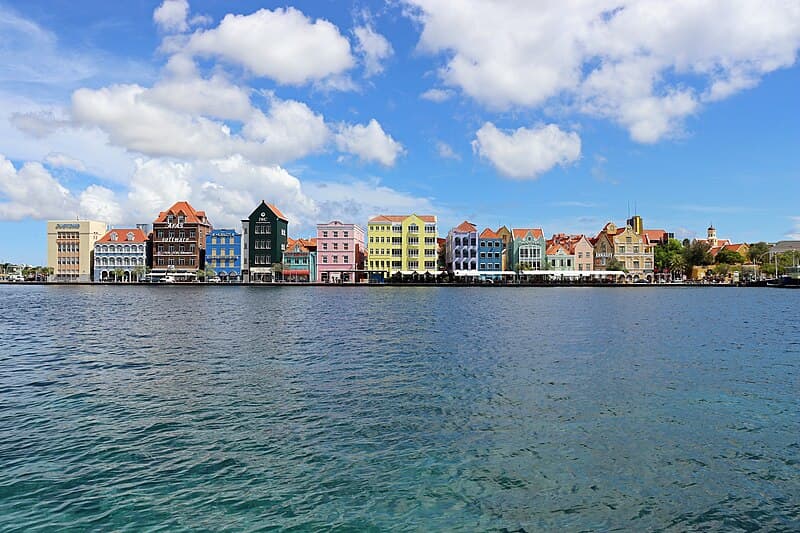
Curaçao is the largest of the three ABC islands, lying 60 kilometres off the coast of Venezuela, outside the hurricane belt. The landscape is the same semi-desert as Aruba's — cacti, thorny scrub and a constant trade wind — but the island is more varied and has something its neighbours don't: Willemstad, the UNESCO-listed capital, whose Handelskade waterfront is a row of colonial houses in sharp pastel colours. Legend has it a 19th-century governor banned white façades because the sun's glare hurt his eyes and had the city repainted; historians suspect he simply owned a paint shop. The island was Dutch for 300 years, and it shows in the architecture, the orderliness and even the tap water. The beaches here aren't long like Aruba's — they're small coves beneath limestone cliffs on the southwest coast, with calm water and a reef starting just metres from shore, which makes Curaçao one of the best diving destinations in the Caribbean.

What to see

The places worth your time in Curacao, and what to expect at each

Handelskade and Punda

Handelskade and Punda

Punda, Willemstad

A waterfront lined with 18th-century colonial houses in yellow, pink, blue and green, reflected in the water of St Anna Bay. It's the most photographed view in the whole Caribbean and the heart of the Punda district, home to shops, restaurants and the oldest surviving synagogue in the Western Hemisphere, dating from 1732.

Tip: The best light for photos is in the morning, when the sun hits the façades from the front; in the afternoon they're backlit. The Mikvé Israel-Emanuel synagogue has a sand-covered floor — commemorating the Jews' flight from Egypt and muffling footsteps during secret services in Spain.

Admission:
free
Time needed:
3 h
Queen Emma Bridge

Queen Emma Bridge

Willemstad

A floating pontoon bridge from 1888 linking the Punda and Otrobanda districts, which swings aside like a door whenever ships pass through — several times a day and sometimes for 20 minutes at a stretch. It's the only floating pedestrian bridge in the Caribbean, nicknamed the Swinging Old Lady.

Tip: When the bridge is open, a free ferry crosses the bay, so there's no need to turn back. The bridge is loveliest in the evening when it's lit up; crossing on foot takes 2 minutes. Originally, the toll depended on whether the walker wore shoes — barefoot free, shod 2 cents.

Admission:
free
Time needed:
30 min
Otrobanda and Kurá Hulanda

Otrobanda and Kurá Hulanda

Otrobanda, Willemstad

The district on the other side of the bay — literally 'the other side' — with winding streets, restored colonial houses and the Kurá Hulanda museum, the Caribbean's most comprehensive exhibition on the transatlantic slave trade. Curaçao was one of its major trading posts.

Tip: The museum is demanding and deserves 2 hours, not half an hour. Otrobanda's streets are lively with street art by day, but after dark stick to the main avenues and don't wander down side streets alone. The waterfront restaurants have the best views of Handelskade.

Admission:
museum from USD 10
Time needed:
3 h
Playa Kenepa Grandi

Playa Kenepa Grandi

northwest

A cove on the northwest coast, hemmed in by limestone cliffs, with vividly turquoise water and white sand. It's the island's most photographed beach, and the view from the cliff above appears on every Curaçao postcard. Next door is the smaller, quieter Kenepa Chiki.

Tip: Locals jump into the water from the rock on the left as a kind of ritual; the depth is sufficient, but only jump where you see others doing it. Arrive before 10am, the car park is small. Shade is limited to a few trees, so bring an umbrella. It's 40 minutes by car from Willemstad.

Admission:
free
Time needed:
full day
Playa Cas Abao

Playa Cas Abao

west

A wide beach with fine sand, palapas and proper facilities — showers, a restaurant, sun lounger rental and even a massage hut, which is rare on Curaçao. The reef starts around 50 metres from shore, making this one of the best snorkelling spots accessible from the beach.

Tip: This is one of the few beaches with paid entry and sun loungers, and the fee is justified by the facilities. Snorkel left along the reef, where you'll find coral gardens and often turtles. Entry is charged per car, not per person, so it's cheap for a group of 3.

Admission:
from USD 6 per car
Time needed:
full day
Christoffel National Park

Christoffel National Park

northwest

A protected area in the northwest of the island around Mount Christoffelberg, 375 metres high, with 8 marked trails through cactus desert and a population of the rare white-tailed deer. The climb to the summit takes 1.5 hours and offers a view of the whole island.

Tip: The last entry up the mountain is at 2pm and the park genuinely enforces it — arrive after lunch and you won't be allowed up. Set off at 6am when the park opens; in the midday heat it's dangerous, and you need at least 2 litres of water per person. The final stretch is a scramble using your hands.

Admission:
from USD 15
Time needed:
half day
Shete Boka

Shete Boka

north

A park on the north, windward coast, where surf from the open Atlantic pounds the limestone cliffs and forces itself into underground caves. At Boka Tabla you can climb down into a cave where waves crash against the ceiling; a trail along the coast leads to 9 further coves.

Tip: Swimming is banned everywhere here, and it's meant seriously — currents and surf kill people. It's best visited when the wind is stronger, when the waves are at their highest. Wear sturdy shoes, the ground is sharp limestone, and combine it with Christoffel Park next door — there's an entry fee for both.

Admission:
from USD 10
Time needed:
2–3 h
Hato Caves

Hato Caves

north, near the airport

Limestone caves in the north of the island, formed below sea level and lifted as the island rose. Inside are stalactites, underground pools, a bat colony and drawings by the indigenous Arawak people over 1,500 years old. Visits are guided only.

Tip: Inside it's damp and slippery, with several dozen steps — not suited to people with mobility issues. Flash photography is banned because of the bats. Tours start on the hour, and the last one is usually early afternoon, so check the time in advance.

Admission:
from USD 12
Time needed:
1 h
Landhuis Chobolobo

Landhuis Chobolobo

Willemstad, Saliña

A manor house from 1853, where the original Blue Curaçao liqueur has been made since 1896 from the peel of the bitter laraha orange — a fruit that went wild on the island from Spanish Seville oranges and doesn't reach an edible form anywhere else. The tour ends with a tasting.

Tip: The blue colour is purely a marketing choice: the original is colourless and also made in 5 other colours that taste the same. The tour is short and cheap, and it's the best souvenir from the island. It's 10 minutes from central Willemstad and walkable.

Admission:
from USD 10
Time needed:
1 h

Photos: Handelskade and Punda — Coolcaesar (CC BY 4.0) · Queen Emma Bridge — Bjørn Christian Tørrissen (CC BY-SA 3.0) · Otrobanda and Kurá Hulanda — Martin Falbisoner (CC BY-SA 4.0) · Playa Kenepa Grandi — Charles Hoffman from New York, United States (CC BY-SA 2.0) · Playa Cas Abao — Charles Hoffman from New York, United States (CC BY-SA 2.0) · Christoffel National Park — JERRYE AND ROY KLOTZ MD (CC BY-SA 3.0) · Shete Boka — Lswarte (CC BY-SA 3.0) · Hato Caves — JERRYE AND ROY KLOTZ MD (CC BY-SA 3.0) · Landhuis Chobolobo — JERRYE AND ROY KLOTZ MD (CC BY-SA 3.0)

Where to stay

Areas and districts, matched to the kind of trip you are taking

Punda

Best for: history, shopping and photos

The original fortified part of Willemstad, with the pastel Handelskade waterfront, Fort Amsterdam, a floating market of Venezuelan traders and the oldest synagogue in the Western Hemisphere. It's the island's commercial and touristic heart and can be covered on foot in a morning.

Otrobanda and Pietermaai

Best for: restaurants and nightlife

The other side of the bay, with streets of colonial houses, a museum on the slave trade, and the adjoining Pietermaai district, which spent 20 years in ruins and is now the island's liveliest neighbourhood, with boutique hotels, bars and restaurants. The best choice for anyone who wants to walk everywhere in the evening.

Jan Thiel and Mambo Beach

Best for: beach with facilities and resorts

A stretch southeast of Willemstad with artificially landscaped beaches, beach clubs, shops and the island's biggest concentration of resorts. The beaches here aren't as photogenic as those in the west, but they have full facilities, and it's 15 minutes to the city.

West Coast (Westpunt)

Best for: the finest coves and diving

The remote northwest tip of the island, with the best beaches — Kenepa, Cas Abao, Porto Mari — and the Christoffel and Shete Boka national parks. Accommodation is minimal here and you can't get around without a car; it's 40 minutes to an hour from Willemstad.

Getting around

From the airport

Curaçao's Hato International Airport lies 12 kilometres northwest of Willemstad. There's no direct flight from most of Europe; the most common and convenient route runs via Amsterdam, from where KLM and other carriers fly direct, with total travel time of 15–17 hours. An alternative is a connection through Miami or Panama, though the US routing requires ESTA registration. Curaçao is an autonomous country within the Kingdom of the Netherlands but isn't part of the European Union or the Schengen area, so you go through passport control. Most Western nationalities, including EU citizens, don't need a visa and can stay for 90 days; before travelling you fill in the online Digital Immigration Card. A return ticket, proof of accommodation and valid travel insurance are required.

Curaçao Hato International (CUR) · 12 km

  • Hotel transfer included in the stay· 20–35 min· included
  • Taxi to Willemstad· 15 min· USD 35
  • Taxi to Jan Thiel· 30 min· USD 45
  • Rental car from the airport· —· USD 40/day

Around town

Curaçao is a large island by Caribbean standards, and without a car you'll see little of it — the best beaches on the west coast are an hour from Willemstad, and public transport barely runs there. Konvoi buses run from the bus station in Punda and Otrobanda along the main routes, but only a few times a day and on an unreliable schedule; smaller shared vans called bus chikitu run more often and you flag them down. Taxis have no meters and follow a government-set zone tariff; fares are high and unaffordable for the trip to the west coast. A rental car is therefore the standard solution and costs around USD 40 a day. Driving is on the right and the roads are good, though the final kilometre to some beaches is on a dusty track.

Rental carPractically essential for the west coast and national parks. Driving is on the right, roads are good, the final stretch to beaches tends to be dusty. · USD 40/day
Konvoi (bus)From Punda and Otrobanda along the main routes, but only a few times a day and on an unreliable schedule. · ANG 2
Bus chikituSmaller shared vans around the city and suburbs, running more often than the big buses; flag them down from the roadside. · ANG 2.50
TaxiNo meters, priced by a government zone tariff. Prohibitively expensive to the west coast. · USD 20

Useful apps: Google Maps, Curaçao Trip, XE Currency, WhatsApp

When to go

Curaçao can be visited year-round and lies outside the hurricane belt, so tropical storms pass it by — it's one of the few Caribbean destinations you can fly to without worry even in September. The temperature varies by only 3 degrees over the year, and it rains around 50 days a year, mostly in short showers. The driest period is February to June and is the best time to visit. The wettest months are November, December and January, but even then it's afternoon showers rather than a rainy season. High season runs from mid-December to April, when prices peak; from May to November the same hotels are noticeably cheaper with almost identical weather. Carnival peaks in February and is the biggest event of the year.

Best time

year-round, driest February to June

What to avoid

nothing major, outside the hurricane belt

MonthJanFebMarAprMayJunJulAugSepOctNovDec
Day30°30°31°31°32°32°32°33°33°32°31°30°
Night24°24°24°25°26°26°26°26°26°26°25°25°
Rainy days95323344471112
Sea26°26°26°27°27°28°28°29°29°29°28°27°

Food & drink

Curaçaoan cuisine is Caribbean with a Dutch base and influences from Venezuela and Indonesia, since the island has always been a port. The national dish is keshi yená, a whole Edam cheese shell stuffed with stewed chicken, raisins and olives, born from what the colonists left behind. It's served with funchi, a firm cornmeal porridge, and stobá, a slow-cooked goat stew. The best and cheapest local food is at the old Marshe Bieu market in Willemstad, cooked over an open fire from morning until 2pm, where lunch costs a fraction of restaurant prices. The Dutch legacy shows in the cheeses, the fried croquettes and the Indonesian rijsttafel. Blue Curaçao originates from the island, and the local beer is called Amstel Bright, brewed with desalinated seawater and drunk with lime.

What to try

Keshi yená

A hollowed-out ball of Edam cheese stuffed with stewed chicken, raisins, olives and capers and baked in the oven. A colonial-era legacy that became the national dish of both ABC islands; Curaçao's version is a little sweeter.

Kabritu stobá

The goat version of stobá, which Curaçao considers its most typical dinner. The meat is dark and full-flavoured, served with funchi and fried plantain.

Stobá

A stew of goat or beef with papaya and vegetables, slow-cooked for hours until tender. Best at Willemstad's Marshe Bieu market, cooked over an open fire from morning until 2pm.

Funchi

A firm cornmeal porridge cut into cubes and pan-fried in butter. The island's staple side dish, served in better restaurants as fried funchi fries.

Piská kòrá

Red snapper grilled or fried whole and topped with a Creole sauce of tomatoes and peppers. Order it at Marshe Bieu or at harbourside places where the fish arrived that morning.

Pastechi

A fried pastry filled with Gouda cheese, beef or tuna. The whole country's breakfast: bakeries fry them from 6am and they cost a couple of guilders each.

Ayaka

Cornmeal dough with a meat filling wrapped in a banana leaf and steamed, made only at Christmas. If you're on the island in December, buy one at the market — it's Curaçao's most festive dish.

Blue Curaçao

A liqueur made from the peel of the bitter laraha orange, which took root on the island and doesn't ripen into an edible form anywhere else. The blue colour is purely a marketing choice — the original from the Chobolobo distillery is colourless and also sold in 5 other colours.

What it costs

Lunch at Marshe Bieu market

ANG 20–30

Pastechi from a bakery

ANG 3–5

Dinner in Pietermaai

USD 45–80 per person

Amstel Bright beer at a shop

ANG 2

Entry to Playa Cas Abao

USD 6 per car

Rental car per day

from USD 40

Full-day trip to Klein Curaçao

from USD 110

Night in a 4-star hotel

from USD 180 for a double

Indicative prices that change over time — treat them as a guide, not a price list.

Practical information

SocketsAtwo flat pins (US/JP)Btwo flat pins plus ground (US)
Voltage130V / 50Hz
Tap waterTap water is drinkable — Tap water is safe to drink and very good quality — the island produces it by desalinating seawater and tests it to Dutch standards. Don't buy bottled water, it's expensive and unnecessary; hotels routinely provide a carafe in the room. Ice is safe everywhere, including beach stalls.
TippingRestaurants often add a service charge of 10–15% to the bill — check before adding more, double-tipping is a common tourist mistake here. When service isn't charged, leave 10–15%. Round up for the bartender, leave USD 2–3 a day for housekeeping, and USD 5–10 for a guide on a diving trip. Dollars and euros are both accepted, but you'll get change in guilders.
Driving on theright
SafetyCuraçao lies outside the hurricane belt and is among the safer Caribbean islands, but it's a bigger, poorer island than Aruba, and the differences between neighbourhoods are noticeable. In Willemstad after dark, stick to Punda, Pietermaai and the main avenues, and don't go into Otrobanda's outer streets alone. Never leave anything visible in the car — break-ins at remote beaches are the most common problem for visitors. There are two natural hazards: strong surf and currents on the north, windward coast, where swimming is banned, and the sun, which you won't feel under the constant trade wind until you're already burnt. Healthcare is Dutch-standard, and Willemstad's CMC hospital is the most modern in the region, but expensive without insurance.
Opening hoursShops in Willemstad open from 9am to 6pm, Saturdays until 5pm, and most close on Sundays — opening only on days when a cruise ship is docked. Supermarkets run from 8am to 8pm, some also on Sunday mornings. Restaurants in Pietermaai serve until 11pm and bars until 2am. Christoffel National Park opens at 6am, and the last entry up the mountain is at 2pm because of the heat — arrive after lunch and you won't be allowed to the summit.
Customs & etiquetteCuraçao is an autonomous country within the Kingdom of the Netherlands and combines Dutch orderliness with Caribbean ease. Papiamentu is the language of the street, Dutch of officialdom, and you'll get by everywhere in English and Spanish. Greeting with bon dia when entering a shop or restaurant is an unwritten rule, and skipping it comes across as rude. Swimwear belongs on the beach; dress properly in Willemstad, and go smart casual at minimum for dinner. The island is multicultural and sensitive about slavery — the Kurá Hulanda museum and the Otrobanda district commemorate it, and it's discussed seriously.
A few local wordsHello — Bon dia (papiamentu)Thank you — Masha dankiGood evening — Bon nochiHow much does it cost? — Kuantu ta kosta?Please — Por fabor

How to plan your days

1 day

A day in Curaçao

  1. 1Morning at Handelskade, while the sun still lights the façades from the front.
  2. 2Late morning: the floating bridge, the synagogue and the floating market in Punda.
  3. 3Lunch at the old Marshe Bieu market.
  4. 4Afternoon at Playa Cas Abao, snorkelling on the reef.
  5. 5Evening in Pietermaai, dinner and the bridge lit up from the shore.

2 days

2 days: the city and the west coast

  1. 1Day 1: Willemstad, Punda, Otrobanda and Kurá Hulanda.
  2. 2Evening in Pietermaai and a tasting at Landhuis Chobolobo.
  3. 3Day 2: drive west to Playa Kenepa.
  4. 4Afternoon at Shete Boka and the surf in the Boka Tabla cave.
  5. 5Return via the Hato Caves, dinner by the waterfront.

3 days

3 days: city, mountains and Klein Curaçao

  1. 1Day 1: Willemstad, exploring both districts on foot.
  2. 2Day 2: climb Christoffelberg at dawn, Kenepa in the afternoon.
  3. 3Day 3: full-day boat trip to Klein Curaçao.
  4. 4Snorkelling by the wreck and the beach without a single tree.
  5. 5Last evening in Pietermaai.

Day trips

Klein Curaçao

25 km · 2 h by catamaran

An uninhabited, flat islet 25 kilometres southeast of the main island, with nothing on it but a lighthouse, a shipwreck on the windward side, and a white beach with water like a swimming pool. There isn't a single tree or patch of shade, only rented parasols. Catamarans depart early morning and return in the afternoon; the open-water crossing tends to be choppy, so don't forget seasickness tablets.

Playa Porto Mari and Playa Lagun

35 km · 40 min by car

Two smaller coves on the west coast that are less well known than Kenepa but come with a major payoff: Porto Mari has a double coral reef right at the shore and the island's best snorkelling accessible without a boat, while Lagun is a tiny cove between cliffs where sea turtles turn up regularly. Both charge a small entry fee and have basic facilities.

Bonaire

50 km · 30 min by plane

The third of the ABC islands, a 30-minute flight east, entirely ringed by a renowned marine park and a world leader in shore diving — you park by the road where a yellow-numbered rock marks the spot and walk straight into the water onto the reef. There are also salt flats with a flamingo colony and reminders of the island's slave past in the form of stone huts by the salt pans. It's rushed as a day trip; two nights is ideal.

Frequently asked questions

When is the best time to visit Curaçao?+

Anytime. The island lies outside the hurricane belt, the temperature varies by only 3 degrees over the year, and it rains around 50 days a year, mostly in short showers. The driest period is February to June. High season runs from mid-December to April, when prices peak; from May to November the same hotels are noticeably cheaper with almost identical weather.

What's the difference between Curaçao and Aruba?+

Aruba has better, longer beaches — Eagle Beach is 100 metres wide — and is more comfortable, safer and pricier. Curaçao has something Aruba doesn't: Willemstad, a UNESCO-listed colonial city with a pastel-coloured waterfront and real history. Its beaches are small coves beneath cliffs, but the reef sits right at the shore, making it a far better destination for diving and snorkelling. Curaçao is also larger and more varied, and without a car you'll see little of it.

Do I need a car in Curaçao?+

Pretty much, yes. The best beaches are on the west coast, 40 minutes to an hour from Willemstad, and public transport there runs only a few times a day and unreliably. A taxi for that distance is prohibitively expensive. A rental car costs around USD 40 a day, driving is on the right and the roads are good; only the last kilometre to some beaches tends to be dusty. Anyone staying in Willemstad and Jan Thiel can manage without one.

Can I drink tap water in Curaçao?+

Yes, without reservation. The island produces it by desalinating seawater and tests it to Dutch standards, so the quality matches European tap water. You don't need bottled water here and it's needlessly expensive; hotels routinely put a carafe in the room. Ice is safe everywhere, including beach stalls.

Is Curaçao safe?+

It lies outside the hurricane belt and is among the safer Caribbean islands, but it's bigger and poorer than Aruba, and the differences between neighbourhoods are noticeable. In Willemstad after dark, stick to Punda, Pietermaai and the main avenues, and don't wander into Otrobanda's side streets alone. The most common problem for visitors is car break-ins at remote beaches — never leave anything visible in the car. Swimming is banned on the north, windward coast, and that's meant seriously.

Do I need a visa for Curaçao?+

No, most Western nationalities, including EU citizens, can stay in Curaçao for 90 days without a visa. The island is an autonomous country within the Kingdom of the Netherlands but is not part of the European Union or the Schengen area, so you go through passport control. Before travelling you fill in the online Digital Immigration Card, and you need a return ticket, proof of accommodation and valid travel insurance.

Where's the best snorkelling in Curaçao?+

Playa Porto Mari has a double coral reef right at the shore and offers the best snorkelling accessible without a boat. Playa Cas Abao has a reef around 50 metres from the beach, and snorkelling left along it often turns up turtles. Playa Lagun is a tiny cove that turtles visit regularly. The island ranks among the Caribbean's best diving destinations precisely because the reef starts just metres from shore.

Is the boat trip to Klein Curaçao worth it?+

Yes, if you don't mind a choppy sea — it's an uninhabited, flat islet with a lighthouse, a shipwreck and a white beach with water like a swimming pool. There isn't a single tree or patch of shade, only rented parasols, so sunscreen and a hat are essential. Catamarans depart early morning and the open-water crossing takes 2 hours and tends to be rough; don't forget seasickness tablets.

Visa Requirements

Check the latest visa requirements for entering this country. Some nationalities may need to apply for a visa or e-visa before travel.

Check visa requirements

Language

Dutch / Papiamento

Currency

ANG

Timezone

GMT-4

Dial Code

+599

Population

155K

Area

444 km²

Voltage

130V / 50Hz

Driving Side

Right

Top Hotels in Curacao

Live prices from 500+ properties

Loading hotels...

Planning a trip to Curacao?

Compare hundreds of hotels, find the best price, and book with free cancellation on TravelManiac.