World-class museums, a souq scented with spices, and desert an hour from the skyscrapers
Doha
LanguageEnglish
CurrencyQAR
TimezoneGMT+3
Temperature22-42 °C
Dial Code+974
Population2.9M
Area11,586 km²
SocketsType G
Tap waterBottled advised
Discover Doha
Doha is the capital of Qatar, a small emirate on a peninsula in the Persian Gulf that ranks among the world's richest countries thanks to natural gas. As recently as the 1970s it was a fishing and pearl-diving settlement of mudbrick houses; today it has the West Bay skyscrapers, the artificial island of The Pearl, and a driverless metro built for the 2022 World Cup. For visitors, Doha is above all a city of museums. The Museum of Islamic Art by I. M. Pei and the National Museum of Qatar, shaped like a desert rose, by Jean Nouvel, rank among the finest in the Middle East, and admission to both is cheap. Souq Waqif, rebuilt in traditional style, is the most pleasant place for dinner and a stroll. Doha is often visited as a stopover with Qatar Airways, and a 2-3-day break is the best way to see it. The city is very safe, air-conditioned and clean; pleasant in winter, unbearably hot in summer.
What to see
The places worth your time in Doha, and what to expect at each
Museum of Islamic Art
متحف الفن الإسلامي
Corniche
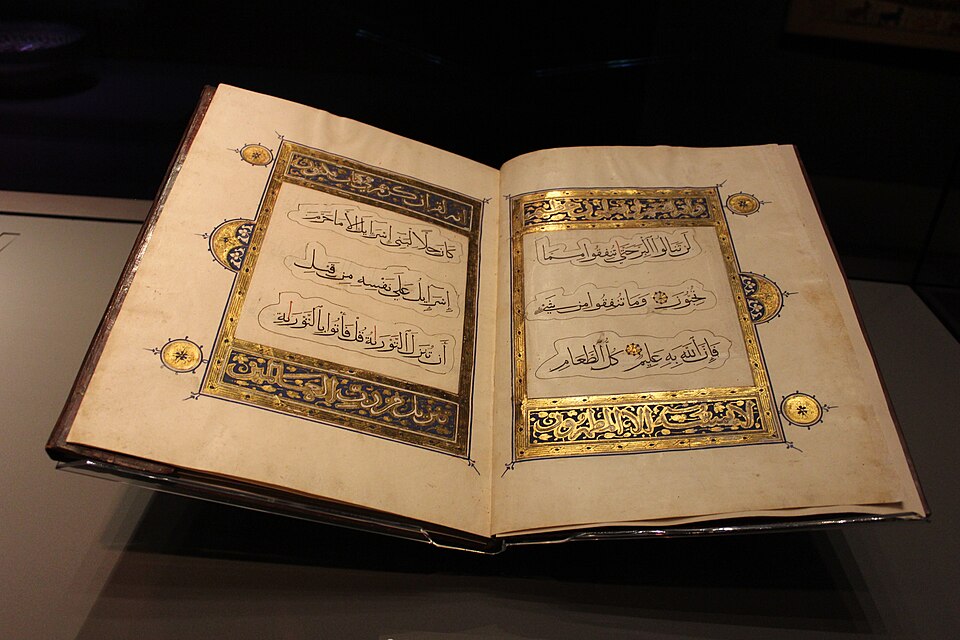
A 2008 building by architect I. M. Pei, standing on its own artificial island in the bay and echoing the geometry of Islamic architecture. Inside is one of the finest collections of Islamic art in the world — manuscripts, ceramics, carpets, glass and metalwork from 3 continents and 14 centuries.
Tip: Best visited late afternoon, staying on for sunset in MIA Park next to the museum, which has the finest view of the West Bay skyline across the bay. The ground-floor café overlooking the water is good for a break. The museum is closed on Tuesdays. The main collection is on the second and third floors — allow 2 hours for it.
Admission:
QAR 50
Time needed:
2–3 h
National Museum of Qatar
متحف قطر الوطني
Corniche
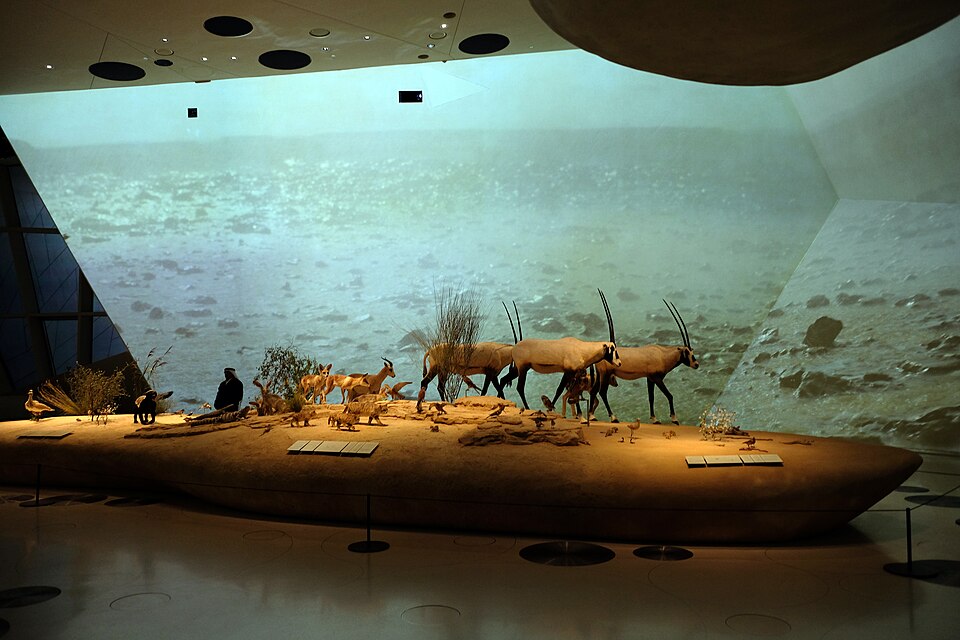
A 2019 building by Jean Nouvel made of interlocking discs that echoes a desert rose, the crystal formation that forms in sand. It wraps around the historic palace of Sheikh Abdullah, which forms the museum's core. The exhibition tells Qatar's story from geology through Bedouin life and pearl diving to oil and gas.
Tip: The projections onto the curved gallery walls are part of the experience, so follow the intended route from the start. The pearl-embroidered Baroda Carpet is the collection's greatest treasure. There's also a shop with the best design-led souvenirs in the city. A combined Culture Pass or museum bundle is cheaper if you plan to visit several Qatar Museums venues.
Admission:
QAR 50
Time needed:
2 h
Souq Waqif
سوق واقف
Souq Waqif
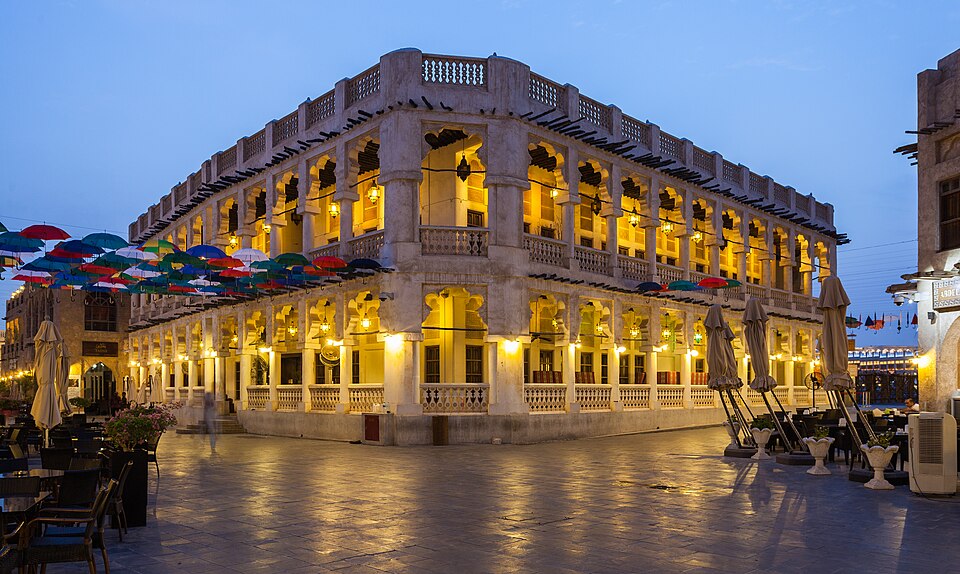
A traditional market rebuilt in 2006 in its original style, with mudbrick walls and timber beams. It sells spices, incense, dates, fabrics, traditional clothing and crafts. It includes the Falcon Souq, with birds on display and a falcon hospital. The whole city gathers here in the evening.
Tip: Shops are open in the morning and then from 4pm to 10pm; midday is dead. The falcon souq is at the front, and you can have a falcon perched on your arm for a photo. Restaurants with outdoor seating are best for dinner, and prices are reasonable. Stables with Arabian horses and camels sit just behind the souq on the Corniche side.
Admission:
free
Time needed:
2–3 h
Corniche
الكورنيش
Corniche
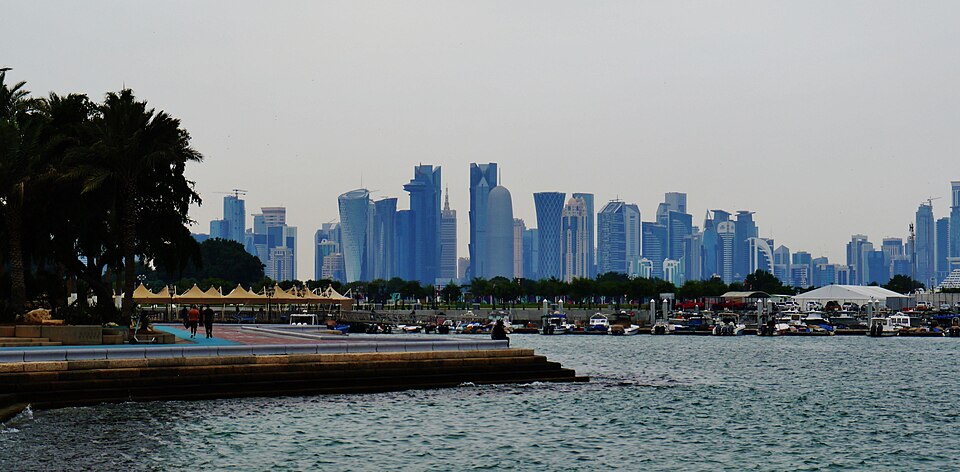
A 7-kilometre waterfront promenade along the bay between the Museum of Islamic Art and the West Bay skyscrapers. Along the way are palm trees, lawns, traditional dhow boats moored at the pier, and views of the skyline. In the evening, people run, cycle and sit on benches here.
Tip: You can't walk the whole stretch in the heat; evening or a winter morning is best. Dhow boats leave from the pier by MIA Park for 30-minute to 1-hour rides, with the price negotiated per boat. The metro Red Line has stops at Corniche and West Bay, so you can ride one way and walk back. The pearl-shell sculpture on the Corniche is a popular photo spot.
Admission:
free
Time needed:
1–2 h
Msheireb Downtown
مشيرب
Downtown
A central district that Qatar demolished and rebuilt as the world's first sustainable downtown, with narrow, shaded streets in a contemporary take on Qatari architecture. It includes four historic houses converted into the Msheireb Museums, covering the city's history, slavery and oil.
Tip: The Msheireb Museums are free and well worth it, especially Bin Jelmood House on slavery in the Gulf, a subject rarely addressed elsewhere. Msheireb metro station is where all 3 lines meet, so it's reachable from anywhere. It's a 5-minute walk between the district and the souq. Cafés and restaurants stay open in the evening, and the whole area is air-conditioned.
Admission:
free
Time needed:
1–2 h
Katara Cultural Village
كتارا
Katara
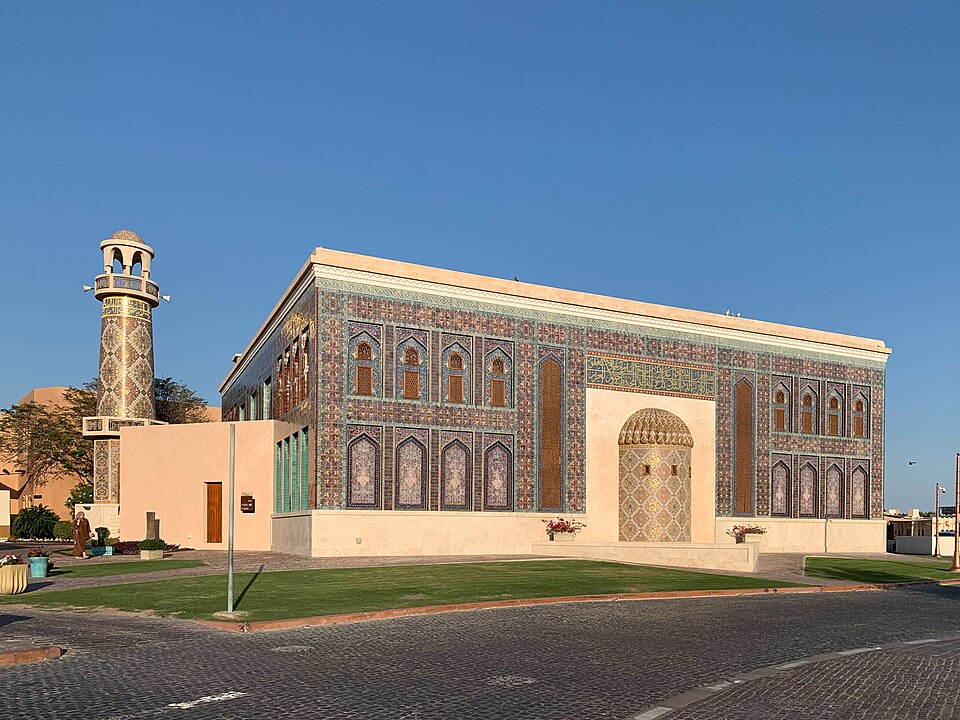
A cultural district on the waterfront with a Greek-style amphitheatre, an opera house, galleries, two striking mosques — one gold, one blue with mosaics — and a public beach. Festivals, concerts and exhibitions are held here throughout the year.
Tip: The Gold Mosque photographs best at dusk. Katara Beach is one of the few public beaches right in the city; admission is charged and a dress code applies — women in one-piece swimsuits, and no alcohol on the beach. Galleries are often closed on Mondays. It's a 10-minute taxi ride from Katara to The Pearl.
Admission:
free, beach charged
Time needed:
1.5–2 h
The Pearl-Qatar
اللؤلؤة
The Pearl
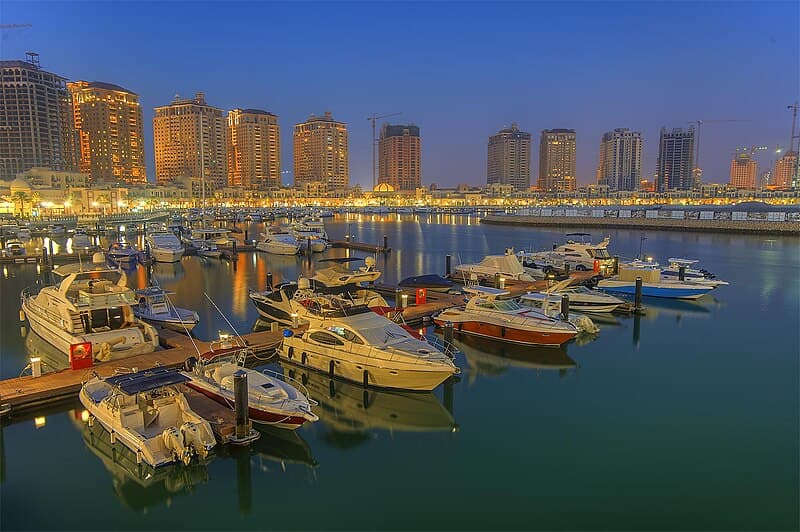
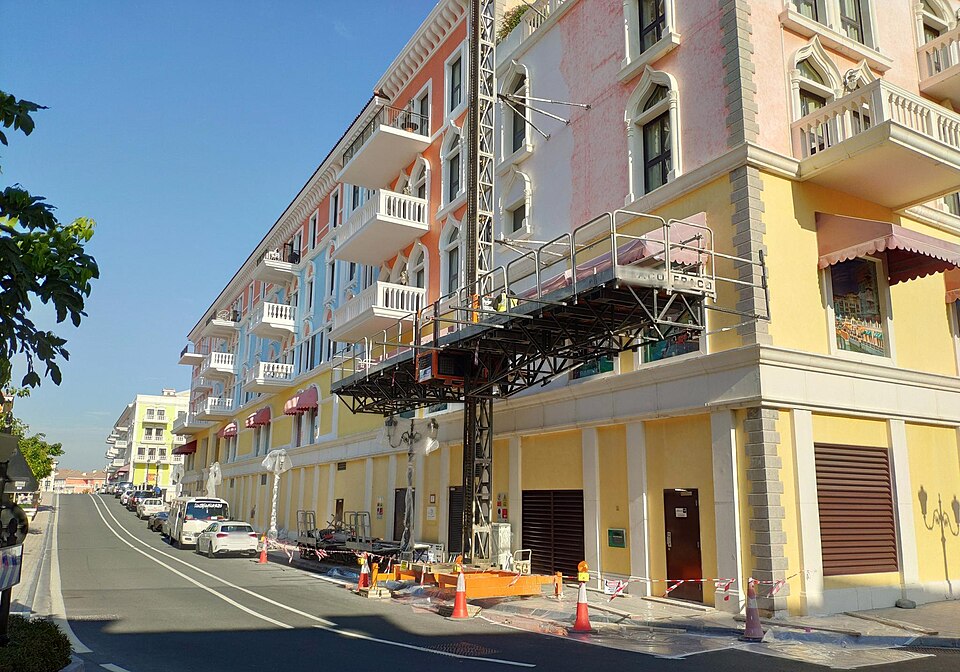
A 4-square-kilometre artificial island built on the site of a former pearl-diving ground. It has a marina with yachts, luxury residences, shops and the Qanat Quartier district, with pastel houses and canals inspired by Venice.
Tip: Qanat Quartier is best for photos and a stroll — come in the afternoon while there's still light. Restaurants around Porto Arabia marina serve alcohol, since they're inside hotels or licensed venues. There's no metro here, only taxis. It's more of a curiosity than a sight — 1–2 hours is plenty.
Admission:
free
Time needed:
1.5 h
Aspire Park and Torch Tower
حديقة أسباير
Aspire Zone
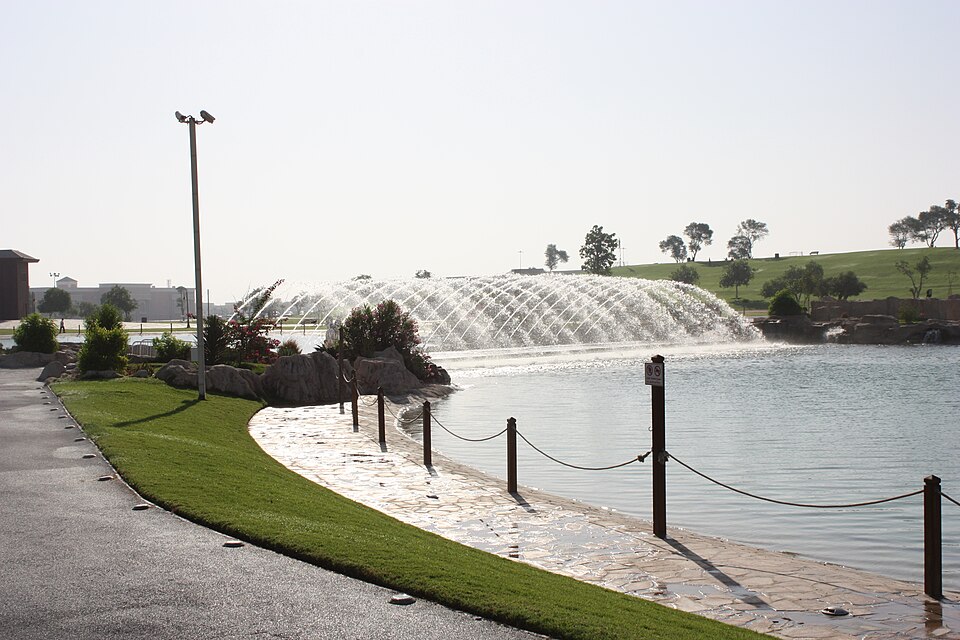
Doha's largest park, with a lake, shade and running tracks, sits within a complex of sports stadiums that hosted the World Cup. Rising above it is the flame-shaped Torch Tower, now a hotel with a restaurant and observation deck.
Tip: The park is best in winter in the afternoon, when local families come to picnic. Next door is Villaggio Mall, with a canal and gondolas — an air-conditioned escape in summer. Khalifa Stadium, a World Cup venue, sits right beside it. Sport City metro station is on the Gold Line.
Admission:
free
Time needed:
1–2 h
National Library and Education City
المكتبة الوطنية
Education City
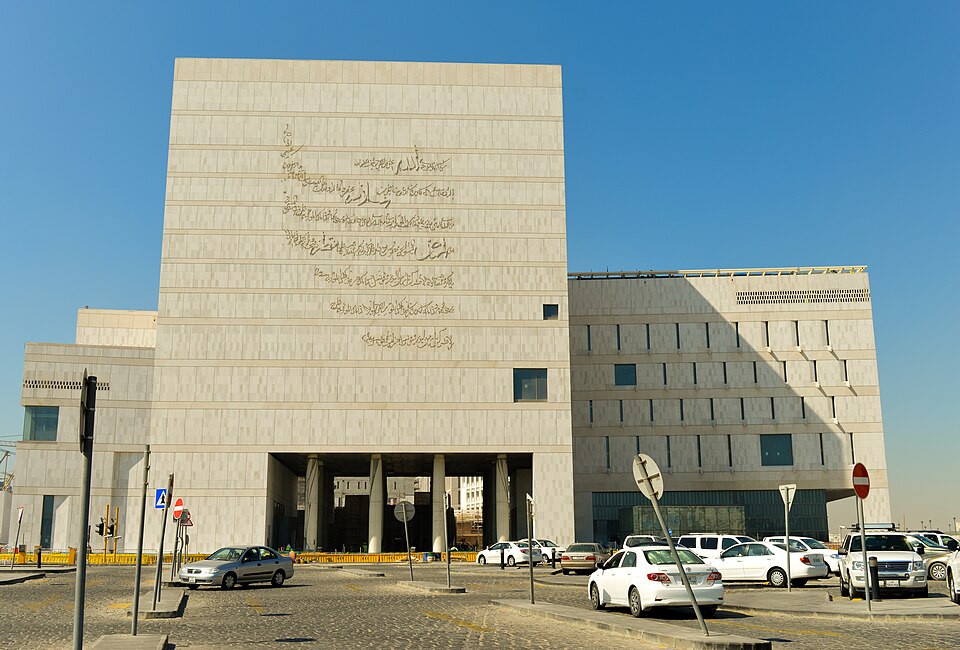
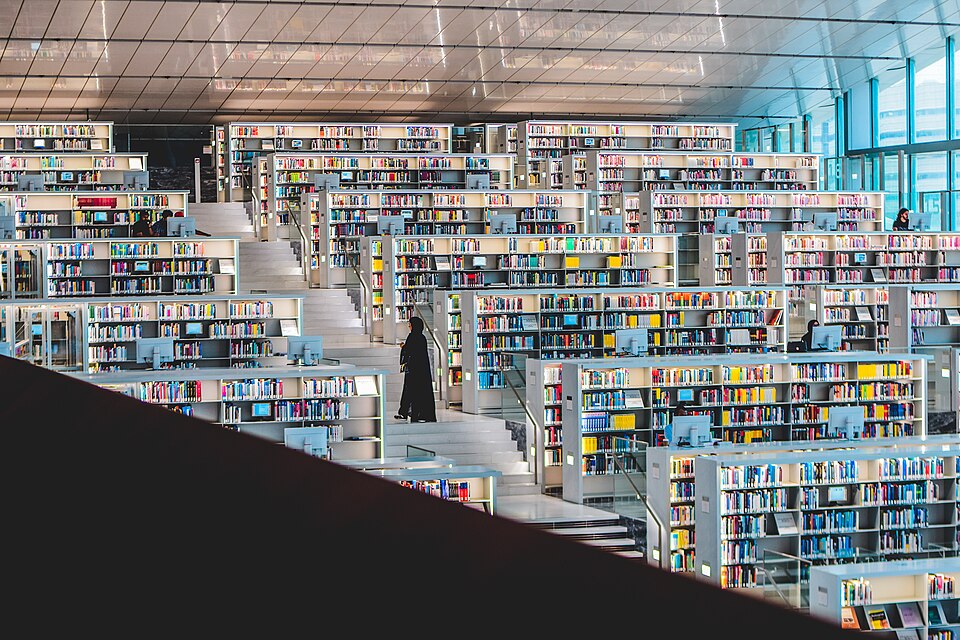
A university campus on the outskirts hosting branches of American and European universities. The Qatar National Library, by Rem Koolhaas, is a vast open hall where the shelves rise like terraces. Nearby stands Education City Mosque, with unconventional architecture and a minaret.
Tip: The library is free, open into the evening and air-conditioned — a pleasant hour's escape from summer heat. The basement holds a historic collection of manuscripts and maps. Education City Mosque is open to visitors outside prayer times. The metro Green Line has a stop right by the library.
Areas and districts, matched to the kind of trip you are taking
West Bay
Best for: luxury, views and business trips
The skyscraper district on the north side of the bay, with international hotels, the City Center mall and sea views. Hotels have their own beaches, licensed bars and large pools. The metro Red Line reaches downtown in 10 minutes. Evenings are quiet here, since the action is more in the Souq.
Souq Waqif and Msheireb
Best for: atmosphere and walkability
Boutique hotels right in the souq and modern hotels in Msheireb, all within walking distance of the museums, the Corniche and restaurants. The best base for a short stopover. Souq hotels serve no alcohol; some in Msheireb do.
The Pearl and Lusail
Best for: sea, calm and longer stays
A modern island and a new city in the north with residential hotels, apartments and marinas. A calm setting with waterfront restaurants, but far from the museums and the souq, with no direct metro link to The Pearl. Suits a longer family stay.
Aspire and Al Sadd
Best for: budget and sport
Western districts with cheaper hotels and a good link via the metro Gold Line. Good for sporting events and budget travellers. 20 minutes to downtown by metro.
Qatar Airways operates flights to Doha from a wide range of European and international cities, and Doha is a major transit hub on the way to Asia, Africa and Australia, with Qatar Airways offering discounted stopover packages that include a hotel. Many nationalities do not need a visa. Hamad International Airport is one of the most modern in the world and lies just 10 kilometres from the centre. The land border with Saudi Arabia is open, but pointless without a car.
Hamad International (DOH) · 10 km
Metro Red Line to Msheireb· 20 min· QAR 2
Karwa taxi· 20 min· QAR 30
Uber / Careem· 20 min· QAR 25
Around town
Doha is a city built for cars, and walking only really works in the souq, Msheireb, on the Corniche and in Katara. The 3-line metro is modern, air-conditioned and cheap, covering the airport, downtown, West Bay, Katara, Education City and Lusail. Every train has a Gold Class carriage for a surcharge and a family carriage. For everything else there are taxis — turquoise metered Karwa cabs, or the cheaper Uber and Careem. Eating and drinking on the metro isn't allowed. In summer, walking outdoors at midday is dangerous, so take a ride even for short distances.
Metro3 lines, using a Travel Card or single ticket. · QAR 2
Uber / CareemThe cheapest taxi option. · QAR 10
Karwa taxiTurquoise, metered. · QAR 12
Dhow on the bayTraditional boat departing from MIA Park. · QAR 25
Useful apps: Karwa Taxi, Uber, Careem, Qatar Rail, Google Maps
When to go
The best time is November to March, when daytime temperatures reach 20–28°C, evenings are pleasant and the sea is around 20°C. In December and January nights can be cool, around 15°C, and it occasionally drizzles. From April temperatures rise quickly, and from May to September Doha is one of the worst places in the world for outdoor activities — over 40°C with high humidity. Life then shifts into air-conditioned museums and malls. Ramadan moves 11 days earlier each year; days are quiet, but evenings are festive.
Best time
November–March
What to avoid
June–September because of the heat and humidity
Month
Jan
Feb
Mar
Apr
May
Jun
Jul
Aug
Sep
Oct
Nov
Dec
Day
22°
24°
28°
33°
39°
41°
42°
41°
39°
35°
29°
24°
Night
14°
15°
18°
22°
27°
29°
31°
30°
28°
24°
20°
16°
Rainy days
2
2
2
1
0
0
0
0
0
0
1
2
Sea
20°
19°
21°
24°
28°
31°
33°
34°
32°
29°
25°
22°
Food & drink
Qatari cuisine resembles that of other Gulf countries — spiced rice, lamb, fish and dates — but Doha has more expats than Qataris, so the best eating is Indian, Lebanese, Iranian and Yemeni. The best value comes from restaurants in Souq Waqif and Indian diners in Al Sadd. Karak tea for a couple of riyals is a local institution. Alcohol is sold only in licensed hotel bars and restaurants and is expensive; a beer costs 40–50 riyals. Street restaurants serve no alcohol at all. During Ramadan, hotel restaurants stay open but with restrictions, and the evening iftar is a memorable experience.
What to try
Machbous
The Gulf's national dish: rice cooked in a spiced broth with dried lime (loomi), cinnamon and cardamom, served with chicken, lamb or fish. A portion is usually meant for two.
Harees
A wheat-and-meat porridge cooked for hours until smooth and drizzled with ghee. Eaten mainly during Ramadan and festivals, though traditional restaurants serve it year-round.
Grilled Gulf fish
Hammour (grouper) or safi grilled with spices or fried, served with rice and a hot sauce. Pick your fish at the fish market and have it prepared right there.
Karak tea
Strong black tea brewed with milk, sugar and cardamom, brought over by Indian labourers. It costs 1–2 riyals and is drunk any time of day — Qataris buy it straight into the car at roadside stalls.
Arabic coffee and dates
Light coffee with cardamom poured from a dallah pot into small, handleless cups. It keeps being topped up until you shake the cup to signal you've had enough.
Luqaimat
Deep-fried dough balls drizzled with date syrup, with cardamom and saffron. Best fresh from the pan, with coffee or tea.
Shawarma and manakish
Lebanese shawarma and manakish flatbreads with zaatar or cheese are Doha's cheapest meal, at 5–20 riyals. Sold at stalls all over the city.
What it costs
Karak tea
QAR 1–3
Shawarma
QAR 6–15
Lunch in the souq
QAR 40–80
Dinner at a restaurant
QAR 120–250
Beer at a hotel bar
QAR 40–55
Metro ticket
QAR 2
Museum of Islamic Art admission
QAR 50
Night at a 4-star hotel for 2
€150–300
Indicative prices that change over time — treat them as a guide, not a price list.
Practical information
SocketsGBritish, three rectangular pins
Voltage240V / 50Hz
Tap waterTap water is treated, bottled is common — Tap water in Qatar is desalinated, monitored and safe, but because it sits in rooftop tanks, locals don't drink it and use bottled water instead, which costs around 1 riyal per 1.5 litres in a supermarket. Restaurants bring water automatically and charge for it. In summer, drink more than you feel you need — dehydration sets in fast.
TippingMost restaurants and hotels add a 10% service charge to the bill; where they don't, leave 10% in cash, since a card service charge may not reach the staff. Round up for taxi and Uber drivers, and give porters 5–10 riyals. Cards are accepted almost everywhere, including in the souq, and the riyal is pegged to the dollar.
Driving on theright
SafetyQatar is one of the safest countries in the world; street crime is almost non-existent, and a lost wallet is usually returned. The real risks are legal and climate-related. Public displays of affection, public drunkenness, insulting the state or religion, and photographing local women without permission are all offences. Alcohol is sold only in licensed hotel bars, and bringing your own in is not allowed. In summer, heatstroke is the biggest danger. The emergency number is 999.
Opening hoursThe weekend is Friday and Saturday; Friday morning is quiet for prayers, and many shops don't open until after 4pm. Malls open from 10am to 10pm, until midnight at weekends. Souqs and smaller shops close for a midday break roughly from 12:30 to 4pm. Museums are often closed on Monday or Tuesday and open only in the afternoon on Friday. During Ramadan, eating in public during the day is avoided, and life shifts to the evening.
Customs & etiquetteDress modestly — shoulders and knees covered — in public places, museums and malls, where security genuinely checks. Swimwear belongs only at the hotel pool and beach. Remove shoes before entering a mosque, and women should cover their hair. Food and drink are handled with the right hand. Don't photograph Qataris in white thobes or women in black abayas up close, and don't offer a handshake to a woman unless she offers hers first.
A few local wordsHello — As-salámu alejkumThank you — ŠukranPlease — Min fadlakHow much does this cost? — Bikam hádha?Yes / No — Na'am / LáGoodbye — Ma'a salama
How to plan your days
1 day
Doha on a stopover
1Morning: Museum of Islamic Art and MIA Park.
2Lunch in Msheireb and the Msheireb Museums.
3Afternoon: National Museum of Qatar.
4Evening: Souq Waqif and dinner on a terrace.
2 days
2 days in Doha
1Day 1: Museum of Islamic Art, National Museum of Qatar.
2Day 1 evening: Souq Waqif and the Falcon Souq.
3Day 2: Katara and The Pearl.
4Day 2 afternoon: National Library and Education City.
5Day 2 evening: Corniche and a dhow ride on the bay.
3 days
3 days with the desert
1Day 1: museums and Souq Waqif.
2Day 2: desert safari and the Inland Sea, overnight at a camp.
3Day 3: Katara, The Pearl.
4Day 3 afternoon: Aspire Park and Villaggio Mall.
5Day 3 evening: Corniche and Msheireb.
Day trips
Inland Sea (Khor Al Adaid)
80 km · 1.5 h by 4x4
A sea inlet deep among sand dunes on the border with Saudi Arabia, on UNESCO's tentative list. You ride out by 4x4 across the dunes, climb the ridges and swim in the bay. The trip is booked with a driver, since dune driving takes experience. Best as an afternoon trip timed for sunset, or an overnight stay at a camp.
Zubarah
105 km · 1.5 h by car
An abandoned 18th-century pearling town and fort in the north-west of the peninsula, Qatar's first UNESCO heritage site. The fort has been restored and houses a small museum. On the way, you can stop at the village of Al Jassasiya, which has rock carvings, and at Fuwairit Beach, a turtle nesting site.
Al Thakhira mangroves
60 km · 50 min by car
A mangrove forest on the north-eastern coast where you can kayak among the roots and watch flamingos and herons. Kayaks are rented on the spot for an hour or two. Best at high tide and in the morning, before the heat sets in.
Frequently asked questions
Do I need a visa for Qatar?+
No visa is required for most Western nationalities. Visitors get a free stamp on arrival that allows a tourist stay of up to 90 days. Your passport must be valid for at least 6 more months, and border control may ask for a return ticket and proof of accommodation. Nothing is needed for a transit connection at Doha airport that doesn't leave the transit area.
Is a Doha stopover worth it?+
Yes, especially for a layover longer than 8 hours. With 12 hours you can fit in the Museum of Islamic Art, Souq Waqif and the Corniche, and with 2 days even a desert safari. Qatar Airways sells stopover packages with discounted hotels. It's 20 minutes from the airport to the centre by metro.
Can you drink alcohol in Qatar?+
Only in licensed hotel bars and restaurants, where a beer costs 40–50 riyals. You can't bring alcohol in, not even from duty free, and public drunkenness is an offence. There's no drinking on the street, in the souq or on public beaches.
How should you dress in Doha?+
Shoulders and knees covered in public, in museums, malls and markets — security checks this and can turn you away. Swimwear is fine at hotels and by the pool. In mosques, women cover their hair.
When is the best weather in Doha?+
From November to March, with temperatures around 25°C. In summer it's over 40°C and very humid; museums and malls are air-conditioned, but it's unbearable outdoors. Spring and autumn are transitional, with hot days.
Is Doha expensive?+
Hotels and alcohol are expensive, everything else isn't. The metro costs 2 riyals, food at Indian and Lebanese diners is cheap, and museum admission is reasonable. Upscale restaurants and hotels in West Bay cost as much as in London. A sensible budget is around €200 a day for 2, including the hotel.
Can you swim in the sea in Doha?+
Yes, but public beaches within the city are limited to Katara and a few on the outskirts; most sea access is through hotels. The sea is shallow, warm and calm. The nicest beaches are outside the city to the north and around the Inland Sea. In summer the water is over 30°C and doesn't cool you down.
How do you get from the airport to the centre?+
The cheapest way is the metro Red Line straight from the terminal to Msheireb station in 20 minutes, with a ticket costing 2 riyals. A Karwa taxi or Uber costs 25–35 riyals and is faster with luggage. The metro runs from 6am to midnight, and from 2pm on Fridays.
Visa Requirements
Check the latest visa requirements for entering this country. Some nationalities may need to apply for a visa or e-visa before travel.