Hotels in Ljubljana

Slovenia's green capital of Plečnik bridges and a castle

Ljubljana

LanguageSlovenian
CurrencyEUR
TimezoneEurope/Ljubljana
Temperature2-26 °C
Dial Code+386
Population2.1M
Area20,273 km²
SocketsType C / Type F
Tap waterDrinkable

Discover Ljubljana

Ljubljana is the capital of Slovenia, small and walkable, with under three hundred thousand people, and in 2016 it was European Green Capital. Through its middle runs the Ljubljanica river lined with cafés and bridges whose design was shaped by the architect Jože Plečnik in the 1920s and 1930s. Above the city stands a medieval castle with a viewpoint and a funicular, and in the historic centre the pedestrian zone stretches from Prešeren Square to the market and the cathedral. Ljubljana is calm, safe and clean and suits two to three days or a base for trips to Lake Bled, the Postojna cave and the Adriatic. From the Czech Republic it is about eight hundred kilometres by car through Austria and a motorway vignette is needed. In summer it is around twenty-five degrees, in winter it freezes and in December Christmas markets are held. Slovenia is in the eurozone and Schengen, and prices are middling, higher than in Croatia and the Balkans, but still mild.

What to see

The places worth your time in Ljubljana, and what to expect at each

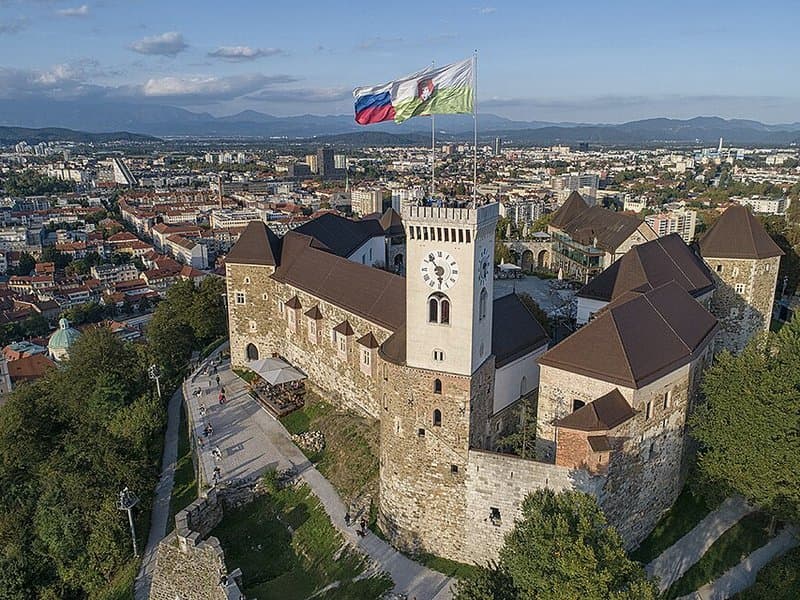
Ljubljana Castle

Ljubljana Castle

above the centre

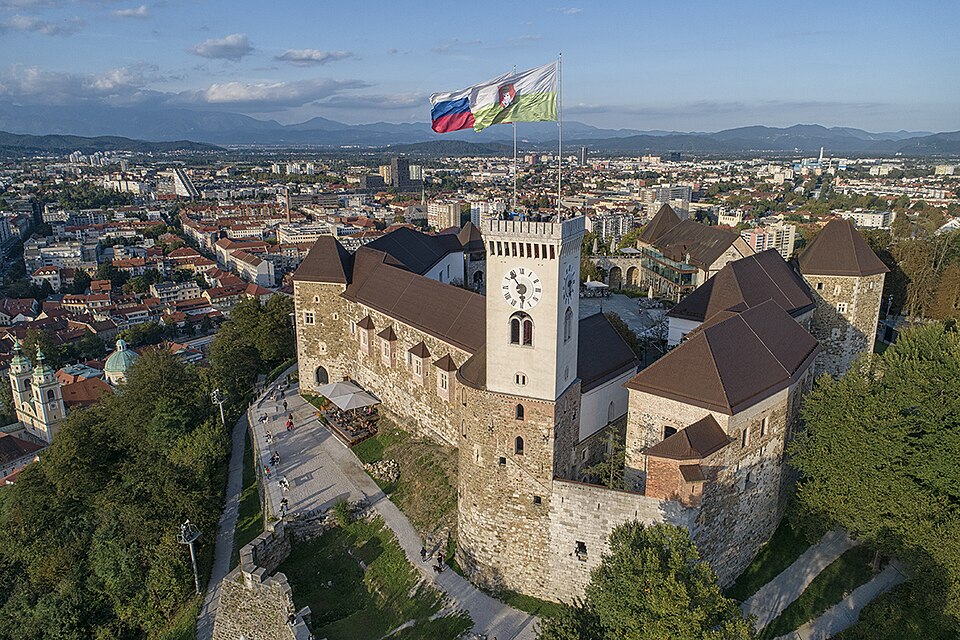
A medieval castle of the twelfth century on the hill above the city, from which the best view over the roofs, the river and, in good weather, the Alps. A funicular runs to the castle from the Market Square in four minutes. Inside are a puppet museum, a tower and a restaurant.

Tip: The funicular and entry together cost about fifteen euros. Walk up from Krakovo or the old town in fifteen minutes; it is lovelier and cheaper.

Admission:
about €15
Time needed:
2 hrs
The Triple Bridge (Tromostovje)

The Triple Bridge (Tromostovje)

centre

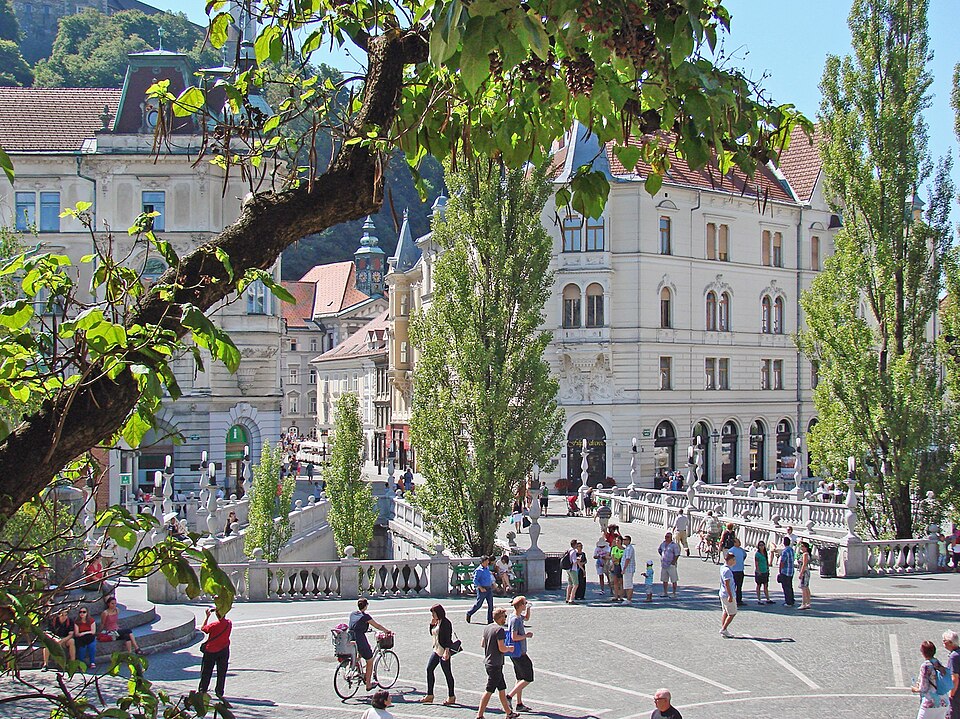
Three joined bridges over the Ljubljanica standing by Prešeren Square, designed by Jože Plečnik in 1932. He supplemented the original stone bridge with two pedestrian bridges with balustrades in the shape of posts. It is the main symbol of the city and where Ljubljana people meet.

Tip: Come at sunrise, when it is calm and the light golden, or in the evening, when the lamps light. A great photo spot is from the Dragon Bridge.

Admission:
free
Time needed:
20 min
Prešeren Square

Prešeren Square

centre

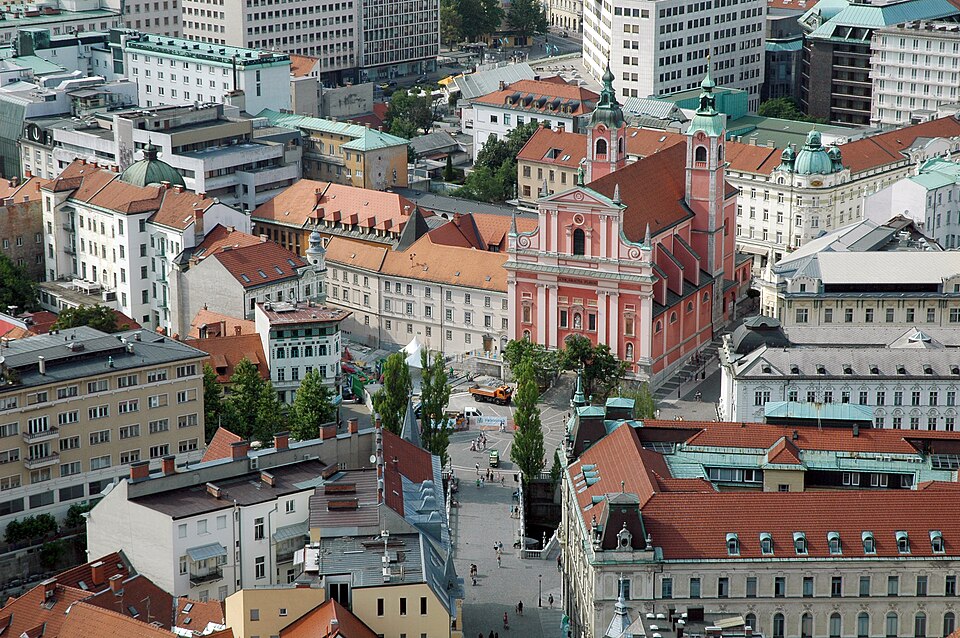
The main square of the city with a monument to the poet France Prešeren, a pink Franciscan church and Art Nouveau buildings. It is a meeting place and cultural centre where concerts are held. Around it is a pedestrian zone with cafés.

Tip: Arrange to meet 'under Prešeren', as the locals do. In the evening the square is lit and street musicians play.

Admission:
free
Time needed:
30 min
The Dragon Bridge

The Dragon Bridge

centre

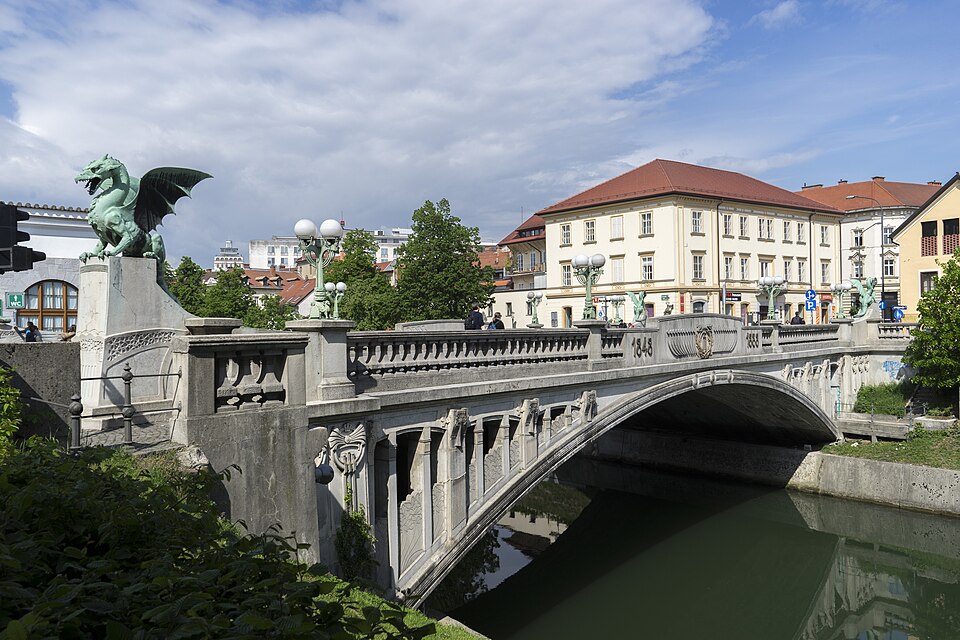
An Art Nouveau bridge from 1901 whose four bronze dragons are a symbol of Ljubljana, standing a short way from the market. According to legend the city arose after Jason and the Argonauts slew a dragon. A photo with the dragons is a must.

Tip: The dragons have the best light in the afternoon; combine the visit with the market and the Triple Bridge. Do not sit on the statues.

Admission:
free
Time needed:
15 min

The Central Market

centre

A market by the river with a colonnade by Jože Plečnik, selling fruit, vegetables, cheese and honey. The outdoor part is open Monday to Saturday, and on Fridays 'Open Kitchen' with food from around the world is held here. It is the best place to taste Slovenian cooking.

Tip: Come in the morning, when the choice is widest; on Sunday it is closed. On Fridays from March to October there is street food.

Admission:
free
Time needed:
1–2 hrs

A Cruise on the Ljubljanica

Ljubljanica river

An hour's cruise on the Ljubljanica river by boat between bridges and cafés, which shows the city from the water. Boats leave from the quay by the Triple Bridge and commentary is in English. It is the calmest way to get to know Plečnik's buildings.

Tip: The cruise costs about ten euros; it is loveliest at sunset. In summer it is worth booking in advance.

Admission:
about €10
Time needed:
1 hr

Tivoli Park

northwest of the centre

The largest city park of Ljubljana, linked to the centre by an avenue, with ponds, gardens and woods. There is a sculpture exhibition and a view of the castle. It is the green lung of the city and a favourite place for walks and running.

Tip: The park is free. It is loveliest in spring, when the trees blossom. Combine the visit with the museum of modern art.

Admission:
free
Time needed:
1–2 hrs

Metelkova

by the station

An autonomous cultural quarter in a former barracks, full of graffiti, galleries, clubs and concert spaces. It is the alternative scene of the city, where students and artists gather. By day it is a gallery, by night a club.

Tip: Come after dark, when the clubs open. The quarter is safe, but behave considerately and watch your belongings.

Admission:
free
Time needed:
1–2 hrs

Ljubljana Cathedral

centre

A Baroque cathedral of St Nicholas from the eighteenth century with bronze doors decorated with scenes from Slovenian history. Inside are frescoes and rich decoration. It stands by the market and is open free of charge.

Tip: Call in after the market. The bronze doors of 1996 are best seen from outside; mind services.

Admission:
free
Time needed:
30 min

Photos: Ljubljana Castle — LjGrad (CC BY-SA 4.0) · The Triple Bridge (Tromostovje) — Jean-Pierre Dalbéra from Paris, France (CC BY 2.0) · Prešeren Square — DimiTalen (CC0) · The Dragon Bridge — Thomas Ledl (CC BY-SA 4.0)

Where to stay

Areas and districts, matched to the kind of trip you are taking

Old town and centre

Best for: monuments and cafés

The pedestrian zone around the castle with hotels, restaurants and shops. Everything is at hand and the surroundings picturesque. Suits a first visit.

Krakovo and Trnovo

Best for: calm by the river

A quiet district south of the centre with small hotels, gardens and nineteenth-century houses. It is calmer and cheaper than the centre. A good choice for a longer stay.

Bežigrad and Tivoli

Best for: greenery and a stadium

A district north of the centre with Tivoli Park and museums. It is calm and has good transport. Suits families and a car.

Around the station

Best for: transport and cheap accommodation

Hotels and hostels by the main station, from which trains and buses run. Prices are lower, but the setting is less picturesque. Suits travellers making trips.

Getting around

From the airport

Ljubljana Airport (LJU) is twenty-six kilometres north of the centre, with flights from Europe; direct ones from Prague are few. Most Czechs travel by car through Austria, eight hundred kilometres, or by train via Vienna and Maribor. From the airport a bus and taxi run to the centre in half an hour. In Austria and Slovenia a motorway vignette is needed.

Ljubljana Airport (LJU) · 26 km

  • Bus to the centre· 45 min· €5
  • Taxi to the centre· 30 min· €40
  • Car rental· at the airport· €40

Around town

The centre of Ljubljana is a pedestrian zone, so it can be walked in a day. City buses run to Tivoli, the station and the outskirts. Bikes are rented around the city. Taxis work by app but cost more. Trains run to Bled and Postojna.

On footThe centre is a pedestrian zone.
City busAll over the city and to the airport. · €1.3
BicikeLJ bikesRental stations around the city. · €1
TaxiAround town. · €10

Useful apps: Google Maps, Marprom, Bolt, SŽ Trains

When to go

Ljubljana has a continental climate with a hot summer and a cold winter. In July it is around twenty-seven degrees, in January around three and it can snow. The best seasons are spring and autumn. In December Christmas markets are held.

Best time

May to September

What to avoid

January and February (frost)

MonthJanFebMarAprMayJunJulAugSepOctNovDec
Day3°6°11°16°21°25°27°27°22°16°9°4°
Night-3°-2°1°5°10°14°16°15°11°7°3°-1°
Rainy days9891112121010991110

Food & drink

Slovenian cooking blends Alpine, Mediterranean and Pannonian influences: sausages, pasta and pastries. A main dish in a restaurant costs fifteen to thirty euros and prices are lower in pubs away from the centre. People drink wine from Primorska and Podravje, and Union and Laško beer.

What to try

Kranjska klobasa

A pork sausage with spices and garlic, grilled or boiled and served with sauerkraut and mustard. The best-known Slovenian dish.

Štruklji

Rolled dough filled with curd cheese, nuts or herbs, boiled or baked. A traditional Slovenian dish.

Žganci

A thick porridge of buckwheat or maize flour, served with fat and crackling. A family dish.

Potica

A rolled yeast cake filled with nuts or curd cheese, the festive Slovenian dessert. Baked at Christmas and Easter.

Jota

A thick soup of beans, sauerkraut and potato with sausage. A typical dish of Primorska.

Idrija žlikrofi

Small filled dumplings from Idrija, filled with potato and bacon. A protected designation of origin.

Primorska wine

White and red wines from vineyards in the west of the country, especially Rebula and Teran. Drunk in Ljubljana's wine bars.

What it costs

Espresso

€1.8–2.5

Lunch in a restaurant

€12–25

Kranjska klobasa

€8–14

A beer

€3–4.5

Ljubljana Castle (with funicular)

€15

River cruise

€10

3★ hotel (night)

€90–170

Bus from the airport

€5

Indicative prices that change over time — treat them as a guide, not a price list.

Practical information

SocketsCEuroplug, two round pinsFSchuko
Voltage230V / 50Hz
Tap waterTap water is drinkable — Tap water in Slovenia is excellent and drunk without restriction. Slovenia has been in the eurozone since 2007.
TippingTipping is customary, ten per cent in a restaurant or rounding up. For taxi drivers rounding up is enough.
Driving on theright
SafetyLjubljana is very safe. Watch for pickpockets in crowds and for bicycles on the pedestrian zone. The emergency number is 112.
Opening hoursShops are open from nine to eight, mostly closed on Sunday. Restaurants serve lunch from noon and dinner from six. The market runs Monday to Saturday.
Customs & etiquetteSlovenes are polite and calm. Ecology matters; sort your waste and do not bring a car into the centre. On the pedestrian zone give way to pedestrians.
A few local wordsGood day — Dober danThank you — HvalaPlease — ProsimHow much is it? — Koliko stane?Cheers — Na zdravjeThe bill, please — Račun, prosimWhere is the toilet? — Kje je stranišče?

How to plan your days

1 day

A day in Ljubljana

  1. 1Morning the market and the cathedral.
  2. 2The Dragon Bridge and the Triple Bridge.
  3. 3Lunch with Kranjska klobasa.
  4. 4Afternoon the castle.
  5. 5Evening a cruise and dinner by the river.

2 days

Two days: Ljubljana and Bled

  1. 1Day one as above.
  2. 2Day two morning by train to Bled.
  3. 3Afternoon the lake and island.
  4. 4Evening return.

3 days

Three days: Ljubljana and Postojna

  1. 1Days one and two as above.
  2. 2Day three the Postojna cave and Predjama castle.
  3. 3Afternoon return.
  4. 4Evening Tivoli and Metelkova.

Day trips

Bled

55 km · 1 hr by car or train

A lake with an island and a church, a castle on a cliff and a view of the Julian Alps. Buses and trains run from Ljubljana and the trip takes a full day.

Postojna Cave

55 km · 50 min by car

Slovenia's largest cave system, which you ride through by little train and then walk. Nearby is Predjama castle in the rock. It suits a full-day trip.

Piran

130 km · 1 hr 30 min by car

A Venetian town on the Adriatic coast with Tartini Square, walls and fish restaurants. It suits a full-day trip.

Frequently asked questions

How long should I stay in Ljubljana?+

Two to three days are enough for the centre, the castle and Plečnik's monuments. For Bled and Postojna add two days. Ljubljana is small, so there is no need to hurry.

How do I get to Ljubljana from the Czech Republic?+

By car it is about eight hundred kilometres through Austria, eight to nine hours. You need an Austrian and a Slovenian motorway vignette. By train via Vienna and Maribor the journey takes about ten hours.

When is the best time to visit?+

May to September, when it is warm and festivals are held. In December there are Christmas markets. In winter it is cold, but calm.

Is Ljubljana expensive?+

It is dearer than Croatia and the Balkans, but cheaper than Austria. Lunch costs twelve to twenty-five euros, a hotel ninety to a hundred and seventy euros a night. Cheapest are the market and pubs.

Who was Plečnik?+

Jože Plečnik was a Slovenian architect who in the 1920s and 1930s designed the bridges, market and library of Ljubljana. His work defined the look of the centre. Many buildings are on the UNESCO list.

How do I get from Ljubljana to Bled?+

By bus in about an hour and a half for eight euros, by train to Lesce–Bled in an hour and a bus to the lake. By car it is an hour on the A2 motorway. Ljubljana is a good base.

Is Ljubljana suitable for families?+

Yes, it is small and safe, with a castle, Tivoli Park and a zoo. Children enjoy the funicular and the Dragon Bridge. The pedestrian zone is comfortable with a pushchair.

Do you pay in euros in Ljubljana?+

Yes, Slovenia has used the euro since 2007. Cards are accepted nearly everywhere and ATMs are on every corner in the centre.

Visa Requirements

Check the latest visa requirements for entering this country. Some nationalities may need to apply for a visa or e-visa before travel.

Check visa requirements

Language

Slovenian

Currency

EUR

Timezone

Europe/Ljubljana

Dial Code

+386

Population

2.1M

Area

20,273 km²

Voltage

230V / 50Hz

Driving Side

Right

Top Hotels in Ljubljana

Live prices from 500+ properties

Loading hotels...

More destinations in Slovenia

Planning a trip to Ljubljana?

Compare hundreds of hotels, find the best price, and book with free cancellation on TravelManiac.