Hotels in Maldives

Twelve hundred islands, a hundred and fifty of them home to a resort

Maldives

LanguageEnglish
CurrencyMVR
TimezoneGMT+5
Temperature28-32 °C
Dial Code+960
Population521K
Area298 km²
SocketsType D / Type G
Tap waterBottled advised

Discover Maldives

The Maldives are twenty-six rings of coral atolls stretched across eight hundred kilometres along the equator, and the flattest country on Earth — its highest natural point is two and a half metres. Tourism here works differently from anywhere else: one island means one resort, and choosing where to stay is also choosing what you'll see for the whole week. Since 2009, though, there's been a second path that's still not well known abroad: guesthouses on inhabited local islands, where a week costs a fraction of the price, in exchange for swimwear being banned on the public beach and no alcohol sold anywhere. The sea stays between 28 and 30°C year-round, and underwater visibility routinely exceeds thirty metres. The season splits into dry, from December to April, and wet, from May to November, when prices are lower and manta rays arrive at the reefs.

What to see

The places worth your time in Maldives, and what to expect at each

Malé

Malé

Kaafu Atoll

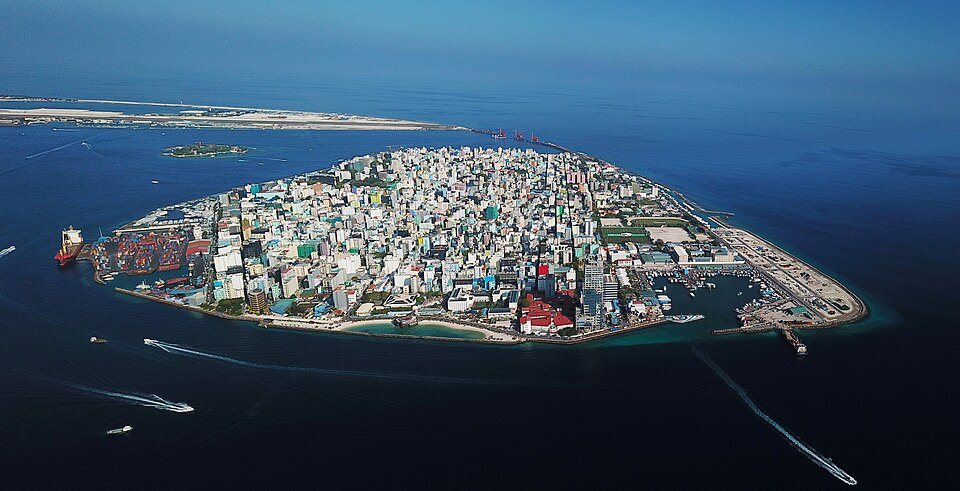
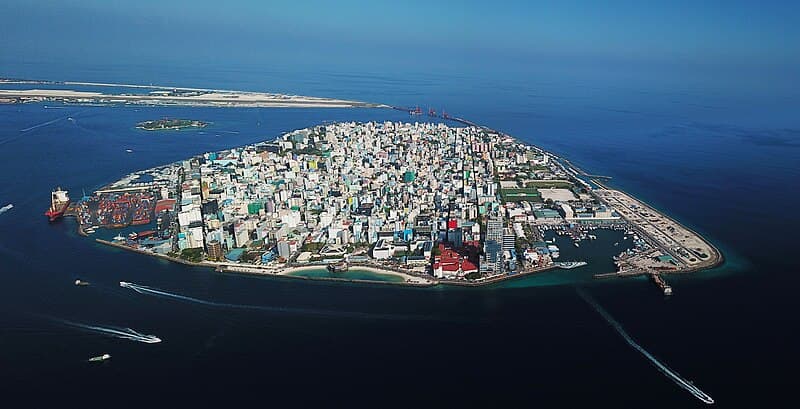
The capital, packed onto an island of under two square kilometres, home to a third of the country's population. It's a densely built Asian city with colourful houses, scooters in every alley and a fish market by the harbour — the exact opposite of the brochure image.

Tip: If you land in the morning and your seaplane doesn't leave until the afternoon, you can fit in Malé — the ferry from the airport runs every ten minutes, costs ten rufiyaa and takes eleven minutes.

Admission:
free
Time needed:
half a day
Old Friday Mosque (Hukuru Miskiy)

Old Friday Mosque (Hukuru Miskiy)

Malé, city centre

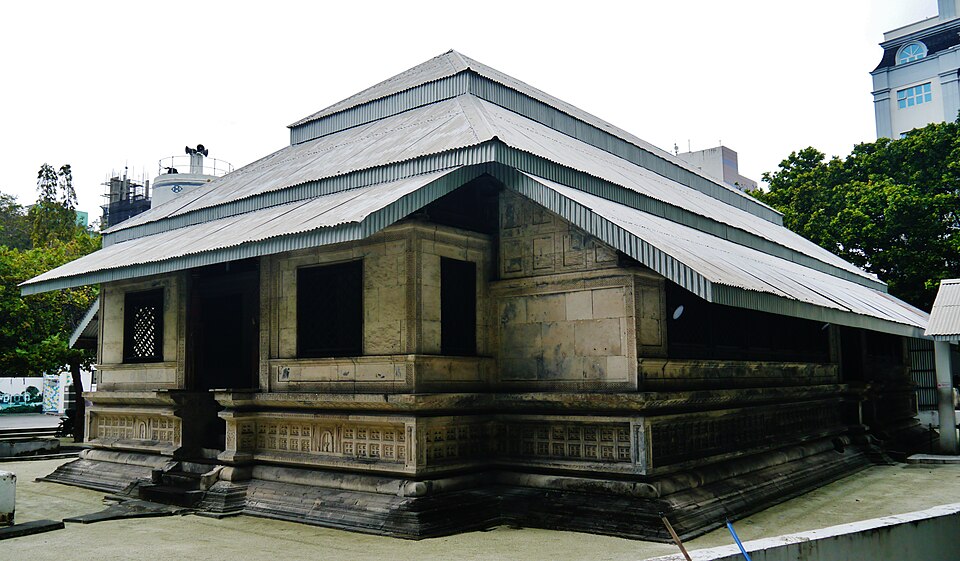
A mosque from 1658 built of carved coral stone blocks, engraved with Arabic inscriptions and ornaments. The interior panelling is lacquered wood, and the surrounding cemetery has coral gravestones with caps distinguishing men's and women's graves. It's on the UNESCO tentative list.

Tip: Entry inside requires permission from the Ministry of Islamic Affairs, arranged in advance — without it you can only see the cemetery and the exterior, which is worth it for the coral carvings alone.

Admission:
free, entry inside with permission
Time needed:
1 h
Hulhumalé

Hulhumalé

Kaafu Atoll, next to the airport

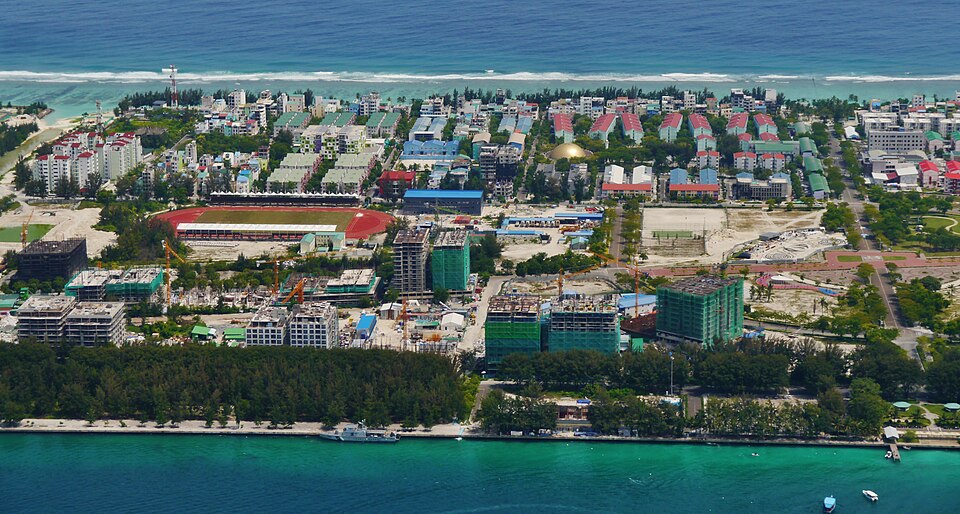
An artificial island reclaimed from the lagoon next to the airport, where overcrowded Malé is gradually relocating. It has a two-kilometre public beach lined with palms, a wide promenade and cheap guesthouses. It's the only place in the country where you stay on solid ground next to the airport with no boat needed.

Tip: The beach at the northern end has a designated zone where swimwear is allowed; elsewhere on the island you swim in a T-shirt and shorts, even if you're alone on the shore.

Admission:
free
Time needed:
half a day
Maafushi and the local islands

Maafushi and the local islands

South Malé Atoll

The best-known inhabited island, where a stay costs a tenth of a resort's price. Around three thousand people live here, with fifty guesthouses and gear-rental shops along the main street, plus a bikini beach — a fenced-off stretch where tourist dress rules apply.

Tip: The public ferry from Malé runs only twice a day, not at all on Fridays, and costs twenty-two rufiyaa; a speedboat runs daily for twenty-five dollars and takes thirty minutes instead of two hours.

Admission:
accommodation from $50/night
Time needed:
several days
Hanifaru Bay, Baa Atoll

Hanifaru Bay, Baa Atoll

Baa Atoll

A shallow bay where currents concentrate plankton, drawing in dozens of reef manta rays and occasionally a whale shark. Part of a UNESCO biosphere reserve, and under the right conditions more than a hundred animals feed at once in an area smaller than a football pitch.

Tip: The season runs from May to November, strongest in August and September around the new and full moon. Diving is prohibited — only snorkelling is allowed, and only with a licensed guide.

Admission:
trip from $80
Time needed:
half a day
South Ari Atoll and whale sharks

South Ari Atoll and whale sharks

Alifu Dhaalu, South Ari

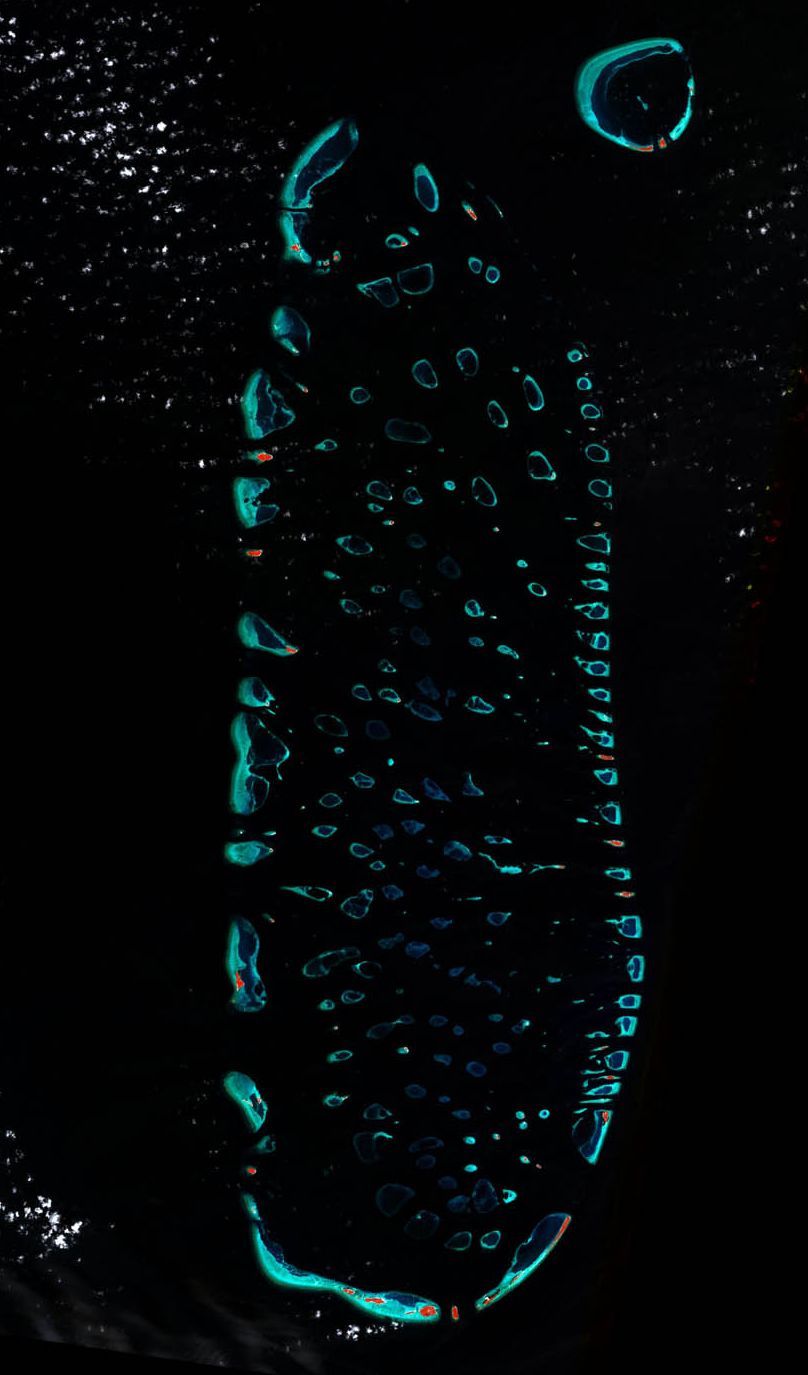
The only place in the Maldives where whale sharks stay year-round, thanks to cold, plankton-rich water rising along the outer edge of the atoll. The animals measure five to eight metres, swim near the surface, and snorkelling with them is safe since they feed only on plankton.

Tip: Trips leave at six in the morning, when the water is calm and few boats are out; afternoon trips have a harder time finding sharks, and you can end up with five boats around a single one.

Admission:
trip from $70
Time needed:
full day
Banana Reef

Banana Reef

North Malé Atoll

The first dive site ever opened in the Maldives, and still one of the best. The banana-shaped reef has overhangs, caves and steep walls, around which schools of trevally, moray eels and reef sharks gather in the current.

Tip: Currents here tend to be strong and the site counts as advanced; for a first dive in the Maldives, the nearby Nassimo Thila, with the same wildlife and calmer water, is a better fit.

Admission:
dive from $60
Time needed:
2 h
Thulusdhoo and surfing

Thulusdhoo and surfing

North Malé Atoll

A local island with the two best-known waves in the country, Cokes and Chickens. They break over a shallow coral reef a few hundred metres offshore and rank among the best rights and lefts in the Indian Ocean. The island is also home to a Coca-Cola bottling plant, which gave the Cokes wave its name.

Tip: Wave season runs from March to October, when the south-west monsoon blows. The reef is sharp and shallow — water shoes and a helmet aren't overcautious, locals wear them too.

Admission:
free
Time needed:
several days
Rasdhoo and Madivaru

Rasdhoo and Madivaru

North Ari Atoll

A small inhabited island with guesthouses, known above all for the Madivaru Corner dive site, where hammerhead sharks gather at sixty metres along the edge of the atoll. The early-morning dive there is one of the few in the Indian Ocean where a sighting is almost guaranteed.

Tip: Hammerhead trips leave at half past five in the morning and go deep, so Advanced certification is required. Non-divers can still snorkel from shore at a nearby sandbank with turtles.

Admission:
dive from $65
Time needed:
half a day

Photos: Malé — Shahee Ilyas (CC BY-SA 3.0) · Old Friday Mosque (Hukuru Miskiy) — Zairon (CC BY-SA 4.0) · Hulhumalé — Zairon (CC BY-SA 4.0) · Maafushi and the local islands — Nattu from Male', Maldives (CC BY 2.0) · Hanifaru Bay, Baa Atoll — Ben Shoshana (CC BY-SA 4.0) · South Ari Atoll and whale sharks — NASA (Public domain) · Banana Reef — This illustration was made by (User:Royonx) and released under the license(s) stated above. You are free to use it for a (CC0) · Thulusdhoo and surfing — The President's Office, Maldives (CC BY 4.0) · Rasdhoo and Madivaru — Wikimedia Commons (CC BY-SA 3.0)

Where to stay

Areas and districts, matched to the kind of trip you are taking

North and South Malé Atoll

Best for: a short transfer and cheaper resorts

The atolls closest to the airport, reachable by speedboat in ten minutes to an hour, with no seaplane cost. This is where the greatest concentration of resorts of all price ranges sits, along with most guesthouses. The downside is heavier boat traffic and reefs marked by coral bleaching.

Ari Atoll

Best for: diving and whale sharks

A large atoll west of Malé with the country's best dive sites and year-round whale sharks along its southern edge. The transfer is a twenty-five-minute seaplane hop or a two-hour boat ride. Resorts are mid-to-upper range, and guesthouses are also available on Rasdhoo and Ukulhas in the north.

Baa and Raa Atoll

Best for: manta rays and the biosphere reserve

Northern atolls registered as a UNESCO biosphere reserve, where manta rays gather in Hanifaru Bay from May to November. It's about a thirty-minute seaplane flight. Resorts here are mostly luxury, the reefs the best preserved in the country, and there's far less boat traffic than around Malé.

Hulhumalé and Malé

Best for: the cheapest accommodation and layovers

The artificial island next to the airport and the capital, connected by a bridge. Accommodation here runs thirty to seventy dollars a night, unmatched anywhere else in the Maldives. It's the solution for a night before an early flight, or for anyone who wants to see how the country actually lives outside the resorts.

Getting around

From the airport

The country is reached only via Velana International Airport on Hulhulé island, next to Malé. There's no direct flight from Prague; connections run via Dubai, Doha, Istanbul or Abu Dhabi, and the whole journey takes eleven to fifteen hours. From the moment you land, the resort takes over transport — by speedboat to nearby atolls, by seaplane, which flies only in daylight, to distant ones. Landing after half past three in the afternoon usually means a mandatory night at an airport hotel and the flight only the next morning, the most common unpleasant surprise of a Maldives holiday.

Velana International Airport (MLE) · 2 km

  • Ferry to Malé· 11 min· 10 MVR
  • Speedboat to a resort· 20–90 min· $100 return
  • Seaplane to distant atolls· 25–50 min· $400 return
  • Domestic flight and boat· 1–2 h· $250 return

Around town

Nobody drives anywhere in the Maldives — all movement between islands is by water or air, and it's paid for separately. Within a resort you walk or cycle; the whole island can be covered in twenty minutes. Cheap public ferries run between local islands on a schedule, though it doesn't cover Fridays and some routes run only twice a week. Speedboats are run privately, three times the price and three times the speed. Malé and Hulhumalé have flat-fare taxis, and a bus runs between the two islands over the bridge.

SeaplaneThe only way to reach distant atolls. Flies only in daylight, with the last departure usually around half past four. · $400 return
Resort speedboatStandard for atolls within a hundred kilometres of the airport, timed to your flight, including at night. · $100 return
Public ferryThe cheapest transport between local islands, slow, and not running on Fridays. The timetable is posted at the harbour. · 22 MVR
Taxi in Malé and HulhumaléFlat fare, no meter; slightly more across the bridge between the two islands. · 30 MVR

Useful apps: MTCC Ferry, Google Maps, Windy

When to go

The Maldives have no winter or summer, only a dry and a wet monsoon. From December to April skies are clear, the sea is calm and underwater visibility is at its best — this is the main season, with prices forty to a hundred percent higher. From May to November afternoon showers arrive, usually lasting an hour, but manta rays and whale sharks also arrive, and accommodation is at its cheapest all year. June and October tend to be least pleasant; late April and early November offer the best balance of price and weather. Christmas and New Year are the most expensive time of year, with mandatory extra dinners on top.

Best time

January to April for weather, August and September for manta rays

What to avoid

June and October, for the heaviest rainfall

MonthJanFebMarAprMayJunJulAugSepOctNovDec
Day30°31°31°32°31°30°30°30°30°30°30°30°
Night25°25°26°26°26°25°25°25°25°25°25°25°
Rainy days64691516151516171410
Sea28°29°29°30°30°29°29°29°29°29°29°29°

Food & drink

Maldivian cuisine rests on three ingredients: tuna, coconut and rice. At a resort you get an international buffet, with local food appearing only as a themed evening once a week; on the local islands, though, everyday cooking is far more interesting. The breakfast dish mas huni, tuna with coconut, is eaten with warm roshi flatbread. In the afternoon, hedhikaa teahouses serve fried bite-sized snacks and sweet tea — you order by pointing at the trays on the counter. Alcohol isn't sold anywhere in the country and is unavailable outside resorts and floating bars; it can't be brought in either.

What to try

Mas huni

Grated coconut mixed with smoked tuna, onion, chilli and lime. The national breakfast, eaten by hand wrapped in roshi flatbread, and the cheapest meal on the island.

Garudhiya

Clear tuna broth served with rice, lime, chilli and onion that you mix in yourself. It looks plain, but it's the most quintessentially Maldivian dish there is.

Mas riha

Tuna curry in coconut milk with curry leaves and pandan, milder than Indian curry. Served with rice or roshi as the day's main meal.

Hedhikaa

The umbrella term for afternoon fried snacks — tuna balls called gulha, triangle-shaped bajiya, rolled keemia. A piece costs a few rufiyaa and is eaten with sweet tea.

Rihaakuru

A thick, dark tuna paste made by long reduction, strongly salty and umami. Maldivians spread it on rice; foreigners either love it or never touch it again.

Bis keemiya

A fried triangle filled with egg, cabbage and tuna, somewhere between a samosa and a strudel. The most common snack at teahouses and on ferries.

Saagu bondibai

A sweet pudding made of sago, coconut milk and rose water, served for holidays and during Ramadan. Served chilled, and the only common Maldivian dessert.

Raa

Sweet sap from the coconut palm, freshly tapped and unfermented, tasting like thin syrup. Sold in the morning on local islands — by afternoon it's already turned.

What it costs

Night in a guesthouse on Maafushi

$50–90

Night in a 4-star resort, half board

$350–600

Night in a 5-star water bungalow

from $900

Lunch at a local teahouse

$3–6

À la carte dinner at a resort

$60–120 per person

Beer at a resort

$9–14

Snorkelling with whale sharks

from $70

Seaplane, return

$400–600

Indicative prices that change over time — treat them as a guide, not a price list.

Practical information

SocketsDthree round pins (India)GBritish, three rectangular pins
Voltage230V / 50Hz
Tap waterTap water is treated, bottled is common — On resort islands, desalinated and filtered water is served, safe to drink and usually free in glass bottles in the room. On local islands, tap water is brackish and undrinkable; bottled water is bought for around twenty rufiyaa a bottle. Ice at resorts is safe.
TippingResorts usually add a ten percent service charge and sixteen percent tax to the bill, so the listed price isn't final. Even so, ten to twenty dollars is customarily left for room staff per week, and a similar amount for a dive guide. On local islands, tipping isn't customary.
Driving on theleft
SafetyThe Maldives are very safe: theft is rare and violent crime practically nonexistent. The real risks are equatorial sun, currents in the channels between islands strong enough to sweep away even a good swimmer, and sharp coral. A doctor isn't always available on resort islands, and a decompression chamber exists only in Malé and a handful of atolls — dive insurance covering air evacuation is essential.
Opening hoursFriday is the day off; offices and most shops on local islands close, and public ferries don't run. During Ramadan, eating and drinking in public during the day is prohibited, and restaurants outside resorts open only after sunset. Resorts operate independently of all this, seven days a week.
Customs & etiquetteThe Maldives are a conservative Muslim country, and outside resort islands strict rules apply: swimwear only on designated bikini beaches, elsewhere a T-shirt and knee-length shorts. Alcohol, pork and overt religious symbols of other faiths may not be brought into the country, and luggage is checked at the airport. None of this is enforced within a resort, where ordinary international hotel rules apply.
A few local wordsHello — Assalaamu alaikumThank you — ShukuriyaaHow much does it cost? — Kihaavaraka?Yes / no — Aan / noonGood (tasty) — Molhu

How to plan your days

1 day

A day between flights

  1. 1Ferry from the airport to Malé, the fish market and the harbour.
  2. 2The Old Friday Mosque and its coral cemetery, then the Islamic Centre from the outside.
  3. 3Lunch at a teahouse and afternoon hedhikaa with sweet tea.
  4. 4Bus to Hulhumalé, a swim on the northern beach and dinner on the promenade.

2 days

Two days on a local island

  1. 1Morning speedboat to Maafushi, check in at a guesthouse.
  2. 2Afternoon snorkelling off the bikini beach and sunset on the jetty.
  3. 3Day two, a full-day trip to a sandbank, a wreck and a reef with turtles.
  4. 4Evening boat back to Malé, or an extra night.

3 days

Three days with whale sharks

  1. 1The first two days as above.
  2. 2Day three, transfer to South Ari Atoll, where whale sharks stay year-round.
  3. 3Six a.m. departure, snorkelling with sharks and manta rays.
  4. 4Afternoon dive or reef snorkelling, return in the evening.
  5. 5If time allows, add a day at Rasdhoo for a morning hammerhead dive.

Day trips

Sandbank and turtle snorkelling

30–60 min by boat

The standard full-day trip from every island: a few hours on an uninhabited sandbank in the middle of the lagoon, with nothing but sand and sea, plus two snorkelling stops at a reef with hawksbill turtles. From Maafushi it costs around thirty dollars.

Fuvahmulah

490 km · 1 h 40 min by plane

An island in the south of the country that, uniquely, isn't part of an atoll and drops straight into deep water. The channel beside it is one of the few places in the world where you can dive with tiger sharks year-round. Reached via Malé, it's a two-to-three-day trip.

Seenu (Addu) Atoll

540 km · 1 h 15 min by plane

The southernmost atoll, with four islands connected by road — unique in the Maldives, allowing you to rent a bike and cover thirty kilometres. It's home to the wreck of the British ship Hulhumeedhoo, and its reefs have been the least affected by coral bleaching.

Frequently asked questions

Is a local island worth it instead of a resort?+

Financially, clearly yes: a guesthouse on Maafushi runs fifty to ninety dollars a night including breakfast, a comparable resort three hundred fifty and up. The trade-off is that swimwear isn't allowed on the public beach, alcohol isn't sold anywhere, and you share the island with several thousand people. It's an excellent choice for divers and snorkellers, less so for a honeymoon.

How much does the resort transfer cost?+

It's not included in the flight or usually the stay, and it's the biggest hidden cost of a Maldives holiday. A speedboat to a nearby atoll runs a hundred to two hundred dollars return per person, a seaplane to a distant atoll four hundred to six hundred. Check the price with the resort before booking, since it can differ by double between two neighbouring islands.

Why do I sometimes have to stay overnight in Malé?+

Seaplanes fly only in daylight, and the last one leaves around half past four in the afternoon. Land later than that and the resort has no way to get you there, so you pay for a night at an airport hotel plus the flight the next morning. When choosing a flight, look at the arrival time in Malé, not just the fare.

When can you see manta rays and whale sharks?+

Whale sharks stay in the southern Ari Atoll year-round, so the odds are good any time. Manta rays follow the plankton: from May to November they're on the western side of the country, mainly in Hanifaru Bay in Baa Atoll, where dozens gather in August and September. From December to April they move to the eastern side of the atolls.

Can I bring alcohol to the Maldives?+

No, importing alcohol is banned and bags are X-rayed at the airport; any bottles found are confiscated and returned on departure. Drinking is allowed only in resorts and on floating bars, and it isn't cheap there — a beer costs nine to fourteen dollars. On local islands alcohol isn't available at all.

Do I need a visa?+

No, Czech citizens receive a free thirty-day tourist visa on arrival. The requirements are a passport valid at least one month after arrival, proof of accommodation and a return ticket. An online Imuga Traveller Declaration form must also be filled in up to seventy-two hours before arrival.

Is the sea the same temperature year-round?+

Yes, it stays between 28 and 30°C all twelve months, with only one or two degrees of difference between winter and summer. What changes between seasons is the clarity of the sky, wave strength and underwater visibility, not the water temperature. A wetsuit is used only for repeated dives.

How many days are enough for the Maldives?+

Seven nights is standard and matches how flights and transfers are priced. A shorter stay isn't worth it once you factor in two days spent travelling and the cost of the seaplane. If you want to combine a resort with a local island, or go diving, plan for ten to fourteen days.

Arrival Card

Fill in the required arrival card before your trip to avoid delays at immigration.

Complete Arrival Card

Visa Requirements

Check the latest visa requirements for entering this country. Some nationalities may need to apply for a visa or e-visa before travel.

Check visa requirements

Language

Dhivehi / English

Currency

MVR

Timezone

GMT+5

Dial Code

+960

Population

521K

Area

298 km²

Voltage

230V / 50Hz

Driving Side

Left

Top Hotels in Maldives

Live prices from 500+ properties

Loading hotels...

Planning a trip to Maldives?

Compare hundreds of hotels, find the best price, and book with free cancellation on TravelManiac.