Hotels in Mauritius

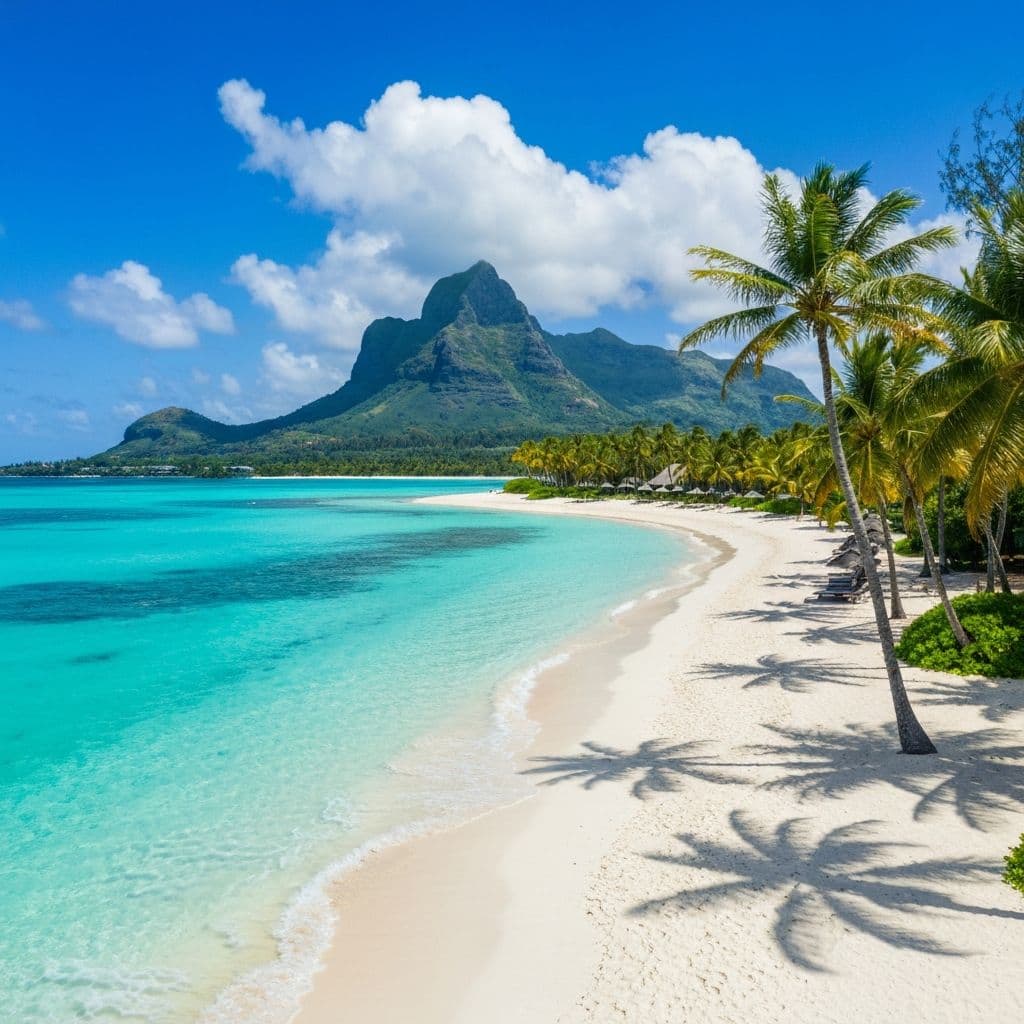
A volcanic island ringed by a lagoon and a coral reef

Mauritius

LanguageEnglish
CurrencyMUR
TimezoneGMT+4
Temperature22-30 °C
Dial Code+230
Population1.3M
Area2,040 km²
SocketsType C / Type G
Tap waterBottled advised

Discover Mauritius

Mauritius is a volcanic island roughly the size of Greater London, entirely ringed by a coral reef — and that reef is what makes a holiday here different from anywhere else. Between the shore and the reef lies a shallow lagoon, its water as calm as a swimming pool and barely waist-deep even a hundred metres from the beach. The interior is the opposite: steep volcanic peaks, sugarcane fields, waterfalls, and the deep Black River Gorges, home to the last remnants of native forest where the dodo once lived, four hundred years ago. Settled in turn by the Dutch, French, and British, who brought labourers from India, the island today has a Hindu temple, a mosque, a Chinese pagoda, and a Creole church all within a single street, and people speak Creole, French, and English. For Europeans, it's the most accessible luxury island in the Indian Ocean, reachable with a single connection, where a beach holiday can be paired with sightseeing without ever needing a seaplane.

What to see

The places worth your time in Mauritius, and what to expect at each

Seven Coloured Earths, Chamarel

Seven Coloured Earths, Chamarel

southwest, Chamarel

A rippled plain of bare dunes whose sand shifts between brick red, purple, and blue-green. The colours come from volcanic lava breaking down into iron and aluminium oxides, which separate naturally by density — mix them in a test tube and they'll settle apart again on their own.

Tip: The Chamarel waterfall and a giant tortoise enclosure sit in the same complex, but the colours look richest in early morning or late-afternoon light — at midday they appear washed out.

Admission:
around 475 MUR
Time needed:
2 h
Le Morne Brabant

Le Morne Brabant

southwest

A basalt monolith five hundred fifty-six metres high, rising straight out of the lagoon at the island's southwestern tip. In the nineteenth century, escaped slaves hid in its caves, and the mountain is UNESCO-listed as a memorial to resistance against slavery.

Tip: The climb is free, but the upper section is guide-only, and the gate at the base closes at 10am — set off by seven at the latest, or you'll only reach the viewpoint halfway up.

Admission:
free, guide from 1,500 MUR
Time needed:
4-5 h
Black River Gorges National Park

Black River Gorges National Park

southwestern interior

The island's largest protected area, with sixty kilometres of trails cutting through gorges and the last continuous stretch of native Mauritian forest. Home to the Mauritius kestrel, saved from just four surviving birds, and the endemic pink pigeon.

Tip: The Gorges Viewpoint sits right by the road and anyone can manage it; the real forest starts only on the Macchabée trail, entered from the visitor centre on the eastern side, where far fewer people go.

Admission:
free
Time needed:
half a day
Ganga Talao

Ganga Talao

southern interior, Grand Bassin

A crater lake at five hundred metres elevation, the most significant Hindu pilgrimage site outside India. A thirty-three-metre statue of Shiva stands by the shore alongside an equally tall statue of Durga, temples ring the lake, and free-roaming macaque monkeys swim in it.

Tip: During the Maha Shivaratri festival in February or March, over four hundred thousand pilgrims walk here, and roads in the south of the island are impassable for several days — plan around it, or avoid the dates entirely.

Admission:
free
Time needed:
1.5 h
Pamplemousses Botanical Garden

Pamplemousses Botanical Garden

north, Pamplemousses

The oldest botanical garden in the southern hemisphere, founded in 1770. Famous for its pond of giant Victoria amazonica water lilies, whose leaves span over two metres across, and an avenue of talipot palms, which flower once every sixty years and then die.

Tip: Without a guide you'll walk through the garden like an ordinary park and miss half of what makes it interesting; guides wait at the gate, cost around 300 rupees per group, and take an hour.

Admission:
around 200 MUR
Time needed:
2 h
Port Louis and Caudan Waterfront

Port Louis and Caudan Waterfront

northwest, Port Louis

The capital, squeezed between the harbour and the mountains, where a colonial square, a Chinese quarter, the Jummah mosque, and a bustling central market all sit within a few hundred metres of each other. The redeveloped Caudan Waterfront docks form a promenade with shops and the Blue Penny Museum.

Tip: The Blue Penny Museum displays the world's two most valuable stamps for only ten minutes each hour, to prevent fading — arrive five minutes before the hour or you'll see an empty case.

Admission:
free, museum 245 MUR
Time needed:
half a day
Île aux Cerfs

Île aux Cerfs

east, near Trou d'Eau Douce

An islet in the lagoon off the east coast, with the palest sand on the island and shallow water in shades of turquoise. Fully enclosed by the reef, it's safe for swimming even with young children, and holds a golf course designed by Bernhard Langer.

Tip: A public boat from Trou d'Eau Douce costs a fraction of an organised tour and takes just a few minutes; head to the northern end of the island, where the beach is empty while hundreds of people crowd the jetty.

Admission:
boat from 500 MUR return
Time needed:
full day
Trou aux Cerfs

Trou aux Cerfs

centre, Curepipe

An extinct volcanic crater right above the town of Curepipe, three hundred metres wide and eighty-five metres deep, its floor overgrown and holding a small pond. A paved path circles the rim, with views across the island to Le Morne and the Trois Mamelles range.

Tip: Curepipe sits at five hundred fifty metres elevation and is the rainiest spot on the island — visit the crater in the morning, as afternoons are often clouded over even in the dry season.

Admission:
free
Time needed:
1 h
Blue Bay Marine Park

Blue Bay Marine Park

southeast, near Mahébourg

A protected lagoon in the southeast with the coast's best-preserved coral, including a brain coral colony estimated at a thousand years old. The water is clear and shallow, so the coral and hundreds of fish species can be viewed with ordinary snorkelling straight from the beach.

Tip: Glass-bottom boats run here from morning and scare the fish off; the best snorkelling is right after seven from the public Blue Bay beach, when the water is calm and no one else is out yet.

Admission:
free, boat from 400 MUR
Time needed:
half a day

Photos: Seven Coloured Earths, Chamarel — "dronepicr" (CC BY 2.0) · Le Morne Brabant — "dronepicr" (CC BY 2.0) · Black River Gorges National Park — Adamina (CC BY 2.0) · Ganga Talao — Starts (CC BY-SA 4.0) · Pamplemousses Botanical Garden — Condem at English Wikipedia (Public domain) · Port Louis and Caudan Waterfront — Simisa (talk · contribs) (CC BY-SA 3.0) · Île aux Cerfs — Arne Müseler (CC BY-SA 3.0 de) · Trou aux Cerfs — Arne Müseler (CC BY-SA 3.0 de) · Blue Bay Marine Park — Lukas von Daeniken from Schweiz (CC BY-SA 2.0)

Where to stay

Areas and districts, matched to the kind of trip you are taking

North and Grand Baie

Best for: first-time visitors, restaurants, and nightlife

The island's liveliest area, with the widest choice of restaurants, bars, and shops, and a calm, wave-free lagoon year-round. Accommodation ranges from budget apartments to five-star resorts. Port Louis is thirty minutes away, and boat trips to the northern islets depart from here.

West and Flic-en-Flac

Best for: sunsets, diving, and families

An eight-kilometre sandy beach shaded by casuarina trees, and the driest climate on the island, since the mountains hold back the rain. Chamarel and Black River Gorges are both nearby, and boats to see the dolphins leave from Tamarin. Prices run lower than in the north.

Southwest and Le Morne

Best for: kitesurfing and the most luxurious hotels

The stretch beneath the Le Morne monolith, where wind and a shallow lagoon combine to make one of the world's best kitesurfing spots. Only a handful of large resorts sit here, and otherwise the area is empty. Restaurants and shops are far away, so plan on having a car.

East and Belle Mare

Best for: the finest beaches and quiet

The island's longest continuous beaches, with sand paler than elsewhere and the lowest density of development. The trade wind blows through here, keeping it cooler and choppier from June to September. It's the calmest but also the most expensive part of the island, with Île aux Cerfs within easy reach.

Getting around

From the airport

The island's only international airport, Sir Seewoosagur Ramgoolam, lies in the southeast near Mahébourg, about fifty kilometres from Port Louis. There's no direct flight from Prague; connections run through Dubai, Paris, Istanbul, or Vienna, and the journey takes fourteen to eighteen hours. Emirates and Air Mauritius offer the shortest routings. A hotel transfer is usually included in package holidays; travelling independently, it's worth renting a car right at the airport, since public transport to the northern resorts takes over two hours with a change in Port Louis.

Sir Seewoosagur Ramgoolam International (MRU) · 48 km

  • Taxi to Grand Baie· 1 h 15 min· 2,500 MUR
  • Hotel transfer· 45-90 min· included in stay
  • Bus to Mahébourg· 20 min· 30 MUR
  • Rental car from the airport· immediate· 1,200 MUR / day

Around town

Buses cover the whole island and are very cheap, with a long-distance ticket costing around 50 rupees, but they run slowly, stop around 6:30pm, and journeys between resort areas often require a change in Port Louis or Curepipe. Anyone wanting to see the interior needs a car: driving is on the left, the M1 motorway crosses the island from the airport to the north, and the drive from one end to the other takes about ninety minutes. Taxis are pricey and fares are negotiated upfront, since no one uses a meter. Port Louis has a modern tram, the Metro Express.

BusThe cheapest way around the island; the last services run around 6:30pm. Pay the driver in cash. · 25 MUR
Rental carThe best way to see the interior. Driving is on the left, roads are good, but parking in Port Louis is difficult. · 1,200 MUR / day
Metro ExpressA tram between Port Louis and Curepipe via Rose Hill and Quatre Bornes, air-conditioned and fast. · 25 MUR
TaxiAgree the fare beforehand — meters aren't used. Drivers can be hired for a flat-rate full-day island tour. · 2,500 MUR full-day tour

Useful apps: Google Maps, Yugo, Metro Express

When to go

Mauritius sits in the southern hemisphere, so the seasons are reversed. Summer, from November to April, is hot and humid at around 30°C, with the warmest sea and cyclone risk from January to March. Winter, from May to October, brings 25°C, dry conditions, and a southeasterly wind that raises waves on the east and south coasts and makes the mountains noticeably cool. The most stable weather tends to fall in September, October, and May. The interior around Curepipe gets over two metres of rain a year, while the west coast gets under one — the gap between the island's two ends is bigger than the gap between seasons.

Best time

September to December and May

What to avoid

January to March, for cyclones and humidity

MonthJanFebMarAprMayJunJulAugSepOctNovDec
Day30°30°30°29°27°25°25°25°26°27°29°30°
Night24°24°24°23°21°19°18°18°19°20°22°23°
Rainy days151615131211121186711
Sea28°28°28°27°26°25°24°23°24°25°26°27°

Food & drink

Mauritian cuisine blends Indian, Creole, Chinese, and French influences, and it's one of the main reasons to come here. The best food is sold on the street: dholl puri, a thin flatbread filled with split peas, costs a few rupees, and Mauritians eat two million of them a day. Restaurants serve tomato-based rougaille curries, Chinese fried noodles (mine frite), and French pastries side by side. Rum here is distilled straight from fresh cane juice, and the Rhumerie de Chamarel and Saint Aubin distilleries offer tastings. Unlike in the Maldives, alcohol is freely available and cheap.

What to try

Dholl puri

A thin flatbread filled with ground yellow split peas, served with vegetable curry, chutney, and chilli paste. The island's cheapest and best food, bought from a street stall and eaten rolled up in your hand.

Rougaille

A Creole tomato sauce with onion, garlic, thyme, and chilli, used to braise fish, chicken, or sausage. The staple of every Mauritian family's Sunday lunch.

Mine frite

Fried Chinese noodles with vegetables, egg, and meat, sold from stalls and restaurants alike. A legacy of Chinese immigration and the most common fast food after dholl puri.

Vindaye

Fish or octopus marinated in mustard, turmeric, garlic, and vinegar, served cold. A distant relative of Portuguese vinha d'alhos and a speciality you won't find elsewhere.

Gâteaux piments

Fried balls of ground yellow split peas with chilli and coriander, about the size of a walnut. Bought ten to a paper bag for morning coffee or with a beer.

Octopus curry

Ourite in coconut or tomato curry, braised slowly until tender. The signature dish of fishing villages on the island's east and south coasts.

Alouda

A sweet milky drink with basil seeds, agar jelly, and vanilla or almond flavouring. Sold at the Port Louis market, and a more effective way to cool down than lemonade.

Rum from fresh cane juice

Unlike Caribbean rum made from molasses, Mauritian rum is distilled straight from cane juice. The Chamarel and Saint Aubin distilleries offer tastings with a tour.

What it costs

Dholl puri from a street stall

25-40 MUR

Lunch at a local restaurant

250-400 MUR

Dinner at a tourist restaurant

900-1,500 MUR per person

Phoenix beer, 0.5 l

90-150 MUR

Night in an apartment in Grand Baie

2,000-3,500 MUR

Night at a 4-star resort, half board

7,000-12,000 MUR

Car rental per day

from 1,200 MUR

Full-day trip to Île aux Cerfs

from 1,500 MUR

Indicative prices that change over time — treat them as a guide, not a price list.

Practical information

SocketsCEuroplug, two round pinsGBritish, three rectangular pins
Voltage230V / 50Hz
Tap waterTap water is treated, bottled is common — Tap water is treated and safe in hotels and larger towns, though it has a strong taste and can turn cloudy after cyclones or heavy rain. Most visitors drink bottled water, which costs around 20 rupees for a litre and a half at the supermarket. Ice at restaurants is made from treated water and poses no issue.
TippingNot mandatory, and hotels often include service in the price. At restaurants, leave 5-10 percent; drivers on a full-day tour get 300-500 rupees, and room staff 100 rupees a day. Don't insist on tipping where it's declined.
Driving on theleft
SafetyMauritius ranks among Africa's safest countries, and violent crime is rare. The most common issue is theft from beaches and cars, mainly in Grand Baie and Flic-en-Flac. Natural risks include stonefish and stingrays in the lagoon, for which water shoes are recommended, strong currents in the reef channels, and cyclones from January to March — hotels announce warning levels and these must be followed.
Opening hoursShops are open from nine to five, including Saturdays in larger towns; Sunday hours are morning-only, and many businesses close entirely. Markets run in the morning until around five, and the one in Port Louis closes at midday on Sundays. Restaurants in resort areas close around 10pm.
Customs & etiquetteMauritius is multicultural and tolerant, but temples, mosques, and churches are visited with shoulders and knees covered and shoes removed. Swimwear belongs on the beach — dress properly in villages and shops. Going topless is frowned upon on public beaches, even if resorts don't enforce it. Ask before photographing people, especially during religious ceremonies.
A few local wordsHello — BonzourThank you — MersiHow are you? — Ki manier?How much is this? — Komie sa?Goodbye — Orevwar

How to plan your days

1 day

A day in the southwest

  1. 1Early morning climb up Le Morne Brabant with a guide.
  2. 2Midday at the Seven Coloured Earths and the Chamarel waterfall.
  3. 3Afternoon rum tasting at the Rhumerie de Chamarel.
  4. 4Evening viewpoint over Black River Gorges on the way back.

2 days

Two days with the north and the interior

  1. 1Day one as above.
  2. 2Morning at the Pamplemousses botanical garden with a guide.
  3. 3Afternoon in Port Louis, the central market, and Caudan Waterfront.
  4. 4Evening swimming and dinner in Grand Baie.

3 days

Three days across the island

  1. 1Days one and two as above.
  2. 2Morning at the Trou aux Cerfs crater and the pilgrimage lake, Ganga Talao.
  3. 3Afternoon snorkelling in Blue Bay Marine Park.
  4. 4Evening stroll through Mahébourg and a fish dinner.
  5. 5If a day remains, add Île aux Cerfs by public boat from Trou d'Eau Douce.

Day trips

Mahébourg and Île aux Aigrettes

45 km · 1 h by car from the north

A sleepy port town with a Monday market and a maritime museum, from where boats leave for the coral islet of Île aux Aigrettes. Cleared of invasive species, it's home to giant tortoises and the island's last remaining native ebony vegetation.

Tamarin and the dolphins

25 km · 40 min by car from Flic-en-Flac

Pods of spinner and bottlenose dolphins gather in the bay off Tamarin every morning. Boats leave at half past six and you swim with them in open water. Choose an operator that follows the code of conduct and doesn't crowd the dolphins — otherwise there are too many boats on the water.

Rodrigues

560 km · 1 h 30 min by air

A separate island five hundred and sixty kilometres east that looks like Mauritius did fifty years ago. No large hotels, an economy of fishing and farming, a huge shallow lagoon, and ridge walks. Worth three days or more, not just one.

Frequently asked questions

When is the best time to visit Mauritius?+

The most stable weather comes from September to December and in May: dry, around 27°C, with the sea at 25-26°C. From January to March it's hot, humid, and cyclones are a risk; from June to August winter brings the coolest temperatures and wind on the east coast. Northern-hemisphere summer, in other words, corresponds to winter here.

Which coast should I choose?+

The north around Grand Baie has the most restaurants and a calm lagoon year-round, the west near Flic-en-Flac is the driest and cheapest, and the east near Belle Mare has the prettiest beaches but catches the trade wind from June to September. The southwest below Le Morne suits kitesurfing and luxury resorts. Anyone wanting calm swimming above all should pick the north or west.

Do I need a car in Mauritius?+

Not for a stay focused purely on the beach — buses are cheap and hotels offer excursions. But to see the interior, Chamarel, Ganga Talao, and remote beaches independently, a car pays off — rental from around 1,200 rupees a day is cheaper than a single organised tour. Driving is on the left, and roads are in good condition.

Do I need a visa?+

No, most nationalities, including EU citizens, receive a free sixty-day tourist permit on arrival. You'll need a passport valid for at least six months, a return ticket, proof of accommodation, and a completed online Mauritius All-in-One Travel Form, submitted no earlier than three days before arrival.

Are there dangerous creatures in the lagoon?+

Sharks can't get into the lagoon; the reef stops them. The real risks are stonefish and stingrays, which can be stepped on while wading, and sea urchins in some spots. Water shoes solve the problem. Never touch coral or cone-shaped shells while snorkelling.

What is cyclone season?+

From November to April, peaking January to March. A cyclone passes directly over the island roughly once every few years; lower-level warnings, bringing rain and wind, are more frequent. Hotels have a drill in place, issue warnings, and stop guests going outside at alert levels three and four. Trip-cancellation insurance is worth having during this period.

Can Mauritius be combined with another island?+

Yes, the most common pairing is with Réunion, a 45-minute flight away, or with Rodrigues, an hour and a half by air. Réunion offers a volcano and mountains instead of beaches, Rodrigues rural quiet and a vast lagoon. It's sometimes combined with South Africa too, since flights to Johannesburg are frequent.

How many days are enough for Mauritius?+

Seven to ten nights. A week lets you fit in beach time alongside three days of inland excursions, which is exactly the point of coming here. A shorter stay makes little sense given fifteen hours of travel and one connection. Add Rodrigues or Réunion and plan for fourteen days.

Visa Requirements

Check the latest visa requirements for entering this country. Some nationalities may need to apply for a visa or e-visa before travel.

Check visa requirements

Language

English / French

Currency

MUR

Timezone

GMT+4

Dial Code

+230

Population

1.3M

Area

2,040 km²

Voltage

230V / 50Hz

Driving Side

Left

Top Hotels in Mauritius

Live prices from 500+ properties

Loading hotels...

Planning a trip to Mauritius?

Compare hundreds of hotels, find the best price, and book with free cancellation on TravelManiac.