Hotels in Montego Bay

Jamaica's main gateway and its oldest spa beach

Montego Bay

LanguageEnglish
CurrencyJMD
TimezoneGMT-5
Temperature25-32 °C
Dial Code+1-876
Population2.8M
Area10,991 km²
SocketsType A / Type B
Tap waterBottled advised

Discover Montego Bay

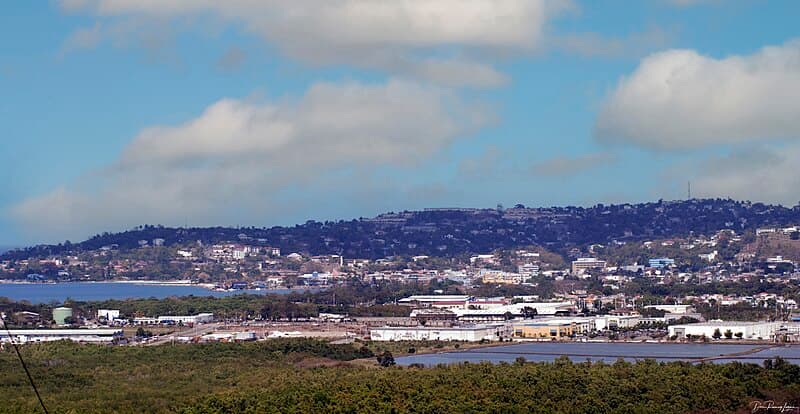
Montego Bay is Jamaica's second-largest city, where the vast majority of charter flights land, and for many travelers it's effectively the only practical gateway to the island. The city has two faces that rarely meet. One is the strip of hotels and beaches along Gloucester Avenue, known as the Hip Strip — white sand, bars, dive centers and all-inclusive resorts. The other is an ordinary Jamaican city with a market, a bus station and neighborhoods visitors have no reason to enter. Montego Bay's fame began in 1906, when Dr. Alexander McCatty brought guests to a freshwater spring in Doctor's Cave and declared its water medicinal — the beginning of the island's first Caribbean spa resort. Around the city stand eighteenth-century plantation great houses, the best known of which is Rose Hall, with its legend of the murderous Annie Palmer. Sangster Airport sits three kilometers from the Hip Strip, an unusually short transfer for the Caribbean, with roads leading west to Negril and east to Ocho Rios.

What to see

The places worth your time in Montego Bay, and what to expect at each

Doctor's Cave Beach

Doctor's Cave Beach

Hip Strip

The beach where Jamaican tourism began in 1906. Fine white sand, calm water sheltered by a reef, and a freshwater spring once believed to have healing properties. It's a private club with paid admission, which keeps it clean, lifeguarded and free of vendors.

Tip: Admission is charged, and it's the only beach downtown where nobody hassles you to buy anything. Loungers and umbrellas are rented separately, so altogether it's not the cheapest swim in town — neighboring Cornwall Beach costs less and the water is the same. Go before ten, before the cruise-ship crowds arrive.

Admission:
admission fee, lounger extra
Time needed:
half a day
The Hip Strip (Gloucester Avenue)

The Hip Strip (Gloucester Avenue)

Hip Strip

A less-than-two-kilometer seafront street lined with bars, restaurants, souvenir shops and duty-free stores, the heart of Montego Bay's nightlife. It runs from Doctor's Cave Beach to the harbor and can be walked in half an hour.

Tip: Prices on the Hip Strip are quoted in dollars and inflated; find Jamaican food at normal prices two blocks up toward town. After dark, stick to the lit side of the street, and politely decline offers of jet skis or 'private tours' — the first price quoted is usually triple.

Admission:
free
Time needed:
2 h
Rose Hall Great House

Rose Hall Great House

Rose Hall

A 1770 plantation great house on the coast eight kilometers east, Jamaica's most famous house. It's tied to the legend of Annie Palmer, the 'White Witch,' said to have poisoned three husbands before being killed by enslaved workers. The house is furnished in period style, with tours led by costumed guides.

Tip: The evening candlelit tour is more dramatic and cooler than the daytime one, but pricier and can be intense for kids. Historians generally agree the Annie Palmer legend was largely invented in the twentieth century — which doesn't make the tour any less enjoyable, just a different kind of experience.

Admission:
admission, evening tour costs more
Time needed:
1.5 h
Martha Brae River rafting

Martha Brae River rafting

Falmouth

A four-kilometer bamboo raft float down a calm river through the rainforest, poled along by a raftsman with a long bamboo pole. It takes about an hour and is the calmest trip in the area — no rapids, just a green tunnel, birds and small waterfalls.

Tip: The raft seats two and the price is per raft, not per person, so going as a pair costs half as much per head. Raft polers rely on tips — plan on about five hundred Jamaican dollars. The best is the first morning trip at nine, when the river is empty and the water still.

Admission:
price per raft for two
Time needed:
2.5 h including transport
Greenwood Great House

Greenwood Great House

Greenwood

The 1780 house of the Barrett family, which, unlike Rose Hall, was never burned or looted — it has its original furniture, a library and a collection of musical instruments, including working music boxes. The view from the veranda stretches across the whole north coast.

Tip: A calmer, less touristy alternative to Rose Hall, and more interesting for history lovers since it's genuinely authentic. Tours are led by the owning family, and the music boxes really do get played — just ask, it isn't automatically part of the tour.

Admission:
admission fee
Time needed:
1 h
Marine park and bay snorkeling

Marine park and bay snorkeling

the bay

A protected marine reserve covering the whole bay from the airport to the Great River — coral gardens, mangroves and seagrass beds. Snorkeling starts just meters from the beaches, and dive centers run twenty-minute boat trips out to the Airport Reef and The Point.

Tip: The best coral is at the airport reef, reachable only by boat — from the beach you'll mostly see sand and scattered coral heads. Collecting anything in the park, including shells and empty conch shells, is forbidden, with steep fines checked at the airport.

Admission:
boat trip from 60 USD
Time needed:
3 h
Sam Sharpe Square

Sam Sharpe Square

downtown

The main downtown square, with a statue of Baptist preacher Sam Sharpe, who led a slave uprising in 1831 and was executed for it. The uprising helped speed the abolition of slavery in the British Empire two years later. The square also holds a period jail known as The Cage.

Tip: This is the busiest spot downtown and the one place you'll see an ordinary Jamaican city rather than a tourist backdrop. Visit in the morning without visible valuables; the adjoining market is worth a look, but vendors are very persistent, and you'll need a firm 'no thanks' to move on.

Admission:
free
Time needed:
1 h
Rocklands Bird Sanctuary

Rocklands Bird Sanctuary

Anchovy

A hillside garden above the city where hummingbirds land right on visitors' fingers to drink sugar water from a small bottle. Founded in the 1950s by ornithologist Lisa Salmon, it's visited by more than twenty bird species, including the endemic doctor bird.

Tip: Open in the afternoon from two to four-thirty, when the birds come to feed — in the morning there's only the garden. The road up is steep and rough, and taxi drivers charge extra for it. Wear calm colors; the birds get skittish around bright red.

Admission:
admission fee
Time needed:
1.5 h
Croydon Plantation and Blue Hole

Croydon Plantation and Blue Hole

inland

A farm in the foothills of Catadupa growing Blue Mountain coffee, pineapple and citrus, with tastings straight from the field. Around Montego Bay are also freshwater pools: the Blue Hole Mineral Spring above Negril and Cool Blue Hole near Ocho Rios, where you jump from the rocks into blue water.

Tip: Croydon is open Tuesday, Wednesday and Friday only — don't go without a reservation on other days. At Jamaica's 'blue holes,' jumping in is at your own risk: depth is unmarked and help is far away.

Admission:
full-day trip from 80 USD
Time needed:
6 h

Photos: Doctor's Cave Beach — en:User:Op. Deo (Public domain) · The Hip Strip (Gloucester Avenue) — Oxyman (CC BY-SA 2.0) · Rose Hall Great House — Don Ramey Logan (CC BY-SA 3.0) · Martha Brae River rafting — Donna-Kay Delahaye (CC BY-SA 4.0) · Greenwood Great House — Van Atrecht (CC0) · Marine park and bay snorkeling — Justin T. Updegraff (Public domain) · Sam Sharpe Square — Martin Falbisoner (CC BY-SA 4.0) · Rocklands Bird Sanctuary — Tony Northrup (CC BY 3.0) · Croydon Plantation and Blue Hole — Adolphe Duperly & Sons (Public domain)

Where to stay

Areas and districts, matched to the kind of trip you are taking

Hip Strip and Doctor's Cave

Best for: a first stay and street-level life

The stretch between the airport and the harbor, with mid-range hotels, bars and the city's best beaches. Everything is walkable, and you don't need to rely on a hotel transfer. In exchange, there's noise into the night, street vendors and dollar-denominated prices; anyone seeking quiet should stay elsewhere.

Ironshore and Rose Hall

Best for: large all-inclusive resorts

A stretch ten to fifteen kilometers east of the city, home to most of the big all-inclusive complexes with their own beaches and golf courses. It's a self-contained world, and you won't get out of the hotel without a taxi — some like it that way, others don't. The transfer from the airport takes twenty minutes.

Freeport and the harbor

Best for: cruise arrivals and quieter hotels

A peninsula south of downtown with the cruise ship terminal, a marina and a handful of hotels. When a ship is docked, it's packed here and downtown alike; on days without a ship, it's the quietest part of Montego Bay. It's ten minutes by taxi to the Hip Strip.

Reading and Great River

Best for: villas and longer stays

The coast heading west toward Negril, with villas, small boutique hotels and the mouth of the Great River, the starting point for kayaking and night trips to see bioluminescence. Prices are lower than on the Hip Strip and it's quiet, but you'll need a car or taxi to get anywhere.

Getting around

From the airport

Sangster International Airport is Jamaica's main gateway and sits just three kilometers from the Hip Strip — the transfer downtown takes ten minutes, unusually short for the Caribbean. Charter flights from Europe run seasonally; travelers from the Czech Republic typically connect through London, Frankfurt or Amsterdam, with a total travel time of fourteen to eighteen hours. A hotel transfer is usually included in package stays; independent travelers should book a transfer in advance or use the official red-plate taxi stand right outside the terminal.

Sangster International Airport (MBJ) · 3 km

  • Hotel transfer· 10–30 min· included in package
  • Official taxi (red plate) to the Hip Strip· 10 min· 20 USD
  • Shared shuttle to Negril· 1 h 30 min· 25 USD
  • Private transfer to Ocho Rios· 1 h 45 min· 90 USD

Around town

The Hip Strip is entirely walkable. For longer distances, use licensed taxis with red plates; white plates are private cars not covered by insurance. Agree on the fare in advance — meters aren't used. Route taxis are shared cars running fixed routes for a few hundred dollars, the cheapest option, but crowded and not ideal for a first visit. Rental cars are an option; driving is on the left, and the local driving style is assertive. The north coast highway is in good shape, while inland roads are rough.

Licensed taxi (red plate)The only insured option; agree on the price beforehand, since nobody uses a meter. · 10 USD around town
Route taxiShared cars on fixed routes, the cheapest transport on the island; they leave once full. · 150 JMD
Knutsford ExpressAir-conditioned long-distance bus to Negril, Ocho Rios and Kingston, tickets online with a reserved seat. · 1,800 JMD
Rental carDriving is on the left; the north coast highway is tolled. A credit card and deposit are required. · 60 USD / day

Useful apps: Knutsford Express, Google Maps, WhatsApp

When to go

The season runs from mid-December through April, dry, around thirty degrees, with a calm sea — also the priciest period, with hotels often sold out around Christmas. May and June are a good compromise: rain falls briefly in the afternoon, and prices drop. Hurricane season runs from August to November, peaking in September, also the rainiest month; a direct hurricane hit is unlikely, but two days of rain isn't. Sea temperature never drops below twenty-seven degrees, even in January.

Best time

December to April

What to avoid

September and October, due to hurricane season and rain

MonthJanFebMarAprMayJunJulAugSepOctNovDec
Day30°30°30°31°31°32°32°32°32°31°31°30°
Night21°21°21°22°23°24°24°24°24°23°22°22°
Rainy days54459869111396
Sea27°27°27°27°28°29°29°30°30°29°28°27°

Food & drink

Jamaican cuisine is spicy, seasoned with allspice, and cheap — if you eat where the locals eat. The gap between jerk from a roadside steel drum for a few hundred Jamaican dollars and jerk from a hotel buffet is enormous, in both price and flavor. In Montego Bay, Scotchies on the road to Rose Hall is an institution, where the meat is smoked over pimento wood right in front of you. Breakfast is ackee and saltfish, patties from the bakery through the day, and fish or curry goat in the evening. The heat is real: scotch bonnet peppers are among the hottest in the world, and a Jamaican cook will usually just smile if you ask whether something's spicy.

What to try

Jerk chicken and jerk pork

Meat marinated in a paste of allspice, thyme and fiercely hot scotch bonnet peppers, then smoked over pimento wood. Best from a roadside steel drum, not a resort buffet; served with festival bread or hard dough bread.

Ackee and saltfish

The national dish: stewed ackee fruit, which looks like scrambled eggs, with desalted cod, onion and bell pepper. A breakfast dish, not a dinner one. Unripe ackee is toxic, which is why it's sold only canned in Europe.

Jamaican patty

A golden flaky pastry filled with spiced ground beef, sold at every bakery for two hundred to three hundred Jamaican dollars. The cheapest filling lunch on the island; the most common brands are Tastee and Juici.

Curry goat

Goat meat stewed for hours in Jamaican curry with allspice, served with rice and peas. A celebration and Sunday dish; the bones stay in the portion and carry the most flavor.

Rice and peas

Rice cooked in coconut milk with kidney beans (called 'peas' despite the name), thyme and a whole scotch bonnet pepper. The standard side to everything, and mandatory on Sundays.

Festival and bammy

Festival is a fried sweet cornmeal dumpling; bammy is a cassava flatbread soaked in coconut milk. Both are served alongside jerk and fish and cost a few dollars at a food stand.

Red Stripe and rum

A pale lager in a stubby bottle, Jamaica's national beer; locals drink it ice cold. Appleton and Wray & Nephew Overproof rums run 63 percent and are meant for mixing — nobody drinks a shot of the overproof neat.

Sorrel and ginger beer

Sorrel is a ruby-red drink made from hibiscus calyxes with ginger and cloves, drunk mainly at Christmas. Ginger beer is a spicy ginger drink served year-round and is best after a plate of jerk.

What it costs

Patty from a bakery

250–350 JMD

Roadside jerk chicken with a side

700–1,200 JMD

Lunch at a restaurant on the Hip Strip

20–35 USD

Red Stripe at a bar

350–600 JMD

Doctor's Cave Beach admission

from 10 USD

Rose Hall tour

from 30 USD

Martha Brae rafting (raft for two)

from 85 USD

Night at a 4-star hotel on the Hip Strip

150–260 USD

Indicative prices that change over time — treat them as a guide, not a price list.

Practical information

SocketsAtwo flat pins (US/JP)Btwo flat pins plus ground (US)
Voltage110V / 50Hz
Tap waterTap water is treated, bottled is common — Tap water in Jamaica is treated and safe to drink in hotels and towns; in rural areas and mountain villages, better not to. Most visitors reach for bottled water anyway — a 1.5-liter bottle costs around two hundred Jamaican dollars at a supermarket, three times that at a resort. Ice at bars is made from treated water and is not a problem. If you have a sensitive stomach, stick to bottled water for the first two days — a change in water is a more common cause of trouble here than the food.
TippingA tip is expected: ten to fifteen percent at a restaurant, unless already added as a service charge; five hundred Jamaican dollars for a transfer driver; two hundred a day for housekeeping. At all-inclusive resorts, tipping is often officially discouraged, but in practice it happens and the bartender will remember you for it. Payment works in both US and Jamaican dollars — US bills are accepted everywhere, but the exchange rate offered in shops is worse than at a currency exchange.
Driving on theleft
SafetyJamaica has a high rate of violent crime, but it's concentrated in specific neighborhoods of Kingston and Spanish Town that tourists never visit. In the tourist areas of the north coast, the main risks are petty theft and pushy sales tactics. Practical rules: don't walk unlit stretches of beach at night, avoid public route taxis without red license plates, and marijuana is decriminalized only up to two ounces for adults — being offered some on the street is often a setup. The sea is the second risk: rip currents are common on the north coast, and beaches outside resorts have no lifeguard. Emergency numbers are 119 (police) and 110 (ambulance).
Opening hoursShops are open from nine to six, until four on Saturdays, and only some supermarkets open on Sundays. Jamaica is a deeply religious country, and Sunday mornings mean church — banks, government offices and many shops are closed, and traffic is light. Restaurants serve from eleven to ten at night; Jamaican eateries close when the food runs out, not by the clock. ATMs are common in tourist centers and dispense Jamaican dollars.
Customs & etiquetteA greeting before any question is essential in Jamaica — walking into a shop with a question and no 'good morning' first is considered rude. The pace is slow (locals call it 'soon come'), and pushing for speed doesn't help, if anything it backfires. Don't photograph people without asking, and Rastafarians in particular can find it outright offensive. Don't haggle aggressively, but the first price quoted at a market is always inflated. Don't bring up poverty or crime as a conversation opener, and comparisons to Cuba or Haiti don't go over well.
A few local wordsHello / what's going on — Wah gwaanThank you — Give thanksPlease — PleaseNo, thank you — No thanks, mi coolHow much does this cost? — How much fi dis?Everything's fine — Everyting irie

How to plan your days

1 day

A day in Montego Bay

  1. 1Morning at Doctor's Cave Beach, before the cruise crowds arrive.
  2. 2Lunch of jerk chicken away from the Hip Strip, where locals eat.
  3. 3Afternoon tour of Rose Hall or Greenwood.
  4. 4Back to the Hip Strip for sunset from a beachside bar.
  5. 5Dinner with fish and a live band on Gloucester Avenue.

2 days

Two days with the river

  1. 1First day as above.
  2. 2Morning bamboo raft float on the Martha Brae.
  3. 3Lunch in Falmouth and a walk through the Georgian town center.
  4. 4Afternoon snorkeling at the airport reef.
  5. 5Evening at Sam Sharpe Square and the market before dusk.

3 days

Three days with an island trip

  1. 1First two days as above.
  2. 2Early morning departure to Ocho Rios for Dunn's River Falls.
  3. 3Lunch in Ocho Rios, afternoon bobsled ride or the gardens.
  4. 4Next afternoon, hummingbirds at Rocklands.
  5. 5Last evening on the Hip Strip, buying rum and coffee before the flight home.

Day trips

Negril and Seven Mile Beach

80 km · 1 h 30 min

Jamaica's longest and prettiest sandy beach, seven miles long with no reef, so real open-water swimming is possible. At the southern end near Negril Point are the cliffs with Rick's Café, where people jump into the sea at sunset. It's a stretch as a day trip — stay overnight if you can.

Ocho Rios and Dunn's River Falls

105 km · 1 h 45 min

A cascading waterfall you climb straight up the streambed in a chain of linked hands — Jamaica's most photographed spot. You climb in water shoes, rentable on site. The same day can also fit in the Mystic Mountain lookout or the Shaw Park gardens.

YS Falls and Black River

115 km · 2 h

A seven-tiered waterfall on a private farm on the island's south side, considerably calmer than Dunn's River — you swim in natural pools, and a zip line crosses the water. The trip stops at Black River, where you cruise by boat among mangroves and crocodiles.

Frequently asked questions

Is Montego Bay safe?+

The tourist zone — the Hip Strip, Ironshore, Rose Hall and the beaches — is patrolled and trouble-free by day. The violent crime that shows up in Jamaica's statistics is concentrated in specific neighborhoods of Kingston and Spanish Town, which visitors have no reason to enter. Stick to lit areas, use licensed taxis with red license plates, and don't flash valuables on the street.

Is all-inclusive worth it, or a room-only hotel?+

In Jamaica, all-inclusive pays off more than it would in Europe, because food, and especially alcohol, is expensive at tourist restaurants — dinner with two drinks easily runs fifty dollars per person. Anyone who wants to taste real Jamaican cooking should book half board and handle lunches outside the resort, where the food is cheap and better.

Do you pay in US dollars or Jamaican dollars?+

Both. Tourist businesses price in US dollars and accept dollar bills, but give change in Jamaican dollars at a rate that favors them. For local food, taxis and the market it's more advantageous to carry Jamaican dollars from an ATM. Bring smaller denominations — nobody can make change for a fifty.

How far is the airport from the hotels?+

Sangster Airport sits three kilometers from the Hip Strip, so the transfer downtown takes ten minutes. Resorts in Ironshore and Rose Hall are twenty minutes away, Negril an hour and a half, and Ocho Rios just under two hours. It's one of the shortest airport transfers in the Caribbean.

What's the best time to visit?+

From mid-December through April, when it's dry and the sea is calm — though this is also the priciest season. May and June offer the best value for the weather, with rain limited to short afternoon showers. Hurricane season runs from August to November, with September and October the rainiest months.

Can you get from Montego Bay to Dunn's River Falls?+

Yes, it's one hundred five kilometers and an hour and three-quarters along the north coast highway. Go on an organized tour, which costs around ninety dollars including admission, or take the Knutsford Express long-distance bus to Ocho Rios and a taxi from there. You climb the falls in water shoes, and the climb takes about an hour.

Is Jamaican food very spicy?+

Yes, scotch bonnet peppers are among the hottest in the world, and jerk marinade is built on them. Tourist restaurants tone the heat down; roadside stalls don't. If you don't want it spicy, say so in advance, and keep in mind that Jamaica's idea of mild is still spicier than what you're used to.

Do I need a visa and vaccinations for Jamaica?+

Most nationalities, including EU citizens, don't need a visa for a tourist stay of up to thirty days — just a passport valid for the length of the stay and a return ticket. No vaccinations are mandatory, though hepatitis A and typhoid are recommended. Before departure you must fill out an online immigration form; without it you may not be allowed to board, so do it the day before you fly.

Visa Requirements

Check the latest visa requirements for entering this country. Some nationalities may need to apply for a visa or e-visa before travel.

Check visa requirements

Language

English

Currency

JMD

Timezone

GMT-5

Dial Code

+1-876

Population

2.8M

Area

10,991 km²

Voltage

110V / 50Hz

Driving Side

Left

Top Hotels in Montego Bay

Live prices from 500+ properties

Loading hotels...

Planning a trip to Montego Bay?

Compare hundreds of hotels, find the best price, and book with free cancellation on TravelManiac.