Hotels in Montevideo

Uruguay's calm capital of the rambla, the market and candombe drums

Montevideo

CurrencyUYU
TimezoneAmerica/Montevideo

Discover Montevideo

Montevideo is the capital of Uruguay, on the shore of the Río de la Plata, where the river widens into the Atlantic. More than a third of the country's population lives here, and it is calmer, cheaper and safer than its neighbours Buenos Aires and Rio de Janeiro. The old town, Ciudad Vieja, has kept its colonial and Art Deco architecture, a twenty-two-kilometre promenade, the rambla, runs along the shore, and in the Pocitos district people swim in summer and eat in the evening. Uruguayans drink mate, grill meat on the parrilla and are proud of the tradition of candombe, an Afro-Uruguayan music of drums. The best time is November to March, when it is warm at around twenty-eight degrees. Montevideo combines well with a trip to the UNESCO town of Colonia del Sacramento and to the resort of Punta del Este. There are direct flights from Madrid and EU citizens do not need a visa for ninety days. Uruguay is among the most stable countries of South America and draws visitors with calm and Tannat wine.

What to see

The places worth your time in Montevideo, and what to expect at each

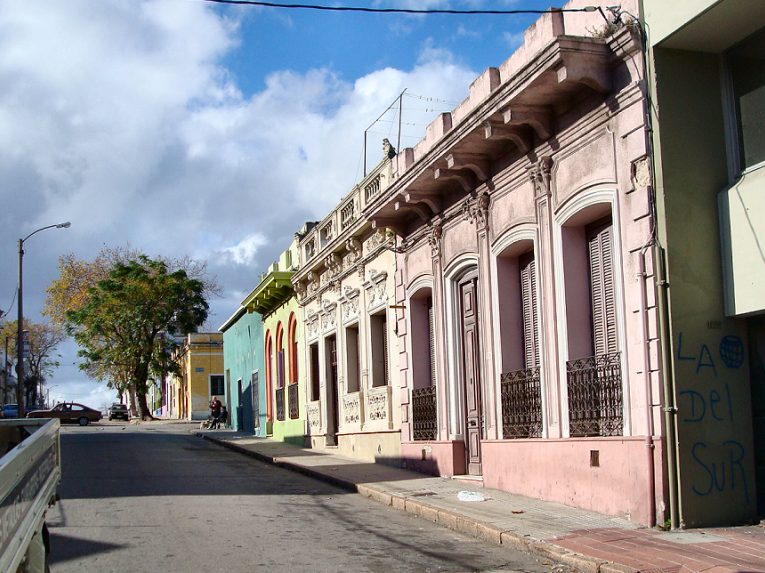
Ciudad Vieja

Ciudad Vieja

Ciudad Vieja

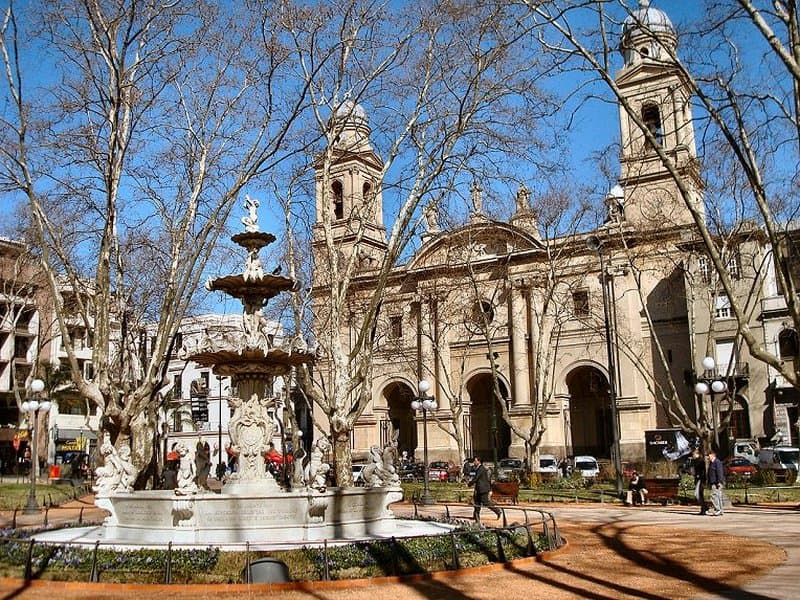
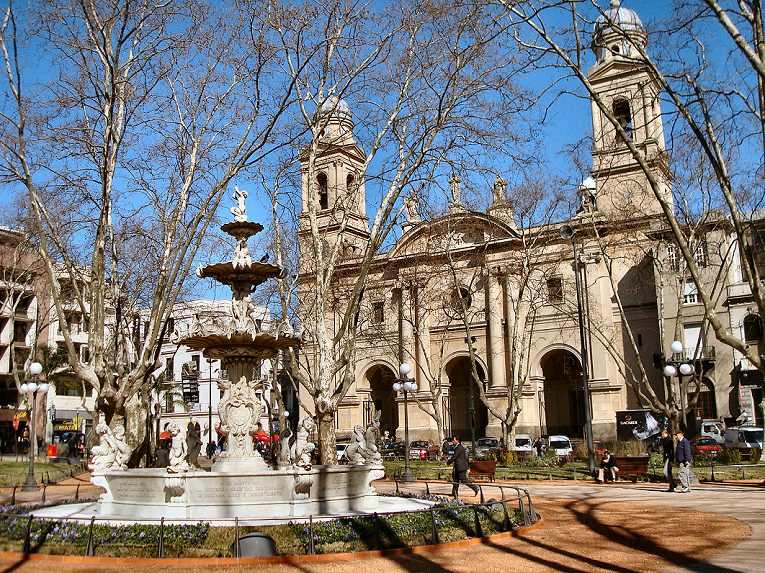
The historic core on the peninsula, which has kept colonial and Art Deco buildings, squares, cafés and museums. From Plaza Matriz runs Sarandí, a pedestrian street of shops, and around stand the cathedral and the Cabildo. It is the centre of the city and the best place for a stroll.

Tip: In the morning and afternoon Ciudad Vieja is lively, but in the evening and at weekends it is empty and less safe; during the day move freely, in the evening take a taxi. Carry only essentials.

Admission:
free
Time needed:
half a day
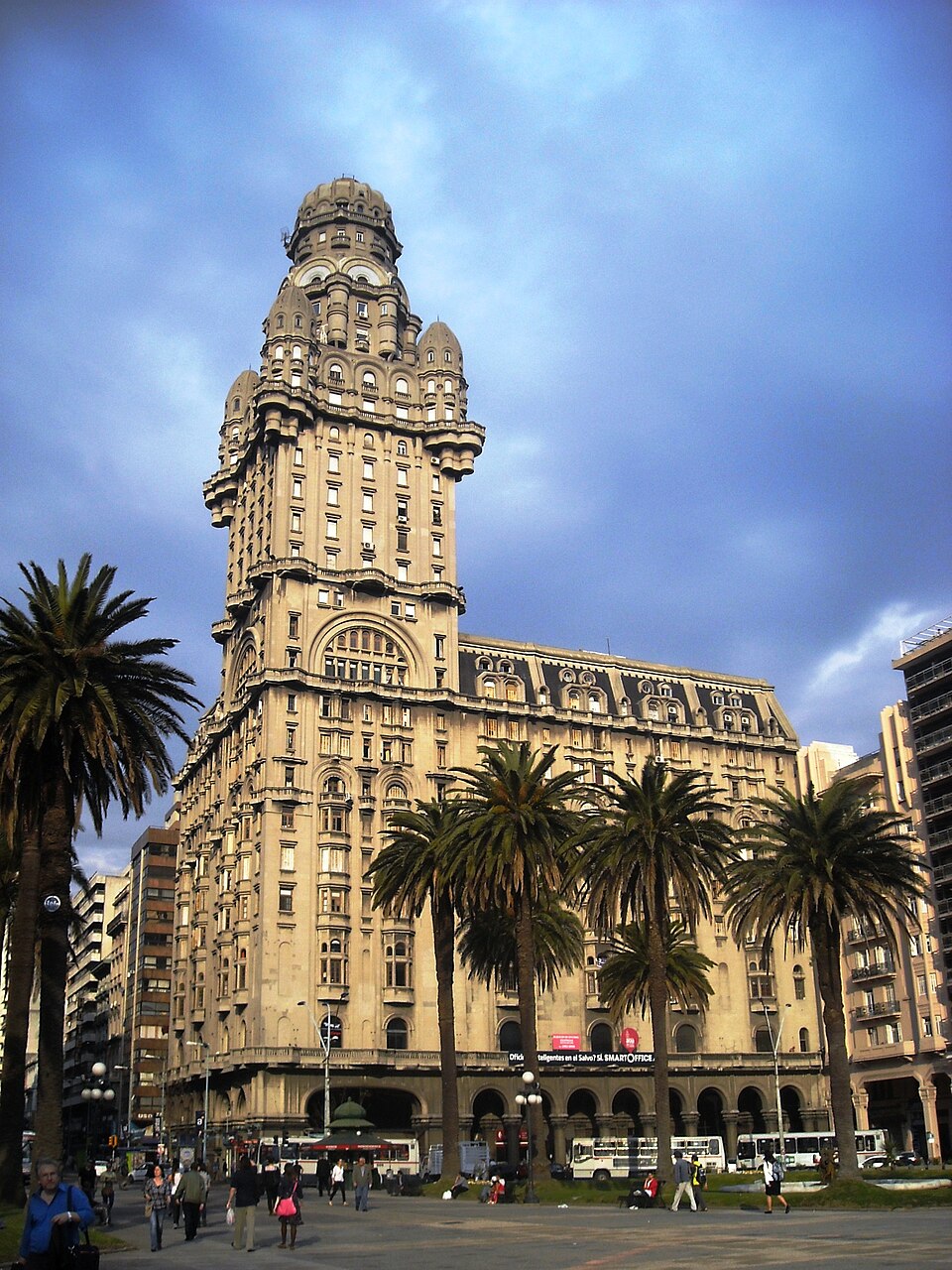
Palacio Salvo

Palacio Salvo

Plaza Independencia

A palace from 1928 with a tower a hundred metres tall, which at completion was the tallest structure in South America. It stands on Plaza Independencia, which separates old and new Montevideo. The building is a symbol of the city and inside are offices and flats.

Tip: Guided tours are held on certain days and cost around UYU 300. The best view is from Plaza Independencia at sunset.

Admission:
tour from UYU 300
Time needed:
1 hr
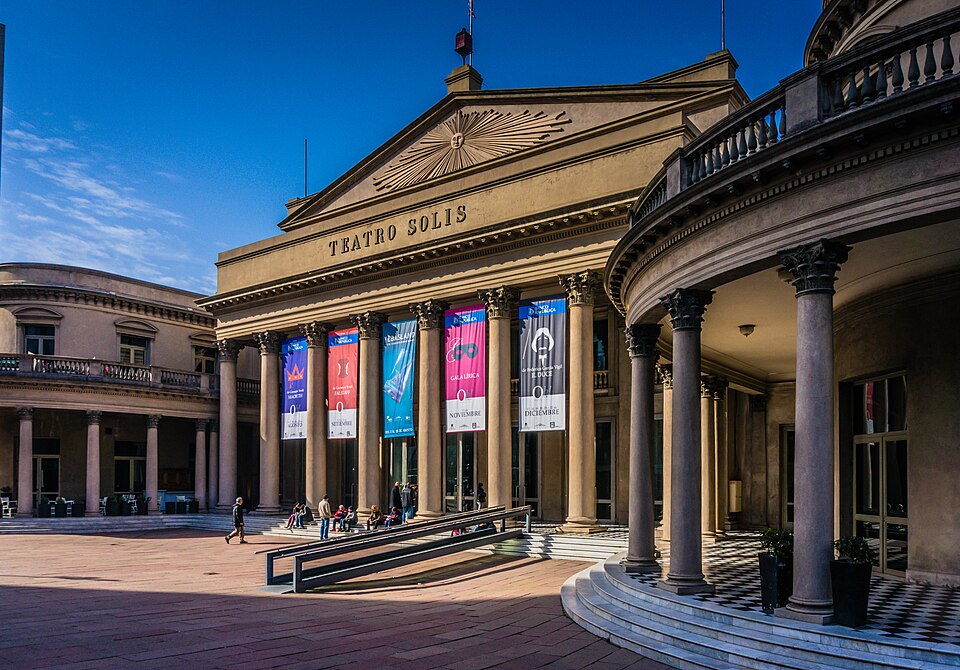
Solís Theatre

Solís Theatre

Ciudad Vieja

The oldest and most important theatre in the country, opened in 1856, with a main hall for more than a thousand spectators. Opera, ballet, concerts and drama are staged here. Guided tours show the hall and backstage.

Tip: Check the programme and buy a ticket for an evening performance; tours are in English and Spanish. Dress appropriately.

Admission:
tour from UYU 250
Time needed:
1 hr

Mercado del Puerto

Ciudad Vieja

A market in an iron hall from 1868 by the harbour, where meat and fish are grilled over charcoal. It is the best place to taste Uruguayan parrillada and the medio y medio cocktail of white and sparkling wine. At weekends music plays and people lunch at the benches.

Tip: Come around midday and at weekends; choose a grill with a queue of locals. One meal can be shared, as portions are large.

Admission:
lunch from UYU 600
Time needed:
1–2 hrs

The Rambla

coast

A twenty-two-kilometre promenade along the coast from the old town to the eastern districts, on which people walk, run and cycle. It is where Uruguayans drink mate and watch the sunset. Along it lie the beaches of Pocitos, Ramírez and Carrasco.

Tip: It is best to walk or cycle at dawn or sunset. Bring a flask of water for mate and rest on a bench.

Admission:
free
Time needed:
half a day

Estadio Centenario

Parque Batlle

A stadium from 1930 where the first football World Cup final was played, and which houses the Football Museum. Uruguay won the title in 1930 and the stadium is a national symbol. The tour shows the dressing rooms, trophies and memorabilia.

Tip: The tour suits football lovers and takes an hour. Check the museum's opening hours; it is closed on match days.

Admission:
about UYU 300
Time needed:
1–1.5 hrs
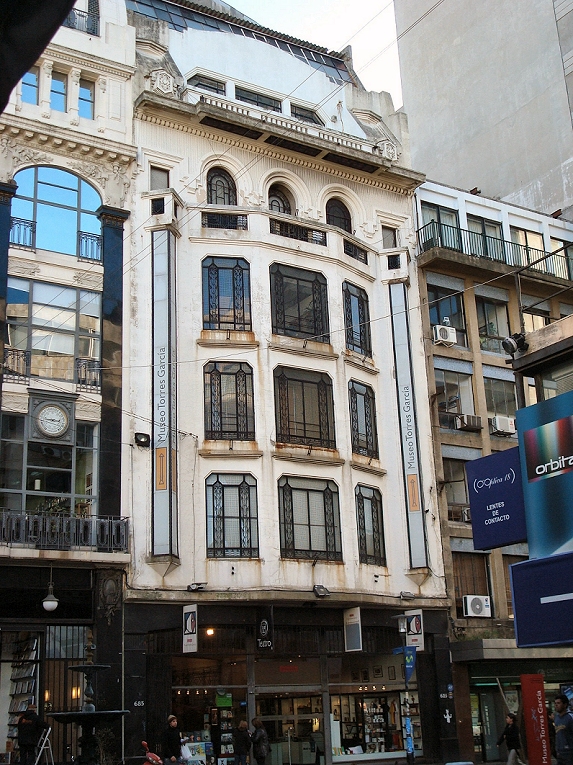
Torres García Museum

Torres García Museum

Ciudad Vieja

A museum devoted to the painter Joaquín Torres García, founder of Constructive Universalism, who combined modern art and pre-Columbian symbols. In the museum you find his paintings and sculptures. It is a quiet place in the middle of the pedestrian zone.

Tip: A visit takes an hour and suits a rainy day. Check the current opening hours and entry price.

Admission:
about UYU 200
Time needed:
1 hr

Parque Rodó

Parque Rodó

A large park by the coast with a lake, an amusement park and sculptures, a favourite place for families at weekends. There are playgrounds, shaded paths and a view of the sea. At weekends families gather and children play on the playgrounds.

Tip: Come on a Sunday afternoon, when the park is liveliest. Bring a picnic and a blanket; there are cafés nearby.

Admission:
free
Time needed:
1–2 hrs
Barrio Sur and Candombe

Barrio Sur and Candombe

Barrio Sur

A traditional district of the Afro-Uruguayan community, from which the candombe music emerged, a UNESCO-listed tradition. Drums sound in the streets and on Sunday parades are held. It is best in February, when as part of Carnival the Llamadas, a big parade of drummers, takes place.

Tip: At weekends ask about the programme of the cultural centre; during Carnival accommodation must be booked in advance. Behave with respect and do not photograph without permission.

Admission:
free
Time needed:
2 hrs

Photos: Ciudad Vieja — Hoverfish (CC BY 3.0) · Palacio Salvo — Maximasu (CC BY-SA 3.0) · Solís Theatre — GameOfLight (CC BY-SA 3.0) · Torres García Museum — Hoverfish (CC BY-SA 3.0) · Barrio Sur and Candombe — Hoverfish (CC BY 3.0)

Where to stay

Areas and districts, matched to the kind of trip you are taking

Ciudad Vieja

Best for: monuments and cafés

The historic core with colonial buildings, museums and the market. You can walk everything of significance, but in the evening it is quiet and less safe. Suits a first visit by day.

Centro and Plaza Independencia

Best for: transport and shops

The city centre with the square, shops and hotels. Transport is good and so is the range of services. Suits a short stay.

Pocitos

Best for: beach and restaurants

A modern coastal district with beaches, the rambla and restaurants. It is safer, more pleasant and closer to the sea. A good choice for families and longer stays.

Carrasco

Best for: calm and greenery

An elegant district by the airport with villas, parks and a beach. It is calm and luxurious, but far from the centre. Suits rest and arrival.

Getting around

From the airport

Carrasco International Airport (MVD) lies about twenty kilometres east of the centre, with flights from Madrid and South American cities. From Europe you fly via Madrid, which takes about twenty hours. Buses run from the airport to the centre in half an hour and a taxi at a fixed fare of about forty dollars. From Buenos Aires Buquebus boats run to Colonia and Montevideo.

Montevideo – Carrasco Airport (MVD) · 20 km

  • Bus to the centre· 40 min· UYU 100
  • Taxi to the centre· 30 min· UYU 1,800
  • Private transfer· 30 min· $40

Around town

The centre of Montevideo can be walked, but to farther districts buses and taxis run. Buses are cheap and paid by STM card or in cash. Uber works and is cheaper than taxis. On the rambla people walk and cycle. Long-distance buses to Colonia and Punta del Este leave from Tres Cruces station.

BusCity lines all over Montevideo. · UYU 60
Taxi and UberAround town and to the airport. · UYU 300
On foot and bicycleThe centre and rambla are walkable.
Long-distance busTo Colonia and Punta del Este from Tres Cruces. · UYU 500

Useful apps: Google Maps, Uber, Cutcsa, Moovit

When to go

Montevideo has a mild climate with four seasons, with the seasons opposite to Europe's. Summer from December to February is warm at around twenty-eight degrees, winter from June to August cool at around fifteen. The sea is warm only in January and February. The best time is November to March.

Best time

November to March

What to avoid

June to August (cold, damp and windy)

MonthJanFebMarAprMayJunJulAugSepOctNovDec
Day28°27°25°22°18°15°14°15°17°20°23°26°
Night19°19°17°14°11°8°7°8°10°12°15°18°
Rainy days778888888988
Sea22°23°22°20°17°14°13°13°14°16°18°21°

Food & drink

Uruguayan cooking is meat-based and simple: grilled steak, sausages and the chivito, a beef sandwich. People drink Tannat wine, beer and mate. A main dish in a restaurant costs seven hundred to twelve hundred pesos and a lunch in a café about five hundred.

What to try

Asado and parrillada

Meat grilled over charcoal: beef ribs, sausages, kidneys and liver. The foundation of Uruguayan cooking, eaten by families at weekends.

Chivito

A large sandwich of thin beef, ham, cheese, egg, tomato and mayonnaise. The national dish of Uruguay.

Milanesa

A breaded and fried cutlet of beef or chicken, served with chips or salad. A quick and cheap lunch.

Dulce de leche

A caramel milk spread eaten on bread, in cakes and in biscuits. The most popular sweet in the country.

Alfajores

Biscuits filled with dulce de leche and coated in chocolate or icing sugar. A good souvenir from Montevideo.

Tannat wine

A red wine from the Tannat grape, Uruguay's national variety. The best come from vineyards in Canelones and from Colonia.

Mate

An infusion of yerba mate herb, drunk from a gourd through a metal straw. Uruguayans carry it everywhere and share it.

What it costs

Coffee

UYU 100–150

Chivito

UYU 450–650

Lunch in a restaurant

UYU 500–900

Wine (bottle)

UYU 400–800

Bus

UYU 60

Estadio Centenario

UYU 300

3★ hotel (night)

$80–150

Taxi from the airport

UYU 1,800

Indicative prices that change over time — treat them as a guide, not a price list.

Practical information

Tap water — Tap water in Montevideo is treated and safe to drink. Hotels and restaurants serve it free.
TippingTipping is given in Uruguay: ten per cent in a restaurant, if not included. For taxi drivers rounding up is enough.
SafetyMontevideo is safer than most South American cities, but watch for pickpockets and for motorcyclists who snatch bags. At night avoid remote streets in Ciudad Vieja. Do not carry valuables on the street. The emergency number is 911.
Opening hoursShops are open from nine to eight, mostly closed on Sunday. Restaurants serve dinner from nine. At weekends life is centred on the rambla and the markets.
Customs & etiquetteUruguayans are calm and polite. Mate is shared from one gourd and refusing it is impolite; thank them and choose. In the street the greeting is a kiss on the cheek.
A few local wordsGood day — Buen día / BuenasThank you — GraciasPlease — Por favorHow much is it? — ¿Cuánto sale?Cheers — SaludThe bill, please — La cuenta, por favorWhere is the toilet? — ¿Dónde queda el baño?

How to plan your days

1 day

A day in Montevideo

  1. 1Morning Ciudad Vieja and the cathedral.
  2. 2Teatro Solís and Plaza Independencia.
  3. 3Lunch at Mercado del Puerto.
  4. 4Afternoon the rambla and Pocitos.
  5. 5Evening sunset on the rambla.

2 days

Two days: the city and football

  1. 1Day one as above.
  2. 2Day two morning Estadio Centenario.
  3. 3Afternoon the Torres García Museum and Parque Rodó.
  4. 4Evening candombe in Barrio Sur.

3 days

Three days: Montevideo and Colonia

  1. 1Days one and two as above.
  2. 2Day three a trip to Colonia del Sacramento.
  3. 3Afternoon a stroll and lunch.
  4. 4Evening return.

Day trips

Colonia del Sacramento

180 km · 2 hrs 30 min by bus

A Portuguese town from 1680 on the Río de la Plata, a UNESCO site, with cobbled lanes and a lighthouse. Buses run from Montevideo and boats from Buenos Aires.

Punta del Este

130 km · 2 hrs by bus

The famous resort with beaches, yachts and the Mano en la Arena sculpture. In summer it is the centre of luxury holidays.

Canelones vineyards

40 km · 1 hr by car

A wine region with Tannat tastings and small family wineries. It suits half a day with a driver.

Frequently asked questions

How long should I stay in Montevideo?+

Two to three days are enough for the city, the rambla and museums. For trips to Colonia and Punta del Este add two days. It is a calm city where there is no need to hurry.

When is the best time to visit?+

November to March, when it is warm and beach weather. In winter it is cold, damp and windy from the river. In February Carnival is held, the longest in the world.

Is Montevideo safe?+

It is one of the safest cities in South America, but pickpockets and bag-snatching motorcyclists exist. Avoid remote streets at night and do not carry valuables in the street. In Pocitos and Carrasco it is safer.

Do I need a visa for Uruguay?+

EU citizens do not need a visa for a stay of up to ninety days. The passport must be valid for at least six months. Conditions change, so check them with your foreign ministry.

How do I get from the airport to the centre?+

A taxi costs about eighteen hundred pesos and takes half an hour, and the bus is cheaper but slower. Uber costs similar to a taxi. A private transfer costs about forty dollars.

What is mate?+

An infusion of yerba mate herb, drunk from a gourd through a metal straw and shared among friends. Uruguayans carry it in a flask everywhere. Try it if invited; refusal is impolite.

What should I eat?+

Chivito, asado and Tannat wine; for dessert dulce de leche and alfajores. Mercado del Puerto has the best parrillada. Dinner is eaten late, from nine.

Is Montevideo pricier than Buenos Aires?+

It depends on the exchange rate: in recent years it has often been pricier than Buenos Aires, but cheaper than European cities. Lunch costs five hundred to nine hundred pesos and a hotel eighty to a hundred and fifty dollars. You pay in pesos, and hotels accept dollars.

Visa Requirements

Check the latest visa requirements for entering this country. Some nationalities may need to apply for a visa or e-visa before travel.

Check visa requirements

Currency

UYU

Timezone

America/Montevideo

Top Hotels in Montevideo

Live prices from 500+ properties

Loading hotels...

Planning a trip to Montevideo?

Compare hundreds of hotels, find the best price, and book with free cancellation on TravelManiac.