Hotels in Muscat

A capital between mountains and sea

Muscat

LanguageArabic
CurrencyOMR
TimezoneAsia/Muscat
Temperature22-40 °C
Dial Code+968
Population4.6M
Area309,500 km²
SocketsType G
Tap waterBottled advised

Discover Muscat

Muscat is Oman's capital, yet it looks nothing like a Gulf metropolis: there are no skyscrapers, buildings are held to a few storeys and almost every house is white or sand-coloured. The city stretches fifty kilometres along the Gulf of Oman in a narrow strip between the sea and the bare rock of the Hajar Mountains, so it is really a string of separate districts joined by a motorway. Three matter to visitors: Mutrah, with its souq and a waterfront where dhows moor; old Muscat, with the Sultan's palace and Portuguese forts guarding its cove; and Qurum, with the beach, cafés and the opera house. The rest is ministries, villas and shopping malls. Muscat makes a good first stop in Oman — two or three days cover the city, and from here you head into the mountains around Nizwa, the wadi canyons and the Wahiba dunes, all two to three hours' drive away. Unlike Dubai, this is not about shopping and theme parks but a genuine Arab city, where things close on Friday, the market takes a long lunch break and dates are sold at the roadside.

What to see

The places worth your time in Muscat, and what to expect at each

Sultan Qaboos Grand Mosque

Sultan Qaboos Grand Mosque

Al Ghubra

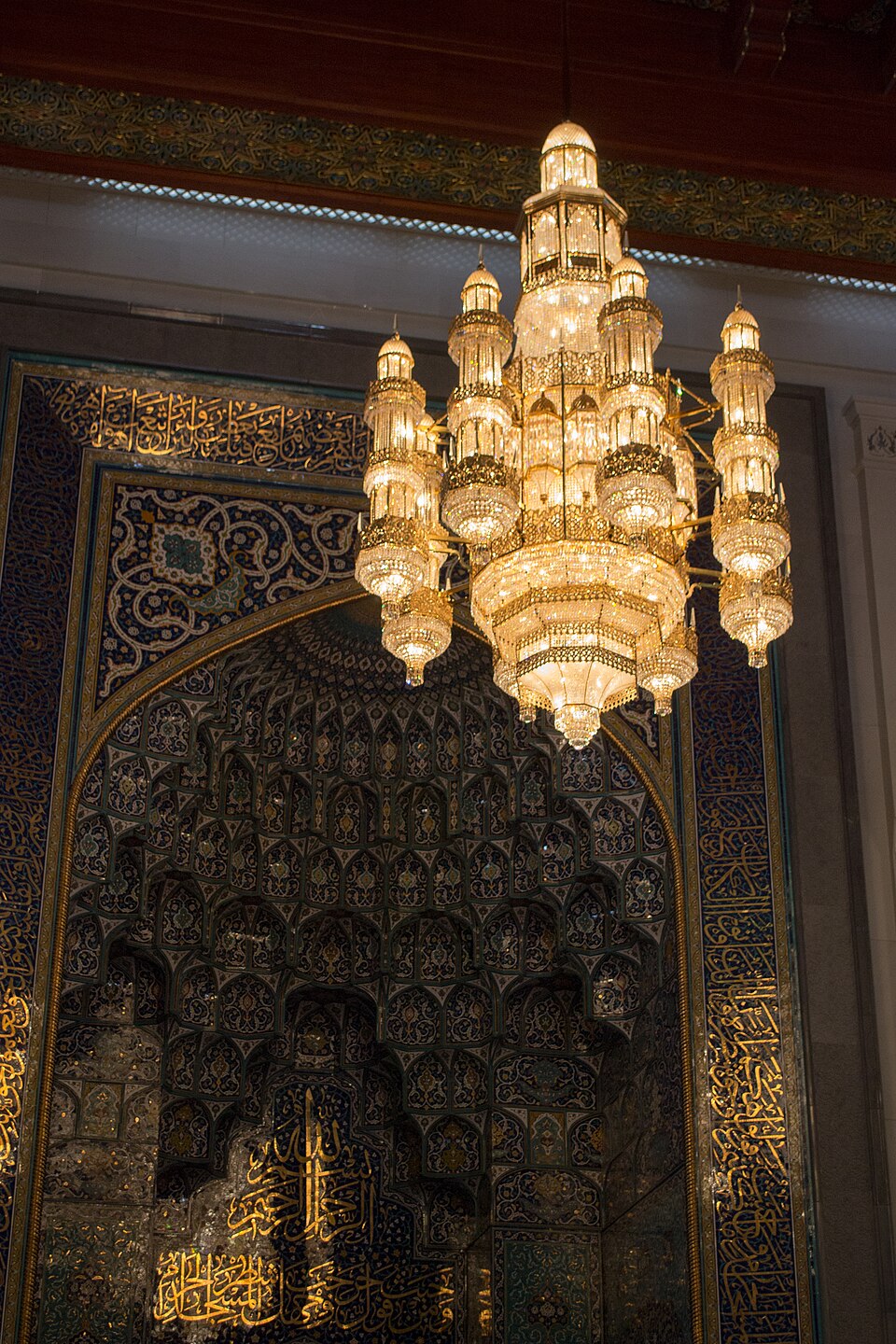
Oman's main mosque, opened in 2001, with five minarets, landscaped gardens and room for twenty thousand worshippers. Inside lies one of the largest hand-woven carpets in the world, which took six hundred Iranian weavers four years to knot, and above it hangs a fourteen-metre chandelier set with Swarovski crystals.

Tip: Non-Muslims are admitted only Saturday to Thursday, roughly from eight to eleven in the morning — arrive at eight, because the cruise-ship coaches roll in at nine. Women must cover their hair, arms and ankles and men need long trousers; shorts mean you will be turned away, and the abaya hire at the entrance is not free. Entry costs nothing.

Admission:
free
Time needed:
1.5 h
Mutrah Souq

Mutrah Souq

Mutrah

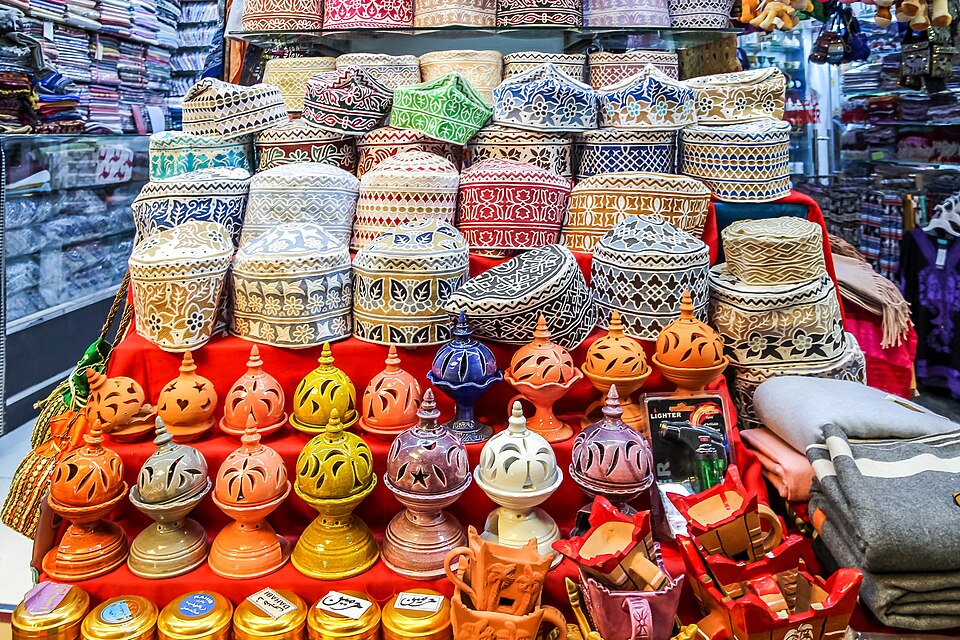
A covered market behind the Mutrah waterfront, a maze of alleys under wooden ceilings selling frankincense, silver, curved khanjar daggers, pashminas, spices and plenty of cheap imported trinkets. It is one of the oldest markets in Arabia, and its main lane opens straight onto the harbour promenade.

Tip: The souq closes for lunch from about one until four and stays shut on Friday morning; the best time is after five, when it cools down. Buy silver and khanjars in the side alleys to the left of the main lane, where older Omani traders sell — the main lane is stocked from India. Knocking a third off the asking price is normal.

Admission:
free
Time needed:
1.5 h
Mutrah Corniche and fish market

Mutrah Corniche and fish market

Mutrah

A three-kilometre promenade around Mutrah's harbour bay, lined with white merchant houses, wooden balconies and mosques backed by brown rock. At the western end stands the modern fish market under its wave-shaped roof; at the eastern end a viewpoint crowned by a giant stone incense burner in Riyam Park.

Tip: Go to the fish market between six and nine in the morning, when fishermen land tuna and kingfish and traders auction them off — by noon it is empty. Walk the promenade an hour before sunset, when the light falls on the house fronts and the cafés serve karak tea. A staircase from the end of the promenade climbs to a viewpoint above Mutrah Fort.

Admission:
free
Time needed:
2 h
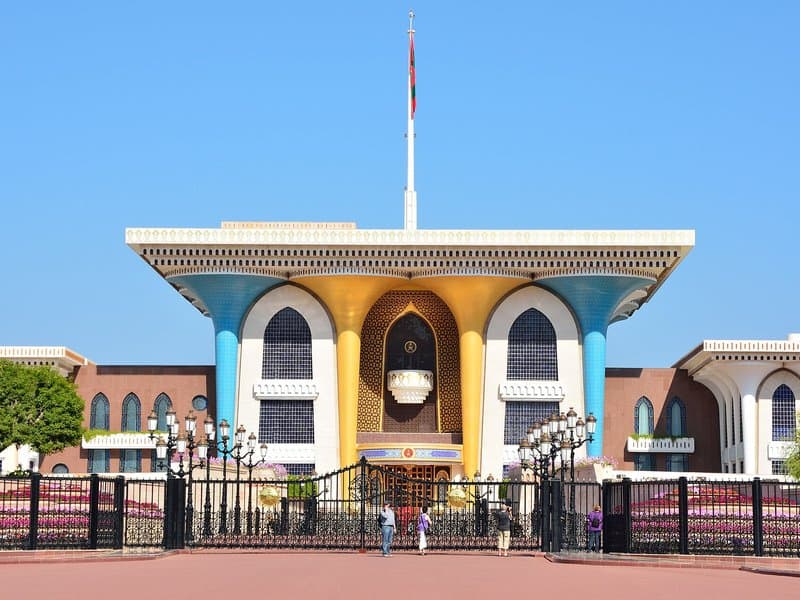
Old Muscat and Al Alam Palace

Old Muscat and Al Alam Palace

Old Muscat

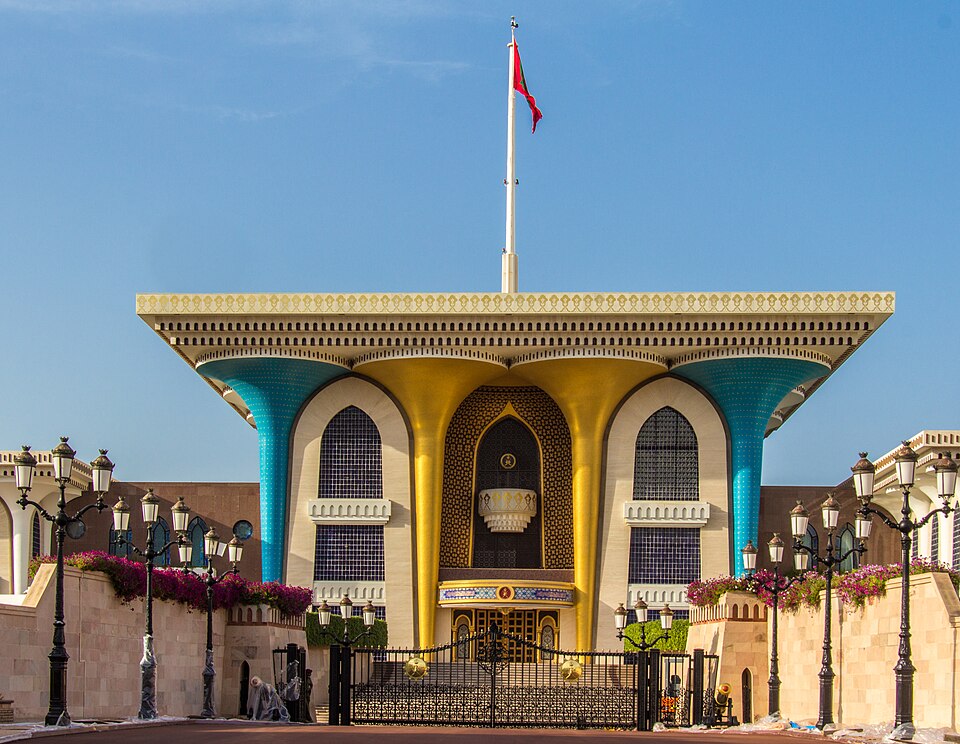
A small cove ringed by rock, home to the Sultan's ceremonial palace with its mushroom-shaped blue and gold columns. On the cliffs above, two Portuguese forts from the 1580s, Al Jalali and Al Mirani, guard the harbour entrance. The old city walls and the Bab al-Kabir gate separate the quarter from the rest of the city.

Tip: Neither the palace nor the forts can be entered — photograph the palace through the railings from the square in front, and the forts from the water or from the roadside viewpoint above the cove. A twelve-kilometre coast road links it with Mutrah; a taxi costs about three rials. Combine it with the National Museum and Bait Al Zubair, all within five minutes' walk.

Admission:
free (outside only)
Time needed:
1 h
National Museum of Oman

National Museum of Oman

Old Muscat

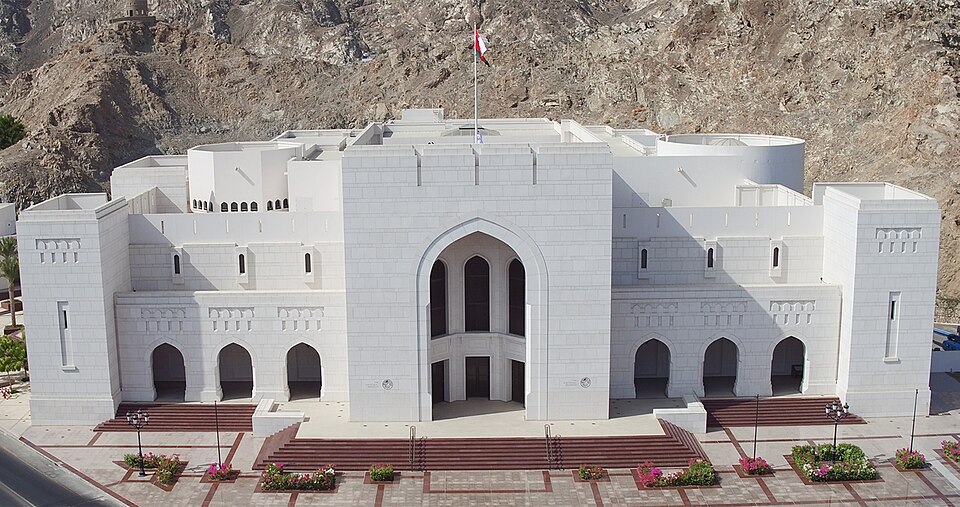
A modern museum opposite the Sultan's palace, telling the country's story across fourteen galleries, from prehistoric tombs through maritime trade with East Africa to the present day. Highlights include manuscripts, boats, weapons, jewellery and an excellent gallery on traditional crafts and dhow building.

Tip: Foreigners pay around five rials, and it is worth it as an introduction to the whole Oman trip — allow two hours. On Fridays it opens only in the afternoon. The galleries are air-conditioned, which makes it ideal for the hottest part of the day, when the souq is closed anyway.

Admission:
OMR 5
Time needed:
2 h
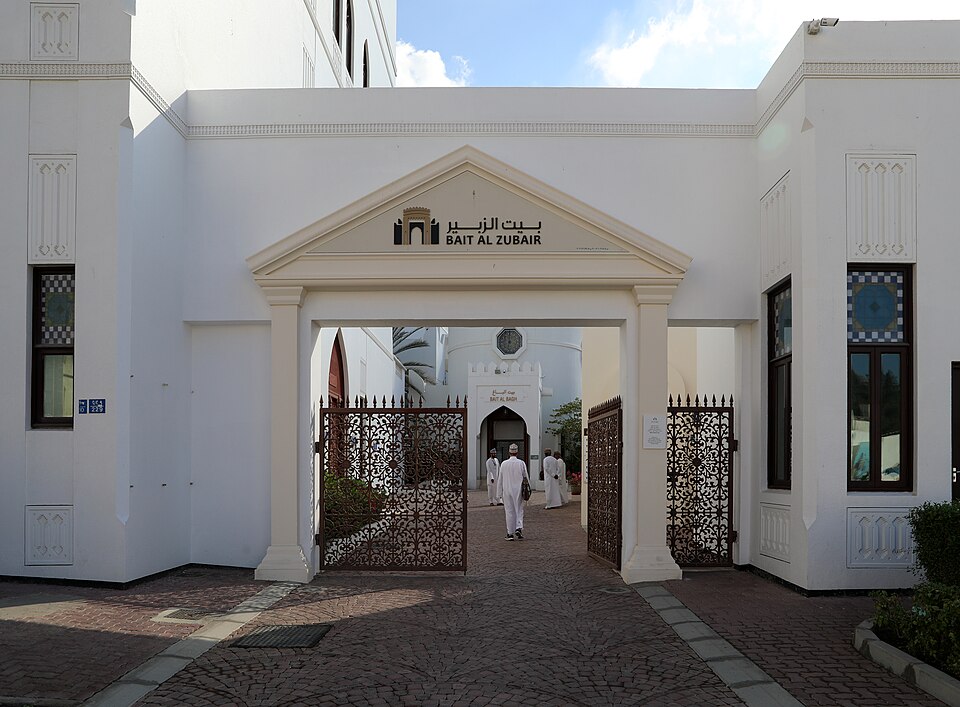
Bait Al Zubair

Bait Al Zubair

Old Muscat

A private museum in a late nineteenth-century family house, with collections of Omani daggers, jewellery, costumes, coins and old maps. The garden holds a miniature Omani village with a falaj irrigation channel, and the building next door houses a gallery of contemporary Omani art.

Tip: Smaller and quieter than the National Museum and a fraction of the price; if you only have time for one, choose the National Museum, if you have time for both, start here. The courtyard café is one of the few places in old Muscat to sit down quietly over a coffee.

Admission:
admission fee
Time needed:
1 h
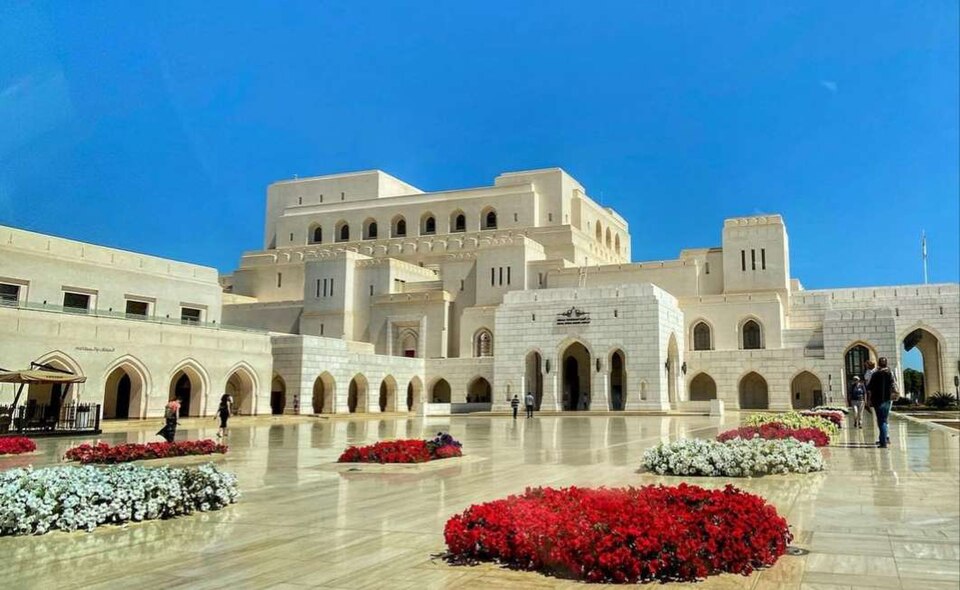
Royal Opera House Muscat

Royal Opera House Muscat

Shatti Al Qurum

An opera house opened in 2011, built of white Omani limestone and finished in wood, marble and gold — the first of its kind in the Gulf. It stages opera, ballet, symphony concerts and Arabic music, and the complex includes an arcade of shops and restaurants.

Tip: Guided tours of the interior run in the morning, but it is far better to buy a ticket for a performance — the cheapest balcony seats cost little more than the tour. Evening shows have a dress code: long trousers and a shirt for men, covered shoulders for women. The programme for the September-to-May season is published in advance.

Admission:
tour or show ticket
Time needed:
1 h / an evening
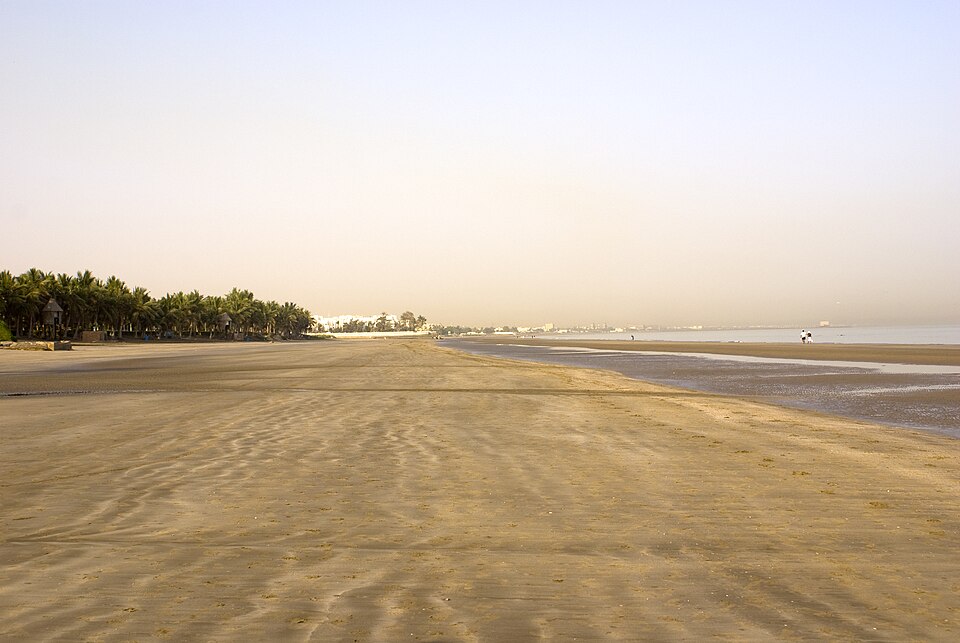
Qurum Beach and Shatti Al Qurum

Qurum Beach and Shatti Al Qurum

Qurum

Muscat's longest city beach, several kilometres of wide sand between a nature park with mangroves and a row of upmarket hotels. Behind it runs a promenade of cafés and restaurants where half the city gathers in the evening, football games spring up and camels wait on the sand for tourists.

Tip: The public beach is free and fine for swimming, but swimwear is not the norm here — women in bikinis will feel out of place, and a one-piece with a T-shirt is the safer choice. For a quiet spot by the water, buy a day pass to one of the hotel beach clubs. The best time is the hour before sunset.

Admission:
free
Time needed:
2–3 h
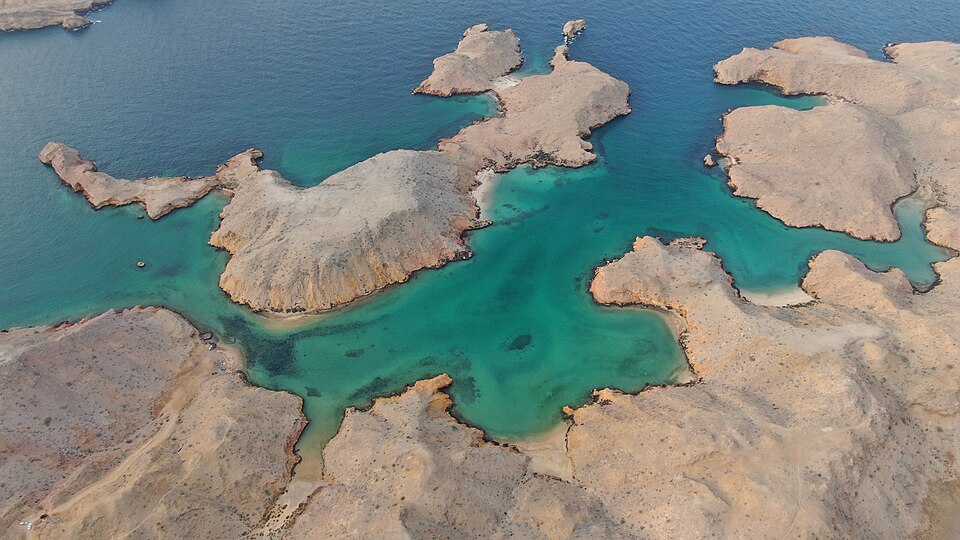
Dolphin watching and Bandar Khayran

Dolphin watching and Bandar Khayran

Al Bustan

Boat trips from Marina Bandar Al Rowdha to find the dolphins that gather in pods of dozens along the coast south of the city, continuing into the fjord-like inlet of Bandar Khayran, with clear water, rocky islets and coral that is good for snorkelling.

Tip: Boats leave around eight in the morning, when the sea is calm and the dolphins most active; afternoon trips have lower odds. A two-hour dolphin cruise costs about twenty rials, a half-day trip with snorkelling at Bandar Khayran about thirty-five. From May to September the wind picks up and boats often stay in port.

Admission:
from OMR 20
Time needed:
2–4 h

Photos: Sultan Qaboos Grand Mosque — Ajay Suresh from New York, NY, USA (CC BY 2.0) · Mutrah Souq — Dr. Thomas Liptak (CC BY-SA 4.0) · Mutrah Corniche and fish market — Andrew Moore (CC BY-SA 2.0) · Old Muscat and Al Alam Palace — Andrew Moore (CC BY-SA 2.0) · National Museum of Oman — Mohammedkhamisnasserkhamis (CC BY-SA 4.0) · Bait Al Zubair — Francesco Bini (CC BY-SA 4.0) · Royal Opera House Muscat — Arsalaan Ahmad (CC BY-SA 4.0) · Qurum Beach and Shatti Al Qurum — Matti Blume (CC BY-SA 3.0) · Dolphin watching and Bandar Khayran — Erfan.arafat (CC BY-SA 4.0)

Where to stay

Areas and districts, matched to the kind of trip you are taking

Mutrah

Best for: atmosphere and walkability

The only part of Muscat where you can stay and do everything on foot: the souq, the waterfront, the fish market and cafés are all round the corner. Hotels are smaller and older, mostly mid-range, and rooms facing the bay look out over moored dhows. For the beach you take a taxi.

Qurum and Shatti Al Qurum

Best for: beach, restaurants and a first visit

A modern district by the longest city beach, with the opera house, malls and the widest choice of restaurants. Large hotels here have their own beach, making it a good compromise between a seaside stay and sightseeing — Mutrah is fifteen minutes away by taxi.

Al Bustan and Barr Al Jissah

Best for: luxury resorts and seclusion

Rocky coves south-east of old Muscat, home to the country's best resorts with private beaches, coral reefs close to shore and dive centres. You cannot walk anywhere from the hotel, but you are ten minutes from the marina where the dolphin boats leave.

Al Mouj and Seeb

Best for: near the airport and longer stays

A new residential district with a marina, golf course and beach close to the airport, popular with expatriates. It is quiet, with modern apartments and hotels and an evening stroll along the yacht harbour, but the centre and Mutrah are thirty to forty minutes away by car.

Getting around

From the airport

Muscat International Airport sits in Seeb, thirty kilometres west of Mutrah, in a modern terminal opened in 2018. There are no direct flights from Central Europe; the quickest option is one connection in Doha, Dubai or Istanbul, with a total journey of nine to eleven hours. A budget alternative is flying into Dubai and taking the Mwasalat coach across the border to Muscat, which takes around six hours. A motorway runs from the airport into town and a taxi takes twenty to forty minutes depending on the district.

Muscat International Airport (MCT) · 30 km

  • Airport taxi to Qurum· 20 min· OMR 8
  • Airport taxi to Mutrah· 35 min· OMR 12
  • Otaxi or Marhaba app· 25–40 min· OMR 6
  • Mwasalat bus route 1 to Ruwi· 1 h· OMR 0.5

Dubai (flight + coach) (DXB) · 450 km

  • Mwasalat coach Dubai–Muscat· 6 h· OMR 10
  • Connecting flight to Muscat· 1 h 15 min· OMR 40

Around town

Muscat is fifty kilometres long and only Mutrah and old Muscat are walkable. Between districts you take a taxi or drive along the Sultan Qaboos Street motorway. The orange-and-white street taxis have no meters, so agree the fare first; the Otaxi and Marhaba apps with upfront prices are better value. Mwasalat city buses are clean and cheap but stick to main routes and run infrequently. For trips out of town a rental car is the best choice: roads are excellent, fuel is cheap and driving is calm.

Otaxi and Marhaba appsUpfront fare and pickup at your address; the easiest way to move between districts. · OMR 2
Street taxiNo meter, so agree the fare first; Mutrah to old Muscat comes to two or three rials. · OMR 2
Mwasalat busesAir-conditioned city routes linking the airport, Ruwi, Mutrah and Qurum; pay by card or in cash to the driver. · OMR 0.2
Rental carEssential for trips into the mountains and wadis; Jebel Akhdar requires four-wheel drive and the police checkpoint will turn you back without it. · OMR 12 / day

Useful apps: Otaxi, Marhaba, Mwasalat, Google Maps

When to go

The best time is November to March, with daytime highs of twenty-five to thirty degrees, pleasant nights and the sea around twenty-five. This is also high season, with the highest hotel rates and cruise ships in port. October and April are already hot but still workable. From May to September Muscat tops forty degrees with high humidity — being outside during the day is impractical and hotels discount heavily. Summer travellers should pair Muscat with Salalah, where the cooler monsoon season is under way.

Best time

November to March

What to avoid

May to September, when it tops forty degrees

MonthJanFebMarAprMayJunJulAugSepOctNovDec
Day25°26°29°34°39°40°38°36°35°34°30°27°
Night17°18°21°25°30°31°31°29°28°25°21°19°
Rainy days222100000012
Sea24°23°24°26°29°30°30°29°29°29°27°25°

Food & drink

Omani cooking is simpler and less spicy than Indian or Lebanese food: rice, fish, goat, dates and cardamom coffee. In Muscat it is best tried in restaurants where you sit on carpets in private alcoves and eat from a shared platter — ordinary eateries are mostly run by Indian, Pakistani and Lebanese cooks, and are cheap and good. Fish is fresh everywhere, because it is caught in the bay that morning. Alcohol is served only in hotels and licensed restaurants, a glass of wine costs over five rials, and supermarkets do not sell it.

What to try

Shuwa

Lamb or goat wrapped in banana leaves and slow-cooked for one or two days in an underground oven. It is made mainly for Eid and you will not find it in an ordinary restaurant — hotels sometimes serve it on Fridays.

Majboos (kabsa)

Rice with chicken or lamb, cooked with loomi (dried lime), cinnamon and cardamom. The standard Omani lunch, served on a large shared platter and eaten by hand.

Mashuai

Whole grilled kingfish with lemon rice and a tomato and onion sauce. In the restaurants by the Mutrah fish market you choose the fish from the ice and pay by weight.

Mishkak

Beef or chicken skewers grilled over charcoal at roadside stalls and served with Omani khubz bread. The cheapest dinner around, and the stalls open after sunset.

Khubz ragag

Thin, crisp Omani bread baked on a hot plate and filled to order with egg, cheese, honey or chilli paste. Muscat's cheapest breakfast, costing two hundred baisa at stalls around the souq and near mosques.

Karak tea

Black tea boiled with condensed milk, cardamom and saffron, adopted from Indian migrants. It is drunk at any hour from small paper cups and costs a hundred baisa at the little cafés along the waterfront.

Omani halwa

A gelatinous sweet made from starch, sugar, rosewater, saffron and nuts, served with coffee. It is sold in tins as a gift and the best comes from Barka; it is seriously sweet.

Kahwa and dates

Pale Arabic coffee with cardamom served in small handleless cups alongside dates. It is offered to guests on every visit and taken with the right hand; your cup is refilled until you give it a little shake.

What it costs

Khubz ragag or shawarma at a stall

OMR 0.2–0.8

Lunch in an Indian or Lebanese eatery

OMR 2–4

Dinner in an Omani restaurant

OMR 7–12

Karak tea on the waterfront

OMR 0.1–0.2

National Museum admission

OMR 5

Dolphin cruise

OMR 20–25

App taxi Mutrah–Qurum

OMR 3–4

Night in a 4-star hotel

OMR 40–80

Indicative prices that change over time — treat them as a guide, not a price list.

Practical information

SocketsGBritish, three rectangular pins
Voltage240V / 50Hz
Tap waterTap water is treated, bottled is common — Tap water comes from desalination plants and is safe in hotels, but even Omanis buy bottled water to drink. A 1.5-litre bottle costs two hundred baisa in a shop, and ten times that from a hotel minibar. In the Omani heat staying hydrated is essential, and hotels replenish the water in your room for free. Never drink from wadis or springs, even boiled.
TippingTipping is not expected in Oman and nobody is offended if you skip it — restaurant bills often include service and tax adding up to about seventeen per cent. If you want to reward good service, round up or leave a rial. A driver on a full-day trip gets five rials, a guide similar. Hotels, supermarkets and petrol stations take cards; markets and small eateries want cash. ATMs are plentiful and withdrawal fees are low.
Driving on theright
SafetyMuscat is one of the safest capitals in the world; there are no pickpockets or scammers and you can walk anywhere at night. The real risks are heat, traffic and nature: motorway speeds are high, speed cameras are everywhere and fines are steep. During the rare winter rains the wadis around the city fill within minutes, and a flooded road should never be crossed. Public beaches have no lifeguards and rip currents form when the wind is up. The emergency number is 9999.
Opening hoursThe working week runs Sunday to Thursday, with the weekend on Friday and Saturday. On Friday morning almost everything closes for midday prayers and reopens around two. Shops open from eight until one and again from four until nine in the evening — the long lunch break is the rule, not the exception. Malls and supermarkets run without a break until ten. During Ramadan, non-Muslims too must not eat or drink in public during daylight hours, and restaurants open only after sunset.
Customs & etiquetteOman is conservative but relaxed about it: women are expected to cover shoulders and knees in public, and men to wear long trousers away from the beach. Swimwear belongs on the hotel beach and by the pool, nowhere else. Eat, give and receive with the right hand; the left is considered unclean. Omanis offer kahwa coffee with dates — refusing is impolite, accept it with your right hand and, after the second refill, return the cup with a little shake. Photographing women without permission is a serious offence. Non-Muslims may enter only some mosques, and only at set hours.
A few local wordsHello — As-salámu alajkumThank you — ŠukranPlease — Min fadlakHow much is it? — Kam as-si'r?No, thank you — Lá, šukranGod willing — In šá' Alláh

How to plan your days

1 day

Muscat in one day

  1. 1At eight, the Sultan Qaboos Grand Mosque while it is still empty.
  2. 2On to old Muscat: Al Alam Palace and the view of the forts.
  3. 3The National Museum through the midday heat.
  4. 4A late lunch and a rest at the hotel in the afternoon.
  5. 5From five, Mutrah Souq and sunset on the waterfront.

2 days

Two days with the sea

  1. 1Day one as above.
  2. 2A morning boat trip to see dolphins and snorkel at Bandar Khayran.
  3. 3A fish lunch near the fish market.
  4. 4Bait Al Zubair in the afternoon, with coffee in the courtyard.
  5. 5Qurum beach in the evening, then a performance at the opera house.

3 days

Three days with a trip to the mountains

  1. 1The first two days as above.
  2. 2Drive to Nizwa early, for the goat market if it is Friday.
  3. 3Nizwa Fort and the souq with its pottery and dates.
  4. 4In the afternoon, the village of Birkat al-Mawz at the foot of Jebel Akhdar.
  5. 5Back to Muscat before dark.

Day trips

Nizwa and Jebel Akhdar

160 km · 1 h 45 min by car

The former inland capital, with the massive round tower of its seventeenth-century fort, a souq of pottery and dates, and a livestock market held on Fridays from seven in the morning. From here a road climbs to the Jebel Akhdar plateau at two thousand metres, with terraced orchards of pomegranates and roses; only four-wheel-drive vehicles are allowed up.

Wadi Shab and Bimmah Sinkhole

140 km · 1 h 30 min by car

Down the coastal motorway to the Bimmah Sinkhole, a round pit of turquoise water you can swim in, then on to the Wadi Shab canyon. A short boat ride takes you across the entrance, followed by an hour's walk through palms and a swim through pools to a cave with a waterfall. Bring water shoes and a waterproof phone pouch.

Wahiba Sands and Wadi Bani Khalid

220 km · 2 h 30 min by car

A sand sea of orange dunes more than a hundred metres high, where you sleep in desert camps with dinner and stargazing. On the way you stop at Wadi Bani Khalid, an oasis of turquoise pools and palms where you can swim. Drive into the dunes only with a camp driver or local guide; tyres are deflated on the tarmac at the edge of the sand.

Frequently asked questions

When is the best time to visit Muscat?+

From November to March, when daytime temperatures sit around twenty-five to thirty degrees and both the city and the mountains are comfortable. April and October already reach thirty-five. From May to September it tops forty degrees with high humidity; you can only be outside early and late, but hotels cost half as much.

Do I need a visa for Oman?+

Citizens of the Czech Republic and other EU countries can enter Oman visa-free for stays of up to fourteen days; longer stays require an e-visa applied for online before travel. At the border you need a passport valid for six more months, a return ticket and an accommodation booking. Travel insurance is worthwhile, as healthcare is expensive for foreigners.

How many days do I need in Muscat?+

The city itself takes two days: one for the mosque, old Muscat and the souq, another for the sea and the dolphins. But Muscat is mainly a base for the rest of Oman, so allow another two to four days for trips to Nizwa, the wadis and the desert, ideally with nights spent outside the city.

Can I swim in the sea in Muscat?+

Yes — the water is clean and around twenty-five degrees from November to April. The public beach at Qurum is mostly used by families and dress there is more conservative; hotel beaches in Qurum and in the Al Bustan coves are more comfortable, and many sell day passes. The best snorkelling is on a boat trip to Bandar Khayran or the Daymaniyat Islands.

Do I need a car in Muscat?+

Not for the city itself — taxis booked through the Otaxi or Marhaba apps cover the districts comfortably. For the mountains, wadis and desert a car is almost essential: there is no public transport and organised tours are expensive. An EU driving licence is accepted, roads are excellent and fuel is cheaper than hotel water.

What should I wear to the Grand Mosque?+

Women must cover their hair with a scarf and wear long sleeves and an ankle-length skirt or trousers, nothing sheer or tight. Men need long trousers and a sleeved top. Guards at the entrance check strictly and turn away anyone dressed inappropriately. Non-Muslims can visit Saturday to Thursday mornings; it is closed to visitors on Friday.

Can I drink alcohol in Muscat?+

Only in hotel bars and licensed restaurants, usually in the larger hotels, where a beer costs three to five rials. Supermarkets do not sell alcohol, and drinking in public or being drunk in the street is an offence. During Ramadan hotels stop serving alcohol during the day, and some stop altogether.

Can I combine Muscat with Dubai?+

Yes, and it is a popular pairing: Mwasalat coaches run between the two cities several times a day and take around six hours including the border. A one-hour flight is quicker. With a rental car there is a border fee and a car hired in the Emirates needs Omani insurance, which rental firms add for a surcharge.

Visa Requirements

Check the latest visa requirements for entering this country. Some nationalities may need to apply for a visa or e-visa before travel.

Check visa requirements

Language

Arabic

Currency

OMR

Timezone

Asia/Muscat

Dial Code

+968

Population

4.6M

Area

309,500 km²

Voltage

240V / 50Hz

Driving Side

Right

Top Hotels in Muscat

Live prices from 500+ properties

Loading hotels...

More destinations in Oman

Planning a trip to Muscat?

Compare hundreds of hotels, find the best price, and book with free cancellation on TravelManiac.