Hotels in Nairobi

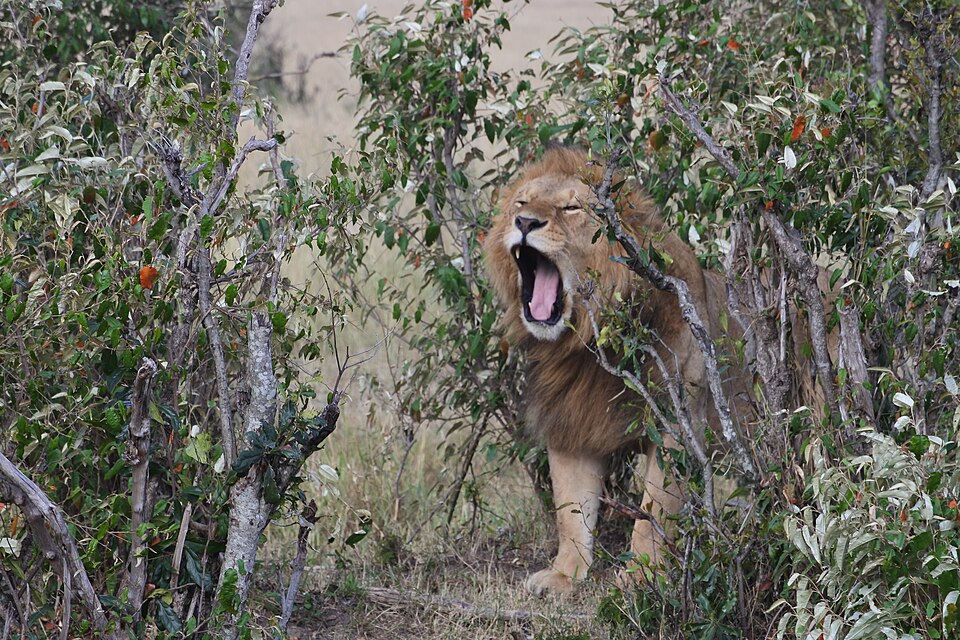
The only capital city in the world with a national park full of lions

Nairobi

LanguageEnglish
CurrencyKES
TimezoneGMT+3
Temperature20-28 °C
Dial Code+254
Population56M
Area580,367 km²
SocketsType G
Tap waterNot drinkable

Discover Nairobi

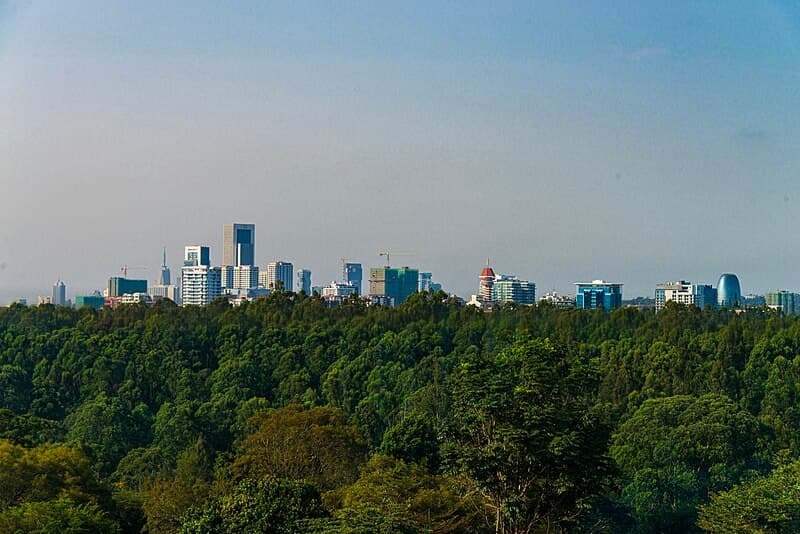
Nairobi is the capital of Kenya and the largest metropolis in East Africa, and for most visitors the first stop before heading out on safari in the Masai Mara or Amboseli. The city was founded only in 1899 as a supply depot for the railway being built from Mombasa to Lake Victoria, on a site the Maasai called Enkare Nairobi — cold water. Today it's a modern hub of tech, the UN, and international business, with skyscrapers and traffic jams. What makes it unusual is that the wilderness begins right at its edge: in Nairobi National Park, giraffes, rhinos, and lions graze with a skyline of skyscrapers in the background — the only capital city in the world with a park like it. In the suburb of Karen, named after the author of Out of Africa, there's an elephant orphanage where baby elephants are bottle-fed each morning, and a centre where you feed giraffes by hand. Nairobi calls for some caution, but two days here are worthwhile before heading further into the bush. It sits at an altitude of 1,700 metres, which keeps it pleasant and malaria-free.

What to see

The places worth your time in Nairobi, and what to expect at each

Nairobi National Park

Nairobi National Park

Langata

A savanna covering one hundred seventeen square kilometres, ten kilometres from downtown, home to lions, rhinos, giraffes, zebras, buffalo, and over four hundred bird species. The only place where you can photograph a rhino with a skyline of skyscrapers behind it.

Tip: The gates open at six in the morning, and it's best to be there right at opening when the lions are active. Entry fees can only be paid by card or M-Pesa — cash isn't accepted. Go with a driver-guide who knows where the lions have been hanging out that week. Elephants don't live here.

Admission:
entry fee
Time needed:
4 h
Sheldrick Elephant Orphanage

Sheldrick Elephant Orphanage

Karen

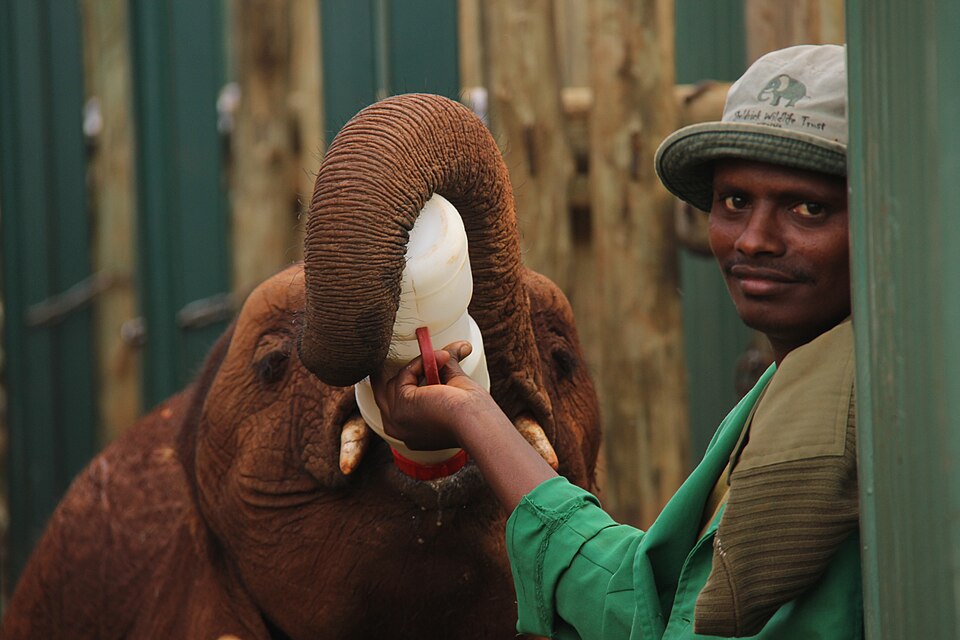
The Sheldrick Wildlife Trust rescue centre, raising orphaned baby elephants since the 1970s and returning them to the wild in Tsavo. Visitors watch them being bottle-fed from giant bottles and taking mud baths.

Tip: The public is admitted only for one hour, between eleven and noon, and tickets are bought online in advance. Anyone who adopts a baby elephant for fifty dollars a year can also attend the evening stable time at five o'clock — a much calmer experience.

Admission:
entry fee
Time needed:
1 h
Giraffe Centre

Giraffe Centre

Karen

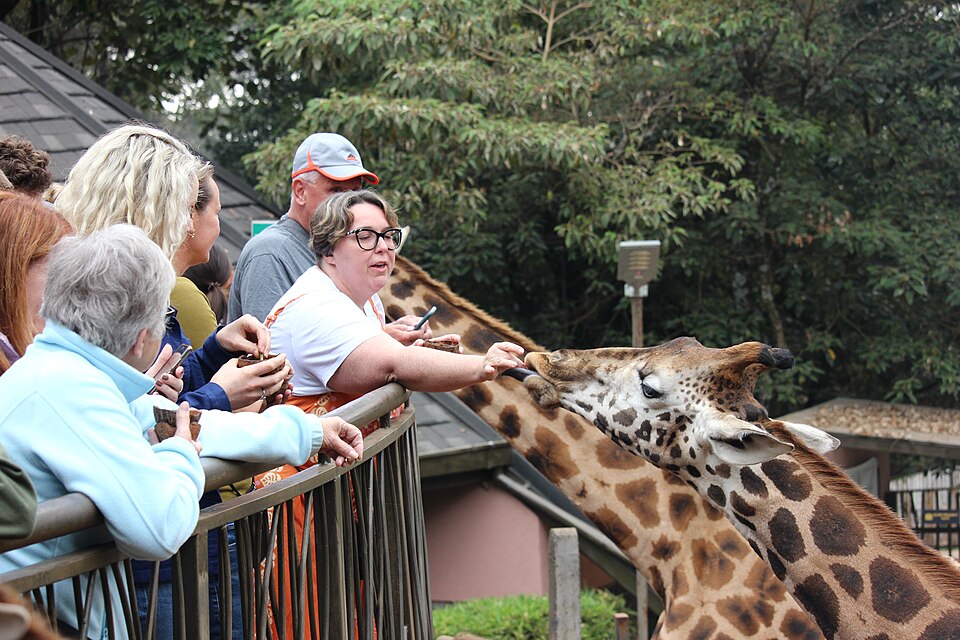
A conservation centre for the endangered Rothschild's giraffe, with a raised platform where visitors hand-feed giraffes with pellets. Next door stands Giraffe Manor hotel, where giraffes poke their heads through the dining room windows.

Tip: Pellets are handed out at the entrance, and giraffes take them with their long blue tongues — if you like, you can hold one between your lips instead. Combine it with the elephant orphanage, a ten-minute drive away. Afternoons are the least crowded.

Admission:
entry fee
Time needed:
1 h
Karen Blixen Museum

Karen Blixen Museum

Karen

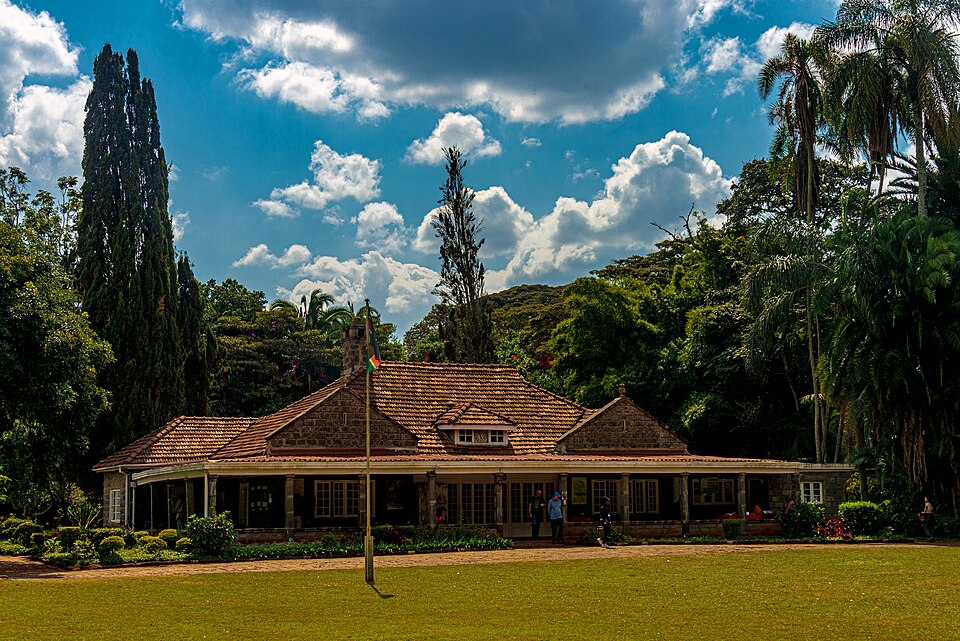
A farmhouse at the foot of the Ngong Hills where Danish author Karen Blixen, who wrote Out of Africa, lived from 1917 to 1931. Period furniture and props from the film starring Meryl Streep.

Tip: A guided tour is included and lasts forty minutes. The garden with views of the Ngong Hills is prettier than the house itself. Next door is Talisman restaurant, one of the best in the city.

Admission:
entry fee
Time needed:
1 h
Nairobi National Museum

Nairobi National Museum

Museum Hill

Kenya's national museum, with exhibits on human evolution — Kenya is one of the cradles of humankind — birds, the cultures of Kenya's peoples, and modern art. The garden houses a snake park.

Tip: The prehistory gallery, with skulls of human ancestors found at Lake Turkana, is the most fascinating section. The snake park is small but children love it. The museum sits on a hill near downtown — have lunch at the café here.

Admission:
entry fee
Time needed:
2 h
Karura Forest

Karura Forest

Muthaiga

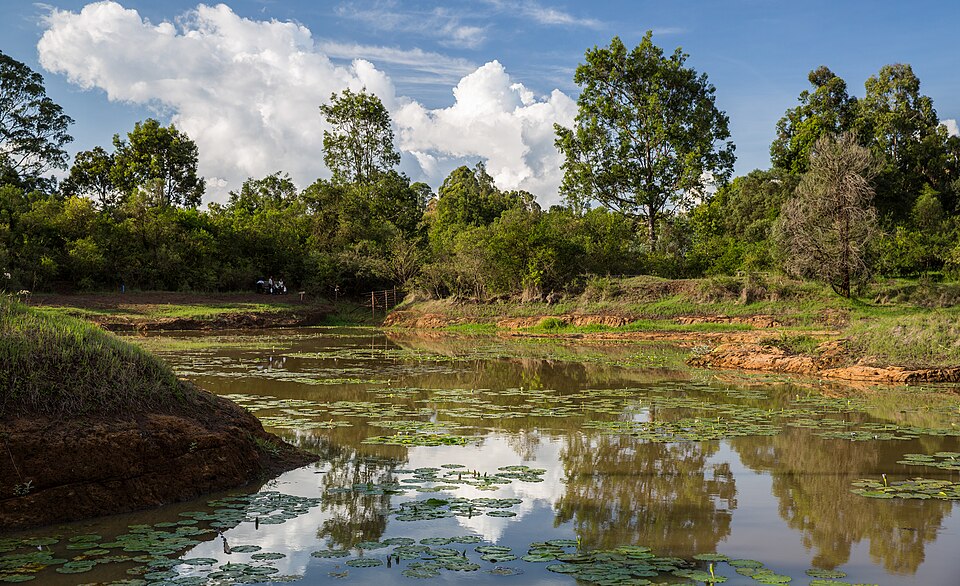
An urban forest of over a thousand hectares in the north of the city, with a waterfall, caves once used as hideouts by Mau Mau fighters, and trails for walking and cycling. Saved from development thanks to Nobel laureate Wangari Maathai.

Tip: The forest is safe thanks to security and fenced entrances. Bikes can be rented at the gate. It's about three kilometres from the main gate to the waterfall. Kenyans come here to run on Sunday mornings.

Admission:
entry fee
Time needed:
2–3 h
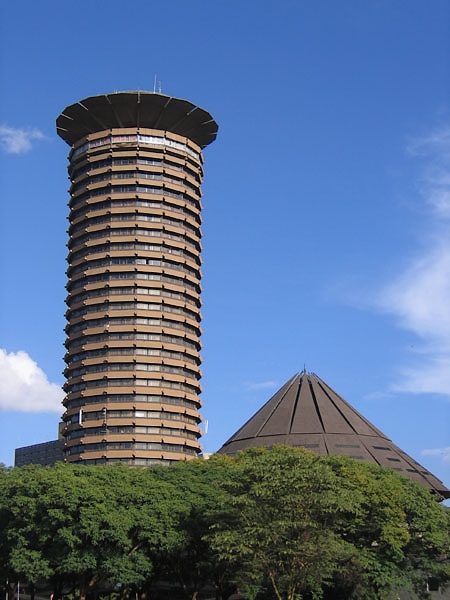
Kenyatta International Convention Centre

Kenyatta International Convention Centre

CBD

A 1973 convention centre shaped like an African hut, a symbol of Nairobi. From the rooftop helipad, twenty-eight floors above the city, there are views in every direction — on a clear morning, even as far as Kilimanjaro.

Tip: The rooftop viewing deck is a paid attraction and requires passing through security. The view is best in the morning, before the afternoon haze sets in. The surrounding downtown can be explored on foot during the day, but don't carry anything valuable in plain sight.

Admission:
entry fee
Time needed:
45 min
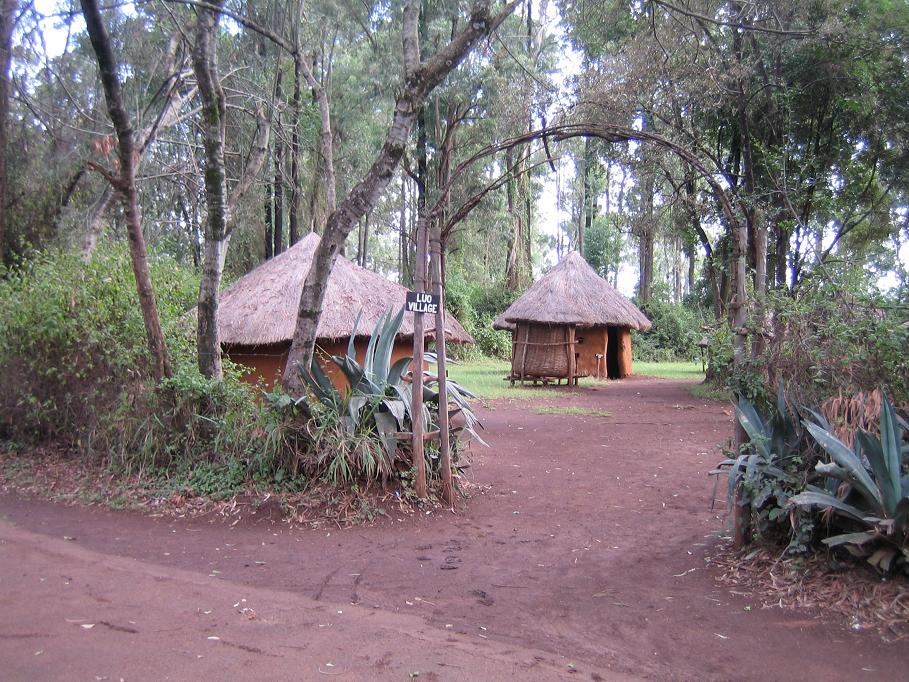
Bomas of Kenya

Bomas of Kenya

Langata

A cultural centre showcasing traditional villages of Kenya's different peoples, with a daily dance performance in a giant circular hall. The best single-stop overview of Kenya's cultural diversity.

Tip: The show runs in the afternoon and lasts two hours; arrive half an hour early for front-row seats. The village is toured before the performance. It's near Nairobi National Park, so the two can be combined.

Admission:
entry fee
Time needed:
2–3 h
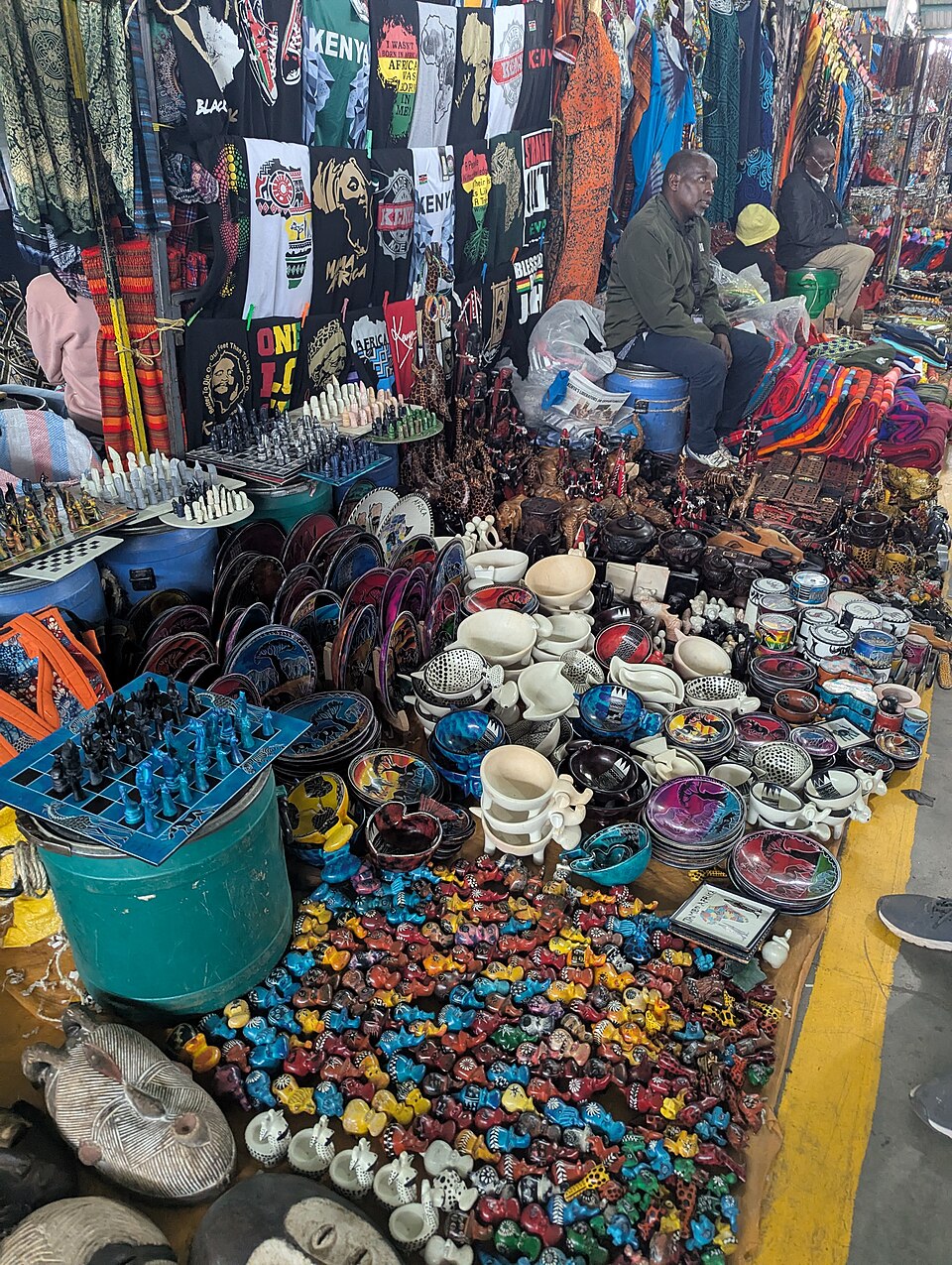
Maasai Market

Maasai Market

various locations

A traveling craft market held in a different location each day — beaded jewelry, soapstone carvings, Maasai shuka blankets, baskets, and paintings. The widest selection of souvenirs in Kenya.

Tip: Locations rotate — it's often near the Prestige mall on Tuesdays and at Village Market on Saturdays; check with your hotel. Bargain hard, since the first price is often triple the real one. Don't carry large amounts of cash or a phone in your back pocket to the market.

Admission:
free
Time needed:
1–2 h

Photos: Nairobi National Park — flightlog (CC BY 2.0) · Sheldrick Elephant Orphanage — Richard Probst from Sequim, Washington, United States (CC BY 2.0) · Giraffe Centre — Samwalton9 (CC BY 4.0) · Karen Blixen Museum — Daniel Case (CC BY-SA 4.0) · Nairobi National Museum — Ethmostigmus (CC BY-SA 4.0) · Karura Forest — Ninaras (CC BY 4.0) · Kenyatta International Convention Centre — Original uploader was Mkimemia at en.wikipedia (CC BY-SA 3.0) · Bomas of Kenya — SteveRwanda (CC BY-SA 3.0) · Maasai Market — Sdkb (CC BY-SA 4.0)

Where to stay

Areas and districts, matched to the kind of trip you are taking

Westlands

Best for: nightlife and hotels

A commercial district with malls, restaurants, bars, and international hotels. The liveliest spot in the evening and relatively safe.

Karen and Langata

Best for: nature and quiet

A green suburb in the south near the Ngong Hills, with the elephant orphanage, giraffes, and lodges set in gardens. Close to the national park but far from downtown.

Gigiri

Best for: safety

The diplomatic district, home to the UN and embassies, calm and guarded, with the Village Market mall. Safe for visitors but far from the sights.

CBD

Best for: daytime visits only

The business centre with the KICC, markets, and government buildings. Busy and interesting by day, but not somewhere to walk at night. Visit only during daylight and with a guide.

Getting around

From the airport

Jomo Kenyatta Airport lies fifteen kilometres southeast of downtown. From Prague, flights connect via Amsterdam (Kenya Airways and KLM), Dubai, Doha, Istanbul, or Addis Ababa, with a journey time of twelve to fifteen hours. An electronic eTA travel authorization is required before departure. The smaller Wilson Airport handles light aircraft flying to safari destinations in the Masai Mara. The Madaraka Express fast train runs to Mombasa in six hours.

Jomo Kenyatta International (NBO) · 15 km

  • Uber / Bolt to Westlands· 30–90 min· 2,000 KES
  • Hotel transfer· 30–90 min· 30 USD
  • Taxi· 30–90 min· 3,000 KES

Wilson Airport (WIL) · 5 km

  • Uber / Bolt· 20–40 min· 800 KES

Around town

Nairobi has some of the worst traffic jams in Africa, and ten kilometres can take an hour. For visitors, the only sensible options are Uber, Bolt, or a hotel driver. The local minibuses, matatus, are colourful and loud but impractical for foreigners and unsafe at night. Walking is fine only in safe districts during the day.

Uber / BoltThe main way to get around — cheap and trackable. Pay by card or M-Pesa. · 500 KES within a district
Driver for the dayBest for visiting Karen and the national park. · 80 USD/day
MatatuColourful minibuses with music, cheap but crowded and not recommended for tourists. · 100 KES
Boda bodaMotorbike taxi, fast in traffic but with a high accident risk. · 200 KES
Madaraka ExpressTrain to Mombasa and Tsavo National Park. · 1,500 KES

Useful apps: Uber, Bolt, M-Pesa, Google Maps, Glovo

When to go

Nairobi sits at 1,700 metres and enjoys a mild climate year-round. The best time is the dry season from July to October, sunny and coinciding with the start of the great wildebeest migration in the Masai Mara, plus January to February. The long rains fall from March to May, the short rains in November and December. July is the coolest month, with mornings around ten degrees.

Best time

July to October and January to February

What to avoid

April and May because of the long rains

MonthJanFebMarAprMayJunJulAugSepOctNovDec
Day25°27°26°24°23°22°21°22°25°25°23°23°
Night12°13°14°14°13°11°10°10°11°13°13°13°
Rainy days549161454447149

Food & drink

Nairobi has surprisingly good food: Kenyan cuisine, excellent Indian restaurants left by the Indian laborers who built the railway, and international spots in Westlands. Nyama choma, grilled meat, is eaten in garden restaurants on weekends. The legendary Carnivore restaurant brings meat to the table on skewers. Prices are low outside hotels.

What to try

Nyama choma

Grilled goat or beef, ordered by the kilo and brought sliced on a board with kachumbari salad and ugali. The main social dish; eaten by hand and washed down with beer.

Ugali and sukuma wiki

A thick maize-flour porridge shaped by hand and dipped into sauce, served with stewed collard greens known as sukuma wiki. The staple of every Kenyan plate and the cheapest lunch around.

Pilau

Rice cooked with meat and a spice blend of cloves, cumin, and cinnamon, a Swahili dish from the coast. Served at weddings and holidays, and cooked in eateries across the cities.

Mandazi and chapati

Mandazi are triangular fried doughnuts spiced with cardamom, eaten with tea for breakfast; chapati are layered flatbreads borrowed from Indian cuisine. Both cost a few dozen shillings from a stall.

Lake fish (samaki)

Whole fried tilapia from Lake Victoria or Lake Naivasha, served with ugali and greens. Eaten by hand, and best right by the lake where it was caught that morning.

Chai

Tea brewed directly in milk with sugar and ginger or cardamom. Kenya is one of the world's largest tea exporters, and chai is drunk several times a day.

Tusker beer

A Kenyan lager with an elephant on the label, drunk on safari around the evening fire. Kenyans often drink it warm; ask for it cold with 'baridi'.

What it costs

Chai and mandazi

100–200 KES

Lunch at a local restaurant

500–900 KES

Dinner in Westlands

2,000–4,000 KES per person

Tusker beer

300–400 KES

Nairobi National Park entry

from 80 USD

Elephant orphanage

from 15 USD

Giraffe Centre

from 15 USD

Night at a 3-star hotel in Westlands

80–150 USD

Indicative prices that change over time — treat them as a guide, not a price list.

Practical information

SocketsGBritish, three rectangular pins
Voltage240V / 50Hz
Tap waterDo not drink tap water — Tap water isn't safe to drink in Kenya, including Nairobi. Hotels and lodges provide free bottled or filtered water in the room; a litre and a half in a shop costs around eighty shillings. Ice at better restaurants is made from filtered water. Brush your teeth with bottled water and eat raw vegetables only at established establishments. Kenya has banned plastic bags, and they may be confiscated at the airport — don't pack them in your suitcase.
TippingRestaurants get a ten percent tip unless service is already added to the bill. On safari, tipping the driver-guide makes up the bulk of their income: budget ten to fifteen dollars per day from the group, plus a shared pool for the cooks and lodge staff. Porters get one hundred to two hundred shillings. Kenya runs on the M-Pesa mobile money system, accepted even at market stalls; visitors can buy a local SIM and activate M-Pesa with a passport. Dollars are accepted on safari and at hotels, but only newer, undamaged notes — older series and torn bills are refused.
Driving on theleft
SafetyKenya is safe for tourists on safari and at resorts, but stricter rules apply in Nairobi: don't walk after dark at all, even short distances — take Uber or Bolt instead. Don't take out your phone or camera on downtown streets, and wear your backpack on your front. The districts of Karen, Westlands, and Gigiri are calm; the CBD downtown is safe only during the day. Before travelling you'll need the electronic eTA authorization, and a yellow fever vaccination is recommended; malaria is a risk in the lowlands on the coast and around the lakes, but Nairobi at 1,700 metres is malaria-free. The emergency number is 999 or 112.
Opening hoursShops and malls are open from nine to eight; the Carrefour and Naivas supermarkets stay open on Sundays too. Government offices run from eight to five. Restaurants serve lunch from twelve to three and dinner from seven, but for safety reasons people in Nairobi tend to leave restaurants early, and the city empties out after ten. National parks open at six in the morning and close at six in the evening; anyone who misses the gate pays a fine.
Customs & etiquetteGreetings matter in Kenya: you ask 'habari?' first and only then get down to business. Food and money are passed with the right hand; the left is not used for either. Photographing people without permission is impolite, and Maasai in traditional dress expect payment for photos. Photographing government buildings, police, airports, and soldiers is prohibited. Bargaining is expected at markets, and the first price quoted is often two to three times the real one. Public displays of affection are frowned upon, and homosexuality is illegal.
A few local wordsHello / Hi — Jambo / HabariThank you (very much) — Asante (sana)How much does it cost? — Bei gani?Slowly, take it easy — Pole poleNo problem — Hakuna matataNo, thank you — Hapana, asante

How to plan your days

1 day

A day in Nairobi

  1. 1Sunrise safari in Nairobi National Park.
  2. 2Elephant feeding at Sheldrick at eleven.
  3. 3Lunch in Karen.
  4. 4Afternoon at the Giraffe Centre and Karen Blixen Museum.
  5. 5Evening nyama choma in Westlands.

2 days

Two days in Nairobi

  1. 1Day 1 as in the one-day itinerary.
  2. 2Day 2 morning: Nairobi National Museum.
  3. 3View from the KICC rooftop.
  4. 4Afternoon walk in Karura Forest.
  5. 5Evening: Maasai Market and dinner.

3 days

Three days in Nairobi

  1. 1Two days as above.
  2. 2Day 3: trip to Lake Naivasha.
  3. 3Boat ride among hippos.
  4. 4Afternoon cycling at Hell's Gate.
  5. 5Evening return.

Day trips

Lake Naivasha and Hell's Gate

95 km · 2 h by car

A freshwater lake in the Rift Valley with hippos, eagles, and pelicans. On Crescent Island you walk on foot among giraffes and zebras, since there are no predators there. The neighboring Hell's Gate National Park is explored by bike between rock towers.

Ngong Hills

25 km · 1 h by car

A ridge of hills southwest of the city with views of the Rift Valley on one side and Nairobi on the other. The hike across seven peaks takes three to four hours. Walkers go with an armed ranger from the gate, arranged by the tour operator.

Lake Nakuru National Park

160 km · 3 h by car

A park by a soda lake known for flamingos, with both white and black rhinos and rare tree-climbing lions. A single-day trip makes for a long day; staying overnight is a better option.

Frequently asked questions

Is Nairobi safe?+

It requires caution. Don't walk after dark, use Uber, keep your phone out of sight, and visit downtown only during the day. Westlands, Karen, and Gigiri are calm.

Do I need a visa for Kenya?+

Visas were replaced in 2024 by an electronic travel authorization (eTA), processed online before your trip and costing around thirty dollars.

How many days are enough for Nairobi?+

Two days: the park, elephants, giraffes, and the museum. Then continue on to safari in the Masai Mara or Amboseli.

Is there malaria in Nairobi?+

In Nairobi itself, practically none, thanks to the altitude; on the coast, around the lakes, and in some parks, yes. Discuss prevention with your doctor based on your route.

How do I get from the airport?+

By Uber, Bolt, or a hotel transfer. Because of traffic, allow an hour or more.

Where should I stay in Nairobi?+

In Westlands for the restaurants, in Karen for nature and quiet. Both districts have hotels with security and gardens.

When can I see the baby elephants at Sheldrick?+

Every day between eleven and noon; tickets are bought online in advance. Anyone who adopts a baby elephant may also attend the evening stable time at five o'clock.

How do people pay in Kenya?+

By card and via M-Pesa. National park entry fees cannot be paid in cash. Cash in shillings is useful only at markets and for tips.

Visa Requirements

Check the latest visa requirements for entering this country. Some nationalities may need to apply for a visa or e-visa before travel.

Check visa requirements

Language

Swahili / English

Currency

KES

Timezone

GMT+3

Dial Code

+254

Population

56M

Area

580,367 km²

Voltage

240V / 50Hz

Driving Side

Left

Top Hotels in Nairobi

Live prices from 500+ properties

Loading hotels...

Planning a trip to Nairobi?

Compare hundreds of hotels, find the best price, and book with free cancellation on TravelManiac.