Hotels in San Jose

The gateway to Costa Rica, set among volcanoes and coffee plantations

San Jose

LanguageEnglish
CurrencyCRC
TimezoneGMT-6
Temperature22-32 °C
Dial Code+506
Population5.2M
Area51,100 km²
SocketsType A / Type B
Tap waterDrinkable

Discover San Jose

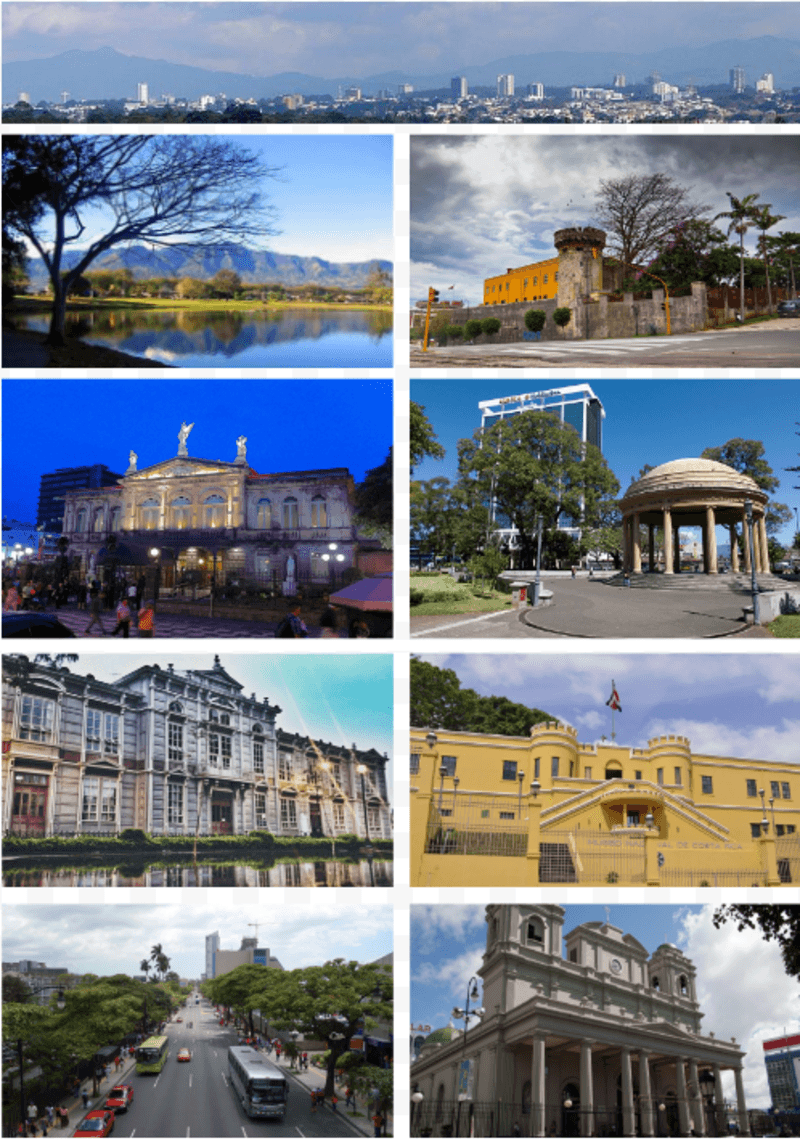
San José is the capital of Costa Rica, a country with no army, a quarter of its territory under national park protection, and the motto pura vida. It sits in the Central Valley at eleven hundred fifty metres, ringed by volcanoes and coffee plantations, giving it a pleasant twenty-five degrees year-round. For most visitors it's just a stopover on the way to the beaches, the Arenal volcano or the Monteverde cloud forest, but a day or two here is worthwhile. Downtown holds surprisingly strong museums: pre-Columbian gold displayed underground beneath the main square, the largest jade collection in the Americas, and the National Theatre, built by coffee barons in 1897 in the style of the Paris Opera. The Mercado Central, dating to 1880, is a maze of stalls and canteens where lunch costs just a few dollars. The city itself isn't pretty — it's a busy Latin American metropolis — but within an hour you can be standing at the rim of the Poás or Irazú volcano crater, beside waterfalls in a cloud forest, or on a coffee farm learning how the world's finest arabica is grown.

What to see

The places worth your time in San Jose, and what to expect at each

National Theatre

National Theatre

Centro

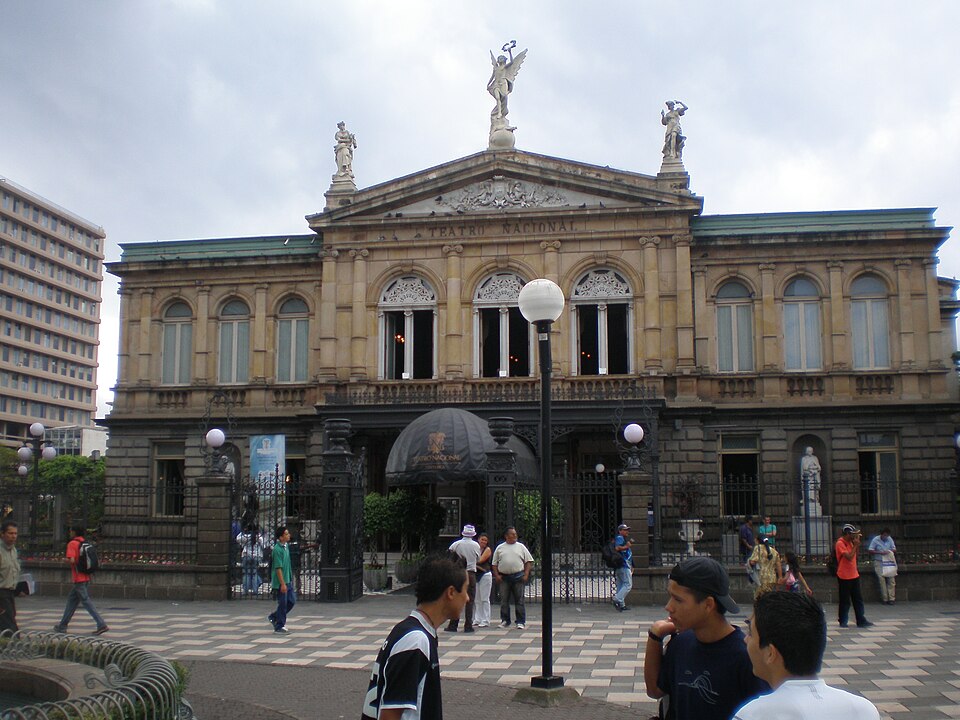
A neoclassical opera house from 1897, built by coffee planters who taxed their own exports to pay for it. A marble staircase, a gilded auditorium and a ceiling painting allegorising coffee and bananas, once reproduced on the national banknotes.

Tip: A guided tour runs every hour and lasts forty minutes. The café in the foyer is one of the loveliest in Latin America, and coffee costs the same as anywhere else. Evening performances are affordably priced, and the auditorium is best seen during a concert.

Admission:
admission
Time needed:
1 h
Pre-Columbian Gold Museum

Pre-Columbian Gold Museum

Centro

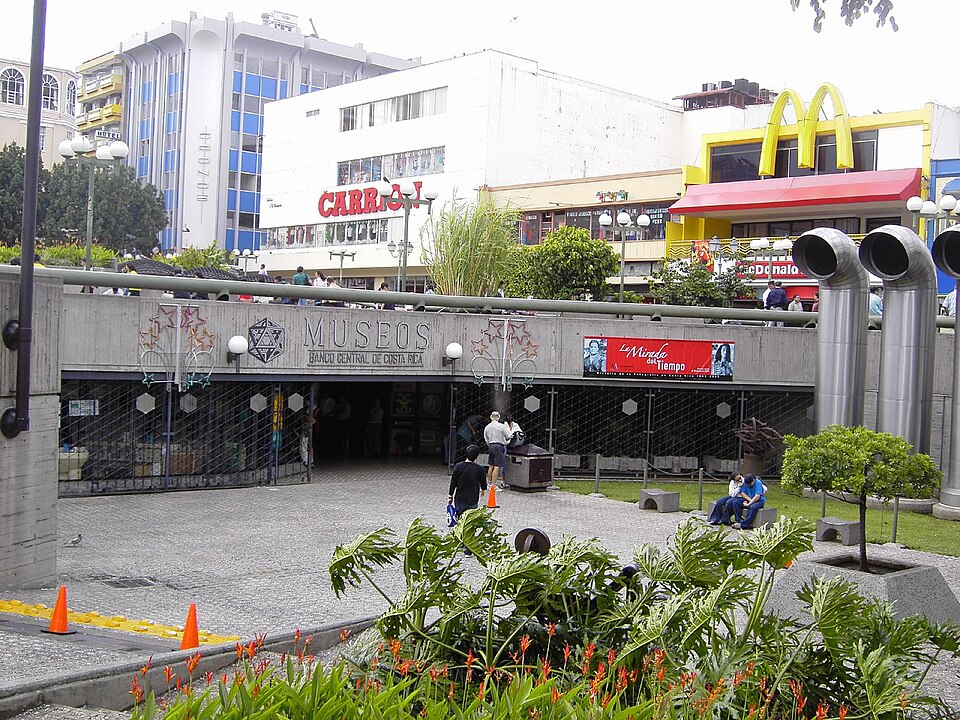
An underground museum beneath Plaza de la Cultura holding more than 1,600 gold objects from 500–1500 AD: frogs, eagles, jaguars and shamanic amulets. The coin museum shares the same building.

Tip: The museum sits right next to the National Theatre and is easy to combine with it. The ticket also covers the numismatics museum. It's kept cold inside by the air conditioning. Mornings are least crowded.

Admission:
admission
Time needed:
1.5 h
National Museum

National Museum

Centro

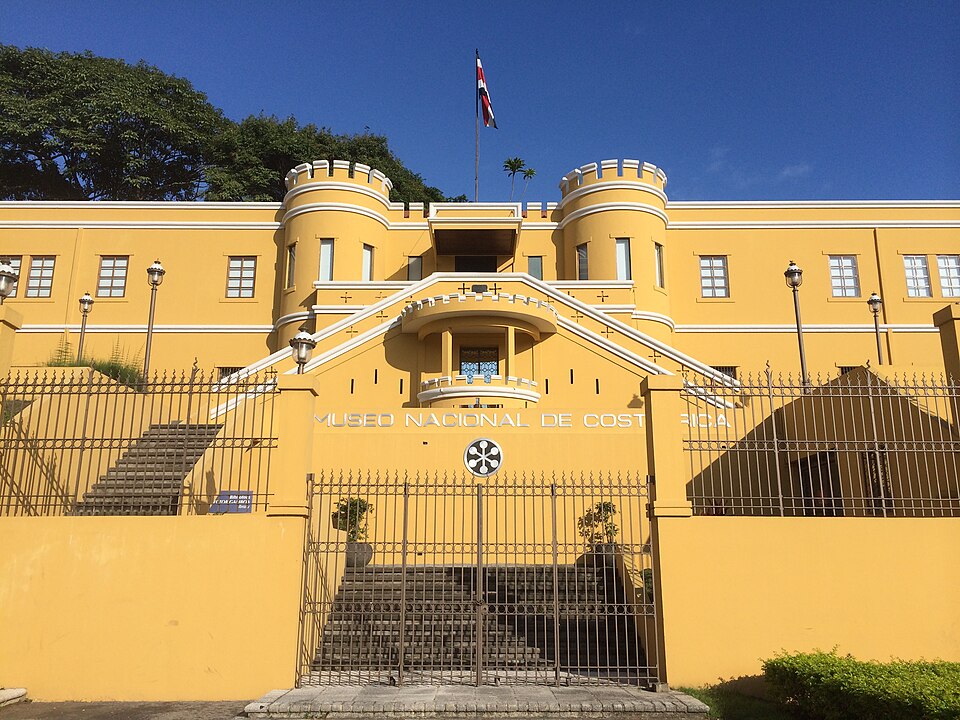
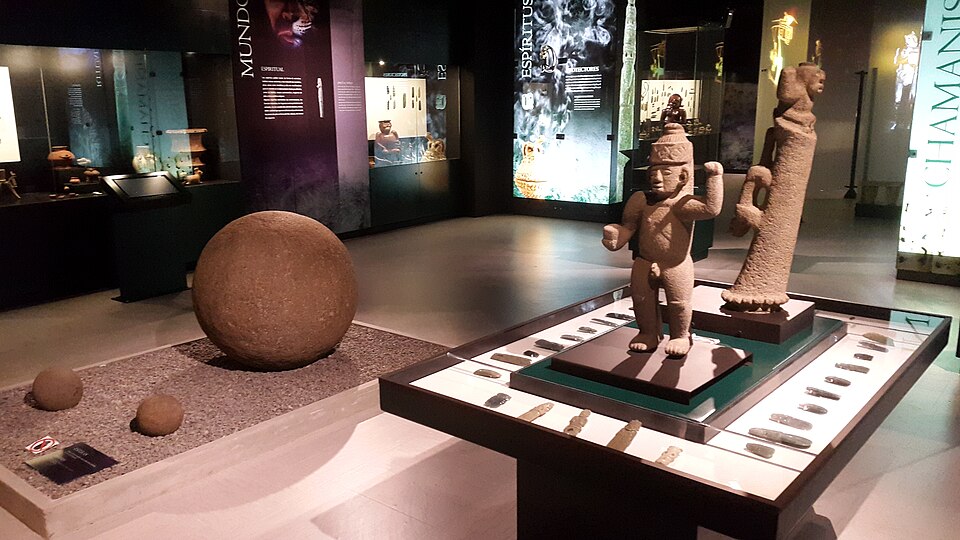
Housed in the former Bellavista fortress and barracks, its walls still bearing bullet marks from the 1948 civil war — after which Costa Rica abolished its army. Exhibits include a butterfly garden, pre-Columbian stone spheres and the country's history.

Tip: The butterfly garden by the entrance is best visited in the morning. The stone spheres from the Diquís delta are the exhibit visitors ask about most. The terrace gives a view over the city.

Admission:
admission
Time needed:
1.5 h
Jade Museum

Jade Museum

Centro

Home to the largest collection of pre-Columbian jade in the Americas, in a modern building beside Plaza de la Democracia. Pendants, axe heads and figurines carved from jade originally imported from Guatemala.

Tip: Hold translucent pieces up to the light — green is the most prized colour. The upper floor gives a view over the city. The museum sits across the square from the National Museum.

Admission:
admission
Time needed:
1.5 h
Mercado Central

Mercado Central

Centro

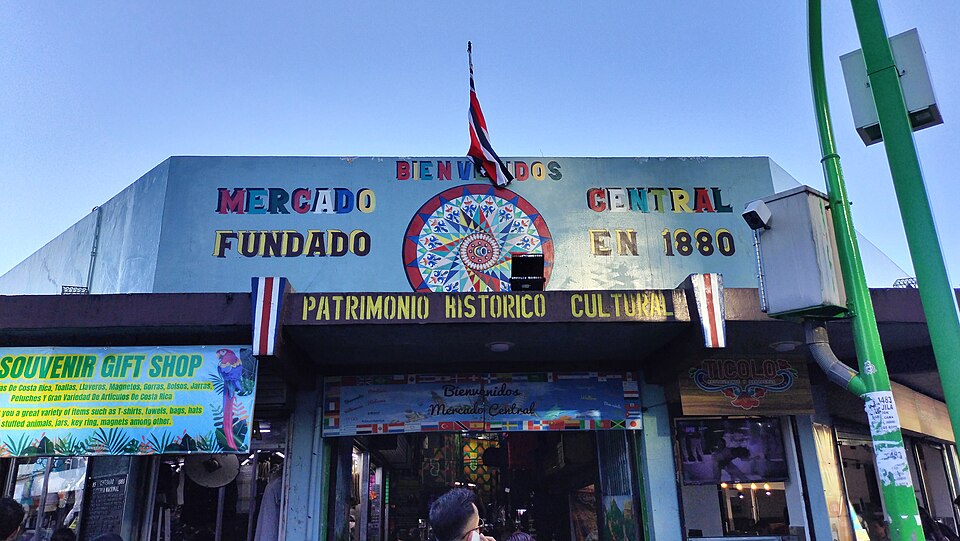
A market dating to 1880 with more than two hundred stalls selling coffee, spices, herbs, leather goods and souvenirs, and above all the sodas serving traditional food. The place where San José meets itself.

Tip: Have lunch at one of the canteens inside — a casado costs about four dollars. La Sorbetera de Lolo Mora has been making ice cream here since 1901. Keep an eye on your bag, as the market gets crowded.

Admission:
free
Time needed:
1 h
La Sabana Park

La Sabana Park

La Sabana

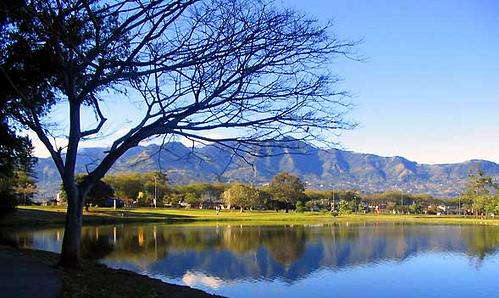
The city's largest park, built on the site of a former airport, with a lake, sports facilities and the Costa Rican Art Museum housed in the old airport terminal building. A weekend haven for families.

Tip: The art museum is free, and its upper floor holds a hall of wall reliefs depicting Costa Rica's history. On Sundays the park fills with locals and street vendors. Avoid the area after dark.

Admission:
free
Time needed:
1.5 h
Barrio Amón

Barrio Amón

Barrio Amón

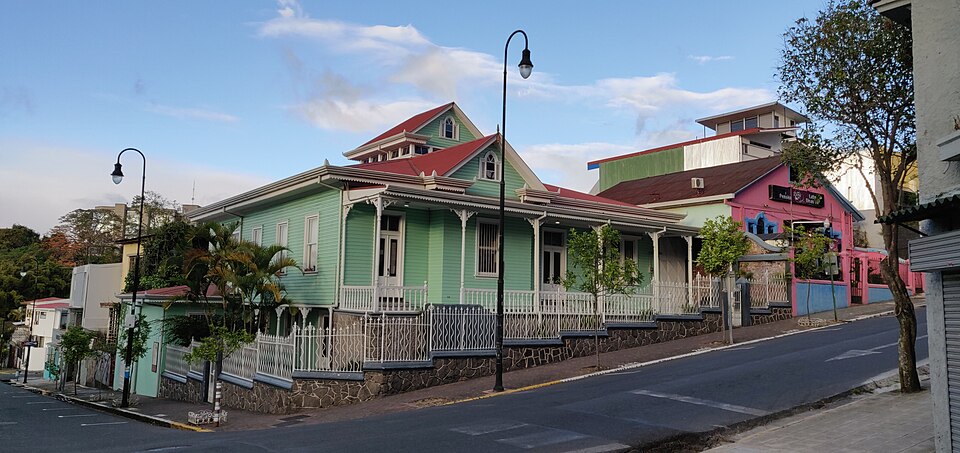
A historic neighbourhood built by coffee barons, with Victorian and Art Nouveau houses from the turn of the twentieth century, now home to galleries, cafés and boutique hotels. The most pleasant walk in the city.

Tip: Look out for Casa Verde, built from prefabricated metal panels shipped over from Belgium. The streets are safe by day, less so after dark. Galleries and cafés open around ten.

Admission:
free
Time needed:
1 h
Metropolitan Cathedral

Metropolitan Cathedral

Centro

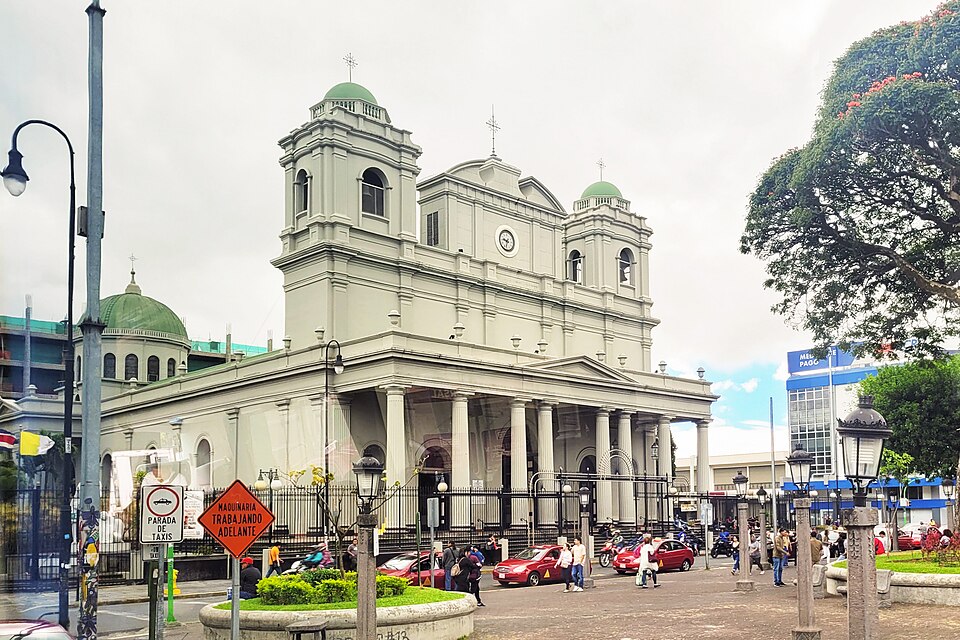
San José's main cathedral, dating to 1871, with a neoclassical facade, a wooden ceiling and stained glass, restored after earthquake damage. It stands beside Parque Central. The cathedral is the seat of the archdiocese, and processions fill the surrounding streets during major religious holidays.

Tip: Admission is free. Avoid wandering the nave during services. The Parque Central across the way has a bandstand kiosk gifted by the Nicaraguan dictator Somoza.

Admission:
free
Time needed:
30 min
Basilica of Our Lady of the Angels, Cartago

Basilica of Our Lady of the Angels, Cartago

Cartago

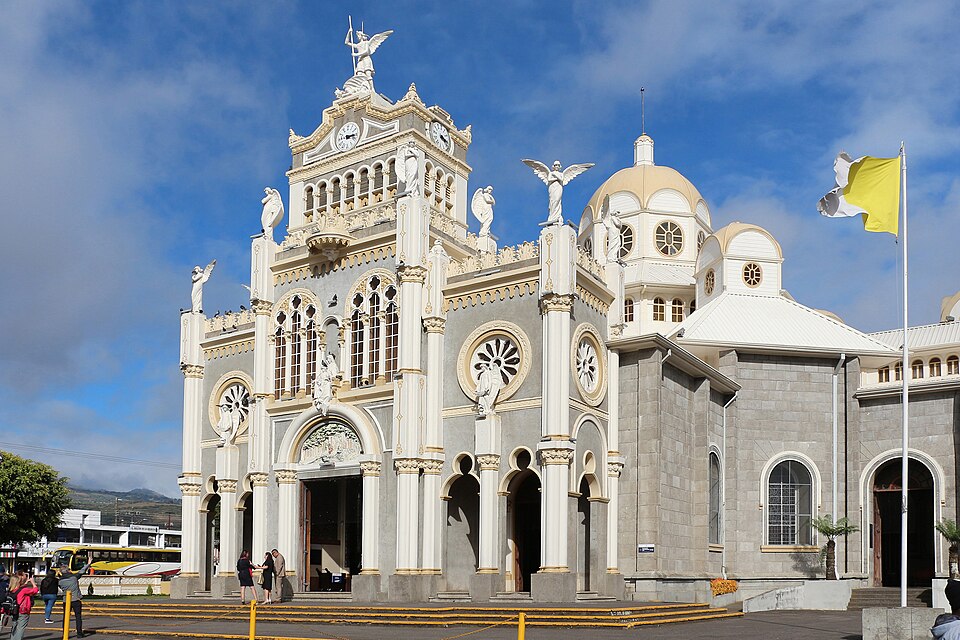
A basilica in Cartago, Costa Rica's former capital, twenty-two kilometres from San José, home to La Negrita, a small black statue and the country's patron saint. Every August 2nd, hundreds of thousands of pilgrims walk here on foot.

Tip: The small statue sits in a chapel, and beneath the basilica is a spring of holy water where pilgrims fill bottles to take home. Combine with a trip to the Irazú volcano, which rises above Cartago. A train runs to Cartago from San José.

Admission:
free
Time needed:
1 h

Photos: National Theatre — Andres Alvarez (CC BY-SA 3.0) · Pre-Columbian Gold Museum — Puroticorico (CC BY 2.0) · National Museum — Fespinozalemistre (CC BY-SA 4.0) · Jade Museum — Rodtico21 (CC BY-SA 2.0) · Mercado Central — Pequeño mar (CC BY-SA 4.0) · La Sabana Park — Bogdan Migulski (CC BY 2.0) · Barrio Amón — Rodtico21 (CC BY-SA 4.0) · Metropolitan Cathedral — Bernard Gagnon (CC0) · Basilica of Our Lady of the Angels, Cartago — Bernard Gagnon (CC0)

Where to stay

Areas and districts, matched to the kind of trip you are taking

Centro

Best for: daytime museum visits

The historic centre, with museums, the theatre and the market. Busy and interesting by day, best avoided on foot after dark. The museums sit close together and are easy to walk between.

Barrio Escalante

Best for: food and bars

A dining district with restaurants, breweries and cafés along Calle 33. The best place to spend an evening, and safer after dark than downtown.

Escazú and Santa Ana

Best for: safety and hotels

Wealthy western suburbs with hotels, malls and restaurants. Quiet, but a fair distance from downtown — about half an hour by Uber.

Alajuela

Best for: proximity to the airport

A town next to the airport, practical for a first or last night. Close to the Poás volcano. About ten minutes from the airport by Uber.

Getting around

From the airport

Juan Santamaría International Airport sits in Alajuela, twenty kilometres from San José. Direct flights from Europe include Iberia from Madrid, Lufthansa from Frankfurt, KLM from Amsterdam and Edelweiss from Zurich; the journey from Prague takes fourteen to seventeen hours. Czech citizens don't need a visa for stays up to one hundred eighty days. A second airport in Liberia, in the northwest, serves the Guanacaste beaches.

Juan Santamaría International (SJO) · 20 km

  • Uber / DiDi to downtown· 30–60 min· 20 USD
  • Official taxi (orange)· 30–60 min· 35 USD
  • Tuasa bus to downtown· 45 min· 1.5 USD

Around town

Getting around San José is easiest with Uber or DiDi; regular taxis are red and use a metre known locally as a maría. Public transport means buses running from several terminals, plus a train to Cartago and Heredia. For day trips around the country, rent a car or take a shared tourist shuttle bus. Mountain roads are winding and slow during the rainy season.

Uber / DiDiThe most convenient and affordable option. · 5 USD around downtown
TaxiRed taxis with a metre; orange ones at the airport. · 5 USD around downtown
TrainRuns to Cartago and Heredia, mainly during rush hour. · 1 USD
Tourist shuttle busesInterbus and similar operators run between tourist destinations. · from 50 USD
Rental carBest for trips to the volcanoes and beaches. A 4x4 is worth the extra cost. · 50 USD/day

Useful apps: Uber, DiDi, Waze, Moovit, Google Maps

When to go

At an elevation of eleven hundred metres, San José enjoys spring-like weather year-round. The dry season from December to April is best, with sunny days and clear views of the volcanoes. The green season from May to November brings afternoon showers, but mornings are usually sunny, the landscape is at its greenest, and prices are lowest. September and October are the wettest months.

Best time

December through April

What to avoid

September and October, for the rain

MonthJanFebMarAprMayJunJulAugSepOctNovDec
Day24°25°26°27°27°26°26°26°26°25°24°24°
Night15°15°16°17°17°17°17°17°16°16°16°15°
Rainy days3226182019212324146

Food & drink

Costa Rican cooking is simple and honest: rice, beans, meat, vegetables and fruit. The best place to eat is a small canteen called a soda, where a casado costs just a few dollars. Barrio Escalante has modern restaurants and breweries. Bills add a ten percent service charge and thirteen percent tax.

What to try

Gallo pinto

Rice fried with black beans, onion, coriander and Salsa Lizano, served for breakfast with egg, cheese and sour cream. Costa Ricans eat it every morning, and a portion at a soda costs around 3,000 colónes.

Casado

A lunch plate of rice, beans, salad, fried plantain and meat or fish. At small canteens called sodas it costs 4,000–6,000 colónes and is the best value meal in the country.

Olla de carne

A beef soup with yuca, chayote, corn and other root vegetables. Cooked on weekends, and a typical lunch during the rainy season.

Chifrijo

A bowl of rice and beans topped with fried pork chicharrón and fresh tomato salsa pico de gallo, served with tortilla chips. A bar snack to go with beer.

Tamal

Corn dough with pork and vegetables wrapped in a banana leaf and boiled. A Christmas dish that every family makes by the dozen in December.

Costa Rican coffee

By law the country may only grow arabica, and coffee from the Tarrazú and Naranjo regions ranks among the world's best. It's traditionally brewed through a cloth filter on a wooden stand called a chorreador.

Imperial beer and guaro

Imperial is the ubiquitous lager with an eagle on the label. Guaro is a clear sugarcane spirit, mixed into a guaro sour cocktail with lime.

What it costs

Casado at a soda

4,000–6,000 CRC

Coffee

1,500–2,500 CRC

Dinner in Barrio Escalante

15,000–30,000 CRC per person

Imperial beer

1,500–2,500 CRC

National Theatre tour

from 12 USD

Poás volcano

from 15 USD

Uber from the airport

20 USD

Night at a 3-star hotel

70–130 USD

Indicative prices that change over time — treat them as a guide, not a price list.

Practical information

SocketsAtwo flat pins (US/JP)Btwo flat pins plus ground (US)
Voltage120V / 60Hz
Tap waterTap water is drinkable — Costa Rica has drinkable tap water across almost the entire country, and around the capital, in particular, it comes from mountain springs and tastes excellent. The exception is a handful of small coastal towns, where hotels will post a notice if it's not safe. Locals drink it without a second thought, and it's worth refilling a bottle at your hotel. Bottled water costs around 800 colónes at a supermarket.
TippingRestaurant bills legally include a ten percent service charge and thirteen percent tax, so the final total runs about a quarter above the menu price. Nothing extra is expected on top, except for exceptional service. Tour guides get ten dollars per person per day, drivers five. Both colónes and dollars are accepted, and prices aimed at tourists are often quoted directly in dollars. Paying in dollars usually gets change in colónes at a worse rate.
Driving on theright
SafetyCosta Rica is the safest country in Central America and has no army; tourist areas are calm. Petty theft is common, though: items get stolen from rental cars even during a short stop at a viewpoint, belongings shouldn't be left unattended on the beach, and bags in overhead racks on buses need watching. In the capital, avoid walking outside the main streets after dark. Natural hazards include strong currents on Pacific beaches, volcanic activity, and landslides on mountain roads during the rainy season. The emergency number is 911.
Opening hoursShops open from nine to seven, and malls stay open until nine in the evening, including Sundays. Costa Ricans rise early and the day starts with sunrise around half past five; restaurants serve breakfast from six and lunch from eleven. National parks open at eight and close at three or four, and some require a ticket booked in advance for a specific time slot. During Holy Week before Easter, most offices close and beach hotels fill up.
Customs & etiquette"Pura vida" works as a greeting, a thank-you and an answer to how are you — and also describes a whole way of life built around not rushing. Costa Ricans, who call themselves Ticos, are polite and avoid confrontation: "ahorita" means sometime, not right now. Addresses have no house numbers and are given from landmarks instead, such as "two hundred metres north of the church". Nature is taken seriously here — feeding wild animals is illegal and fined.
A few local wordsHello — Buenos díasThank you — Gracias / Pura vidaHow much does it cost? — ¿Cuánto cuesta?The check, please — La cuenta, por favorIt's all good / great — Pura vida / TuanisDo you speak English? — ¿Habla inglés?

How to plan your days

1 day

A day in San José

  1. 1Morning at the National Theatre with coffee in the foyer.
  2. 2The Pre-Columbian Gold Museum.
  3. 3Lunch at the Mercado Central.
  4. 4Afternoon at the Jade Museum and the National Museum.
  5. 5Evening in Barrio Escalante.

2 days

Two days in San José

  1. 1Day one as outlined above.
  2. 2Early on day two, a trip to the Poás volcano.
  3. 3A coffee farm along the way.
  4. 4Afternoon at the La Paz Waterfall Gardens.
  5. 5Evening in Alajuela.

3 days

Three days in San José

  1. 1The first two days as outlined above.
  2. 2Day three at the Irazú volcano.
  3. 3The basilica in Cartago.
  4. 4Afternoon in the Orosi Valley.
  5. 5Evening back in San José.

Day trips

Poás Volcano

55 km · 1.5 h by car

An active volcano with one of the largest craters in the world and an acidic turquoise lake. Tickets must be bought online for a specific time slot, and visitors may stay at the crater rim for only twenty minutes. Go in the morning — by afternoon clouds usually roll in.

Irazú Volcano

55 km · 1.5 h by car

Costa Rica's tallest volcano, at 3,432 metres, with a moon-like landscape of craters. On a clear morning, both the Pacific and the Caribbean are visible from the summit. Combine it with the basilica in Cartago and the Orosi Valley.

La Paz Waterfall Gardens

55 km · 1.5 h by car

A private nature reserve with five waterfalls in a cloud forest, trails, a butterfly garden, hummingbirds and a wildlife rescue centre. Easy to combine with a trip to Poás.

Frequently asked questions

Is San José worth visiting?+

A day or two, yes, for the museums, the market and volcano day trips. For nature and beaches, you'll want to move on from there.

Do I need a visa for Costa Rica?+

No, Czech citizens can stay for up to one hundred eighty days. You do need proof of a return or onward flight.

How do I get from the airport?+

By Uber or an official orange airport taxi; the ride takes thirty minutes to an hour. Uber fares are usually lower than taxis.

Is San José safe?+

During the day, with ordinary caution, yes. In the evening, avoid walking downtown and take an Uber instead.

Where should I stay?+

In Barrio Escalante or Barrio Amón for the atmosphere, in Escazú for safety, or in Alajuela for the airport.

Dollars or colónes?+

Both. Dollars are accepted almost everywhere, but change is given in colónes. Cards are accepted everywhere. Paying by card in local currency gets a better rate.

Is the Poás volcano crater always visible?+

No, it's often shrouded in cloud. Your best chance is early morning during the dry season. Book a morning time slot if you can.

How many days do I need for Costa Rica?+

Ten to fourteen days: San José, Arenal, Monteverde and beaches on the Pacific or Caribbean coast.

Visa Requirements

Check the latest visa requirements for entering this country. Some nationalities may need to apply for a visa or e-visa before travel.

Check visa requirements

Language

Spanish

Currency

CRC

Timezone

GMT-6

Dial Code

+506

Population

5.2M

Area

51,100 km²

Voltage

120V / 60Hz

Driving Side

Right

Top Hotels in San Jose

Live prices from 500+ properties

Loading hotels...

Planning a trip to San Jose?

Compare hundreds of hotels, find the best price, and book with free cancellation on TravelManiac.