Hotels in San Salvador

The capital beneath the volcano: a restored centre, a crater above the city, and surf beaches an hour away

San Salvador

LanguageSpanish
CurrencyUSD
TimezoneAmerica/El_Salvador
Temperature22-32 °C
Dial Code+503
Population6.5M
Area21,041 km²
SocketsType A / Type B
Tap waterNot drinkable

Discover San Salvador

San Salvador is the capital of the smallest country in mainland America, sitting in the so-called Valley of the Hammocks at 660 metres, beneath the San Salvador volcano, whose Boquerón crater is visible from all over the city. Earthquakes have destroyed it so many times across five centuries of history that almost no colonial buildings survive downtown — today's cathedral, palace and theatre all date from the twentieth century. El Salvador long carried a reputation as one of the world's most dangerous countries, scarred by civil war in the 1980s and then by the maras gangs. Since 2022, when the government declared a state of emergency and dismantled the gangs through mass arrests, the situation has changed radically: the historic centre has been restored, the streets have filled with people, and tourist numbers grow every year. Visitors today find a lively city with some of the world's best pupusas, modern neighbourhoods with cafés serving specialty coffee from the surrounding volcanoes, and, an hour away, Pacific beaches for surfers, the coffee-growing Ruta de las Flores, and Santa Ana volcano with its turquoise crater lake. The country is small, prices are in dollars, and everything is close by.

What to see

The places worth your time in San Salvador, and what to expect at each

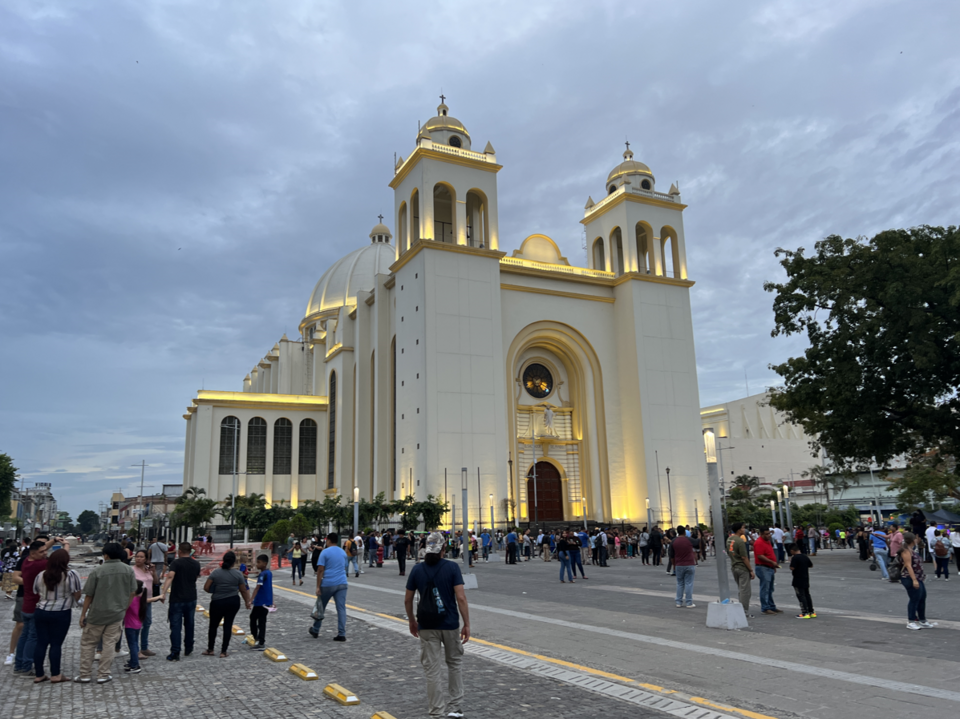
Metropolitan Cathedral

Metropolitan Cathedral

Catedral Metropolitana

Centro Histórico

The Cathedral of the Holy Saviour on Plaza Barrios, with a large dome, completed in 1999 after years of interrupted construction. The crypt holds the tomb of Archbishop Óscar Romero, shot during Mass in 1980 for his criticism of the military, and canonised as El Salvador's first saint in 2018. Pilgrims come to his tomb from across Latin America.

Tip: The crypt with Romero's tomb has a separate side entrance and is usually only open during the day. Entry is free and photography is allowed, but not during Mass. The chapel where Romero was shot is at the Divina Providencia hospital in the Miramonte neighbourhood, and his small house there is now a museum — a more moving experience than the cathedral itself.

Admission:
free
Time needed:
45 min
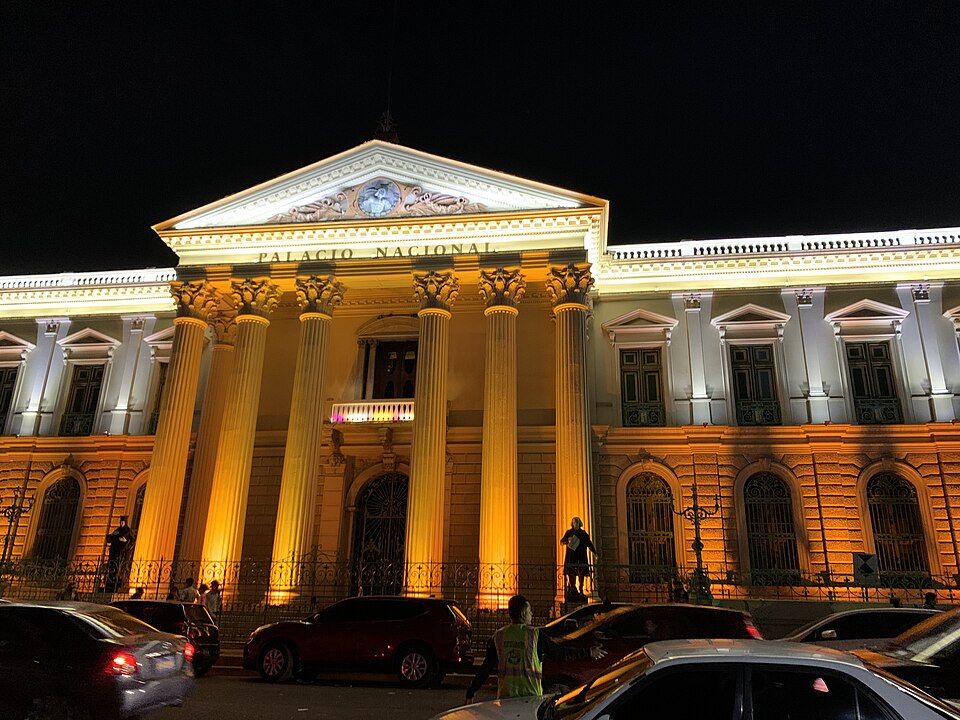
National Palace

National Palace

Palacio Nacional

Centro Histórico

A neoclassical palace built 1905–1911 on Plaza Barrios, constructed from steel and concrete to withstand earthquakes. Its 101 rooms once housed the government, parliament and supreme court. The main halls are named after colours — Red, Yellow, Pink and Blue — and retain their original chandeliers, furniture and mosaic floors.

Tip: Admission is just a few dollars and guided tours are free. From the courtyard with araucaria trees you can see the back of the cathedral. The palace sits next to the restored pedestrian streets of the historic centre, with cafés and stalls; liveliest on weekends and evenings, when the buildings are lit up.

Admission:
around 3 USD
Time needed:
1 h
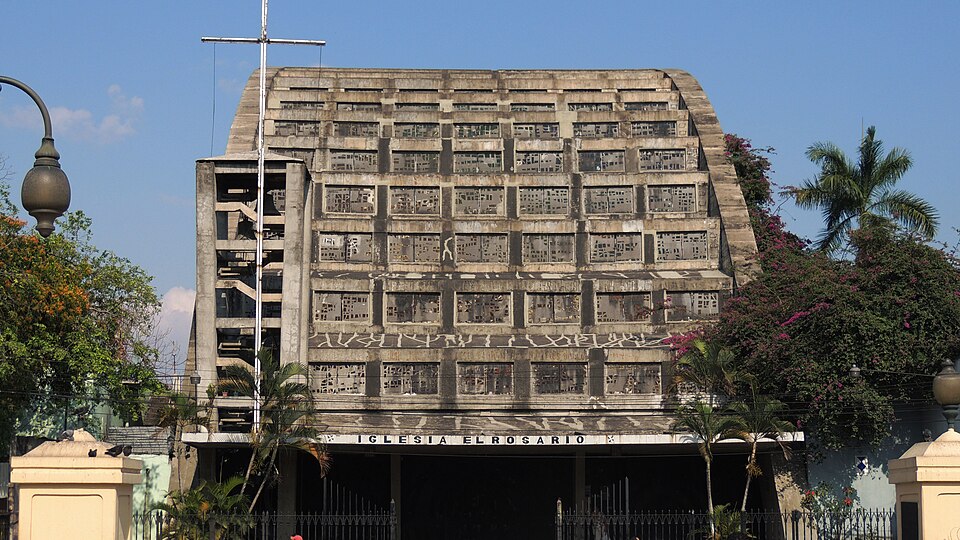
El Rosario Church

El Rosario Church

Iglesia El Rosario

Centro Histórico

An unassuming concrete building from 1971 on Plaza Libertad that looks like a hangar from outside but is one of the most striking modern churches in Latin America inside. Its half-circular vault is glazed with coloured glass along its full length, casting a rainbow of light across the concrete. Designed by sculptor Rubén Martínez. Independence hero José Matías Delgado is buried here.

Tip: Come around midday or early afternoon on a sunny day, when light passes through the glass most vividly and colours ripple across the floor. Beneath the altar is a metal Stations of the Cross made from scrap. The church is active, so no photos during Mass. The surrounding Plaza Libertad is one of the oldest squares in the city.

Admission:
free
Time needed:
30 min
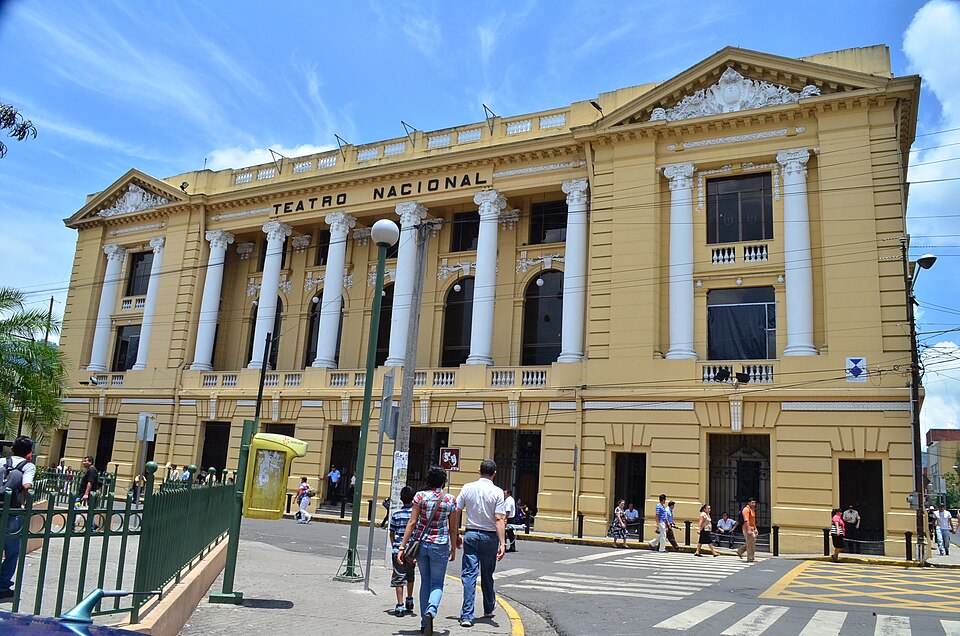
National Theatre

National Theatre

Teatro Nacional

Centro Histórico

A French Renaissance-style theatre opened in 1917, the oldest still-operating theatre in Central America. The horseshoe-shaped auditorium has box seating and a ceiling mural by Salvadoran painter Carlos Cañas. Following restoration, it now hosts concerts, ballet and theatre.

Tip: The programme is listed on the Ministry of Culture's website, and tickets to the national orchestra cost just a few dollars — cheaper than a theatre tour in Europe. Outside performances, you can view the interior with a guide. The theatre stands on Plaza Morazán, two streets from the cathedral.

Admission:
performances from 5 USD
Time needed:
30 min – evening
National Museum of Anthropology

National Museum of Anthropology

MUNA David J. Guzmán

San Benito

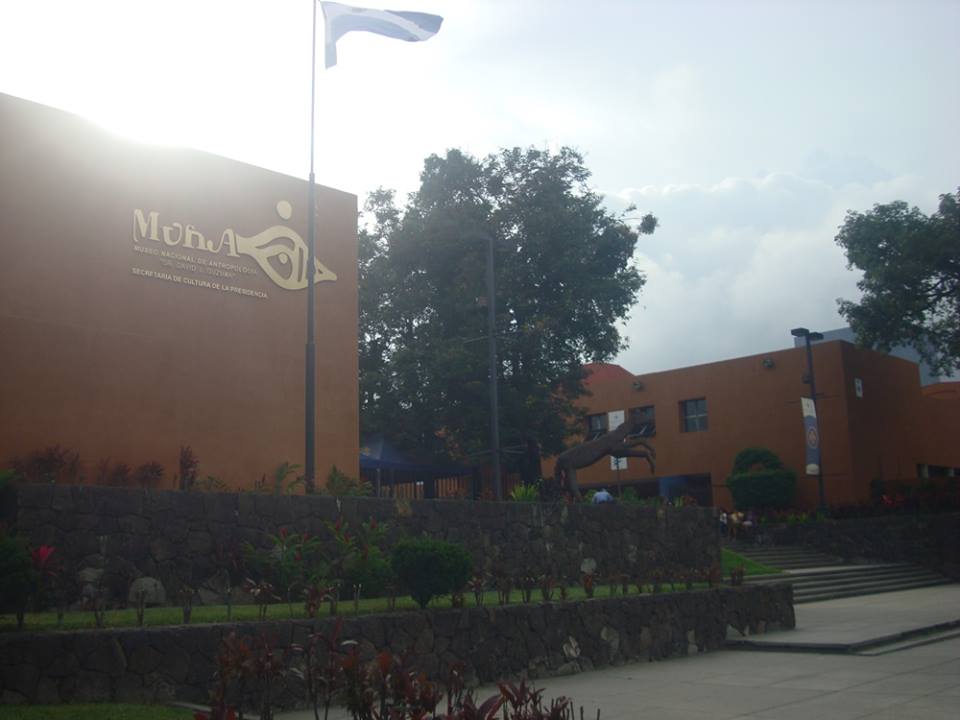
A museum in the modern San Benito district holding El Salvador's finest collection of pre-Columbian objects — Maya and Pipil pottery, sculptures, and finds from Joya de Cerén, a Maya village buried by volcanic ash in the sixth century. A second section covers Salvadoran culture and the production of indigo and coffee, which sustained the economy for centuries.

Tip: Closed on Mondays. The finds from Joya de Cerén, where houses, pottery and even food were preserved as in Pompeii, are the best preparation before visiting the actual site, thirty kilometres from the city. The MARTE art museum is a short walk away — combine them into one morning.

Admission:
around 3 USD
Time needed:
1.5 h
Museum of Art

Museum of Art

MARTE

San Benito

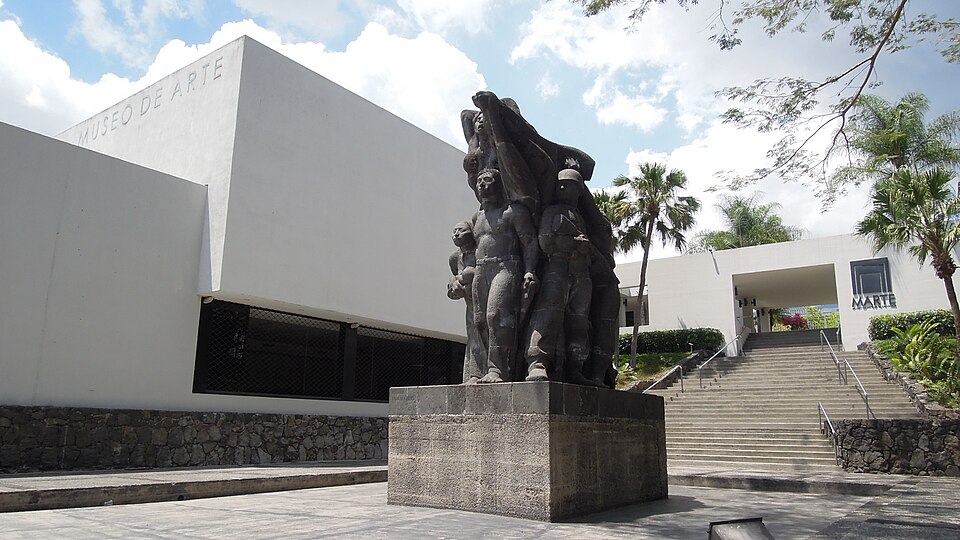
A museum of Salvadoran art from the nineteenth century to today, in a modern building beneath the volcano. The highlights are paintings by the generation of the 1960s and works by Fernando Llort, who created the naive style of colourful village scenes still painted today in the mountain town of La Palma. In front of the museum stands a concrete revolution monument with a nude figure.

Tip: The Monumento a la Revolución across the street, nicknamed El Chulón, is a striking 1948 mosaic and photographs well from the lawn. The museum has a pleasant café. It sits on the border of San Benito and Escalón, close to hotels, making it a good choice for a first afternoon after landing.

Admission:
around 2 USD
Time needed:
1 h
Monument to the Divine Saviour of the World

Monument to the Divine Saviour of the World

Monumento al Divino Salvador del Mundo

Escalón / Plaza Salvador del Mundo

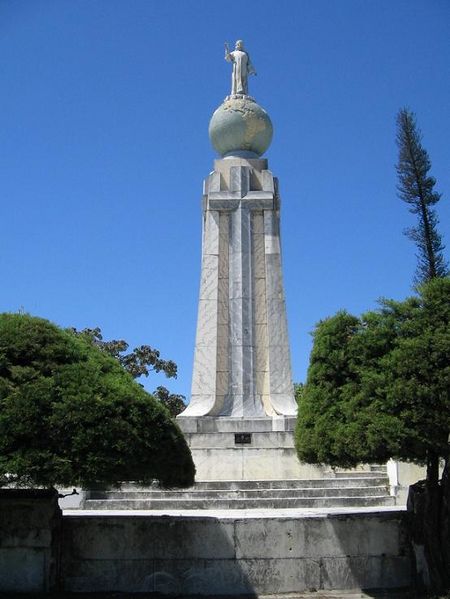
A statue of Christ standing on a globe atop a tall pedestal in the middle of Plaza Salvador del Mundo, a national symbol that gives both the city and the country their name. Built in 1942, it survived the 1986 earthquake that toppled it. Crowds gather here for major holidays and football victories.

Tip: Best visited in the evening, when the monument is lit, or during the first week of August, during the Fiestas Agostinas honouring the patron saint, when a procession carries a figure of the Saviour through the streets. The square is a junction of major avenues, so cross carefully. It lies on the route between downtown and Escalón, so you'll pass it by taxi anyway.

Admission:
free
Time needed:
20 min
El Boquerón crater

El Boquerón crater

Parque Nacional El Boquerón

San Salvador volcano

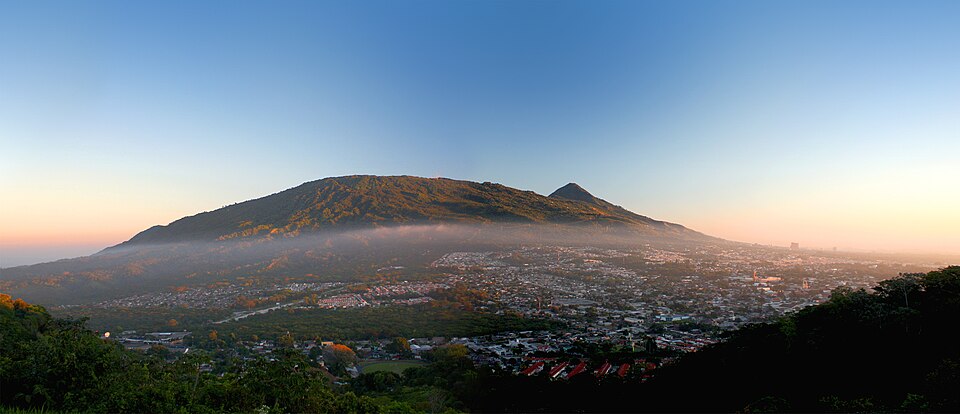
The crater of the San Salvador volcano, a kilometre and a half wide and 550 metres deep, with a small cone in the middle formed during the last eruption in 1917. The park at the rim, at 1,800 metres, has viewpoints, forest trails and noticeably cooler air than the city below. On a clear day you can see all the way to the sea.

Tip: Go in the morning — by midday the crater is often shrouded in cloud. The loop trail around the crater rim takes an hour. The road up passes villages with cafés and flower growers, where it's worth stopping for hot chocolate and pupusas. An Uber from Escalón takes forty minutes; descending into the crater itself requires a guide.

Admission:
around 3 USD
Time needed:
2–3 h
Puerta del Diablo (Devil's Door)

Puerta del Diablo (Devil's Door)

Los Planes de Renderos

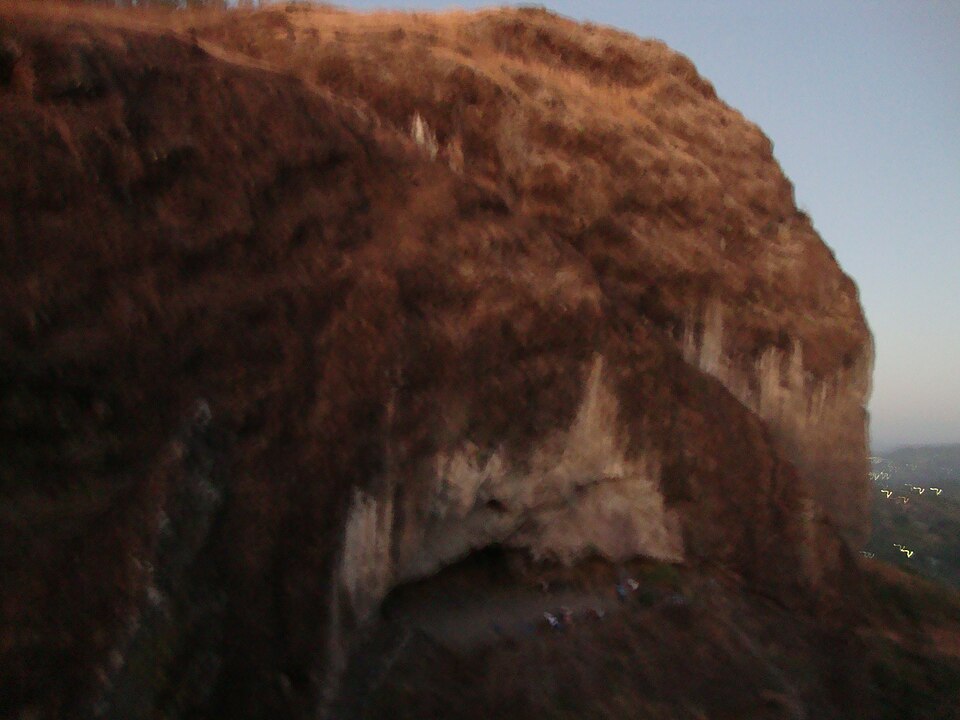
Two giant boulders split apart at the top of a mountain above the town of Panchimalco, the Devil's Door, with views over Lake Ilopango, the volcanoes and the Pacific Ocean. Reached by a short, steep climb up steps. It lies within Los Planes de Renderos park, twelve kilometres south of the centre, popular on weekends for its pupusas.

Tip: The climb up takes ten minutes of stairs followed by scrambling over rock; wear sturdy-soled shoes. On the way back, stop at Los Planes de Renderos, home to dozens of pupuserías where half the city gathers on weekend evenings. Go by Uber, as public transport is slow. Below the rock, in Panchimalco, is a colonial church and, in May, a flower and palm festival.

Admission:
around 1 USD
Time needed:
1.5 h

Photos: Metropolitan Cathedral — Echa24161 (CC BY-SA 4.0) · National Palace — Busition (CC BY-SA 4.0) · El Rosario Church — BelenM (CC BY-SA 3.0) · National Theatre — Cesar Lainez (CC BY-SA 3.0) · National Museum of Anthropology — AnaLi197 (CC BY-SA 3.0) · Museum of Art — MARTE El Salvador (CC BY-SA 4.0) · Monument to the Divine Saviour of the World — Wikimedia Commons (CC BY-SA 3.0) · El Boquerón crater — Diego Brito from Antiguo Cuscatlán, El Salvador (CC BY-SA 2.0) · Puerta del Diablo (Devil's Door) — BlackGold21 (CC BY-SA 3.0)

Where to stay

Areas and districts, matched to the kind of trip you are taking

Colonia Escalón

Best for: hotels, restaurants and safety

The wealthiest district, on the volcano's slopes, with tree-lined avenues, malls, restaurants and international chain hotels. Calm, safe and clean, with views over the city. The most practical base for a first visit; twenty minutes by Uber to downtown.

San Benito and Zona Rosa

Best for: museums and nightlife

Home to the MUNA and MARTE museums, hotels, bars and restaurants along the Zona Rosa strip. Friday and Saturday nights are the liveliest in the city here. Hotels are within walking distance of the museums and of Escalón.

Centro Histórico

Best for: sightseeing and city buzz

The restored historic centre with the cathedral, palace, theatre and pedestrian streets, which have filled with cafés and stalls since 2022. Busy by day, lit up and popular with local families in the evening. Accommodation here is still limited and mostly basic.

Santa Tecla

Best for: a weekend evening out

A neighbouring town to the west, now merged into San Salvador's sprawl, with the pedestrian street Paseo El Carmen, where live music plays and people eat on terraces on weekend evenings. It sits on the road toward the volcanoes and the coast, making it a natural dinner stop.

Getting around

From the airport

From Europe, flights to San Salvador connect at least once — from Madrid, via Miami, Houston, Mexico City or Bogotá, a hub for Avianca, whose historical home base is actually San Salvador. From Prague, expect eighteen to twenty-two hours with one or two connections. Czech citizens don't need a visa; stays under the CA-4 agreement count jointly across El Salvador, Guatemala, Honduras and Nicaragua. Monseñor Óscar Arnulfo Romero International Airport lies forty kilometres south of the city on the coast, and it's a forty-five-minute to one-hour drive to Escalón on the highway; an official taxi costs around thirty-five dollars, Uber less. From the airport it's just twenty minutes to the surf beaches, so many visitors start their trip on the coast. International Tica Bus and Pullmantur coaches run from Guatemala in five hours.

Monseñor Óscar Arnulfo Romero International Airport (SAL) · 40 km

  • Official taxi to Escalón· 45–60 min· around 35 USD
  • Uber· 45–60 min· around 25 USD
  • Taxi to El Tunco beach· 25 min· around 25 USD

Around town

San Salvador is a sprawling, hilly city, and for visitors the best transport is Uber or InDrive — a ride between Escalón, Zona Rosa and downtown costs four to eight dollars and is safe. City buses are cheap and, thanks to the state of emergency, safer than before, but they're crowded and the routes hard to follow. The historic centre, Escalón and Zona Rosa are each walkable, but are far apart from one another. For trips to the volcanoes, the Ruta de las Flores and the coast, renting a car pays off: roads are good and distances short — you can cross the whole country in five hours — and at police checkpoints you simply show your passport and driving licence. Organised tours from your hotel are more comfortable but pricier.

Uber and InDriveThe most practical way around the city, cheap and with a fixed price upfront. Around twenty-five dollars to the airport, four to eight within the city. · from 3 USD
City busesColourful buses and minibuses with the route number on the windshield, fare paid to the driver. Cheap, but with no map or timetable; impractical with luggage. · around 0.25 USD
Car rentalBest for trips along the Ruta de las Flores, to Santa Ana volcano and the coast. Rental desks at the airport and in Escalón; drive on the right, and take care in the mountains due to sharp curves and slow trucks. · from 40 USD / day
TaxiYellow taxis with no meter, price agreed in advance. For visitors, Uber is cheaper and more transparent; taxis make sense at the airport and where Uber doesn't operate. · from 5 USD
Tourist shuttleSmall travel agencies run shuttles between San Salvador, El Tunco, the Ruta de las Flores and Guatemala. Pricier than the bus, but hotel-to-hotel. · from 20 USD

Useful apps: Uber, InDrive, Google Maps, Waze

When to go

The best time is the dry season, November to April: sunny, around 30°C by day, pleasantly cool at night, and clear views from the volcanoes. On the coast, this period brings smaller waves suited to beginner surfers. May to October is the rainy season — mornings are usually sunny, with rain arriving in heavy downpours in the afternoon and evening, but the countryside is at its greenest and experienced surfers get the biggest waves. Salvadorans travel during Holy Week and the first week of August, during the festival of San Salvador's patron saint, when beaches get crowded and hotels pricier. The coast is hot year-round; the mountains along the Ruta de las Flores are several degrees cooler.

Best time

November to April

What to avoid

September and October, for the heaviest rain

MonthJanFebMarAprMayJunJulAugSepOctNovDec
Day30°31°32°32°31°29°30°30°29°29°29°29°
Night18°18°19°20°21°20°20°20°20°20°19°18°
Rainy days112515212122231541

Food & drink

Salvadoran cuisine is built on corn, beans and cheese, and its flagship dish is the pupusa, eaten daily here for a few dozen cents. Pupuserías open in the afternoon and evening, and the best ones have a line out front — whole streets of them cluster in Los Planes de Renderos and in Olocuilta near the airport. Meals are washed down with horchata made from jícaro tree seeds, and fruit juices. El Salvador grows excellent coffee on volcanic slopes, and Escalón and San Benito have specialty cafés that roast it themselves. Modern restaurants in Zona Rosa and Escalón serve international food at prices lower than in Europe. On the coast, fish and seafood dominate, along with ceviche and shrimp cocktails.

What to try

Pupusa

A thick corn-dough flatbread filled with cheese, refried beans, pork cracklings (chicharrón) or loroco — an edible flower bud from a local vine. Served with fermented cabbage slaw (curtido) and a thin tomato sauce. Costs around fifty cents, and National Pupusa Day falls on the second Sunday of November.

Pupusa de arroz

Made with rice dough instead of corn, a specialty of the town of Olocuilta near the airport. Lighter and crisper; dozens of pupuserías line the road there.

Yuca frita

Fried cassava root topped with pork-skin cracklings (chicharrón) or tiny fried fish (pepesca), curtido and sauce. A cheap street snack found in town centres and markets.

Pan con pavo

A baguette filled with turkey stewed in a spiced sauce with vegetables. Traditionally a Christmas dish, but sold in eateries year-round in San Salvador, where locals treat it as an everyday lunch.

Tamales

Corn dough with chicken or pork and sauce, wrapped in a banana leaf and steamed. The sweet version, tamal de elote, made from fresh corn, is eaten with coffee.

Salvadoran coffee

Arabica from the Apaneca-Ilamatepec and Chalatenango mountains ranks among Central America's finest, and the Pacamara variety was bred right here. The city has specialty cafés; local eateries serve weak, sweet coffee from a pot.

Horchata salvadoreña

A cold drink made from ground morro tree seeds, rice, cocoa and cinnamon. It's brownish and more intense than Mexican horchata, and it's served with almost every meal.

Pilsener and Suprema

Two Salvadoran beers from the same brewery. Pilsener is a light lager drunk across the country, Suprema is fuller-bodied. A bottle at a pupusería costs around a dollar fifty.

What it costs

Pupusa

0.50–1 USD

Specialty coffee

2.50–4 USD

Beer at a bar

1.50–3 USD

Set lunch menu

4–7 USD

Dinner at a restaurant

15–30 USD per person

Uber ride in the city

4–8 USD

Santa Ana volcano hike

around 10 USD with guide and entry

Night in a 3-star hotel for two

60–110 USD

Indicative prices that change over time — treat them as a guide, not a price list.

Practical information

SocketsAtwo flat pins (US/JP)Btwo flat pins plus ground (US)
Voltage115V / 60Hz
Tap waterDo not drink tap water — Tap water in El Salvador is not safe to drink. Locals buy water in large refillable barrels, and a bottle costs around seventy-five cents in a shop. Cheap and typical are small water sachets ('bolsitas') sold on the street — treated and safe to drink. Ice in restaurants is made from purchased water. Street pupusas are safe since they're eaten straight off the griddle; curtido slaw is fermented and fine too.
TippingAt restaurants with table service, a ten percent 'propina' is usually already added to the bill, and nothing further is expected. At a pupusería, rounding up is enough. Tour guides are given five to ten dollars per person. The currency has been the US dollar since 2001, so there's nothing to exchange; Bitcoin is still legal tender but, since 2025, businesses aren't required to accept it, and in practice you'll only encounter it at a handful of coastal establishments. Restaurants and shops in the city take cards; markets and pupuserías are cash only.
Driving on theright
SafetyEl Salvador was one of the world's most dangerous countries a decade ago. Since 2022, a state of emergency has been in force, the maras gangs were dismantled through mass arrests, and the murder rate has fallen to levels comparable with southern Europe; the tourist areas of the country are calm today. The state of emergency does, however, mean an ever-present military presence, ID checks and reduced civil rights — always carry your passport or a copy, and never argue with police or soldiers. Photographing soldiers, police stations or prisons is forbidden. The emergency number is 911.
Opening hoursShops are open from nine to seven; malls in Escalón and Santa Tecla stay open until eight or nine, including Sundays. Government offices and banks downtown run until four. Pupuserías open around 5pm and are busiest in the evening and on Sundays. Museums are closed on Mondays. Holy Week (Semana Santa) and the first week of August, when San Salvador's patron saint is celebrated, are holidays when the whole city empties out and heads to the beach.
Customs & etiquetteSalvadorans are friendly and proud of how the country has changed; politics and President Bukele come up often in conversation, but as a guest it's best to stay neutral. Greeting people and addressing them as don or doña is polite. Pupusas are eaten by hand, not with cutlery. In rural areas people aren't used to tourists, so don't photograph them without asking. Salvadorans call themselves guanacos, and jokes about Hondurans, with whom they fought the 1969 'Football War', are common.
A few local wordsGood day — Buenos díasThank you — GraciasHow much does it cost? — ¿Cuánto cuesta?The bill, please — La cuenta, por favorAwesome, cool — ¡Qué chivo!Buddy / you (informal) — Cipote / vos

How to plan your days

1 day

One day in San Salvador

  1. 1Morning in the historic centre: the cathedral with Romero's tomb and the National Palace.
  2. 2El Rosario Church around midday, when the coloured glass glows.
  3. 3Lunch downtown, then the National Theatre.
  4. 4Afternoon at the Monument to the Saviour of the World, and the MUNA and MARTE museums.
  5. 5Evening pupusas and beer in Zona Rosa.

2 days

Two days: the city and the volcano

  1. 1Day one as above.
  2. 2Morning two: the El Boquerón crater.
  3. 3Lunch at a café on the volcano's slopes.
  4. 4Afternoon at Puerta del Diablo and Panchimalco.
  5. 5Pupusas for dinner in Los Planes de Renderos.

3 days

Three days with day trips

  1. 1Two days as above.
  2. 2Day three: hike Santa Ana volcano with a view of Lake Coatepeque.
  3. 3Lunch by Lake Coatepeque afterward.
  4. 4Or instead, the Ruta de las Flores with the weekend market in Juayúa.
  5. 5Further days at the coast in El Tunco or El Zonte.

Day trips

Ruta de las Flores

90 km · 1.5–2 h by car

A road through the Apaneca-Ilamatepec range linking five mountain towns surrounded by coffee plantations that bloom with white flowers from November to February — hence the name, Route of the Flowers. Juayúa holds a weekend food market with grilled meats and local specialties, Concepción de Ataco has streets covered in murals, and Apaneca has a zipline over the forest. Coffee farms (fincas) offer tours with tastings.

Santa Ana volcano and Lake Coatepeque

65 km · 1.5 h by car

El Salvador's highest volcano, at 2,381 metres, with a crater holding a turquoise, boiling acidic lake with rising steam. The hike starts at Cerro Verde National Park and is only done in a group with a guide and police escort, departing at 11am; the climb up takes two hours. Below the volcano lies the crater lake Coatepeque, with restaurants on piers — ideal for lunch after the hike.

El Tunco and the surf coast

40 km · 45 min by car

A Pacific coast village named after a rock shaped like a pig, with black volcanic-sand beaches, hostels, bars and surf schools. The coast from La Libertad to El Zonte, marketed by the government as Surf City, has some of the most consistent waves in Latin America. Non-surfers enjoy the sunsets, ceviche and nightlife. Swimming is dangerous due to strong currents and waves, so swim only where locals do.

Frequently asked questions

Is El Salvador safe today?+

Compared with the situation before 2022, yes, fundamentally: the gangs were broken up and the murder rate dropped to levels comparable with Europe, and people in tourist areas walk around freely even at night. The state of emergency, though, means an omnipresent military, checkpoints and reduced civil rights, so carry your passport and follow police and military instructions. Ordinary caution, as in any big city, still applies.

What currency should I use?+

The US dollar has been El Salvador's only widely used currency since 2001, so there's nothing to exchange. Bitcoin is formally still legal tender, but businesses aren't required to accept it, and in practice you'll only see it at a handful of coastal establishments. Markets and pupuserías are cash-only, the city takes cards.

Do I need a visa for El Salvador?+

Czech (and most EU) citizens don't need a visa for tourist visits. El Salvador, Guatemala, Honduras and Nicaragua share the CA-4 agreement, under which your stay is counted jointly across all four countries, usually up to ninety days. Your passport must be valid for at least six months.

How many days are enough for San Salvador?+

Two days for the city: one for downtown and the museums, one for the Boquerón crater and Puerta del Diablo. Then a day for Santa Ana volcano, a day for the Ruta de las Flores, and two to three days at the coast. The whole country can be covered in a week to ten days.

What is Joya de Cerén?+

A Maya farming village thirty kilometres from San Salvador, buried around 600 AD by volcanic ash so fast that houses, pottery, food stores and even plant impressions in the field were preserved. It's UNESCO-listed and nicknamed the Pompeii of the Americas. A visit takes about an hour and pairs well with a trip along the Ruta de las Flores.

What's the best way to surf here?+

The coast around El Tunco, El Sunzal and Punta Roca has waves year-round. Beginners come in the dry season, November to April, when the swells are smaller, and take a lesson at a local school for twenty to thirty dollars. More advanced surfers head for the right-hand point breaks during the rainy season. A board rents for around ten dollars a day.

Is San Salvador hot?+

The city sits at 660 metres, so it's around 30°C during the day and a pleasant 18–20°C at night. The coast is hot and humid year-round, while the volcanoes and the Ruta de las Flores are noticeably cooler. During the rainy season, May to October, rain mostly falls in the afternoon and evening.

Where can I find the best pupusas?+

At pupuserías with a line of locals out front. Traditional spots are Los Planes de Renderos on a hill south of the city, and Olocuilta by the highway to the airport, where pupusas are made from rice dough. Order revueltas, a mix of cheese, beans and pork cracklings, and loroco with cheese; eaten by hand with curtido cabbage slaw.

Visa Requirements

Check the latest visa requirements for entering this country. Some nationalities may need to apply for a visa or e-visa before travel.

Check visa requirements

Language

Spanish

Currency

USD

Timezone

America/El_Salvador

Dial Code

+503

Population

6.5M

Area

21,041 km²

Voltage

115V / 60Hz

Driving Side

Right

Top Hotels in San Salvador

Live prices from 500+ properties

Loading hotels...

Planning a trip to San Salvador?

Compare hundreds of hotels, find the best price, and book with free cancellation on TravelManiac.