Hotels in St. Barts

A French island of yachts, bistros and fourteen beaches

St. Barts

LanguageEnglish
CurrencyEUR
TimezoneGMT-4
Temperature25-31 °C
Dial Code+590
Population11K
Area25 km²
SocketsType C / Type E
Tap waterDrinkable

Discover St. Barts

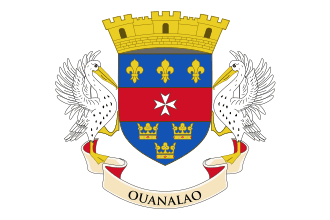
Saint-Barthélemy, which nobody calls anything but St Barth, is a French island of just twenty-five square kilometres, thirty-five kilometres southeast of Saint-Martin. It belonged to Sweden for a century before being sold back to France in 1878 — a Swedish legacy that survives in the name of the capital, Gustavia, a fort above the harbour, and a coat of arms bearing three crowns. Today it's the most French corner of the Caribbean: the currency is the euro, French is spoken everywhere, a queue forms at the bakery for baguettes, and the harbour holds yachts worth more than the entire island put together. Tourism here runs on villas rather than hotels — there are only a handful of large resorts, and none has more than a hundred rooms. The island is hilly, its roads steep and narrow, and there are fourteen beaches, all of them public. Landing at Gustaf III Airport is one of the most famous approaches in the world: the plane clears the Col de la Tourmente ridge just metres above the road, then touches down on a runway that ends right on the sand.

What to see

The places worth your time in St. Barts, and what to expect at each

Gustavia

Gustavia

southwest of the island

The capital and harbour, where yachts crowd the horseshoe-shaped marina backed by a row of low, red-roofed buildings. The streets still carry their Swedish names, and the shops sell duty-free French brands. The whole town can be walked in an hour.

Tip: Park right at the start near the roundabout and walk in — the centre has only a few dozen parking spots, and finding one at midday is a losing battle.

Admission:
free
Time needed:
3 h
Fort Gustav and the lighthouse

Fort Gustav and the lighthouse

above Gustavia

The remains of a late-18th-century Swedish fort on the hill above Gustavia, with surviving ramparts, cannons and the foundations of a guardhouse. A red-and-white lighthouse stands beside it, and the view takes in the whole harbour and coastline as far as St Jean.

Tip: Access is free and gateless, so it's possible to walk up after dark for the harbour lights, but the last stretch is steep and has no railing.

Admission:
free
Time needed:
45 min
Anse de Grande Saline

Anse de Grande Saline

south coast, 5 km from Gustavia

The wildest beach on the island, behind an old salt pond reached by a ten-minute walk across the dunes — which is exactly why there isn't a single house or bar here. The surf tends to be stronger than elsewhere and the seabed drops off quickly. Nobody bats an eye at topless sunbathing.

Tip: Bring water and shade — there's absolutely nothing at the beach itself; the nearest refreshments are back at the car park, a fifteen-minute walk over the dunes.

Admission:
free
Time needed:
half a day
Anse du Gouverneur

Anse du Gouverneur

south coast, 4 km from Gustavia

A bay pinched between two hills on the south coast, reached by a steep switchback road ending at an overlook above the beach. The sand is coarser here, the water deeper, and on a clear day you can make out the silhouettes of Saba, Statia and St Kitts.

Tip: Stop at the overlook above the bay before descending — it's the best photo on the island, and you can't get the same shot from the beach itself.

Admission:
free
Time needed:
3 h
Saint-Jean and the airport runway

Saint-Jean and the airport runway

north coast, 3 km from Gustavia

The bay with the island's liveliest beach scene, split in two by the Eden Rock headland. Above its western end, planes descend onto the short runway — clearing the Col de la Tourmente ridge just metres above the road before touching down practically on the sand.

Tip: The best spot for watching landings is the top of Col de la Tourmente by the warning sign, not the beach beneath the runway; planes come in roughly every fifteen minutes between nine and four.

Admission:
free
Time needed:
half a day
Anse de Colombier

Anse de Colombier

northwest tip, 7 km from Gustavia

The only beach with no road access at all — reached via a coastal trail from Petite Anse, roughly twenty-five minutes on foot, or by boat. The bay is protected as a marine reserve, and sea turtles routinely graze in the shallows.

Tip: The trail is rocky and unshaded, a real ordeal in flip-flops — go early morning, when the beach is empty and the sun hasn't yet hit the ridge.

Admission:
free
Time needed:
half a day
Corossol

Corossol

2 km north of Gustavia

A fishing village in a bay north of Gustavia where the old island way of life survives: wooden boats pulled up on the shore, hats woven from latania palm leaves, and older women still wearing the traditional white quichenotte bonnet. There's also a small seashell museum.

Tip: The village is liveliest around eight in the morning, when the fishing boats come back in with their catch; by midday it's quiet and feels almost deserted.

Admission:
free
Time needed:
1 h
Lorient and Anse des Cayes

Lorient and Anse des Cayes

north coast, 4 km from Gustavia

A quieter stretch of the north coast where locals actually live. Lorient has a cemetery shaded by frangipani trees, the island's oldest church, and a beach with waves good enough for surfing. Anse des Cayes just beyond is a small cove with not a single business on it.

Tip: Lorient has the only proper bakery on the island outside Gustavia, and the baguettes are gone by ten — get there early if breakfast on the beach is the plan.

Admission:
free
Time needed:
3 h
Île Fourchue

Île Fourchue

boat trip, 8 km northwest

An uninhabited volcanic island between St Barts and Saint-Martin, shaped like a horseshoe around a protected anchorage. Part of a marine reserve, it supports only cactus and dry scrub, and the rocky shallows offer some of the best snorkelling in the area.

Tip: Reached by catamaran from Gustavia on a half-day sail; the anchorage is on mooring buoys, so trips are cancelled in stronger wind even under clear skies.

Admission:
trip from 120 €
Time needed:
half a day

Photos: Gustavia — Originally uploaded at en.wikipedia by en:User:Evaneggers as en:Image:Stb.jpg (CC BY-SA 3.0) · Fort Gustav and the lighthouse — MikeSchinkel on Flickr.com, MikeSchinkel.com (CC BY 2.0) · Anse de Grande Saline — David Broad (CC BY 3.0) · Anse du Gouverneur — Murzabov (CC BY-SA 4.0) · Saint-Jean and the airport runway — Master of the Saint Bartholomew Altarpiece (CC0) · Anse de Colombier — David Broad (CC BY 3.0) · Corossol — Damien Boilley from suburbs of Paris, France (CC BY 2.0) · Lorient and Anse des Cayes — William Ellison (CC BY-SA 3.0) · Île Fourchue — Hansottowirtz at English Wikipedia / chrisbox2 (CC0)

Where to stay

Areas and districts, matched to the kind of trip you are taking

Gustavia

Best for: first-time visitors, restaurants and shopping

The harbour town with the densest concentration of restaurants, bars and shops on the island. Property here is expensive, and the nearby Shell Beach is pebbly rather than sandy. The advantage is that everything is walkable, so there's no need to drive the steep switchbacks after dark.

Saint-Jean

Best for: an active beach scene and families

The island's liveliest beach, lined with hotels, beach clubs and shops right on the sand, plus a shallow, reef-protected lagoon that's good for kids. The airport sits right next door, so the sound of landing planes carries over — an attraction for some, a reason to stay elsewhere for others.

Flamands and Colombier

Best for: quiet and top-tier hotels

The northwest of the island, with the wide, palm-lined sand of Flamands beach and several of St Barts' best hotels. The coastal trail to Colombier starts here. It's ten minutes to Gustavia by car, though along a narrow road in the dark.

Grand Cul-de-Sac

Best for: water sports and a shallow lagoon

The east coast, with a reef-enclosed lagoon of waist-deep water and steady wind. It's the island's best spot for kitesurfing and paddleboarding, and safe for small children too. There are only a handful of restaurants here — for more choice, head to Gustavia.

Getting around

From the airport

No large aircraft can reach St Barts — the runway at Gustaf III Airport is just seven hundred metres long, and only small planes flown by specially certified pilots are permitted to land there. From Prague, travel routes via Paris or Amsterdam to Sint Maarten, then either a twelve-minute flight or a ferry from Oyster Pond or Philipsburg. The ferry is cheaper and more reliable, the flight faster and part of the experience in itself. There are no flights after sunset — the airport has no night operations.

Gustaf III, Saint-Jean (SBH) · 3 km

  • Taxi to Gustavia· 10 min· 20 €
  • Car rental right at the terminal· immediate· 60 € / day
  • Hotel transfer· 5–20 min· included by most hotels

Sint Maarten Princess Juliana (connecting airport) (SXM) · 35 km

  • Short flight to SBH· 12 min· 130 €
  • Ferry from Oyster Pond to Gustavia· 45 min· 70 €
  • Ferry from Philipsburg to Gustavia· 45 min· 80 €

Around town

There's no public transport on the island and only a few dozen taxis, so a rental car is practically essential. Small cars and open-top Mini Mokes are the norm, since the roads are narrow, steep and full of sharp bends — a larger car struggles to turn on some stretches. Driving is on the right. The island can be crossed end to end in twenty minutes, but average speeds are low and parking in Gustavia is the hardest part of any day.

Rental carA small car or Mini Moke; book ahead, as they sell out in high season. · 60 € / day
Scooter or quad bikeCheaper and easier to park, but the steep, wet switchbacks aren't for the inexperienced. · 40 € / day
TaxiOnly a few dozen cars, booked by phone; expect a wait at night and in high season. · 20 € per ride
Water taxi and catamaranThe fastest way to reach Colombier and Île Fourchue, departing from Gustavia. · 60 €

Useful apps: Google Maps, WhatsApp

When to go

The high season runs from mid-December to April: dry, around 29°C, with the lowest humidity of the year. New Year is the absolute peak — dozens of superyachts fill the harbour, accommodation prices multiply, and villas are booked a year ahead. May, June and November are quieter and cheaper. Hurricane season runs from August to October, when some restaurants and hotels close for several weeks for maintenance.

Best time

December to April, with the best value in May and November

What to avoid

August to October, for hurricane risk and closures

MonthJanFebMarAprMayJunJulAugSepOctNovDec
Day28°28°29°29°30°30°31°31°31°31°30°29°
Night22°22°22°23°24°25°25°25°25°24°24°23°
Rainy days86568891112131210
Sea26°26°26°27°27°28°28°29°29°29°28°27°

Food & drink

Food is the main reason people return to St Barts, even those left cold by the beaches. The cuisine is French, built on Caribbean ingredients: spiny lobster, tuna, mahi-mahi and Creole spices. Prices run European or above, since almost everything is flown in via Saint-Martin. Bakeries, a small local market and beach-bar lunches offer the more affordable side of things. Book dinner ahead — in high season, the good restaurants fill up days in advance.

What to try

Accras de morue

Fried salt-cod fritters, the classic Creole starter to go with a drink.

Grilled spiny lobster

Caribbean lobster halved and grilled, the centrepiece of most seafront restaurants, priced by weight.

Tuna tartare

Yellowfin tuna tartare with lime and avocado, a standard on every bistro menu in Gustavia.

Boudin créole

Spiced blood sausage with chili, served sliced as a starter.

Colombo

A Caribbean chicken or goat curry, a legacy of indentured Indian labourers brought to the French Antilles.

Baguettes and croissants

The bakeries run on French hours and sell out by mid-morning — the cheapest breakfast on the island.

Planteur

A rum punch with fruit juice and nutmeg, the Caribbean take on an aperitif.

Ti-punch

White agricultural rum, cane syrup and lime, no ice — mixed at the table to your own taste.

What it costs

Espresso in Gustavia

3–4 €

Sandwich baguette from a bakery

8–12 €

Lunch at a beach club

40–70 € per person

Dinner at a bistro

80–150 € per person

Glass of wine

12–18 €

Small car rental, per day

from 60 €

Ferry from Saint-Martin

70–80 € one way

Night at a 4-star hotel in high season

600–1,200 €

Indicative prices that change over time — treat them as a guide, not a price list.

Practical information

SocketsCEuroplug, two round pinsEFrench, with earth pin
Voltage220V / 60Hz
Tap waterTap water is drinkable — The island has no natural freshwater source; all of it comes from desalination or collected rainwater. Tap water is safe to drink but tastes hard, so bottled water is the norm. Water is expensive and hotels ask guests to use it sparingly.
TippingService is included in the price, French-style, and tipping isn't obligatory. Rounding up or leaving five percent is a courtesy, not an expectation. That said, many establishments catering to American visitors add fifteen percent to the bill regardless.
Driving on theright
SafetySt Barts is one of the safest places in the Caribbean, with minimal petty crime. The real risks are on the roads: steep climbs, blind corners and slick asphalt after a shower. The southern beaches of Saline and Gouverneur can have strong surf and rip currents, and there are no lifeguards anywhere on the island.
Opening hoursShops in Gustavia open roughly from nine to noon and again from two to six, keeping the French midday break. Almost everything is closed on Sundays except restaurants. From September to mid-October, a large share of businesses close for maintenance.
Customs & etiquetteSaying bonjour on entering a shop or restaurant is mandatory, not just polite. Swimwear stays at the beach — dress properly in Gustavia. Topless sunbathing is common; full nudity is tolerated only at Saline and Gouverneur.
A few local wordsHello — BonjourThank you — MerciPlease — S'il vous plaîtThe bill, please — L'addition, s'il vous plaîtCheers — Santé

How to plan your days

1 day

A day in Gustavia and on the beaches

  1. 1Morning walk through Gustavia and up to Fort Gustav and the lighthouse.
  2. 2Lunch at a bistro by the harbour.
  3. 3Afternoon at Anse du Gouverneur, stopping at the overlook above the bay.
  4. 4Early evening at Shell Beach, then dinner in Gustavia.

2 days

Two days including the airport and the north

  1. 1Day one as outlined above.
  2. 2Day two morning: Corossol as the fishing boats return.
  3. 3Late morning: Saint-Jean and watching landings from Col de la Tourmente.
  4. 4Afternoon at Flamands beach, then dinner in Lorient.

3 days

Three days including a hike and a boat trip

  1. 1The first two days as outlined above.
  2. 2Day three morning: the coastal trail from Petite Anse to Colombier.
  3. 3A swim in the protected bay where turtles graze.
  4. 4Afternoon at Anse de Grande Saline across the dunes.
  5. 5If time allows, a half-day catamaran sail out to Île Fourchue.

Day trips

Saint-Martin and Sint Maarten

35 km · 45 min by ferry

The nearest large neighbour, and also the airport most visitors arrive through. The French side offers the market at Marigot and Orient Bay beach, the Dutch side duty-free shopping in Philipsburg and the famous Maho Beach right under the landing flight path. Ferries run several times a day.

Anguilla

55 km · 2 h by boat via Saint-Martin

A British island with thirty-three coral-sand beaches, quieter and less formal than St Barts. There's no direct connection — you transit through Saint-Martin — so it makes more sense as an overnight trip than a day excursion.

Saba

45 km · 1 h 30 min by boat from Saint-Martin

A volcanic cone rising nine hundred metres, visible from St Barts on a clear day. It has no beaches, but the best diving in the region and a trail to the summit of Mount Scenery through cloud forest. Reached via Saint-Martin.

Frequently asked questions

How do you get to St Barts?+

There's no direct flight, and large aircraft can't land here at all. Travel routes via Paris or Amsterdam to Sint Maarten, then a twelve-minute hop by small plane, or a forty-five-minute ferry from Oyster Pond or Philipsburg.

Is landing at St Barth airport dangerous?+

It looks dramatic, but it's routine: the runway is seven hundred metres long and only pilots with special certification for this airport are allowed to fly it. Aircraft clear the Col de la Tourmente ridge just metres above the road below, then touch down on a runway that ends right at the beach. There are no flights after dark.

How much does a trip to St Barts cost?+

It's the most expensive island in the Caribbean. A four-star hotel runs six hundred to twelve hundred euros a night in high season, and dinner at a bistro costs eighty to a hundred and fifty euros per person. A villa split among a larger group and self-catering from the supermarket help bring the cost down.

Do you need a car on the island?+

Yes. There's no public transport and only a few dozen taxis on the whole island. Most visitors rent a small car or an open-top Mini Moke, since the roads are narrow and steep — book ahead, as rental cars sell out in high season. Driving is on the right.

What currency and language are used?+

The euro, since the island is a French overseas collectivity, and cards are accepted almost everywhere. Dollars are taken at tourist-oriented places, but at a worse exchange rate. The official language is French, though English works fine at hotels and restaurants.

Which beaches are the best?+

For calm swimming with kids, Saint-Jean and the lagoon at Grand Cul-de-Sac; for wild, dramatic scenery, Saline and Gouverneur; for the best water, Colombier, though it's only reachable on foot or by boat. All fourteen beaches are public, and none has lifeguards.

Do I need a visa?+

St Barts is a French overseas collectivity outside the Schengen area, but most European and North American visitors can enter visa-free for short tourist stays. A valid passport is required — an ID card is not sufficient, even when connecting through Sint Maarten.

How many days does St Barts need?+

Three days are enough to cover the whole island and its main beaches, since the entire territory is only twenty-five square kilometres. A typical stay runs a week and is often combined with Saint-Martin, through which most visitors arrive anyway.

Visa Requirements

Check the latest visa requirements for entering this country. Some nationalities may need to apply for a visa or e-visa before travel.

Check visa requirements

Emergency Numbers

Language

French

Currency

EUR

Timezone

GMT-4

Dial Code

+590

Population

11K

Area

25 km²

Voltage

220V / 60Hz

Driving Side

Right

Top Hotels in St. Barts

Live prices from 500+ properties

Loading hotels...

Planning a trip to St. Barts?

Compare hundreds of hotels, find the best price, and book with free cancellation on TravelManiac.