Hotels in Tbilisi

Wine culture, sulphur baths and mountains within reach

Tbilisi

LanguageGeorgian
CurrencyGEL
TimezoneAsia/Tbilisi
Temperature5-30 °C
Dial Code+995
Population3.7M
Area69,700 km²
SocketsType C / Type F
Tap waterDrinkable

Discover Tbilisi

Tbilisi is the capital of Georgia, lying in the valley of the Kura river on the border of Europe and Asia. It is a city of colourful balconies, sulphur baths, churches, mosques and synagogues and one of the most pleasant and cheapest destinations reachable from Prague. The old town with narrow lanes and carved wooden balconies, the Narikala fortress above the river and the modern Bridge of Peace give the city a unique character. Georgia is the cradle of winemaking, where wine has been made for eight thousand years in clay vessels called qvevri, and Georgian cuisine with khachapuri, khinkali and walnut sauces is famed. EU citizens need only an ID card or passport and the visa-free stay lasts up to a year. From Prague direct flights run in four hours, and from the nearby Caucasus mountains Tbilisi is a base for trips to Kazbegi and Kakheti. You pay in the lari (GEL) and prices are low. The best time is April to June and September to October.

What to see

The places worth your time in Tbilisi, and what to expect at each

The Old Town and Abanotubani Sulphur Baths

The Old Town and Abanotubani Sulphur Baths

Old Town

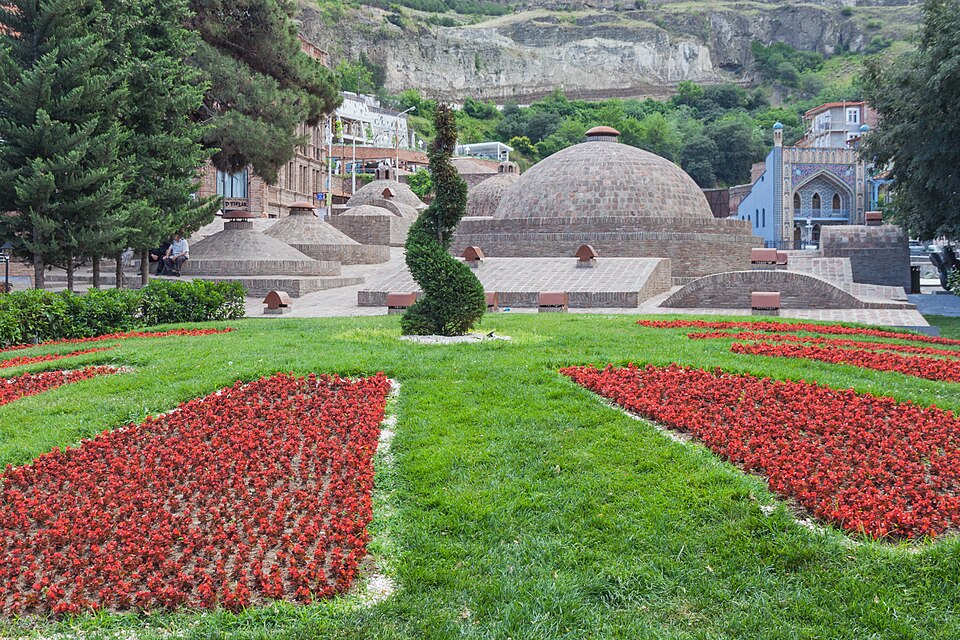
The narrow lanes of the Old Town with wooden balconies, cafés and shops. The Abanotubani quarter is famed for sulphur baths with brick domes, in which baths have been run since the Middle Ages. It is the most authentic part of the city.

Tip: A private bath costs about twenty euros an hour. Come in the morning, when it is calmer. Bring a towel or swimwear.

Admission:
bath ~€20
Time needed:
2–3 hrs
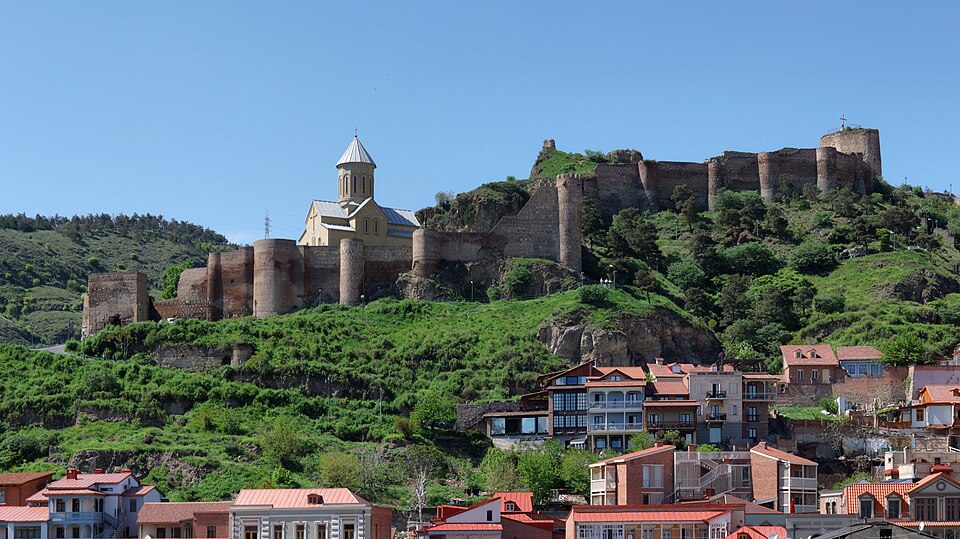
Narikala Fortress

Narikala Fortress

above the Old Town

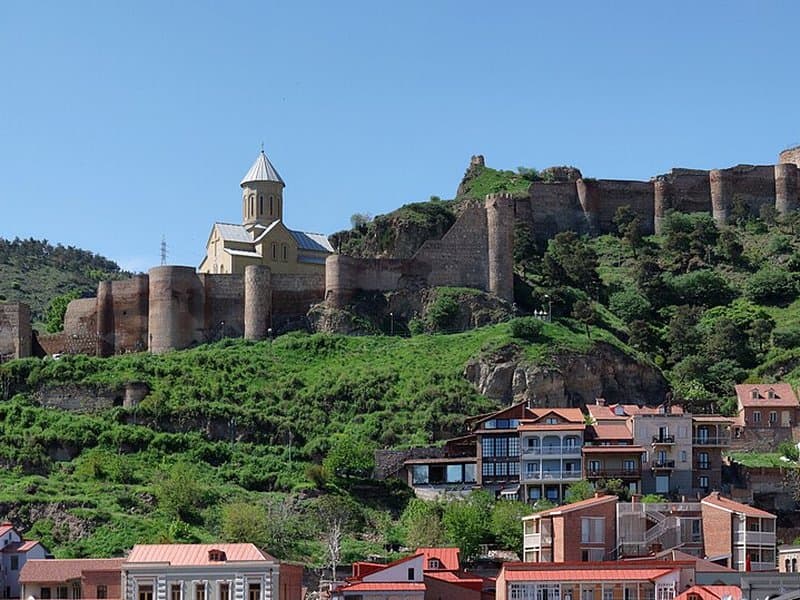
A fortress of the fourth century on the hill above the Old Town, from which the best view of all Tbilisi opens. A cable car runs to it from Rike Park or you can walk. Part of it is the twentieth-century church of St Nicholas.

Tip: The cable car costs about one euro. Come at sunset, when the light is loveliest. Next to the fortress stands the statue of Mother Georgia.

Admission:
cable car ~€1
Time needed:
1–2 hrs
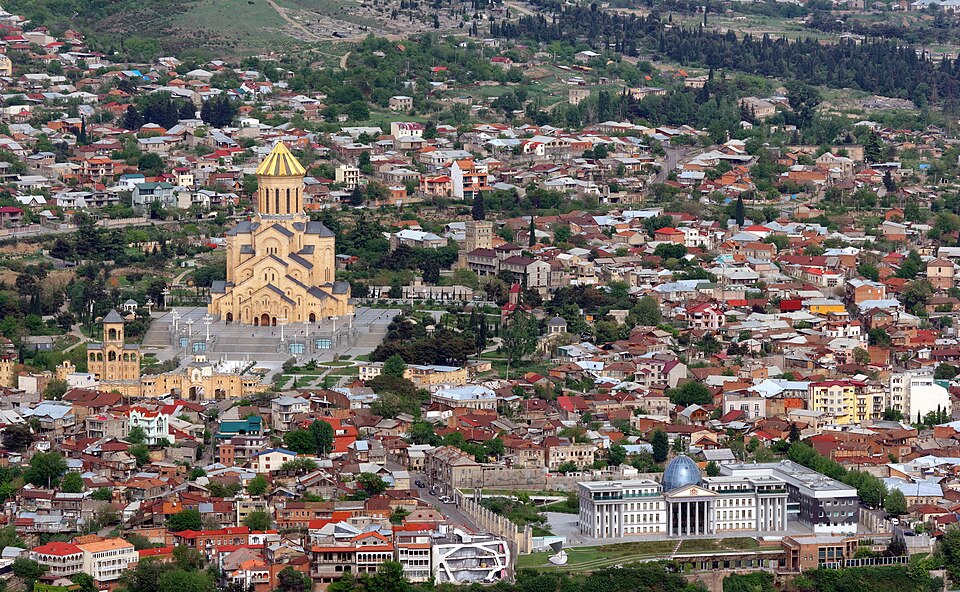
Holy Trinity Cathedral (Sameba)

Holy Trinity Cathedral (Sameba)

Elia

The largest Orthodox cathedral in Georgia, completed in 2004, eighty-four metres high, which dominates the city. The interior is grand. It lies on Elia hill.

Tip: Entry is free, but observe dress: women cover head and shoulders, men wear trousers. Photograph from outside at sunset.

Admission:
free
Time needed:
1 hr
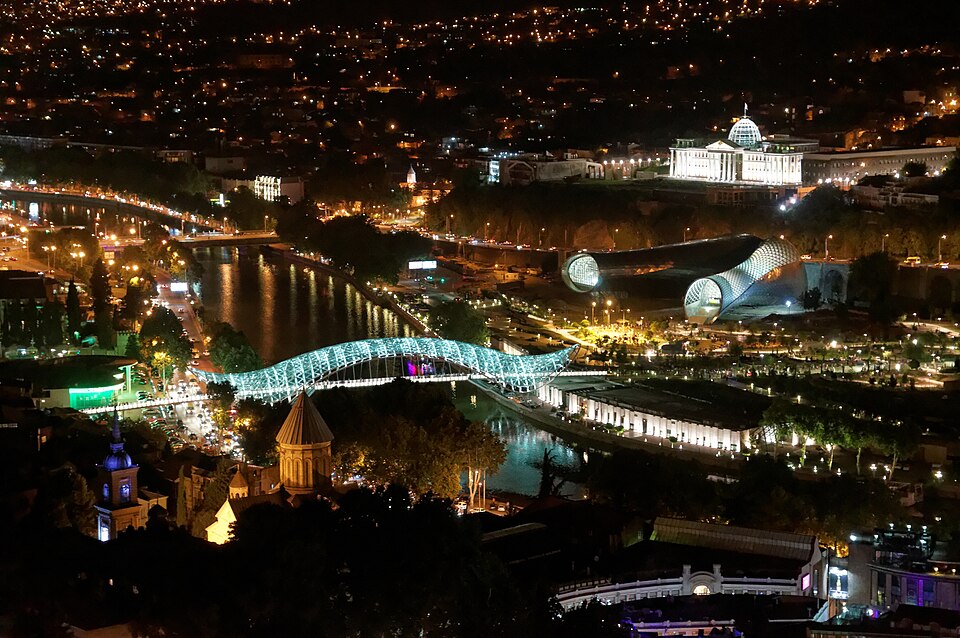
The Bridge of Peace

The Bridge of Peace

Old Town

A modern pedestrian bridge over the Kura river from 2010, in the shape of a glass wave, with evening LED lighting. It links the Old Town with Rike Park. It is one of the symbols of the new Georgia.

Tip: In the evening thousands of lights come on; come after dark. It is a good start to a walk along the embankment.

Admission:
free
Time needed:
20 min
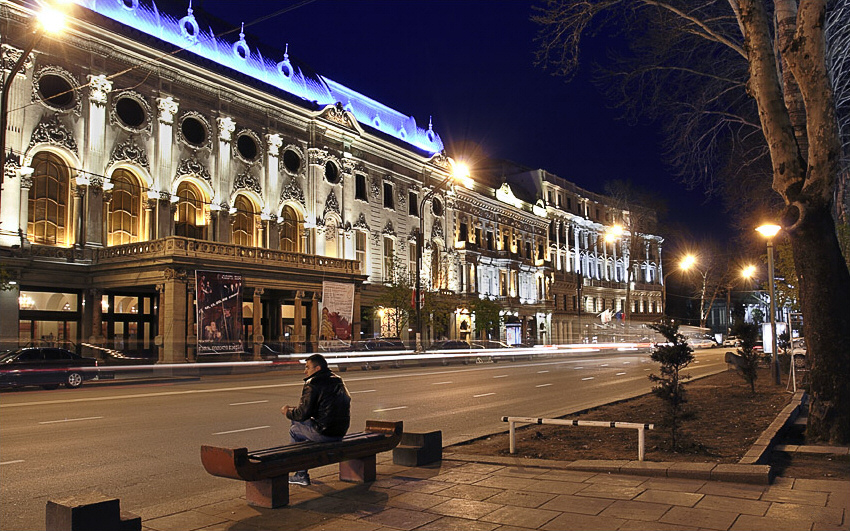
Rustaveli Avenue

Rustaveli Avenue

centre

The main street of Tbilisi with theatres, museums, the parliament and shops, lined with trees and nineteenth-century buildings. It is the best place for an evening stroll and coffee. The surroundings are rich in cafés.

Tip: Call in at the Georgian National Museum, where gold from Colchis is displayed. Coffee costs about two euros.

Admission:
free
Time needed:
1–2 hrs
Mtatsminda

Mtatsminda

Mtatsminda

A mountain above the city with an amusement park, a viewpoint and a TV tower, reached by a funicular from the centre. It is a favourite place for a view of the city and dinner in a restaurant. In the park is a pantheon of notable Georgians.

Tip: The funicular costs about one euro. Come at sunset; the restaurant at the top has an excellent view.

Admission:
funicular ~€1
Time needed:
2 hrs
Mtskheta

Mtskheta

20 km from Tbilisi

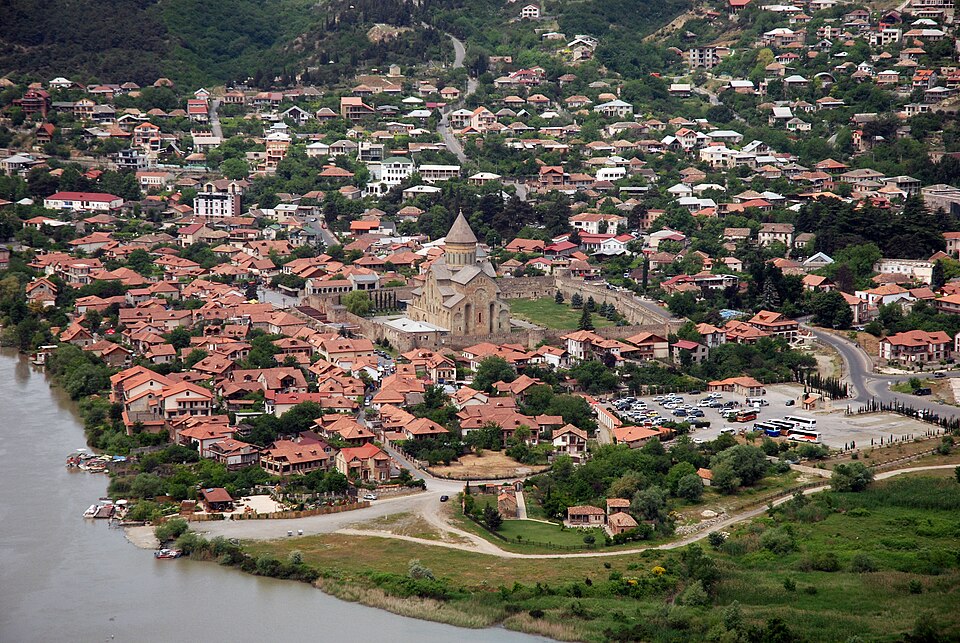
The old capital of Georgia, a UNESCO site, twenty kilometres from Tbilisi. Here stand the Svetitskhoveli Cathedral and the Jvari Monastery, the holiest places in the country. The trip is easy and suits half a day.

Tip: From Tbilisi a marshrutka runs in half an hour for one euro. Cover shoulders and knees. Jvari is loveliest at sunset.

Admission:
free
Time needed:
half a day
Kazbegi and Gergeti Trinity

Kazbegi and Gergeti Trinity

Kazbegi

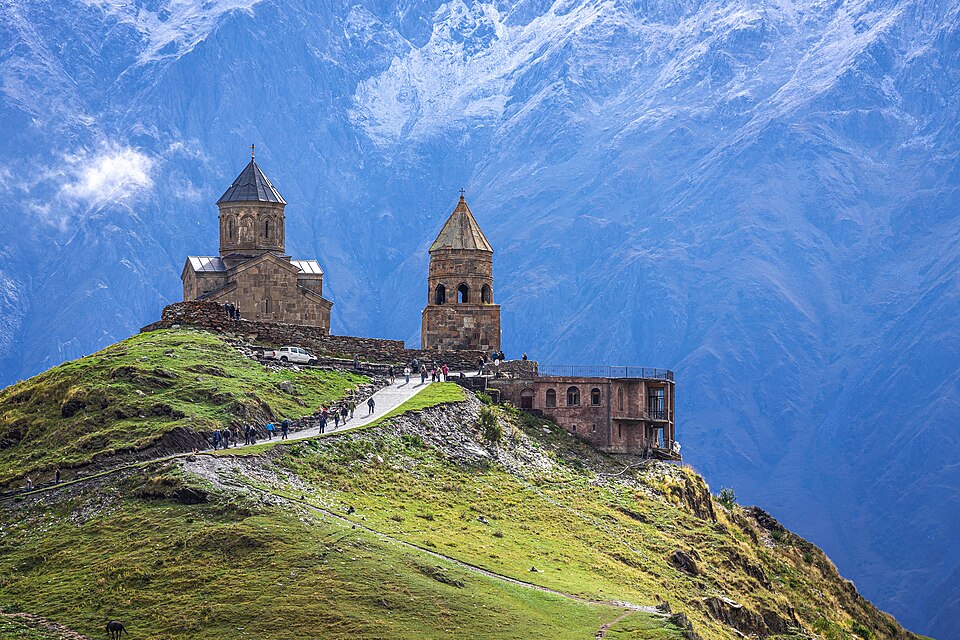
A mountain town below the glaciated Mount Kazbek, five thousand and fifty-four metres high, with the Gergeti Trinity church on a hilltop. The way from Tbilisi runs along the Georgian Military Road and takes three hours. It is the best trip from Tbilisi.

Tip: Set out early in the morning; the weather changes. A path or jeep leads to the church. Bring a jacket, as it is cold at the top.

Admission:
free
Time needed:
full day
Kakheti and Wine

Kakheti and Wine

Kakheti

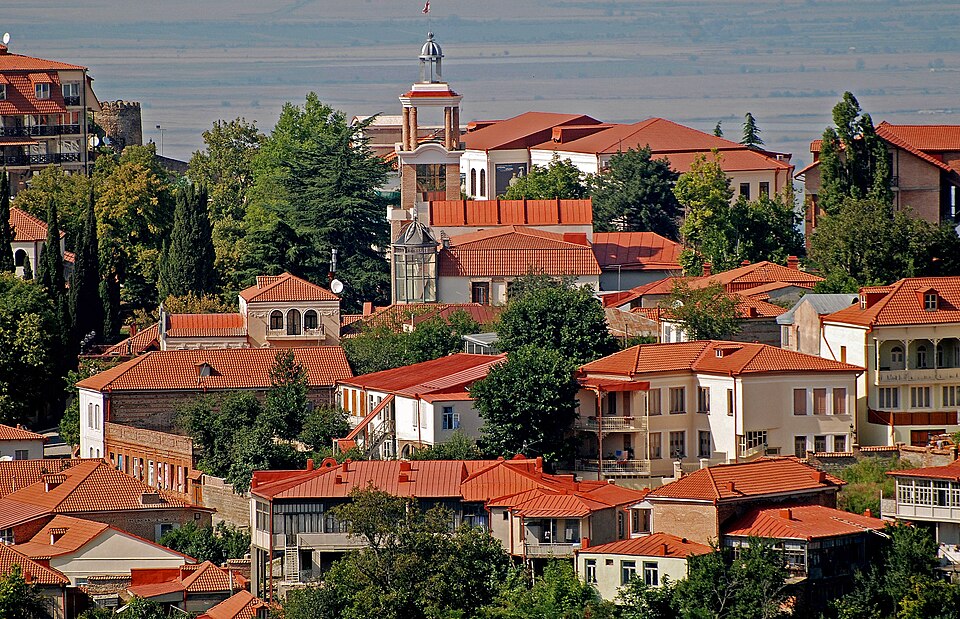
The main wine region of Georgia, two hours from Tbilisi, with the Alaverdi monastery, the town of Sighnaghi and vineyards. You can taste qvevri wine and Georgian food here. It is the best trip for wine lovers.

Tip: Wineries offer tastings for ten to twenty euros. Choose an organised trip with a driver; the wine is strong.

Admission:
tasting ~€15
Time needed:
full day

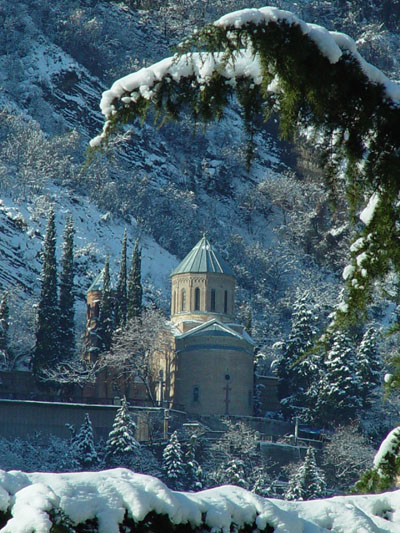
Photos: The Old Town and Abanotubani Sulphur Baths — Marcin Konsek (CC BY-SA 4.0) · Narikala Fortress — Alexxx1979 (CC BY-SA 4.0) · Holy Trinity Cathedral (Sameba) — Alexxx1979 (CC BY-SA 4.0) · The Bridge of Peace — Vyacheslav Argenberg (CC BY 4.0) · Rustaveli Avenue — George Kvizhinadze from Tbilisi, Georgia (CC BY-SA 2.0) · Mtatsminda — Paata Vardanashvili from Tbilisi, Georgia (CC BY 2.0) · Mtskheta — Jelger Groeneveld (CC BY 2.0) · Kazbegi and Gergeti Trinity — This Photo was taken by Supanut Arunoprayote. Feel free to use any of my images, but please mention me as the author an (CC BY 4.0) · Kakheti and Wine — George Nikoladze (Public domain)

Where to stay

Areas and districts, matched to the kind of trip you are taking

Old Town (Sololaki, Abanotubani)

Best for: monuments and baths

The area around the baths, fortress and Bridge of Peace with hotels and restaurants. Everything is at hand. Best for a first visit.

Vera and Vake

Best for: cafés and calm

Elegant districts with parks, cafés and boutiques. It is pleasant and safe. A good choice for families and a longer stay.

Avlabari and Elia

Best for: cheap accommodation

A district on the left bank with the Sameba cathedral and lower prices. There are fewer tourists. Suits budget travellers.

Saburtalo

Best for: modern and business

Modern districts with shopping centres and restaurants. Prices are lower and transport good. Suits a longer stay.

Getting around

From the airport

Tbilisi Airport (TBS) is eleven kilometres from the centre; direct flights from Prague run several times a week in four hours. A bus runs to the centre in half an hour and a taxi costs about ten euros. By car from the Czech Republic it is about five thousand kilometres through Turkey, which we do not recommend.

Tbilisi Shota Rustaveli (TBS) · 11 km

  • Bus 337· 40 min· €1
  • Taxi to the centre· 25 min· €10
  • Car rental· at the airport· €35

Around town

The centre of Tbilisi can be walked, but the hills are steep. Metro, buses and marshrutkas run around the city; you pay with a Metromoney card. Taxis are cheap, so use the Bolt app. Cable cars lead to Narikala and Mtatsminda.

On footThe Old Town is compact.
Metro and busAround town. · €0.3
Taxi (Bolt)Around town. · €3
MarshrutkaTo Mtskheta and the surroundings. · €1

Useful apps: Google Maps, Bolt, Yandex Go, Maps.me

When to go

Tbilisi has a continental climate with a hot summer and a cold winter. In July it is around thirty-two degrees, in January around five. The best time is April to June and September to October. In summer it is hot, in winter it freezes and occasionally snows.

Best time

April to June and September to October

What to avoid

July and August (heat)

MonthJanFebMarAprMayJunJulAugSepOctNovDec
Day5°8°13°19°24°29°32°32°27°20°12°7°
Night-2°0°4°9°13°17°20°20°15°9°4°0°
Rainy days202540708560353535403020

Food & drink

Georgian cooking is among the tastiest in the world: cheeses, walnuts, herbs and grilled meat. A main dish costs six to twelve euros. People drink qvevri wine, chacha and beer.

What to try

Khachapuri

Bread filled with cheese; the Adjarian khachapuri is boat-shaped with an egg and butter. The best-known Georgian dish.

Khinkali

Large dumplings filled with meat and broth, eaten with the hands. First you drink the broth and then eat the dough.

Mtsvadi

Grilled meat on a skewer, pork, lamb or poultry. Served with pomegranate and onion.

Badrijani nigvzit

Fried aubergine rolls stuffed with walnut paste and pomegranate. A typical starter.

Lobio

A bean dish with herbs and walnuts, served in a clay pot. A hearty meal.

Churchkhela

A sweet of walnuts strung on a thread and dipped in grape juice. A popular souvenir.

Qvevri wine

Wine made in clay vessels buried in the ground, an eight-thousand-year-old tradition. Taste Rkatsiteli and Saperavi.

What it costs

Coffee

GEL 6–10

Khachapuri

GEL 10–20

Lunch in a restaurant

GEL 25–50

A beer

GEL 6–10

Sulphur bath

GEL 60–100

Narikala cable car

GEL 3

3★ hotel (night)

GEL 150–350

Marshrutka to Mtskheta

GEL 3

Indicative prices that change over time — treat them as a guide, not a price list.

Practical information

SocketsCEuroplug, two round pinsFSchuko
Voltage220V / 50Hz
Tap waterTap water is drinkable — Tap water in Tbilisi is usually safe, but most tourists drink bottled. Bottled water is cheap.
TippingTipping is customary, ten per cent in a restaurant or rounding up.
Driving on theright
SafetyTbilisi is safe. Watch for pickpockets in queues and for taxi drivers without a meter; use an app. Watch your belongings. The emergency number is 112.
Opening hoursShops are open from ten to eight, restaurants until midnight. Churches are open daily. On Sunday most shops are open.
Customs & etiquetteGeorgians are extremely hospitable and offer wine and food. In churches cover shoulders and knees, women the head. Toasts are led by the 'tamada'.
A few local wordsHello — გამარჯობა (gamarjoba)Thank you — მადლობა (madloba)Please — გთხოვთ (gtkhovt)How much is it? — რამდენი ღირს? (ramdeni girs?)Cheers — გაუმარჯოს (gaumarjos)The bill, please — ანგარიში, გთხოვთ (angarishi)Where is the toilet? — სად არის ტუალეტი? (sad aris tualeti?)

How to plan your days

1 day

A day in Tbilisi

  1. 1Morning Narikala and the cable car.
  2. 2The Old Town and sulphur baths.
  3. 3Lunch with khinkali.
  4. 4Afternoon the Bridge of Peace and Rustaveli.
  5. 5Evening wine and dinner.

2 days

Two days: Tbilisi and Mtskheta

  1. 1Day one as above.
  2. 2Day two morning Mtskheta.
  3. 3Afternoon Jvari.
  4. 4Evening Mtatsminda.

3 days

Three days: Tbilisi and Kazbegi

  1. 1Days one and two as above.
  2. 2Day three Kazbegi and Gergeti.
  3. 3Afternoon the Georgian Military Road.
  4. 4Evening return.

Day trips

Mtskheta

20 km · 30 min by marshrutka

The old capital of Georgia, a UNESCO site, with the Svetitskhoveli Cathedral. It suits half a day.

Kazbegi

150 km · 3 hrs by car

A mountain town below a glacier with the Gergeti Trinity church. It suits a full-day trip.

Kakheti

100 km · 2 hrs by car

The main wine region with a monastery and the town of Sighnaghi. It suits a full-day trip with a tasting.

Frequently asked questions

Do I need a visa for Georgia?+

EU citizens do not need a visa; the visa-free stay lasts up to a year. A valid passport is enough, in some cases an ID card. Conditions change, so check.

How many days should I stay in Tbilisi?+

Two to three days suffice for the city, baths and Mtskheta. For Kazbegi and Kakheti add two days. Georgia offers more, so plan a week.

When is the best time to visit?+

April to June and September to October, when it is warm and wine festivals are held. In summer it is hot. For the Kazbegi mountains the best is July to September.

How do I get from Prague to Tbilisi?+

By direct flights in four hours several times a week. People do not drive. From the airport a bus and taxi run.

Is Tbilisi expensive?+

It is cheap: lunch costs six to twelve euros, a hotel fifty to a hundred and fifty euros a night. Cheapest are street food and marshrutkas.

What is qvevri?+

A clay vessel buried in the ground in which wine has been made for eight thousand years. The tradition is on the UNESCO list. Qvevri wine has a distinctive taste.

Is Tbilisi safe?+

Yes, it is a safe city. Watch for pickpockets in queues and for taxi drivers without a meter. Use the Bolt app.

What do you pay with in Tbilisi?+

The Georgian lari (GEL). Euros are accepted only exceptionally. Cards are accepted in hotels and restaurants, and cash is useful at the market and in marshrutkas.

Visa Requirements

Check the latest visa requirements for entering this country. Some nationalities may need to apply for a visa or e-visa before travel.

Check visa requirements

Language

Georgian

Currency

GEL

Timezone

Asia/Tbilisi

Dial Code

+995

Population

3.7M

Area

69,700 km²

Voltage

220V / 50Hz

Driving Side

Right

Top Hotels in Tbilisi

Live prices from 500+ properties

Loading hotels...

More destinations in Georgia

Planning a trip to Tbilisi?

Compare hundreds of hotels, find the best price, and book with free cancellation on TravelManiac.