Hotels in Turks and Caicos

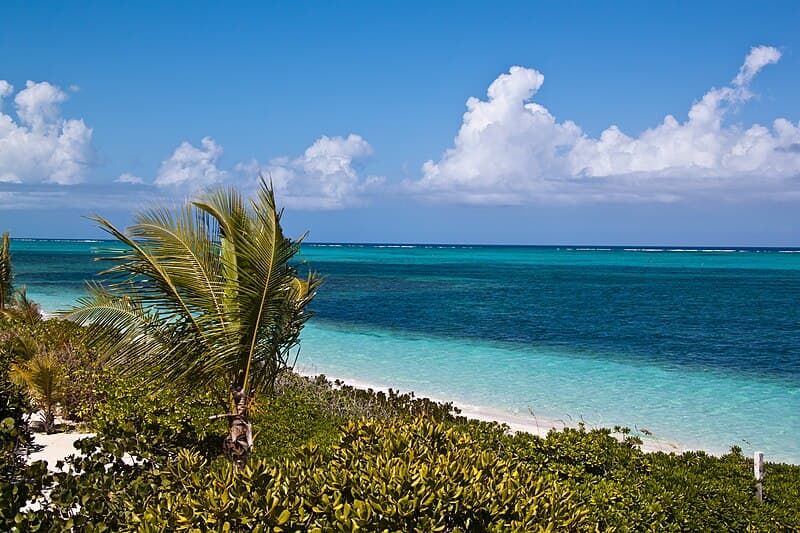
Grace Bay, the world's third-largest reef and flat white sand

Turks and Caicos

LanguageEnglish
CurrencyUSD
TimezoneGMT-5
Temperature25-32 °C
Dial Code+1-649
Population45K
Area948 km²
SocketsType A / Type B
Tap waterBottled advised

Discover Turks and Caicos

Turks and Caicos is a British Overseas Territory made up of eight inhabited and forty uninhabited islands at the southeastern edge of the Bahamas archipelago. For visitors it's almost entirely a single island: Providenciales, known to everyone simply as Provo, home to the airport, the resorts and Grace Bay beach — five kilometres of sand that turns up with annoying regularity in rankings of the world's best beaches. The islands are flat, dry and low-lying — the highest point is fifty metres — so there are no mountains, rivers or rainforest; instead there's a coral reef, one of the three largest in the world, starting just a few hundred metres offshore. The currency is the US dollar, English is spoken, and the capital, Cockburn Town, sits on Grand Turk, 150 kilometres from the tourist bustle of Provo. Hurricane season, from August to October, is the only period worth avoiding. The rest of the year is dry, around twenty-nine degrees, with the sea above twenty-six.

What to see

The places worth your time in Turks and Caicos, and what to expect at each

Grace Bay Beach

Grace Bay Beach

north coast of Providenciales

Five kilometres of white coral sand on Provo's north coast, sheltered by a reef a few hundred metres offshore. That keeps the water calm and shallow even in windy weather, and the seabed is free of rocks and algae. Most of the island's resorts line this beach, yet it never feels crowded.

Tip: The quietest and emptiest stretch is the western end near Bight Park, where you can park for free — parking near the resorts in the middle of the beach is for guests and monitored.

Admission:
free
Time needed:
half a day
Bight Reef

Bight Reef

Grace Bay, Providenciales

A stretch of coral reef reaching to within ten metres of shore in the middle of Grace Bay, marked with buoys. You can snorkel straight from the beach without a boat or a guide — among the coral you'll spot parrotfish, spiny sea urchins and often turtles.

Tip: Swim along the buoy line, not over the reef — the water above the coral is sometimes only half a metre deep, and waves can easily scrape you against it.

Admission:
free
Time needed:
2 h
Chalk Sound

Chalk Sound

8 km southwest of Grace Bay

An enclosed lagoon in southwest Provo, dotted with dozens of tiny limestone islets. The water has an unusually vivid turquoise hue, caused by the shallow limestone seabed, and being cut off from the open sea, it's completely calm. The surrounding area is a national park.

Tip: You can't really get into the lagoon from the coastal road; rent a kayak or paddleboard at Sapodilla Bay — it's only once you're weaving among the islets that the colour makes sense.

Admission:
free, kayak from $40
Time needed:
3 h
Sapodilla Bay and Taylor Bay

Sapodilla Bay and Taylor Bay

south coast of Providenciales

Two shallow bays on Provo's quiet south side, where the water is knee-deep and bathtub-warm even a hundred metres from shore. There are no waves or currents, making these the best beaches on the island for small children. Above Sapodilla is a hill carved with 18th-century sailors' inscriptions.

Tip: There's no marked path to Taylor Bay — the turn-off is an unassuming dirt track between villas off Chalk Sound Road; if you're looking for a signpost, you won't find one.

Admission:
free
Time needed:
3 h
Little Water Cay and Half Moon Bay

Little Water Cay and Half Moon Bay

boat trip, 3 km east of Provo

An uninhabited islet east of Provo, home to several thousand critically endangered Turks and Caicos rock iguanas. Wooden boardwalks run across it so visitors don't trample their burrows. Next door lies the sandbar of Half Moon Bay, connecting two small islands.

Tip: The iguanas are used to people and will approach right up to your feet, but feeding them is prohibited and fined — holding fruit in your hand is basically an invitation you won't be able to shake off.

Admission:
reserve entry $10, trip from $90
Time needed:
half a day
Cheshire Hall Plantation

Cheshire Hall Plantation

Providenciales, inland

Ruins of a late-18th-century cotton plantation in the middle of Provo, founded by Loyalists fleeing America after the War of Independence. The walls of the main house, a granary and a kitchen still stand, linked by a trail that describes the lives of the enslaved people who worked the plantation.

Tip: The site sits just off the main shopping strip on Leeward Highway, so it's easy to combine with errands — but go in the morning, since there's no shade or breeze between the walls.

Admission:
from $10
Time needed:
1 h
Conch Bar Caves

Conch Bar Caves

Middle Caicos

The largest cave system in the Bahamas archipelago, carved by water into the limestone of Middle Caicos. The passages run over a kilometre, with stalactites, salt pools and bat colonies. The original Lucayan inhabitants used them as a shelter.

Tip: Entry is only with a local guide, arranged in advance — nobody waits at the entrance on Middle Caicos, and mobile signal is patchy at best.

Admission:
from $20 with a guide
Time needed:
1.5 h
Mudjin Harbour

Mudjin Harbour

Middle Caicos, 40 km from Provo

The most dramatic spot in the territory: limestone cliffs dropping into the sea, a beach below them, and the rocky islet of Dragon Cay just offshore. A staircase winds down through a cave to the sand. Unlike Provo, there's real surf and open ocean here.

Tip: Enter the water carefully here — the current between the beach and Dragon Cay is strong; the neighbouring Bambarra Beach, a few kilometres further on, is safer for swimming.

Admission:
free
Time needed:
3 h
Cockburn Town and the Grand Turk lighthouse

Cockburn Town and the Grand Turk lighthouse

Grand Turk, 150 km southeast

The territory's capital on Grand Turk, with colonial houses and wooden verandas, old salt pans, and a national museum housing the wreck of a 16th-century ship. At the island's northern tip stands a cast-iron lighthouse, shipped in from England in 1852.

Tip: Grand Turk can be done as a day trip by flight from Provo, but on days when a cruise ship is docked, Cockburn Town gets busy — cruise arrivals can be checked in advance against the port's schedule.

Admission:
museum from $10
Time needed:
full day

Photos: Grace Bay Beach — Jason Boldero (CC BY 2.0) · Bight Reef — User:Orderinchaos (CC BY-SA 3.0) · Chalk Sound — Simone Costa (Public domain) · Sapodilla Bay and Taylor Bay — Tonbi ko (CC BY-SA 4.0) · Little Water Cay and Half Moon Bay — Wikimedia Commons (CC BY-SA 3.0) · Cheshire Hall Plantation — Dwkaminski (CC BY-SA 4.0) · Conch Bar Caves — James St. John (CC BY 2.0) · Mudjin Harbour — Tim Sackton (CC BY-SA 2.0) · Cockburn Town and the Grand Turk lighthouse — Original uploader was Seanjacksontc at en.wikipedia (Public domain)

Where to stay

Areas and districts, matched to the kind of trip you are taking

Grace Bay

Best for: first-time visitors and a beach with plenty to do

Provo's tourist hub and where the vast majority of visitors stay. Resorts, restaurants and shops line the beach, and everything is walkable. Convenience comes at a price: accommodation and food here are the most expensive on the islands.

Long Bay and Leeward

Best for: villas, kitesurfing and quiet

The eastern part of Provo, with a long, shallow beach where a steady trade wind makes Long Bay the island's main kitesurfing spot. Accommodation here runs to villas and apartments rather than hotels, which works out cheaper for families. Without a car, though, you can't get anywhere.

Chalk Sound and the south coast

Best for: families with small children and privacy

The quiet southwestern side of Provo, with the lagoon, the shallow bays of Sapodilla and Taylor, and almost no hotels. The water here is knee-deep and wave-free, making it the safest swimming on the island. Restaurants are only in Grace Bay, fifteen minutes by car.

Grand Turk

Best for: diving, whales and a colonial town

The territory's main island, 150 kilometres from Provo, reached by small plane. It's small, sleepy and cheaper, with colonial architecture and a reef wall just a few hundred metres offshore. Humpback whales pass through from January to April.

Getting around

From the airport

The main gateway is Providenciales International Airport; there's no direct flight from Prague, so you'll connect either through London, or via US and Canadian hubs, most often Miami, New York and Toronto. If you connect through the United States you'll need an ESTA registration, even though you're not formally entering the country. Between the islands you fly on small aircraft, or take the ferry to North Caicos, from where a causeway continues on to Middle Caicos.

Providenciales International (PLS) · 8 km

  • Taxi to Grace Bay· 15 min· $25 for two people
  • Hotel transfer· 15–25 min· included at most resorts
  • Car rental at the terminal· immediate· $60/day

JAGS McCartney International, Grand Turk (GDT) · 3 km

  • Flight from Provo· 35 min· $180 return
  • Taxi to Cockburn Town· 10 min· $15

Around town

On Providenciales, a rental car is essentially a necessity — there's no public transport, and a taxi ride costs fifteen to twenty-five dollars, so with two trips a day a rental works out cheaper. Driving is on the left, though most cars have the steering wheel on the left too, since they're imported from the United States. To reach the other islands you fly on small aircraft, or take the ferry from Walkin Marina to North Caicos, which is linked to Middle Caicos by a causeway.

Rental carThe most common option on Provo; a mandatory temporary licence fee applies on top of the rental. · $60/day
TaxiFixed rates by route, charged per person rather than per vehicle; confirm the price beforehand. · $15 per ride
Ferry to North CaicosSeveral times a day from Walkin Marina, then by car across the causeway to Middle Caicos. · $30 return
Domestic flightSmall aircraft to Grand Turk, Salt Cay and South Caicos, several flights a day. · $180 return

Useful apps: Google Maps, WhatsApp

When to go

The best period is December to April: dry, around twenty-nine degrees, low humidity and the lowest chance of rain all year. It's also the most expensive season, especially between Christmas and mid-January. May and June offer almost the same weather at significantly lower prices. Hurricane season runs from August to October, peaking in September. Humpback whales pass through the channel near Grand Turk from January to April.

Best time

December to April, best value in May and June

What to avoid

August to October, because of hurricanes

MonthJanFebMarAprMayJunJulAugSepOctNovDec
Day28°28°29°29°30°31°32°32°32°31°30°29°
Night22°22°22°23°24°25°26°26°26°25°24°23°
Rainy days65446669111298
Sea26°25°26°26°27°28°29°29°29°29°28°27°

Food & drink

The cuisine is built on the sea, above all on conch, a sea snail that holds near-national-dish status across the islands and is prepared eight different ways. Add fresh fish, spiny lobster in season from August to March, and Jamaican-influenced seasoning. Prices are high, since almost everything is imported, and a ten percent service charge is added to the bill. It's cheaper and often better to eat outside Grace Bay — in Blue Hills on the north coast, beachside spots serve the same dishes for a third less.

What to try

Conch salad

Raw conch diced with onion, pepper and lime, prepared right in front of you — the most common dish on the islands.

Cracked conch

Pounded and breaded conch fried until crisp, served with fries and a spicy dipping sauce.

Conch fritters

Deep-fried balls of batter with chopped conch, a standard starter at every restaurant.

Grilled spiny lobster

Caribbean spiny lobster without claws; the catch is only permitted from August to March, so out of season only frozen is on the menu.

Peas and grits

Corn porridge with pigeon peas, a traditional side dish among local families.

Jerk chicken

Chicken grilled over charcoal in Jamaican spices, the cheapest solid lunch outside the tourist zone.

Bambarra Rum

Local rum named after a beach on Middle Caicos, mixed into most cocktails on the islands.

Turk's Head

Beer from the local brewery on Providenciales, which also offers tours with tastings.

What it costs

Conch fritters as a starter

$14–18

Lunch at a beach spot in Blue Hills

$20–30

Dinner at a Grace Bay restaurant

$70–110 per person

Turk's Head beer

$6–8

Car rental per day

from $60

Boat trip to Little Water Cay

from $90

Ferry to North Caicos

$30 return

Night in a 4-star hotel on Grace Bay

$400–700

Indicative prices that change over time — treat them as a guide, not a price list.

Practical information

SocketsAtwo flat pins (US/JP)Btwo flat pins plus ground (US)
Voltage120V / 60Hz
Tap waterTap water is treated, bottled is common — Drinking water comes from desalination and from rainwater collected in cisterns. In resorts it's treated and safe; outside them, bottled water is the norm. Water here is expensive and scarce, since the islands have no natural freshwater source.
TippingTipping follows American norms — fifteen to twenty percent is expected. Restaurants, however, commonly add a ten percent service charge directly to the bill, so check it to avoid paying twice. Baggage porters get one to two dollars per bag.
Driving on theleft
SafetyThe territory is safe overall, but in recent years there have been some robberies on Provo outside the tourist zone — avoid walking unlit stretches at night, and don't leave valuables in the car. In the water, the main risks are sharp coral, sea urchins and currents at the open beaches of Middle Caicos. Healthcare is basic; serious cases are flown to Miami.
Opening hoursShops are generally open from about nine to six; Sunday hours are limited and many businesses don't open at all. Restaurants on Grace Bay serve dinner until roughly ten pm. From September to mid-November, some hotels and restaurants close for maintenance.
Customs & etiquetteThe islands are conservative and religious; swimwear belongs on the beach, not in shops or restaurants, and topless sunbathing isn't done on public beaches. Collecting conch shells and coral is prohibited and checked at the airport. A greeting before a question is simply expected.
A few local wordsGood morning — Good morningThank you — Thank youHow much is it? — How much is it?The bill, please — The bill, pleaseCheers — Cheers

How to plan your days

1 day

A day on Providenciales

  1. 1Morning at Grace Bay, snorkelling at Bight Reef straight from the beach.
  2. 2Lunch at a beach spot in Blue Hills, outside the tourist zone.
  3. 3Afternoon at Chalk Sound, kayaking among the limestone islets.
  4. 4Sunset at Sapodilla Bay and dinner on Grace Bay.

2 days

Two days with a boat trip

  1. 1Day one as above.
  2. 2Morning of day two by boat to Little Water Cay to see the iguanas.
  3. 3Stop at the Half Moon Bay sandbar and snorkelling on the reef.
  4. 4Afternoon at Cheshire Hall Plantation, evening at the brewery on Provo.

3 days

Three days including Middle Caicos

  1. 1First two days as above.
  2. 2Day three by ferry to North Caicos, then by car across the causeway to Middle Caicos.
  3. 3Tour of the Conch Bar Caves with a local guide.
  4. 4Afternoon at the Mudjin Harbour bluffs and a swim at Bambarra Beach.
  5. 5If time allows, a flight to Grand Turk for the colonial town and the lighthouse.

Day trips

Middle Caicos

40 km · 30 min by ferry and 40 min by car

The largest and least-visited island of the archipelago, with the Conch Bar Caves, the Mudjin Harbour bluffs, and empty beaches. You take the ferry to North Caicos and then drive across the causeway. A rental car needs to be booked in advance — there's no renting on-site.

Grand Turk

150 km · 35 min by air

The main island of the territory, with colonial Cockburn Town, a museum, an 1852 lighthouse, and a reef wall just a few hundred metres offshore that ranks among the best diving spots in the Caribbean. Humpback whales pass through from January to April.

Salt Cay

160 km · 40 min by air

A twenty-square-kilometre island with about a hundred residents, old salt pans, and donkeys left over from the salt-raking era. From January to April, boats set out from here to see humpback whales passing just a few hundred metres offshore.

Frequently asked questions

How do I get to Turks and Caicos?+

There's no direct flight. The fastest route connects through London; otherwise flights go via Miami, New York or Toronto. If you connect through the United States you'll need an ESTA registration, even though you're not formally entering the country. The whole journey takes sixteen to twenty hours.

Is Grace Bay really that good a beach?+

Yes, and mostly for practical reasons: a reef a few hundred metres offshore breaks the waves, so the water stays calm even in wind, the seabed is free of rocks and algae, and the sand is made of crushed coral, so it doesn't get scorching hot. The beach runs five kilometres and never feels crowded.

When's the best time to visit?+

From December to April, when it's dry and around twenty-nine degrees. The most expensive period is between Christmas and mid-January. May and June have almost the same weather at significantly lower prices. Hurricane season runs from August to October.

Do I need a car on the islands?+

On Providenciales, essentially yes. There's no public transport, and taxis charge per person, so if you make two trips a day a rental works out cheaper. Driving is on the left, though most cars have the steering wheel on the left too, since they're imported from the United States.

Where can I snorkel without a boat?+

The best spot is Bight Reef in the middle of Grace Bay, where the reef comes within ten metres of shore and is marked with buoys. The second option is Smith's Reef at the western end of the beach. Both are free, and you don't need a guide or any gear beyond a mask.

Will I see whales here?+

Yes — from January to April, humpback whales pass through the channel near Grand Turk and Salt Cay on their way to breeding grounds. Half-day boat trips go out to see them, and the animals are often just a few hundred metres offshore. You can't see them from Providenciales; you'd need to fly over.

How much does a Turks and Caicos holiday cost?+

It's one of the pricier Caribbean destinations. A four-star hotel on Grace Bay costs 400–700 dollars a night, and dinner runs 70–110 dollars per person. You can save by eating in Blue Hills and staying in a villa away from Grace Bay.

How many days should I spend here?+

Three days on Providenciales are enough if you want to see Grace Bay and Chalk Sound and take a boat trip to the cays. With a trip to Middle Caicos and a flight to Grand Turk, a week is reasonable, which also matches the typical length of a beach holiday.

Visa Requirements

Check the latest visa requirements for entering this country. Some nationalities may need to apply for a visa or e-visa before travel.

Check visa requirements

Language

English

Currency

USD

Timezone

GMT-5

Dial Code

+1-649

Population

45K

Area

948 km²

Voltage

120V / 60Hz

Driving Side

Left

Top Hotels in Turks and Caicos

Live prices from 500+ properties

Loading hotels...

Planning a trip to Turks and Caicos?

Compare hundreds of hotels, find the best price, and book with free cancellation on TravelManiac.