Hotels in Varadero

Twenty kilometers of white beach on the Hicacos peninsula

Varadero

LanguageEnglish
CurrencyCUP
TimezoneGMT-5
Temperature24-32 °C
Dial Code+53
Population11.2M
Area109,884 km²
SocketsType A / Type B / Type C / Type L
Tap waterNot drinkable

Discover Varadero

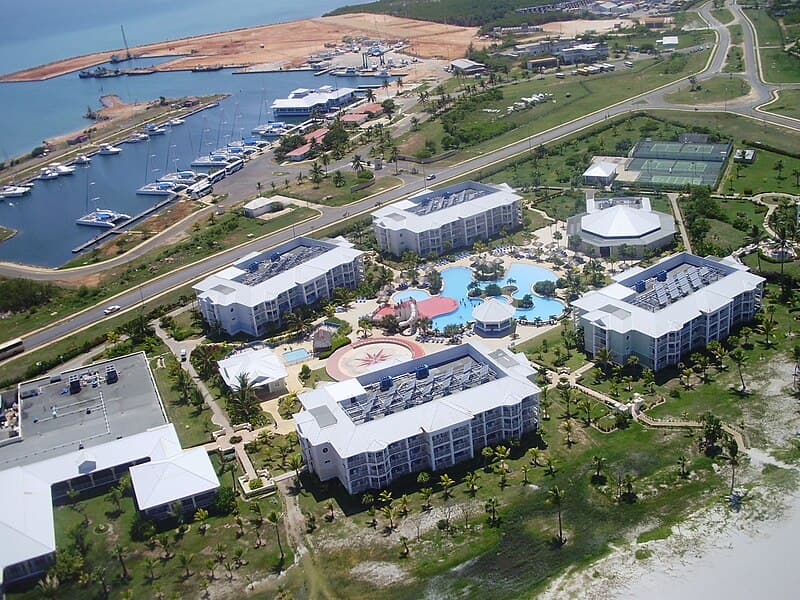
Varadero sits on the narrow Hicacos peninsula, which juts twenty kilometers into the Straits of Florida and is, in places, only a few hundred meters wide — beach on one side, bay on the other, and a single street in between. The sand is white and fine as flour, the sea shallow and calm, and the entire north side of the peninsula forms one unbroken beach that rankings regularly place among the best in the world. The resort began in the 1920s as a summer retreat for wealthy Americans, including chemical magnate Irénée du Pont, who built the Xanadú mansion here; after the revolution, the villas became hotels, and fifty large resorts have been added since the 1990s. That makes Varadero a peculiar island within Cuba itself — the best supply lines, the most tourists, and the least everyday Cuban reality. Anyone wanting to see the country takes a day trip from here to Havana, Matanzas or the interior; anyone who just wants the beach never needs to leave the resort grounds.

What to see

The places worth your time in Varadero, and what to expect at each

Varadero Beach

Varadero Beach

whole peninsula

Twenty unbroken kilometers of white silica sand along the entire north side of the peninsula, with a shallow bottom and water that's waist-deep even a hundred meters from shore. The beach is public by law along its full length, even in front of the priciest resorts, so it can be walked from town all the way to the tip of the peninsula.

Tip: The prettiest, least built-up stretch runs between street 30 and Parque Josone in the old part of town, lined with small hotels and used by Cubans too. The widest sand, on the other hand, is at the eastern tip near the big resorts. Wind picks up in the afternoon and is stronger at the eastern end.

Admission:
free
Time needed:
full day
Parque Josone

Parque Josone

old part of town

A park with gardens, a small lake and old trees in the middle of Varadero's town section, established in the 1940s around a rum merchant's private villa. Today it's the most pleasant shade in the whole resort, with restaurants, boat rentals on the lake, and a bowling alley.

Tip: It's the only place in Varadero where local families also come, and live music plays here in the evening. Admission is free, and the restaurants in the park are cheaper than hotel à la carte venues — the easiest way to eat outside the resort.

Admission:
free
Time needed:
1–2 h
Cueva de Saturno

Cueva de Saturno

road to the airport

A flooded cenote cave beside the road to the airport, ten kilometers from Varadero. Stairs lead down into the underground cavern to a pool of clear freshwater twenty-two meters deep, where you can swim and snorkel among the stalactites.

Tip: The water sits around twenty-two degrees, a shock after the tropical heat. Arrive right at opening at nine — by eleven, tour buses arrive and the small pool fills with forty people at once. Water shoes help, since the rocks are sharp.

Admission:
5 CUC
Time needed:
1–2 h
Xanadú Mansion

Xanadú Mansion

east of the peninsula

A three-story mansion built in 1930 on a bluff on the eastern side of the peninsula by American chemical magnate Irénée du Pont. It has marble floors, cedar ceilings and an organ in the dining room; nationalized after the revolution, it now houses a restaurant and small hotel surrounded by a golf course.

Tip: You can visit the mansion without staying there — the rooftop terrace bar is open to the public, and a cocktail with a sea view costs about the same as at a hotel bar, except you're sitting in du Pont's former house. Best at sunset.

Admission:
free, pay at the bar
Time needed:
1 h
Varahicacos Ecological Reserve

Varahicacos Ecological Reserve

eastern tip

A nature reserve at the eastern tip of the peninsula, the only part of Hicacos left undeveloped. Three short trails cross dry scrubland to the Ambrosio Cave, with pre-Columbian rock art of seventy-two figures, and to El Patriarca, a five-hundred-year-old cactus.

Tip: Bring repellent and plenty of water — shade is limited to the cave, and the trails cross sun-baked limestone. It takes about an hour and a half and is the only way to see what the peninsula looked like before the hotels took over.

Admission:
5 CUC
Time needed:
2 h
Calle 62 and central Varadero

Calle 62 and central Varadero

old part of town

The main street of the old resort area, with a souvenir market, private paladar restaurants and the resort's best-known corner bar by the beach, where live salsa plays from afternoon into the night. Pre-revolution wooden houses line the street.

Tip: Paladar restaurants are privately run and cook noticeably better than state-owned ones — spot them by the menu posted outside and by ingredients you won't see at the hotel. Pay in cash, and a tip in euros is appreciated more than one in pesos.

Admission:
free
Time needed:
2–3 h
Varadero Museum

Varadero Museum

old part of town

A wooden house from 1921 right on the beach, one of the last survivors from when this was just a stretch of summer villas. Inside is a small exhibit on the peninsula's history, from its indigenous inhabitants through pirate salt trading to the pre-revolutionary beach society, with period photographs and swimwear.

Tip: The visit takes half an hour, and the main reason to go is the house itself — the first-floor veranda offers the best beach view you'll get downtown, with shade and a breeze. It closes in the early afternoon.

Admission:
2 CUC
Time needed:
45 min
Varadero Dolphinarium

Varadero Dolphinarium

east of the peninsula

A dolphinarium in a natural lagoon on the eastern side of the peninsula, where dolphins live in an enclosed section of the bay rather than a pool. Besides the show, visitors can get in the water and swim with them; capacity is limited, with a few time slots a day.

Tip: Anyone opposed to keeping marine mammals in captivity should skip this — it's a legitimate stance, and Cuba has no real answer to it. Anyone who does go should book a morning slot through the hotel front desk, since afternoons fill up with bus-tour groups and swim time gets cut short.

Admission:
from 15 CUC
Time needed:
2 h
Snorkeling at Coral Beach

Snorkeling at Coral Beach

east of the peninsula

A coral reef just offshore on the eastern part of the peninsula, reachable by swimming straight from the beach — a rarity in Cuba, where reefs elsewhere usually require a boat. The water is shallow and clear, with parrotfish, barracuda and sea urchins to see.

Tip: Wear water shoes — the entry point is over sharp coral rock, and bare feet get cut in seconds. Visibility is best in the morning, before the afternoon wind picks up. Resorts rent gear, but your own mask is always more comfortable.

Admission:
free
Time needed:
2 h

Photos: Varadero Beach — Laslovarga (CC BY-SA 3.0) · Parque Josone — Jacas (CC BY-SA 3.0) · Cueva de Saturno — Emmanuel Huybrechts from Laval, Canada (CC BY 2.0) · Xanadú Mansion — RenaKol (CC BY-SA 4.0) · Varahicacos Ecological Reserve — Pato Novoa (CC BY 2.0) · Calle 62 and central Varadero — Photo by Anton Zelenov (CC BY-SA 4.0) · Varadero Museum — Museo Bacardi, Santiago de Cuba (publisher) (Public domain) · Varadero Dolphinarium — Ivan955 (CC BY-SA 4.0) · Snorkeling at Coral Beach — MODIS Land Rapid Response Team, NASA GSFC (Public domain)

Where to stay

Areas and districts, matched to the kind of trip you are taking

Old town (streets 1 to 64)

Best for: contact with Cuba and cheaper food

The original Varadero, with wooden houses, a market, Parque Josone and private paladar restaurants. Hotels here are smaller and older, but everything is within walking distance, and it's the only place in the resort where you'll encounter ordinary Cuban life. The beach here is narrower but pleasant.

Middle of the peninsula (street 64 to the Marina)

Best for: a balance of quiet and convenience

A transitional zone with large mid-range hotels, a marina and the Plaza América shopping center. It's fifteen minutes by bus to town, and the beach is wide and calmer than downtown. Most Czech tourists head here.

Eastern tip (Punta Hicacos)

Best for: the newest resorts and widest beach

The furthest part of the peninsula, with the newest five-star resorts, the widest sand and the least bustle. It's half an hour by car to town, so most guests simply don't leave. The Varahicacos reserve and Xanadú Mansion are nearby.

Cárdenas

Best for: a look at a real Cuban town

A town fifteen kilometers from Varadero, home to most of the hotel staff. Horse carts instead of taxis, a market, and crumbling colonial houses — it's the closest place to see Cuba without the tourist gloss. Not somewhere to stay overnight, but worth a morning visit.

Getting around

From the airport

Varadero has its own international airport, Juan Gualberto Gómez (VRA), twenty kilometers from the resort and serving almost exclusively charter flights. Direct flights run from Prague during the winter season, taking roughly eleven hours; scheduled flights connect via Madrid or Paris to Havana, followed by a two-hour bus ride. Travelers need a tourist card, arranged through a travel agency or bought at the airport before departure, and proof of health insurance is mandatory and checked on entry — without it, you won't be let in. An electronic D'Viajeros form with a QR code must now be filled out before traveling. Anyone who has used the US ESTA visa-waiver program loses eligibility for it after visiting Cuba.

Juan Gualberto Gómez, Varadero (VRA) · 20 km

  • Hotel transfer included in package· 20–40 min· included
  • Taxi to central Varadero· 25 min· 25 CUC

Havana José Martí (HAV) · 150 km

  • Víazul bus to Varadero· 3 h· 10 CUC
  • Private taxi· 2 h· 100 CUC

Around town

A double-decker tourist bus, the Varadero Beach Tour, runs the length of the peninsula from downtown to the eastern tip, stopping at every hotel. A ticket covers the whole day, bought from the driver, and it's the cheapest and most convenient way to get around the resort. Taxis come in two kinds: yellow state ones with a meter, and private ones without, where the price is negotiated in advance. A Cuban quirk is the coco taxi, a yellow coconut-shaped three-wheeler, and horse-drawn carriages, both used more as novelties than real transport. Rental cars in Cuba are expensive, scarce and booked weeks ahead; gasoline is often in short supply, with gas-station lines running for hours.

Varadero Beach TourA double-decker bus covering the whole peninsula, day ticket, stops at every hotel. The most practical transport in the resort. · 10 CUC / day
TaxiYellow state taxis have a meter; private ones don't — agree on the price beforehand, or you'll be quoted double. · 5 CUC
Coco taxiA yellow three-wheeler for two, loud and not very comfortable, but fast and cheap for short hops along the main street. · 3 CUC
Rental bike or scooterThe peninsula is flat and can be covered end to end; hotels rent scooters, but gasoline can be scarce. · 25 CUC / day

Useful apps: Maps.me, Google Translate, La Nave, XE Currency

When to go

The best period runs from December to April: dry, around twenty-seven degrees, low humidity and minimal rain. It's peak season, when hotels fill up and prices are highest, cresting over the Christmas holidays and in February. From May to October it's humid and hot, with afternoon showers a near-daily occurrence; September and October are also the peak of hurricane season, when resorts occasionally do evacuate. The sea sits at twenty-five degrees in February, chilly for the Caribbean and noticeable to some visitors — by July it reaches twenty-nine. Havana's carnival falls in August, which is also the hottest, most humid month of the year.

Best time

December to April

What to avoid

September and October, the peak of hurricane season

MonthJanFebMarAprMayJunJulAugSepOctNovDec
Day27°27°29°30°31°31°32°32°31°30°28°27°
Night18°18°19°21°22°23°23°24°23°22°20°19°
Rainy days6544911911121176
Sea25°25°25°26°27°28°29°29°29°28°27°26°

Food & drink

Cuban cuisine is simple: pork, rice with beans, fried plantains and little seasoning. In Varadero, supply problems make things worse, so hotel buffets tend to be repetitive, and what's listed on a menu may not actually be in the kitchen. The difference between a state restaurant and a private paladar is significant — a paladar sources its own ingredients and cooks from fresh, and the food is noticeably better; you can spot one by the menu posted outside and by the fact that a family runs it. Fish and lobster are the best things to eat in Varadero and cheaper here than almost anywhere else in the Caribbean. Rum is a point of national pride, and a bottle of seven-year Havana Club costs a fraction of the European price in shops; mojitos and daiquiris, both Cuban inventions, are made properly here. Order Cuban coffee, strong and very sweet.

What to try

Ropa vieja

Shredded beef stewed in tomato sauce with peppers and cumin, Cuba's national dish. Served with white rice and fried plantains, it's one of the few things even state restaurants reliably do well.

Moros y cristianos

Rice cooked together with black beans over a base of lard, onion and garlic. A side dish for everything; done right, each grain stays separate and it smells of cumin, rather than just rice with beans poured over it.

Lechón asado

Suckling pig slow-roasted on a spit, marinated in bitter orange, garlic and oregano. Made for celebrations and Christmas; rural paladares serve it year-round, and it's the best meat in Cuba.

Tostones

Twice-fried slices of green plantain, flattened between fryings. Salted hot and served with everything instead of bread, since bread is a scarce commodity in Cuba.

Langosta a la plancha

Caribbean clawless lobster, split and grilled with butter and garlic. In Varadero it's the priciest item on the menu, and at private paladares it's often cheaper and fresher than at the hotel.

Tamal en cazuela

A porridge of freshly grated corn with pork, cooked in a pot instead of wrapped in a corn husk. A rural dish sold at cheap eateries for a few pesos.

Flan

A caramel custard made from condensed milk, Cuba's most common dessert. At a paladar it's homemade and rich; at a hotel buffet, it's often made from a mix — you'll notice the difference on the first spoonful.

Mojito

White rum, lime, sugar, mint and soda. Invented in Havana and made here with local hierbabuena mint, milder than the European kind. At a beach bar, it costs a fraction of the European price.

What it costs

Meal at a private paladar

10–20 EUR per person

Mojito at a bar outside the hotel

3–5 EUR

Bottle of seven-year Havana Club

from 12 EUR

Varadero Beach Tour day ticket

10 EUR

Taxi to Cárdenas

20 EUR

Full-day trip to Havana

from 70 EUR

Cayo Blanco excursion with lunch

from 60 EUR

Night at a 4-star all-inclusive

from 90 EUR per double room

Indicative prices that change over time — treat them as a guide, not a price list.

Practical information

SocketsAtwo flat pins (US/JP)Btwo flat pins plus ground (US)CEuroplug, two round pinsLItalian
Voltage110/220V / 60Hz
Tap waterDo not drink tap water — Don't drink tap water anywhere in Cuba, not even at the resort. Bottled water is occasionally in short supply due to distribution problems — buy a stock the moment you see it, and don't count on it still being there tomorrow. Hotels leave two bottles a day in rooms. Ice at resorts is made from treated water; outside them, it's better to skip it.
TippingIn Cuba, tips make up a substantial part of staff income, since state salaries are a fraction of what a tourist spends on a single lunch. Leave ten percent at a restaurant; at an all-inclusive resort, a dollar or euro to the bartender per drink, and one to two euros a day for housekeeping. Give it in cash and in foreign currency, ideally euros or dollars in small bills — bring these from home, since they can't be broken in Cuba.
Driving on theright
SafetyCuba is one of the safest countries in the Caribbean, and violent crime against tourists is rare — police are everywhere and penalties are severe. The real difficulties are different: regular scheduled power outages outside the resort zone, unreliable medicine supplies and shortages of everyday goods. Bring your own first-aid kit, including diarrhea medication, ibuprofen and bandages, since you won't find them in Cuba. The internet is slow and paid through Nauta cards, so expect to be offline most of the time. Health insurance must be documented and is checked on entry. Watch for exchange-rate scams and cigars sold on the street — they're almost always fake.
Opening hoursResorts in Varadero operate independently, but à la carte restaurants need to be booked on the first day, since slots fill up quickly. State shops are open roughly from nine to six, until noon on Sundays, with unpredictable stock. Museums close on Mondays. Banks and CADECA exchange offices operate on weekdays until half past three and often have hour-long lines; in Varadero it's simpler to exchange money at your hotel.
Customs & etiquetteCubans are open, loud and enjoy chatting with foreigners, but politics is a subject outsiders shouldn't wade into — openly criticizing the regime can harm the Cuban you're talking to, not you. Photographing soldiers, police, airports and ports is banned and taken seriously. Ask before photographing a person; in Havana and Trinidad, women in costume with cigars pose for exactly this and expect a euro per photo. Don't complain about missing menu items — it's a supply issue, not the restaurant's fault.
A few local wordsGood day — Buenos díasThank you — GraciasHow much does it cost? — ¿Cuánto cuesta?The bill, please — La cuenta, por favorI don't have change — No tengo cambio

How to plan your days

1 day

A day in Varadero

  1. 1Morning at the beach in the old part of town, before the wind picks up.
  2. 2Late morning stroll through shaded Parque Josone.
  3. 3Lunch at a private paladar on Calle 62.
  4. 4Afternoon snorkeling at Coral Beach or a walk through the Varahicacos reserve.
  5. 5Evening cocktail on the Xanadú Mansion terrace at sunset.

2 days

Two days with a day trip

  1. 1Day one: the beach, Parque Josone, and live salsa downtown in the evening.
  2. 2Day two, set off early on a full-day trip to Havana.
  3. 3Old Havana, the Malecón and a ride in a classic American car.
  4. 4Return in the evening for a last drink at the hotel bar.

3 days

Three days: beach, caves and Cuba

  1. 1Day one: the beach and the Varahicacos reserve with the Ambrosio Cave.
  2. 2Day two, morning at Cueva de Saturno, afternoon in Cárdenas.
  3. 3Day three, a full-day catamaran trip to Cayo Blanco with a beach lunch.
  4. 4Evening at a paladar downtown and a mojito on Calle 62.

Day trips

Havana

150 km · 2 h by car, 3 h by bus

Cuba's capital is the most popular full-day trip from Varadero and well worth the two-hour bus ride. You'll see the UNESCO-listed Old Havana, Plaza Vieja and the cathedral, the eight-kilometer Malecón seawall, and a ride in a 1950s American classic car. The tour is often packed, returning around eight in the evening; anyone who wants to see Havana properly should spend a night there in a private casa particular.

Cayo Blanco

30 km · 1 h 30 min by catamaran

An uninhabited islet southeast of the peninsula, with white sand and reef all around, reached on a full-day catamaran trip. Along the way, the boat stops twice for snorkeling and at a natural dolphin enclosure, and the island itself has a grilled lobster lunch and an open bar. It's the most popular excursion from Varadero, and the catamarans fill up — don't expect solitude, but do expect a great day.

Matanzas and the Bellamar Caves

40 km · 45 min by car

A port city nicknamed 'the Athens of Cuba' for its status as a cultural center in the nineteenth century, home to the country's oldest surviving theater, the Sauto. Nearby are the Bellamar Caves, discovered in 1861, Cuba's oldest tourist attraction, with stalactite-filled chambers stretching over two kilometers. Half a day is enough, and it's the cheapest way to step outside the tourist bubble.

Frequently asked questions

When is the best time to go to Varadero?+

From December to April, when it's dry, with temperatures around twenty-seven degrees and minimal rain. It's the peak season with the highest prices, cresting around Christmas and February. From May to October it's humid and hot with afternoon showers, and September and October are the peak of hurricane season. Watch out in winter, though — the sea is twenty-five degrees in February, which is chilly for the Caribbean.

What do I need for a trip to Cuba?+

A passport valid for six months after your return, a tourist card arranged through your travel agency, and proof of health insurance, which is checked on entry. Before traveling, you fill out the electronic D'Viajeros form with a QR code. Important note: visiting Cuba disqualifies you from the US visa-waiver ESTA program, so you'll need to apply for a standard US visa afterward.

How does money and card payment work in Cuba?+

Cards issued by American banks don't work at all; European ones often do, but they can't be relied on — bring enough cash in euros for the whole stay. Euros exchange better than dollars, since dollar exchange carries a surcharge. CADECA exchange offices have hour-long lines; in Varadero it's simpler to exchange at your hotel. Bring small denomination bills from home — they can't be broken in Cuba, and tips are given in them.

Should I expect power outages and shortages?+

Not at the resorts in Varadero — they have their own generators and priority supply. Outside them, yes — planned power outages are common across Cuba, and even basic goods are missing from shops. Bring your own first-aid kit, including diarrhea medication, ibuprofen, bandages and repellent, since you won't find them in Cuba. Buy bottled water as soon as you see it, not when you need it.

How does internet work in Cuba?+

Wi-Fi is paid for with Nauta cards, sold by the hour, and hotel signal is often limited to the lobby. Speeds are low and connections unreliable. Most resorts now offer in-room Wi-Fi for an extra fee, but don't expect to work or stream. The wisest approach is to accept being offline for the week and let your family know in advance.

Is Varadero safe?+

Yes, Cuba is one of the safest countries in the Caribbean, and violent crime against tourists is rare — police are everywhere and penalties are harsh. More common are small scams: unfavorable exchange rates, cigars sold on the street that are almost always fake, and unmetered taxis quoting made-up fares. Healthcare is decent but medicine is scarce, so your own first-aid kit is essential.

Is a day trip from Varadero to Havana worth it?+

Yes, even if it means four hours on a bus for a single day. Varadero is a tourist peninsula where you won't see Cuba as a country; Havana is the opposite. Anyone with time should stay one night in a private casa particular — the city in the evening and early morning is completely different from a midday bus-tour stop. Matanzas or Cárdenas are alternatives for a shorter trip.

How much should I tip?+

Tips make up a substantial part of staff income, since state salaries are a fraction of what a tourist spends on a single lunch. At a restaurant, leave ten percent; at an all-inclusive, one euro to the bartender per drink and one to two euros a day for housekeeping. Give it in cash, in euros or dollars in small bills brought from home.

Visa Requirements

Check the latest visa requirements for entering this country. Some nationalities may need to apply for a visa or e-visa before travel.

Check visa requirements

Language

Spanish

Currency

CUP

Timezone

GMT-5

Dial Code

+53

Population

11.2M

Area

109,884 km²

Voltage

110/220V / 60Hz

Driving Side

Right

Top Hotels in Varadero

Live prices from 500+ properties

Loading hotels...

Planning a trip to Varadero?

Compare hundreds of hotels, find the best price, and book with free cancellation on TravelManiac.