Hotels in Vilnius

Baroque churches on every corner, an artists' republic, and a castle on a lake

Vilnius

LanguageEnglish
CurrencyEUR
TimezoneGMT+2
Temperature-2-22 °C
Dial Code+370
Population2.8M
Area65,300 km²
SocketsType C / Type F
Tap waterDrinkable

Discover Vilnius

Vilnius, the capital of Lithuania, is one of central Europe's most pleasant surprises. It was once the centre of the Grand Duchy of Lithuania, which stretched from the Baltic to the Black Sea, and later part of the Polish-Lithuanian Commonwealth. The Old Town, one of the largest in Europe and a UNESCO World Heritage Site, is a maze of Baroque churches — more than forty of them — Gothic gems, monasteries and the courtyards of a university founded in 1579. Vilnius was also once the 'Jerusalem of the North', a centre of Jewish culture, and its wartime destruction is remembered through museums and memorials. Soviet occupation ended right here in 1990, and a museum in the former KGB headquarters shows what that era looked like. Today Vilnius is a young, green and relaxed city with cafés, beer halls, and its own tongue-in-cheek artists' republic, Užupis. It's smaller, calmer and cheaper than both Riga and Tallinn. Half an hour away stands Trakai Castle, on an island in a lake.

What to see

The places worth your time in Vilnius, and what to expect at each

Cathedral and Bell Tower

Cathedral and Bell Tower

Vilniaus arkikatedra

Old Town

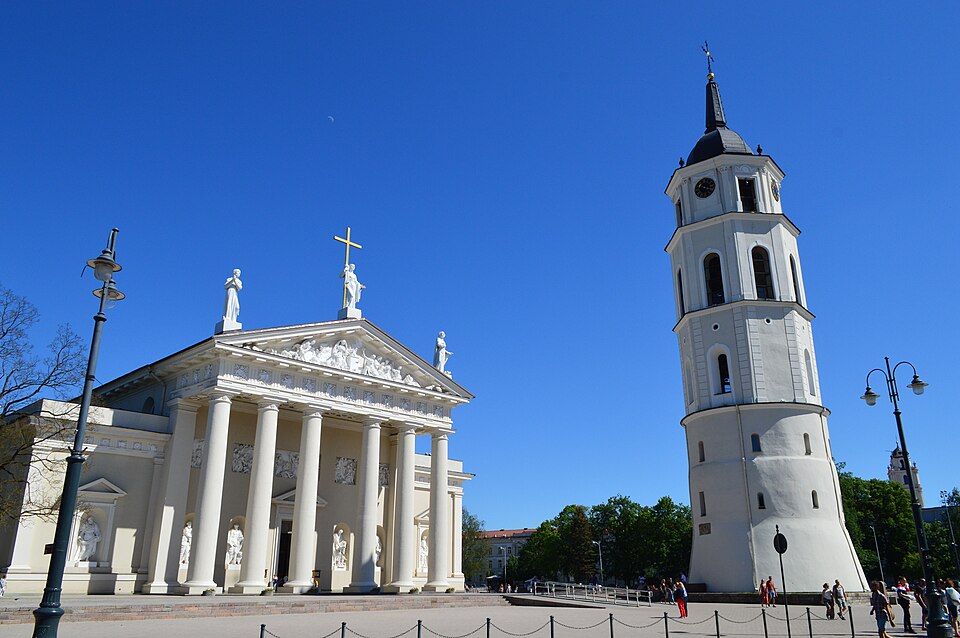
A neoclassical cathedral with a white colonnaded façade on Cathedral Square, built on the site of a pagan temple to the god Perkūnas. Inside is the Baroque Chapel of St. Casimir, patron saint of Lithuania, decorated with marble and stucco. A freestanding bell tower next to it can be climbed.

Tip: On the square by the bell tower, look for the tile marked 'Stebuklas' — meaning 'miracle' — which marks the end point of the human chain that stretched from Vilnius to Tallinn in 1989. Locals say a wish comes true if you turn on it three times clockwise. The bell tower can be climbed for a small fee. The Chapel of St. Casimir is the cathedral's most beautiful part.

Admission:
free, bell tower around €6
Time needed:
45 min
Gediminas' Tower

Gediminas' Tower

Gedimino pilis

Old Town

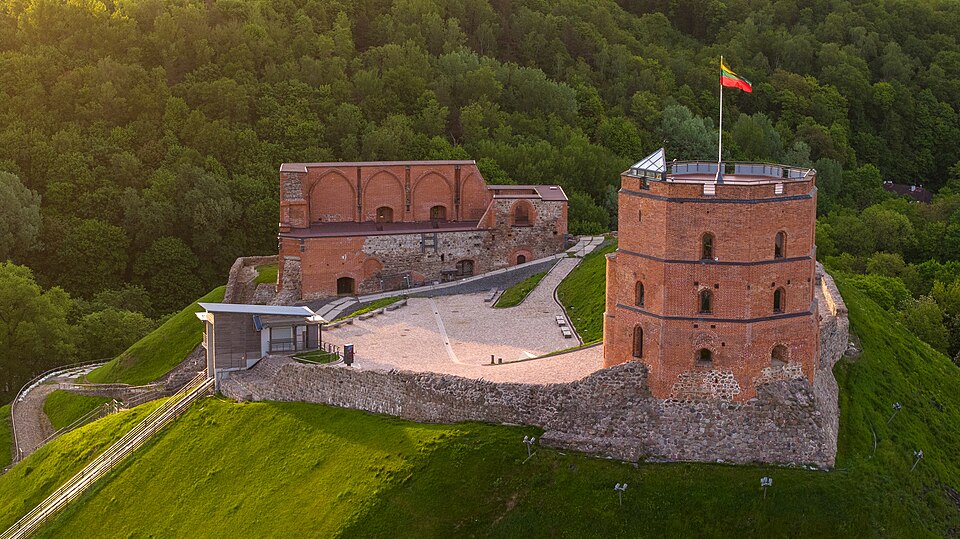
A brick tower of the upper castle on a hill above the confluence of the Neris and Vilnia rivers, a symbol of both Vilnius and Lithuania. The castle was founded by Grand Duke Gediminas in the fourteenth century. The tower holds a small museum, and the viewing platform overlooks the whole Old Town.

Tip: A funicular runs up from the courtyard of the National Museum when operating, or take the ten-minute footpath; the hill's slopes have suffered landslides in past years and parts of the paths are sometimes closed. It's best at sunset, when the church towers light up. In 1988, the Lithuanian flag was raised here for the first time in decades. At the foot of the hill stands the Palace of the Grand Dukes, restored as a museum.

Admission:
around €8
Time needed:
45 min
Gate of Dawn

Gate of Dawn

Aušros vartai

Old Town

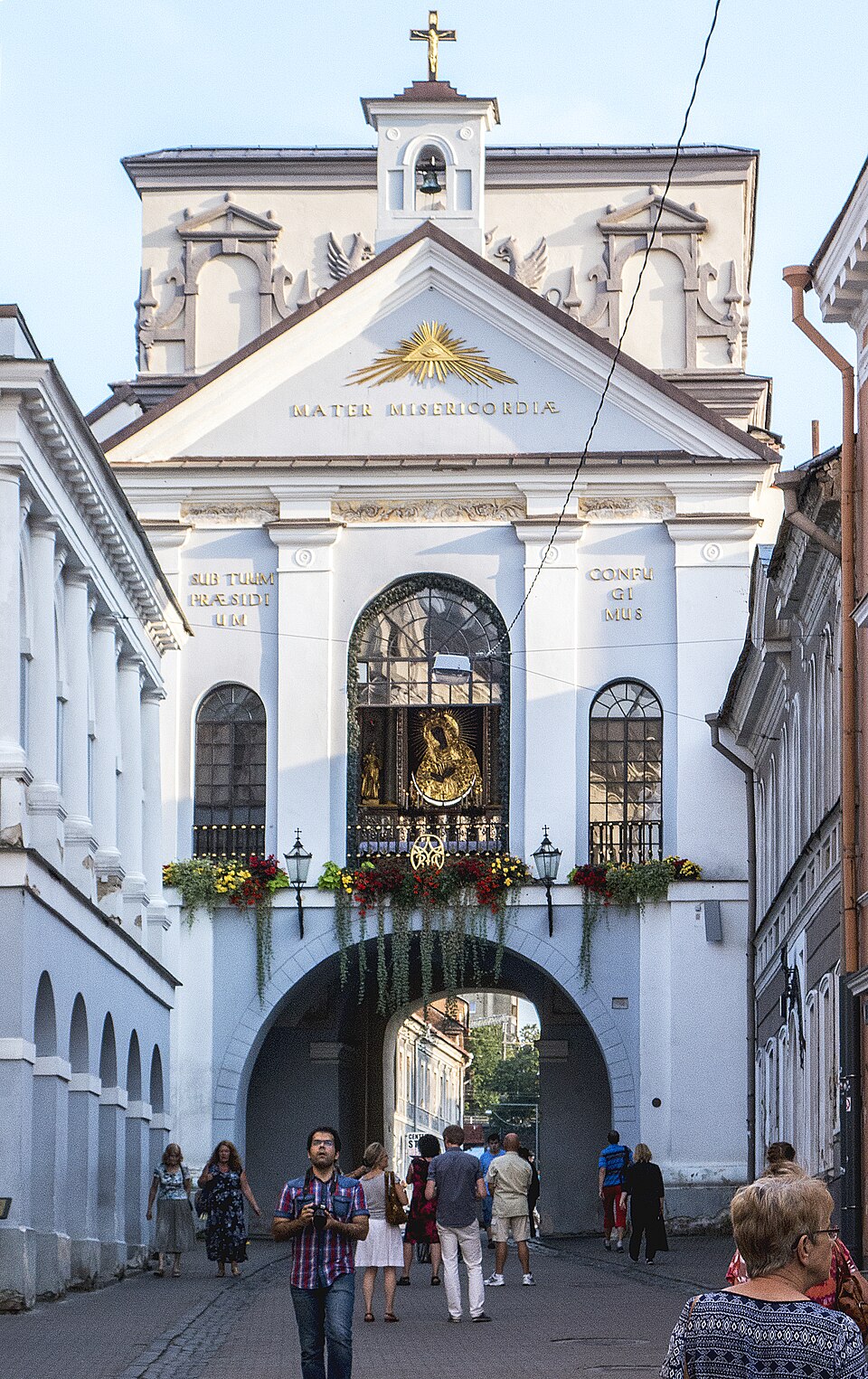
The only surviving gate of the sixteenth-century city walls, containing a chapel with a miraculous image of the Virgin Mary of Mercy, venerated by both Catholics and Orthodox Christians. The image can be seen from the street through a window above the gate.

Tip: The chapel is reached via stairs from the side of St. Teresa's Church. Inside is a wall of ex-votos — silver hearts and plaques left by the faithful. Pilgrims pray in the street below the window. Aušros Vartų street, leading down from the gate, is the most beautiful entrance into the Old Town, passing the Orthodox Church of the Holy Trinity and Baroque façades.

Admission:
free
Time needed:
20 min
Užupis

Užupis

Užupis

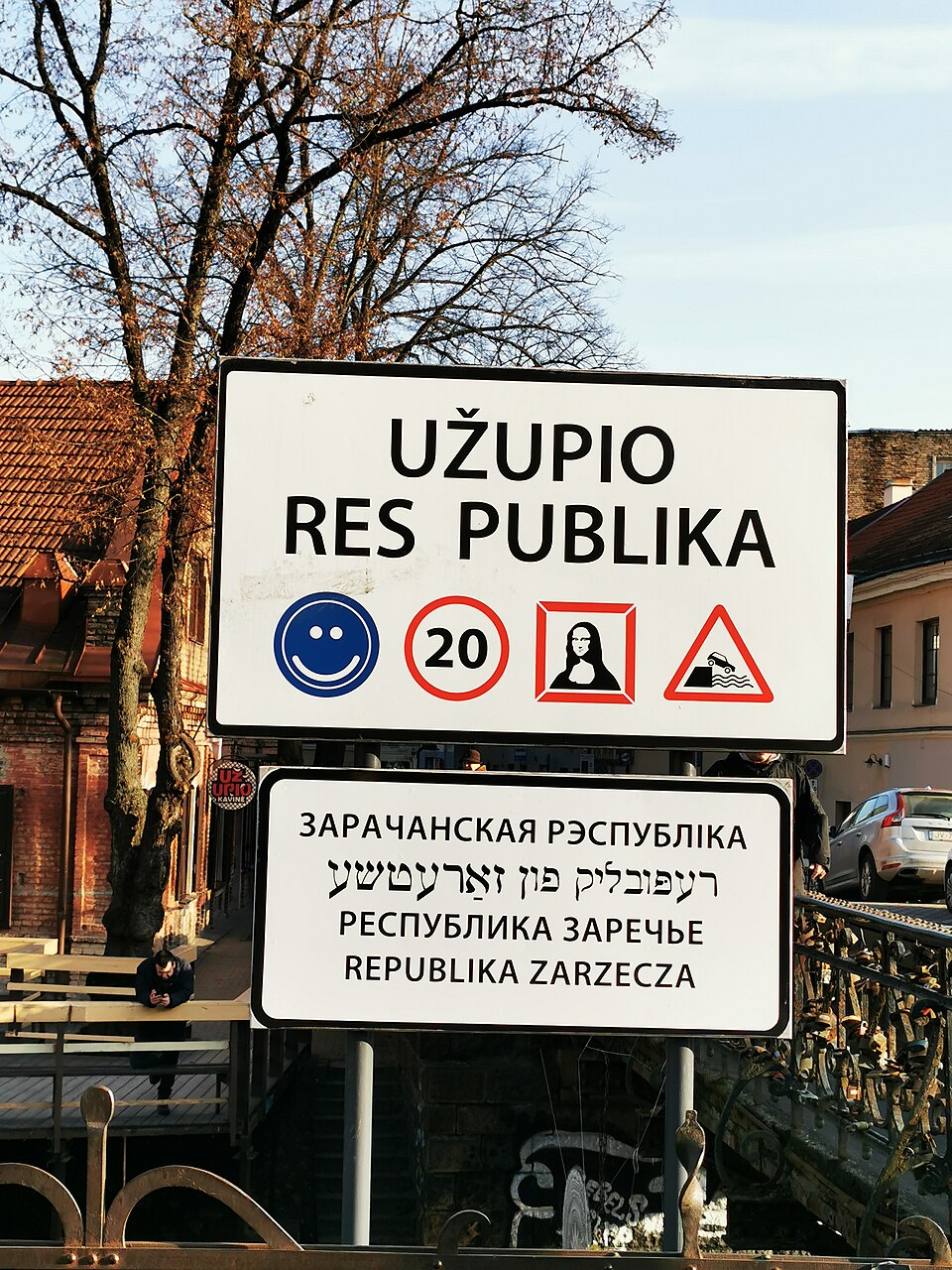
A district across the Vilnia river that declared its own Republic of Artists in 1997, complete with a president, flag, a twelve-man army, and a constitution posted on a wall in dozens of languages. Once run-down, the district is now full of galleries, studios and cafés.

Tip: The constitution hangs on Paupio street on mirrored panels in dozens of languages — look for the lines that everyone has the right to be unhappy, and that a cat does not have to love its owner. The main square holds a statue of the Angel of Užupis. Independence Day is celebrated on 1 April, with passports stamped on the bridge. The best cafés are along the river.

Admission:
free
Time needed:
1–1.5 h
Church of St. Anne

Church of St. Anne

Šv. Onos bažnyčia

Old Town

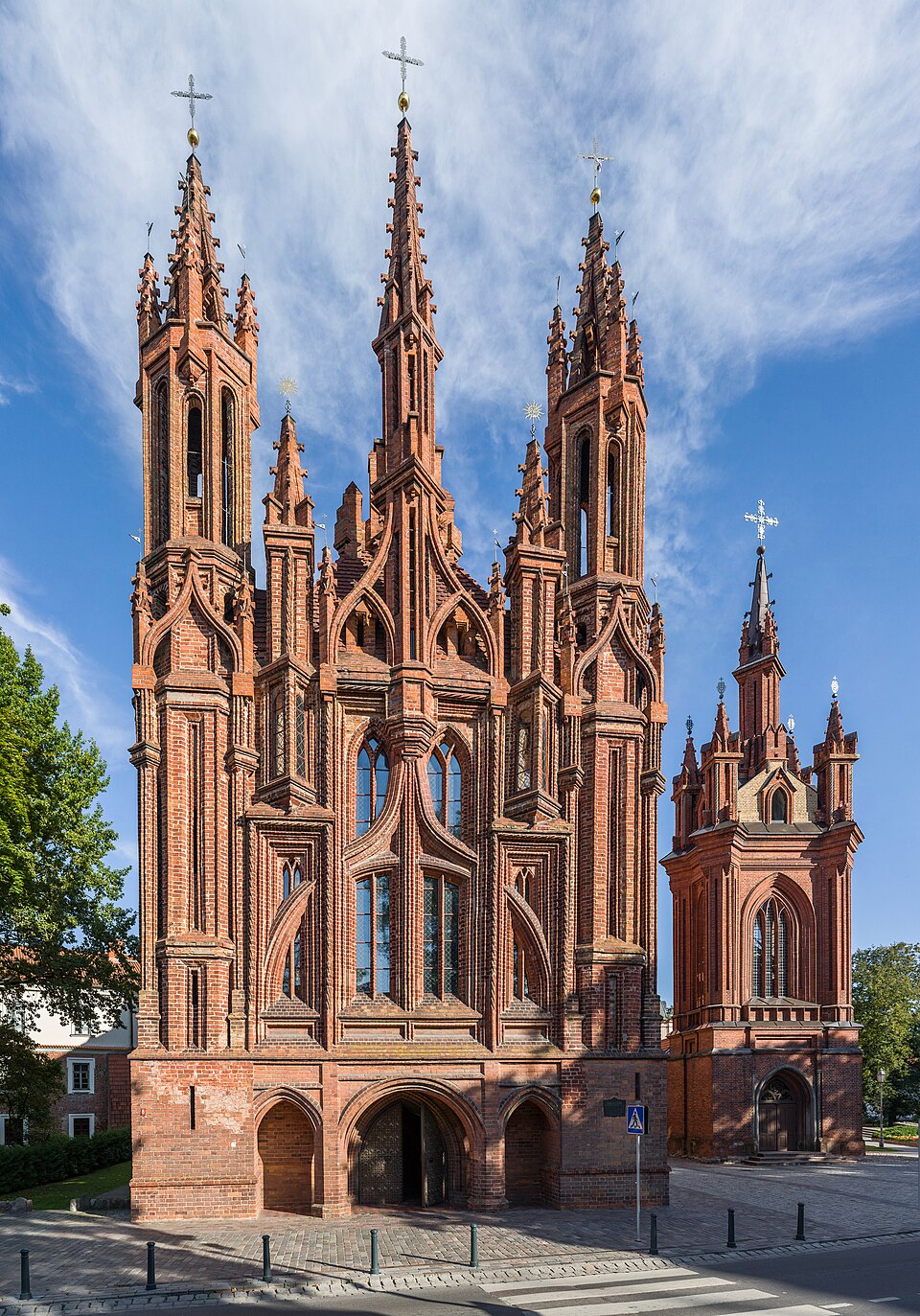
A late-fifteenth-century Gothic church built from thirty-three types of fired brick, with slender turrets and delicate arches. Legend has it that Napoleon admired it so much he wished he could carry it to Paris in the palm of his hand.

Tip: The façade is most beautiful at dusk, when the brick glows red. Behind it stands the larger Bernardine church, which forms a single ensemble with it. In the courtyard behind the churches is Bernardinų Park, with a view over the river and Užupis. The interior isn't as striking as the exterior.

Admission:
free
Time needed:
15 min
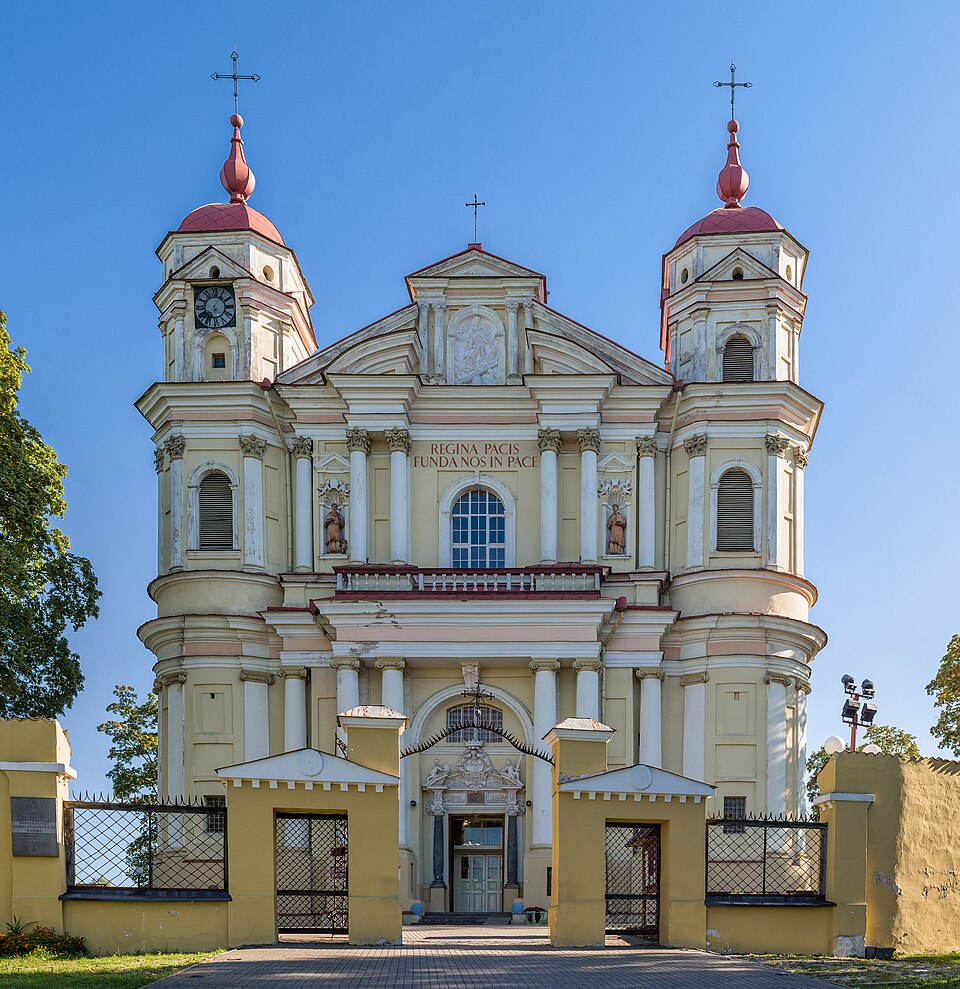
Church of St. Peter and St. Paul

Church of St. Peter and St. Paul

Šv. apaštalų Petro ir Povilo bažnyčia

Antakalnis

A late-seventeenth-century Baroque church on the edge of the centre, modest outside but adorned inside with more than two thousand stucco figures of angels, saints, plants and scenes, all in white. It ranks among the finest examples of European Baroque.

Tip: The church is two kilometres from the Old Town, but worth the trip — take a bus or walk along the Neris river. Inside hangs a ship-shaped chandelier. Enter quietly, as the church is active. The light is best in the morning.

Admission:
free
Time needed:
30 min
Vilnius University

Vilnius University

Vilniaus universitetas

Old Town

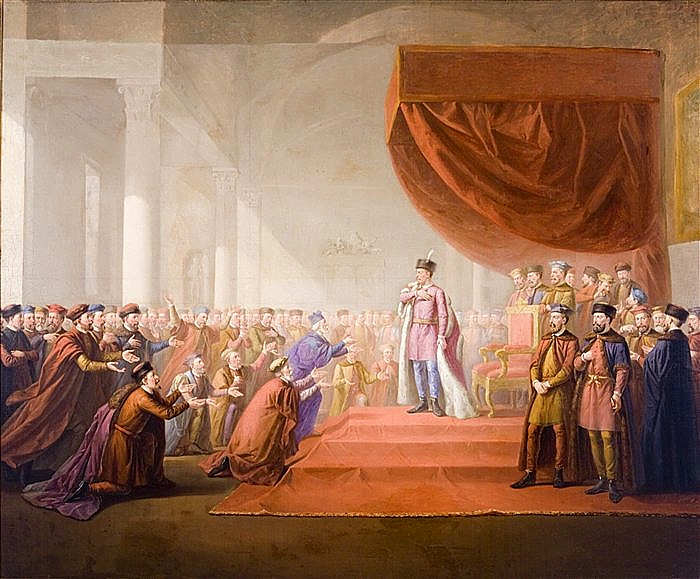
One of the oldest universities in central and eastern Europe, founded by Jesuits in 1579, with thirteen courtyards, arcades, St. John's Church, and a library. The rooms are decorated with frescoes, the most beautiful being the Littera hall, painted with Lithuanian motifs.

Tip: Access to the courtyard and St. John's Church requires a ticket; the library hall and Littera room are visited with a guide. St. John's bell tower is the tallest structure in the Old Town and has a viewing platform. Inside the Littera bookshop is the finest ceiling in the city.

Admission:
around €5
Time needed:
1 h
Museum of Occupations and Freedom Fights

Museum of Occupations and Freedom Fights

Okupacijų ir laisvės kovų muziejus

Centre

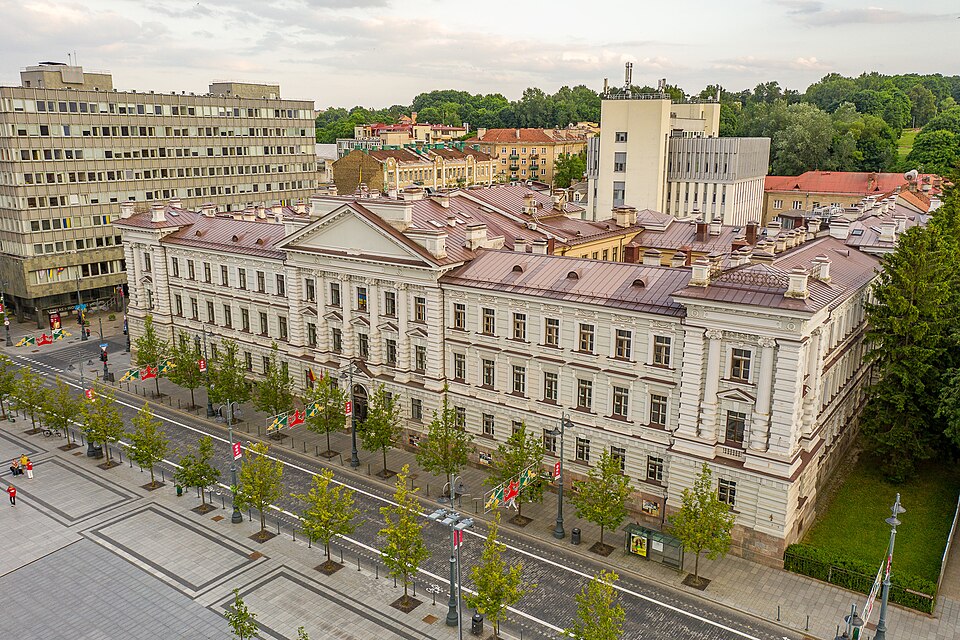
A museum in the former KGB headquarters, where the Soviet secret police interrogated and executed opponents of the regime. The basement preserves cells, isolation rooms and an execution chamber; the upper floors display exhibits on deportations and the partisan resistance.

Tip: Locals call it the KGB museum. The basement with the cells is the most powerful part, and the room where victims' remains were found is equally striking. The names of victims are carved into the outer wall. Allow an hour and a half. Closed on Mondays. Not suitable for young children.

Admission:
around €8
Time needed:
1.5 h
Old Vilnius — lanes and courtyards

Old Vilnius — lanes and courtyards

Senamiestis

Old Town

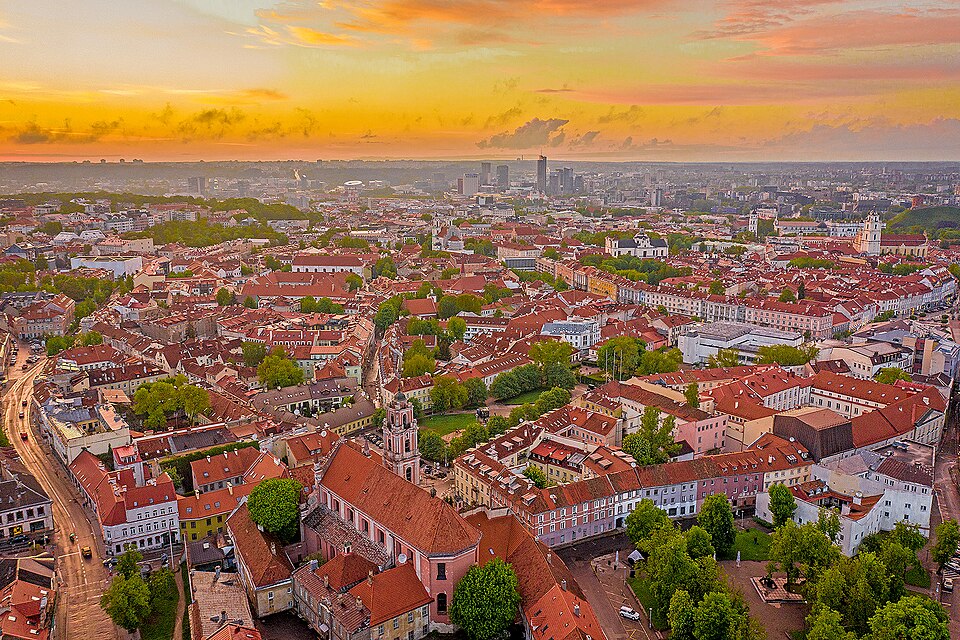
The Old Town is one of the largest in Europe and is best explored on foot along Pilies and Didžioji streets, which run from the cathedral to the Gate of Dawn, with side lanes leading to courtyards, café patios and the former Jewish quarter.

Tip: Pilies street is the busiest and priciest; the lanes of Stiklių and Žydų in the former Jewish ghetto are quieter. Look for courtyards you can wander into — they often hide galleries and cafés. The Jewish quarter is a reminder that pre-war Vilnius was the 'Jerusalem of the North'. Town Hall Square hosts markets and events.

Admission:
free
Time needed:
2 h

Photos: Cathedral and Bell Tower — Scotch Mist (CC BY-SA 4.0) · Gediminas' Tower — Gytis Grižas https://www.wikidata.org/wiki/Q16452479 (CC BY-SA 4.0) · Gate of Dawn — Jerzy Strzelecki (CC BY-SA 3.0) · Užupis — Jodkovska (CC BY-SA 4.0) · Church of St. Anne — Diliff (CC BY-SA 3.0) · Church of St. Peter and St. Paul — Diliff (CC BY-SA 3.0) · Vilnius University — Wincenty Smokowski (Public domain) · Museum of Occupations and Freedom Fights — Augustas Didžgalvis (CC BY-SA 4.0) · Old Vilnius — lanes and courtyards — BigHead (CC BY-SA 4.0)

Where to stay

Areas and districts, matched to the kind of trip you are taking

Old Town

Best for: atmosphere, first-time visitors

Hotels in Baroque buildings and courtyards, walking distance to every sight. Quieter in the evening than Riga, with cafés and restaurants. The best base for a short stay.

Užupis

Best for: artistic atmosphere, quiet stays

Small hotels and apartments in the artists' quarter, quiet and green, a five-minute walk from the Old Town. Riverside cafés and galleries. Ideal for couples.

Naujamiestis and the station area

Best for: transport links, budget

Hotels near the train and bus stations, convenient for the airport train, Trakai, and buses to Riga. Cheaper, a fifteen-minute walk to the Old Town.

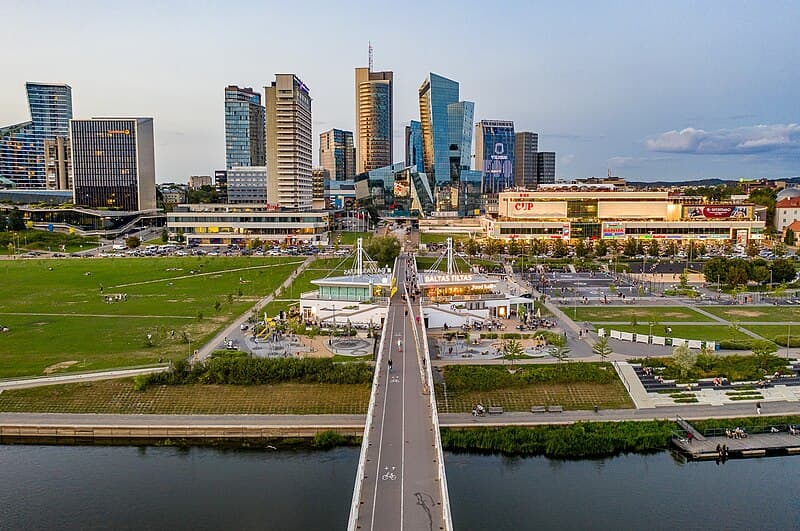
Šnipiškės

Best for: modern amenities, business travel

A modern district of high-rises across the Neris river, with international hotels and shopping centres. A ten-minute walk across the bridge to the Old Town. Well suited for business trips.

Getting around

From the airport

From Prague, Vilnius is reached by flights with a transfer in Riga or Warsaw, and depending on the season sometimes direct, with journeys starting at under two hours. Lithuania is in the Schengen area, so Czechs travel with just an ID card. The airport is only six kilometres from the centre. From Vilnius, trains run to Kaunas and Trakai, Lux Express buses to Riga in four hours, and trains to Warsaw with a transfer.

Vilnius International (VNO) · 6 km

  • Train to the main station· 8 min· from €0.80
  • Bus 1 or 2 to the centre· 20 min· €1
  • Bolt· 15 min· €8

Around town

The Old Town is compact and walkable, with all the main sights within twenty minutes on foot. Buses and trolleybuses cover the whole city, with tickets bought through the Trafi or m.Ticket app and valid for a set time. Bolt is cheap and fast. Vilnius is flat only near the river — the Old Town is hilly and cobbled. Trains and buses to Trakai leave from the main station.

Bus and trolleybusTickets bought in-app, valid for 30 or 60 minutes. · €1
BoltCheap taxi service. · €3
Train to TrakaiFrom the main railway station. · €2
Shared bikes and scootersAvailable throughout the centre. · €1

Useful apps: Bolt, Trafi, Vilnius Transport (m.Ticket), Google Maps, Wolt

When to go

The best time is from May to September, when temperatures hover around twenty degrees, days are long, and cafés set up their terraces. Summer is warm but not hot. In autumn, the parks turn colourful. Winter is cold and snowy with frosts below minus ten degrees, but the Christmas atmosphere on Cathedral Square, with its giant tree, is beautiful. Kaziukas, a large crafts fair, takes place in early March and is the city's oldest annual event.

Best time

May–September

What to avoid

January–February, because of the frost

MonthJanFebMarAprMayJunJulAugSepOctNovDec
Day-2°0°5°13°19°22°24°23°17°10°4°-1°
Night-8°-7°-3°2°7°11°13°12°8°3°-1°-5°
Rainy days109878999891011

Food & drink

Lithuanian cuisine is built on potatoes, pork, cream, dill and dark bread — hearty, rustic, and satisfying in winter. Cepelinai and šaltibarščiai are essential tastings, best had at traditional restaurants in the Old Town. But Vilnius also has a lively scene of modern bistros and cafés, with the best value for money in the Baltics. In beer halls, locals drink Lithuanian beer from small breweries alongside fried bread sticks as a snack. Karaite kibinai from Trakai are a popular quick bite. Prices are lower than in Prague.

What to try

Cepelinai

Large zeppelin-shaped potato dumplings filled with minced meat, topped with cream and bacon. The national dish — one portion is two dumplings, and they're enormous.

Šaltibarščiai

A cold pink soup made from beetroot, kefir, cucumber and dill, served with warm potatoes on the side. A summer dish often photographed for its colour.

Kibinai

Puff-pastry pockets filled with mutton or chicken, a dish of the Karaite minority from Trakai. Best eaten there, but also sold in Vilnius.

Kepta duona

Sticks of dark bread fried with garlic, served with a cheese dip. A classic snack to go with beer.

Šakotis

A 'tree cake' baked on a rotating spit, with batter poured on gradually to form branch-like ridges. A wedding and festive cake, also sold as a souvenir.

Lithuanian beer and gira

Lithuania has a strong beer tradition with top-fermented ales from small rural breweries. Gira is a non-alcoholic fermented bread drink.

Skilandis

Smoked pork cured inside a pig's stomach casing, sliced thin and eaten with dark bread. A traditional Lithuanian cured meat found at the Halės market.

What it costs

Coffee

€2.50–3.50

Kibinai

€2–3

Lunch at a bistro

€8–12

Dinner at a restaurant

€20–35

Beer at a pub

€3.50–5

Public transport ticket

€1

Museum of Occupations

around €8

Night in a 3-star hotel for two

€60–100

Indicative prices that change over time — treat them as a guide, not a price list.

Practical information

SocketsCEuroplug, two round pinsFSchuko
Voltage230V / 50Hz
Tap waterTap water is drinkable — Tap water in Lithuania is drinkable and comes from underground sources, so it's clean and unchlorinated — Lithuanians are proud of it. There's no need to buy bottled water. In a restaurant you can ask for tap water, but it isn't brought free everywhere.
TippingTipping isn't mandatory; five to ten percent is left at restaurants when the service was good. In cafés, the bill is rounded up. Cards and euros are accepted everywhere, even at market stalls.
Driving on theright
SafetyLithuania is safe, and Vilnius is one of the calmest capitals in Europe. Watch only for pickpockets in the Old Town in summer, and avoid hailing taxis on the street — use Bolt instead. In winter, watch for ice on the pavement and icicles falling from roofs. The emergency number is 112.
Opening hoursShops are open from ten to seven, supermarkets from eight to ten in the evening, including Sundays. Museums close on Mondays, and some also close Sunday afternoons. Alcohol is sold in shops from ten to eight in the evening on weekdays, and only until three in the afternoon on Sundays, to customers over twenty.
Customs & etiquetteLithuanians are reserved at first but warm once you get to know them. The Catholic faith matters, and modest dress is expected in churches. An odd number of flowers is given for celebrations, an even number for graves. Shoes are removed when visiting someone's home. Don't confuse Lithuania with the other Baltic states — the language and history differ, and Lithuanians take pride in the Grand Duchy of Lithuania, which once stretched to the Black Sea.
A few local wordsHello — Laba dienaThank you — AčiūPlease — PrašauHow much does it cost? — Kiek kainuoja?Cheers — Į sveikatąGoodbye — Viso gero

How to plan your days

1 day

One day in Vilnius

  1. 1Morning at the cathedral and Gediminas' Tower.
  2. 2The university and Pilies street.
  3. 3Lunch in the Old Town.
  4. 4Afternoon at the Gate of Dawn, Church of St. Anne, and Užupis.
  5. 5Evening at a beer hall or riverside café.

2 days

Two days in Vilnius

  1. 1Day 1: cathedral, Gediminas' Tower, university, Gate of Dawn.
  2. 2Day 1 afternoon: Užupis and the Church of St. Anne.
  3. 3Day 2: Museum of Occupations.
  4. 4Day 2 afternoon: Church of St. Peter and St. Paul.
  5. 5Day 2 evening: the former Jewish quarter and dinner.

3 days

Three days including Trakai

  1. 1Day 1: Old Town and Gediminas' Tower.
  2. 2Day 2: Trakai Castle and kibinai by the lake.
  3. 3Day 3: Užupis and the Museum of Occupations.
  4. 4Day 3 afternoon: Church of St. Peter and St. Paul.

Day trips

Trakai

28 km · 40 min by train

A red-brick Gothic castle on an island in Lake Galvė, once the seat of the Grand Dukes of Lithuania. The castle has been restored, houses a museum, and is reached via a wooden bridge. The town is home to the Karaite minority, descendants of Crimean Turks, whose wooden houses sell kibinai. In summer, rowboats and sailboats can be rented on the lake.

Kaunas

100 km · 1 h 15 min by train

Lithuania's second-largest city and interwar capital, with modernist architecture on the UNESCO list, an Old Town with a castle and churches, and the Museum of Devils, home to thousands of devil figurines. The Ninth Fort on the outskirts is a memorial to Holocaust victims. The train from Vilnius takes an hour and a quarter.

Kernavė

35 km · 45 min by car

A UNESCO-listed archaeological site with five hillforts above the Neris river, where a medieval town stood before Vilnius was founded. The hills can be climbed, and the view over the valley is beautiful. In early July, a festival of living archaeology with craftspeople is held here.

Frequently asked questions

How many days are enough for Vilnius?+

Two days for the Old Town, Užupis and the Museum of Occupations. A third day for Trakai. Add Kaunas and it's four days. Vilnius pairs well with Riga and Tallinn for a week-long Baltic trip.

Is Vilnius cheap?+

Yes, the cheapest of the three Baltic capitals. Dinner costs twenty to thirty-five euros, a beer four euros, and hotels are affordable. The best value is at traditional restaurants and the Halės market.

How do you get to Trakai?+

By train from the main station in forty minutes, or by bus in half an hour — both run every hour. From Trakai station it's a twenty-minute walk to the castle. By car it takes half an hour.

Is Vilnius safe?+

Yes, very safe, one of the calmest capitals in Europe. Watch for pickpockets in the centre in summer, and avoid hailing taxis on the street — use Bolt instead. In winter, watch for ice on the pavement.

What is the Republic of Užupis?+

A tongue-in-cheek artists' republic in the district across the Vilnia river, declared on 1 April 1997. It has its own constitution, president and flag. The constitution is displayed on a wall in dozens of languages, and its articles are both funny and sincere. Independence Day is celebrated on 1 April.

When is the weather best in Vilnius?+

From May to September, around twenty degrees and dry. Summer brings long days and café terraces. Winter is cold and snowy, but the Christmas atmosphere on Cathedral Square is worth experiencing.

How do you get from the airport to the centre?+

By train to the main station in eight minutes, by bus 1 or 2 in twenty minutes, or by Bolt for eight euros. The airport is only six kilometres from the centre.

How do you get from Vilnius to Riga?+

By Lux Express or Ecolines bus in four hours, tickets from fifteen euros. The train involves a transfer and is slower. By car it's three and a half hours on the motorway via Panevėžys.

Visa Requirements

Check the latest visa requirements for entering this country. Some nationalities may need to apply for a visa or e-visa before travel.

Check visa requirements

Language

Lithuanian

Currency

EUR

Timezone

GMT+2

Dial Code

+370

Population

2.8M

Area

65,300 km²

Voltage

230V / 50Hz

Driving Side

Right

Top Hotels in Vilnius

Live prices from 500+ properties

Loading hotels...

Planning a trip to Vilnius?

Compare hundreds of hotels, find the best price, and book with free cancellation on TravelManiac.