Hotels in Antalya

An ancient city between the mountains and the Mediterranean

Antalya

LanguageTurkish
CurrencyTRY
TimezoneEurope/Istanbul
Temperature8-32 °C
Dial Code+90
Population85.3M
Area783,562 km²
SocketsType C / Type F
Tap waterNot drinkable

Discover Antalya

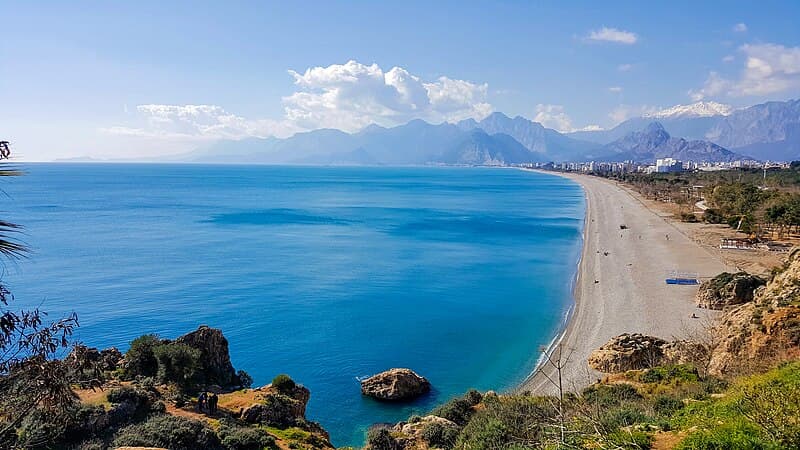
Antalya is the main gateway to the Turkish Riviera and the one resort area in the region that's a genuine city with its own life, not just a strip of hotels. The historic core of Kaleiçi hides behind walls right above the old harbour, while the modern city stretches 20 km along the coast to the beaches of Lara and Konyaaltı. The Taurus Mountains rise above the city to 2,000 m, so in May you can still see snow-capped peaks from the beach. Antalya's strength is the combination: an ancient theatre at Aspendos in the morning, the sea in the afternoon, dinner in the old town's lanes in the evening. The season runs from May to October, and in July and August temperatures routinely sit above 34°C, too hot for sightseeing.

What to see

The places worth your time in Antalya, and what to expect at each

Kaleiçi Old Town

Kaleiçi Old Town

Kaleiçi

Kaleiçi

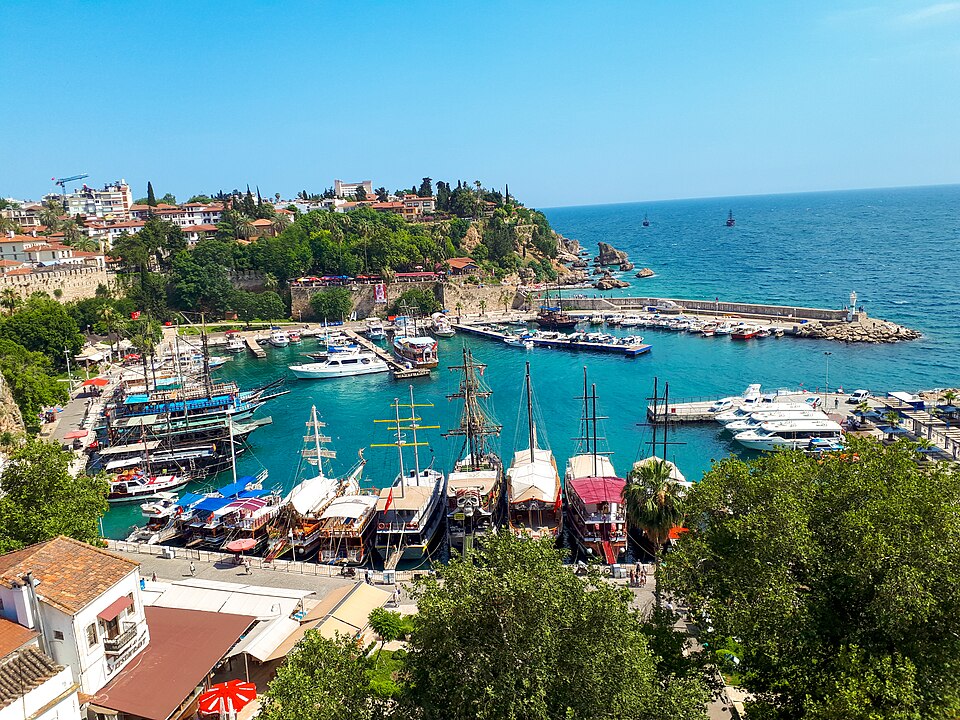
The historic core, ringed by Roman walls, slopes down to the marina and is made up of narrow lanes with Ottoman wooden houses, many now boutique hotels. Look out for Hıdırlık Tower, the Yivli Minaret and plenty of cafés in shaded courtyards.

Tip: Enter through Hadrian's Gate and walk down to the harbour — the climb back up is noticeably tougher in the afternoon heat.

Admission:
free
Time needed:
2–3 h
Hadrian's Gate

Hadrian's Gate

Hadrian Kapısı

Kaleiçi

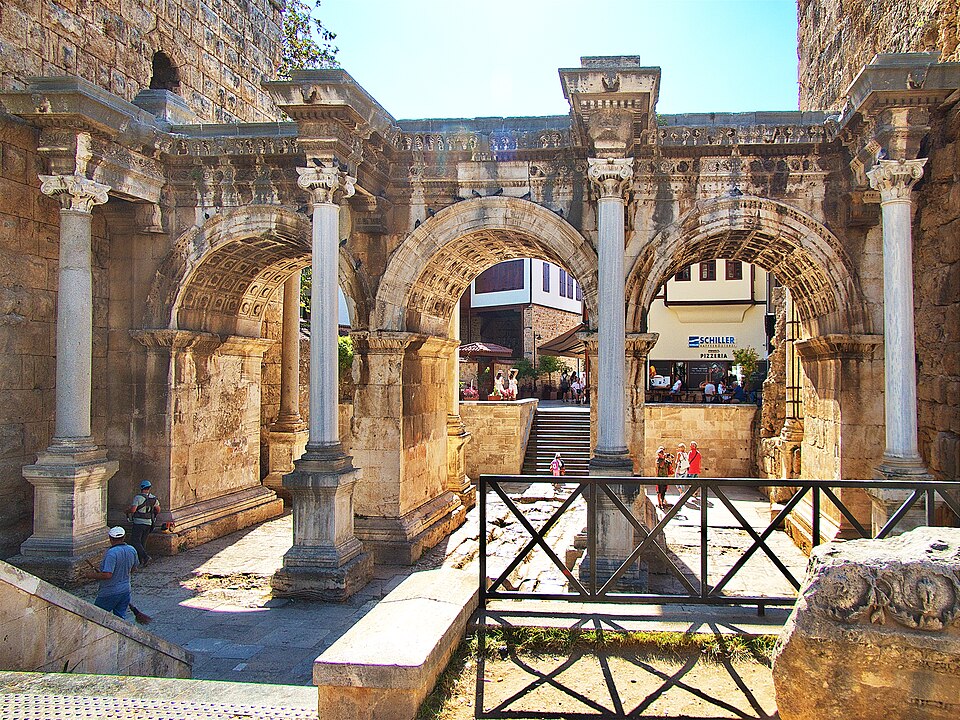
A triple marble arch built in AD 130 in honour of Emperor Hadrian, forming the main entrance to the old town. The original Roman paving beneath the arch remains in place, with cart-wheel ruts still visible.

Tip: The best light for photos is late afternoon, when the sun shines through the arch from the sea side.

Admission:
free
Time needed:
20 min
Düden Waterfalls

Düden Waterfalls

Düden Şelalesi

Lara

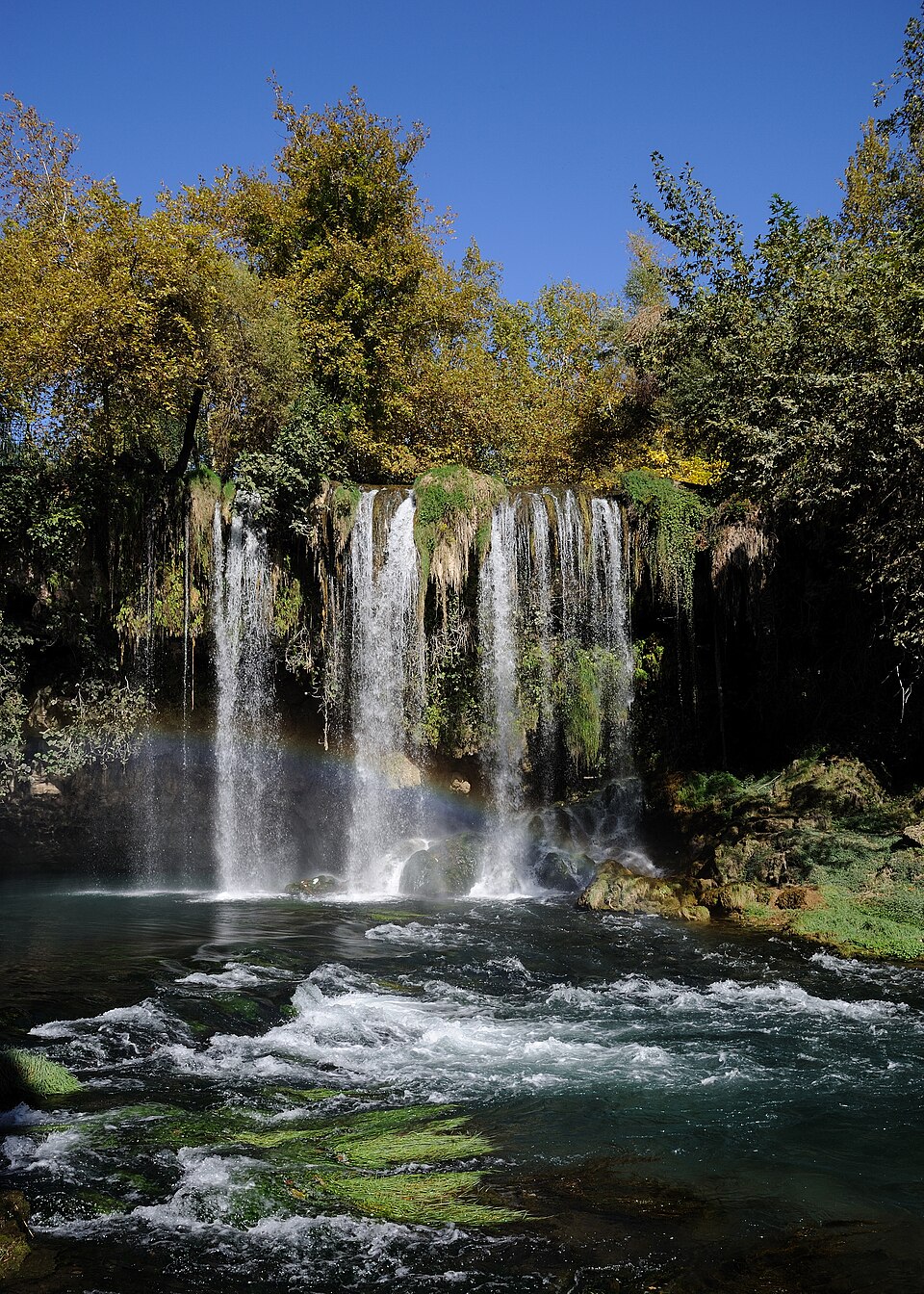
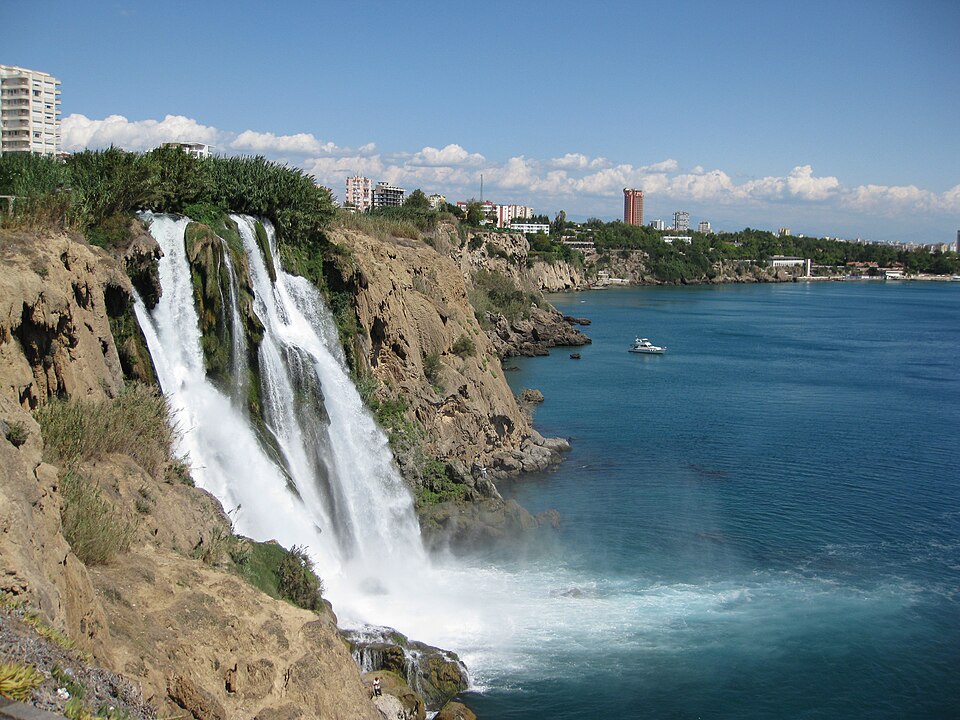
The Düden River falls in 2 stages: the upper falls form a cave you can walk through behind the water curtain, while the lower falls plunge 40 metres straight from a cliff into the sea. The lower falls are best viewed from a boat or the viewpoint in Lara Park.

Tip: The upper and lower falls sit 10 km apart and shouldn't be confused — if you want the one plunging into the sea, head to the lower falls.

Admission:
from TRY 100
Time needed:
1.5 h
Antalya Museum

Antalya Museum

Antalya Müzesi

Konyaaltı

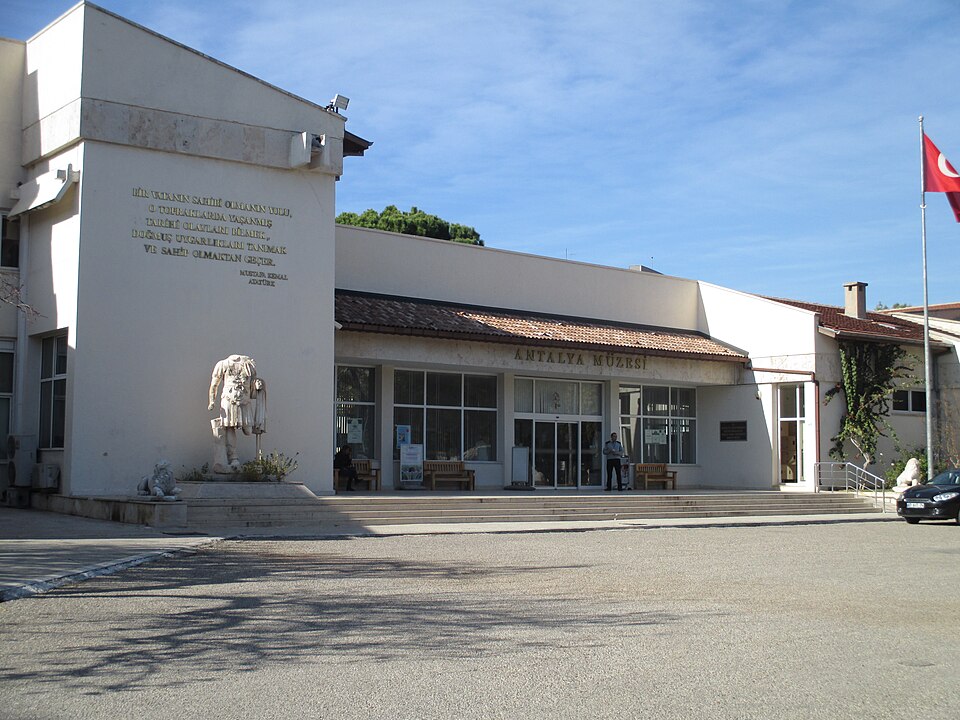
One of Turkey's best archaeological museums, gathering finds from across Pamphylia. Its star exhibit is the Hall of the Gods, with statues from Perge, 2nd-century sarcophagi, and a Hercules whose upper half wasn't returned to Turkey from an American museum until 2011.

Tip: The museum is air-conditioned — an ideal plan for the hottest part of the day, between 1pm and 4pm.

Admission:
from TRY 400
Time needed:
2 h
Aspendos

Aspendos

45 km east

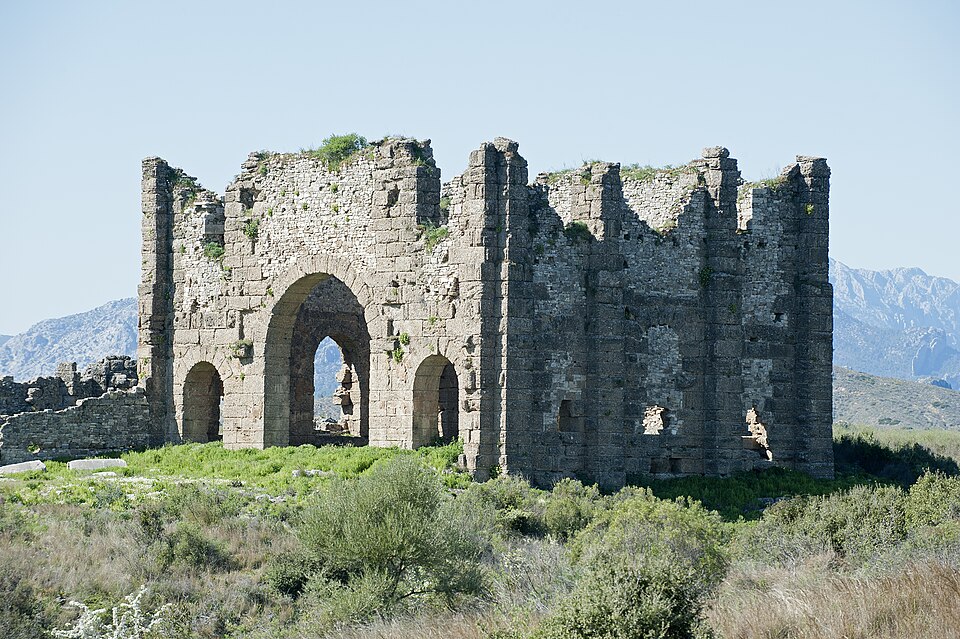
The best-preserved Roman theatre in the Mediterranean, dating from the 2nd century, seats 15,000 and still has an intact stage wall and acoustics. A coin dropped on the stage can be heard in the back row. The site also holds the remains of an aqueduct and agora.

Tip: Climb right to the top row and have someone speak from the stage below — the acoustics are the most striking thing you'll take away from Aspendos.

Admission:
from TRY 400
Time needed:
2 h
Perge

Perge

18 km east

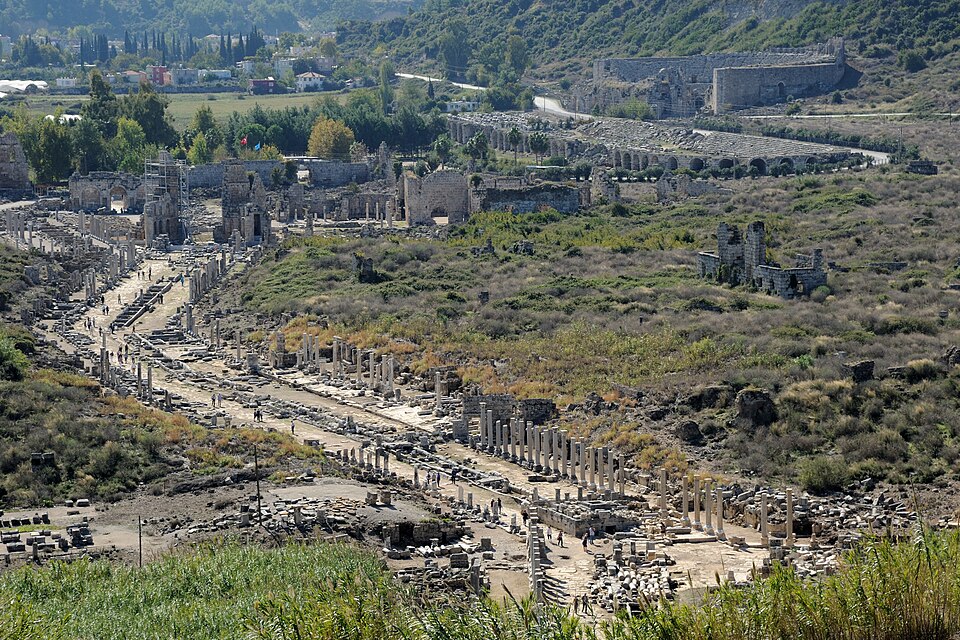
An extensive ancient city 18 km from Antalya, with a colonnaded main street, baths, a stadium for 12,000 spectators and a Hellenistic gate flanked by 2 towers. Statues found here are now in the Antalya Museum.

Tip: There's practically no shade, so go right after opening or after 4pm, and bring water.

Admission:
from TRY 400
Time needed:
1.5–2 h
Termessos

Termessos

35 km northwest

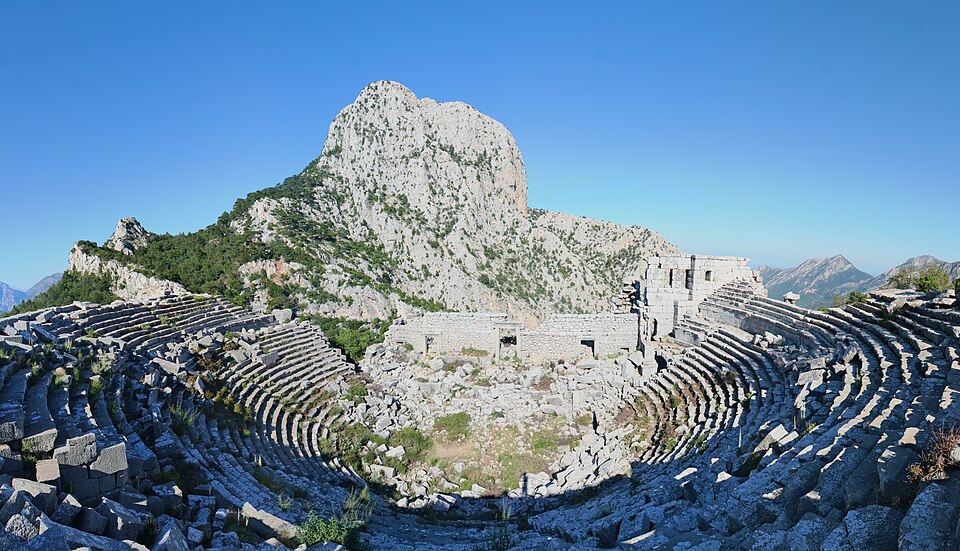
A mountain city in a national park at 1,000 m altitude, never conquered even by Alexander the Great. The ruined theatre perched on the edge of a drop, overlooking the canyon, ranks among Turkey's most dramatic ancient sites, and visitor numbers are a fraction of Aspendos's.

Tip: It's an hour of steep climbing up a rocky path from the car park — this isn't a stroll, and sandals won't cut it.

Admission:
from TRY 150
Time needed:
3–4 h including the climb
Konyaaltı Beach

Konyaaltı Beach

Konyaaltı Plajı

Konyaaltı

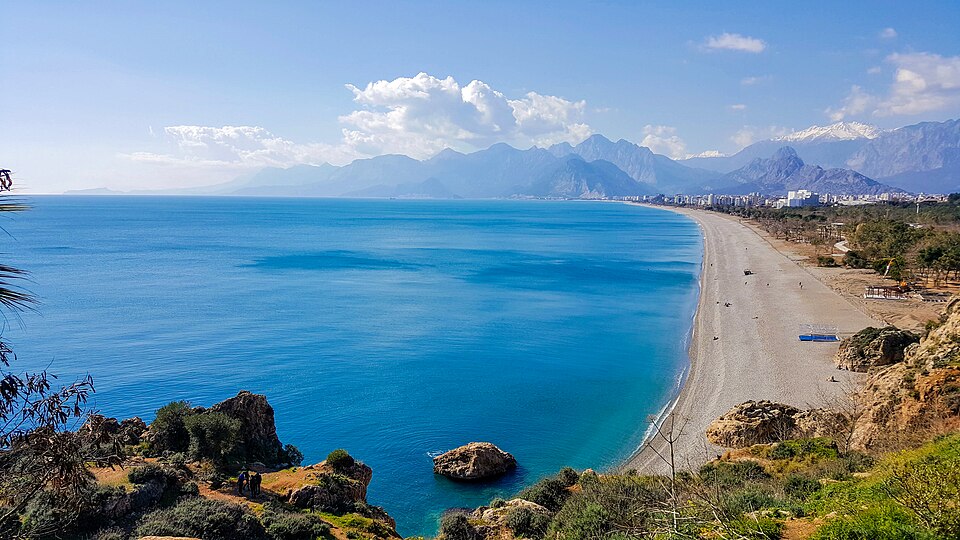
A 7-km pebble beach west of the centre, with views of the Taurus Mountains right from the water. The pebbles keep the water clear, but entry is steeper and stony, so water shoes help. A promenade with bars runs alongside the beach.

Tip: The pebbles heat up fast in the midday sun — without flip-flops or water shoes, getting from your sunbed to the sea is rough going.

Admission:
free, sunbeds from TRY 150
Time needed:
half a day
Lara Beach

Lara Beach

Lara Plajı

Lara

A long sandy beach east of the city, lined with most of the big all-inclusive resorts. Unlike Konyaaltı, it has fine sand and a gentle slope into the water, making it a better choice for families with small children.

Tip: The public stretch of beach is at its western end, by Lara Park; the rest is taken up by hotel sections.

Admission:
public section free
Time needed:
half a day

Photos: Kaleiçi Old Town — REHBER0770 (CC BY-SA 4.0) · Hadrian's Gate — Joe Wallace (CC BY-SA 2.0) · Düden Waterfalls — Saffron Blaze (CC BY-SA 3.0) · Antalya Museum — Dat doris (CC BY-SA 4.0) · Aspendos — Dosseman (CC BY-SA 4.0) · Perge — Saffron Blaze (CC BY-SA 3.0) · Termessos — Ingo Mehling (CC BY-SA 3.0) · Konyaaltı Beach — Esginmurat (CC BY-SA 4.0) · Lara Beach — bynyalcin (CC BY 3.0)

Where to stay

Areas and districts, matched to the kind of trip you are taking

Kaleiçi

Best for: sightseeing and atmosphere, not swimming

The historic core, with boutique hotels in Ottoman houses, is the best choice if the city interests you more than the beach. Restaurants, bars and the marina are all on foot. But it's far from the sandy beaches, and hotels here have only small pools.

Lara

Best for: families and all-inclusive

A strip of large resorts along the sandy beach east of the city. Most charter-flight tourists head here. Gentle entry into the water, kids' pools and entertainment, but getting into the city itself means a taxi or bus.

Konyaaltı

Best for: combining city and sea

The modern district in the west, with a pebble beach, a promenade, an aquarium and a museum all within walking distance. It's a 15-minute tram ride to the old town. A good compromise if you don't want to be confined to a resort.

Belek and Side

Best for: golf and a quieter resort holiday

30–60 km east of Antalya lies a belt of 5-star resorts, golf courses and pine forests. Quieter and more manicured than Lara, but without city life — expect to rely on the hotel for everything.

Getting around

From the airport

Antalya has its own international airport about 13 km east of the centre, one of the busiest in Europe during the season. Many visitors arrive on charter flights with a hotel transfer included as part of a package. If travelling independently, both a tram and an airport bus run to the centre; a taxi from the airport is fairly pricey, so a ride-hailing app is a better option.

Antalya Airport (AYT) · 13 km

  • AntRay tram to the centre· 40 min· TRY 30
  • Havaş airport bus· 35 min· TRY 150
  • Taxi or ride-hailing app· 20 min· TRY 500
  • Hotel transfer to resorts· 30–90 min depending on resort· included in the package

Around town

Within Antalya itself, get around by tram and bus using a rechargeable AntalyaKart, bought from a machine at the stop. The historic core is walkable. Long-distance dolmuş minibuses run from the bus station to Aspendos, Perge or Side, but at limited frequency, so for more distant spots either an organised tour or a rental car pays off. Driving in Turkey is more assertive than many visitors are used to, and parking in the centre is difficult.

Tram and city busesPaid with an AntalyaKart; cash fares aren't possible. · TRY 30
DolmuşShared minibuses on fixed routes, flagged down to stop. The cheapest transport to nearby resort towns. · TRY 40
TaxiYellow cars with a meter; insist it's switched on. A ride-hailing app is usually cheaper. · TRY 100 flag fare
Rental carWorth it for Termessos and Olympos, which public transport barely reaches. · TRY 1,200 / day

Useful apps: BiTaksi, Moovit, Google Maps

When to go

The swimming season runs from May to October, and the sea is warmest in August and September at around 29°C. For combining beach and sightseeing, May, June, and then September and October are best — warm enough, yet the ancient sites can be explored without risking heatstroke. July and August are too hot for day trips, routinely above 34°C in the shade. From November to March it rains, hotel prices drop and many resorts close.

Best time

May, June, September and October

What to avoid

July and August for sightseeing, November to March for swimming

MonthJanFebMarAprMayJunJulAugSepOctNovDec
Day15°16°18°21°26°31°34°34°31°27°21°16°
Night6°6°8°11°15°19°23°23°19°15°11°8°
Rainy days11976420025711
Sea17°17°17°19°22°25°28°29°28°25°22°19°

Food & drink

Southern Turkish cuisine rests on the grill, meze and olive oil. Tea in tulip-shaped glasses accompanies meals, costing just a few lira at a teahouse and topped up almost free. Kahvaltı, the breakfast spread, is a social event: cheeses, olives, tomatoes, honey with cream and endless tea. Resorts serve an international buffet; for real Turkish cooking, look to Kaleiçi or a local lokanta, where you point at the dish on display.

What to try

Adana and Urfa kebab

Minced lamb on a wide skewer; Adana is spicy, Urfa mild. Served with lavash flatbread and grilled vegetables.

Pide

A Turkish boat-shaped dough base with cheese, minced meat or egg. A cheaper, more rustic take on pizza.

Meze

Cold starters to go with rakı — garlic yoghurt, stuffed vine leaves, roasted aubergine paste. Several are ordered at once.

Balık ekmek

Grilled fish in bread with onion and lemon, bought right at the harbour in Kaleiçi.

Künefe

A hot dessert of thin noodles with cheese and syrup, served fresh from the baking pan.

Gözleme

A thin flatbread filled with cheese, spinach or potato, cooked on a griddle in front of you.

What it costs

Tea at a teahouse

TRY 20–40

Lunch at a local lokanta

TRY 250–400

Dinner at a restaurant in Kaleiçi

TRY 600–1,000

Beer, 0.5 l

TRY 150–250

Public transport ticket

TRY 30

Taxi, 5 km

TRY 250–350

Sunbed and parasol on the beach

TRY 150–300

Full-day guided tour

from TRY 1,500

Indicative prices that change over time — treat them as a guide, not a price list.

Practical information

SocketsCEuroplug, two round pinsFSchuko
Voltage220V / 50Hz
Tap waterDo not drink tap water — Don't drink the tap water, even though it's chlorinated. Bottled water is very cheap and usually included in all-inclusive resorts.
TippingAround 10% is left in restaurants if service isn't already on the bill. Hotel staff and transfer drivers get small change, though nobody expects it.
Driving on theright
SafetyAntalya is safe even for travelling with children. Watch out for strong sun between 11am and 4pm, currents at open beaches, and inflated opening prices when bargaining at the bazaar. Exchange money at a bureau de change, not at the hotel.
Opening hoursShops in tourist areas tend to open from 9am until late evening, including weekends. Ancient sites close as early as around 5pm in winter, staying open until 7pm in summer.
Customs & etiquetteMosques are entered without shoes, and women cover their hair and shoulders. Beachwear is normal at resort beaches; in the city itself, T-shirts are more appropriate. Bargaining is expected at the bazaar, not in shops with fixed prices.
A few local wordsHello — MerhabaThank you — Teşekkür ederimPlease — LütfenHow much is it? — Ne kadar?The bill, please — Hesap, lütfen

How to plan your days

1 day

A day away from the hotel

  1. 1Morning in the old town of Kaleiçi and at Hadrian's Gate.
  2. 2Lunch at a lokanta above the harbour, then a boat tour to the lower Düden waterfall.
  3. 3Afternoon at the air-conditioned Antalya Museum.
  4. 4Evening dinner in the lanes of Kaleiçi and tea at the harbour.

2 days

2 days with ancient sites

  1. 1Day 1 as above.
  2. 2Early on day 2, Perge before it gets hot.
  3. 3Afternoon at Aspendos and its theatre.
  4. 4Return via Side for dinner by the ancient Temple of Apollo.

3 days

3 days including the mountains

  1. 1The first 2 days as above.
  2. 2Third morning, the climb up to Termessos in the national park.
  3. 3Afternoon rest at Konyaaltı beach.
  4. 4After dark, a trip to the eternal Chimaera flames above Olympos.

Day trips

Pamukkale and Hierapolis

240 km · 3.5 h by car

White travertine terraces with warm mineral water, and above them the ancient spa city of Hierapolis with an extensive necropolis. It's a long day trip from Antalya, but it's one of Turkey's best-known sights.

Side

65 km · 1 h by car

An ancient city built on a peninsula, with the Temple of Apollo standing right by the sea and a theatre for 15,000 spectators. Modern Side is also a resort town, so sightseeing can be combined with a swim.

Köprülü Canyon

100 km · 1.5 h by car

A national park with a 14-km canyon, a Roman bridge and Turkey's most popular white-water rafting. The water stays icy even in summer, a welcome change from the coastal heat.

Frequently asked questions

When is the sea warmest in Antalya?+

It's warmest in August and September, when the sea reaches around 28–29°C. Comfortable swimming runs from May, when the water is 22°C, through to the end of October, when it drops back to around 25°C.

Do I need a visa for Turkey?+

Citizens of the EU, UK, US and many other countries don't need a visa for tourist stays of up to 90 days, though requirements vary by nationality and are worth checking before travel. Passports must be valid for at least 150 days from the date of entry, a stricter requirement than the usual 6 months.

What's the difference between Lara and Konyaaltı beaches?+

Lara is sandy with a gentle slope into the water, suiting families with small children. Konyaaltı is pebbly, which keeps the water clearer and more transparent, but the entry is steeper and stony, so water shoes help.

Is all-inclusive worth it?+

In Antalya, yes, because the value for money at the resorts is among the best in the Mediterranean. But if you want to explore the surrounding area and eat at local places, you'll effectively pay twice — in that case, half-board or a hotel in Kaleiçi makes more sense.

Can you drink the tap water?+

It's not recommended, even though it's chlorinated and fine for washing and brushing teeth. Bottled water costs just a few lira, and all-inclusive resorts include it in the price, so there's no reason to risk an upset stomach.

How do I get to day trips without an organised tour?+

Shared dolmuş minibuses run to Side, Perge and Aspendos from the bus station, though only at limited frequency. Public transport barely reaches Termessos or the Chimaera flames, so you'll need a rental car or a tour that includes transport there.

Which currency should I use?+

The official currency is the Turkish lira. Euros and dollars are accepted in tourist areas, but at a noticeably worse rate. It's most cost-effective to pay by card or exchange money at a bureau de change in town, where rates tend to beat both hotels and the airport.

Is Antalya worth visiting outside summer?+

For sightseeing, yes — April and October bring a pleasant 20–27°C and the ancient sites are empty. For swimming, the sea turns cold from November to April, and some resorts close for winter, so the range of accommodation narrows.

Visa Requirements

Check the latest visa requirements for entering this country. Some nationalities may need to apply for a visa or e-visa before travel.

Check visa requirements

Language

Turkish

Currency

TRY

Timezone

Europe/Istanbul

Dial Code

+90

Population

85.3M

Area

783,562 km²

Voltage

220V / 50Hz

Driving Side

Right

Top Hotels in Antalya

Live prices from 500+ properties

Loading hotels...

Planning a trip to Antalya?

Compare hundreds of hotels, find the best price, and book with free cancellation on TravelManiac.