Hotels in Hammamet

A white medina, jasmine, and Tunisia's oldest resort on Cap Bon

Hammamet

LanguageArabic / French
CurrencyTND
TimezoneAfrica/Tunis
Temperature12-35 °C
Dial Code+216
Population12.5M
Area163,610 km²
SocketsType C / Type E
Tap waterNot drinkable

Discover Hammamet

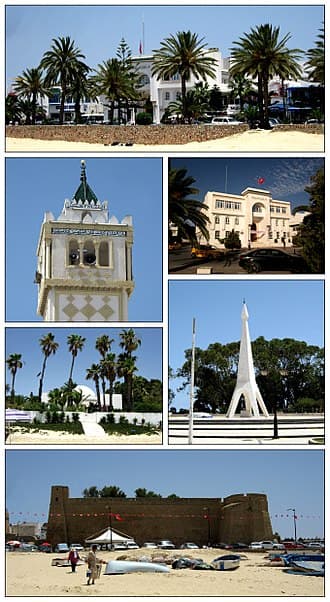
Hammamet lies on the southern edge of the Cap Bon peninsula, 60km from Tunis, and is Tunisia's oldest resort — visitors have been coming here since the 1930s, long before Sousse or Djerba existed as resorts. Its heart is the white medina on a rocky outcrop, whose walls drop straight into the sea, enclosing just a handful of lanes, a kasbah and a cemetery with a view. Around it stretches a shallow bay of fine light sand reaching both ways: north to hotels from the 1980s set among gardens, and south to the newer zone of Yasmine Hammamet, with its marina, artificial medina and theme park. Hammamet is greener than other Tunisian resorts because a regulation states that no hotel may be taller than the surrounding cypress trees — instead of concrete towers, low white complexes stand among citrus groves. The town lives on jasmine, sold in little bunches on every corner in summer, and on thalassotherapy centres, of which it has more than anywhere else in the country. The season runs from May to October, with July and August hot at around 33°C.

What to see

The places worth your time in Hammamet, and what to expect at each

Medina and Kasbah

Medina and Kasbah

centre

A fortified old town from the 15th century on a headland above the sea, surrounded by walls that are washed by waves on one side. Inside is the Great Mosque, a few streets of shops and the kasbah, which offers the best view over the whole bay and the cemetery of white gravestones above the beach.

Tip: Admission to the kasbah walls costs extra and is worth it — go up 1 hour before sunset, when the walls turn golden and photos from the north side capture both the medina and the beach at once.

Admission:
medina free, kasbah from TND 8
Time needed:
2–3 h
Villa Sebastian and Cultural Centre

Villa Sebastian and Cultural Centre

north of the medina

A white villa from the 1930s, built by Romanian millionaire George Sebastian, where the European bohemian set once gathered. Today it houses the International Cultural Centre, with a park, a marble pool surrounded by columns and a summer amphitheatre seating 1,000.

Tip: Entry to the garden is almost free and nearly empty during the day. In July and August a festival is held in the amphitheatre — tickets are sold right at the gate and cost a fraction of a similar concert in Europe.

Admission:
from TND 5
Time needed:
1–2 h
Yasmine Hammamet and the Marina

Yasmine Hammamet and the Marina

Yasmine, 5km south

A zone built from 2000 onwards, 5km south of town, with a marina for 300 yachts, a wide promenade and a strip of large hotels. Cafés line the pier, and in the evening it's the liveliest spot around, without being as noisy as clubbing zones elsewhere.

Tip: Along the promenade, drink prices are double those in town. Have your coffee one street back, where marina staff sit — it's the same coffee for 3 dinars instead of 6.

Admission:
free
Time needed:
half a day
Medina Mediterranea and Carthage Land

Medina Mediterranea and Carthage Land

Yasmine

An artificial medina by the marina that mimics old Tunisian architecture, housing a museum, craft workshops and a theme park with a roller coaster and water rides. It's built for tourists and doesn't pretend otherwise, but for families with children it's the safest bet for half a day.

Tip: An afternoon-only ticket, valid after 2pm, can be bought for roughly half price. Queues are shortest around lunchtime, when hotel groups are eating.

Admission:
from TND 40, children from TND 25
Time needed:
half a day
Roman Pupput

Roman Pupput

southern edge of town

Ruins of a Roman town with mosaic floors, baths and a necropolis, right among the hotels on the southern edge of Hammamet. The site is small and unassuming, but the mosaics are in their original location, not behind glass in a museum.

Tip: The site opens at 8am and closes at midday, usually shut in the afternoon because of the heat. The mosaics show best in the morning, when the sun is low and doesn't wash them out.

Admission:
from TND 8
Time needed:
1 h
Hammamet Beaches

Hammamet Beaches

the whole coast

About 12km of fine light sand in two arcs, north and south of the medina. The seabed shelves gently, the sea is shallow and the waves small. The northern stretch by the old hotels is narrower and shadier thanks to the pines; the southern strip by Yasmine is wide and has no shade.

Tip: On the public stretch right below the medina walls you can lie down for free, and a few metres from the water is the Sidi Bou Hdid café built into the walls — the cheapest spot in Hammamet with a sea view.

Admission:
free, sunbed from TND 15
Time needed:
full day
Nabeul and the Ceramics Workshops

Nabeul and the Ceramics Workshops

13km north

The neighbouring district town, 13km to the north, the main centre of Tunisian ceramics and orange-blossom rose water production. The Friday market fills the whole centre and sells camels and carpets, not just souvenirs.

Tip: The train from Hammamet to Nabeul costs under TND 2, and the ride takes 20 minutes. Buy ceramics at the workshops on the road to Hammamet rather than at the market — it's cheaper and you choose straight from the kiln.

Admission:
free
Time needed:
half a day
Friguia Park

Friguia Park

Bouficha, 45km south

A safari park between Hammamet and Sousse with African animals in enclosures you drive or ride a train through. It also has a dolphinarium and lions, which can be watched from a viewing terrace. The drive takes about 40 minutes on the motorway.

Tip: Predator feeding and the dolphin show have set times in the morning — arrive right after opening, since in the afternoon the animals retreat into the shade and the park feels empty.

Admission:
from TND 55, children from TND 35
Time needed:
half a day
Korbous and the Hot Springs

Korbous and the Hot Springs

60km north-west

A spa village on the northern coast of Cap Bon, where a hot sulphur spring, Ain Atrous, flows straight from the rock into the sea. The water reaches 50°C and mixes with the waves, so you can sit in the cove with warmth from the rock and cool from the sea.

Tip: The spring by the road is freely accessible and free of charge; you can only change behind your car. The winding road is narrow — don't drive it after dark, and expect only a handful of parking spaces.

Admission:
spring free
Time needed:
half a day

Photos: Medina and Kasbah — Георгий Долгопский (CC BY-SA 3.0) · Villa Sebastian and Cultural Centre — Habib M'henni (CC BY-SA 3.0) · Yasmine Hammamet and the Marina — Kritzolina (CC BY-SA 4.0) · Medina Mediterranea and Carthage Land — Habib M'henni (CC BY-SA 4.0) · Roman Pupput — Rais67 (Public domain) · Hammamet Beaches — Marc Ryckaert (MJJR) (CC BY 3.0) · Nabeul and the Ceramics Workshops — Unknown authorUnknown author (Public domain) · Friguia Park — SMS (Public domain) · Korbous and the Hot Springs — GIRAUD Patrick (CC BY 3.0)

Where to stay

Areas and districts, matched to the kind of trip you are taking

Centre and Medina

Best for: a first visit

The area around the old town, with shops, the market, the bus station and the train station for Nabeul. Hotels here are smaller and cheaper, and both the medina and the public beach are within walking distance. Evenings here have local life rather than hotel entertainment — anyone wanting to see how Tunisia works beyond the resort should stay here.

Hammamet Nord

Best for: peace and quiet, and older garden hotels

A strip of hotels from the 1970s and 80s north of the medina, set among citrus and olive gardens. The buildings are low, greenery is abundant, and the beach here is narrower but shadier. It's a 20-minute walk to the centre along the promenade, and evening noise doesn't reach here.

Hammamet Sud

Best for: a wide beach and all-inclusive

The longest unbroken stretch of sand south of town, lined mostly by large all-inclusive hotels. The beach is wide, without shade, and has full beach service. There's almost nothing outside the hotels, so getting to the centre means a taxi for 5–8 dinars or the tourist train.

Yasmine Hammamet

Best for: the marina, families and evening entertainment

The newest part of the resort, 5km to the south, built all at once around a marina. Hotels are larger and more modern than the rest of Hammamet, plus there's a theme park, an artificial medina and golf. It's the most comfortable, and at the same time the least Tunisian, part of the resort.

Getting around

From the airport

The nearest airport is Enfidha–Hammamet, 45km to the south, built specifically for this stretch of coast, and served by seasonal charter flights from many European cities; the transfer to a hotel takes 40 minutes. The alternative is Tunis–Carthage airport, 65km to the north, served by scheduled flights, often with a connection. From Tunis, both a train and the A1 motorway run to Hammamet, with the drive taking 1 hour. Sousse is 80km away by motorway.

Enfidha–Hammamet (NBE) · 45 km

  • Hotel transfer· 40 min· included in the stay
  • Taxi· 40 min· TND 70
  • Private transfer· 40 min· TND 90

Tunis–Carthage (TUN) · 65 km

  • Taxi· 1 h· TND 90
  • Louage from Moncef Bey station· 1 h 20 min· TND 8
  • Train via Bir Bou Rekba· 2 h· TND 6

Around town

You can walk around Hammamet, but the resort stretches over 10km, so getting from the hotel to the medina usually means a taxi. Yellow taxis have meters, and a ride around town costs 3–8 dinars. A tourist train also runs between the hotel zone, the centre and Yasmine, which is pricier but stops at every major hotel. A local railway runs to Nabeul, with services roughly every hour. You only need a car for trips out of town; parking in the centre is free but crowded in season.

Yellow taxiMeters are compulsory. A 50% surcharge applies at night and outside the town limits. · TND 3
Train to NabeulLocal line from Hammamet station, roughly every hour, a 20-minute ride. · TND 1.5
Tourist trainA loop between the hotels, the medina and Yasmine. Slow, but stops right at reception. · TND 8
LouageShared minivans to Tunis, Nabeul and Sousse, departing once full from the station by the market. · TND 4
Rental carWorth it for Cap Bon, Korbous or Kairouan. The A1 motorway has small tolls. · TND 110/day

Useful apps: Google Maps, Bolt, Maps.me

When to go

The swimming season runs from June to early October. The sea warms more slowly than in the south of the country — in June it's 23°C, warmest in August and September at 26–27°C. June and September are the most pleasant: around 30°C by day, warm water and half-empty beaches. In July and August the temperature climbs past 33°C and hotels are full. April and May are great for sightseeing and thalassotherapy, but the water is only 17–20°C. Winters are mild, around 17°C, with rain mostly from November to February.

Best time

June and September

What to avoid

July and August because of the heat and full hotels

MonthJanFebMarAprMayJunJulAugSepOctNovDec
Day17°18°20°22°26°30°33°33°30°26°21°18°
Night7°7°9°11°15°19°22°22°20°17°12°8°
Rainy days766542114668
Sea15°14°15°17°20°23°26°27°26°23°20°17°

Food & drink

Hotels in Hammamet cook buffets for European tastes, with little real Tunisian cuisine on offer. For authentic food, head to the centre and the medina, where small eateries serve ojja, brik and grilled fish at a third of marina prices. Cap Bon is farming country — tomatoes, peppers, citrus and orange blossom are grown here and shipped across the country, so the vegetables here are noticeably better than in the southern resorts. Fish pairs well with the local white wine Muscat de Kelibia, one of the few Tunisian wines worth trying.

What to try

Brik

A thin sheet of malsouka pastry fried with egg, tuna and parsley. The yolk stays runny inside, so you bite the corner first and eat it by hand over the plate.

Couscous

The whole country's Friday meal: semolina steamed over a pot with meat and vegetables. In coastal towns it's also made with fish — a version you won't get at the hotel.

Mechouia Salad

Roasted peppers, tomatoes and garlic crushed in a mortar, with tuna, egg and olives. Served cold as a starter, and it's the best way to test the strength of the local harissa.

Ojja

A tomato pan with harissa, into which eggs are cracked, usually with merguez sausage or shrimp. Quick, spicy, and the cheapest hot dish at every local eatery.

Lablabi

A chickpea soup with garlic and cumin, into which you crumble stale bread straight into the bowl. A workers' breakfast, sold in the morning and usually sold out by midday.

Harissa

A paste of roasted chillies, garlic and cumin, served with bread before the menu even arrives. Tunisian harissa is spicier than the Moroccan version — take the first spoonful carefully.

Makroud and Pine Nut Tea

Diamond-shaped semolina pastries filled with dates and soaked in honey, served with strong sweet green tea with a handful of pine nuts floating on top.

Grilled Fish by the Kilo

Choose your sea bream, sea bass or red mullet from the display case and pay by weight. The price per kilo is usually written on a board — have the fish weighed in front of you.

What it costs

Coffee in the centre

TND 2–3

Ojja or brik at a local eatery

TND 6–10

Dinner at a restaurant in the medina

TND 30–50 per person

Celtia beer, 0.5l

TND 7–10

2 sunbeds with an umbrella

TND 15–25

Taxi from Yasmine to the medina

TND 6–9

Thalassotherapy treatment

from TND 60

Train to Nabeul

TND 1.5

Indicative prices that change over time — treat them as a guide, not a price list.

Practical information

SocketsCEuroplug, two round pinsEFrench, with earth pin
Voltage230V / 50Hz
Tap waterDo not drink tap water — Don't drink the tap water — it's chlorinated, hard and has an unpleasant taste in summer. A 1.5-litre bottle of water costs under a dinar in a shop, 4 times that at a hotel. It's best to avoid ice in drinks outside hotels, and wash fruit with bottled water.
TippingTips are expected in small change: round up at a café, leave around 10% at a restaurant, and give a porter 1 dinar per bag. Terminals can't process tips, so keep a few 1- and 5-dinar notes handy. Guides and drivers on a full-day trip expect around 5 dinars per person.
Driving on theright
SafetyResorts and medinas are safe, and police have a visible presence in tourist areas. The most common nuisance isn't crime but pushy sales tactics: in the medina, someone may approach you claiming to lead you 'to my brother's workshop' and take you to a carpet shop. A polite 'la, choukran' (no, thank you) and walking on is enough. Taxis have meters — insist they're switched on, or the driver will charge triple. Watch the flags in the sea; afternoon winds can be strong.
Opening hoursShops in the resorts are open from 9am until late in the evening, including Sundays; medinas and souks close around midday on Fridays for prayers. Offices and banks operate from 8am to 4pm, and in summer only until 1pm. During Ramadan, the daily rhythm shifts: cafés and restaurants outside hotels open only after sunset, while hotel service runs as normal.
Customs & etiquetteTunisia is secular but Muslim: swimwear is fine at the resort, but wear a T-shirt and trousers or a knee-length skirt in town and the medina. Tourists usually aren't allowed past the courtyard of mosques. The left hand isn't used for eating or handing over objects. Don't photograph people, especially women, without asking, and it's forbidden near police and military sites.
A few local wordsHello — As-salám alejkumThank you — ŠukranNo, thank you — Lá, šukranHow much does this cost? — B'kaddech?That's too expensive — Ghálí barša

How to plan your days

1 day

1 Day in Town and on the Beach

  1. 1Morning swim at the public beach beneath the medina walls.
  2. 2Lunch at the Sidi Bou Hdid café built into the walls.
  3. 3Afternoon loop around the medina and a climb up the kasbah for the view.
  4. 4Early evening, a stroll along the promenade and dinner in the centre away from the hotel zone.

2 days

2 Days with Yasmine and Nabeul

  1. 1First day as above.
  2. 2Second day, take the train to Nabeul in the morning for ceramics and the market.
  3. 3Return for lunch and an afternoon swim.
  4. 4Evening at the marina in Yasmine Hammamet and a walk around the pier.

3 days

3 Days Including a Trip Out of the Resort

  1. 1First two days as above.
  2. 2Third day, early morning by car or on a trip to Tunis.
  3. 3Carthage, the Bardo Museum and blue-and-white Sidi Bou Said.
  4. 4Return in the evening via the A1 motorway.
  5. 5If you have a day to spare, Korbous and its hot spring, or Roman Pupput.

Day trips

Tunis, Carthage and Sidi Bou Said

65 km · 1 h by car

The capital, with its UNESCO-listed covered medina, mosaics at the Bardo Museum, and the ruins of Carthage on a hilltop above the sea. A little further on is the blue-and-white town of Sidi Bou Said above the bay. The whole day can be done by car or on a standard hotel-organised trip.

Kairouan

150 km · 1 h 45 min by car

The fourth-holiest city in Islam, with the Great Mosque dating from the 7th century, whose courtyard is open even to non-Muslims. Around it is a medina with carpets and bakeries selling makroud. Worth combining with the return trip via Sousse.

Kelibia and Cap Bon

85 km · 1 h 15 min by car

The northern tip of the peninsula, with a fortress above the town, empty beaches and vineyards that produce the local Muscat. Tourist numbers are a fraction of those in Hammamet, and the fish restaurants by the harbour are among the best in the country.

Frequently asked questions

What's the difference between Hammamet and Yasmine Hammamet?+

Hammamet is the old town, with its medina, market and hotels set in gardens; Yasmine is a zone built after 2000, 5km to the south, around a marina. Yasmine has more modern hotels, a marina, golf and a theme park; the old town has atmosphere and lower prices. A taxi between the two costs 6–9 dinars.

Is Hammamet good for families with children?+

Yes. The beach is fine sand, the seabed shelves gently and the waves are small. In Yasmine there's the Carthage Land theme park and a dolphinarium at Friguia Park, 40 minutes away by motorway. Most large hotels have kids' pools and multilingual entertainment programmes.

When is the sea warmest in Hammamet?+

In August and September, when it's 26–27°C. In June it's around 23°C, and in May only 20°C, which feels cold to most people. Unlike Djerba, the swimming season here ends around mid-October.

Is Hammamet noisy?+

Considerably less than the resorts around Sousse. Regulations limit hotel height, and nightclubs are concentrated in just 2 spots, in Yasmine and the centre. Hotels in the northern zone and in the gardens are quiet in the evening. Before booking, check that the hotel isn't right on the main road — that's noisier than the nightlife.

Is thalassotherapy worth it?+

Hammamet has more thalassotherapy centres than anywhere else in Tunisia, and treatments cost a fraction of European prices — a basic bath from 60 dinars, a full-day package around 150. Most centres are in hotels but also take outside guests. Book a day ahead, as it's often full in season.

Can you get from Hammamet to Tunis without a car?+

Yes, 2 ways. A louage — a shared 9-seat minivan — leaves from the station by the market once it's full, takes under 1 hour and costs around 8 dinars. The train is slower, since you change at Bir Bou Rekba, but it's the cheapest option. A taxi for the whole journey costs around 90 dinars.

How much money should I bring outside all-inclusive?+

Around 50 dinars per person a day is plenty: lunch at a local eatery is 10 dinars, coffee 2, a taxi around town 5. The only expensive spots are the marina in Yasmine and souvenirs in the medina, where you haggle. Buy dinars once you arrive — it's a closed currency you can't get at home.

What to do in Hammamet when it rains or is windy?+

It mostly rains from November to February; rain is rare in season. On a windy day, the best options are the medina, which is sheltered within its walls, thalassotherapy at the hotel, Villa Sebastian with its park, and the covered part of the theme park in Yasmine. Wind off the sea tends to be a one-day affair.

Visa Requirements

Check the latest visa requirements for entering this country. Some nationalities may need to apply for a visa or e-visa before travel.

Check visa requirements

Language

Arabic / French

Currency

TND

Timezone

Africa/Tunis

Dial Code

+216

Population

12.5M

Area

163,610 km²

Voltage

230V / 50Hz

Driving Side

Right

Top Hotels in Hammamet

Live prices from 500+ properties

Loading hotels...

More destinations in Tunisia

Planning a trip to Hammamet?

Compare hundreds of hotels, find the best price, and book with free cancellation on TravelManiac.