Hotels in Karachi

Pakistan's largest city: a port, bazaars, colonial Saddar and the country's best biryani

Karachi

LanguageEnglish
CurrencyPKR
TimezoneGMT+5
Temperature10-40 °C
Dial Code+92
Population240M
Area881,913 km²
SocketsType C / Type D
Tap waterNot drinkable

Discover Karachi

Karachi is Pakistan's largest city, its economic heart and main port, home to more than 20 million people from across the country. It was the capital until 1959, leaving behind the white-marble mausoleum of the country's founder, Muhammad Ali Jinnah, the sandstone colonial quarter of Saddar with its British clock towers, and Mohatta Palace in Clifton. Karachi has fewer historic sights than Lahore, but it's more open, faster-paced and more cosmopolitan; it's a city of traders, migrants and excellent food, where whole families gather on Clifton Beach in the evening and people eat nihari and kebabs until midnight in the restaurants of Burns Road. A visit takes some preparation: the security situation has improved in recent years, but it's still true that you get around the city by car, not on foot, and that having a local contact or an experienced guide is worthwhile. Anyone who accepts that will find very hospitable people and one of South Asia's most interesting cities, still visited by relatively few tourists.

What to see

The places worth your time in Karachi, and what to expect at each

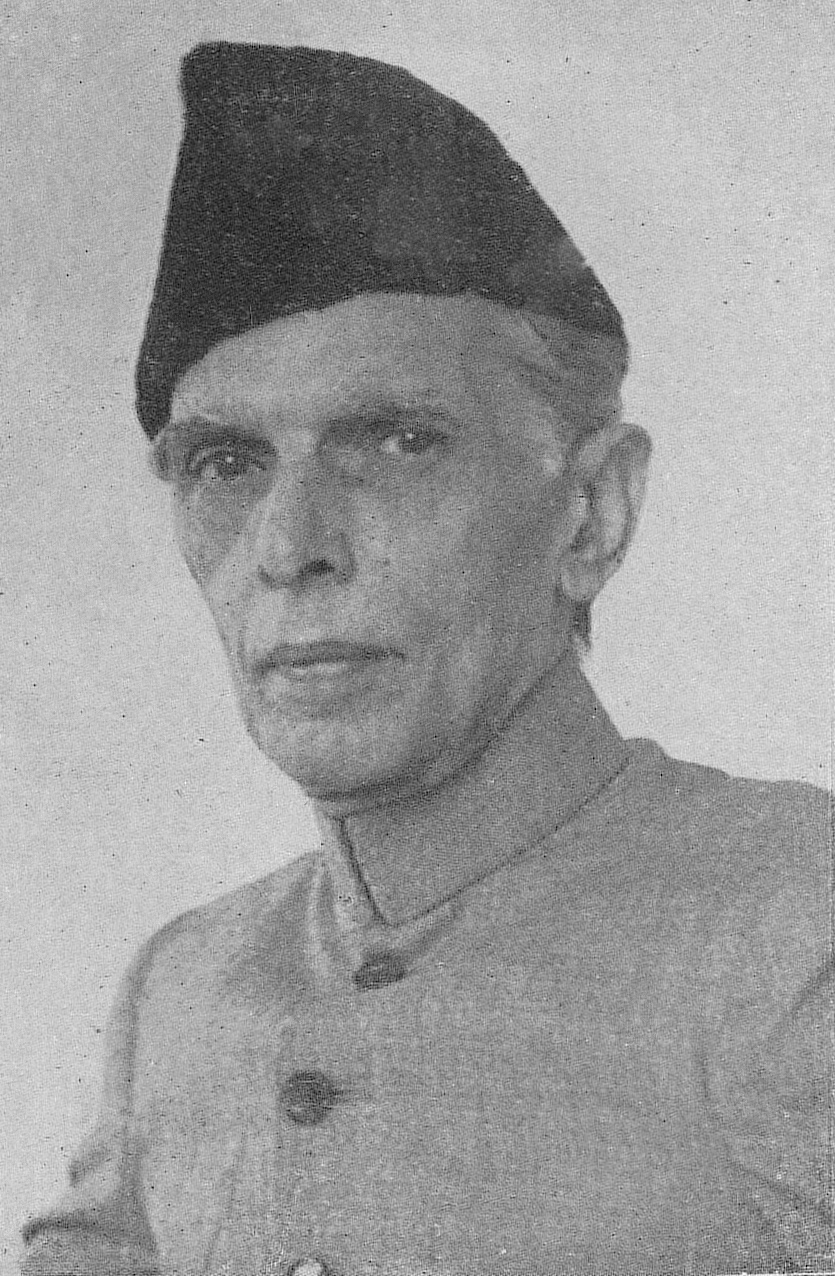
Mazar-e-Quaid Mausoleum

Mazar-e-Quaid Mausoleum

مزارِ قائد

Jamshed Town

The monumental tomb of Muhammad Ali Jinnah, founder of Pakistan, completed in 1970. A white marble cube with arches and a dome stands on a raised platform in the middle of a 60-hectare park. Inside hangs a giant crystal chandelier gifted by China, and buried alongside Jinnah are his sister and the country's first prime minister.

Tip: The most striking moment is the ceremonial changing of the guard, carried out by cadets from military academies; the largest ceremonies fall on Pakistan Day (23 March), Independence Day (14 August) and Jinnah's birth anniversary (25 December). A small museum in the basement displays Jinnah's cars and personal effects. Smoking and eating are banned in the park, and photographing the tomb inside isn't allowed.

Admission:
free
Time needed:
1h
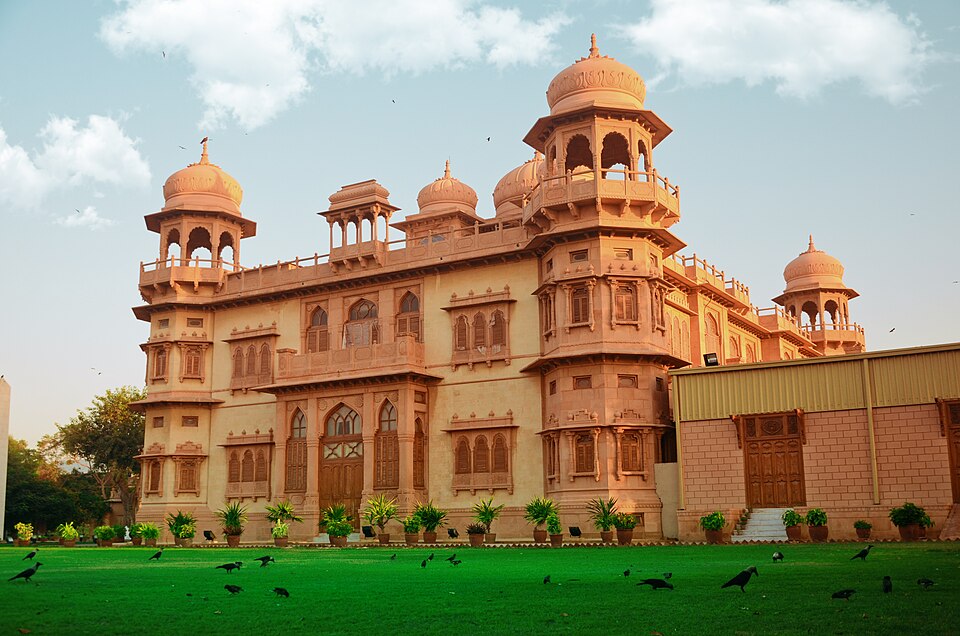
Mohatta Palace

Mohatta Palace

موہٹہ پیلس

Clifton

A palace built from pink stone from Jodhpur and yellow stone from Gizri, commissioned in 1927 by the Hindu merchant Shivratan Mohatta in a Rajasthani palace style with domes and turrets. After partition it served as a government ministry and then as the residence of Jinnah's sister; today it houses a museum of Pakistani art and crafts.

Tip: Exhibitions change several times a year, so check what's currently on. The garden and the view of the façade from the south side are the highlights. The palace sits in Clifton, close to the sea, so combine it with a late afternoon on the beach. It's closed on Mondays, and photography is only permitted outdoors.

Admission:
around PKR 50–500
Time needed:
1h
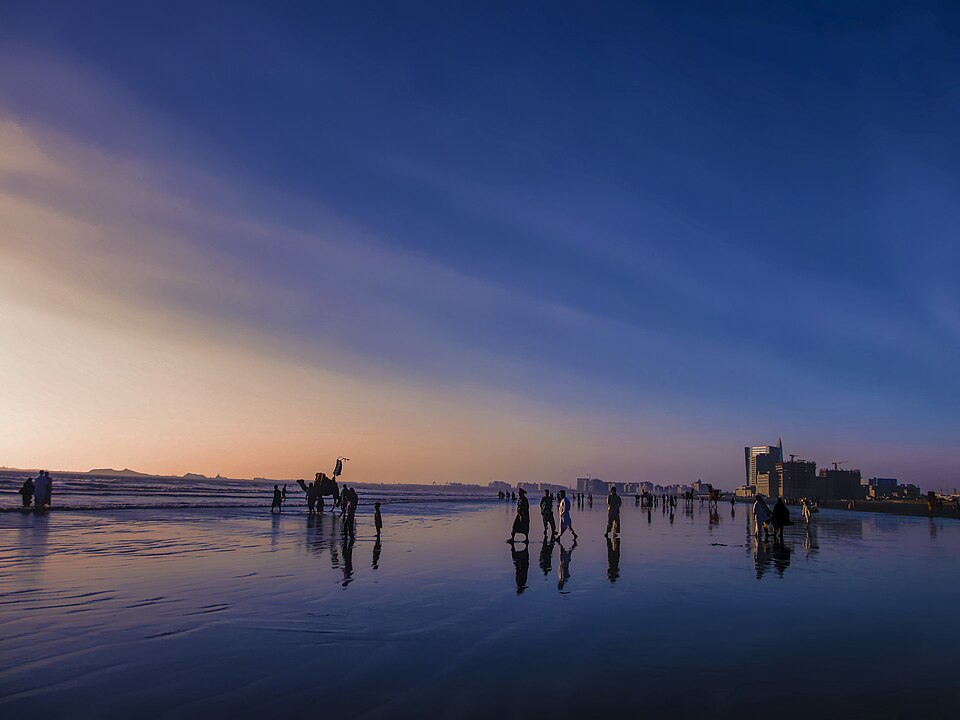
Clifton Beach and Sea View

Clifton Beach and Sea View

کلفٹن

Clifton / DHA

Karachi's best-known beach, where much of the city gathers in the evening. It's not a beach for swimming, but a promenade with camel and horse rides, stalls selling corn and tea, and huge sunsets over the Arabian Sea. Behind it stretches the newer Do Darya promenade, lined with restaurants over the water.

Tip: Arrive an hour before sunset and stay for dinner at Do Darya, where restaurants sit on jetties over the water serving grilled fish and prawns by weight. Swimming here is dangerous and banned outright from June to September due to monsoon waves. On weekend evenings traffic is so heavy you won't get near the beach by car — go on a weekday instead.

Admission:
free
Time needed:
1–2h
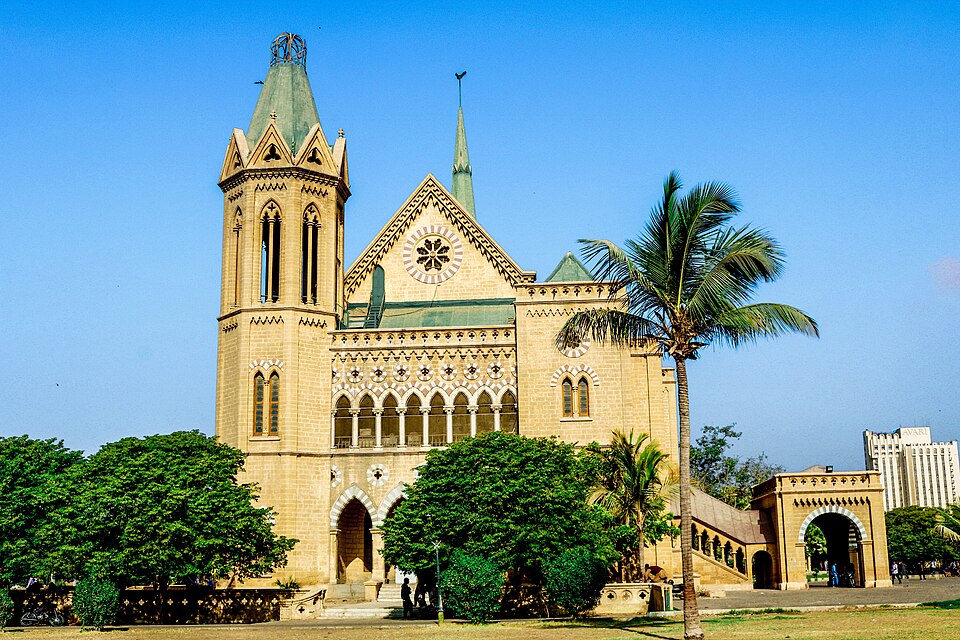
Frere Hall

Frere Hall

فریئر ہال

Civil Lines

A building from 1865 in Venetian Gothic style, built from yellow and grey sandstone as a town hall and named after British administrator Bartle Frere. Inside is a library and a hall with a ceiling mural by Pakistani painter Sadequain; outside are gardens where a book market is held at weekends.

Tip: On Sunday mornings the gardens host a book market selling old books, maps and magazines from colonial times — the best day to visit. Sadequain's ceiling mural is only visible during the library's opening hours. The surrounding Civil Lines district has more colonial buildings and the American consulate, so there's a heavy police presence, and photography is only permitted of Frere Hall itself.

Admission:
free
Time needed:
45min
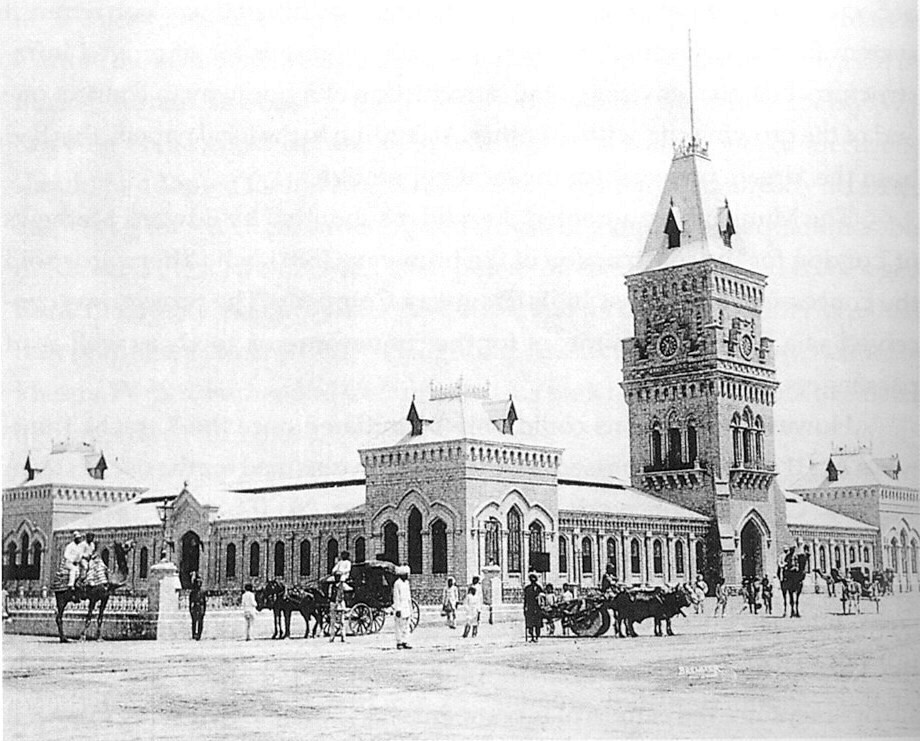
Empress Market

Empress Market

ایمپریس مارکیٹ

Saddar

A Victorian-era market hall from 1889 with a clock tower in the Saddar district, built on the site where the British executed rebels from the 1857 uprising. Spices, dried fruit, tea, meat, fish and birds are sold in and around it, making it one of the busiest bazaars in the country.

Tip: Go in the morning, when the market is busiest and the heat still bearable. The best stalls sell dried dates, pistachios and spices in the inner alleys. Watch your pockets and keep your camera out of sight. Around the market lies colonial Saddar, with St Andrew's Church and St Patrick's Cathedral, both a few minutes' walk away.

Admission:
free
Time needed:
1h
National Museum of Pakistan

National Museum of Pakistan

قومی عجائب گھر

Burns Garden

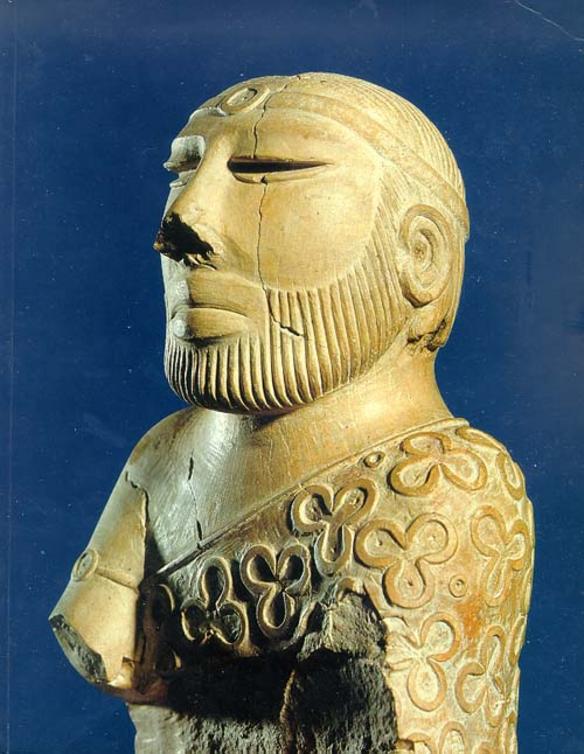
The country's leading museum, holding around 70,000 objects spanning the Harappan and Mohenjo-daro civilisations from 4,500 years ago through Gandharan Buddhist sculpture to Islamic manuscripts and Qurans. The collection helps make sense of the history of a territory that gave rise to some of the world's oldest cities.

Tip: The highlight is the Indus Civilisation gallery, with seals bearing a still-undeciphered script and pottery from Mohenjo-daro. If you don't have time to visit Mohenjo-daro itself, this is the best substitute. The museum sits in Burns Garden, close to Burns Road, so combine it with lunch at the restaurants there.

Admission:
around PKR 20–500
Time needed:
1.5h
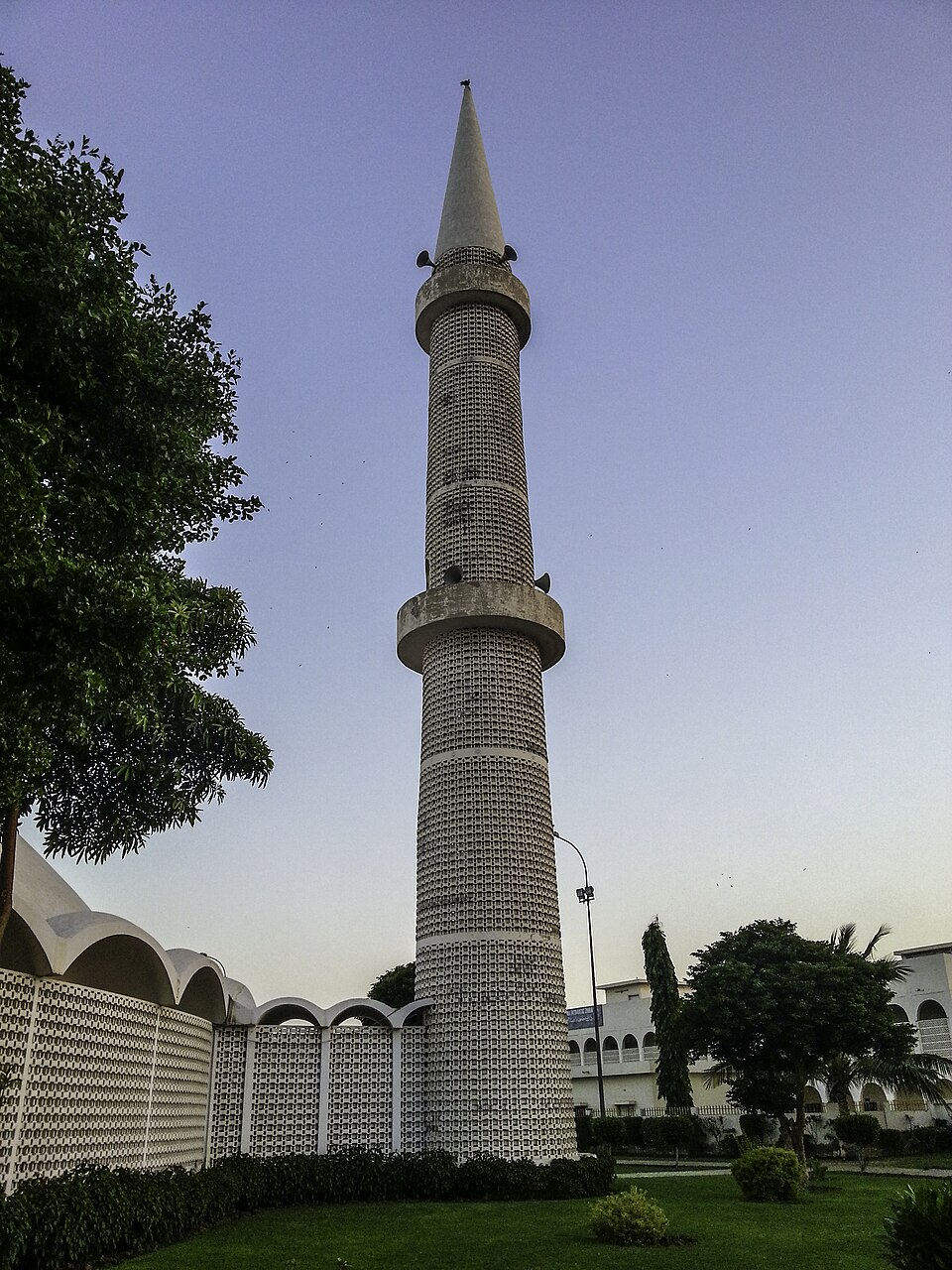
Tooba Mosque

Tooba Mosque

مسجد طوبیٰ

DHA

A 1969 mosque with one of the largest domes in the world unsupported by pillars — 72m in diameter. It holds up to 5,000 worshippers. The dome is made of white marble and has remarkable acoustics, with a word spoken at one end audible at the other.

Tip: Outside prayer times, non-Muslims are also let in; shoes come off at the entrance and women should cover their hair. Locals call it Gol Masjid, the round mosque, after its shape. It sits in the Defence district, on the route between the centre and Clifton Beach, so it's an easy half-hour stop en route.

Admission:
free
Time needed:
30min
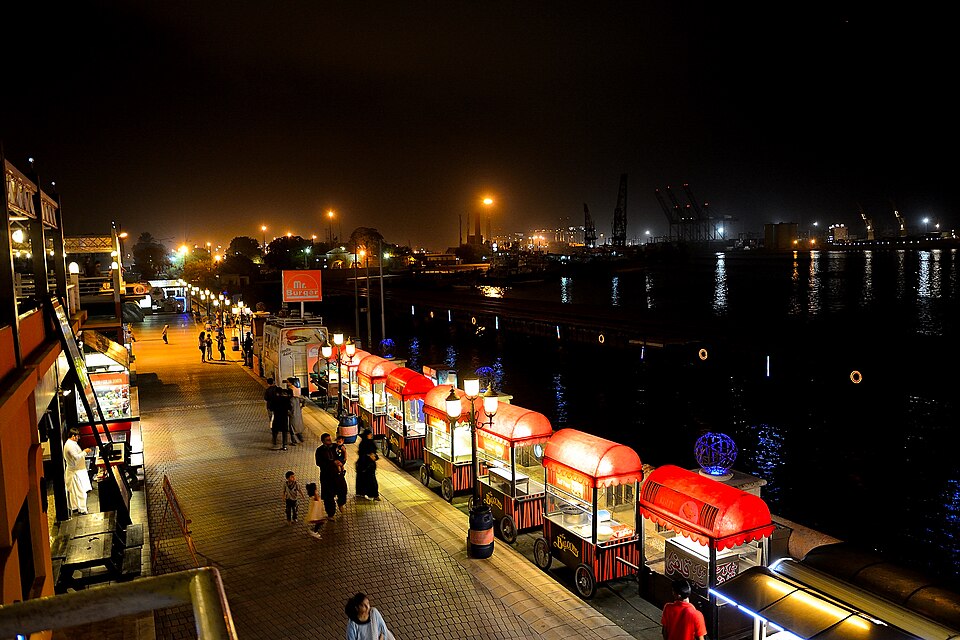
Port Grand

Port Grand

پورٹ گرینڈ

Keamari / the port

A kilometre-long promenade and entertainment complex built on the 19th-century Native Jetty, with restaurants, cafés and stalls. From here you can see out over the port to ships and mangroves, and in the evening it's one of the most pleasant and safest spots in the city.

Tip: Come after dark, when it cools down, the promenade lights up and restaurants fill with families. Admission is paid at the gate. Evening sightseeing boats and crab-fishing trips leave from a nearby jetty, with fishermen cooking your catch on board — arrange these in advance through your hotel.

Admission:
around PKR 100–500
Time needed:
1.5–2h
Pakistan Maritime Museum

Pakistan Maritime Museum

پاکستان میری ٹائم میوزیم

Karsaz

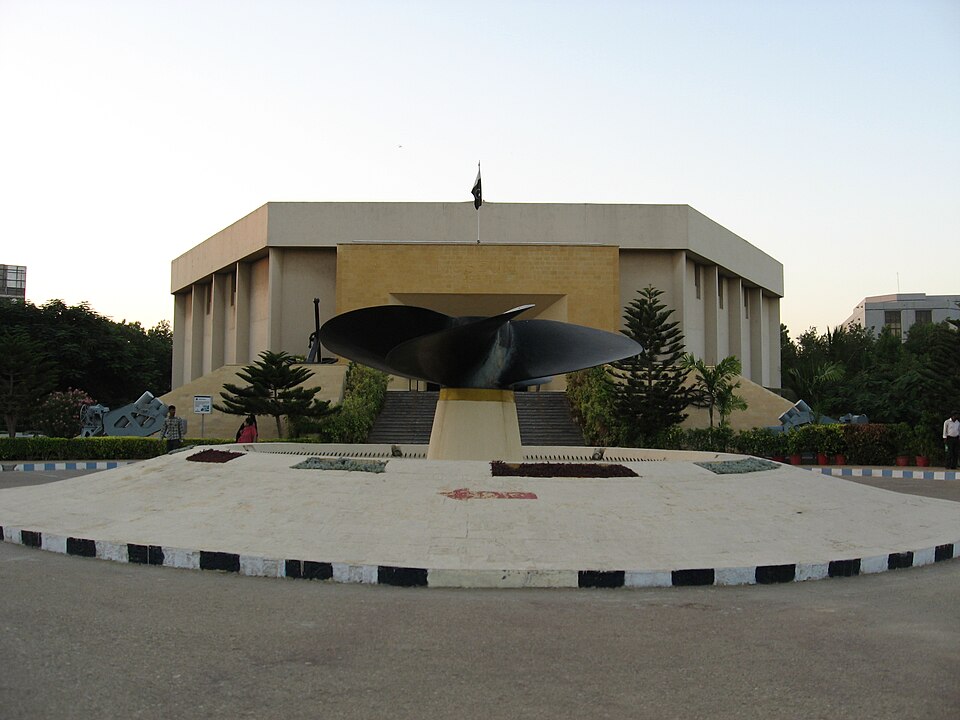
An open-air museum in a 22-hectare park with the decommissioned submarine Hangor, which sank an Indian frigate in 1971, a minesweeper, aircraft, and exhibits on the region's naval history. Inside are an aquarium and a gallery of ship models.

Tip: It's one of the best spots in the city for children, as you can climb inside the submarine and walk right through it. The park is large and green, a rarity in Karachi, so families spend whole afternoons here. It's in the Karsaz district, on the route from the airport into the centre. It closes at 6pm, and photography is unrestricted.

Admission:
around PKR 100–500
Time needed:
1.5h

Photos: Mazar-e-Quaid Mausoleum — Photographer not known (Public domain) · Mohatta Palace — Aareez Asif (CC BY-SA 4.0) · Clifton Beach and Sea View — M.irfan44 (CC BY-SA 4.0) · Frere Hall — Aliubair (CC BY-SA 4.0) · Empress Market — Unknown authorUnknown author (Public domain) · National Museum of Pakistan — Mamoon Mengal (CC BY-SA 1.0) · Tooba Mosque — Muhammad Saqib Khan (CC BY-SA 3.0) · Port Grand — Obaid747 (CC BY-SA 3.0) · Pakistan Maritime Museum — Adnanrail (CC BY-SA 3.0)

Where to stay

Areas and districts, matched to the kind of trip you are taking

Clifton

Best for: first-time visits, the sea, restaurants

A seafront district with international hotels, shopping centres, Mohatta Palace and the beach. It's the safest and best-kept part of the city, with hotels running their own security. You can walk the promenade in the evening, and it's a 30-minute drive to the old centre.

DHA (Defence)

Best for: quiet, cafés, staying among locals

A sprawling residential district home to the middle and upper classes, with cafés, restaurants and boutiques along Zamzama and Khayaban-e-Ittehad. There are plenty of guesthouses and apartments here. Streets are clean and quiet, but a car is needed to get anywhere.

Saddar and the old centre

Best for: sights, bazaars, colonial architecture

The historic commercial district, with Empress Market, colonial buildings, churches and Burns Road lined with eateries. By day it's the most interesting part of the city for a guided walk; for staying overnight it's noisy and less safe, with older, cheaper hotels.

Shahrah-e-Faisal

Best for: business trips, close to the airport

The main artery between the airport and the centre, lined with large international chain hotels, offices and shopping centres. For a short stay or a business trip it's the most practical choice, though there's little reason to walk around here.

Getting around

From the airport

Flights to Karachi typically connect through a Gulf hub, most commonly Dubai with Emirates or flydubai, Doha with Qatar Airways, or Istanbul with Turkish Airlines; the journey takes 9–12 hours from Europe. Most foreign nationals need a Pakistani visa, arranged online through the official government portal; it has been free for EU citizens since 2024, with processing usually taking a few days. Before travelling, check current foreign ministry advice and register with your government's travel-registration service if one exists. Jinnah International Airport lies 15km northeast of the centre and Clifton. From Karachi it's an hour and a half's flight to Lahore or Islamabad, or 20 hours by train.

Karachi Jinnah International (KHI) · 15 km

  • Careem or Uber to Clifton· 30–60min· PKR 1,500
  • Hotel transfer· 30–60min· PKR 5,000
  • Taxi from the official rank· 30–60min· PKR 2,500

Around town

Karachi is a vast, sprawling city with no metro, and visitors get around by car. The most reliable options are the Careem, Uber and inDrive apps, which show you the price and driver in advance. Auto-rickshaws are cheap but uncomfortable — don't use them at night. The new Green Line BRT fast bus route runs north from Saddar, of limited use to visitors. Walking works in Saddar with a guide and along the promenades at Clifton and Port Grand. Traffic is chaotic at rush hour, and an hour-long journey is common.

Careem / Uber / inDriveThe safest way to get around, payable by cash or card. · PKR 400
Auto-rickshawDaytime and short distances only; agree the fare in advance. · PKR 200
Car with driverBooked through your hotel for a full day, the most comfortable option for sightseeing. · PKR 8,000/day
Green Line BRT busA modern air-conditioned route to the north of the city. · PKR 55

Useful apps: Careem, inDrive, Bykea, Google Maps, foodpanda

When to go

The best period is November to February, with daytime temperatures around 25°C and pleasantly cool nights. From March to June it's hot, around 35°C, and very humid because of the sea, with heatwaves striking in May and June that claim lives every year. The monsoon in July and August is brief, but when it hits, it can flood the streets within an hour. Winter is wedding season, with lavish celebrations held across Karachi, and December brings a literary festival. Ramadan, whose dates shift 11 days earlier each year, changes the rhythm of the city — quiet by day, alive at night.

Best time

November–February

What to avoid

May–June (heat and humidity), monsoon flooding in July and August

MonthJanFebMarAprMayJunJulAugSepOctNovDec
Day26°28°32°35°35°35°33°32°33°35°32°28°
Night12°14°19°23°27°29°28°27°26°23°18°13°
Rainy days111001221001

Food & drink

Karachi is Pakistan's culinary capital, since people from across the subcontinent settled here and brought their recipes with them. After the partition of India, Muslims arrived from Delhi, Lucknow and Hyderabad, which is why Karachi has the country's best biryani, nihari and kebabs. On Burns Road, dozens of old eateries sit side by side, with plastic tables to eat at. From the port come prawns, crab and fish, grilled in the evening at Do Darya. Karachi comes alive at night, with restaurants filling up after 9pm, and during Ramadan people eat right through until dawn. Pork is served nowhere, and alcohol doesn't feature in restaurants at all. Street food is excellent, but avoid raw vegetables and chutneys anywhere the water isn't bottled.

What to try

Biryani

Spiced rice layered with chicken or mutton, potato and dried plums. Every city claims to make the best version; a plate at a street stall costs around PKR 300.

Nihari

Beef or mutton slow-cooked overnight in a thick spiced broth, eaten for breakfast and dinner alike in the old bazaars. Served with a piece of bone marrow, ginger, chilli and lime, and eaten with naan bread.

Tikka and seekh kebab

Meat marinated in yoghurt and spices, grilled over hot coals — tikka pieces or minced kebabs on long skewers. An evening street food, eaten sitting on plastic chairs by the grill.

Karahi

Chicken or mutton cooked with tomatoes, ginger and green chillies in an iron pan with handles. Ordered by weight, with half a kilo enough for 2, and served straight from the same pan.

Bun kebab

Karachi's street burger: a lentil-and-minced-meat patty fried with an egg, served in a bun with onion and chutney. It costs PKR 100–200 and is sold from afternoon until night.

Haleem

A thick porridge of wheat, lentils and meat cooked for hours until the meat falls apart into shreds. Served with fried onion, ginger and lime, and eaten after sunset during Ramadan.

Crab and prawns at Do Darya

Seafood from the Arabian Sea grilled with spices or in masala, priced by weight. Pick your fish raw from the ice and say how you'd like it cooked.

Doodh patti tea

Strong tea boiled directly in milk with sugar and cardamom, drunk anywhere, anytime. A cup at a stall costs PKR 50–80, and an offered cup of tea is never turned down.

What it costs

Tea at a stall

PKR 50–100

Bun kebab

PKR 150–300

Plate of biryani

PKR 300–600

Dinner at a grill restaurant

PKR 2,000–4,000

Careem ride across town

PKR 600–1,500

Museum entry (foreigners)

PKR 200–500

Bottle of water

PKR 60–100

Night at a 4-star hotel for 2

PKR 25,000–50,000

Indicative prices that change over time — treat them as a guide, not a price list.

Practical information

SocketsCEuroplug, two round pinsDthree round pins (India)
Voltage230V / 50Hz
Tap waterDo not drink tap water — Don't drink Pakistan's tap water, and don't even use it to brush your teeth. Bottled water costs PKR 60–100 a litre — buy brands with an intact seal, such as Nestlé or Aquafina. Only accept ice in drinks at hotels and better restaurants. Fresh fruit juices from street stalls are tempting, but are often diluted with tap water.
TippingIn restaurants, leave 10% if service isn't already on the bill; hotel porters get PKR 100–200. Bargaining is normal at markets, not in fixed-price shops. Cash is still king, with cards accepted at hotels, shopping centres and better restaurants. ATMs taking international cards are found at major bank branches (HBL, Meezan, Standard Chartered), with withdrawals limited to a few tens of thousands of rupees at a time. Exchange money only at banks and authorised bureaus.
Driving on theleft
SafetyCheck current foreign ministry travel advice before your trip and register with your government's travel-registration service if one exists — parts of Pakistan, especially the border regions of Khyber Pakhtunkhwa and Balochistan, are among the areas foreign ministries advise against visiting, and major cities are occasionally hit by attacks too. In the city, move around with a local contact or through your hotel, avoid demonstrations and religious gatherings, and take a ride-hailing app rather than a rickshaw flagged down on the street at night. Street crime is mainly phone theft from motorbikes. Expect police checkpoints, and carry your passport or a copy at all times. The police emergency number is 15, ambulance 1122.
Opening hoursShops and bazaars open late, around 11am, and stay busy well into the evening until 10pm or later. Most shops and offices close between 12.30 and 3pm on Fridays for midday prayers. Restaurants serve dinner from 8pm, with families eating even later. During Ramadan, eating and drinking in public during the day stops entirely, and restaurants don't open until sunset; it's a quieter experience for foreign visitors, but the evenings are the liveliest of the year. Museums are often closed on Mondays.
Customs & etiquettePakistan is a conservative Muslim country. Dress with shoulders and knees covered; women should dress loosely and carry a scarf to cover their hair in mosques, and men shouldn't wear shorts. Shoes come off before entering a mosque or a home. Food, money and gifts are handed over with the right hand. A man doesn't offer his hand to a woman unless she extends hers first. Alcohol is forbidden for Muslims; foreign visitors can legally buy it only at licensed shops and some hotels, and it isn't drunk in public. Photographing women without permission is considered very rude, and government buildings and military sites shouldn't be photographed at all. Hospitality is immense — an invitation for tea from a stranger is common and genuine.
A few local wordsHello (greeting) — Assalám alejkumThank you — ŠukrijaHow much does this cost? — Jeh kitne ká hai?Not spicy, please — Mirč kamYes / No — Dží hán / NahínThe bill, please — Bil de dédžije

How to plan your days

1 day

Karachi in one day

  1. 1Morning: the Mazar-e-Quaid mausoleum.
  2. 2Late morning: the National Museum and lunch on Burns Road.
  3. 3Afternoon: Frere Hall and Empress Market with Saddar.
  4. 4Late afternoon: Mohatta Palace.
  5. 5Sunset at Clifton Beach and dinner at Do Darya.

2 days

Two days: city and port

  1. 1Day 1: Mazar-e-Quaid, Saddar, Empress Market and Burns Road.
  2. 2Day 1 evening: Port Grand and an evening cruise with crab fishing.
  3. 3Day 2: the National Museum and Frere Hall.
  4. 4Day 2 afternoon: Tooba Mosque and Mohatta Palace.
  5. 5Day 2 evening: Clifton and Do Darya.

3 days

Three days with the Sindh necropolises

  1. 1Day 1: Mazar-e-Quaid, Saddar and Burns Road.
  2. 2Day 2 morning: a drive to the Makli necropolis and Thatta.
  3. 3Day 2, on the way back: the Chaukhandi tombs.
  4. 4Day 3: the Maritime Museum and Tooba Mosque.
  5. 5Day 3 evening: Mohatta Palace and sunset at Clifton.

Day trips

Makli Necropolis and Thatta

100 km · 2h by car

One of the largest cemeteries in the world, with half a million graves spread over a 10km ridge, holding tombs of sultans, nobles and saints from the 14th to 18th centuries, decorated with carved stonework and glazed tiles. It's UNESCO-listed. Below the hill, in the town of Thatta, stands the Shah Jahan Mosque with 93 domes. Go with a driver and set out early in the morning — by midday the shadeless ridge is unbearably hot.

Chaukhandi Tombs

30 km · 45min by car

A 16th- to 18th-century burial ground with pyramid-shaped sandstone tombs, covered in fine geometric carving, horsemen, weapons and jewellery that indicate whether a man or a woman is buried inside. It lies beside the highway to Thatta, so it can be combined with a trip to Makli. The site is small and an hour is enough.

Hawke's Bay and Sandspit beaches

25 km · 45min by car

Sandy beaches west of the city, popular with Karachiites at weekends. Beach huts can be rented by the day, with space for a barbecue. At Hawke's Bay, green turtles lay their eggs, and in the winter months you can watch, with a local conservation group at night, as turtles come ashore and hatchlings emerge. Swimming is banned during the monsoon.

Frequently asked questions

Is it safe to travel to Karachi?+

The situation is far better than a decade ago, and business travellers and tourists alike visit Karachi. Even so, check current foreign ministry advice before travelling and register with your government's travel-registration service if one exists. Stay in a hotel with security, use ride-hailing apps, avoid demonstrations, and ideally arrange a local guide or contact.

Do I need a visa?+

Yes. The visa is arranged online through the official Pakistani government portal and has been free for EU citizens since 2024. Processing usually takes a few working days. Have your printed approval and your accommodation address ready on arrival.

How should you dress?+

Conservatively. Men should wear long trousers, women loose clothing covering the shoulders, elbows and knees, plus a headscarf for mosques. The simplest and most comfortable option is to buy a local shalwar kameez, which costs a few thousand rupees at the market and is ideal in the heat.

Can you swim in the sea in Karachi?+

Not at Clifton — the water is polluted and the currents strong. Hawke's Bay and French Beach west of the city are fine, outside the monsoon from June to September, when swimming is banned due to rough waves.

Can you drink alcohol in Pakistan?+

Muslims may not. Foreign visitors can buy alcohol at licensed shops with a permit or at the bars of some large hotels, but it isn't served in restaurants and drinking in public isn't allowed.

How do you pay?+

Mainly cash, in Pakistani rupees. Cards are accepted at hotels, shopping centres and upmarket restaurants. ATMs at major banks accept foreign cards, though withdrawal limits are restricted. Exchange dollars or euros at a bank or an authorised bureau, not on the street.

How many days do you need for Karachi?+

2 days for the city and a third for a trip to the Makli necropolis. Most visitors then continue by air to Lahore, which is historically richer, and on north into the Karakoram mountains.

What's the best time to visit?+

From November to February, when it's warm but not hot. Watch out for Ramadan, during which most restaurants are closed during the day; for the experience, though, it can be an interesting time thanks to the night markets.

Visa Requirements

Check the latest visa requirements for entering this country. Some nationalities may need to apply for a visa or e-visa before travel.

Check visa requirements

Language

Urdu / English

Currency

PKR

Timezone

GMT+5

Dial Code

+92

Population

240M

Area

881,913 km²

Voltage

230V / 50Hz

Driving Side

Left

Top Hotels in Karachi

Live prices from 500+ properties

Loading hotels...

More destinations in Pakistan

Planning a trip to Karachi?

Compare hundreds of hotels, find the best price, and book with free cancellation on TravelManiac.