Hotels in Kuala Lumpur

Steel twin towers rising over rainforest, mosques, temples and 3 cultures of food on 1 street

Kuala Lumpur

LanguageEnglish
CurrencyMYR
TimezoneGMT+8
Temperature27-33 °C
Dial Code+60
Population33.9M
Area330,803 km²
SocketsType G
Tap waterBottled advised

Discover Kuala Lumpur

Kuala Lumpur is Malaysia's capital, which over 150 years grew from a tin-mining settlement at the muddy confluence of 2 rivers — hence its name — into a modern city with the world's tallest twin towers. For visitors, it's above all the most comfortable gateway to Southeast Asia: clean, safe, English-speaking and cheap. The country's 3 cultures live side by side here, and you see it at every turn. Malay mosques with domes, Chinese temples with incense coils and Hindu shrines with colourful towers stand a few streets apart, and a single food stall can sell nasi lemak, dim sum and Indian curry all at once. There are fewer sights in the classic sense — colonial Merdeka Square, the Petronas Towers, the Batu Caves temple — but the city reveals itself through walking, eating and lingering in parks set inside the rainforest. Kuala Lumpur is also one of the best-value cities in Asia for accommodation: a 5-star hotel with a rooftop pool costs about what a 3-star hotel does in Europe. And from the airport there are cheap flights to Bali, Langkawi, Thailand and Vietnam.

What to see

The places worth your time in Kuala Lumpur, and what to expect at each

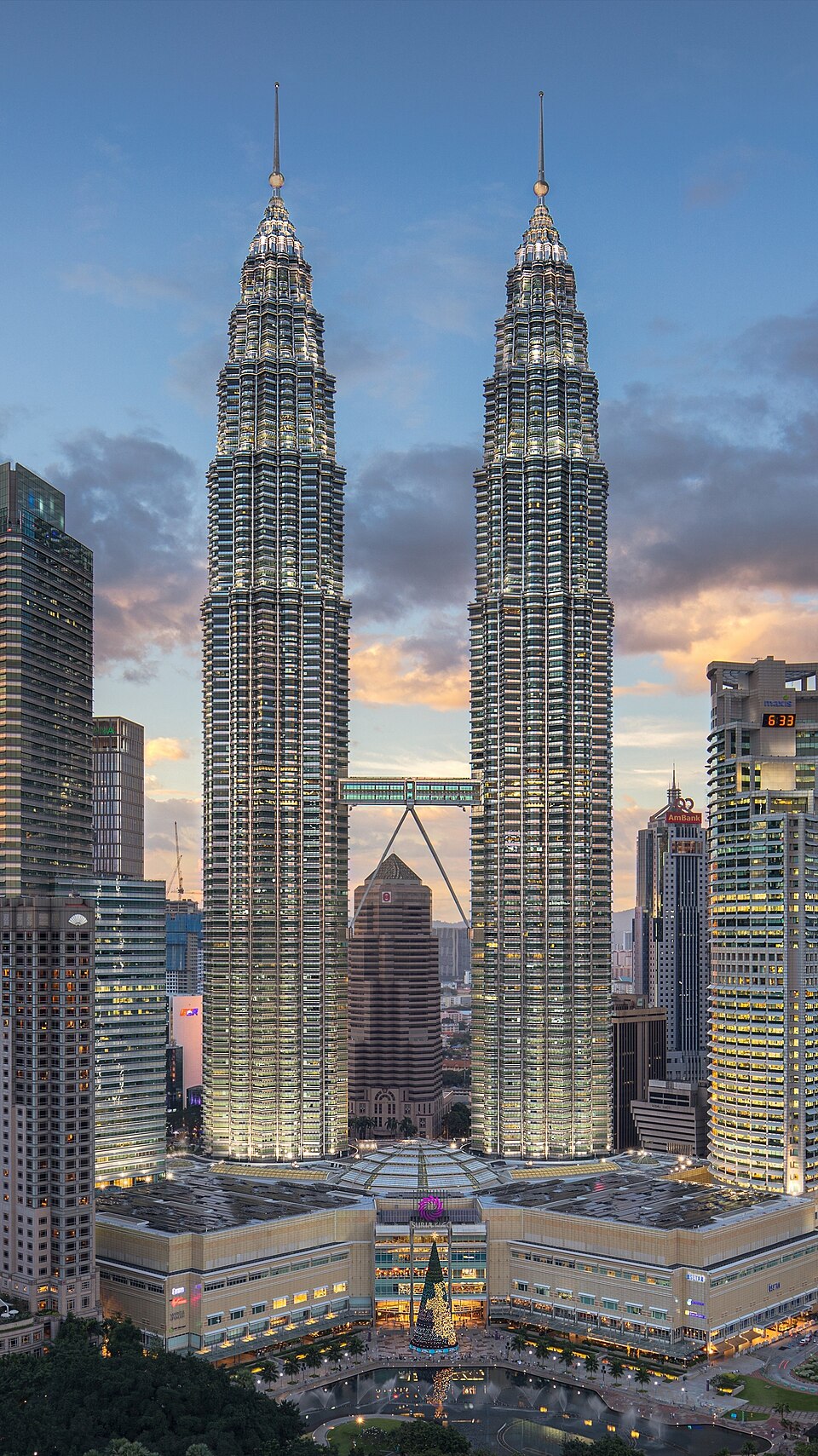
Petronas Towers

Petronas Towers

Menara Berkembar Petronas

KLCC

The 452 m twin towers were the tallest buildings in the world from 1998 to 2004 and remain the tallest twin towers today. Their floor plan is based on an 8-pointed Islamic star. Between the towers, the Skybridge connects the 41st and 42nd floors, and there's an observation deck at 370 m.

Tip: Tickets for the bridge and observation deck are sold for specific time slots and sell out — book online several days ahead. Closed on Mondays. The best view of the illuminated towers is free from KLCC Park by the fountain, which has a water show at 8pm and 9pm. For a photo from a distance, head to the footbridge over Jalan Ampang or the rooftop bar terrace at the Traders Hotel.

Admission:
from MYR 98
Time needed:
1–1.5 h
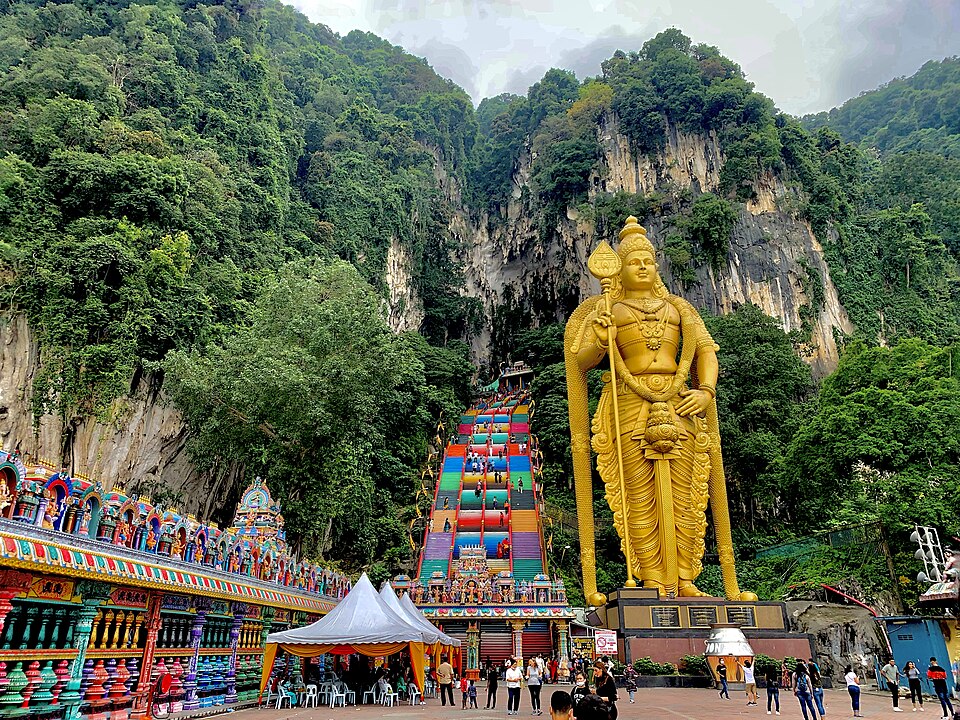
Batu Caves

Batu Caves

Gua Batu

Gombak / 13 km north

A limestone hill with giant caves that form a Hindu shrine to the god Murugan. 272 brightly coloured steps lead up to the main Temple Cave, guarded by a 42 m golden statue of Murugan, one of the largest in the world. Inside is a cave with an opening in the roof and several temples.

Tip: Arrive at 7 or 8am, before the heat and the tour buses. Macaques on the steps steal food, bottles and glasses — don't carry anything loose in your hand. Shoulders and knees must be covered; a sarong can be borrowed at the steps. The KTM Komuter train takes half an hour from KL Sentral station. Around the turn of January and February, the Thaipusam festival is celebrated here with more than a million pilgrims.

Admission:
free
Time needed:
1.5–2 h
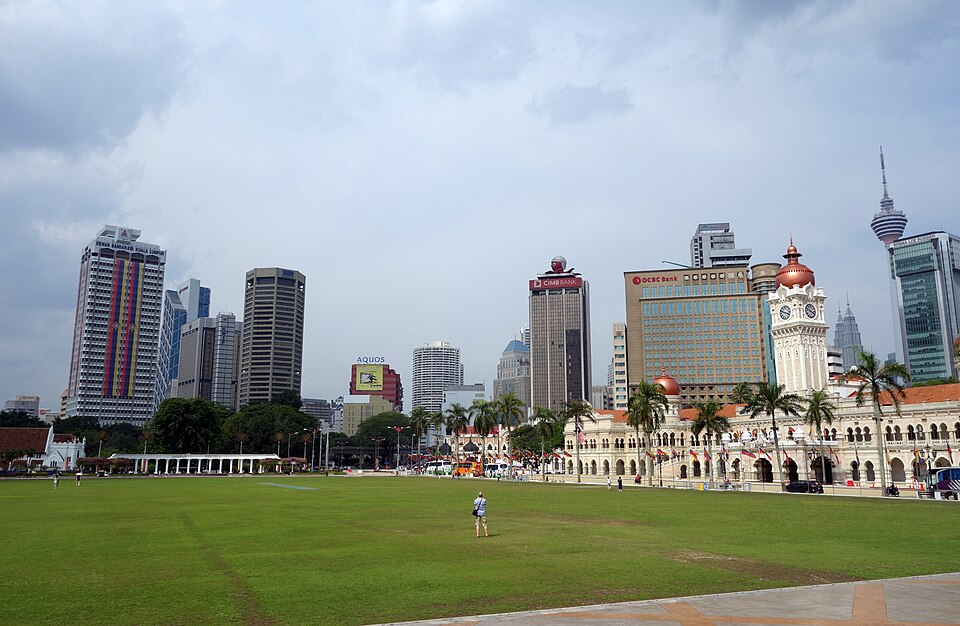
Merdeka Square

Merdeka Square

Dataran Merdeka

Old town

The former British colonial cricket ground, where Malaysia's independence was declared at midnight on 31 August 1957. It's ringed by the copper-domed, Moorish-style Sultan Abdul Samad Building with its clock tower, the Royal Selangor Club, and one of the world's tallest flagpoles.

Tip: Best in the morning or at dusk, when the Sultan Abdul Samad Building lights up. Beneath the square is a small gallery on Kuala Lumpur's history with a large model of the city. A 5-minute walk away is Masjid Jamek at the river confluence where the city was founded; in the evening, the River of Life promenade lights up with blue lights over the water.

Admission:
free
Time needed:
1 h
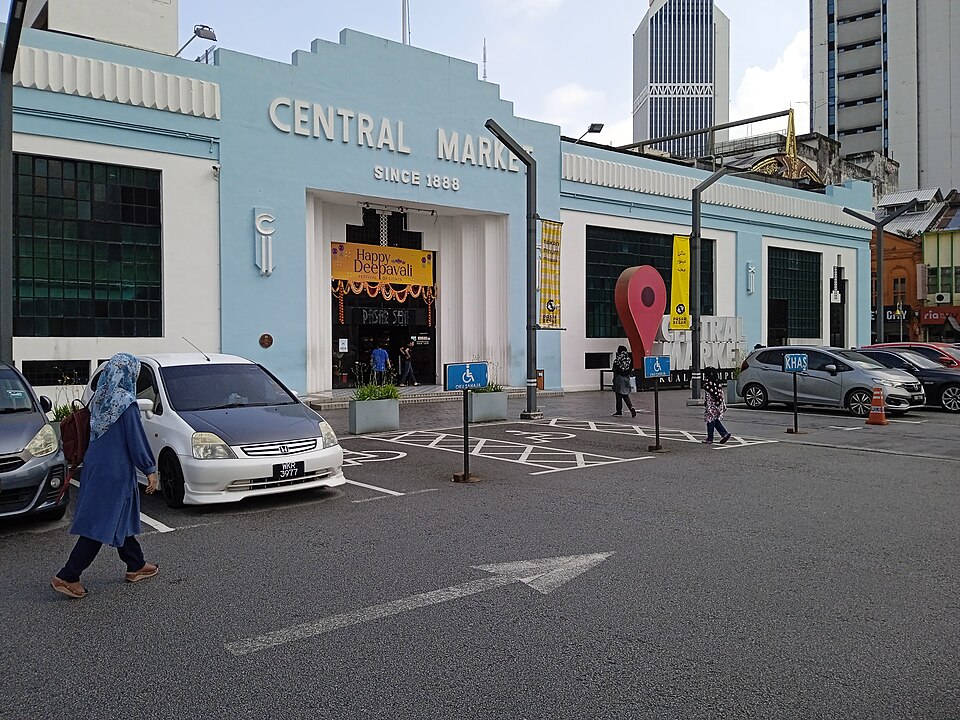
Central Market

Central Market

Pasar Seni

Chinatown

An art deco building from 1888, originally a fish and vegetable market, now a hub for crafts and souvenirs. It sells batik, Selangor pewter, kris daggers, songket fabrics and paintings. Upstairs are stalls serving Malay food, and Kasturi Walk runs along the back.

Tip: Prices are firmer here than on Petaling Street, and quality is better. You can make your own batik in a ground-floor workshop for a few tens of ringgit. For pewter, Royal Selangor is the original — its factory and museum north of the city has free open workshops. Kasturi Walk, an alley covered by a roof shaped like a Malay wau kite, is a cheaper spot for food.

Admission:
free
Time needed:
1 h
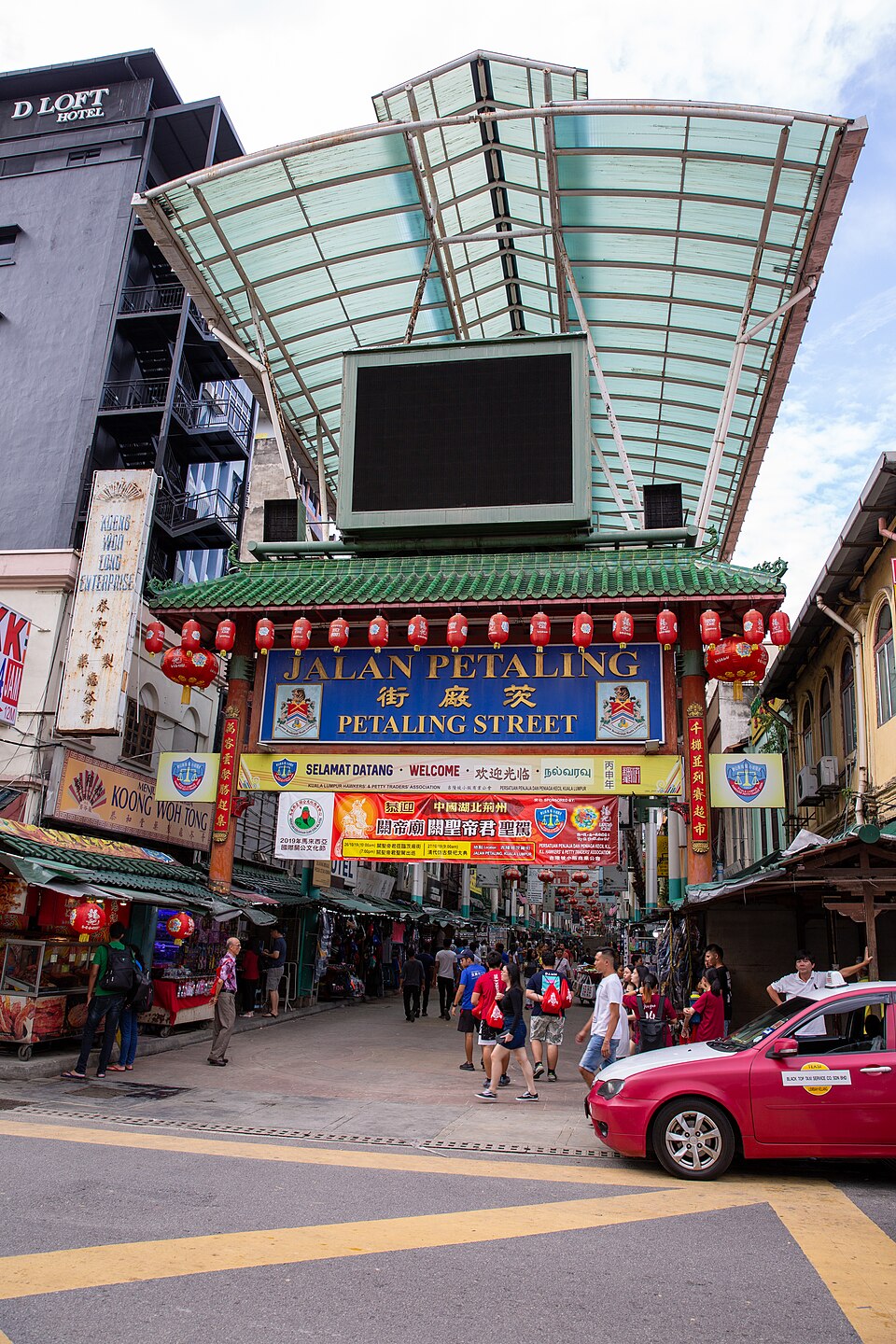
Petaling Street and Chinatown

Petaling Street and Chinatown

Jalan Petaling

Chinatown

The main street of Chinatown under a green canopy roof, where knock-offs, clothes and souvenirs are sold and where people eat in the evening. Around it are old shophouses, the 1864 Sin Sze Si Ya Chinese temple, the Sri Mahamariamman Hindu temple with its colourful tower, and, more recently, street art and cafes in Kwai Chai Hong.

Tip: The goods on Petaling Street itself are touristy, and bargaining starts at a third of the asking price. The main reason to come is the food — roast duck, claypot rice, coconut desserts. Kwai Chai Hong, an alley of restored 1960s-style houses and murals, is prettiest in the evening. The Sri Mahamariamman Temple dates from 1873 and is the city's oldest Hindu temple.

Admission:
free
Time needed:
2 h
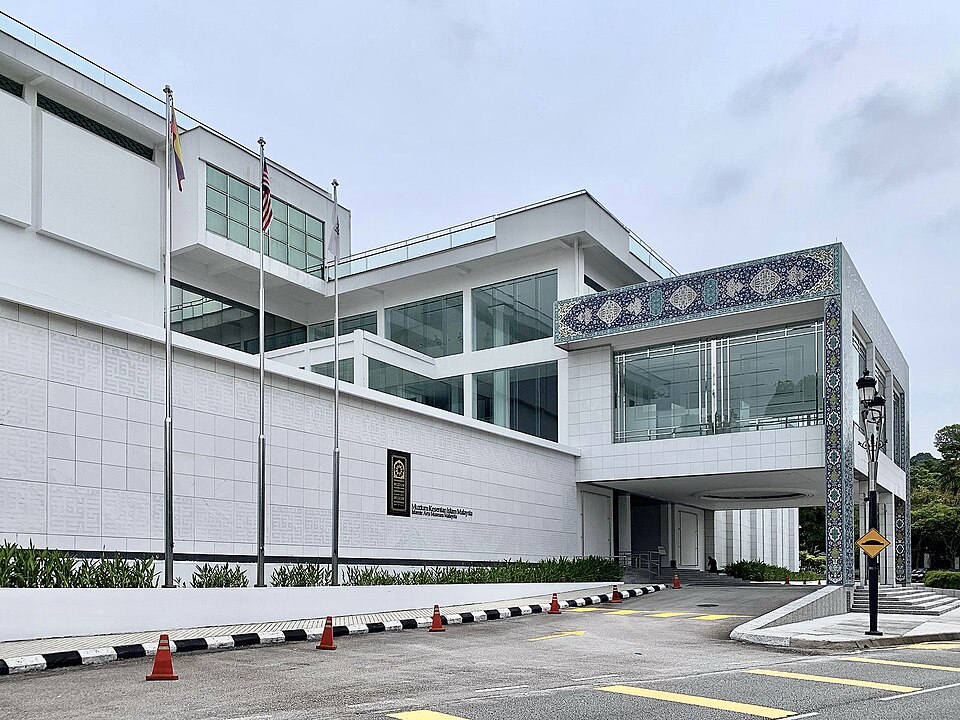
Islamic Arts Museum

Islamic Arts Museum

Muzium Kesenian Islam Malaysia

Perdana Park

The largest museum of Islamic art in Southeast Asia, with 7,000 objects — Quran manuscripts, ceramics, jewellery, textiles, weapons and models of the world's most significant mosques. The building itself has 5 glazed domes and stunning interiors.

Tip: It's the best museum in Kuala Lumpur, yet it stays quiet — even on Saturdays there are few visitors, and the air conditioning is a relief from the midday heat. The most interesting galleries hold mosque models and a restored Ottoman room from Damascus. The museum café serves good Lebanese food. The museum sits in Perdana Park, so pair it with a walk through the gardens.

Admission:
MYR 20
Time needed:
1.5–2 h
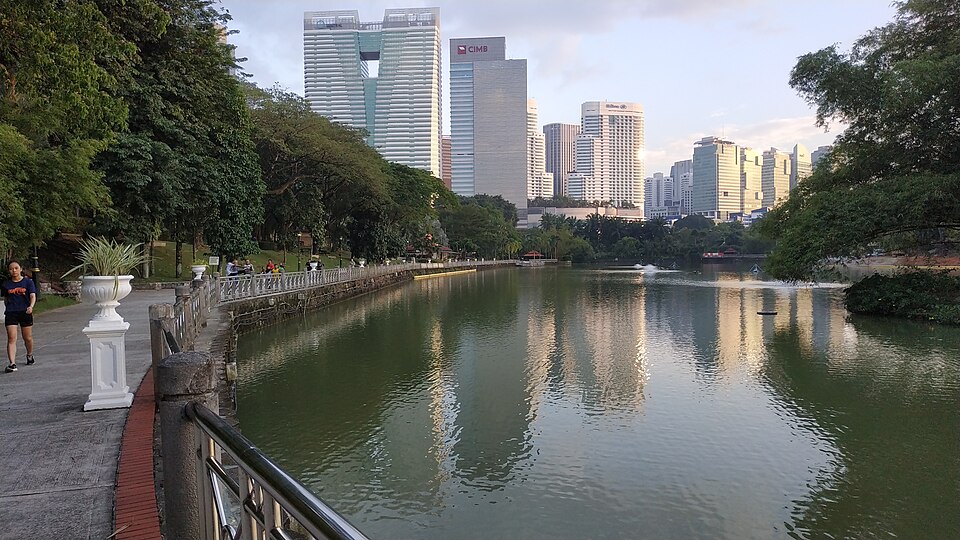
Perdana Botanical Garden

Perdana Botanical Garden

Taman Botani Perdana

Perdana Park

The largest park in Kuala Lumpur, 92 hectares of greenery with a lake, an orchid and hibiscus garden, and a deer enclosure. The British founded it in 1888 as a recreational oasis, and it remains the city's green lung today. The park also holds the National Museum, the National Monument and the bird park.

Tip: It's cool in the morning until 9am, when locals come to jog and exercise. KL Bird Park, one of the largest free-flight aviaries in the world with 3,000 birds, is worth visiting especially with children. The National Monument, a bronze group of soldiers, is by the same sculptor as the Iwo Jima Memorial in Arlington. A free shuttle train loops around the park.

Admission:
garden free, bird park from MYR 90
Time needed:
2–3 h
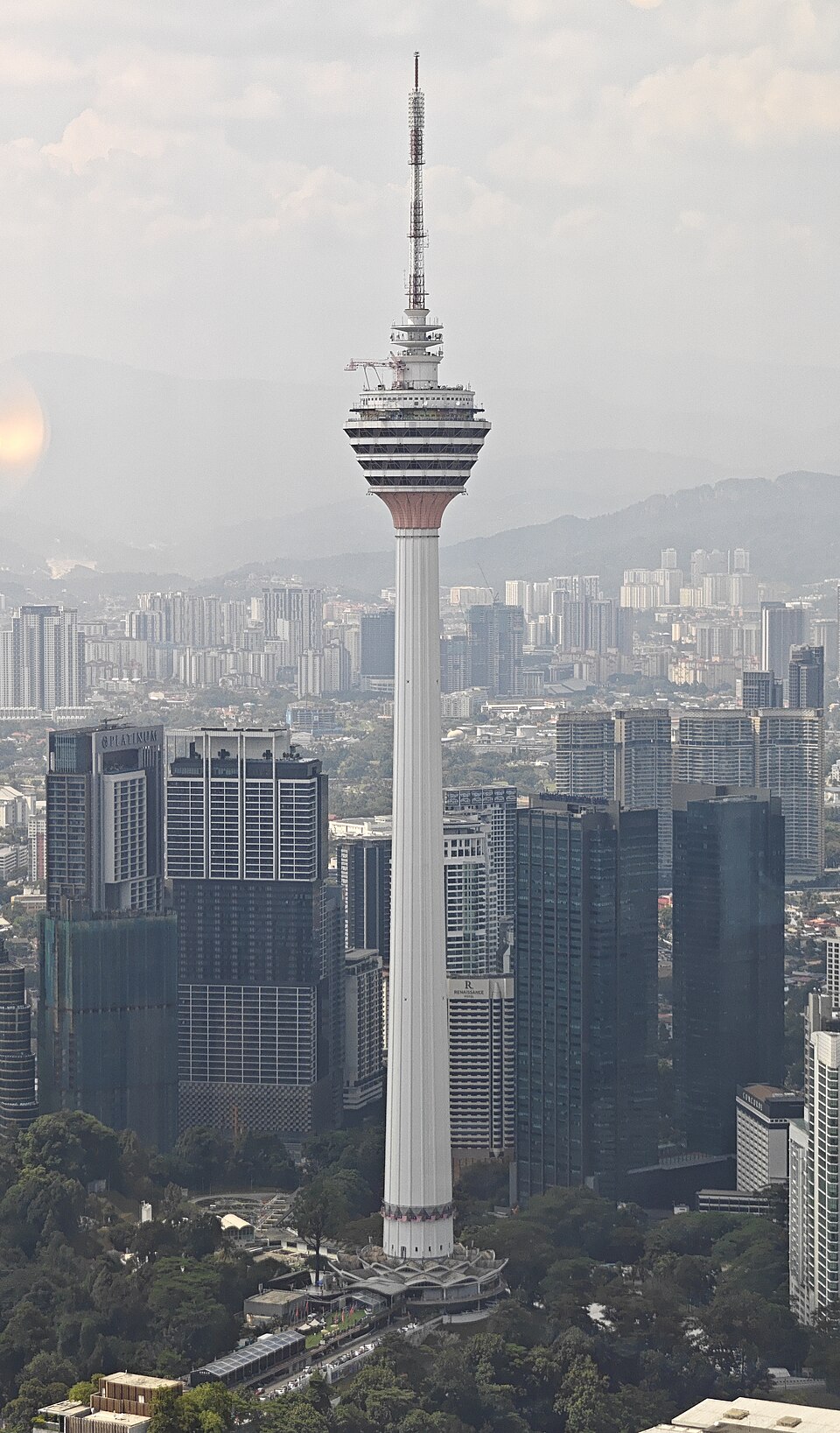
KL Tower

KL Tower

Menara Kuala Lumpur

Bukit Nanas

A 421 m telecommunications tower built on Bukit Nanas hill in the middle of a rainforest reserve, which means its viewing platform sits higher than the one at the Petronas Towers. From the Sky Deck terrace at 300 m, you get the best view of the twin towers themselves. Below the tower, you can walk through what remains of the original tropical rainforest.

Tip: The Sky Deck observation deck is outdoors, with no glass, and gives the best photo of the twin towers. The best time is an hour before sunset. If you're not afraid, you can step into the glass Sky Box cube hanging over the drop. Below the tower, a free wooden trail runs through the Bukit Nanas forest reserve with a canopy walkway among the treetops.

Admission:
Sky Deck from MYR 150
Time needed:
1–1.5 h
Thean Hou Temple

Thean Hou Temple

Tian Hou Gong

Robson Heights / south

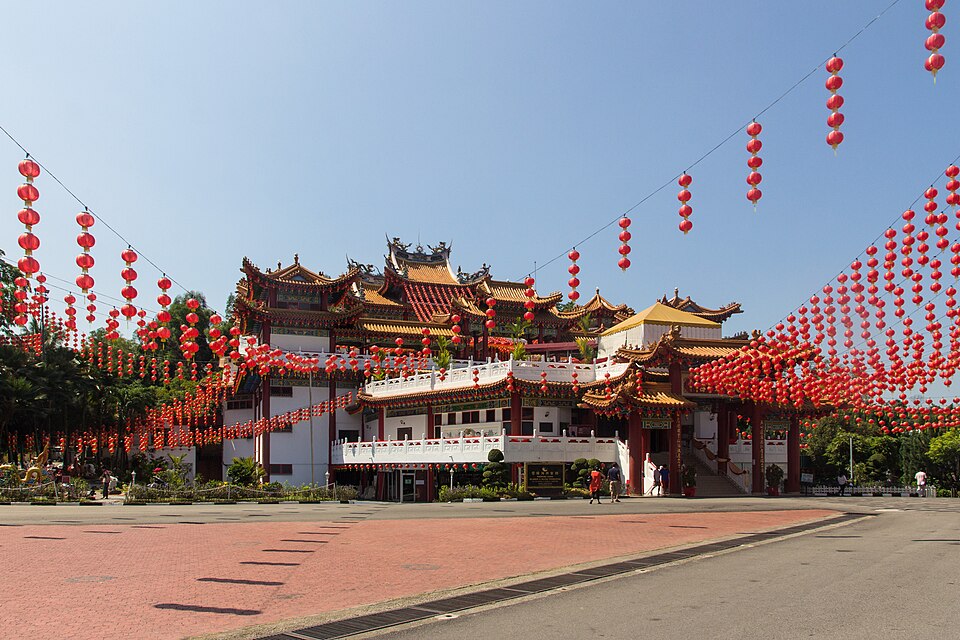
A 6-storey Chinese temple on a hill south of the centre, dedicated to Mazu, the goddess of the sea. It blends Buddhist, Taoist and Confucian elements with red lanterns, ornate roofs and views over the city. It's one of the largest Chinese temples in Southeast Asia.

Tip: It's prettiest just before Chinese New Year, when thousands of red lanterns hang, and in the evening when it lights up. The temple garden has statues of the 12 animals of the Chinese zodiac. Grab is the best way to get here, as public transport doesn't run directly to it. Downstairs there's a vegetarian eatery with a cheap lunch.

Admission:
free
Time needed:
45 min–1 h

Photos: Petronas Towers — James Kerwin from Tbilisi (CC BY 2.0) · Batu Caves — Chainwit. (CC BY-SA 4.0) · Merdeka Square — Haakon S. Krohn (CC BY-SA 3.0) · Central Market — Wiki Farazi (CC0) · Petaling Street and Chinatown — Shesmax (CC BY-SA 4.0) · Islamic Arts Museum — Chainwit. (CC BY-SA 4.0) · Perdana Botanical Garden — Renek78 (CC BY-SA 4.0) · KL Tower — DvTor8303 (CC0) · Thean Hou Temple — Alexey Komarov (CC BY-SA 4.0)

Where to stay

Areas and districts, matched to the kind of trip you are taking

Bukit Bintang

Best for: first visit, shopping, food

A shopping and entertainment district with the Pavilion, Lot 10 and Fahrenheit malls, the Jalan Alor food street, and hundreds of hotels in every category. The monorail and metro are both close by, and a covered, air-conditioned footbridge leads to KLCC. It's the most practical choice for a first stay — lively until late, with food on every corner.

KLCC

Best for: luxury, twin-tower views, families

The district around the Petronas Towers, with luxury hotels boasting rooftop pools and views of the twin towers, plus KLCC Park with a children's pool and an aquarium. It's clean and quieter than Bukit Bintang, though there's less going on at night. Hotels with a view of the twin towers are one of the best experiences in Kuala Lumpur.

Chinatown and Merdeka

Best for: smaller budgets, history, atmosphere

The old town, with colonial buildings, Chinese and Hindu temples, Central Market, and cheap hotels and hostels. It has the most atmosphere in the city and excellent food. Hotels are simpler, though boutique hotels in restored shophouses have recently appeared. Pasar Seni station has a direct connection to the airport.

Brickfields and KL Sentral

Best for: transport links, Indian quarter

Little India by the main KL Sentral station, from where trains run to the airport and the Batu Caves. The streets are full of sari shops, flower-garland stalls and banana-leaf eateries. Hotels here are business-oriented and well connected, though shopping and nightlife are further away.

Getting around

From the airport

Kuala Lumpur is reached with one stopover via hubs such as Dubai, Doha, Istanbul or Amsterdam from many European cities; Malaysia Airlines flies direct from London and Paris, with the journey taking 14–16 hours. Most Western passport holders don't need a visa for stays of up to 90 days, but you must complete the electronic MDAC arrival card 3 days before landing. Kuala Lumpur International Airport (KLIA) lies 50 km south of the city and has 2 terminals — KLIA1 for traditional airlines and KLIA2 for AirAsia and other budget carriers. From KLIA2 there are cheap flights to Bali, Langkawi, Penang, Thailand, Vietnam and Australia. Trains run from KL Sentral to Penang and Singapore, and buses to Malacca.

Kuala Lumpur International (KLIA1 and KLIA2) (KUL) · 50 km

  • KLIA Ekspres to KL Sentral· 28–33 min· MYR 55
  • Bus to KL Sentral· 60–90 min· MYR 15
  • Grab to Bukit Bintang· 50–70 min· MYR 75

Around town

Kuala Lumpur has an extensive rail network — the MRT metro, LRT light rail, monorail and KTM commuter trains — though they were built independently over time, so transfers can be long. You pay with a contactless card or a Touch 'n Go card. The most practical option for visitors is Grab: cheap, with an upfront price, and air-conditioned. Unlike in some other Asian cities, walking here is hard going because of the heat and roads without pavements, though a covered footbridge links KLCC and Bukit Bintang, and free GO KL City Bus routes run around the centre. Avoid taxis without a meter, as they overcharge. During rush hour and rain, roads get jammed and Grab gets pricier.

MRT, LRT and monorailFare based on distance, paid by contactless card or Touch 'n Go. · MYR 1.20
GO KL City BusFree loop routes around the centre, every 10–15 min. · free
GrabThe most practical transport, upfront price, paid by card. · MYR 8
KTM KomuterCommuter trains to the Batu Caves. · MYR 2.60

Useful apps: Grab, Google Maps, Waze, AirAsia MOVE

When to go

Kuala Lumpur sits 3 degrees from the equator and is hot all year round, around 32°C by day and 24°C at night, with high humidity. The seasons differ only in rainfall: June and July are driest, along with January and February, while April and October–November are wettest. Rain, though, comes as an hour-long afternoon storm and then the sun's back out, so you can travel any time. From June to September, smoky haze from fires on Sumatra can blanket the city. Notable dates include Chinese New Year with its lanterns, Thaipusam at the Batu Caves, and Hari Raya at the end of Ramadan, when the city empties out and many families hold open houses for anyone to visit.

Best time

June–August, January–February

What to avoid

November (most storms)

MonthJanFebMarAprMayJunJulAugSepOctNovDec
Day32°33°33°33°33°33°32°32°32°32°32°32°
Night23°23°24°24°24°24°23°24°23°23°23°23°
Rainy days12111416139101113171915

Food & drink

Kuala Lumpur is one of the best cities in Asia for food, because Malay, Chinese and Indian cuisines meet here and influence one another. Breakfast is nasi lemak wrapped in a banana leaf, or roti canai at Indian mamak stalls that never close. For lunch, head to a nasi campur counter, where you pick what you want on your rice from dozens of dishes and pay by how much you've taken. In the evening, people eat on the street — Jalan Alor in Bukit Bintang is the best known, but locals are more likely to head to the pasar malam night markets and eateries in Chinatown. Banana-leaf Indian food in Brickfields is eaten with your hand. Food is halal at most Malay establishments, while Chinese eateries serve pork. Prices are low: a meal at a hawker centre costs MYR 10–20, while restaurants add a 10% service charge and 6% tax.

What to try

Nasi lemak

Rice cooked in coconut milk with pandan, served with spicy sambal paste, dried anchovies, peanuts, cucumber and egg. Malaysia's national dish and most common breakfast, sold in the morning wrapped in a banana leaf.

Roti canai

A layered fried flatbread of Indian origin, served with a bowl of dal or fish curry for dipping. A breakfast that costs MYR 2, made at round-the-clock mamak stalls found everywhere in Malaysia.

Satay

Grilled chicken or beef skewers with peanut sauce, ketupat rice cakes and raw onion. Ordered by the 10, and it's an evening food — most stalls don't have the grill fired up during the day.

Char kway teow

Wide rice noodles fried over a fierce flame with prawns, lap cheong sausage and bean sprouts. The mark of a good version is the smoky wok hei flavour that cheap stalls can't manage.

Laksa

A noodle soup that takes a different form in every state — in the north it's the sour, fish-based asam laksa, elsewhere a creamy coconut curry laksa. Order wherever you see a queue of locals; the gap in quality is huge.

Teh tarik

Strong black tea with sweetened condensed milk, poured between 2 containers from a height until it froths. Ordered with every meal, and costs just a couple of ringgit at mamak stalls.

Cendol

Shaved ice with coconut milk, gula melaka palm sugar and green rice-flour noodles. Tastes better than it looks, and it's the best thing to have in the midday heat.

Banana leaf rice

Rice on a banana leaf with several types of vegetable curry, papadam and pickles, plus fried chicken or fish curry on the side. Eaten with the right hand, and at the end the leaf is folded towards you as a sign that you enjoyed the meal.

What it costs

Nasi lemak or roti canai

MYR 4–10

Meal at a hawker centre

MYR 10–20

Teh tarik

MYR 2–4

Dinner at a restaurant

MYR 50–100

Beer at a bar

MYR 20–35

Grab ride around the centre

MYR 8–20

Petronas Towers admission

from MYR 98

Night in a 4-star hotel for 2

MYR 250–500

Indicative prices that change over time — treat them as a guide, not a price list.

Practical information

SocketsGBritish, three rectangular pins
Voltage240V / 50Hz
Tap waterTap water is treated, bottled is common — Tap water is treated, but due to old pipes it's not recommended to drink it straight from the tap — locals boil it first. Bottled water costs around MYR 2 a bottle in shops, and hotel rooms commonly come with a kettle. Ice in drinks is safe, as it's produced centrally.
TippingTipping isn't customary in Malaysia and no one expects it. At mid-range and upscale restaurants, the bill includes a 10% service charge and 6% tax, added at the end — so menu prices aren't final. At cheap eateries you pay exactly, rounded only to the nearest coin.
Driving on theleft
SafetyMalaysian cities are safe, and violent crime against tourists is rare. The typical problem is bag-snatching by passing motorbike riders and pickpocketing at night markets — carry your bag on the side away from the road. Taxis without a meter overcharge; Grab is more reliable. Afternoon storms arrive quickly with lightning, so take shelter in parks and open areas. From June to September, smoky haze from forest burning on Sumatra can drift in; wear a mask when the API index is high. The emergency number is 999, or 112 from a mobile.
Opening hoursShopping malls are open from 10am to 10pm, and street eateries and mamak stalls are often open around the clock. Night markets start around 6pm. On Fridays, between 12:30 and 2:30pm, mosques close to tourists and offices take a longer lunch break. Museums close at 5 or 6pm. During Hari Raya at the end of Ramadan, Chinese New Year and Deepavali, the city empties out as people head home; shopping malls, however, stay open.
Customs & etiquetteMalaysia is a Muslim-majority country with large Chinese and Indian minorities, so the rules differ depending on where you are. The left hand is considered unclean — food, money and gifts are handed over with the right. Mosques are entered without shoes, and women should cover their hair; robes are usually available to borrow at the entrance. Swimwear belongs on the beach and by the pool, not in a village; no one minds at resorts, but it matters in a Muslim village. During Ramadan, eating and drinking in public during the day is avoided, even though the rule doesn't apply to tourists.
A few local wordsHello — Selamat pagi (ráno) / petang (odpoledne)Thank you — Terima kasihHow much does this cost? — Berapa harga?The bill, please — Bil, silaGood (tasty) — Sedap

How to plan your days

1 day

Kuala Lumpur in 1 day

  1. 1At 7am, Batu Caves, before the heat sets in.
  2. 2Merdeka Square and Masjid Jamek.
  3. 3Lunch at Central Market and Petaling Street.
  4. 4In the afternoon, the Islamic Arts Museum and Perdana Park.
  5. 5In the evening, the Petronas Towers fountain show and food on Jalan Alor.

2 days

Two days in Kuala Lumpur

  1. 1Day 1: Batu Caves, Merdeka Square, Chinatown and Kwai Chai Hong.
  2. 2Day 1 evening: Jalan Alor in Bukit Bintang.
  3. 3Day 2: Islamic Arts Museum, the bird park and the botanical garden.
  4. 4Day 2 afternoon: Thean Hou Temple and KL Tower.
  5. 5Day 2 evening: the Petronas Skybridge or a rooftop bar with a view of the twin towers.

3 days

Three days with Malacca

  1. 1Day 1: Batu Caves, Merdeka Square and Chinatown.
  2. 2Day 2: a full-day trip to Malacca.
  3. 3Day 2 evening: the Jonker Street night market and the bus back.
  4. 4Day 3: Perdana Park, the Islamic Arts Museum and KL Tower.
  5. 5Day 3 evening: the Petronas Towers and KLCC Park.

Day trips

Malacca

150 km · 2 h by bus

A historic strait port ruled in turn by Malays, the Portuguese, the Dutch and the British, whose old town is a UNESCO World Heritage Site. The Dutch Square with the red Stadthuys town hall, the Portuguese A Famosa fort, Peranakan trading houses and the weekend night market on Jonker Street. Buses leave from the TBS terminal every half hour. Stay overnight on a weekend, since the night market runs on Friday and Saturday.

Putrajaya

30 km · 30 min by KLIA Transit train

Malaysia's new administrative capital, built since the 1990s on an artificial lake, with monumental buildings in Islamic style. The prettiest is the pink-granite-domed Putra Mosque, along with the stainless-steel Iron Mosque. Boats cruise the lake and the bridges light up in the evening. It's more a curiosity than a living city — half a day is enough.

Genting Highlands

60 km · 1 h by car + cable car

A mountain resort almost 2,000 m up, where it's 10°C cooler than in the city. One of Southeast Asia's longest cable cars, the Awana Skyway, climbs to it over the rainforest. At the top there's a casino, a theme park and a shopping mall. For nature, it's better to stop at the Chin Swee Temple on the slope and walk through the misty forest.

Frequently asked questions

How many days do you need for Kuala Lumpur?+

2–3 days for the city, 4 with a trip to Malacca. Kuala Lumpur is often a stopover on the way to Bali or Australia, and even a single full day is enough for Batu Caves, Merdeka Square, Chinatown and the Petronas Towers. For Malaysia as a whole, add Penang, Langkawi or Borneo.

Do I need a visa for Malaysia?+

Visitors from most Western countries don't need a visa for stays of up to 90 days. However, you must complete the online MDAC arrival card 3 days before landing — it's free and takes 5 minutes. At the airport, use the automated gates. Your passport must be valid for at least 6 months.

Do I need to book Petronas Towers tickets in advance?+

Yes, it's recommended. Tickets for the Skybridge and observation deck are sold for specific time slots and sell out on weekends and public holidays. Buy them online on the official website. It's closed on Mondays and during Friday midday prayers. You can get free photos of the twin towers from KLCC Park or KL Tower.

What should I wear to mosques and temples?+

Cover your shoulders and knees, both men and women; women should also cover their hair inside mosques. Mosques lend robes and headscarves to visitors free of charge. Shoes come off. Mosques are closed to tourists during prayer times, especially around midday on Fridays. Shoes also come off at Hindu temples.

Is Kuala Lumpur safe?+

Yes, it's a safe city with low violent crime. Watch out for bag-snatching motorbike riders and pickpockets at night markets. Taxis without a meter overcharge, so use Grab instead. You can walk around the centre at night without worry.

Where's the best place to eat in Kuala Lumpur?+

In hawker centres and local eateries, not shopping malls. Jalan Alor is the best-known evening food street, though it's touristy. Chinatown around Petaling Street has the best Chinese food, Brickfields the best banana-leaf Indian food, and mamak stalls serving roti canai and teh tarik are open around the clock across the city.

How do you pay in Malaysia?+

Cards are accepted almost everywhere — in Grab, shopping malls and restaurants. Cash is handy at night markets, small eateries and stalls. ATMs are everywhere and accept foreign cards. A Touch 'n Go card is useful for public transport and parking, and you can buy one at any 7-Eleven.

When is the best weather in Kuala Lumpur?+

It's warm all year round; the only difference is rainfall. June and July are the driest months, along with January and February. Storms peak in April and from October to November, though these are usually just an hour-long afternoon downpour. From June to September, smoky haze can drift in from Indonesia.

Arrival Card

Fill in the required arrival card before your trip to avoid delays at immigration.

Complete Arrival Card

Visa Requirements

Check the latest visa requirements for entering this country. Some nationalities may need to apply for a visa or e-visa before travel.

Check visa requirements

Language

Malay

Currency

MYR

Timezone

GMT+8

Dial Code

+60

Population

33.9M

Area

330,803 km²

Voltage

240V / 50Hz

Driving Side

Left

Top Hotels in Kuala Lumpur

Live prices from 500+ properties

Loading hotels...

More destinations in Malaysia

Planning a trip to Kuala Lumpur?

Compare hundreds of hotels, find the best price, and book with free cancellation on TravelManiac.