Hotels in Pokhara

A calm lake beneath eight-thousand-meter peaks, the starting point for treks into the Annapurnas

Pokhara

LanguageNepali
CurrencyNPR
TimezoneAsia/Kathmandu
Temperature10-30 °C
Dial Code+977
Population30.9M
Area147,181 km²
SocketsType C / Type D / Type M
Tap waterNot drinkable

Discover Pokhara

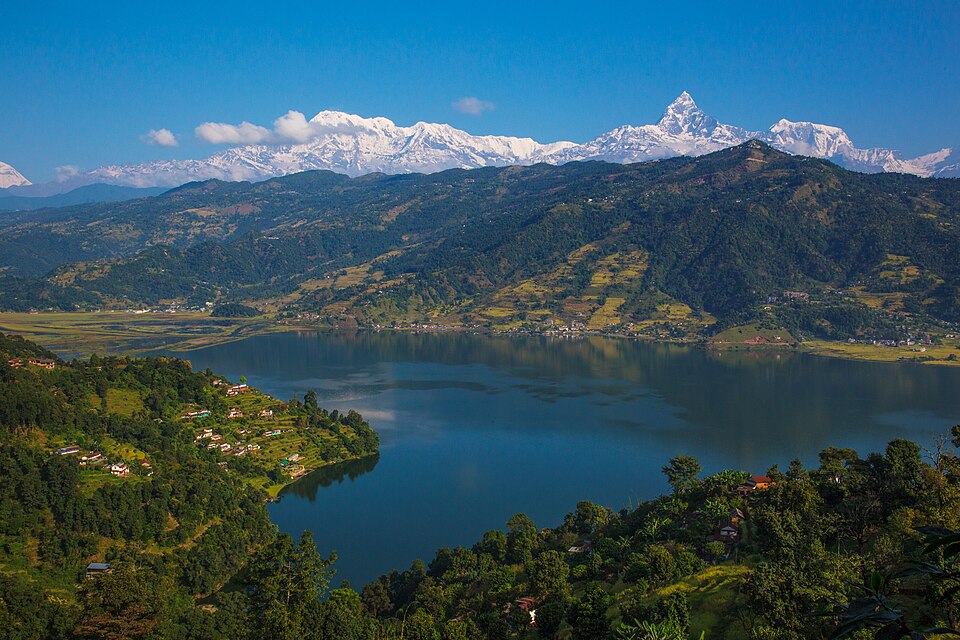
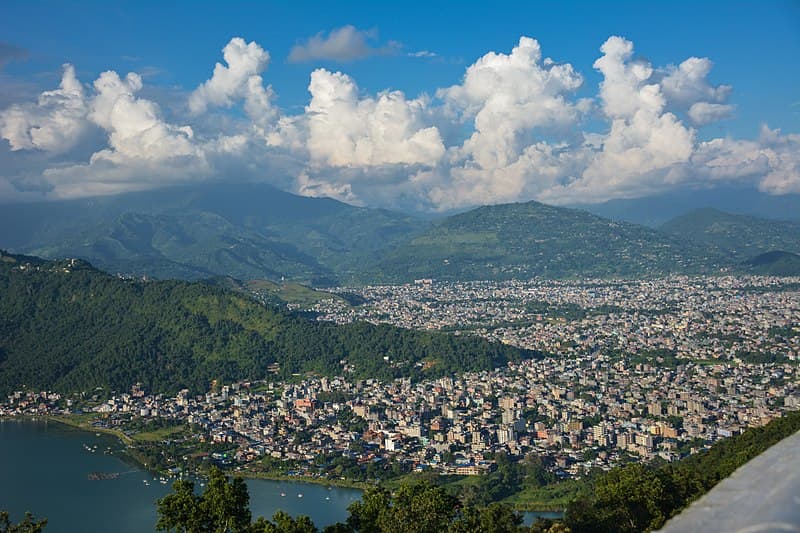
Pokhara is Nepal's second-largest city and its holiday hub, two hundred kilometers west of Kathmandu. It sits in a valley at eight hundred twenty meters on the shore of Lake Phewa, and just thirty kilometers away as the crow flies rises the wall of the Annapurnas, including the eight-thousand-meter Annapurna I and the sacred, spire-shaped Machapuchare, which is off-limits to climbers. On clear mornings the mountains reflect in the lake, and a seven-kilometer difference in elevation over such a short distance is unmatched anywhere in the world. Pokhara is the starting point for treks into the Annapurna region — from the four-day Poon Hill trek to the two-week Annapurna Circuit. Those not trekking come here for the calm, paragliding over the lake, rowing boats, and views from the hills. The tourist district of Lakeside, along the lake, has hotels, restaurants serving food from around the world, and shops selling trekking gear. It's an ideal place to rest after Kathmandu and after the mountains.

What to see

The places worth your time in Pokhara, and what to expect at each

Lake Phewa and Tal Barahi Temple

Lake Phewa and Tal Barahi Temple

Lakeside

Nepal's second-largest lake, four and a half kilometers long, with colorful wooden boats along the shore and the Annapurnas rising behind it. On a small island in the middle stands the two-tiered pagoda-style Tal Barahi temple dedicated to the goddess Durga, reached by boat. The Lakeside promenade is Pokhara's main waterfront.

Tip: Rent a boat with or without a rower and paddle out at dawn, when the water is calm and the mountains reflect in it — by afternoon the wind picks up and the mountains vanish into haze. On Saturdays the temple fills with Nepali pilgrims making animal offerings. The best view of the lake with the mountains is from the dam in Damside.

Admission:
boat around 700 NPR/h
Time needed:
2 h
Sarangkot

Sarangkot

North of the lake

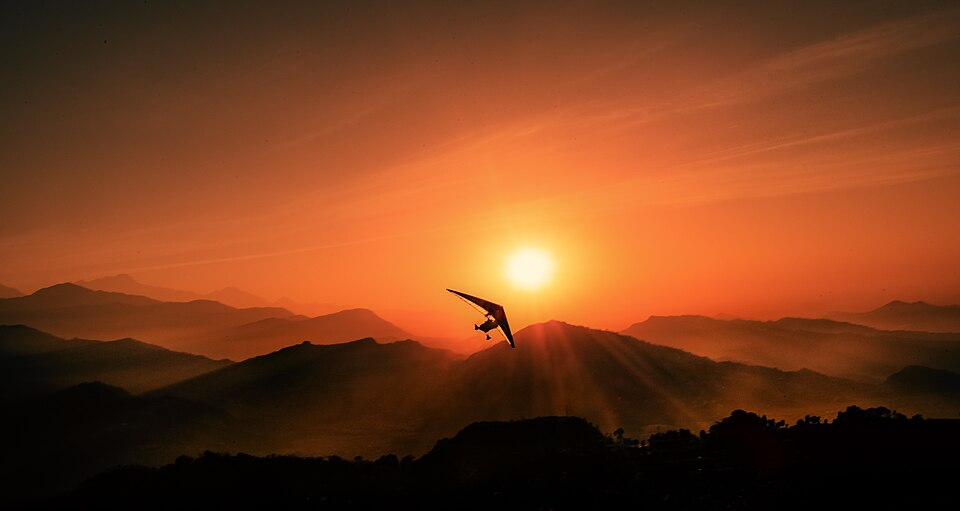
A hill at 1,600 meters above the north shore of the lake with the most famous sunrise view over the Annapurnas: from Dhaulagiri in the west across Annapurna I and Machapuchare to Lamjung in the east. At dawn the peaks turn red and gold one after another. Paragliders launch from here.

Tip: Taxis leave Lakeside at five in the morning and take forty minutes; alternatively, walk up in an hour and a half from Bindhyabasini Temple. Once at the top, pay extra for the higher viewing tower — the lower platform gets crowded. The view is only reliable from October to April — during the monsoon the mountains are in cloud.

Admission:
viewpoint around 50 NPR
Time needed:
3 h
World Peace Pagoda (Shanti Stupa)

World Peace Pagoda (Shanti Stupa)

South shore of the lake

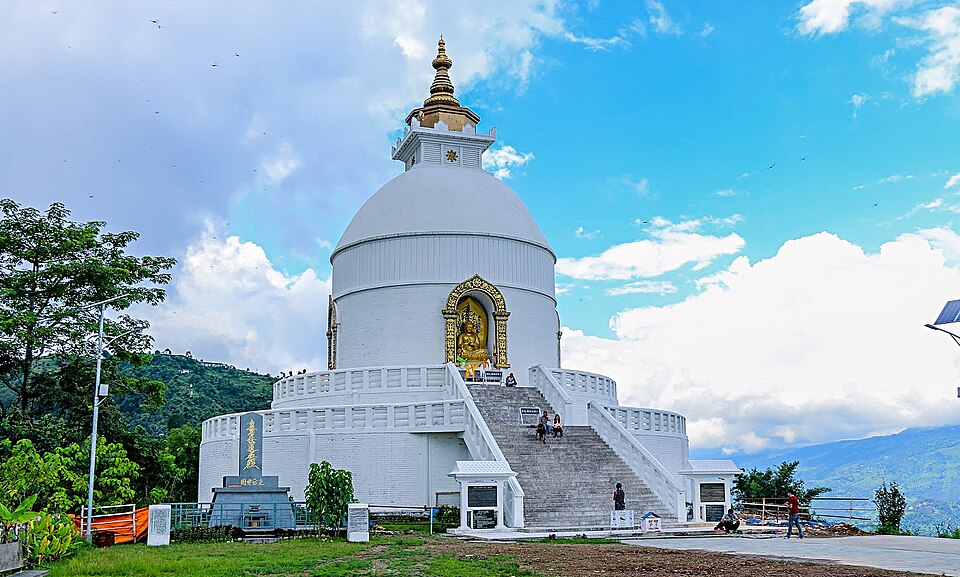
A white Buddhist stupa on the ridge above the south shore of the lake, built by Japanese monks of the Nipponzan-Myohoji order as one of the World Peace Pagodas found around the globe. From the terrace there are views of the lake, the city, and the Annapurnas behind it. Golden Buddha statues face all four directions.

Tip: The nicest route is by boat across the lake from Lakeside to the south shore, then a forty-minute walk up steps through the forest. On the way back, descend on the other side to Davis Falls and take a taxi. Walk to the stupa barefoot and clockwise. The best light is at sunset.

Admission:
free
Time needed:
3 h
Paragliding over the lake

Paragliding over the lake

Sarangkot

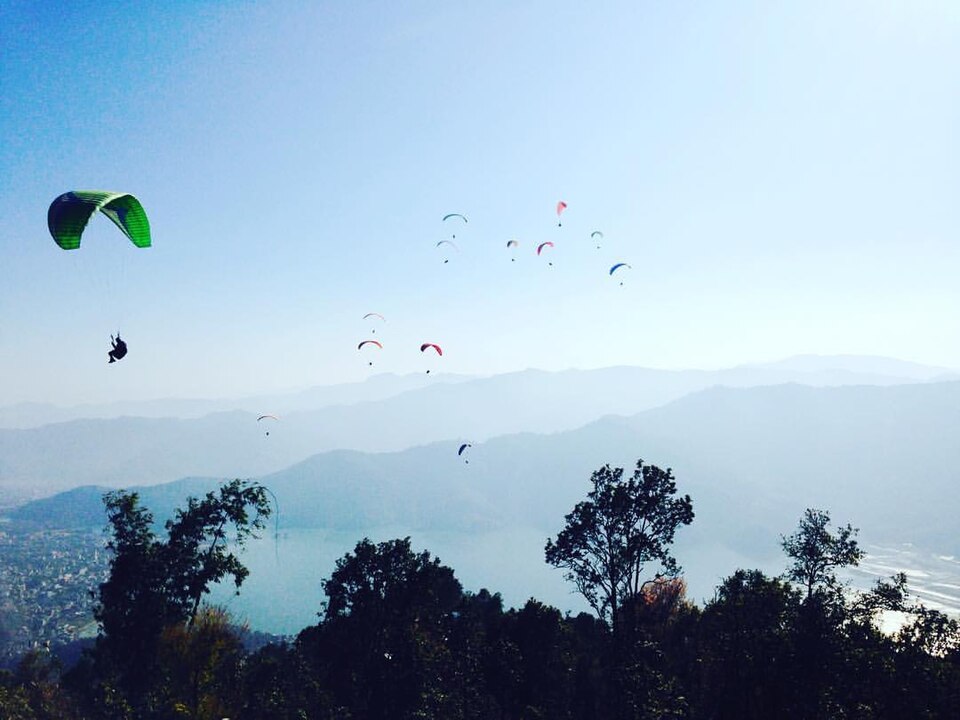
Pokhara is one of the best places in the world for tandem paragliding: launching from Sarangkot at 1,600 meters, a half-hour flight over the lake with views of eight-thousand-meter peaks, landing on the shore in Lakeside. Thermals over the valley allow long airtime and circling with eagles above the lake.

Tip: The best season is October to April, with clear views and stable thermals. A thirty-minute flight costs around ten thousand rupees, an hour over fifteen thousand; GoPro photos and videos are sold separately. Choose a licensed operator with experienced pilots — thermals are strongest around midday.

Admission:
8,000–15,000 NPR
Time needed:
3 h including transfer
International Mountain Museum

International Mountain Museum

South of the city

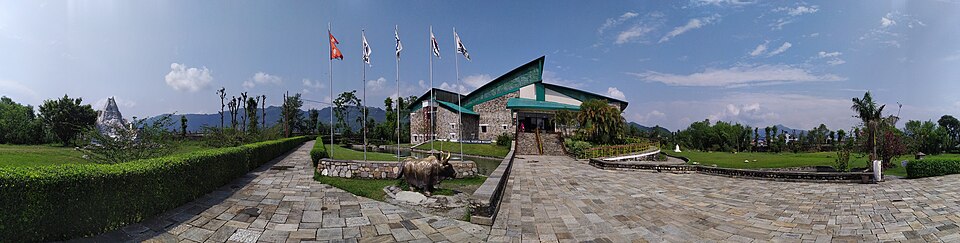
A modern museum devoted to the Himalaya and mountaineering: the history of eight-thousander ascents, expedition gear, the culture of Nepal's mountain peoples, and the geology and nature of the mountains. Outside stands a climbing wall and a model of Manaslu. It's the best preparation before a trek.

Tip: The museum is large and air-conditioned, ideal for the hottest afternoon or a rainy monsoon day. The exhibit on Sherpas and the first ascents of Everest with original gear is the highlight. It's in the south of the city, fifteen minutes by taxi from Lakeside.

Admission:
around 500 NPR
Time needed:
2 h
Davis Falls and Gupteshwor Cave

Davis Falls and Gupteshwor Cave

South of the city

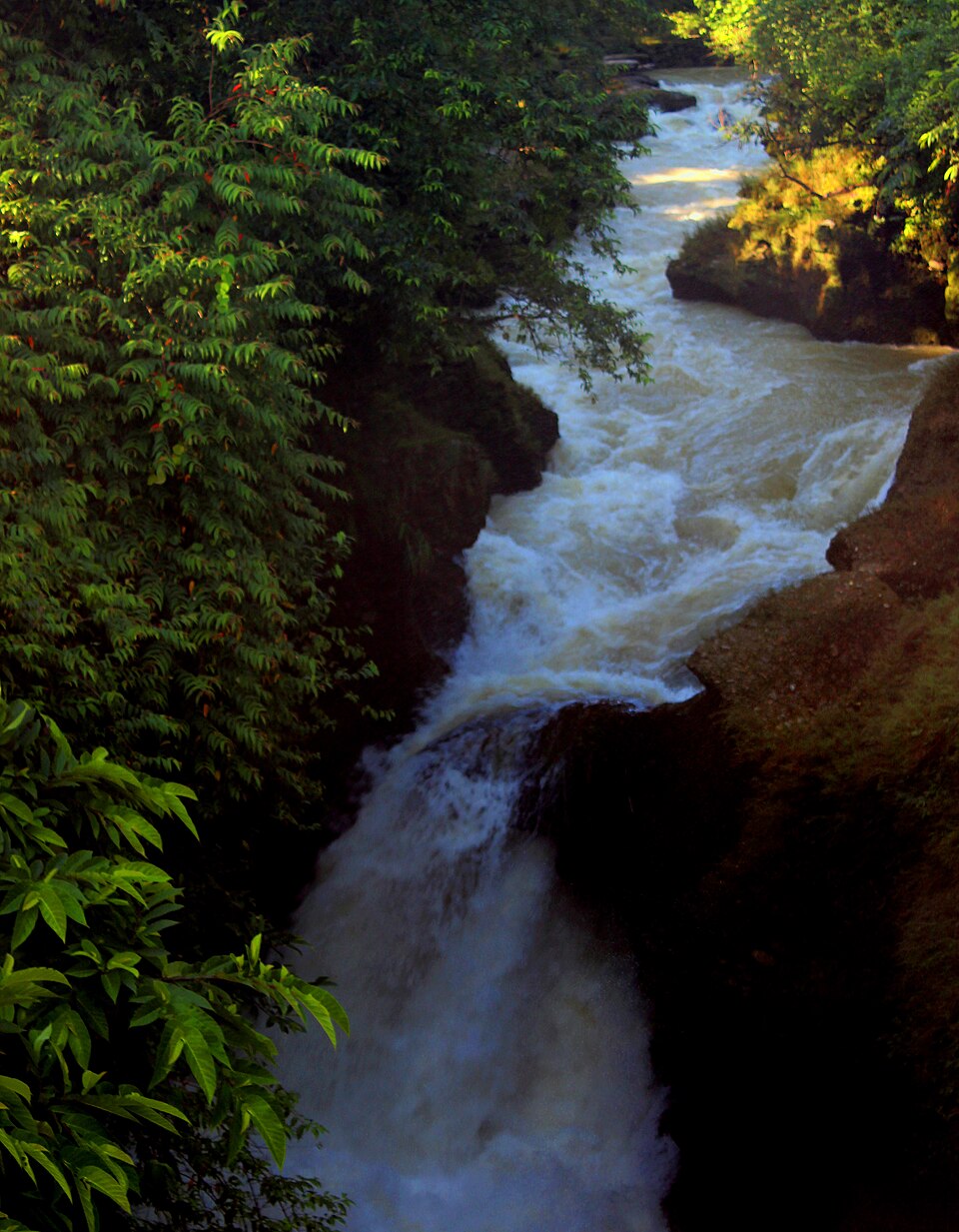
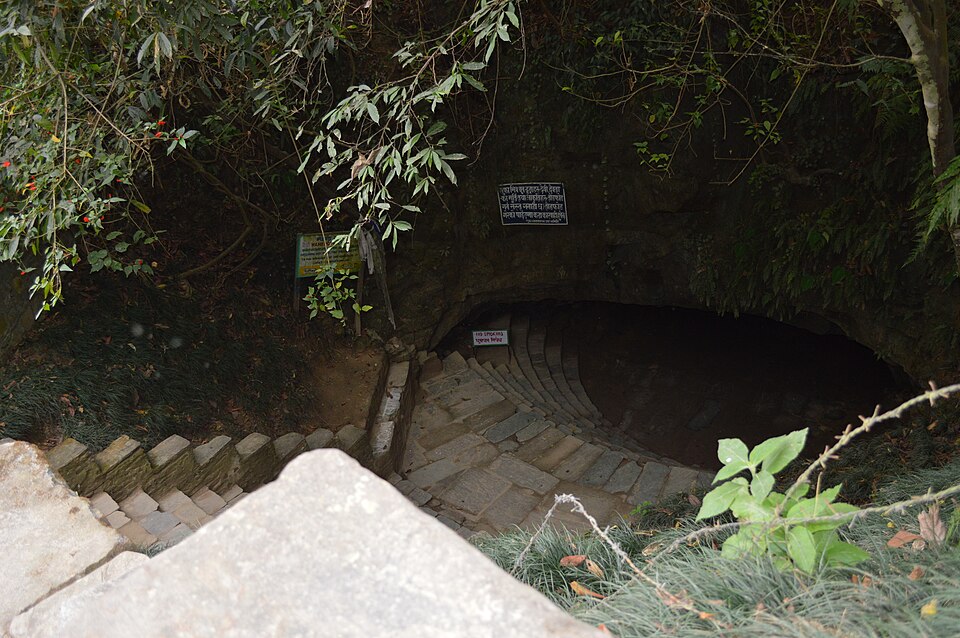
A waterfall where water from Lake Phewa disappears into an underground gorge — named after a tourist swept away here by the water in 1961. Across the road is Gupteshwor Mahadev Cave, a Hindu shrine with underground passages leading right beneath the waterfall, where you can see the water crashing into darkness.

Tip: The waterfall is only worth seeing during and just after the monsoon, from July to October, when there's plenty of water — in the dry season it's just a trickle. The cave is walked on wet steps, so footwear with good grip is essential. Admission is charged separately for the waterfall and the cave.

Admission:
around 100–200 NPR each
Time needed:
1.5 h
Mahendra Cave and Bat Cave

Mahendra Cave and Bat Cave

Batulechaur, north

Two limestone caves north of the city: Mahendra Cave with stalactites and a statue of the god Shiva, and the adjoining Bat Cave (Chamere Gufa) with hundreds of bats on its ceiling. From Bat Cave you can climb out through a narrow chimney-like passage, squeezing through on your stomach.

Tip: Bring your own flashlight — lighting inside the caves is weak and the power often cuts out. The passage out of Bat Cave is only for slim, non-claustrophobic visitors; otherwise you return the way you came. Nearby is the Seti River gorge, running fifty meters below the city through a narrow canyon.

Admission:
around 300–500 NPR
Time needed:
1.5 h
Old Town and Bindhyabasini Temple

Old Town and Bindhyabasini Temple

Old town

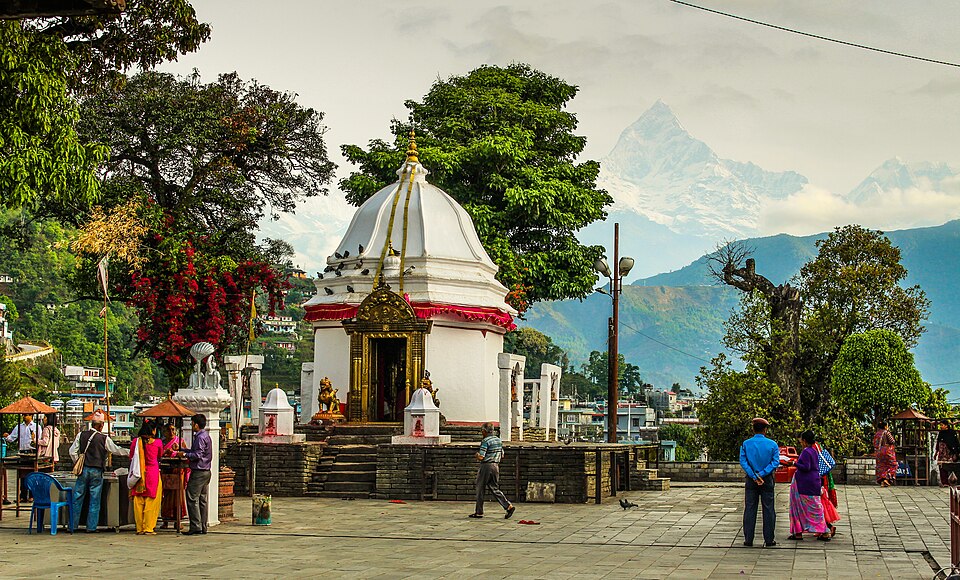
Pokhara's old trading bazaar on the ancient caravan route to Tibet, with Newar houses featuring carved windows, and shops selling brassware and spices. Above it, on a hill, stands the temple of the goddess Bindhyabasini, protector of the city, where worshippers come to make offerings in the morning and on Saturdays.

Tip: Few tourists know the old town, yet it feels more authentic than Lakeside. It's best in the morning, when ceremonies are underway at the temple and the market is in full swing. The old town also has cheap, good local eateries serving dal bhat.

Admission:
free
Time needed:
1.5 h
Lake Begnas

Lake Begnas

15 km east

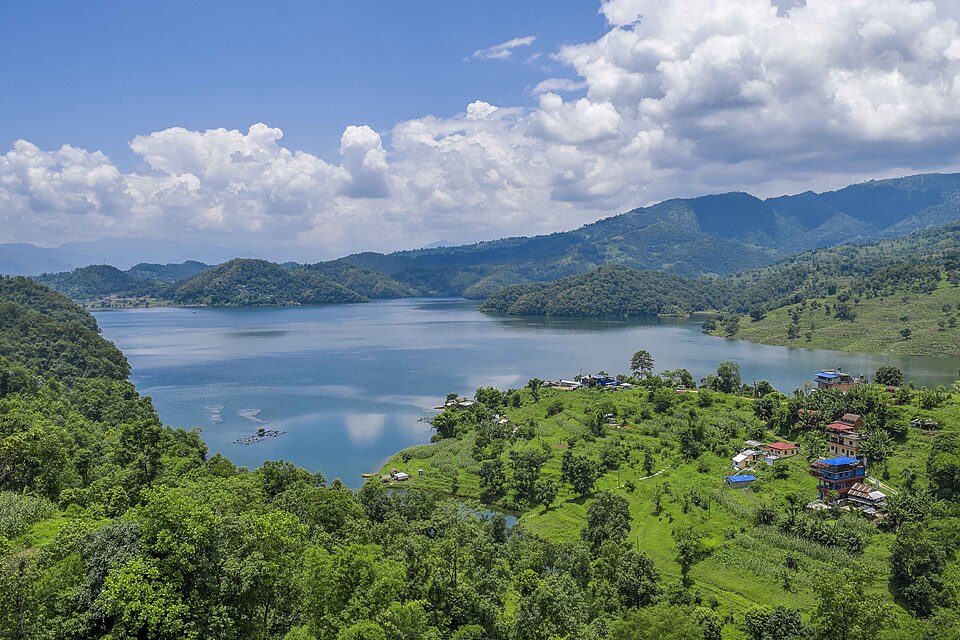
The second-largest lake in the valley, fifteen kilometers east of Pokhara, calm and surrounded by rice paddies and villages. There are no tourist hotels and restaurants here like in Lakeside, just fishermen, rowing boats, and a few family-run guesthouses. A pleasant walk runs along the ridge between Begnas and the neighboring Rupa Lake.

Tip: Come here for half a day by local bus or scooter, rent a boat, and take a break from the bustle of Lakeside. On the ridge between the lakes there's a viewpoint over both lakes and the mountains. The fish restaurants by the dam serve fresh fish straight from the lake.

Admission:
free
Time needed:
half a day

Photos: Lake Phewa and Tal Barahi Temple — Jmhullot (CC BY-SA 3.0) · Sarangkot — Q-lieb-in (CC BY-SA 4.0) · World Peace Pagoda (Shanti Stupa) — PageantUpdatess (CC BY-SA 4.0) · Paragliding over the lake — Thoplo.1 (CC BY-SA 4.0) · International Mountain Museum — Sadmadd (CC BY-SA 4.0) · Davis Falls and Gupteshwor Cave — Satyamfxr (CC BY-SA 4.0) · Mahendra Cave and Bat Cave — Kamalbeloved (CC BY-SA 3.0) · Old Town and Bindhyabasini Temple — Dhurba Gurung (CC BY-SA 4.0) · Lake Begnas — Mithunkunwar9 (CC BY-SA 4.0)

Where to stay

Areas and districts, matched to the kind of trip you are taking

Lakeside (Baidam)

Best for: first visit, everything nearby

The tourist district along the lake, with hotels at every price point, restaurants, bars with live music, gear shops, and trekking agencies. Everything is within walking distance, and lake views come from many terraces. Lively in the evening, but noisy.

North Lakeside (Khapaudi)

Best for: calm, views

The quieter northern end of Lakeside, with guesthouses and yoga centers by the water, and views of the lake and mountains. Less traffic, cheaper, greener, and a ten-minute walk to central Lakeside.

Damside

Best for: mountain views, budget

The neighborhood by the dam at the south end of the lake, with the best view of the Annapurnas across the water and cheaper hotels. Quieter, but farther from Lakeside's restaurants. The trekking permit office is here.

Sarangkot

Best for: sunrise, mountains

Guesthouses and lodges on the hill above the lake with mountain views from bed. You're already there for sunrise, without an early taxi ride. Quiet and cool in the evening, half an hour by car to Lakeside.

Getting around

From the airport

From Prague, flights to Nepal go to Kathmandu (KTM) with a connection, most often via Istanbul, Doha, or Dubai. From Kathmandu, Pokhara is two hundred kilometers away: by plane with Buddha Air or Yeti Airlines in twenty-five minutes, with Himalayan views on the left side, or by tourist bus in seven to nine hours along a mountain road with frequent traffic jams. The new Pokhara International Airport (PKR), opened in 2023, still has only a few international connections. Nepal visas are issued on arrival in Kathmandu.

Pokhara International (PKR) · 3 km

  • Taxi to Lakeside· 15 min· 800 NPR

Kathmandu Tribhuvan (KTM) · 200 km

  • Domestic flight to Pokhara· 25 min· 120 USD
  • Tourist bus· 7–9 h· 1,500 NPR
  • Private car with driver· 6–7 h· 15,000 NPR

Around town

Lakeside is walkable; for longer distances, taxis without meters run around, so agree on the price beforehand, or use the Pathao and inDrive apps with upfront pricing. Boats cover the lake. For trips around the area, a rented scooter or motorbike works best — roads around town are decent but traffic is chaotic, and an international driving permit is required. Local buses run to the Old Town and Lake Begnas. Jeeps and buses to trailheads leave from the bus station.

TaxiNo meter, 300–700 NPR within the city. · 300 NPR
Pathao / inDriveCar or motorbike with upfront pricing. · 150 NPR
Rented scooterFor trips to Lake Begnas and Sarangkot. · 1,000 NPR/day
Lake boatWith a rower or on your own, by the hour. · 700 NPR

Useful apps: Pathao, inDrive, Google Maps, maps.me (offline), Hamro Patro (holiday calendar)

When to go

The best season is autumn, October to November: after the monsoon the air is clear, the mountains are visible every morning, temperatures are pleasant around twenty-five degrees during the day, and it's the main trekking season. The second-best window is March to April, when rhododendrons bloom, though views are hazier. Winter, December to February, is dry and clear with beautiful views, but nights are cold and the mountains are freezing, with snow closing the high passes. The monsoon, June to September, hits Pokhara harder than anywhere else in Nepal — it rains daily, the mountains are in clouds, and treks bring leeches and landslides.

Best time

October–November, March–April

What to avoid

June–September (monsoon)

MonthJanFebMarAprMayJunJulAugSepOctNovDec
Day20°22°26°29°30°29°29°29°28°27°24°21°
Night7°8°12°15°18°20°21°21°20°16°11°8°
Rainy days13581522282720611

Food & drink

Thanks to trekkers, Pokhara has the most varied food scene in Nepal — in Lakeside you'll find pizza, and Italian, Israeli, Korean, and German bakeries alongside Nepali eateries. Nepali cuisine is simple and filling: the staple is dal bhat, rice with lentils and vegetables, refilled until you're full. The mountains contribute Thakali cuisine, considered the best dal bhat in the country. Fish from the lake comes grilled or in curry. Prices in tourist restaurants run three times higher than in local eateries, but are still low. Gorkha and Everest beer is enjoyed at sunset on terraces above the lake.

What to try

Thakali set

Dal bhat as prepared by the Thakali people from the Kali Gandaki valley: rice or buckwheat porridge (dhido), lentils, vegetable curry, pickled vegetables, yogurt, meat, and ghee served on a brass tray. Considered the best dal bhat in Nepal, served in Pokhara at Thakali Kitchen restaurants.

Dal bhat

The national dish, eaten by Nepalis twice a day: rice, lentil soup (dal), vegetable curry, pickled vegetables (achar), and often meat. Portions are refilled for free until you've had enough, hence the saying "dal bhat power, 24 hour."

Momo

Tibetan dumplings filled with buffalo, chicken, or vegetables, steamed or fried, served with a tomato-sesame sauce. A plate of ten for one hundred fifty to two hundred fifty rupees is the country's most common fast food.

Thukpa

A thick noodle soup of Tibetan origin with vegetables and meat, a staple meal in the mountains after a full day of walking. It's warming and heartier than it looks.

Fish from Lake Phewa

Carp or tilapia from the lake, fried whole with spices or served in curry. Best found at the fish stalls near the dam in Damside and by Lake Begnas.

Sel roti

A sweet fried ring of rice-flour batter, similar to a doughnut. Made in large batches for the Dashain and Tihar festivals and sold in the morning with tea.

Chiya and butter tea

Chiya is sweet milk tea brewed with spices, sipped by the cup for twenty rupees throughout the day. In the mountains, salty Tibetan tea with yak butter is served, tasting more like a soup.

What it costs

Dal bhat at a local eatery

300–500 NPR

Meal at a Lakeside restaurant

800–1,500 NPR

Beer on a terrace

500–800 NPR

Boat on the lake, per hour

700–1,000 NPR

Tandem paragliding

8,000–15,000 NPR

ACAP trekking permit

3,000 NPR

Taxi to Sarangkot at dawn

1,500–2,000 NPR

Night in a 3-star hotel, double room

3,000–7,000 NPR

Indicative prices that change over time — treat them as a guide, not a price list.

Practical information

SocketsCEuroplug, two round pinsDthree round pins (India)MSouth African, large pins
Voltage230V / 50Hz
Tap waterDo not drink tap water — Tap water in Nepal is not drinkable, even in hotels — brush your teeth with bottled or filtered water. A bottle costs twenty-five to forty rupees, more with each day of walking in the mountains. A greener and more common option in Kathmandu is filtered water from large refill barrels in hotels and cafes, where you top up your own bottle for a few rupees. Ice and raw salad from street stalls are the most common cause of stomach trouble — avoid them in the first few days.
TippingTipping is expected in Nepal wherever there's tourist traffic: restaurants often add ten percent service and thirteen percent tax to the bill, making the final total about a quarter higher than the menu price. Guides and porters on treks are given ten to fifteen percent of their fee, drivers and hotel bellhops small change. Payment is mostly in cash, in rupees; ATMs in Thamel dispense only ten to thirty-five thousand rupees at a time and charge a fee, while better hotels and restaurants take cards with a three to four percent surcharge. Indian five-hundred and two-thousand rupee notes are banned in Nepal.
Driving on theleft
SafetyNepal is calm and welcoming for tourists, with low crime. The real risks lie elsewhere: road traffic on mountain roads is dangerous and buses do crash, Kathmandu's air quality in winter and spring is among the worst in Asia (a mask helps), landslides and road collapses occur during the monsoon. Trekking above three thousand meters carries a risk of altitude sickness, so ascend slowly. Bandh strikes can shut down shops and transport for a day. The country sits in a seismically active region — the 2015 earthquake killed over eight thousand people. Insurance must cover helicopter rescue; without it you won't be allowed on a trek. The police emergency line is 100, tourist police 1144.
Opening hoursShops and restaurants in the tourist district of Lakeside are open from seven in the morning until ten or eleven at night, bars later. In the old town and outside the tourist zone, shops close at eight. Paragliding runs from nine to three, when thermals are best. The national park office for trekking permits in Damside is open on weekdays and closed on Saturdays. During the Dashain and Tihar festivals in October and November, some shops close for several days.
Customs & etiquetteNepal is Hindu and Buddhist, and its customs are taken seriously. Walk clockwise around stupas, prayer wheels, and chortens. Shoes come off before entering temples, and nothing made of leather should be brought into a Hindu shrine; many of the holiest Hindu temples don't admit non-Hindus at all. Food and money are passed with the right hand — the left is considered unclean. Don't touch anyone's head, and don't point your feet at people or at an altar. Dishes and food touched by someone's mouth (jutho) aren't shared. Public displays of affection are frowned upon, as are shorts outside of trekking.
A few local wordsHello (said with palms pressed together) — NamasteThank you — DhanyabadHow much does it cost? — Kati ho?Too expensive — Dherai mahangoNot spicy — Piro nahalnusGoodbye — Pheri bhetaula

How to plan your days

1 day

Pokhara in one day

  1. 1Sunrise over the Annapurnas from Sarangkot.
  2. 2Breakfast in Lakeside, then a boat to the island temple of Tal Barahi.
  3. 3Across the lake and on foot up to the World Peace Pagoda.
  4. 4Afternoon at Davis Falls and Gupteshwor Cave.
  5. 5Sunset and dinner on a terrace above the lake.

2 days

Pokhara in two days

  1. 1Day 1: Sarangkot, the lake, Tal Barahi, and the World Peace Pagoda.
  2. 2Evening: live music in Lakeside.
  3. 3Day 2: morning tandem paragliding.
  4. 4Afternoon at the International Mountain Museum.
  5. 5Late afternoon in the Old Town and Bindhyabasini Temple.

3 days

Pokhara and Australian Camp in three days

  1. 1Day 1: Pokhara — the lake, the World Peace Pagoda, and the museum.
  2. 2Day 2: jeep to Kande and the climb up to Australian Camp.
  3. 3Night in a lodge with Annapurna views.
  4. 4Day 3: sunrise, then descend through the village of Dhampus.
  5. 5Afternoon: paragliding or Lake Begnas.

Day trips

Australian Camp and Dhampus

25 km · 45 min by jeep + 1 h on foot

The shortest trek from Pokhara: from the village of Kande, it's an hour's climb up to the Australian Camp meadow at two thousand meters, with views across the valley to the Annapurnas, Machapuchare, and Dhaulagiri. It can be done as a day trip there and back, but it's best to stay overnight in a lodge for the sunrise, then descend through the Gurung village of Dhampus. An ACAP permit is required.

Bandipur

80 km · 2 h 30 min by car

A Newar trading town on a ridge between Kathmandu and Pokhara, car-free on its main street, with eighteenth-century houses, terrace cafes, and views of the Himalaya from Dhaulagiri to Langtang. It lies on the road between Kathmandu and Pokhara, and it's best to stay overnight — evenings and mornings are quiet here.

Ghandruk

55 km · 2 h 30 min by jeep

A large Gurung village at two thousand meters with stone houses and slate roofs, terraced fields, and close-up views of Annapurna South and Machapuchare. It has a museum of Gurung culture and lies on the route to Annapurna Base Camp. It's about two and a half hours by jeep, then a walk into the village.

Frequently asked questions

Which trek from Pokhara should I choose?+

For three to four days, Poon Hill offers sunrise over Dhaulagiri and the Annapurnas — the most popular short trek. For a week to ten days, the Annapurna Base Camp trek reaches a natural amphitheater beneath the mountains at 4,130 meters. For two to three weeks, the Annapurna Circuit crosses the Thorong La pass (5,416 meters). For a single day, there's Australian Camp.

Do I need a guide for the trek?+

Yes — since April 2023, trekking without a licensed guide has been banned for foreigners in Nepal's national parks and protected areas, including the Annapurnas. A guide costs twenty-five to thirty-five dollars a day and arranges permits, accommodation, and safety. A porter costs around twenty dollars a day.

What permits do I need for the Annapurna trek?+

The Annapurna Conservation Area Permit (ACAP), which costs three thousand rupees, is arranged in Pokhara or Kathmandu, usually through an agency or guide. It's checked at several checkpoints along the route. Treks to Mardi Himal and Upper Mustang require separate permits.

When are the mountains best seen from Pokhara?+

From October to February, ideally early in the morning. In spring, from March to April, haze often sets in and the mountains are only visible in the morning. During the monsoon, from June to September, the peaks are mostly hidden in clouds and only occasionally appear at dawn. After eight in the morning, clouds tend to build up over the valley.

Is paragliding in Pokhara safe?+

Tandem flights with licensed operators and experienced pilots are safe — Pokhara has some of the best paragliding conditions in the world. Choose an established, insured company with good reviews rather than the cheapest offer. Accidents are rare, but they do happen.

How do I get from Kathmandu to Pokhara?+

By plane in twenty-five minutes with Buddha Air or Yeti Airlines (around one hundred twenty dollars), with Himalayan views on the left side. By tourist bus in seven to nine hours for fifteen hundred rupees — the road is under construction and dusty. A private car is faster and can stop in Bandipur along the way.

How many days should I spend in Pokhara?+

For Pokhara alone, two to three days: Sarangkot, the lake, the Peace Pagoda, paragliding, and rest. With a short trek to Poon Hill or Australian Camp, a week. Most visitors come here at the start and end of a trek.

Is Pokhara suitable for families with children?+

Yes, it's the calmest and safest place in Nepal. The lake with its rowing boats, the caves, the mountain museum, and short excursions are ideal for families, and the restaurants in Lakeside cater to picky eaters too. Paragliding usually has a minimum age and weight requirement depending on the operator.

Visa Requirements

Check the latest visa requirements for entering this country. Some nationalities may need to apply for a visa or e-visa before travel.

Check visa requirements

Language

Nepali

Currency

NPR

Timezone

Asia/Kathmandu

Dial Code

+977

Population

30.9M

Area

147,181 km²

Voltage

230V / 50Hz

Driving Side

Left

Top Hotels in Pokhara

Live prices from 500+ properties

Loading hotels...

More destinations in Nepal

Planning a trip to Pokhara?

Compare hundreds of hotels, find the best price, and book with free cancellation on TravelManiac.