Hotels in Rio de Janeiro

Mountains, rainforest and beaches in one city: Christ above the clouds and samba until dawn

Rio de Janeiro

LanguageEnglish
CurrencyBRL
TimezoneGMT-3
Temperature22-35 °C
Dial Code+55
Population216M
Area8,515,767 km²
SocketsType C / Type N
Tap waterNot drinkable

Discover Rio de Janeiro

Rio de Janeiro is one of the rare big cities where nature overshadows the built environment, not the other way around. Between Guanabara Bay and the Atlantic, granite peaks covered in rainforest rise straight out of the sea; on the tallest of them stands the thirty-meter statue of Christ the Redeemer with arms outstretched, and below stretch the beaches of Copacabana and Ipanema, where much of the life of the Cariocas, as Rio's residents are known, plays out. The Portuguese founded the city in 1565, and between 1808 and 1821, when Napoleon occupied Lisbon, the entire Portuguese royal court fled here — for a time Rio was the only European capital outside Europe, and it remained Brazil's capital until 1960. From that era survives a colonial downtown that most tourists skip. But Rio is also a city of stark contrasts: favelas climb the hillsides right above wealthy neighborhoods, and crime is a real issue visitors need to plan around. Anyone who follows a few clear rules gets to experience a city with arguably the most spectacular setting on earth, samba in the bars of Lapa, football at the Maracanã, and a Carnival unlike anywhere else.

What to see

The places worth your time in Rio de Janeiro, and what to expect at each

Christ the Redeemer statue

Christ the Redeemer statue

Cristo Redentor

Corcovado / Cosme Velho

A thirty-meter statue of Christ, made of concrete and soapstone, atop Corcovado mountain, seven hundred ten meters above sea level, completed in 1931 and listed among the New Seven Wonders of the World. The outstretched arms span twenty-eight meters. From the platform below the statue there's a view over the whole bay, Sugarloaf, Copacabana and the Rodrigo de Freitas lagoon.

Tip: The cog railway, Trem do Corcovado, climbs from Cosme Velho through the forest in twenty minutes; buy a timed ticket online in advance. Take the first train in the morning, before the statue disappears into clouds and before the crowds arrive — by midday the platform is packed. The operator's website has a webcam; check it before you head out.

Admission:
around 100 R$ with train
Time needed:
2.5–3 h
Sugarloaf Mountain

Sugarloaf Mountain

Pão de Açúcar

Urca

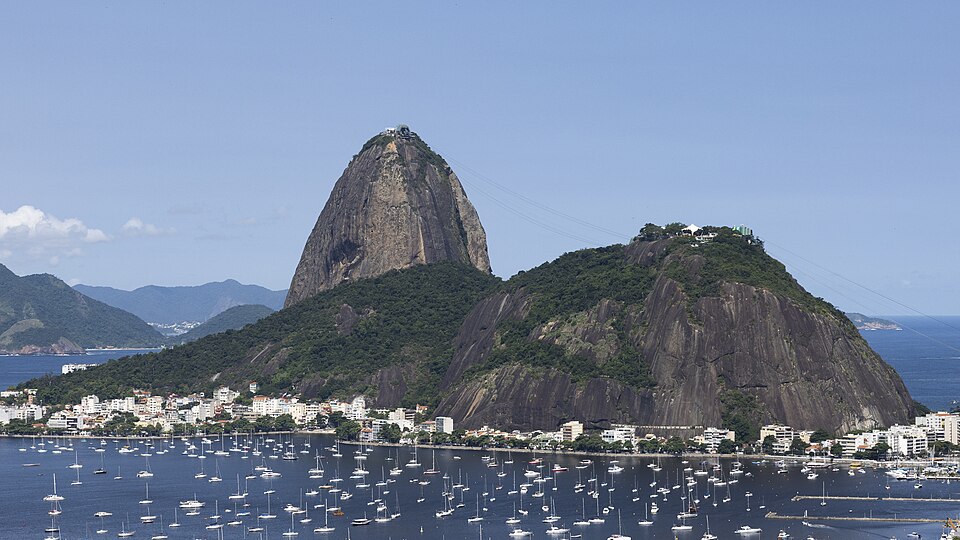
A granite peak three hundred ninety-six meters high at the entrance to Guanabara Bay, reached since 1912 by a cable car in two stages via the lower Morro da Urca. From the top you see all of Rio, with Christ on the opposite mountain, Copacabana, and Niterói across the bay. It's the best sunset spot in the city.

Tip: Arrive an hour before sunset and stay until the city lights up. You can hike the first stretch, to Morro da Urca, on foot from Praia Vermelha beach in thirty minutes and take the cable car for the second leg only. Below the hill runs the flat scenic walkway Pista Cláudio Coutinho, where you'll spot marmoset monkeys in the morning.

Admission:
around 200 R$
Time needed:
2 h
Copacabana

Copacabana

Copacabana

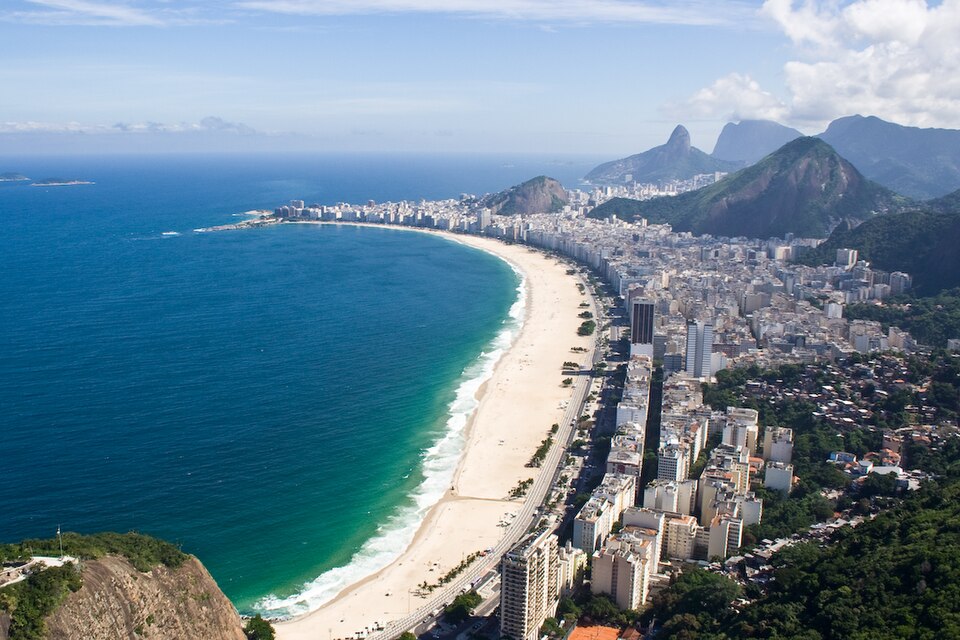
A four-kilometer crescent-shaped beach with a promenade whose black-and-white wave-pattern paving, designed by Roberto Burle Marx, is perhaps the most famous sidewalk in the world. Football, volleyball and footvolley are played on the sand, and vendors carry everything from grilled cheese to swimwear across it. Over two million people gather here in white on New Year's Eve.

Tip: The beach is divided by lifeguard posts, 'postos', and locals use them as reference points. A sunbed and umbrella from a beach stall, 'barraca', are free if you order drinks there, paid for on departure. Bring only cash for the day and nothing valuable; don't walk on the sand at night, not even for a stroll.

Admission:
free
Time needed:
half a day
Ipanema and Arpoador

Ipanema and Arpoador

Ipanema

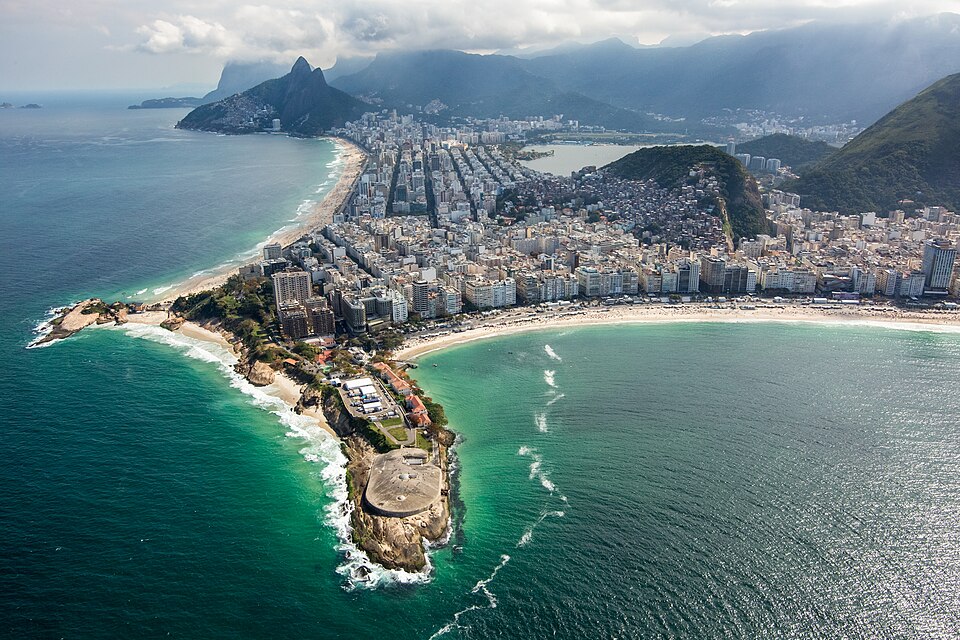
A beach between the Arpoador rock and the Jardim de Alah canal, made famous by the song 'The Girl from Ipanema', with views of the twin-peaked Dois Irmãos. It's more upscale and younger than Copacabana, and each stretch has its own crowd: post 9 draws intellectuals and artists, post 8 the gay community, and further toward Leblon, families.

Tip: The best evening experience in Rio is sunset from the Arpoador rock at the end of the beach: hundreds of people sit on the rocks and applaud as the sun sets behind the Dois Irmãos peaks. Arrive half an hour early. On Sundays, Praça General Osório hosts the Feira Hippie market with crafts and food.

Admission:
free
Time needed:
half a day
Selarón Steps

Selarón Steps

Escadaria Selarón

Lapa

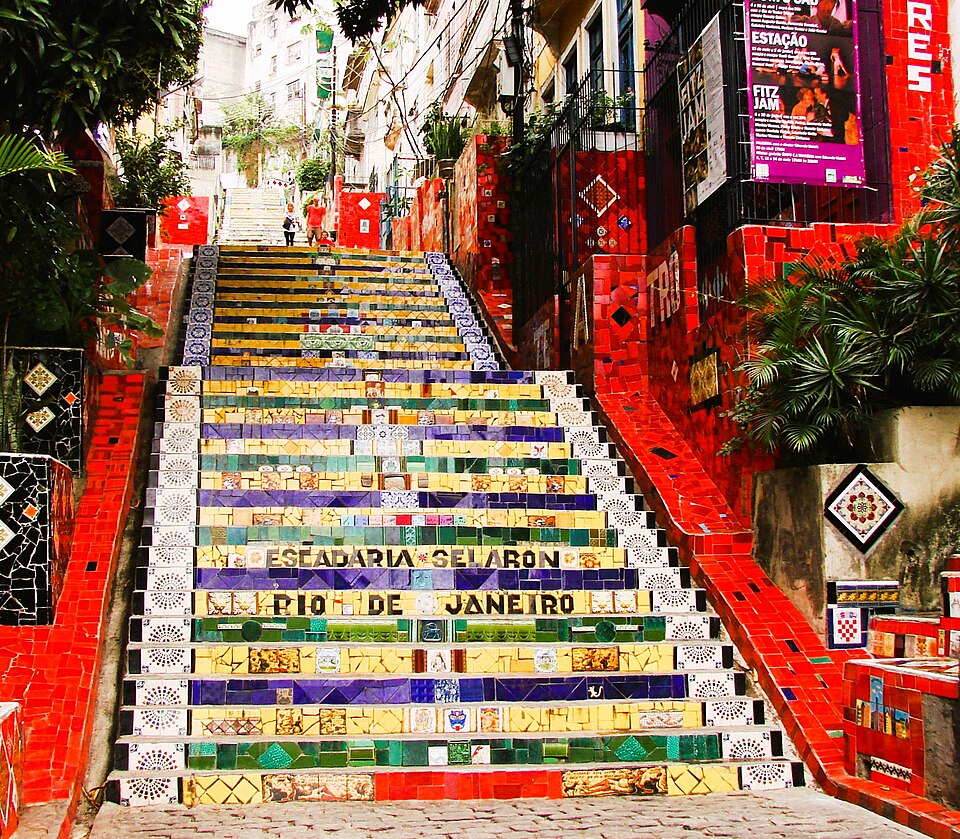
Two hundred fifteen steps between the Lapa and Santa Teresa neighborhoods, which the Chilean painter Jorge Selarón covered in tiles from more than sixty countries, many sent to him by tourists, from 1990 until his death in 2013. Colors from the Brazilian flag dominate, and several tiles carry his own self-portrait as a pregnant woman.

Tip: Arrive at eight in the morning, before tour groups and wedding photographers show up, or you won't get near the steps. Look for a tile from your own country. The steps are safe during the day, but don't walk up into Santa Teresa on foot in the evening — the upper section borders a favela. Come back to Lapa in the evening for samba.

Admission:
free
Time needed:
30 min
Santa Teresa

Santa Teresa

Santa Teresa

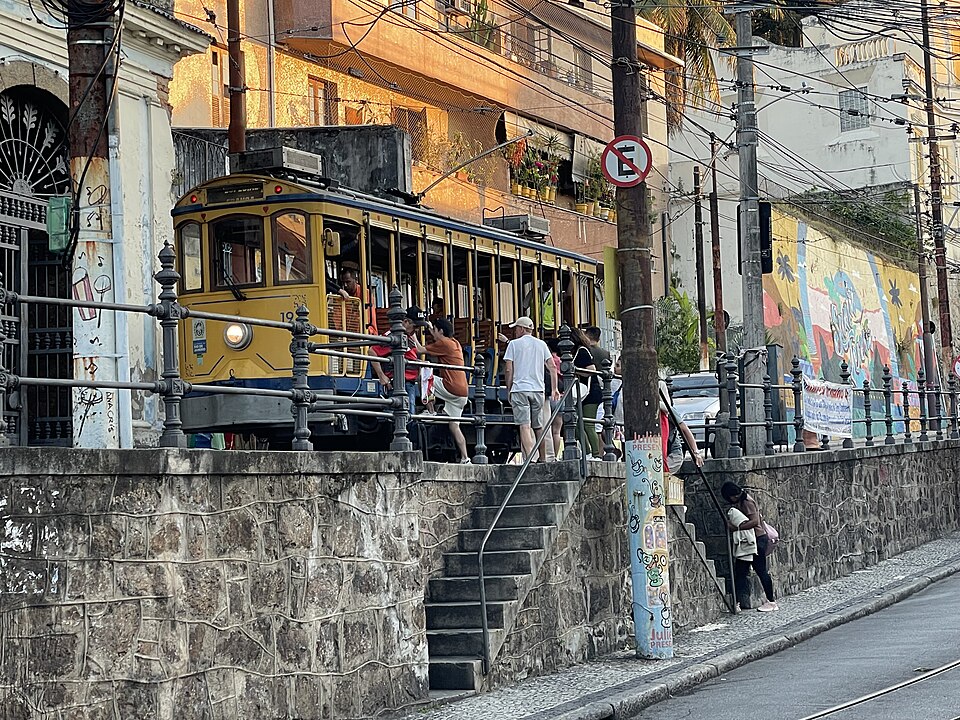
A bohemian neighborhood on a hill above downtown, with nineteenth-century villas, artists' studios, cobblestone lanes and views over the bay. The oldest electric tram in Latin America, the yellow 'bonde', runs here across the Arcos da Lapa aqueduct. Parque das Ruínas holds the villa of a former arts patron, now a viewpoint and cultural center.

Tip: The tram departs from its terminus near Carioca metro station, close to the cathedral, and crosses the aqueduct at a height of seventeen meters. Parque das Ruínas is free and has one of the best views in the city. Visit Santa Teresa during the day and order an Uber for the evening return.

Admission:
tram around 20 R$
Time needed:
half a day
Tijuca National Park

Tijuca National Park

Parque Nacional da Tijuca

Tijuca / Alto da Boa Vista

One of the largest urban forests in the world, planted in the nineteenth century on the site of cleared coffee plantations, with waterfalls, viewpoints and three thousand plant species. The park includes Corcovado mountain itself. The best viewpoints are Vista Chinesa, with its Chinese pavilion, and the summit of Pedra da Gávea, a giant granite block above the ocean.

Tip: Take rainforest hikes with a guide; robberies occasionally happen on remote trails. The most intense experience is a tandem hang-glide or paraglide flight from the Pedra Bonita ramp, landing on São Conrado beach; it costs around six hundred reais and lasts ten minutes. Flights only happen with good wind, in the morning.

Admission:
free
Time needed:
half a day
Maracanã

Maracanã

Estádio do Maracanã

Maracanã

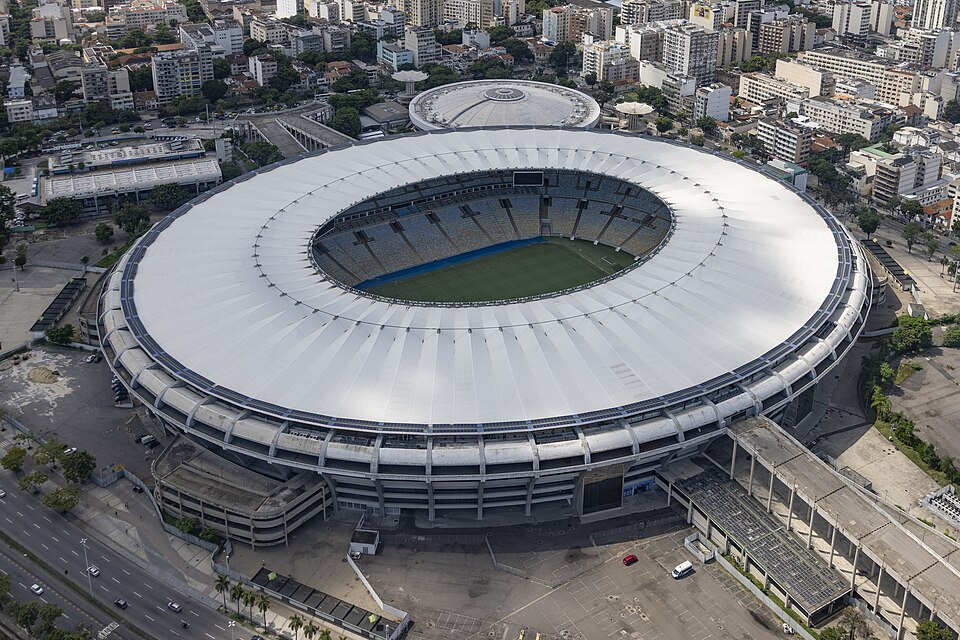
A legendary football stadium built for the 1950 World Cup, when two hundred thousand people watched the final against Uruguay and Brazil lost — the whole country still calls it the 'Maracanaço'. After renovation it holds seventy-eight thousand spectators. Flamengo and Fluminense play here, and it also hosted the final of the 2014 World Cup.

Tip: A tour with access to the locker rooms and the pitch itself costs around eighty reais, but the real experience is a Flamengo derby match. Buy tickets through the club's official website or with an organized group that also arranges transport — walking back through the crowd alone after a match isn't safe. Maracanã metro station is right by the stadium.

Admission:
tour around 80 R$
Time needed:
1.5 h
Museum of Tomorrow

Museum of Tomorrow

Museu do Amanhã

Centro / Porto Maravilha

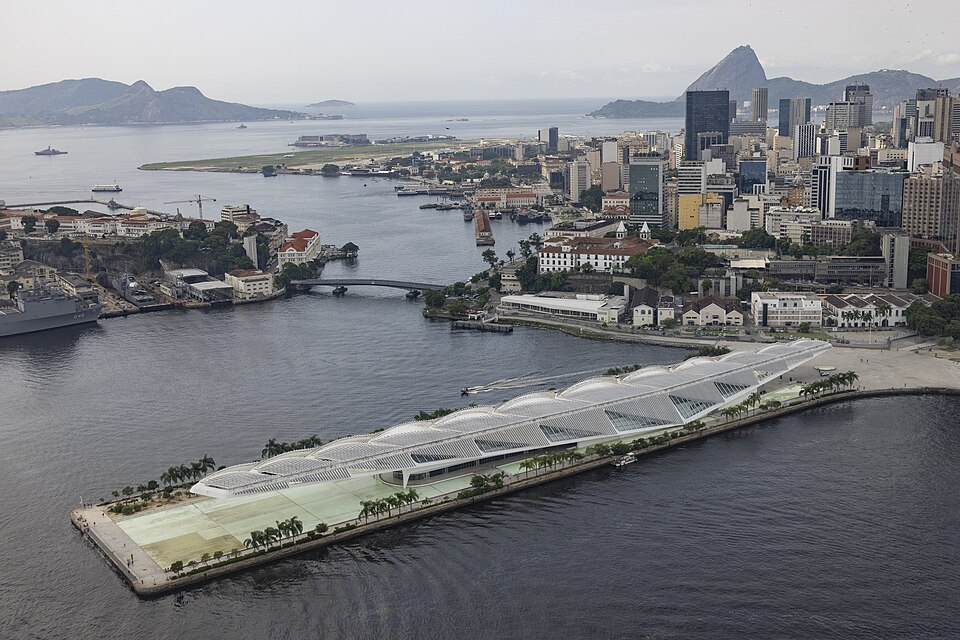
A museum of the planet's future science, in a 2015 building by Santiago Calatrava that looks like a white skeleton jutting over the bay. It stands on Praça Mauá in the redeveloped Porto Maravilha harbour district, home also to the Olympic Boulevard and its giant mural 'Etnias' by Eduardo Kobra, one of the largest graffiti works in the world.

Tip: The museum is at its best from outside and from the promenade; the exhibition inside suits visitors who enjoy interactive screens more than artifacts. Entry is often free on Tuesdays. From the square, take the VLT tram downtown to the cathedral and to old cafés like the 1894 Confeitaria Colombo, where coffee is served under Art Nouveau mirrors.

Admission:
around 30 R$
Time needed:
1.5 h

Photos: Christ the Redeemer statue — Arne Müseler (CC BY-SA 3.0 de) · Sugarloaf Mountain — Arne Müseler (CC BY-SA 3.0 de) · Copacabana — [www.flickr.com/photos/26912057@N02/ bisonlux] (CC BY 2.0) · Ipanema and Arpoador — Gabriel Heusi/Brasil2016.gov.br (CC BY 3.0 br) · Selarón Steps — Marshallhenrie (CC BY-SA 4.0) · Santa Teresa — Brooks patty (CC BY-SA 4.0) · Tijuca National Park — Halley Pacheco de Oliveira (CC BY-SA 3.0) · Maracanã — Arne Müseler (CC BY-SA 3.0 de) · Museum of Tomorrow — Arne Müseler (CC BY-SA 3.0 de)

Where to stay

Areas and districts, matched to the kind of trip you are taking

Copacabana

Best for: first-time visitors and beachfront hotels

A densely built neighborhood behind the most famous beach, with the widest choice of hotels in every price range, restaurants and nightlife bars. The metro runs through the whole area, giving quick access to downtown and Ipanema. It's noisy, a bit worn around the edges, and nightlife stays concentrated on the main avenue, Nossa Senhora de Copacabana, and the seafront.

Ipanema and Leblon

Best for: a quieter stay and dining

Rio's wealthiest and safest neighborhoods, with shops, cafés, good restaurants and a beach with views of the Dois Irmãos peaks. Accommodation costs more than in Copacabana, but the streets are cleaner and quieter. Leblon is a notch more exclusive and family-oriented still.

Santa Teresa and Lapa

Best for: bohemian atmosphere and nightlife

Santa Teresa is a hilly artists' quarter with guesthouses in old villas; Lapa below it is the nightlife hub, with samba and forró in bars under the aqueduct. Lapa's streets fill with people on Friday nights. Santa Teresa is beautiful to stay in, but handle evening trips by Uber.

Botafogo

Best for: local atmosphere and cheaper accommodation

A neighborhood between downtown and Copacabana with views of Sugarloaf across the bay, popular with young Cariocas. The streets around Rua Voluntários da Pátria have the best bars and restaurants at local prices. The metro serves it, and it's just one stop from the Copacabana beach.

Getting around

From the airport

Direct flights to Rio operate from Lisbon, Madrid, Paris, London, Frankfurt, Amsterdam and Rome; the flight takes eleven to twelve hours, and from Prague you'll connect through one of these hubs, most commonly Lisbon with TAP or Madrid. Many nationalities, including EU citizens, don't need a visa for stays up to ninety days, but check requirements for your own passport before booking. Galeão International Airport sits on Governador Island, twenty kilometers from downtown and thirty-five from Copacabana; the trip to the southern neighborhoods takes forty minutes to an hour and a half depending on traffic and passes near large favelas, so use Uber or a prepaid taxi from the counter in the terminal rather than public transport at night. The second airport, Santos Dumont, sits right downtown by the bay and handles domestic flights, including to São Paulo in about an hour.

Rio de Janeiro Galeão (GIG) · 35 km

  • Uber to Copacabana· 40–90 min· around 80 R$
  • Prepaid taxi from the terminal counter· 40–90 min· around 130 R$
  • Bus to the southern neighborhoods· 1–1.5 h· around 20 R$

Santos Dumont (SDU) · 12 km

  • VLT tram downtown, then metro· 30–40 min· around 12 R$
  • Uber to Copacabana· 20–30 min· around 35 R$

Around town

The metro is the best transport for a visitor: lines 1 and 4 connect downtown, Botafogo, Copacabana, Ipanema and Leblon, and it's clean, safe and air-conditioned. A ticket costs around seven and a half reais, tapped with a contactless card at the turnstile. Downtown, a modern tram, the VLT, runs between Santos Dumont airport, Praça Mauá and the train station. Buses are cheap and go everywhere, but they're fast, packed and confusing for outsiders; avoid them in the evening. Uber and the Brazilian app 99 are cheap and the safest option after dark. Along the coast from Leme to Leblon runs a cycle path with the Itaú bike-share scheme. Don't rent a car — traffic is aggressive and navigation apps can route you straight through a favela.

Rio MetroLines 1 and 4 cover downtown, Botafogo, Copacabana, Ipanema and Leblon out to Barra da Tijuca. Runs until midnight, shorter hours on weekends. · around 7.50 R$
VLT tramLow-floor trams in the historic center and port district; connects Santos Dumont airport, Praça Mauá and the bus station. Pay by card at the reader on board. · around 4.70 R$
Uber and 99Cheap and the safest option for evening trips; a ride from Copacabana to Lapa costs around twenty-five reais. Only get into the car matching the license plate shown in the app. · from 10 R$
Bonde tram to Santa TeresaThe historic yellow tram from downtown, crossing the Arcos da Lapa aqueduct up the hill. Runs during the day, less frequently on Sundays. · around 20 R$
Bike ItaúOrange shared bikes at stations along the beaches and in the southern neighborhoods. The cycle path from Leme to Leblon along the sea is the prettiest route in the city. · from 10 R$ / day

Useful apps: Uber, 99, Moovit, Google Maps, iFood

When to go

Rio has a tropical climate and stays warm year-round. Summer, from December to March, is hot and humid, with temperatures over 30°C and afternoon thunderstorms, but it's also beach season, New Year's Eve on Copacabana, and Carnival in February or early March — when prices peak and hotels sell out. The most pleasant months are April to June and August to October: dry, around 25°C, with clear skies for views from Christ and Sugarloaf. Brazilian winter in July is mild, around 25°C during the day, though the sea is cooler and occasional cold fronts bring rain. For swimming, December through April is best.

Best time

April to June and August to October

What to avoid

January and February, unless you tolerate heat well or are there for Carnival

MonthJanFebMarAprMayJunJulAugSepOctNovDec
Day30°31°30°28°27°26°25°26°26°27°28°29°
Night24°24°23°22°20°19°18°19°19°20°22°23°
Rainy days12910976558101112
Sea25°26°26°25°24°23°22°21°21°22°23°24°

Food & drink

Food in Rio revolves around the beach, the grill, and the botequim — a simple corner bar where draft beer, 'chopp', is served so cold it comes with ice in the glass, alongside fried snacks called petiscos. Lunch is a serious affair: at 'por quilo' restaurants you fill your own plate from a buffet and pay by weight, the cheapest and fastest way to eat well. Feijoada is served everywhere on Wednesdays and Saturdays. At a churrascaria you eat meat until you can't anymore. On the beach, vendors sell grilled cheese on a skewer, shrimp and corn. Prices in the beachfront tourist neighborhoods run close to European levels; in Botafogo and downtown they're noticeably lower.

What to try

Feijoada

Black beans stewed with several kinds of smoked and pork meat, served with rice, toasted cassava flour called farofa, collard greens, and a slice of orange. Traditionally eaten for lunch on Wednesdays and Saturdays — it's a meal for the whole afternoon, not a quick dinner.

Picanha and churrasco

Picanha is the top round of beef with a fat cap, grilled on a wide skewer. At a 'rodízio' churrascaria you pay a fixed price and waiters keep bringing meat to the table until you flip your card to the red side — pace yourself and skip the salad bar.

Queijo coalho

A firm cheese on a skewer, grilled over a small portable barbecue right on the beach, sprinkled with oregano or drizzled with molasses. Vendors carry it across the sand, and it costs around fifteen reais.

Pão de queijo

Small round rolls made from cassava starch and cheese, crispy outside and chewy inside. Eaten with coffee at breakfast or in the afternoon, and costing just a few reais. It's naturally gluten-free.

Açaí na tigela

Frozen pulp from an Amazonian palm berry, blended into a thick purple ice-cream-like base and served in a bowl with granola and banana. It's a quick lunch after beach sports, eaten standing up at juice bars around Rio.

Coxinha

A fried teardrop of dough filled with shredded chicken and cream cheese, shaped like a chicken drumstick. The most common 'salgadinho' — a savory snack from the counter — costing around seven reais.

Brigadeiro

A truffle of condensed milk, cocoa and butter, rolled in chocolate sprinkles. It's a fixture at every birthday party, and pastry shops sell gourmet versions with pistachio or Belgian chocolate.

Caipirinha

The national cocktail of cachaça sugarcane spirit, lime and sugar. Made with vodka it's called caipiroska, with sake it's sakerinha. On the beach, vendors mix it from carts, and it's stronger than it tastes.

What it costs

Coconut water on the beach

8–12 R$

Chopp at a botequim

10–15 R$

Caipirinha on the beach

20–35 R$

Lunch at a por quilo restaurant

45–80 R$

Dinner at a restaurant

120–200 R$ per person

Metro ticket

around 7.50 R$

Christ the Redeemer with train

around 100 R$

Night in a 3-star hotel in Copacabana, double

450–800 R$

Indicative prices that change over time — treat them as a guide, not a price list.

Practical information

SocketsCEuroplug, two round pinsNBrazilian
Voltage127/220V / 60Hz
Tap waterDo not drink tap water — Don't drink tap water in Brazil, even in cities where it's formally treated — pipes are often old, and Brazilians themselves drink filtered or bottled water. A five-liter jug costs around eight reais at a supermarket, and a half-liter at a beach stall costs three to five. Ice in bars and restaurants is made from treated water and is safe. On the beach, drink coconut water, 'água de coco', straight from the shell — it's cheap and better in the heat than anything from a fridge.
TippingMost restaurants automatically add ten percent to the bill as 'serviço' — technically optional, and you can decline it, but no one does. Nothing further is added on top. Round up for taxi drivers; Uber drivers get a tip through the app only for exceptional service. On the beach, a sunbed at a vendor's stall is free if you order drinks from them; you pay on departure based on your tab. Cards are accepted almost everywhere, including at stalls, though Brazilians themselves mostly pay by instant transfer, Pix, which a foreigner without a Brazilian bank account can't use.
Driving on theright
SafetyCrime is a genuine issue in Brazilian big cities, and the rules need to be taken seriously. Bring only swimwear, a towel, a bit of cash and a copy of your passport to the beach, never an expensive phone or watch. Don't pull out your phone on the street, especially on a corner or at a bus stop, where a passerby can snatch it and run. Don't enter favelas without a licensed local guide, even the ones described as 'pacified'. After dark, take Uber rather than walking through empty streets. Use ATMs inside shopping malls and during daylight hours. The police emergency line is 190, ambulance is 192. Swimming is fine at the ocean beaches of Copacabana, Ipanema and Leblon; beaches inside Guanabara Bay are polluted, and water quality drops even on ocean beaches after heavy rain.
Opening hoursShops open from nine to seven; shopping malls stay open until ten in the evening, including Sundays. Brazilians eat lunch late, between noon and three, and dinner after eight; restaurants don't fill up until around ten. Museums are typically closed on Mondays. Banks operate only from ten to four. During Carnival — the five days before Ash Wednesday — most offices and some shops close, and transport runs on a special schedule.
Customs & etiquetteBrazilians are warm and physically close: women greet with a kiss on the cheek, men with a handshake and a pat on the back. Brazil speaks Portuguese, not Spanish, and Brazilians don't appreciate being told it's 'basically the same' — a few words of Portuguese open more doors. The 'OK' gesture made with thumb and forefinger is a rude insult here; agreement is shown with a thumbs up instead. Swimwear on the beach is minimal, but topless sunbathing is not allowed. Punctuality is loose; arriving half an hour late to a social gathering is normal.
A few local wordsGood morning / good afternoon — Bom dia / Boa tardeThank you — Obrigado (male) / Obrigada (female)How much does this cost? — Quanto custa?The bill, please — A conta, por favorDo you speak English? — Você fala inglês?All good — Tudo bem

How to plan your days

1 day

A day in Rio

  1. 1Take the first train up Corcovado to the Christ statue.
  2. 2Lunch in Botafogo at a por quilo restaurant.
  3. 3Afternoon at Copacabana beach and its promenade.
  4. 4Sunset from the Arpoador rock.
  5. 5Dinner and chopp in Ipanema.

2 days

Two days in Rio

  1. 1Day one as above.
  2. 2Day two morning: the Selarón Steps and the tram up to Santa Teresa.
  3. 3Parque das Ruínas and lunch in Santa Teresa.
  4. 4Afternoon at Sugarloaf Mountain for sunset.
  5. 5Evening samba in Lapa, back by Uber.

3 days

Three days with the rainforest and downtown

  1. 1Two days as above.
  2. 2Day three morning: a hang-gliding flight from Pedra Bonita, or a guided hike in Tijuca Park.
  3. 3Afternoon downtown: Confeitaria Colombo, Praça Mauá and the Museum of Tomorrow.
  4. 4The Etnias mural on the Olympic Boulevard.
  5. 5Evening football at the Maracanã, or a churrascaria dinner.

Day trips

Petrópolis

65 km · 1.5 h by car

The mountain summer residence of the Brazilian emperors, where Pedro II's court fled the heat. The Imperial Museum, in his pink palace, displays the crown jewels and everyday life of the monarchy. The town has a cooler climate, a neo-Gothic cathedral, the house of Santos Dumont with his clever inventions, and a glass palace. Buses leave from the main Rodoviária bus station every half hour.

Ilha Grande

150 km · 3 h by car and boat

A mountainous, car-free island covered in rainforest, with dozens of beaches, of which Lopes Mendes ranks among the most beautiful in Brazil. Until 1994 it held a prison, which is exactly why it stayed undeveloped. The route from Rio is by bus or transfer to Conceição de Jacareí, then a twenty-minute boat ride to the village of Abraão. It's a long day trip; the island deserves two or three nights.

Búzios

170 km · 2.5–3 h by car

A peninsula with twenty beaches and a former fishing village made famous in the 1960s by Brigitte Bardot — her statue stands on the Orla Bardot promenade. Today it's an elegant resort with boutiques, restaurants and clear water good for snorkeling. On the way lies Arraial do Cabo, with turquoise beaches nicknamed 'the Brazilian Caribbean'. It's a lot for one day; an overnight stay works better.

Frequently asked questions

Is Rio de Janeiro safe?+

Crime in Rio is real, but most visitors leave without incident if they follow a few simple rules. Carry nothing valuable to the beach or on the street, don't pull out your phone on a street corner or at a bus stop, take Uber after dark, don't enter favelas without a licensed guide, and avoid empty beaches after sunset. The tourist neighborhoods of Ipanema, Leblon and Copacabana are safe and patrolled during the day.

Do I need a visa for Brazil?+

Most travelers, including EU citizens, don't need a visa for a tourist stay of up to ninety days, though requirements vary by nationality and should be checked before booking. Your passport must be valid for at least six months. Yellow fever vaccination isn't required for Rio itself, though it's recommended for trips to the Amazon and some inland states.

When is Carnival in Rio?+

Carnival takes place five days before Ash Wednesday, so in February or early March depending on the date of Easter. The main samba school parades happen on Sunday and Monday at the Sambadrome, with tickets bought months in advance. Street parades called 'blocos' are free and happen all over the city for weeks before Carnival itself. Hotel prices double or triple.

How many days do I need for Rio?+

Three to four days: one for Christ the Redeemer and the beaches, a second for Sugarloaf Mountain, Santa Teresa and Lapa, a third for downtown or Tijuca Forest. A fifth day for a trip to Petrópolis, Ilha Grande or Búzios, which are worth an overnight stay. Rio is often combined with Iguaçu Falls, a two-hour flight away.

Is a favela tour worth it?+

Organized tours into the Rocinha or Santa Marta favelas with a local guide who actually lives there are safe, and the money stays with the community. Don't enter favelas alone or on the invitation of a stranger, and avoid agencies that drive tourists through in open jeeps like a safari. The situation can change day to day; guides know what's accessible on any given day.

Can you swim in the sea in Rio?+

Yes, on the ocean beaches of Copacabana, Ipanema, Leblon and Barra, though the waves can be strong and the current dangerous — swim near lifeguard posts and respect red flags. Beaches inside Guanabara Bay, like Botafogo or Flamengo, are polluted. Water quality drops even on ocean beaches after heavy rain.

How do you pay in Brazil?+

Cards are accepted almost everywhere, including beach stalls. A bit of cash is handy for beach vendors and the tram. Withdraw from ATMs inside a shopping mall or bank, and during the day. Brazilians pay by instant transfer called Pix, which you can't use without a Brazilian bank account, but no one will refuse a card.

How do I get to the Christ the Redeemer statue?+

The best way is the cog railway, Trem do Corcovado, from Cosme Velho station, reached by Uber; buy a timed ticket online in advance. A second option is the official minibuses from Copacabana and Largo do Machado. You can hike up on a trail from Parque Lage through the forest, but only with a guide, for safety.

Visa Requirements

Check the latest visa requirements for entering this country. Some nationalities may need to apply for a visa or e-visa before travel.

Check visa requirements

Language

Portuguese

Currency

BRL

Timezone

GMT-3

Dial Code

+55

Population

216M

Area

8,515,767 km²

Voltage

127/220V / 60Hz

Driving Side

Right

Top Hotels in Rio de Janeiro

Live prices from 500+ properties

Loading hotels...

More destinations in Brazil

Planning a trip to Rio de Janeiro?

Compare hundreds of hotels, find the best price, and book with free cancellation on TravelManiac.