Hotels in Seoul

Royal palaces beneath skyscrapers, barbecue on every corner, and a city that never sleeps

Seoul

LanguageEnglish
CurrencyKRW
TimezoneGMT+9
Temperature2-30 °C
Dial Code+82
Population51.7M
Area100,210 km²
SocketsType C / Type F
Tap waterBottled advised

Discover Seoul

Seoul is a city of ten million people that grew from the ruins of war into one of the world's most modern metropolises in just sixty years, while still holding on to five royal palaces from the Joseon dynasty, wooden hanok houses, and Namsan mountain rising up in the middle of it all. What surprises visitors most is how much this is a city built for living at night: markets, barbecue restaurants and cafés stay open late, cosmetics shops light up until ten, and the subway runs clean and quiet. The Han River splits the city into an older north with palaces and traditional neighbourhoods, and a wealthier south with Gangnam and the country's tallest skyscraper. Korean culture, from TV dramas to K-pop, draws millions of young visitors to Seoul, many of whom rent a traditional hanbok at the palaces — wearing one gets you free entry. Visitors who come for the food are rarely disappointed: Korean barbecue, spicy soups and market street food rank among the best in Asia and cost reasonable money. And ninety minutes to the north lies the most heavily guarded border on earth.

What to see

The places worth your time in Seoul, and what to expect at each

Gyeongbokgung Palace

Gyeongbokgung Palace

경복궁

Jongno / Gwanghwamun

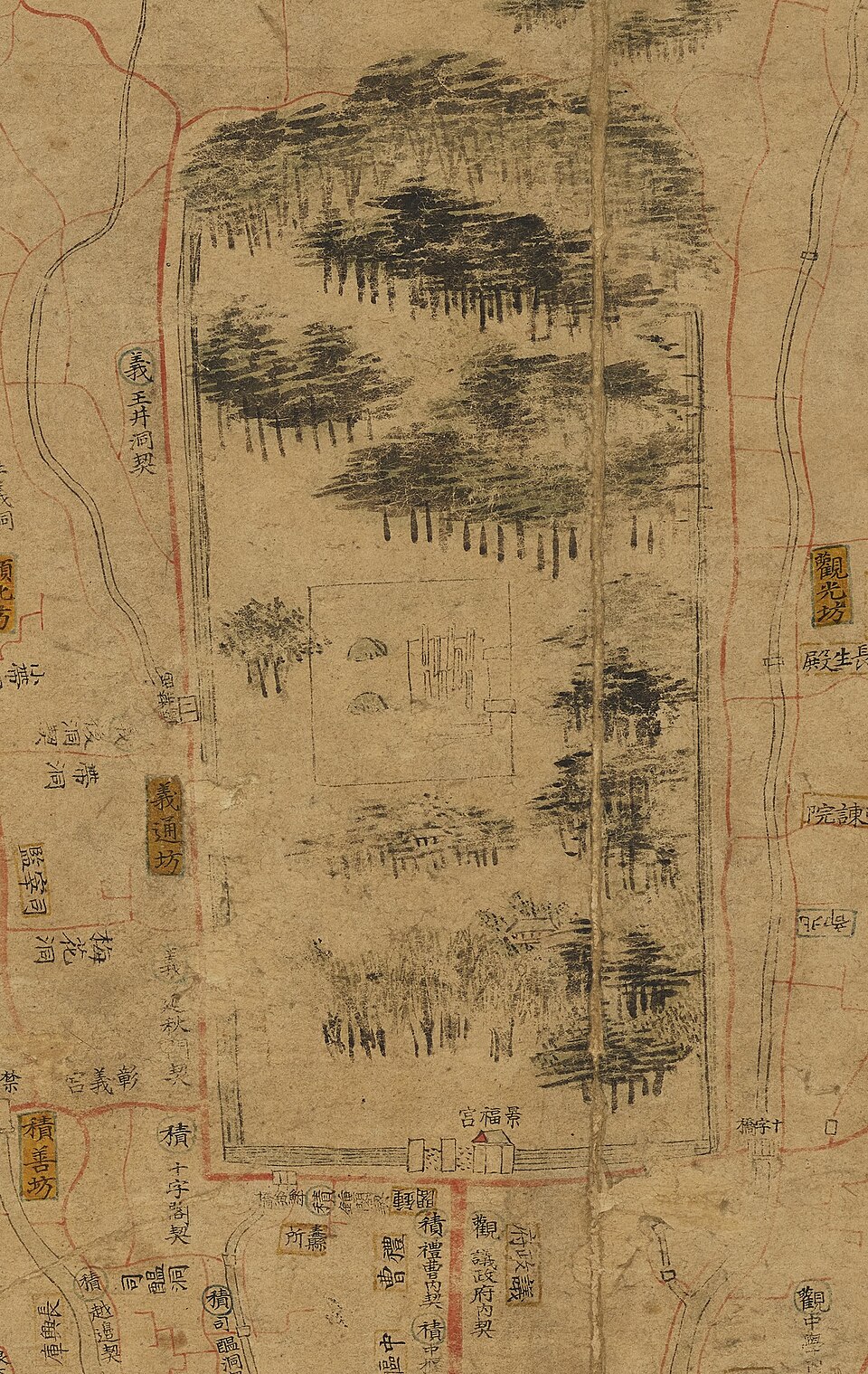
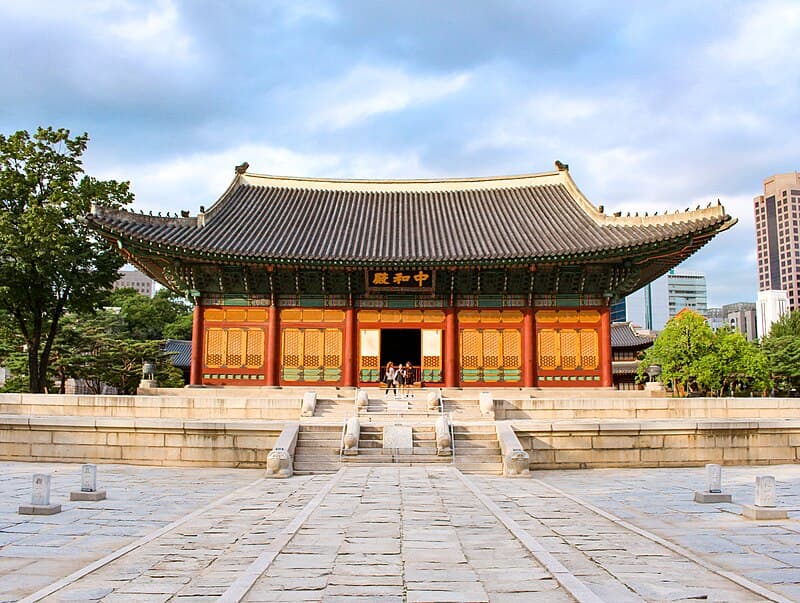
The main and largest of the five royal palaces of the Joseon dynasty, built in 1395 and rebuilt after being burned by Japanese forces. Beyond Gwanghwamun Gate stands the Geunjeongjeon throne hall, the Gyeonghoeru pavilion over a pond used for royal banquets, and dozens of courtyards. The National Folk Museum of Korea adjoins the grounds.

Tip: The changing of the guard, in colourful uniforms, takes place at ten and two by Gwanghwamun Gate. Rent a hanbok at one of the nearby shops (from 15,000 won for two hours) and you get free entry to every palace plus much better photos. This palace closes on Tuesdays rather than Mondays like the others. A combined ticket for four palaces and Jongmyo Shrine costs 10,000 won and is valid for three months.

Admission:
3,000 KRW
Time needed:
2 h
Changdeokgung Palace and Secret Garden

Changdeokgung Palace and Secret Garden

창덕궁

Jongno

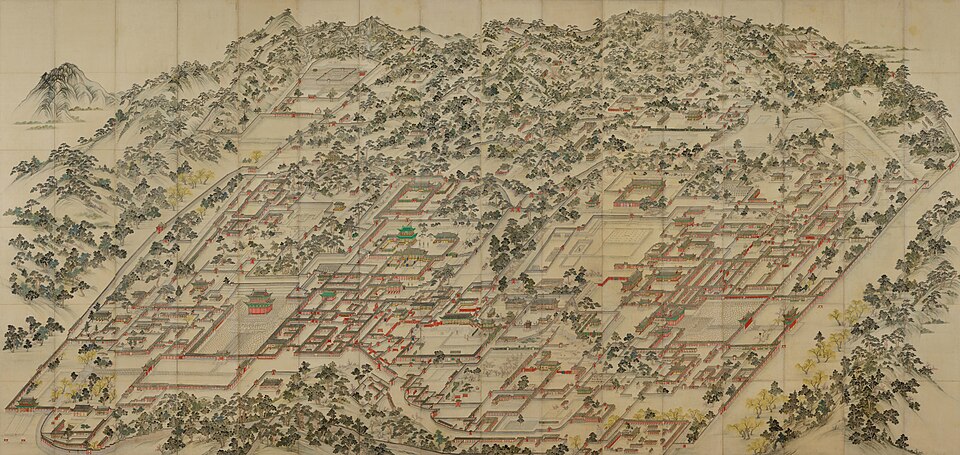
Unlike Gyeongbokgung, this palace follows the natural landscape instead of a strict axis, which is why it's listed as a UNESCO World Heritage Site. It was the longest-inhabited residence of Korea's kings. Behind it lies the Huwon Secret Garden, with ponds, pavilions and centuries-old trees, accessible only with a guide.

Tip: English-language tours of the Secret Garden run several times a day with limited spots — book online a week ahead, as they sell out in spring and autumn when the maples turn colour. If you don't have a reservation, try the ticket office in the morning, since some tickets are sold on-site. The palace is closed on Mondays. From Changdeokgung it's a five-minute walk to Bukchon.

Admission:
3,000 KRW, Secret Garden +5,000 KRW
Time needed:
2–2.5 h
Bukchon Hanok Village

Bukchon Hanok Village

북촌한옥마을

Jongno / Gahoe-dong

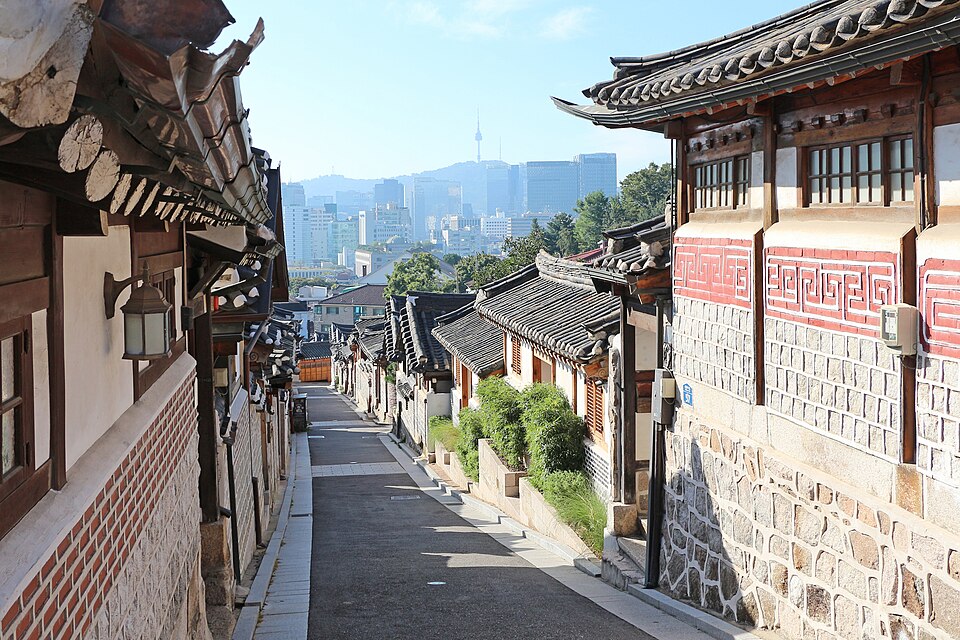
A hillside neighbourhood between two palaces with around nine hundred traditional tile-roofed hanok houses, once home to officials and the nobility. Narrow lanes climb the hill, and from the upper points you can look out over the rooftops toward the skyscrapers of downtown. It's home to small galleries, teahouses and craft workshops.

Tip: Bukchon is a residential neighbourhood, and due to noise complaints it now enforces an evening curfew: tourists are barred from the main lanes from 5 pm to 10 am, with fines for violations. Visit at ten and keep your voice down. The most famous view is from Bukchon-ro 11-gil, but the neighbouring Samcheong-dong, with its cafés and small shops, is prettier and quieter.

Admission:
free
Time needed:
1–1.5 h
Namsan and N Seoul Tower

Namsan and N Seoul Tower

N서울타워

Yongsan / Namsan

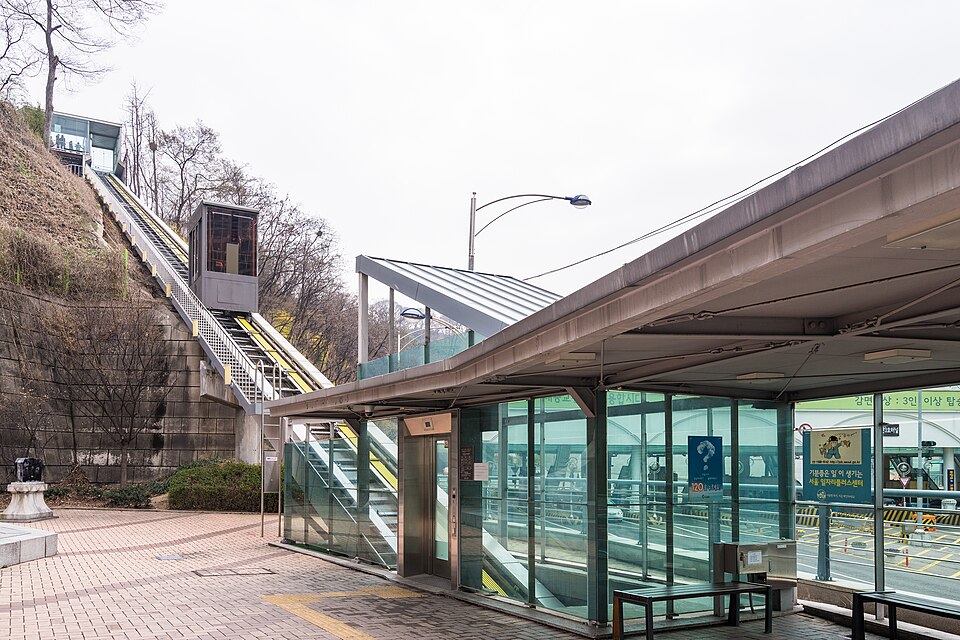
A television tower atop Namsan mountain, 480 metres above sea level, with an observation deck overlooking the entire city ringed by mountains. Tens of thousands of love padlocks hang from the terrace at its base. The summit is reached by cable car, bus, or a forest trail along the old city wall.

Tip: You don't need to go up the tower itself — the terrace beneath it is free and only slightly less impressive. The nicest way up is on foot, following the stairs along the old city wall from Hoehyeon station, about forty minutes. The cable car has long queues at the base station; it's better to take electric bus 01. Arrive an hour before sunset to be up top when the whole city lights up.

Admission:
terrace free, tower from 21,000 KRW
Time needed:
1.5–2 h
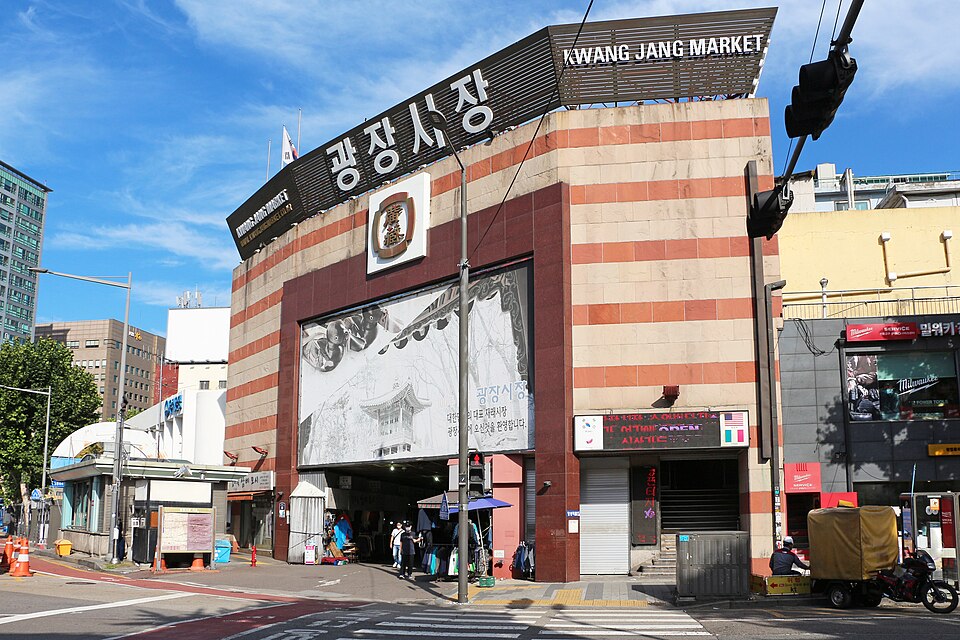
Gwangjang Market

Gwangjang Market

광장시장

Jongno 5-ga

Korea's oldest continuously operating market, opened in 1905, with more than five thousand shops selling fabric, hanboks and, above all, food. Inside the covered hall, hundreds of food stalls fry mung bean pancakes (bindaetteok), serve raw beef (yukhoe), rice rolls (kimbap) and blood sausage (sundae).

Tip: The mung bean pancake (bindaetteok) from the stall with the long queue is reason enough to come — eat it standing at the counter with a bottle of makgeolli. Mini kimbap (“majak kimbap”, said to be addictive) is the market's cheapest bite. The textile shops close at six, but the food stalls run until ten in the evening and are liveliest after seven. Cash is the usual way to pay.

Admission:
free, food from 5,000 KRW
Time needed:
1–1.5 h
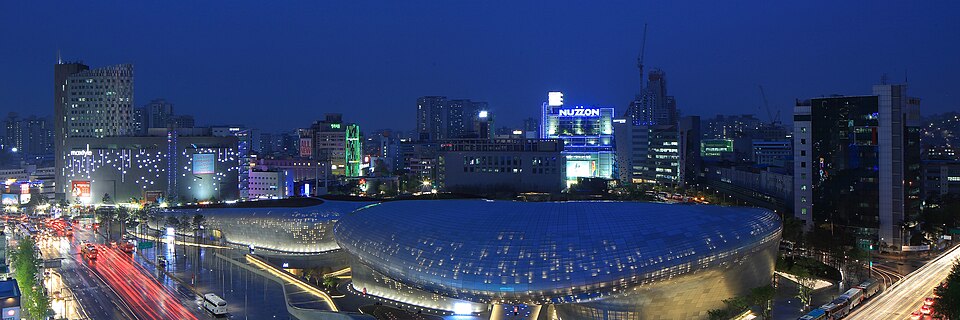
Dongdaemun Design Plaza

Dongdaemun Design Plaza

동대문디자인플라자

Dongdaemun

A futuristic Zaha Hadid building of aluminium panels with not a single right angle, housing galleries, exhibitions and a design store. It sits in the fashion district of Dongdaemun, where dozens of department stores sell clothing wholesale and retail, and shopping runs until dawn.

Tip: Photograph the building after dark, when the rose garden of thousands of LEDs and the façade light up. Dongdaemun's wholesale department stores (Doota, Migliore) open at eight in the evening, and the wholesale market itself doesn't get going until night — if you want cheap clothing, come after ten. Next door stands the remaining stretch of Heunginjimun, one of Seoul's original eight city gates.

Admission:
exterior free, exhibitions from 8,000 KRW
Time needed:
1–2 h
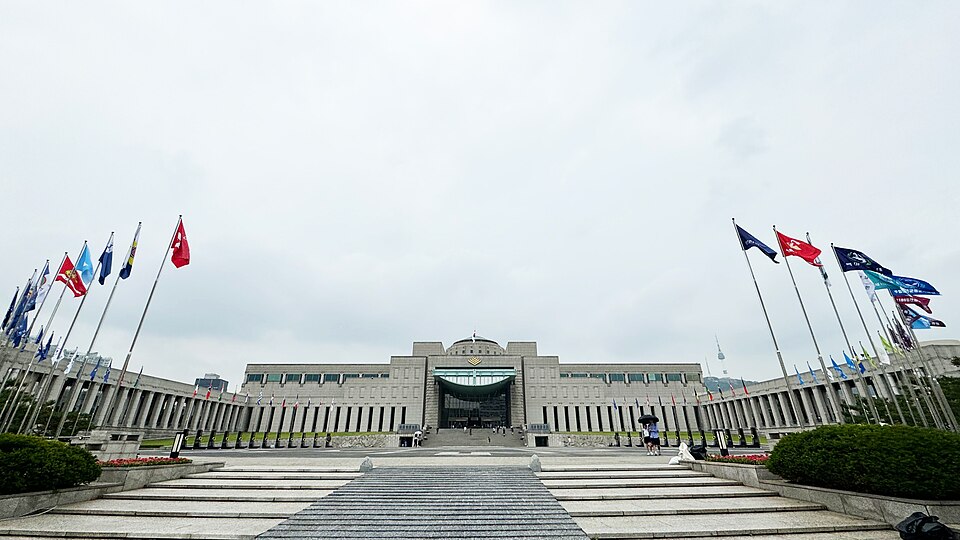
War Memorial of Korea

War Memorial of Korea

전쟁기념관

Yongsan

A vast museum covering Korea's wars from antiquity through the 1950–1953 Korean War, which killed more than two million people. The exhibits explain the division of the peninsula, the phases of the war, and the involvement of UN forces. Outside stand dozens of tanks, aircraft and ships, including a B-52 bomber.

Tip: Admission is free, and the exhibition on the Korean War deserves at least two hours — it's the best preparation before a trip to the DMZ. On Friday evenings there's often an honour guard ceremony on the grounds. The museum is closed on Mondays. The outdoor display of military hardware stays accessible even after the main building closes.

Admission:
free
Time needed:
2–3 h
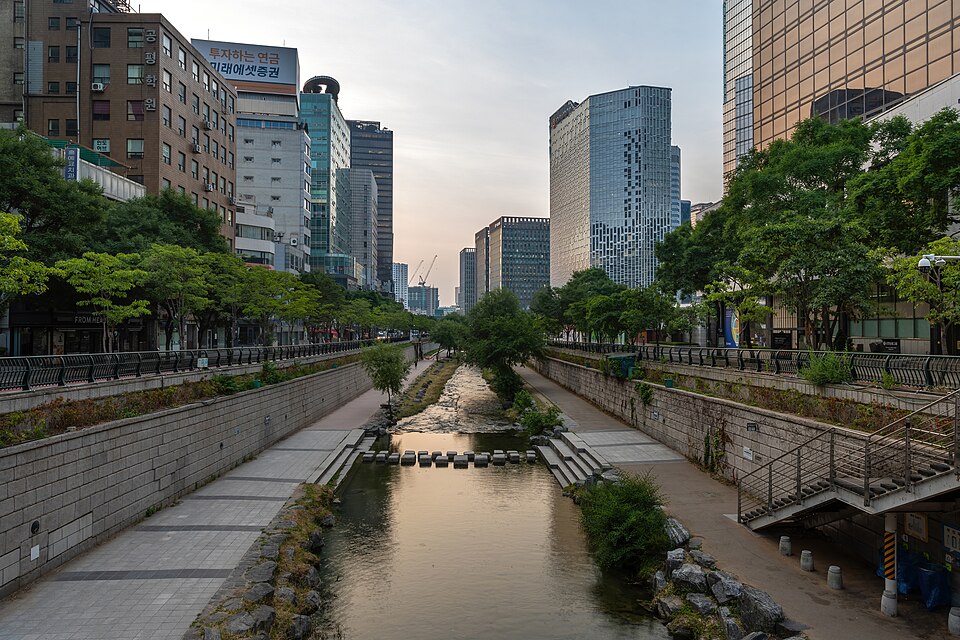
Cheonggyecheon Stream

Cheonggyecheon Stream

청계천

Jongno / Jung-gu

A six-kilometre stream through downtown that spent more than fifty years buried under concrete and an elevated highway. In 2005 the city tore the highway down and restored the stream as a sunken park with water, stepping stones and footbridges. Today it's Seoul's most popular promenade and a model that other cities have since followed.

Tip: The nicest stretch runs from Cheonggye Plaza, with its shell-shaped sculpture, to Gwangtong Bridge, where it's quieter with fewer people. On summer evenings people sit with their feet in the water. In November, the Lantern Festival fills the stream with giant illuminated figures. The promenade leads all the way to Gwangjang Market, so you can easily pair it with dinner.

Admission:
free
Time needed:
45 min – 1.5 h
Lotte World Tower and Seoul Sky

Lotte World Tower and Seoul Sky

롯데월드타워

Jamsil / Songpa

At 555 metres, Korea's tallest building and the sixth-tallest in the world, in the southern district near Seokchon Lake. The Seoul Sky observation deck, on floors 117 to 123, has a glass floor suspended over the drop below. At the tower's base sit a shopping mall, an aquarium and the Lotte World amusement park.

Tip: Tickets are cheaper online, and the view is best on clear autumn days — in spring, dust and smog can obscure the skyline, so check an air quality index before buying. Sunset slots cost more. A 2.5 km loop circles Seokchon Lake, lined with cherry blossoms in spring.

Admission:
from 31,000 KRW
Time needed:
1.5–2 h

Photos: Gyeongbokgung Palace — Unknown, according to [1] (Public domain) · Changdeokgung Palace and Secret Garden — anonymous (Public domain) · Bukchon Hanok Village — Bgag (CC0) · Namsan and N Seoul Tower — Wei-Te Wong from Taipei City, Taiwan, Republic of China (CC BY-SA 2.0) · Gwangjang Market — Bgag (CC0) · Dongdaemun Design Plaza — Eugene Lim (CC BY 2.0) · War Memorial of Korea — *Youngjin (CC BY-SA 4.0) · Cheonggyecheon Stream — Basile Morin (CC BY-SA 4.0) · Lotte World Tower and Seoul Sky — Wikimedia Commons (CC BY-SA 3.0)

Where to stay

Areas and districts, matched to the kind of trip you are taking

Myeongdong and Jung-gu

Best for: first-time visitors, shopping, convenience

The most touristy central district, with cosmetics shops, an evening street food market, and dozens of hotels across every price range. Everything important — palaces, Namsan, Cheonggyecheon — is a short walk or a few subway stops away. It stays lively late into the night, though accommodation here is pricier and noisier. It's the most practical choice for a first visit.

Insadong and Ikseon-dong

Best for: traditional Korea, teahouses, older travellers

Lanes lined with craft shops, hanji paper goods, ceramics and teahouses; in Ikseon-dong, converted hanok houses now hold cafés and restaurants. It sits between the palaces, so everything is walkable. Staying in a traditional hanok here is one of the best experiences Seoul offers, though the rooms are small and you sleep on the floor.

Hongdae and Yeonnam-dong

Best for: younger travellers, nightlife, smaller budgets

A university district full of street music, clubs, bars, cheap restaurants and clothing shops. The AREX airport train from Incheon runs straight here, which is a big plus. Hostels and budget hotels offer the best value in this area. Neighbouring Yeonnam-dong, along a green park built on an old rail line, has quieter cafés.

Gangnam and Sinsa

Best for: business trips, luxury, modern Seoul

The wealthier side of the river, with skyscrapers, luxury boutiques in Apgujeong, aesthetic clinics and upscale restaurants. Garosu-gil street in Sinsa is packed with design shops and cafés. It's a fair distance from the palaces, but the hotels are modern and the subway is fast — it suits visitors here for shopping or business.

Getting around

From the airport

Korean Air flies direct from Prague to Seoul several times a week in some seasons, with a flight time of roughly eleven to twelve hours; otherwise you can connect via Helsinki, Istanbul, Dubai or Frankfurt. Czech citizens don't need a visa for stays under ninety days; Korea has temporarily waived the K-ETA electronic registration requirement for Czechs, but check the current status with the Ministry of Foreign Affairs before travelling. The main international airport, Incheon, sits on an island fifty kilometres west of the city and ranks among the best in the world. The smaller Gimpo Airport, closer to the centre, mainly serves domestic routes and flights to Japan and China. Overland, the KTX high-speed train connects Seoul to Busan in about two and a half hours.

Seoul Incheon (ICN) · 50 km

  • AREX Express to Seoul Station (non-stop)· 43–51 min· 11,000 KRW
  • AREX All-stop (Hongdae, Seoul)· 60 min· 4,450 KRW
  • Airport limousine bus to hotels· 60–90 min· 17,000 KRW
  • Taxi to Myeongdong· 60 min· 65,000 KRW

Seoul Gimpo (GMP) · 17 km

  • Subway line 5 or 9· 30–40 min· 1,500 KRW
  • Taxi to downtown· 30–50 min· 25,000 KRW

Around town

Seoul's subway has more than twenty lines and around seven hundred stations, and it will take you almost anywhere — clean, safe, with English signage and announcements in four languages. Pay with a T-money card, sold and topped up at any convenience store, and transfers between subway and bus within thirty minutes are free. Because of Korea's mapping data law, Google Maps won't navigate on foot or by car here, so install Naver Map or KakaoMap instead — both have English interfaces. Taxis are cheap and drivers accept cards; orange taxis for tourists come with English-speaking drivers. Distances can be large: it's about half an hour by subway from Myeongdong to Gangnam. The subway runs from roughly 5:30 am to midnight, and night buses marked N run after that.

Subway and buses (T-money)Base fare covers up to 10 km, then a surcharge by distance; transfers within 30 minutes are free. · 1,550 KRW
Climate Card / Discover Seoul PassUnlimited rides or entry to selected sights; worth it if you're taking five or more trips a day. · 5,000 KRW / day
TaxiBase fare 4,800 KRW, 20–40% more at night; book through Kakao T. · 4,800 KRW
Ttareungyi bike shareCity bike-share scheme, pay through the app. · 1,000 KRW / h

Useful apps: Naver Map, KakaoMap, Kakao T (taxi), Papago (translator), T-money / WOWPASS

When to go

Seoul has four distinct seasons. The prettiest are April, when cherry blossoms bloom along the river and in the parks, and late September through early November, with blue skies and red maples in the palace gardens. Summer is hot and humid, with the changma monsoon bringing a month of rain in July and sweltering heat above 30°C in August. Winter is freezing and dry, around minus ten during the day with an icy wind from Siberia, but sunny — January brings the cheapest hotels and skiing in the mountains. Between March and May, yellow dust can blow in from Mongolia, bringing poor air quality with it. Avoid travelling by train during the Lunar New Year and Chuseok holidays.

Best time

April–May, late September–early November

What to avoid

the monsoon in July, freezing January, the Seollal and Chuseok holidays

MonthJanFebMarAprMayJunJulAugSepOctNovDec
Day2°5°11°18°24°28°29°30°26°20°12°4°
Night-6°-4°1°7°13°18°22°23°18°10°3°-4°
Rainy days657891017159687

Food & drink

Eating in Seoul is a social event: dishes are shared from the middle of the table, and many restaurants only serve groups of two or more. Korean barbecue, where you grill meat right at the table, is the best known style, but restaurants specializing in a single dish are just as good — braised ribs, spicy fish stew, ginseng chicken soup or cold noodles. Every meal comes with small free side dishes called banchan, refilled without being asked. Cheap eats can be found at Gwangjang and Dongdaemun markets and at street food stalls, while high-end Korean fine dining has several Michelin-starred restaurants in the city. Call the staff over with the bell on the table. Water is always free and self-service. Coffee is an obsession in Seoul — there are more cafés here than almost anywhere else, and many are elaborate multi-storey design spaces. The spice is real: if you can't handle chili, say “an mepke”.

What to try

Korean barbecue

Pork belly (samgyeopsal) or marinated beef (bulgogi and galbi) are grilled right at the table, snipped with scissors, and wrapped in lettuce leaves with garlic and ssamjang paste. Usually ordered for at least two people, alongside a green bottle of soju.

Kimchi and banchan

Fermented spicy cabbage is just one of the small banchan side dishes served free with every meal and refilled without asking. The number and quality of the banchan is the best sign of how good a restaurant is.

Bibimbap

Rice with colourful vegetables, an egg and spicy gochujang paste, mixed together at the table. The version served in a scorching stone bowl crisps up at the bottom — that's the best part.

Tteokbokki and street food

Rice cakes in a sweet-spicy sauce, Korean fried chicken, noodle sausage (sundae) and brown-sugar hotteok pancakes. Found at markets and street stalls in the evening for just a few thousand won.

Korean fried chicken

Twice-fried, extremely crispy chicken glazed in soy-garlic or sweet-spicy sauce. Usually paired with beer — a combination with its own name, chimaek. Ordered as a whole chicken, cut into pieces, to share.

Naengmyeon

Cold buckwheat noodles in an icy broth with vinegar and mustard — traditionally a summer dish, though eaten year-round. The noodles are long, and staff will snip them with scissors on request — long noodles are said to bring a long life.

Samgyetang

A whole young chicken stuffed with sticky rice, ginseng, garlic and jujube, simmered in broth. Eaten, somewhat paradoxically, on the hottest days of summer, since Koreans believe hot food helps you beat the heat.

Soju and makgeolli

Soju is a clear spirit around 16% ABV in a green bottle, sipped from small glasses and the cheapest alcohol in the country. Makgeolli is a milky, sweet, low-alcohol rice wine, traditionally paired with savory pajeon pancakes on rainy days.

What it costs

Coffee at a café

4,500–7,000 KRW

Kimbap or tteokbokki at a stall

4,000–6,000 KRW

Lunch at a local diner

9,000–14,000 KRW

Barbecue per person with drinks

25,000–40,000 KRW

Subway ride

1,550 KRW

Palace entry

3,000 KRW

Bottle of soju at a restaurant

5,000–7,000 KRW

Night in a 3-star hotel for two

100,000–180,000 KRW

Indicative prices that change over time — treat them as a guide, not a price list.

Practical information

SocketsCEuroplug, two round pinsFSchuko
Voltage220V / 60Hz
Tap waterTap water is treated, bottled is common — Tap water in Korea meets drinking water standards, but Koreans rarely drink it straight from the tap, and filters are common in both homes and restaurants. Every restaurant table has a free jug of water or barley tea, refilled by staff. Self-service water dispensers are also found in cafés and public offices. A bottle at a shop costs around 1,000 won.
TippingTipping is not customary in Korea and nobody expects it — the price on the receipt is final. Pay at the register on your way out. Cards are accepted almost everywhere, including taxis and markets; cash is mainly useful for street stalls. The most useful tool is a T-money transport card, which works on the subway, buses, taxis and in shops, and can be topped up with cash at any convenience store. Some Korean apps and online shops don't accept foreign cards, so it's worth getting an app that lets you pay with a foreign card instead (WOWPASS).
Driving on theright
SafetySouth Korea is very safe — street crime is minimal and lost items are usually returned. The real risks lie elsewhere: traffic, where delivery scooters often ride on the pavement, summer monsoon downpours, and icy pavements in winter. Military tension with North Korea is not something tourists notice in daily life; the exception is the DMZ, which can only be visited with an organized tour and a passport. In spring, dust blows in from northern deserts, and Koreans wear masks when air quality is poor — check an air quality index app. Emergency numbers are 112 (police) and 119 (ambulance/fire); the tourist information line 1330 speaks English.
Opening hoursKorea lives late into the night: shops open at ten and close around ten in the evening, shopping districts and barbecue restaurants run until midnight, and convenience stores and some diners never close. Palaces and museums are closed on Mondays (Gyeongbokgung is closed on Tuesdays instead), with last entry an hour before closing. The subway runs from roughly 5:30 am to midnight. During Seollal (Lunar New Year) and Chuseok (the harvest festival in September or October), the whole country travels home to family — traditional markets and smaller restaurants close for three days and trains sell out, while palaces stay open and are often free.
Customs & etiquetteRespect for elders matters: give and receive things with both hands, turn your head slightly away when drinking in front of an elder, and never pour your own drink — an elder pours for you, and you pour for them. In restaurants, call staff over with the bell on the table or by calling out “jogiyo”. Don't stick chopsticks upright in rice, and don't lift the rice bowl to your mouth — eat rice with a spoon. Take your shoes off when stepping onto heated ondol flooring. Pink-marked subway seats are reserved for pregnant women, and end-of-carriage seats for seniors — sitting there is considered rude even in an empty carriage.
A few local wordsHello — AnnyeonghaseyoThank you — KamsahamnidaExcuse me / Sorry — JoesonghamnidaHow much is this? — Eolmayeyo?This one, please (when ordering) — Igo juseyoCheers — Gonbae

How to plan your days

1 day

Seoul in a day

  1. 1Morning at Gyeongbokgung Palace, catching the changing of the guard at ten.
  2. 2Walk through Samcheong-dong into Bukchon.
  3. 3Lunch in Insadong and tea at a traditional teahouse.
  4. 4Afternoon stroll along Cheonggyecheon.
  5. 5Evening at Gwangjang Market, then sunset atop Namsan.

2 days

Two days: palaces and modern Seoul

  1. 1Day 1: Gyeongbokgung, Bukchon, Changdeokgung and its Secret Garden.
  2. 2Day 1 evening: Insadong, then dinner in Ikseon-dong.
  3. 3Day 2: War Memorial of Korea, then Namsan on foot along the old wall.
  4. 4Day 2 afternoon: Myeongdong and Dongdaemun Design Plaza.
  5. 5Day 2 evening: barbecue and bars in Hongdae.

3 days

Three days including the Demilitarized Zone

  1. 1Day 1: palaces, Bukchon, Insadong and Gwangjang Market.
  2. 2Day 2: full-day organized DMZ tour — bring your passport.
  3. 3Day 2 evening: Myeongdong and street food.
  4. 4Day 3: Gangnam, Sinsa and the Lotte World Tower observation deck.
  5. 5Day 3 evening: picnic by the Han River at Yeouido Park.

Day trips

Demilitarized Zone (DMZ)

55 km · 1 h 30 min by bus

A four-kilometre-wide strip of land between North and South Korea, the most heavily guarded border in the world. On an organized tour you'll see an observatory looking into North Korea, an infiltration tunnel dug by the North, and the Bridge of Freedom at Imjingak. The Joint Security Area at Panmunjom is only reached on limited tours, which are often cancelled due to the political situation. You won't be allowed on the bus without a passport, and ripped jeans or shorts are not permitted on the tour.

Suwon and Hwaseong Fortress

35 km · 1 h by subway

A late-18th-century fortress with 5.5 km of walls, gates and watchtowers, listed as a UNESCO World Heritage Site. You can walk the entire wall circuit in two to three hours. Suwon is also the birthplace of Korean fried chicken, and the aptly named Chicken Street (Tongdak-geori) near the market is lined with restaurants. Take subway line 1 or the ITX train; a ticket costs 2,000 won.

Nami Island

63 km · 1 h 30 min by ITX train and ferry

A river island lined with metasequoia and ginkgo trees, made famous by the drama Winter Sonata, with especially vivid foliage in autumn. It's part amusement park, part nature garden, with cycling paths and restaurants. The island is reached by ferry or a zipline over the river. It pairs well with Petite France village or the rail bikes in Gapyeong.

Frequently asked questions

How many days do you need for Seoul?+

Three days cover the palaces, the traditional districts and the main viewpoints; add a fourth for a trip to the Demilitarized Zone. If you're here for shopping, cosmetics or Korean pop culture, you could easily fill a week. Combined with Busan, Gyeongju and Jeju Island, ten to fourteen days makes a well-rounded trip around Korea.

Why doesn't Google Maps work in Korea?+

Korean law restricts the export of precise mapping data, so Google Maps only shows public transport and won't navigate on foot or by car. Install Naver Map or KakaoMap instead — both have English interfaces and navigate accurately, right down to the correct subway exit. It's best to search for places by their Korean name or address.

How do you get to the Demilitarized Zone?+

Only with an organized tour — you cannot go on your own. Tours are booked a day or a few days in advance and pick you up at your hotel. Don't forget your passport; without it you'll be turned back at the checkpoint. Panmunjom, with the buildings sitting right on the demarcation line, is often closed for political reasons and isn't included in standard tours.

Is Seoul expensive?+

Food and transport are cheaper than in Europe relative to quality — a lunch set at a local diner costs around 10,000 won. Cafés, cosmetics and clothing are priced similarly to back home. Accommodation in the centre is pricier: a decent hotel for two runs 100,000–180,000 won a night. Palace entry is nominal, and free if you're wearing a hanbok.

Do I need to rent a hanbok?+

You don't have to, but it's more fun than it sounds: rental shops near the palaces will dress you for 15,000–20,000 won for two hours, hairstyle included, and wearing a hanbok gets you free entry to every royal palace. Koreans see it as a genuine interest in their culture, not a costume. Wear comfortable shoes — sneakers under a hanbok are completely normal.

Is Seoul safe?+

Yes, Seoul is one of the safest big cities in the world, and walking alone at night is entirely normal. Crime is low, lost items get returned, and people leave their phones on café tables without worry. Tension with North Korea doesn't intrude on everyday life. The main thing to watch for is delivery scooters, which often ride on the pavement.

When is the best time to visit Seoul?+

April, with cherry blossoms, and late September to early November, with colourful maples and stable weather, are the best times. Summer is hot, humid and rainy during the July monsoon, while winter is bitterly cold, around minus ten. If you travel in winter, pack thermal layers and a hat — in exchange you get the cheapest hotels and empty palaces.

How do you pay in Seoul?+

By card almost everywhere, including taxis and markets — cash is really only needed for street stalls. For transport, get a T-money card at any convenience store. Some Korean apps and machines won't accept foreign cards, so it's worth getting a WOWPASS card, which you top up at a kiosk at the airport or in the city and then use just like a local.
Arrival Card

Fill in the required arrival card before your trip to avoid delays at immigration.

Complete Arrival Card

Visa Requirements

Check the latest visa requirements for entering this country. Some nationalities may need to apply for a visa or e-visa before travel.

Check visa requirements

Language

Korean

Currency

KRW

Timezone

GMT+9

Dial Code

+82

Population

51.7M

Area

100,210 km²

Voltage

220V / 60Hz

Driving Side

Right

Top Hotels in Seoul

Live prices from 500+ properties

Loading hotels...

More destinations in South Korea

Planning a trip to Seoul?

Compare hundreds of hotels, find the best price, and book with free cancellation on TravelManiac.