Hotels in Uyuni

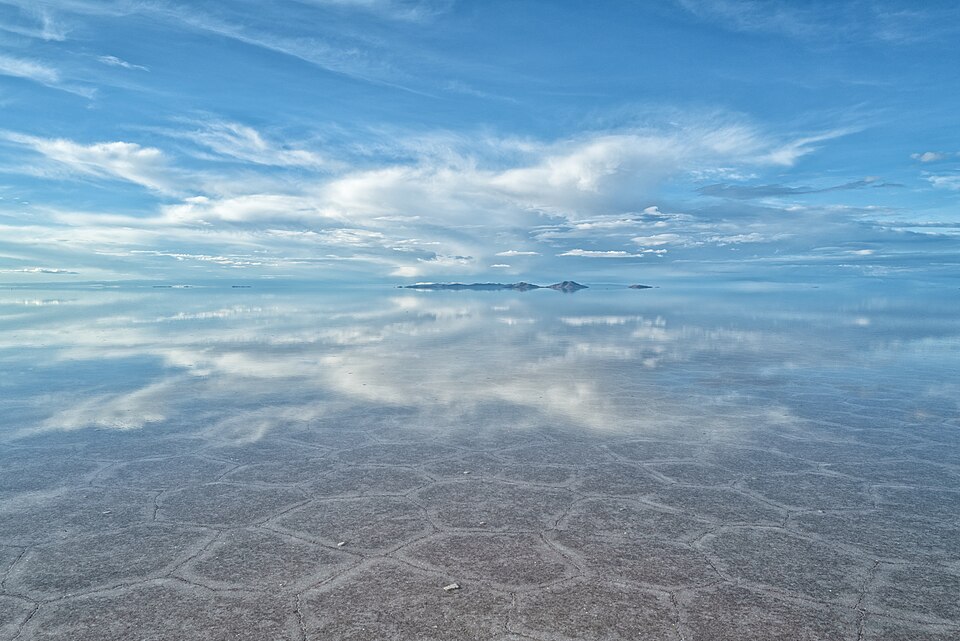
The world's largest salt flat, turned into a giant sky-mirror after the rains

Uyuni

LanguageSpanish
CurrencyBOB
TimezoneAmerica/La_Paz
Temperature10-25 °C
Dial Code+591
Population12.2M
Area1,098,581 km²
SocketsType A / Type C
Tap waterNot drinkable

Discover Uyuni

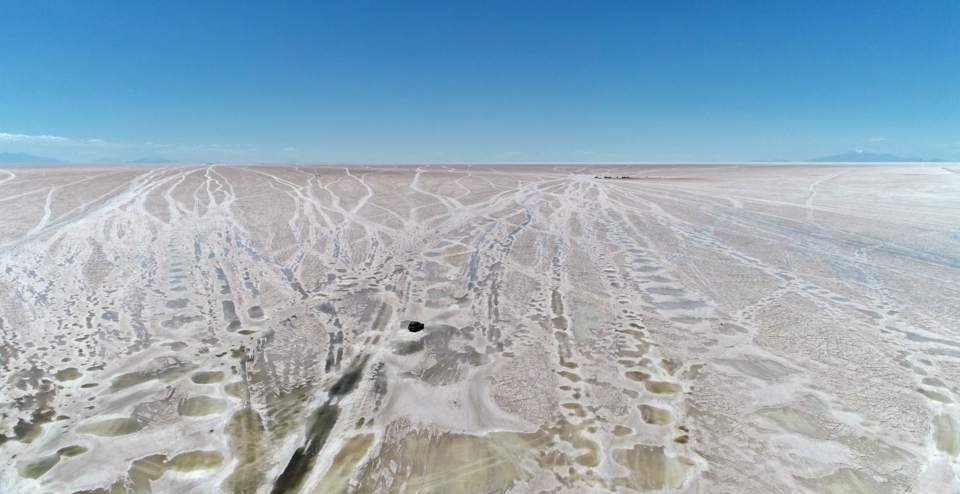
Salar de Uyuni is a dried-up prehistoric lake on Bolivia's Altiplano plateau, at 3,650 metres, covered by a salt crust over an area of more than ten thousand square kilometres — the largest salt flat on Earth, so flat that satellites use it to calibrate their altimeters. In the dry season it's a blindingly white hexagonal mosaic stretching to the horizon, perfect for playful perspective photos. In the rainy season, a few centimetres of water cover the flat and create a mirror so perfect that it's impossible to tell where the ground ends and the sky begins. Beneath the salt lies the world's largest lithium reserve. From the small town of Uyuni, visitors head out on day trips onto the salt flat, or on three-day jeep tours past a cactus-covered island, deserts, volcanoes and lagoons tinted red and green, with flamingos and geysers at five thousand metres, ending at the Chilean border near San Pedro de Atacama. It's one of the most powerful natural journeys in South America, though nights are spent in simple guesthouses, some built from salt, and it freezes after dark.

What to see

The places worth your time in Uyuni, and what to expect at each

Salar de Uyuni

Salar de Uyuni

west of Uyuni

A salt flat covering 10,582 square kilometres, capped by several metres of salt above a brine layer. In the dry season the salt cracks into regular hexagons; in the rainy season it turns into a mirror. There are no landmarks in the middle, and you only go with local drivers who know the routes.

Tip: For the mirror effect, go from January to March, but not on a tour through the lagoons — water on the salt flat blocks the way to Incahuasi Island and the southern reserves. The best compromise is April, when there's still some water at the edges and the island remains accessible. For playful perspective photos, bring a toy or a bottle — drivers are experienced at staging the shots.

Admission:
included in the tour
Time needed:
1 day
Train Cemetery

Train Cemetery

3 km from Uyuni

Dozens of rusting steam locomotives and railcars from the early twentieth century sit on the edge of Uyuni, remnants of the railway that once carried silver and tin from the mines to the Chilean coast. They were abandoned here after the mining collapse in the 1940s. You can climb on the wagons and take photos.

Tip: This is the first stop on every tour, around half past ten, when up to twenty jeeps arrive at once. If you have an evening free in Uyuni, walk here from the centre (three kilometres) for sunset, when it's empty and the light is far better. The metal is scorching hot with sharp edges, so gloves help.

Admission:
free
Time needed:
30 min
Colchani and the salt hotels

Colchani and the salt hotels

edge of the salt flat, 22 km from Uyuni

A village at the edge of the salt flat where salt is harvested by hand, dried in mounds and packaged. Workshops let you see the whole process, and stalls sell souvenirs carved from salt blocks. Nearby stands the original salt hotel, built in the middle of the flat, and today several more hotels where the walls, beds and tables are all made of salt blocks.

Tip: The salt mounds on the flat look best in morning light. The salt museum in Colchani is small and unremarkable — better to visit a family workshop that iodizes and packages the salt by hand. If you sleep in a salt hotel, try not to lick the walls — it's the first thing everyone does.

Admission:
free
Time needed:
1 h
Incahuasi Island

Incahuasi Island

centre of the salt flat

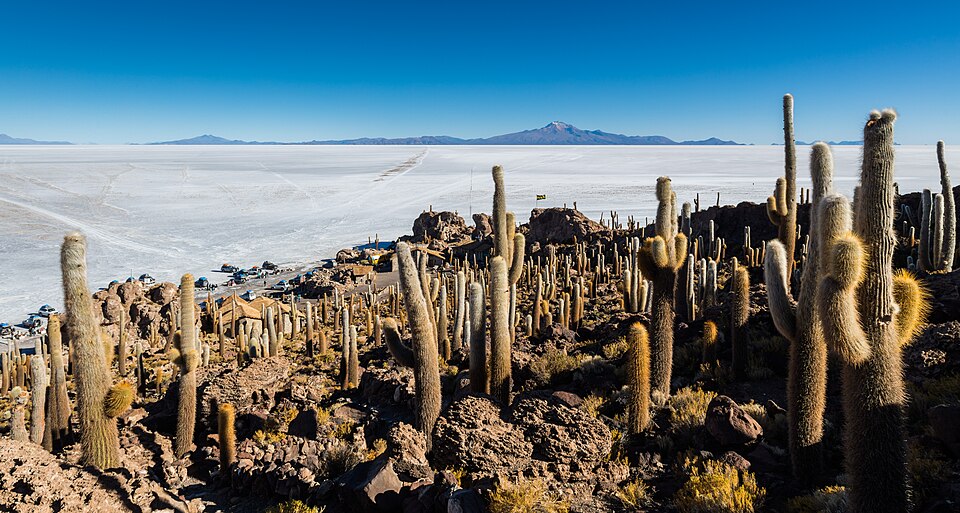
A rocky island in the middle of the white flat, a former volcanic peak in a prehistoric lake, covered with giant Trichocereus cacti up to twelve metres tall, some over a thousand years old. A trail leads to the top, with views in every direction over the endless white plain. Fossilized coral is visible in the rocks.

Tip: The island is only accessible in the dry season — during the rains, water cuts it off. The climb to the top takes half an hour and is strenuous above 3,600 metres, so go slowly. Lunch is usually served at tables made of salt at the base of the island, and the entrance fee is paid separately, in cash.

Admission:
30 BOB
Time needed:
1 h
Tunupa Volcano

Tunupa Volcano

north of the salt flat

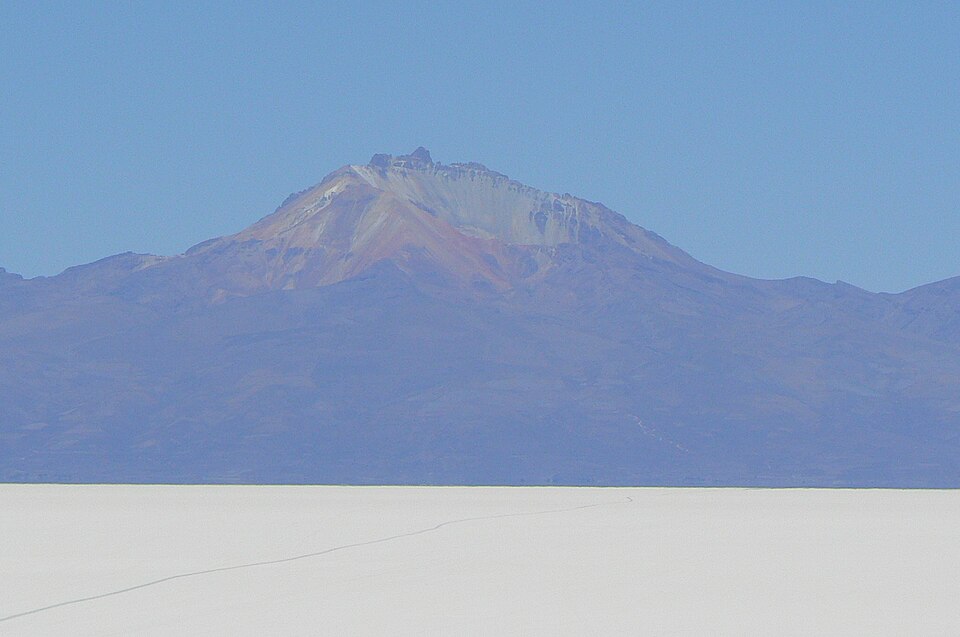
A 5,321-metre volcano on the northern edge of the salt flat, its slopes streaked red, yellow and purple. On its flank, near the village of Coqueza, lies a cave with mummies in pre-Columbian tombs, and a viewpoint at 4,300 metres, where the flat below looks like a frozen sea.

Tip: Tunupa isn't part of the classic three-day route — it's added on a two-day tour through the north of the salt flat, with an overnight stop in Coqueza. The climb to the viewpoint takes two to three hours and is demanding because of the altitude. The mummies sit in a small cave, and entry is paid to the local community.

Admission:
30 BOB
Time needed:
half a day
Laguna Colorada

Laguna Colorada

Eduardo Avaroa Reserve

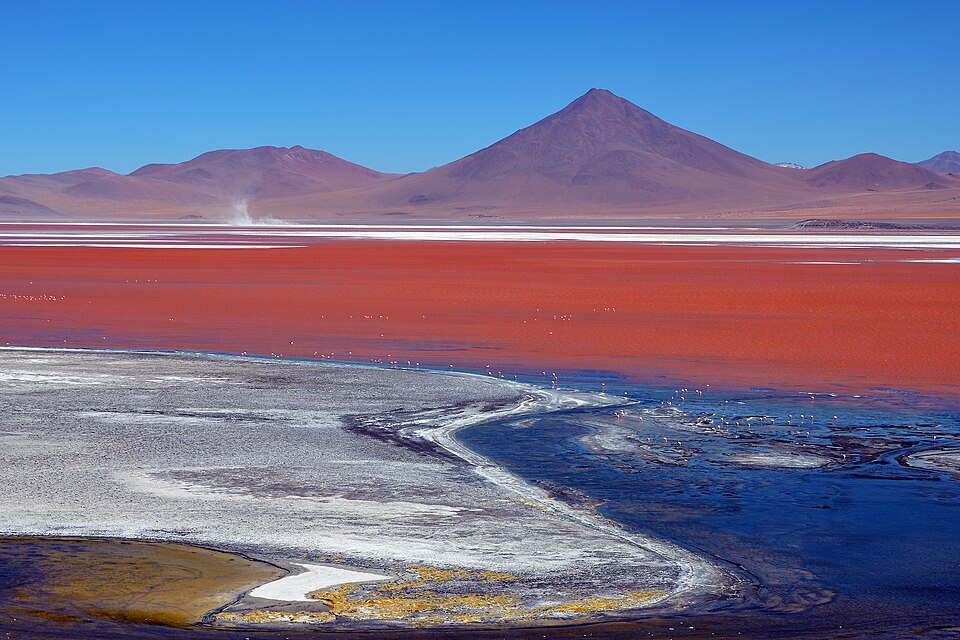
A shallow lake at 4,278 metres, its water a deep red from algae and minerals, dotted with white borax islets. Thousands of Andean, Chilean and James's flamingos feed in the shallows here. It's the highlight of day two on the three-day tour through the Eduardo Avaroa Reserve.

Tip: The water's colour shifts through the day with the wind and sun, deepest in the afternoon. Don't walk to the shoreline through the mud, since it's easy to sink in. The wind is icy here even in summer, so bring a hat and gloves. The 150-boliviano reserve entrance fee is paid in cash at the gate.

Admission:
150 BOB reserve entrance fee
Time needed:
1 h
Stone Tree (Árbol de Piedra)

Stone Tree (Árbol de Piedra)

Siloli Desert

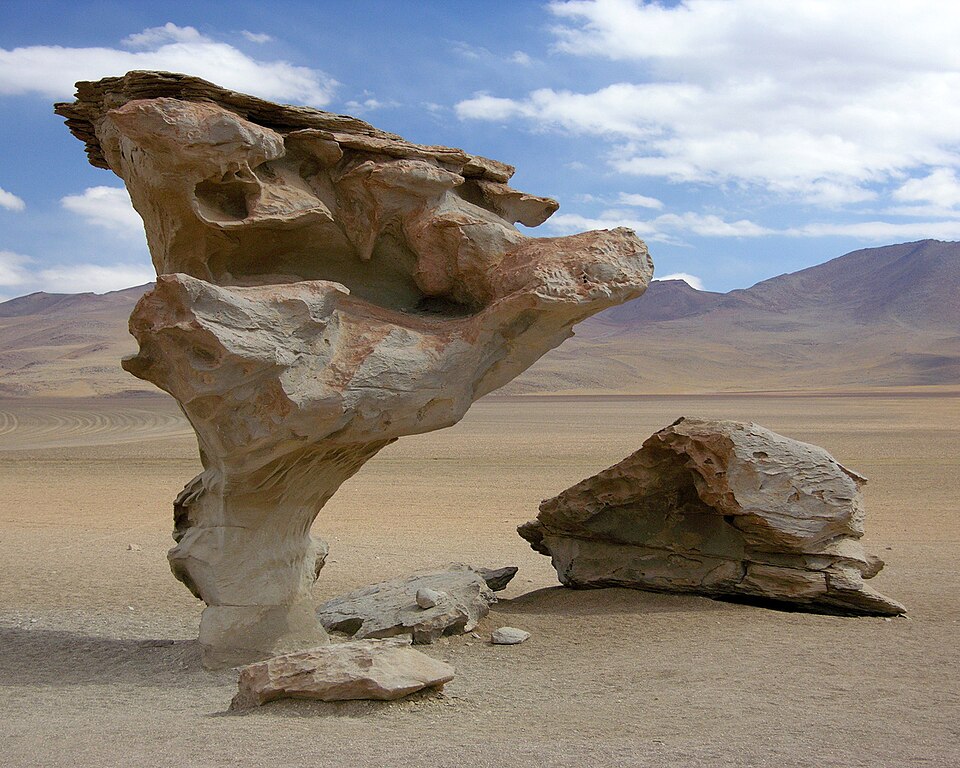
A tree-shaped rock formation in the Siloli Desert, seven metres tall, sculpted over time by wind-blown sand. It stands among other bizarre rock formations in the middle of the desert, with views of distant volcanoes. The Siloli Desert is one of the driest places on Earth.

Tip: Climbing on the rock formation is forbidden and enforced by rangers. The surrounding rocks are more interesting, and you can climb those with far fewer people around. Stops here tend to be brief, so ask the driver for extra time for photos.

Admission:
included in the reserve fee
Time needed:
30 min
Sol de Mañana Geysers

Sol de Mañana Geysers

south of the reserve

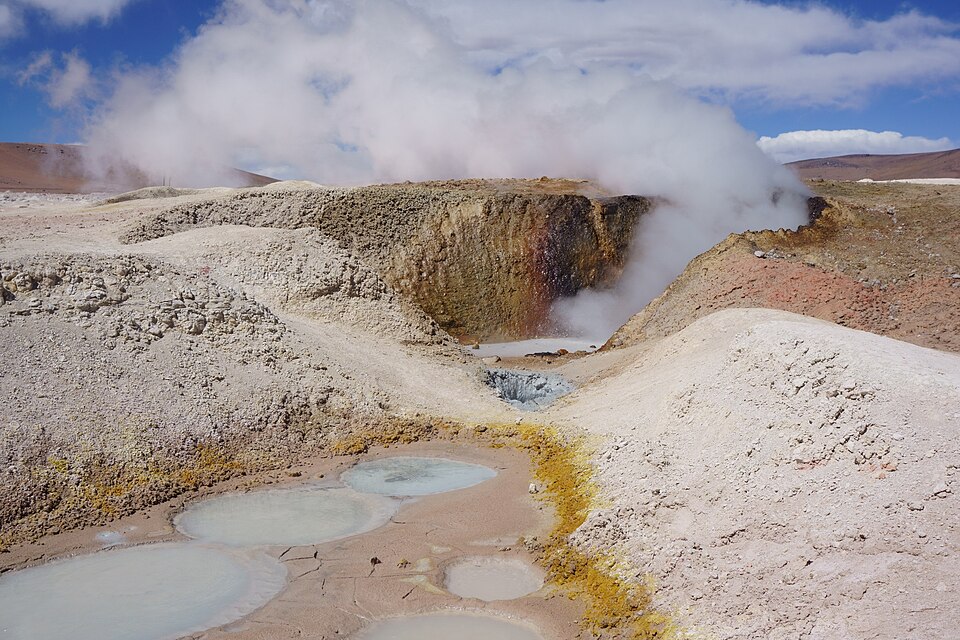
A geothermal field at 4,850 metres, with bubbling mud pools and fumaroles sending steam into the freezing dawn air. Sulphur hangs in the air, and volcanic terrain stretches in every direction. It's the highest point on the three-day tour.

Tip: Jeeps arrive here at dawn on day three, when the steam is at its most dramatic and the temperature hovers around minus fifteen. Stay on the marked paths — the ground around the mud pools is thin, with boiling mud beneath, and someone gets scalded here every year. Breakfast follows at the Polques hot springs after the geysers.

Admission:
included in the reserve fee
Time needed:
30 min
Laguna Verde and Licancabur

Laguna Verde and Licancabur

south of the reserve, near the Chilean border

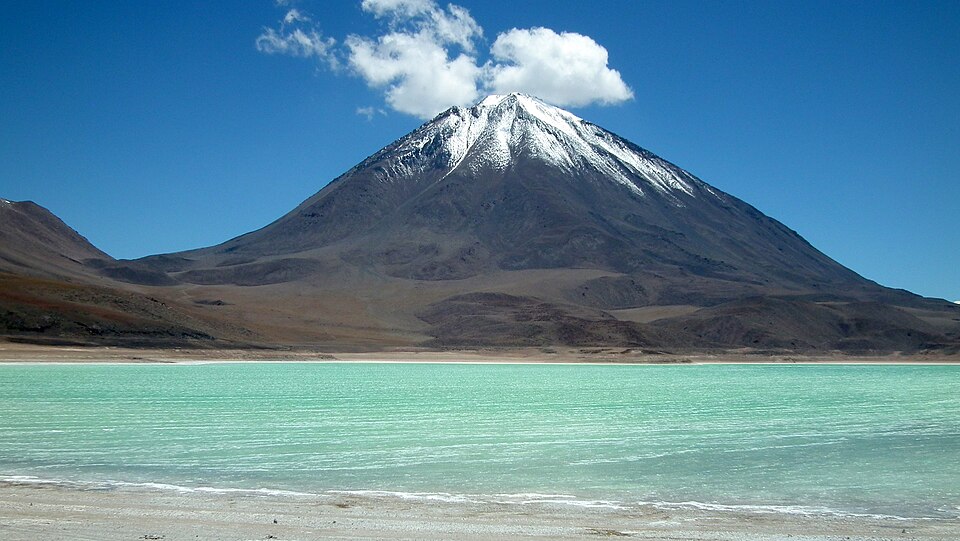
A lake at the foot of the perfectly conical Licancabur volcano (5,916 metres) on the Chilean border. The water contains arsenic, lead and copper, which turn it an emerald green in windy conditions. Nearby lies Laguna Blanca, and beyond it the crossing into Chile.

Tip: The green colour only appears with wind and sunlight, usually in the morning; the lake often looks grey at dawn. It's the last stop of the tour before the Chilean border, where minibuses depart for San Pedro de Atacama. Licancabur can be climbed with a guide over two days, but only by well-acclimatized visitors.

Admission:
included in the reserve fee
Time needed:
30 min

Photos: Salar de Uyuni — Otávio Nogueira from Fortaleza, BR (CC BY 2.0) · Train Cemetery — Martin St-Amant (CC BY 3.0) · Colchani and the salt hotels — Jamesryche (CC BY-SA 4.0) · Incahuasi Island — Diego Delso (CC BY-SA 4.0) · Tunupa Volcano — Iain and Sarah from London, UK (CC BY 2.0) · Laguna Colorada — madras91 (CC BY 2.0) · Stone Tree (Árbol de Piedra) — El Guanche (CC BY 2.0) · Sol de Mañana Geysers — kallerna (CC BY-SA 4.0) · Laguna Verde and Licancabur — Albert Backer (CC BY-SA 3.0)

Where to stay

Areas and districts, matched to the kind of trip you are taking

Central Uyuni

Best for: the night before your tour

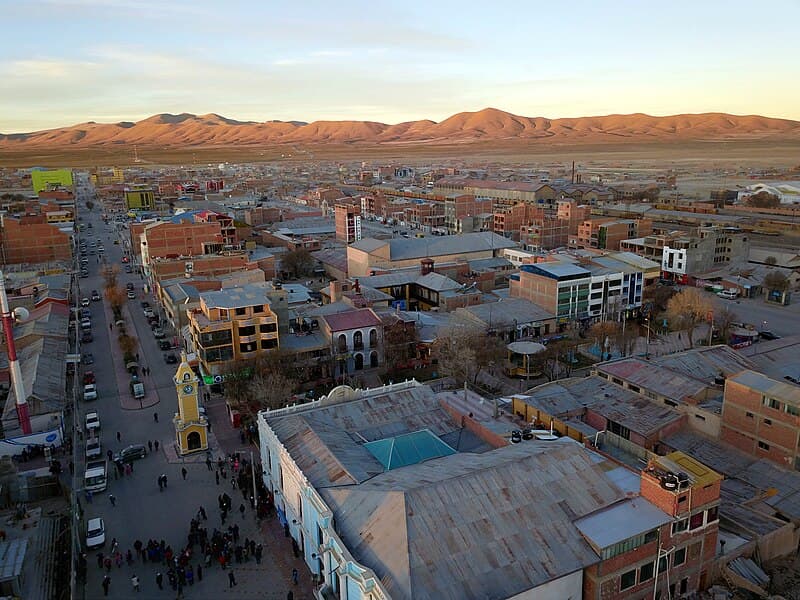
A dusty town with straight streets around the main avenue, Avenida Arce, home to the agencies, restaurants and hostels. Accommodation is basic and cold at night, so look for a hotel with heating. There's little to see here beyond it being the starting point for the tours.

Salt hotels on the edge of the flat

Best for: a memorable stay, comfort

Hotels built from salt blocks in Colchani and along the edge of the flat, with views over the salt and a glass of wine at sunset. They're pricier, but a night between walls made of salt is an experience in itself. Good for the start or end of the tour.

Guesthouses along the tour route

Best for: the three-day tour

Simple guesthouses in remote villages and by the lagoons, with rooms for four to six people, no heating and limited hot water. Night temperatures drop to minus ten or lower, so a sleeping bag rated to minus ten is essential.

Tupiza

Best for: an alternative tour starting point

A small town with red canyons in southern Bolivia, where four-day tours to the salt flat begin from the opposite direction, with fewer jeeps and the southern lagoons visited first. Good for travellers arriving from Argentina.

Getting around

From the airport

From Prague, flights to Bolivia connect once or twice to La Paz (LPB) or Santa Cruz (VVI), most commonly via Madrid, Bogotá or Lima. From La Paz to Uyuni it's an hour's flight with BoA or Amaszonas, or a ten-hour overnight bus ride on paved roads. A train runs from Oruro to Uyuni twice a week, taking seven hours. From Chile, you reach Uyuni the other way around — via the three-day tour starting in San Pedro de Atacama. If you fly directly into La Paz (4,000 metres), the altitude hits immediately, so plan for a rest day.

Uyuni Joya Andina (UYU) · 3 km

  • Taxi to the centre· 10 min· 20 BOB
  • Agency pickup· 10 min· included in the tour

La Paz El Alto (LPB) · 540 km

  • Overnight bus· 10 h· 150 BOB
  • Domestic flight· 1 h· $100

Around town

The salt flat and the reserve are toured by Toyota Land Cruiser jeep with a driver, usually carrying six passengers and today often a cook as well. Tours are booked at agencies in Uyuni a day ahead, or on the spot in the morning: a one-day salt flat trip, a three-day loop back to Uyuni, or a three-day tour ending in San Pedro de Atacama. A private jeep costs four times as much but lets you set your own pace and stops. Uyuni itself is walkable. Don't drive onto the salt flat yourself — orientation is essentially impossible, and it's easy to get stuck in soft salt.

One-day salt flat tourTrain Cemetery, Colchani, Incahuasi and sunset. · 250 BOB
Three-day shared tourSalt flat, lagoons, geysers, with two nights and meals. · 1,000 BOB
Private jeep, three daysA custom itinerary for a group of up to six. · $700 per vehicle
Transfer to San Pedro de AtacamaBy minibus from the border at the end of the tour. · included in the tour

Useful apps: maps.me (offline), Google Maps, WhatsApp

When to go

The best time depends on what you want to see. For the mirror effect, go from January to March during the rainy season, when the salt flat is underwater; however, Incahuasi Island becomes inaccessible and some southern tours are cancelled. The dry season from May to November is ideal for the full three-day tour with the lagoons and geysers, with cloudless skies and visible stars, but night temperatures drop below minus ten, and in July even below minus twenty. April and December are transitional — a little water at the edges of the salt flat while the lagoons remain accessible. Crowds peak in July and August.

Best time

April–May, September–November; January–March for the mirror effect

What to avoid

June–August, if you can't handle the cold

MonthJanFebMarAprMayJunJulAugSepOctNovDec
Day20°20°19°18°15°13°13°15°17°19°21°21°
Night5°5°4°0°-5°-8°-8°-6°-3°0°2°4°
Rainy days12107200001126

Food & drink

On the tour, meals are simple — food is carried and cooked by the driver or a cook travelling in the jeep: breakfast with bread and tea, lunch of rice with chicken or llama meat and vegetables, and dinner with soup at the guesthouse. Vegetarians need to say so in advance. In the town of Uyuni there are restaurants serving pizza, llama steaks and quinoa; the best known is the Minuteman pizzeria at the Toñito hotel. The choice is limited and prices higher than elsewhere in Bolivia, since everything is trucked in. At altitude, portions get smaller, coca tea flows freely, and alcohol is best kept to a minimum.

What to try

Llama steak

Lean llama meat, grilled or in sauce, served with quinoa or potatoes. The most common meat on the Altiplano — you'll find it in every restaurant in Uyuni.

Quinoa

A pseudo-grain grown on the Altiplano around the salt flat, source of the finest white and red quinoa in the world. Served as soup, as a side dish, or even sweet with milk for breakfast.

Salteña

A baked pastry filled with juicy stewed meat, egg, olive and a raisin; the filling is liquid, so it's eaten tilted to avoid spills. Sold only in the mornings, usually sold out by noon, for around six bolivianos apiece.

Api con pastel

A thick, hot drink made from purple corn with cinnamon and cloves, served with a fried cheese pastry dusted with sugar. A classic market breakfast on a cold Andean morning.

Chuño

Potatoes freeze-dried overnight on the Altiplano and dried in the sun, an old Andean preservation method. They're black, light and have an earthy taste that doesn't win people over on the first bite, but appears in nearly every Bolivian dish.

Pique macho

A big platter of beef, sausage, fries, onion, tomato and hot locoto peppers, topped with fried eggs. The portion serves two to three and belongs to an evening after a few beers.

Singani

The national grape brandy, distilled from muscatel grapes grown in the high valleys around Tarija. Drunk in a chuflay cocktail with ginger ale, and lighter on the palate than its proof suggests.

Mate de coca

Tea made from coca leaves, served for free in hotels as a remedy for altitude sickness. It's mildly stimulating, similar to green tea, and perfectly legal — though a drug test could still come back positive for several days afterward.

What it costs

One-day salt flat tour

200–350 BOB

Three-day shared jeep tour

900–1,500 BOB

Eduardo Avaroa reserve entrance fee

150 BOB

Entry to Incahuasi Island

30 BOB

Set lunch menu in Uyuni

30–50 BOB

Pizza at Minuteman

80–120 BOB

Polques hot springs

6 BOB

Night in a salt hotel, double room

$100–250

Indicative prices that change over time — treat them as a guide, not a price list.

Practical information

SocketsAtwo flat pins (US/JP)CEuroplug, two round pins
Voltage230V / 50Hz
Tap waterDo not drink tap water — Don't drink tap water in Bolivia, even boiled — at altitude, water boils at around eighty-eight degrees, and boiling alone isn't enough to make everything safe. Bottled water is available everywhere and cheap, a two-litre bottle costs around eight bolivianos. Skip ice and raw vegetables outside better restaurants, and only drink fresh market juices where they're blended without added water. Drink a lot at altitude — three litres a day is the best prevention against altitude sickness.
TippingTipping isn't automatic: in restaurants, five to ten percent is left, while in set-menu eateries people round up. Guides on excursions get ten to twenty bolivianos per person per day, and drivers roughly the same. Bolivia has a long-running dollar shortage, and the official exchange rate differs sharply from the market rate, so cash dollars exchanged at a casa de cambio go further than an ATM withdrawal or card payment. Bills must be clean and undamaged — no one will accept torn dollar notes. Cards are accepted only at hotels and upscale restaurants.
Driving on theright
SafetyUyuni is a small, quiet town, and crime isn't a real problem. The main risk is altitude: the town itself sits at 3,650 metres, and on the three-day tour you sleep at 4,300 metres and cross passes above five thousand, so headaches, insomnia and shortness of breath affect nearly everyone. Arrive after a few days in La Paz or Sucre, drink plenty of water, skip alcohol on the first days, and discuss altitude-sickness medication with a doctor beforehand. The second risk is drivers: choose an agency by its reviews, not its price, and confirm the vehicle has a seatbelt at every seat and the driver doesn't drink. Sunlight reflected off the salt burns both skin and eyes — sunglasses with UV protection are essential, not optional.
Opening hoursAgencies in Uyuni are open from eight to eight, and tours depart between ten and eleven in the morning, with only special sunrise departures leaving at dawn. Restaurants on the main street, Avenida Arce, serve until ten in the evening. There are only a handful of ATMs in town, and they run out of cash during high season — bring bolivianos in cash from La Paz, since cards can't be used on the tour or inside the reserve.
Customs & etiquetteMore than half of Bolivians identify with Indigenous nations, mainly Aymara and Quechua, and the difference from neighbouring countries is visible on the street. Women in bowler hats, layered pollera skirts and colourful aguayo cloth carried on their backs are called cholitas; photographing them without permission is not done, and they often expect a few bolivianos in return. Coca leaves are chewed and drunk as tea legally and routinely, but cannot be carried across the border into Europe. Bargaining happens at markets, not in shops. In the countryside, everyone you pass gets a greeting.
A few local wordsGood morning — Buenos díasThank you — GraciasHow much is it? — ¿Cuánto es?May I take your photo? — ¿Puedo tomarle una foto?I have altitude sickness — Tengo sorocheThank you (in Aymara) — Jallalla / Yuspagara

How to plan your days

1 day

Salar de Uyuni in one day

  1. 1Morning at the Train Cemetery on the edge of Uyuni.
  2. 2Colchani and salt drying in mounds.
  3. 3Lunch at salt tables and Incahuasi Island with its cacti.
  4. 4Afternoon of playful perspective photos out on the flat.
  5. 5Sunset on the salt flat, then back to Uyuni.

2 days

Uyuni in two days

  1. 1Day 1: the one-day salt flat tour with sunset.
  2. 2Overnight at a salt hotel on the edge of the flat.
  3. 3Day 2: sunrise on the salt flat, when the salt turns pink.
  4. 4Excursion to Pulacayo, with its old mines and Butch Cassidy's train.
  5. 5Evening departure to Potosí or La Paz.

3 days

Three-day tour to San Pedro de Atacama

  1. 1Day 1: Train Cemetery, Colchani, the salt flat, Incahuasi, overnight at a salt hotel.
  2. 2Day 2: Ollagüe volcano, flamingo lagoons, the Siloli Desert with the Stone Tree.
  3. 3Afternoon at Laguna Colorada, overnight at a guesthouse at 4,300 m.
  4. 4Day 3: the Sol de Mañana geysers at dawn and a soak in the Polques hot springs.
  5. 5Laguna Verde, the border, and on into Chile.

Day trips

Pulacayo

20 km · 30 min by car

An abandoned mining town that once produced silver, and where Butch Cassidy and the Sundance Kid held up a train in 1908. It still has a mining museum, Bolivia's first locomotive, and the railcar the bandits fired on. You can also visit the mine itself; today only a few hundred people live here.

Potosí

200 km · 3 h 30 min by car

Once one of the richest cities in the world, at 4,090 metres, where silver mined from Cerro Rico funded the Spanish empire. Its colonial centre, with the Casa de la Moneda mint, is a UNESCO World Heritage site. Touring the mines, where work still continues today in appalling conditions, is a powerful and controversial experience.

San Pedro de Atacama

400 km · 3 days by tour

An oasis town in Chile's Atacama Desert where the three-day tour ends. Cross the border and it's instantly a different world, with cafés, adobe houses, and excursions to the Valley of the Moon, the El Tatio geysers and stargazing tours. Prices in Chile run two to three times higher than in Bolivia.

Frequently asked questions

When does the salt flat get its mirror effect?+

During the rainy season from January to March, when the salt flat is covered by water. The effect needs calm, windless weather and water only a few centimetres deep. February is the safest bet. At that time, though, not all tours to the southern lagoons run, and Incahuasi Island is inaccessible.

How do I choose an agency for the three-day tour?+

Go by current reviews, not the lowest price. Check the condition of the vehicle, whether every seat has a seatbelt, how many passengers will share the jeep (ideally five to six), whether the driver speaks English, and whether a sleeping bag is included. Drivers who drink or drive too fast are the most common complaint.

How do I cope with the altitude?+

Acclimatize for at least two to three days in La Paz, Sucre or Potosí. On the tour you sleep at 4,300 metres and cross passes above 4,800 metres. Drink plenty of water, skip alcohol the first days, and eat light. Coca-leaf tea and altitude-sickness medication from a doctor both help. Anyone with serious symptoms needs to descend.

How cold does it get at night?+

It's severe. In the dry season from June to August, night temperatures drop to minus ten to minus twenty degrees, and the guesthouses have no heating. Bring a down jacket, hat, gloves, thermal underwear and a sleeping bag rated to minus ten, or rent one from the agency.

Can I end the tour in Chile?+

Yes — on day three you switch to a minibus at the border near Laguna Verde, heading to San Pedro de Atacama. You'll need your passport with a Bolivian exit stamp, and Chilean customs checks food — fruit, meat and dairy products get confiscated at the border. Going the other way, the tour starts in San Pedro and ends in Uyuni.

How much cash should I bring?+

For the tour, bring around five hundred bolivianos per person for the reserve entrance fee, the island, the hot springs, toilets and snacks, plus tips for the driver and cook. Cards can't be used on the tour, and ATMs in Uyuni run out of cash during high season. Small-denomination dollar bills are useful at the border.

Is the one-day tour worth it, or do I need three days?+

The one-day tour shows the salt flat itself with Incahuasi Island and sunset, and is enough if you're short on time or can't stand the cold. The three-day tour adds the lagoons, flamingos, geysers and deserts, and is the main reason people come here. Both options make sense.

How do I protect myself from the sun?+

Sunlight reflecting off the salt burns skin from below too, under the chin and nose. Sunglasses with UV filter category three or four are essential — without them you risk snow blindness. Use factor-fifty sunscreen, a hat and lip balm; the air is extremely dry.

Visa Requirements

Check the latest visa requirements for entering this country. Some nationalities may need to apply for a visa or e-visa before travel.

Check visa requirements

Language

Spanish

Currency

BOB

Timezone

America/La_Paz

Dial Code

+591

Population

12.2M

Area

1,098,581 km²

Voltage

230V / 50Hz

Driving Side

Right

Top Hotels in Uyuni

Live prices from 500+ properties

Loading hotels...

More destinations in Bolivia

Planning a trip to Uyuni?

Compare hundreds of hotels, find the best price, and book with free cancellation on TravelManiac.