Hotels in Ho Chi Minh City

9 million people, 8 million motorbikes, and the best street food in southern Vietnam

Ho Chi Minh City

SpracheEnglish
WährungVND
ZeitzoneGMT+7
Temperatur24-34 °C
Vorwahl+84
Bevölkerung99.5M
Fläche331,212 km²
SteckdosenTyp A / Typ C / Typ F
LeitungswasserNicht trinkbar

Entdecken Sie Ho Chi Minh City

Ho Chi Minh City, still called Saigon by locals, is Vietnam's largest and fastest-moving city — the country's economic engine, with skyscrapers, rooftop bars and 8 million motorbikes streaming through its streets day and night. Unlike traditional Hanoi, this is a city of commerce, nightlife and change: an old colonial centre with a cathedral, post office and opera house stands beside glass towers, and a new metro line runs above old markets. For visitors, Saigon is above all a place to understand the Vietnam War from the Vietnamese perspective — at the War Remnants Museum, at the Reunification Palace, which a tank rolled into in April 1975, and at the Cu Chi Tunnels outside the city. The second draw is food: the southern cuisine is sweeter, herbier, and Saigon has thousands of eateries where you can eat on the pavement for a few tens of thousands of dong. The city is hot year-round and can feel overwhelming on the first day, but its energy is infectious. It's a starting point for the Mekong Delta and the islands of Phú Quốc and Côn Đảo.

What to see

The places worth your time in Ho Chi Minh City, and what to expect at each

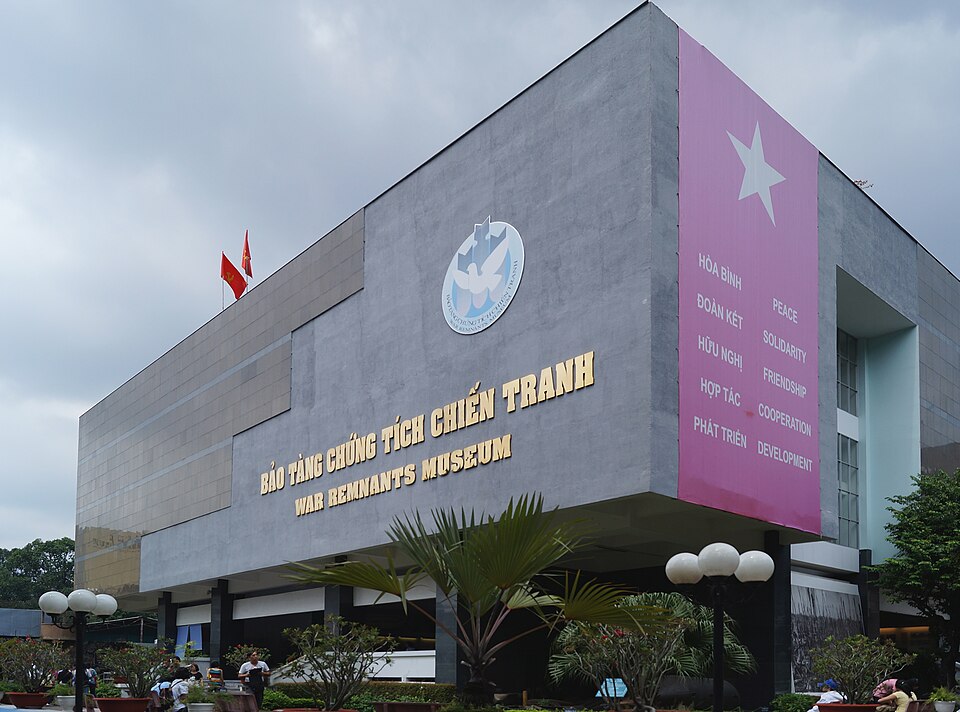
War Remnants Museum

War Remnants Museum

Bảo tàng Chứng tích Chiến tranh

District 3

Vietnam's most visited museum documents the Vietnam War from the Vietnamese perspective — photographs by war correspondents, the effects of napalm and Agent Orange on people and the environment, and tiger cages from the Côn Đảo prison. American tanks, aircraft and helicopters stand in the courtyard.

Tip: The exhibits on Agent Orange and the Requiem photo gallery, featuring the work of war photographers who died covering the conflict, are emotionally very heavy — children may be better left outside for these. It's a one-sided presentation, but the photographs speak for themselves. Come at opening, at 7:30am; after 10am it gets crowded. 2 hours is enough for the whole museum.

Admission:
VND 40,000
Time needed:
2 h
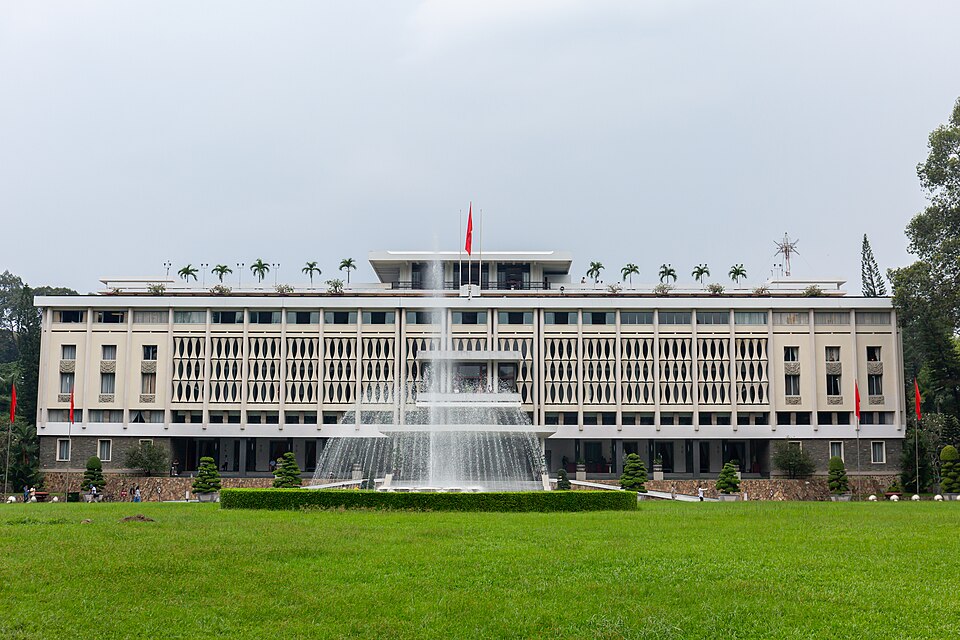
Reunification Palace

Reunification Palace

Dinh Độc Lập

District 1

The former residence of the President of South Vietnam, built in 1966 in a 1960s modernist style. On 30 April 1975, a North Vietnamese Army tank crashed through its gate, symbolically sealing the end of the war. The interior remains as it was then: meeting halls, offices, a reception hall, and in the basement, war command rooms with maps and radios.

Tip: The basement, with its bunkers and communications centre, is the most interesting part — don't skip it. A helicopter sits on a rooftop helipad. It's closed between noon and 1pm for a lunch break. A replica of the tank that broke through the gate stands in the garden. The English audio guide is good and inexpensive.

Admission:
VND 65,000
Time needed:
1.5 h
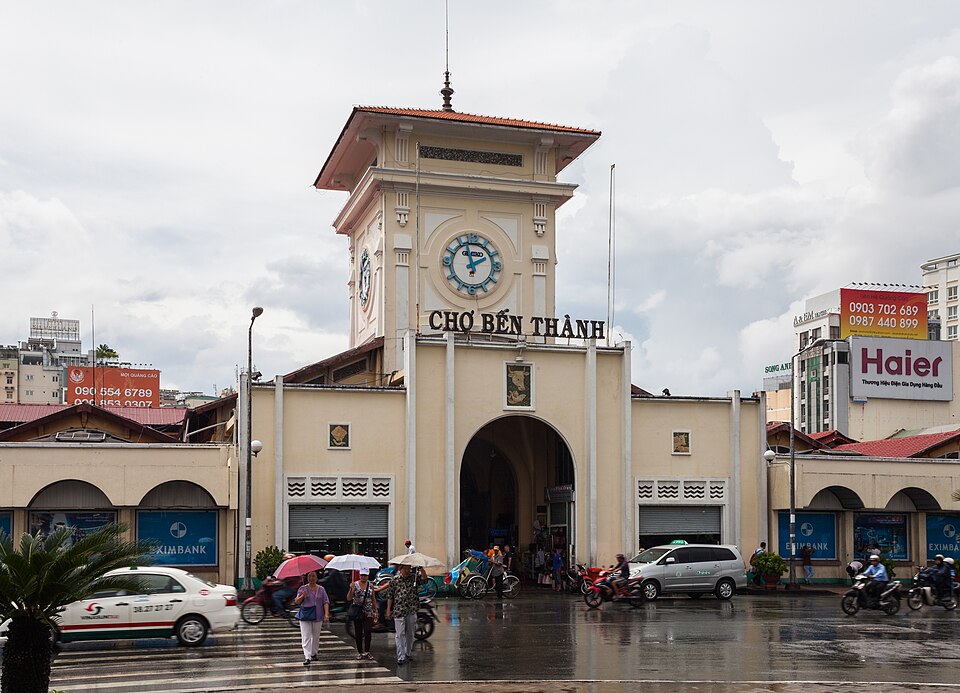
Bến Thành Market

Bến Thành Market

Chợ Bến Thành

District 1

The city's most famous market, beneath a clock tower from 1914. Clothes, souvenirs, coffee, spices and fruit are sold inside, with eateries at its centre. It's a symbol of Saigon, and despite being overrun by tourists, locals still shop here.

Tip: Bargaining is expected inside, and the first price quoted to tourists tends to be 2–3 times over the odds; food and coffee stalls have firmer prices. The eateries in the middle of the market are good for a quick lunch, but for a more authentic market experience, head to Bình Tây in Cholon. In the evening, after closing, night-market stalls open around the building, though these are more touristy.

Admission:
free
Time needed:
1 h
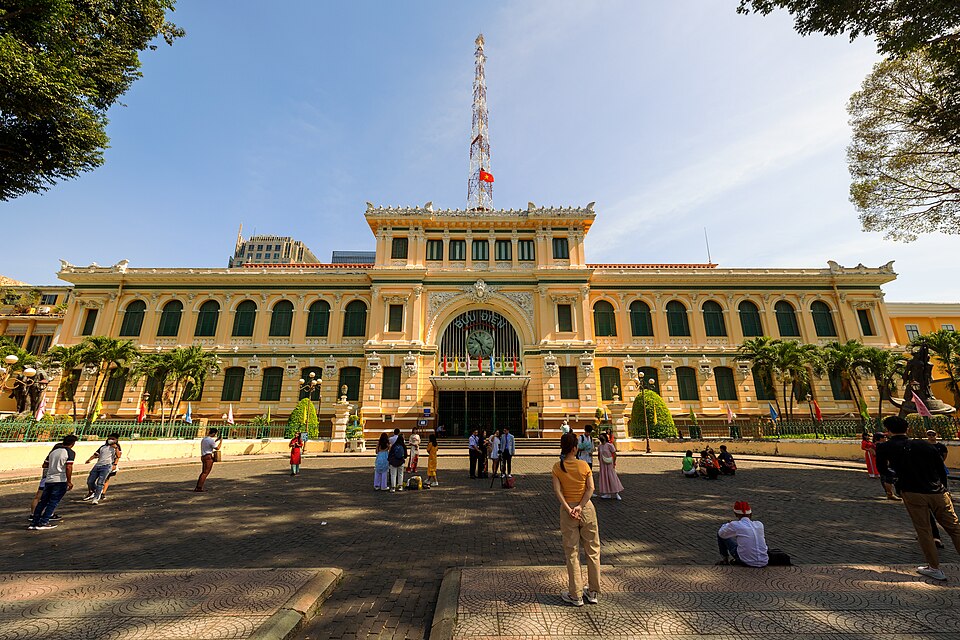
Notre-Dame Cathedral and Central Post Office

Notre-Dame Cathedral and Central Post Office

Nhà thờ Đức Bà / Bưu điện Trung tâm

District 1

Saigon's 2 most famous colonial buildings stand facing each other across a single square. The red-brick cathedral, built with brick shipped from Marseille, was completed in 1880. The Central Post Office, with its steel frame and vaulted ceiling built between 1886 and 1891, is still functioning today, with a huge portrait of Ho Chi Minh hanging above the counters.

Tip: The cathedral has been undergoing long-term restoration and the interior is often closed to visitors, though the façade can still be seen. At the post office, buy a postcard and send it home straight from the historic building — a stamp costs a few tens of thousands of dong. Behind the cathedral is Đường Sách book street, with cafés under the shade of trees. The best light for photos is in the morning.

Admission:
free
Time needed:
45 min
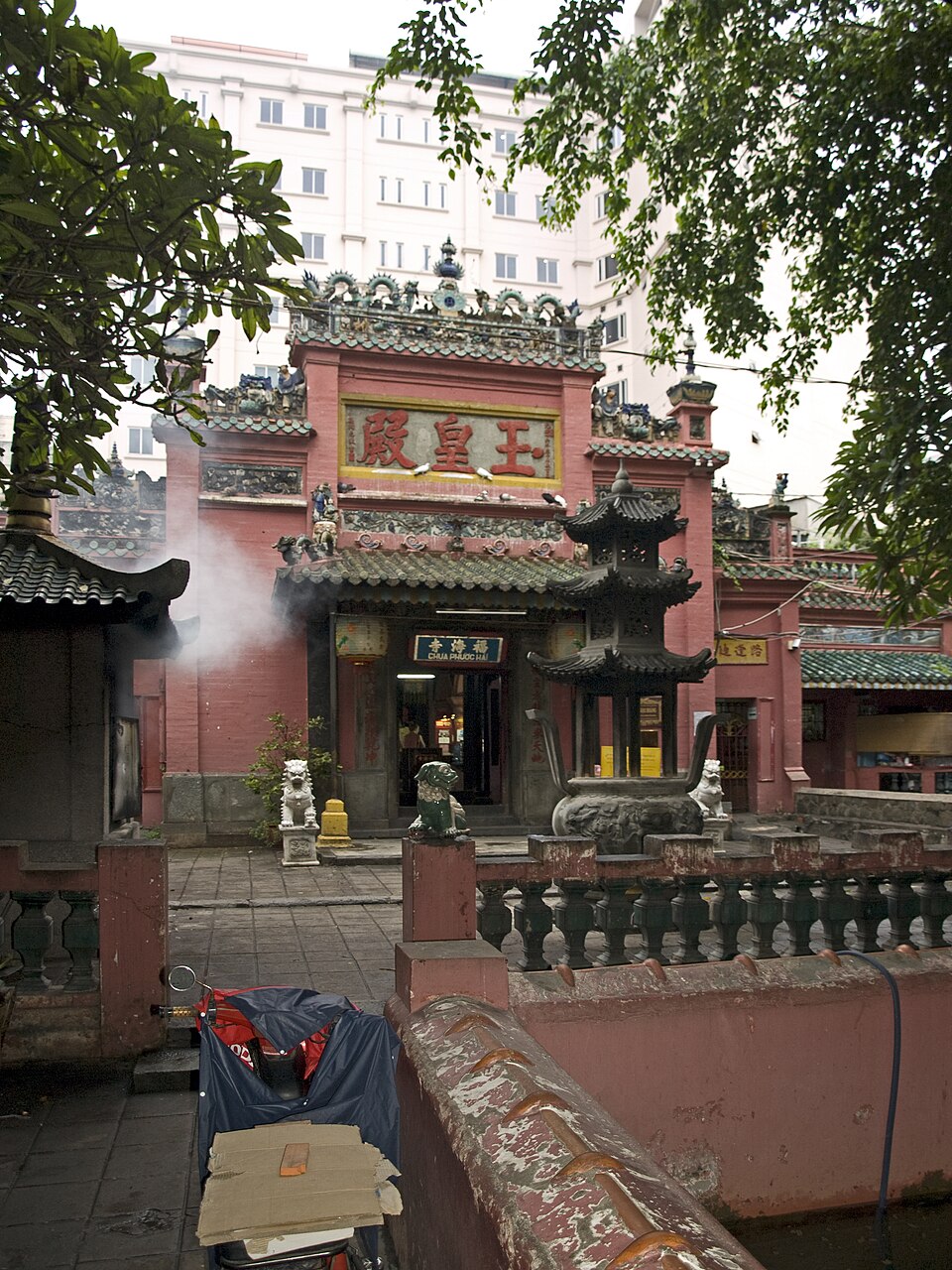
Jade Emperor Pagoda

Jade Emperor Pagoda

Chùa Ngọc Hoàng

District 1 / Đa Kao

A Taoist temple from 1909, built by the Cantonese community and dedicated to the supreme Taoist deity. Inside it's dim, smoky with incense, and filled with dozens of richly carved statues of deities and demons. Barack Obama visited in 2016.

Tip: Turtles live in the courtyard pond, released by worshippers as an act of merit. In the hall dedicated to women's fertility, women pray for children before a statue of the goddess Kim Hoa. The temple is busiest on the first and fifteenth days of the lunar month. Entry is free, though a donation to the collection box is welcomed.

Admission:
free
Time needed:
30–45 min
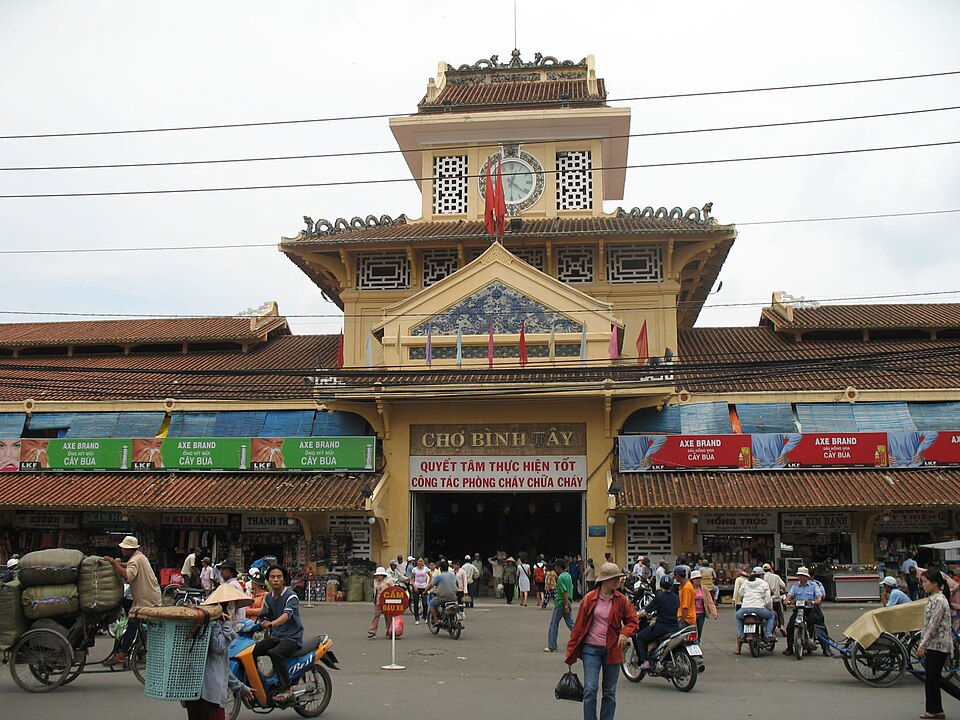
Cholon and Bình Tây Market

Cholon and Bình Tây Market

Chợ Lớn / Chợ Bình Tây

Districts 5 and 6

Cholon is Vietnam's largest Chinatown, home for centuries to traders of Cantonese and Hokkien descent. At its centre is Bình Tây Market, dating from 1930, with a courtyard and clock tower, where everything from spices to crockery is traded wholesale. Around it are guild temples, herbalists and eateries.

Tip: Bình Tây Market is the authentic counterpart to Bến Thành: wholesale trade, no souvenirs, and few tourists. Mornings are best. After the market, walk to Thiên Hậu Temple on Nguyễn Trãi Street, dedicated to the goddess of the sea, with spirals of incense hanging from the ceiling. Cholon is 5km from the centre — go by Grab or bus route 1.

Admission:
free
Time needed:
2–3 h
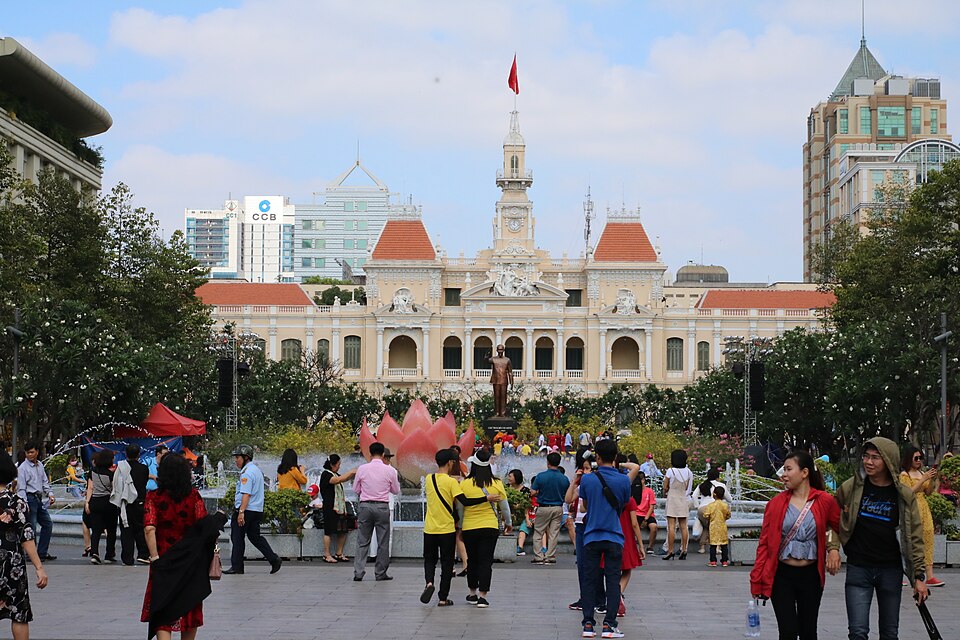
Nguyễn Huệ Boulevard

Nguyễn Huệ Boulevard

Phố đi bộ Nguyễn Huệ

District 1

A wide pedestrian boulevard in the centre, running from the People's Committee Building, with its colonial façade and statue of Ho Chi Minh, down to the Saigon River. In the evening it becomes the city's living room: families, groups of young people, street performers, fountains, and views of the skyscrapers.

Tip: Come after dark on a weekend, when the boulevard is at its liveliest. At number 42 stands a former apartment block converted into a "café building" — each floor has a different café with a balcony overlooking the boulevard, the best spot for an evening coffee. At the river end of the boulevard is a waterfront with views of the new Thủ Thiêm district.

Admission:
free
Time needed:
1 h
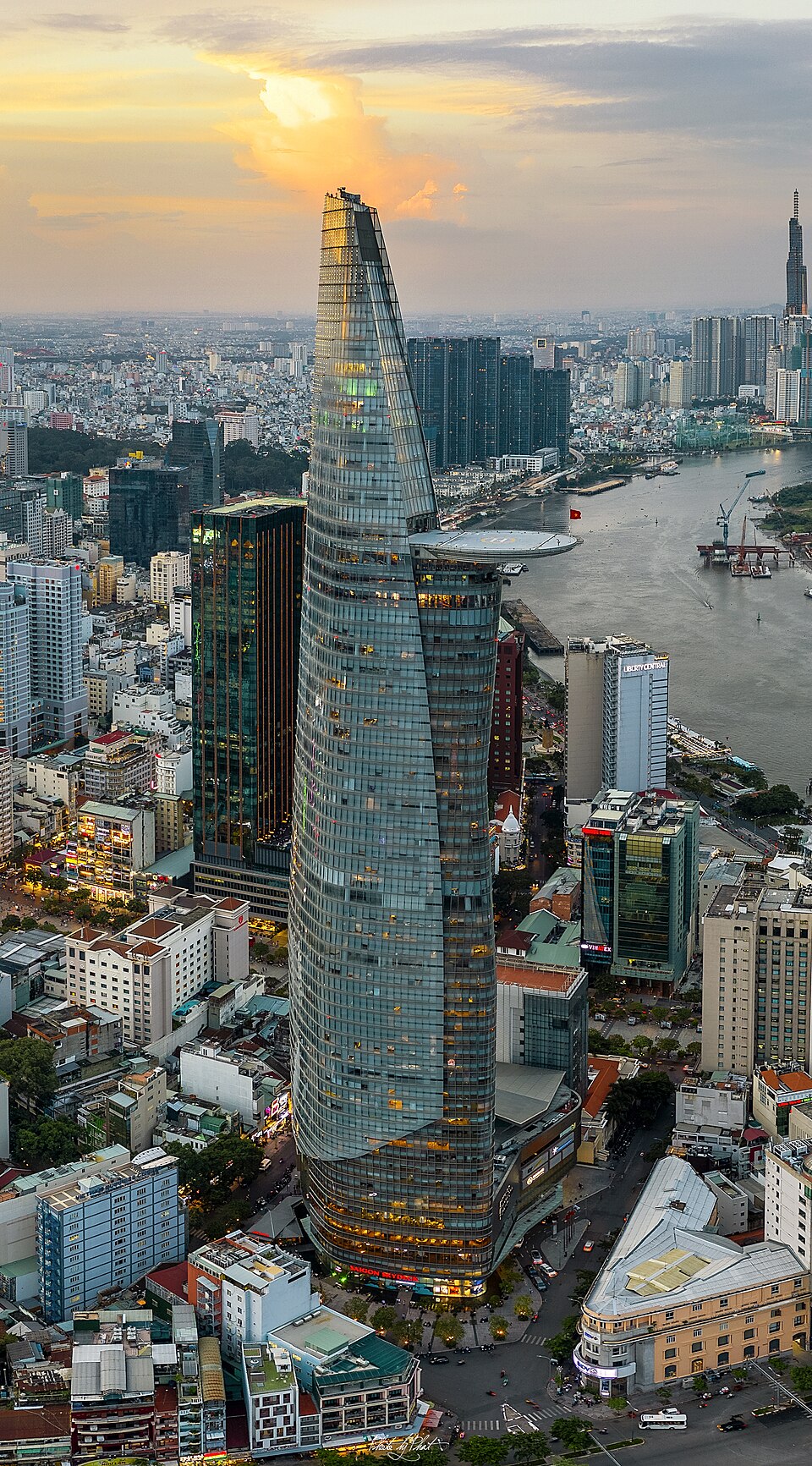
Bitexco and the city's skyline views

Bitexco and the city's skyline views

Tháp Tài chính Bitexco

District 1

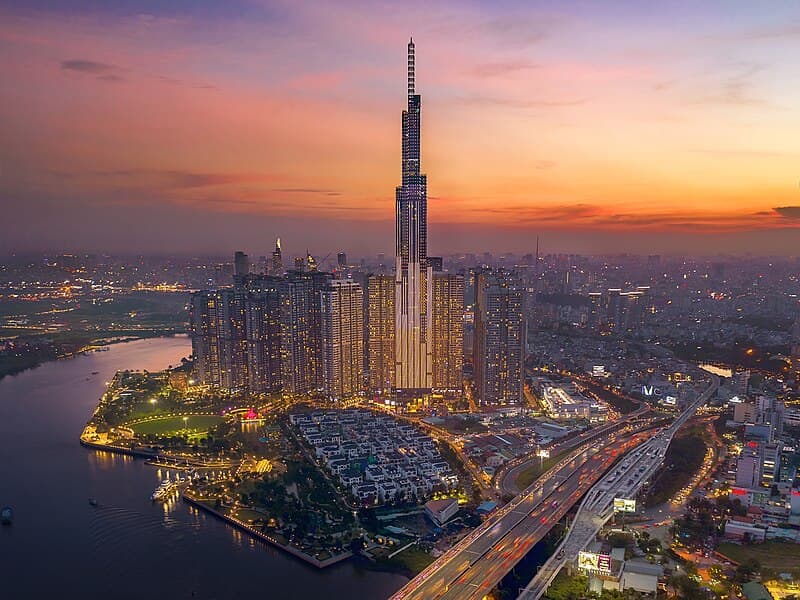
A lotus-bud-shaped skyscraper with a helipad jutting from its side is Saigon's best-known silhouette. The Saigon Skydeck on the 49th floor offers views over the river and the whole centre. Taller still is Landmark 81 in Bình Thạnh, Vietnam's tallest building.

Tip: Instead of paying for the observation deck, head to the EON Heli Bar on the 52nd floor of the Bitexco Tower: entry is free, a drink costs about the same as the observation deck ticket, and the view is the same. Best an hour before sunset. Landmark 81 has the SkyView observation deck on floors 79–81, with the highest view in Vietnam.

Admission:
Skydeck from VND 200,000
Time needed:
1 h
Ho Chi Minh City Museum

Ho Chi Minh City Museum

Bảo tàng Thành phố Hồ Chí Minh

District 1

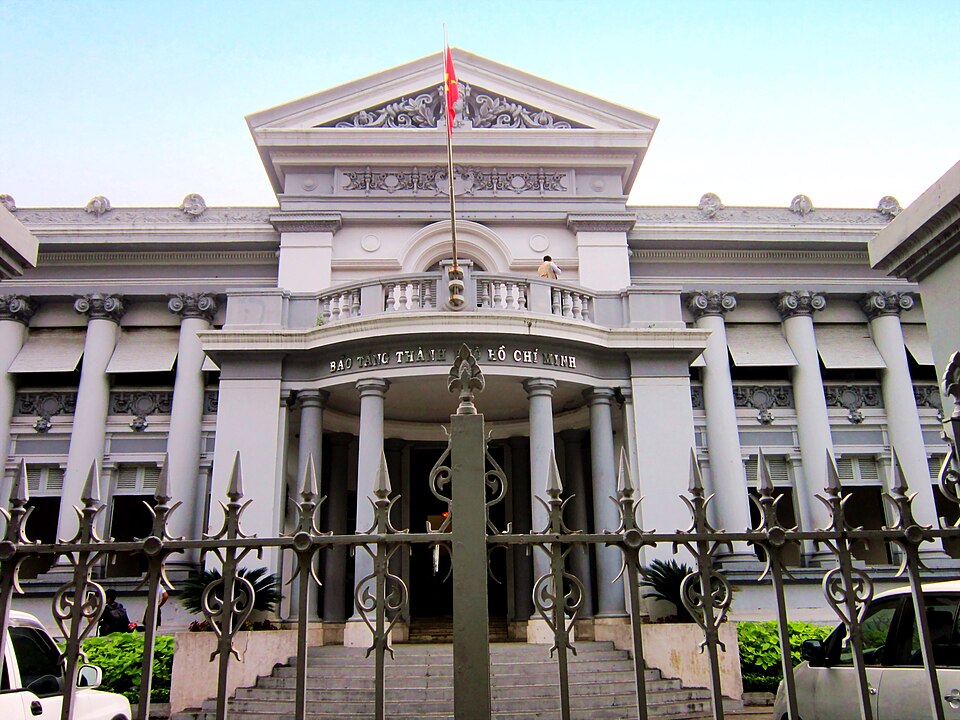
A museum housed in the former Cochinchina governor's palace from 1890, one of the city's finest colonial buildings. The exhibits on Saigon's history, crafts and the war are modest, but the building itself, with its staircase and halls, is reason enough to visit. Beneath it lies a network of bunkers.

Tip: The building is a popular backdrop for wedding photography — on weekends, dozens of couples in white pose here. The garden is a quiet spot to rest in the centre. The museum is a few streets from the Reunification Palace, so the 2 can easily be combined. The entry fee is small and few visitors come, so it's often quiet at midday.

Admission:
VND 30,000
Time needed:
45 min

Photos: War Remnants Museum — Prenn (CC BY-SA 3.0) · Reunification Palace — Balon Greyjoy (CC0) · Bến Thành Market — Diego Delso (CC BY-SA 3.0) · Notre-Dame Cathedral and Central Post Office — Kevin Rutherford (CC BY-SA 2.0) · Jade Emperor Pagoda — Ymblanter (CC BY-SA 4.0) · Cholon and Bình Tây Market — Bgabel (CC BY-SA 3.0) · Nguyễn Huệ Boulevard — Timback (CC BY-SA 4.0) · Bitexco and the city's skyline views — Lê Minh Phát (CC BY-SA 4.0) · Ho Chi Minh City Museum — Bùi Thụy Đào Nguyên (CC BY-SA 3.0)

Where to stay

Areas and districts, matched to the kind of trip you are taking

District 1

Best for: first visit, sights, nightlife

The centre, with colonial landmarks, Bến Thành Market, skyscrapers, rooftop bars and the most hotels. Everything essential is within walking distance or a short Grab ride. The backpacker street Bùi Viện is noisy well into the night — if you're not after a party scene, stay in the quieter area around Đồng Khởi or Nguyễn Huệ.

District 3

Best for: quiet, local life, cafés

A district west of the centre with shaded streets, colonial villas, local eateries and cafés. Home to the War Remnants Museum and several pagodas, it has fewer tourists and lower prices. It's a 10-minute Grab ride to District 1. An excellent choice for experiencing Saigon like a local.

Bình Thạnh and Thảo Điền

Best for: longer stays, expats, modern cafés

Thảo Điền, in District 2 across the river, is the expat district, with villas, design-led cafés, restaurants and yoga studios, quieter than the centre. Bình Thạnh, home to the Landmark 81 skyscraper, feels modern. The new metro line reaches the centre. Well suited to a longer stay.

Cholon (District 5)

Best for: authentic markets, Chinese cuisine

The Chinatown district, with temples, herbalists, wholesale markets and the city's best Chinese food. There are few hotels and they're basic, but the atmosphere is the most authentic in all of Saigon. It's a 20-minute ride to the centre.

Getting around

From the airport

Ho Chi Minh City is reached with 1 stopover via hubs such as Istanbul, Doha, Dubai or Frankfurt; total travel time is 15–18 hours, and Vietnam Airlines occasionally flies direct from Frankfurt and Paris. Citizens of many European countries have been able to enter Vietnam visa-free for up to 45 days since 2025 under a temporary exemption; check before you travel, otherwise an e-visa is required. Tân Sơn Nhất Airport lies right in the city, 7km from the centre, with the new T3 terminal serving domestic flights. Hanoi is a cheap 2-hour flight away with Vietjet, Bamboo or Vietnam Airlines. Buses and boats run to the Mekong Delta and Cambodia.

Ho Chi Minh City Tân Sơn Nhất (SGN) · 7 km

  • Bus 109 to District 1· 45 min· VND 20,000
  • Grab to District 1· 25–50 min· VND 120,000
  • Vinasun / Mai Linh taxi· 25–50 min· VND 150,000

Around town

Saigon is sprawling and too hot for much walking, but District 1 itself is walkable. For longer trips, Grab or Be are most practical — a car or motorbike with the price fixed upfront. In traffic jams, a Grab Bike motorbike is significantly faster, and the driver will lend you a helmet. Only take taxis from Vinasun and Mai Linh, with a working meter. In 2024, the city's first metro line opened, running from the centre (Bến Thành) to Thảo Điền and further east — it's new, clean and cheap. Buses are cheap, but timetables are Vietnamese-only. A water bus runs along the Saigon River, more of a scenic cruise than transport. Crossing the street works the same as in Hanoi: slowly and steadily. During rush hour, roughly 5–7pm, traffic grinds to a halt.

Grab / BeCar or motorbike, with the price fixed upfront in the app. · VND 15,000
Metro Line 1From Bến Thành to Thảo Điền and Suối Tiên, pay by card. · VND 7,000
Water busAlong the Saigon River from Bạch Đằng to Thảo Điền. · VND 15,000
BusesRoute 109 to the airport, route 1 to Cholon. · VND 6,000

Useful apps: Grab, Be, Google Maps, Vietnam Airlines

When to go

Saigon is hot year-round, around 32–35°C, and the difference between seasons comes down to rain. The dry season, from December to April, is best — sunny, rain-free and with lower humidity in December and January. April is the hottest month and the heat can be gruelling. The rainy season, from May to November, brings sharp afternoon downpours lasting about an hour, followed by fresher air; mornings are usually dry and travel isn't a problem. In September and October, rain can flood the streets. Tết, at the turn of January and February, is a major holiday, and the city empties out with many restaurants closing.

Best time

December–March

What to avoid

sweltering April, Tết week, flooded streets in September and October

MonthJanFebMarAprMayJunJulAugSepOctNovDec
Day32°33°34°35°34°33°32°32°32°31°31°31°
Night22°23°24°26°25°25°24°24°24°24°23°22°
Rainy days2125152022222219115

Food & drink

Saigon's cuisine is sweeter, richer and more herb-heavy than Hanoi's: with a bowl of phở you get a whole plate of herbs and sprouts, and sauces come sweetened with sugar and coconut. The best food is sold on the pavement, and eateries specialise in a single dish — broken rice, bánh mì, crab soup or grilled skewers. In the evening, people go out for ốc, snails and shellfish prepared a hundred ways, with beer on plastic stools. Café culture is strong: Vietnamese iced coffee with condensed milk or coconut coffee is drunk on every corner. Saigon is also Vietnam's most cosmopolitan city, with excellent international restaurants and rooftop bars. A meal at an eatery costs VND 30,000–60,000, dinner at a restaurant around VND 300,000.

What to try

Cơm tấm

Broken rice with a grilled pork chop, an egg, a slice of pork meatloaf and sweet fish sauce. Once a dish of the poor, it's now Saigon's breakfast and lunch, sold at eateries from early morning.

Hủ tiếu

A southern Vietnamese noodle soup with a clear pork broth, shrimp, pork and quail eggs. Can also be ordered "dry", with the broth served on the side. As much a Saigon breakfast as phở is for Hanoi.

Southern-style bánh xèo

A giant crispy turmeric-and-coconut-milk pancake filled with shrimp, pork and bean sprouts, wrapped in mustard leaves and herbs and dipped in fish sauce. The Saigon version is bigger and thinner than elsewhere.

Ốc

Sea snails, mussels and clams prepared dozens of ways — with tamarind, lemongrass, or butter and garlic. An evening dish eaten with beer at pavement spots, ordering several small plates to share.

Bánh mì

A baguette from the French era filled with pâté, meat, pickled vegetables and coriander. The best come from cart vendors and cost a fraction of a café's price.

Gỏi cuốn

Fresh, unfried spring rolls in rice paper with shrimp, noodles and herbs. A light, safe dish for hot weather; the dipping sauce is usually peanut or fish sauce.

Cà phê sữa đá

Strong coffee dripping through a metal filter into sweetened condensed milk, then poured over ice. Vietnam is the world's second-largest coffee producer, and this is how it's drunk here.

Sinh tố and coconuts

Fruit smoothies made from mango, avocado, durian or sapodilla with condensed milk and ice, plus fresh young coconuts to drink from. Stalls are on every corner and, in the heat, a necessity.

What it costs

Bánh mì from a stall

VND 20,000–35,000

Cơm tấm or a bowl of soup

VND 40,000–70,000

Iced coffee

VND 20,000–50,000

Beer at an eatery

VND 20,000–35,000

Dinner at a restaurant

VND 250,000–500,000

Grab ride around the centre

VND 30,000–80,000

Cu Chi Tunnels trip

from VND 400,000

Night in a 3-star hotel for 2

VND 700,000–1,400,000

Indicative prices that change over time — treat them as a guide, not a price list.

Practical information

SocketsAtwo flat pins (US/JP)CEuroplug, two round pinsFSchuko
Voltage220V / 50Hz
Tap waterDo not drink tap water — Tap water isn't drinkable — use bottled water even for brushing your teeth. A bottle costs around VND 10,000 and hotels refill it for free. Ice in drinks is safe, made centrally, and identifiable by its tube shape with a hole in the middle. Iced coffee with condensed milk is drunk everywhere and is among the best in the world.
TippingTipping isn't a Vietnamese tradition and isn't given at cheap eateries. At tourist restaurants and hotels, bills are rounded up or 5–10% is left; guides and drivers on a full-day trip are typically given VND 100,000–200,000. Watch out for the zeros — the 20,000 and 500,000 dong notes are a similar colour and it's the most common payment mistake.
Driving on theright
SafetyIn Vietnam's big cities, violent crime against tourists is rare; the typical problem is a snatch-and-grab, where a motorbike rider pulls a phone or bag from your hand while riding by — don't hold your phone near the edge of the pavement by the road, and carry your bag on the side away from traffic. Cross the street at a slow, steady pace; motorbikes will only go around you if you're predictable. Take taxis via Grab or from the branded operators Mai Linh and Vinasun — unmarked cars at the airport and station tend to overcharge. Check the dong exchange rate, as the zeros on banknotes are easily confused. The police emergency line is 113, the ambulance is 115.
Opening hoursThe city rises with the dawn: markets and street kitchens run from 6am, and the best phở sells out by 9. Shops open at 8 and close between 9 and 10pm, with smaller businesses taking a midday break. Museums close at 5, some also over lunch; the mausoleum and government offices are closed on Mondays. During the Tết holiday, at the turn of January and February, most shops and restaurants close for a week, and many for a further week after that.
Customs & etiquetteGive and receive things with both hands, especially with older people. Cover shoulders and knees when visiting temples and pagodas, and remove your shoes. Don't raise your voice or show irritation — a public argument means a loss of face for both sides. Bargaining is normal and expected at markets, but not in fixed-price shops. If you photograph a woman carrying baskets on a shoulder pole, it counts as a paid service — agree the price beforehand.
A few local wordsHello — Xin chàoThank you — Cảm ơnHow much does it cost? — Bao nhiêu tiền?The bill, please — Tính tiềnDelicious — Ngon quá

How to plan your days

1 day

Saigon in 1 day

  1. 1Morning: the War Remnants Museum at opening time.
  2. 2Reunification Palace, then cơm tấm for lunch.
  3. 3The cathedral, the Central Post Office and book street.
  4. 4Afternoon at Bến Thành Market and coffee at the café building on Nguyễn Huệ.
  5. 5Evening at the EON Heli bar in the Bitexco Tower, then ốc on the pavement.

2 days

2 days in Saigon

  1. 1Day 1: the War Remnants Museum, the Reunification Palace, the cathedral and the post office.
  2. 2Day 1 evening: Nguyễn Huệ Boulevard and a rooftop bar.
  3. 3Day 2: the Jade Emperor Pagoda and Cholon with Bình Tây Market.
  4. 4Day 2 afternoon: the metro to Thảo Điền and riverside cafés.
  5. 5Day 2 evening: a food crawl through District 4.

3 days

3 days with Cu Chi and the Mekong

  1. 1Day 1: the centre, museums and Bến Thành.
  2. 2Day 2 morning: the Cu Chi Tunnels.
  3. 3Day 2 afternoon: Cholon and the Jade Emperor Pagoda.
  4. 4Day 3: a full-day trip to the Mekong Delta.
  5. 5Day 3 evening: the view from Landmark 81 and dinner in District 1.

Day trips

Cu Chi Tunnels

70 km · 1.5 h by car, 2 h by boat

A network of over 200km of underground tunnels where Vietnamese guerrillas lived and fought during the war. At Bến Dược or Bến Đình you can see hideouts, booby traps and kitchens, and squeeze through a widened section of tunnel — even that is very tight. There's a shooting range on site. The most pleasant way there is by boat along the Saigon River; otherwise it's an organised bus tour.

Mekong Delta

100 km · 2 h by car

A world of canals, orchards, rice paddies and floating markets, where the Mekong splits into 9 branches before reaching the sea. Day trips to Mỹ Tho and Bến Tre offer canal boat rides, coconut-candy workshops and fruit. More authentic is the Cái Răng floating market near Cần Thơ, liveliest at dawn, though it's better to stay overnight to catch it.

Vũng Tàu

95 km · 2 h by speedboat

The nearest beach town, where Saigon residents head at weekends for the beach and seafood. A 32m-tall statue of Christ with outstretched arms stands on a hill, reached by 800 steps and rewarding climbers with a sea view. A speedboat departs from Bạch Đằng wharf. The beaches aren't Vietnam's finest, but they're enough for a one-day escape from the city.

Frequently asked questions

Is it Saigon or Ho Chi Minh City?+

The official name has been Ho Chi Minh City since 1976, but locals and the media commonly use Saigon, especially for the centre (District 1). The airport code is SGN, and many businesses have Saigon in their name. Either is fine and won't offend anyone.

How many days do you need for Saigon?+

2–3 days for the city, plus a day for the Cu Chi Tunnels and 1–2 days in the Mekong Delta. Saigon is a gateway to southern Vietnam and to Cambodia, and most people combine it with Hanoi and central Vietnam for a 2–3-week trip.

How do I get to the Cu Chi Tunnels?+

The simplest option is an organised half-day bus tour with pickup in District 1. A speedboat along the Saigon River is more pleasant, and pricier, but avoids traffic. Independently, you can take bus 13, then bus 79, but it takes 2 hours. Bến Dược is more authentic and less visited than Bến Đình.

Is Saigon safe?+

Yes, violent crime is rare. The biggest risk is phone and bag theft from passing motorbikes, especially in District 1 and around Bùi Viện. Don't hold your phone near the edge of the road, and carry your bag on the side away from traffic. Take taxis via Grab or from Vinasun and Mai Linh.

How hot does it get in Saigon?+

It's over 30°C during the day and around 25°C at night year-round, with high humidity. Plan activities for the morning and late afternoon, and shelter from midday heat in a museum, shopping mall or air-conditioned café. Drink plenty — coconuts and fruit smoothies are sold everywhere.

Where's the best place to eat in Saigon?+

At pavement eateries that specialise in a single dish — cơm tấm, bánh mì, hủ tiếu, ốc. District 1 has tourist prices, while Districts 3, 4 and 5 are cheaper and more authentic. District 4 is famous for its evening seafood and snail spots. Eat where it's full of locals.

Is a one-day trip to the Mekong Delta worth it?+

As a taster, yes: Mỹ Tho and Bến Tre are 2 hours away and offer canal boat trips, coconut candy workshops and fruit. But it's a fairly touristy programme. For the Cái Răng floating market and a real feel of the Delta, it's better to stay overnight in Cần Thơ and head to the market at dawn.

Do I need a visa for Vietnam?+

Since 2025, citizens of several European countries have been able to enter Vietnam visa-free for up to 45 days under a temporary exemption. Check official sources before you travel to confirm it's still in effect. For a longer stay or repeat entry, you can apply online for an e-visa valid for up to 90 days.

Visabestimmungen

Prüfen Sie die aktuellen Visabestimmungen für die Einreise in dieses Land.

Visabestimmungen prüfen

Sprache

Vietnamese

Währung

VND

Zeitzone

GMT+7

Vorwahl

+84

Bevölkerung

99.5M

Fläche

331,212 km²

Spannung

220V / 50Hz

Fahrseite

Rechts

Top Hotels in Ho Chi Minh City

Live-Preise von 500+ Unterkünften

Hotels werden geladen...

More destinations in Vietnam

Planen Sie eine Reise nach Ho Chi Minh City?

Vergleichen Sie Hunderte von Hotels, finden Sie den besten Preis und buchen Sie mit kostenloser Stornierung.