Hotels in Boracay

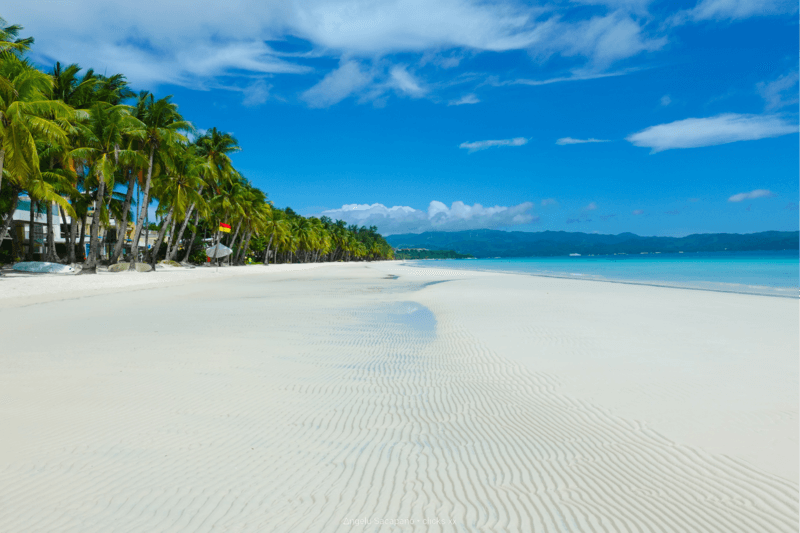
A 4 km white beach on a 7 km island

Boracay

LanguageEnglish
CurrencyPHP
TimezoneGMT+8
Temperature26-34 °C
Dial Code+63
Population115M
Area300,000 km²
SocketsType A / Type B / Type C
Tap waterNot drinkable

Discover Boracay

Boracay is a small island off the northern tip of Panay, 7 km long and, at its narrowest, just 1 km wide. Its single real asset is White Beach — 4 km of sand so fine and white that it squeaks underfoot and stays cool even in the midday sun. Over 30 years the island grew from a fishing settlement into one of Asia's most visited destinations, and in 2018 that boom came to a head when the Philippine president had Boracay closed completely for 6 months and rebuilt: wastewater had been flowing straight into the sea, hotels stood on the sand, and the beach was crowded with buildings. The island reopened in October 2018 under new rules that still apply today — no drinking, smoking or eating on the beach, a third fewer buildings, capped visitor numbers, and a confirmed booking required for accommodation. The result is that Boracay looks better today than it did 10 years ago. It remains, though, a lively island rather than a secluded retreat: anyone seeking real quiet belongs more on El Nido.

What to see

The places worth your time in Boracay, and what to expect at each

White Beach

White Beach

west coast

A 4 km stretch of beach on the west coast with sand made of crushed coral, so fine that it squeaks and so pale that it stays cool even at midday. The sea is shallow, calm and wave-free through the whole main season. The beach is split into 3 stations, each with its own atmosphere and prices.

Tip: Since the 2018 rebuild, drinking, smoking and eating on the beach itself are banned and enforced with fines — beach bars now stand at least 30 metres back from the water. The quietest stretch is the southern end of Station 3, the most upmarket is Station 1 in the north.

Admission:
free
Time needed:
a full day
Puka Shell Beach

Puka Shell Beach

north

A quieter beach at the island's northern tip, around 800 metres long, with coarser sand full of tiny puka shells that were strung into necklaces back in the 1970s. There's almost no development here, just a few food stalls and coconut vendors.

Tip: The sea here is deeper and has waves, making it a better spot for swimming than for playing with children. Take a tricycle for 20 minutes from Station 1 and walk to the northern end of the beach, where there's no one around. There's almost no shade, so an umbrella is essential.

Admission:
free
Time needed:
half a day
Bulabog Beach

Bulabog Beach

east coast

A beach on the island's eastern side, directly opposite White Beach across the narrowest point. From November to April the amihan trade wind blows in here, and the reef-protected lagoon is one of the best kitesurfing spots in Asia — up to 100 kites can be in the air at once.

Tip: Seasons here run exactly opposite to White Beach: when the west side is calm and sunny, Bulabog is windy, and vice versa. If you're not kitesurfing, don't swim here — with kites and boards everywhere, it isn't safe. A beginner course takes 3 days.

Admission:
free, courses from USD 350
Time needed:
half a day
Willy's Rock

Willy's Rock

Station 1

A volcanic rock rising out of the shallows at Station 1, topped with a small shrine to the Virgin Mary. At low tide you can walk to it on dry sand; at high tide you wade up to your waist. It's the most photographed spot on Boracay.

Tip: Come at daybreak, around 6am, for photos, when the beach is empty and the light is soft — during the day there's a queue by the rock and 20 strangers in every shot. Climbing the steps to the top is no longer allowed, as the rock has become unstable.

Admission:
free
Time needed:
30 min
Mount Luho

Mount Luho

island centre

The island's highest point, 100 metres above the sea, with a viewing platform that takes in the whole of Boracay at once — White Beach on one side, Bulabog on the other, and on a clear day the coast of Panay too. A road and a set of steps both lead to the top.

Tip: There are 2 entrances under different owners with different prices; the cheaper one is on the east side and is just a viewpoint, without the adjoining mini zoo, which isn't worth visiting. Go in the late afternoon for the light and lower heat — the tricycle will wait at the top.

Admission:
from PHP 120
Time needed:
1 h
Sunset paraw sailing

Sunset paraw sailing

White Beach

A paraw is a traditional Filipino sailing outrigger with bamboo floats and a colourful sail, still built by hand on Boracay today. A 1-hour sail along White Beach at sunset is the cheapest and most beautiful thing you can do on the island.

Tip: The price is negotiated on the beach directly with the crew and is per boat, not per person — split 4 ways it works out to a fraction each. Boats set off roughly an hour before sunset. Bring things that can get wet, since the paraw leans and water splashes over the outrigger.

Admission:
from PHP 1,500 per boat
Time needed:
1–2 h
D'Mall and D'Talipapa

D'Mall and D'Talipapa

Station 2

The island's 2 commercial hubs: D'Mall on Station 2 is a network of lanes with restaurants, shops and a pharmacy, while D'Talipapa is a covered fish market where you pick out fresh seafood and the restaurant next door cooks it for a fee, however you like it.

Tip: D'Talipapa is the cheapest way to eat lobster and prawns on Boracay — the price is agreed per kilo and haggled over, starting at around 65-70% of the asking price. The restaurant next door only charges for cooking it. Have the fish weighed in front of you, not out of sight in the kitchen.

Admission:
free
Time needed:
2 h
Crystal Cove

Crystal Cove

south, offshore islet

A small private islet south of Boracay with 2 natural caves carved into the limestone that open straight onto the sea — you walk through a cave and a turquoise-water cove awaits on the other side. A path over the rocks with viewpoints runs around it.

Tip: It's often part of an island-hopping tour, but you can also reach it by your own boat from Cagban. Wear water shoes, since the caves are reached by clambering over wet rocks. Every tour boat arrives at once around midday — early morning is best.

Admission:
from PHP 200
Time needed:
2 h
Diniwid Beach

Diniwid Beach

north of Station 1

A small beach just past the northern end of White Beach, separated by a rocky headland and reached along a path cut into the cliff. It's shorter and quieter, with a handful of small hotels and a rock-top bar with the best sunset view on the island.

Tip: The path along the cliff is only passable at low tide; at high tide the water covers it — plan for that on the way back in the evening, or you'll face a detour by tricycle. The bar on the rock at the northern end charges White Beach prices, but the view is incomparable.

Admission:
free
Time needed:
half a day

Photos: White Beach — Jhun Sacapano (CC BY-SA 4.0) · Puka Shell Beach — Tirakatol (CC BY-SA 4.0) · Bulabog Beach — Alexey Komarov (CC BY 3.0) · Willy's Rock — Patrickroque01 (CC BY-SA 4.0) · Mount Luho — LMP 2001 (CC BY-SA 4.0) · Sunset paraw sailing — The Wandering Angel (CC BY 2.0) · D'Mall and D'Talipapa — Ray in Manila (CC BY 2.0) · Crystal Cove — Sepiorosario/Lakwatserong Frog (CC BY-SA 4.0) · Diniwid Beach — Christopher Punzalan (CC BY-SA 4.0)

Where to stay

Areas and districts, matched to the kind of trip you are taking

Station 1

Best for: the widest beach and better hotels

The northern third of White Beach, with the widest stretch of sand, the most upmarket hotels and Willy's Rock. It's quieter than the middle, and evenings lean more towards dinner than dancing. Prices are the highest on the island, and most people consider it a fair trade for that stretch of sand.

Station 2

Best for: a first visit and the best access

The middle of the beach and the island's real hub: D'Mall with its restaurants and shops, the highest concentration of hotels of every class, and the most bars and people. Everything is within walking distance, making it the most practical base if the buzz doesn't bother you.

Station 3

Best for: cheaper accommodation and quiet

The southern part of the beach, with hostels, guesthouses and smaller businesses, a more relaxed atmosphere and noticeably lower prices. The beach here is narrower and rockier in places, but its southernmost end is the quietest stretch of White Beach anywhere. D'Mall is a 15-minute walk away.

Bulabog and the east side

Best for: kitesurfing

The opposite side of the island, where the amihan trade wind blows from November to April and where all the kitesurfers set up. Accommodation is cheaper than on White Beach, and the schools sit right on the beach. The classic beach is a 10-minute walk away across the island's narrowest point.

Getting around

From the airport

There are no direct flights to Boracay — the island has no airport of its own. Flights land at one of 2 airports on neighbouring Panay: Caticlan, 10 minutes from the jetty but with a short runway that only takes smaller aircraft, or Kalibo, which takes larger planes, including international ones, but is 2 hours away by bus. International travellers typically connect through major hubs such as Manila, Hong Kong or Singapore before the final domestic leg. From the Caticlan jetty a boat to Boracay takes 15 minutes, and the fare includes a terminal fee and an environmental fee on top. Nationals of many countries, including the EU, the UK and the US, don't need a visa for stays of up to 30 days, but must hold a return flight and complete the electronic eTravel registration before travelling.

Caticlan (Godofredo P. Ramos) (MPH) · 5 km

  • Tricycle to the jetty and boat· 30 min· PHP 350
  • Transfer included with stay· 45 min· included

Kalibo International (KLO) · 70 km

  • Bus to Caticlan and boat· 2 h 30 min· PHP 500
  • Private transfer· 2 h· PHP 2,500

Around town

The island is 7 km long and a single road runs its full length. The basic mode of transport is the e-tricycle, an electric 3-wheeler that replaced the older petrol models as part of the island's clean-up; it runs like a shared taxi along the main road for a few dozen pesos, or you can charter the whole thing. Along White Beach people simply walk — the beach is continuous and takes about an hour to walk end to end, the pleasantest way to move between the stations. Bicycles and e-scooters can be hired, but the road is narrow and full of tricycles. You can rent a scooter on Boracay, but there's little point: the island is small and there's nowhere to park anyway.

Shared e-tricycleRuns the length of the main road; flag one down and pay on getting off. The cheapest way to get around. · PHP 20
Chartered e-tricycleYou pay for the whole 3-wheeler and go direct. Agree the price beforehand, or you'll pay the tourist rate. · PHP 150
Walking along White BeachThe unbroken beach from Station 1 to Station 3 takes about an hour to walk and is the most pleasant way to get around the island. · free
Boat to nearby islandsFor island-hopping tours and trips to Crystal Cove and Puka. Agreed on the beach, priced per boat. · PHP 1,500 per boat

Useful apps: Grab, Google Maps, Klook, Angkas

When to go

Boracay's climate is shaped by 2 monsoons. From November to April the dry amihan trade wind blows from the northeast — White Beach on the western side then sits in its lee, the sea is like a mirror, and this is by far the best time to visit; peak season runs from December to February. From June to October the humid habagat blows from the southwest, sending waves straight into White Beach, bringing rain and typhoons; during this period tourists shift over to Bulabog, where conditions are calm instead. May is a transitional month, hot but still mostly dry. August and September are the cheapest months, but this is also when a typhoon can shut down boat traffic for several days.

Best time

November to April, peaking December to February

What to avoid

July to September, the habagat monsoon and typhoon season

MonthJanFebMarAprMayJunJulAugSepOctNovDec
Day29°29°31°32°32°31°30°30°30°30°30°29°
Night24°24°25°26°26°25°25°25°25°25°25°24°
Rainy days75441218202019171210
Sea27°27°28°29°30°29°29°29°29°29°29°28°

Food & drink

For its size, Boracay has a disproportionately wide choice of restaurants, since the island serves hundreds of thousands of visitors a year — you'll find Italian, Indian and Japanese food here, and dinner at a beachfront restaurant costs about the same as in Europe. Filipino food in its proper form is easier to find at simple inland eateries and at carinderia canteens, where you point to what you want from the pots on the counter. The best value for money is the D'Talipapa fish market: you buy fresh seafood by weight and the restaurant next door cooks it for a small fee. The island is known for grilled octopus and lobster and for cheap fresh fruit — mango shakes are sold on every corner. On the drinks side there's local San Miguel beer and Tanduay rum, which costs less than a soft drink.

What to try

Adobo

Pork or chicken braised in vinegar, soy sauce, garlic and bay leaf. The national dish of the Philippines, which originally developed as a way of preserving meat in the tropical heat — hence its sharp acidity.

Kinilaw

Raw fish cured in vinegar and calamansi with onion, ginger and chilli — the Filipino answer to ceviche, but sharper. Order it where the fish comes straight off the boat, not at a restaurant with no customers.

Sinigang

A sour soup with meat or prawns and vegetables, its tang coming from tamarind or guava. Filipinos eat it even in the height of the heat; served with rice, it's the most typical home-style lunch.

Lechón

A whole pig roasted on a spit, with skin as crisp as glass. It's cooked for celebrations, and the best version is found on Cebu, stuffed with lemongrass; on tourist beaches it's sold by the portion in the evening.

Chicken inasal

Chicken marinated in calamansi, ginger and annatto, grilled over charcoal and served with garlic rice. It comes from Bacolod and is easy to spot by its orange colour from the annatto.

Lumpia

Thin fried spring rolls filled with minced meat and vegetables, served with a sweet-and-sour dip. Sold by the piece at markets, and the cheapest Filipino street food there is.

Halo-halo

Shaved ice with condensed milk, sweet beans, jelly, ube jam and ice cream on top. It looks like a failed experiment and tastes wonderful; the name literally means "mix together".

Mango shake

Filipino mangoes are among the sweetest in the world, and a shake made from fresh fruit and ice costs around PHP 100 on the beach. Ask whether it's made with fresh mango rather than syrup — the difference is huge.

What it costs

Meal at a carinderia canteen

PHP 120–200

Dinner at a beachfront restaurant

PHP 700–1,500 per person

Seafood from D'Talipapa

from PHP 600 per kilo

San Miguel beer from a shop

PHP 60

Mango shake from a stall

PHP 100

E-tricycle across the island

PHP 150

Sunset paraw sailing trip

from PHP 1,500 per boat

Night at a 4-star hotel on Station 2

from PHP 4,500 per double room

Indicative prices that change over time — treat them as a guide, not a price list.

Practical information

SocketsAtwo flat pins (US/JP)Btwo flat pins plus ground (US)CEuroplug, two round pins
Voltage220V / 60Hz
Tap waterDo not drink tap water — Don't drink tap water. Filipinos themselves drink bottled water from large jugs, and every sari-sari store sells a bottle for a few pesos; resorts provide 2 a day per room. Ice in restaurants and bars is factory-made and safe, but crushed ice from a street cart isn't. Fresh buko coconut water is the cheapest and best drink on the islands, and it's drunk straight from the shell.
TippingTipping is customary, but lower than in the US: 10% at a restaurant, unless a service charge is already added to the bill, which most tourist-facing places do. Island-hopping guides are typically given PHP 100–200 per person, and tricycle drivers are tipped by rounding up. Resort staff are usually left a shared envelope at the end of the stay.
Driving on theright
SafetyThe tourist islands of the Visayas and Palawan are safe, with low crime against foreigners; the security warnings for the southern Philippines concern Mindanao and Sulu, not these areas. The real risks are natural and transport-related. From June to October typhoons cross the Philippines and can disrupt flights and ferries for up to 3 days at a stretch — always leave a spare day between an inter-island transfer and an international departure. Healthcare on the smaller islands is limited to a basic clinic, and a serious case means a flight to Manila, so insurance with repatriation cover is essential. Jellyfish appear in the sea from April to October, and some beaches have strong currents. Daytime heat is stronger than it looks — drink more than you feel like.
Opening hoursSari-sari stores are open from morning until night every day, and larger supermarkets from 9am to 9pm. Beachfront restaurants tend to close around 11pm, bars from midnight to 2am. Sunday mornings are quieter because of mass, and some small businesses stay closed. During typhoon season boat services can stop at an hour's notice on the coast guard's decision — don't count on making a same-day connecting flight.
Customs & etiquetteFilipinos are welcoming and avoid confrontation at almost any cost — raising your voice or pointing out a mistake in public means a loss of face, and it will always make things worse, not better. Elders are addressed with po and opo at the end of a sentence, and it carries over into English too. English will get you by everywhere; it's the country's second official language. The country is strongly Catholic: cover up for church, and swimwear belongs on the beach, not in the village. Topless sunbathing is not acceptable. Drug laws are strict even for small amounts.
A few local wordsGood day — Magandang arawThank you — SalamatHow much is it? — Magkano?Yes / No — Oo / HindiThe bill, please — Bill out, please

How to plan your days

1 day

A day on Boracay

  1. 1At daybreak, Willy's Rock, while the beach is still empty.
  2. 2Morning swim and a walk along the whole of White Beach from Station 1 to 3.
  3. 3Lunch on fresh seafood from the D'Talipapa market.
  4. 4Afternoon at the Mount Luho viewpoint for the whole island from above.
  5. 5Early evening sunset paraw sail and dinner in D'Mall.

2 days

2 days: beach and nearby islands

  1. 1Day 1: White Beach, D'Talipapa and a sunset paraw sail.
  2. 2Day 2 morning: island-hopping tour to Crystal Cove and Puka Shell.
  3. 3Snorkelling at 2 stops along the way and lunch on the boat.
  4. 4Afternoon return, evening at the rock-top bar above Diniwid.

3 days

3 days: beach, wind and viewpoints

  1. 1Day 1: White Beach and Willy's Rock at daybreak.
  2. 2Day 2: island-hopping tour, Crystal Cove and Puka Shell Beach.
  3. 3Day 3 morning: Bulabog and a trial kitesurfing lesson.
  4. 4Afternoon: Mount Luho and Diniwid via the cliff path.
  5. 5Final evening: seafood from D'Talipapa and a paraw sail.

Day trips

Island-hopping boat tour

15 km · a full day by boat

The standard full-day trip on a bangka, a traditional Filipino outrigger boat, taking in Crystal Cove, Puka Shell Beach and 2–3 snorkelling stops over coral. Lunch is grilled on board or on the beach. The price is negotiated on White Beach and charged per boat, so it works out to a fraction each in a larger group. Set off at 8am — by around midday every stop is packed.

Ariel's Point

25 km · 45 min by boat

A private cliff on the Panay coast facing Boracay, with 5 jumping platforms into the sea ranging from 3 to 15 metres, plus kayaking and snorkelling. The price includes the boat transfer, lunch and an open bar, making it a full day out. You don't have to jump, but anyone who doesn't is just paying for lunch with a view — if you're afraid of the water, this isn't the trip for you.

Motag Living Museum

20 km · 1 h by boat and car

A living-history village on the Panay mainland where visitors don't just walk past exhibits but take part: planting rice in the paddy, threshing it with a wooden pestle, grating coconut and cooking over an open fire. It's run by local families and the proceeds go back to the village. It's the most worthwhile half-day trip from Boracay, and the only one that shows the Philippines beyond the tourist island.

Frequently asked questions

When is the best time to visit Boracay?+

From November to April, when the dry amihan trade wind blows and White Beach sits in its lee — the sea is calm as a mirror and the weather stays dry. Peak season runs from December to February. From June to October the humid habagat monsoon blows straight onto White Beach, bringing rain and the risk of typhoons that can halt boat traffic for several days at a time. May is a hot transitional month that is still mostly dry.

How do I get to Boracay?+

The island has no airport of its own. Flights land on neighbouring Panay, either at Caticlan, 10 minutes from the jetty but served only by smaller aircraft, or at Kalibo, which takes larger planes but is 2 hours away by bus. From the jetty a boat takes 15 minutes, and the fare includes a terminal fee and an environmental fee on top. Most international travellers connect through Manila with at least 1 change of plane; allow the best part of a day for the whole journey.

What changed after the island's closure in 2018?+

The Philippine government shut Boracay down for 6 months and had it rebuilt, because wastewater was flowing straight into the sea and buildings stood right on the beach. Today drinking, smoking and eating on the beach itself are banned and enforced with fines, beach bars must stand at least 30 metres back from the water, fire shows and beach parties are prohibited, visitor numbers are capped, and a confirmed booking at a registered hotel is required for accommodation. As a result the island is cleaner today than it was 10 years ago.

Which stretch of White Beach should I choose?+

Station 1 in the north has the widest sand, the best hotels and the highest prices; evenings there lean more towards dinner than dancing. Station 2 in the middle is the island's hub, with D'Mall, the widest choice and the most buzz, and is the most practical base for a first visit. Station 3 in the south is cheaper and quieter, with a narrower beach, and its southernmost end is the calmest spot on the whole of White Beach.

Do I need a visa for the Philippines?+

Visa requirements depend on nationality, but many visitors, including from the EU, the UK, the US and a number of other countries, can enter visa-free for stays of up to 30 days. The conditions are a passport valid for at least 6 more months and proof of a return or onward flight, which airlines check at check-in. Before travelling, visitors complete the electronic eTravel registration on the official government portal, at the earliest 3 days before arrival, and show the QR code it generates on entry.

Is Boracay safe?+

Yes — the tourist islands of the Visayas are considered a safe region, and the security warnings that apply to the southern Philippines concern Mindanao, not Boracay. The real risks are natural ones: typhoons from June to October, which disrupt both flights and ferries, so always build in a spare day between an inter-island transfer and an international departure. Healthcare on the island is limited to a basic clinic, and a serious case means a flight to Manila.

Can you kitesurf on Boracay?+

Yes, and it is one of the best spots for it in Asia. The season runs from November to April, when the amihan trade wind blows onto Bulabog Beach on the island's eastern side — the lagoon there is reef-protected, shallow and flat, which makes it ideal for learning. A beginner course takes around 3 days. Don't swim at Bulabog in season; with up to 100 kites in the air at once, it isn't safe.

How do I eat cheaply?+

The cheapest option is the carinderia canteens inland on the island, where you point at the pots on the counter and a meal costs around PHP 150. The best value for the experience is the D'Talipapa fish market, where you buy seafood by weight and the adjoining restaurant cooks it for a small fee — haggle, and have the fish weighed in front of you. Restaurants right on the beach cost several times as much.
Visa Requirements

Check the latest visa requirements for entering this country. Some nationalities may need to apply for a visa or e-visa before travel.

Check visa requirements

Language

Filipino / English

Currency

PHP

Timezone

GMT+8

Dial Code

+63

Population

115M

Area

300,000 km²

Voltage

220V / 60Hz

Driving Side

Right

Top Hotels in Boracay

Live prices from 500+ properties

Loading hotels...

More destinations in Philippines

Planning a trip to Boracay?

Compare hundreds of hotels, find the best price, and book with free cancellation on TravelManiac.