Hotels in Glasgow

Victorian wealth, free museums and Scotland's best live music

Glasgow

LanguageEnglish
CurrencyGBP
TimezoneGMT+0
Temperature6-22 °C
Dial Code+44
Population67.7M
Area243,610 km²
SocketsType G
Tap waterDrinkable

Discover Glasgow

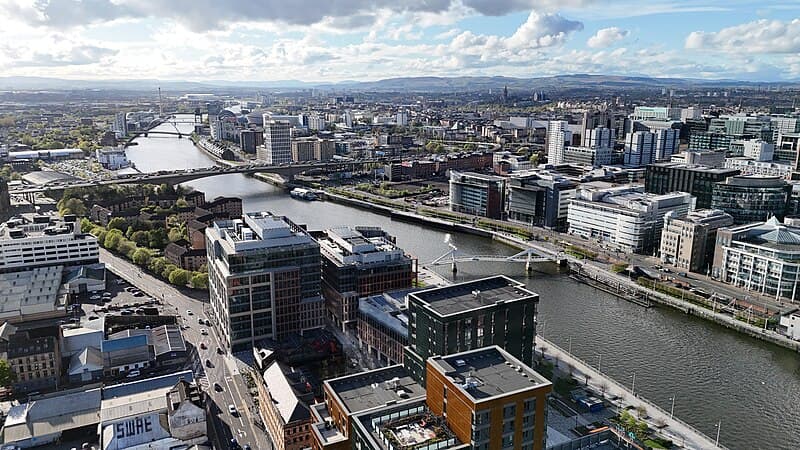
Glasgow is Scotland's largest city and was, in the 19th century, the second city of the British Empire. Shipyards on the River Clyde built vessels for the whole world, and wealthy tobacco and cotton merchants built a Victorian centre of red and honey-coloured sandstone that today looks more monumental than Edinburgh. After industrial decline, Glasgow reinvented itself as a city of culture: its museums are free and world-class, murals cover entire gable ends, and the music scene is the liveliest in Britain — bands from Franz Ferdinand to Primal Scream got their start in local clubs. Architect and designer Charles Rennie Mackintosh left his Art Nouveau mark on buildings and tearooms across the city. Glaswegians are known as the friendliest and funniest people in the British Isles, with a thick accent that even the English struggle with at first. Loch Lomond and the Highlands are an hour from Glasgow, making it a better base for heading north than Edinburgh.

What to see

The places worth your time in Glasgow, and what to expect at each

Kelvingrove Art Gallery and Museum

Kelvingrove Art Gallery and Museum

West End

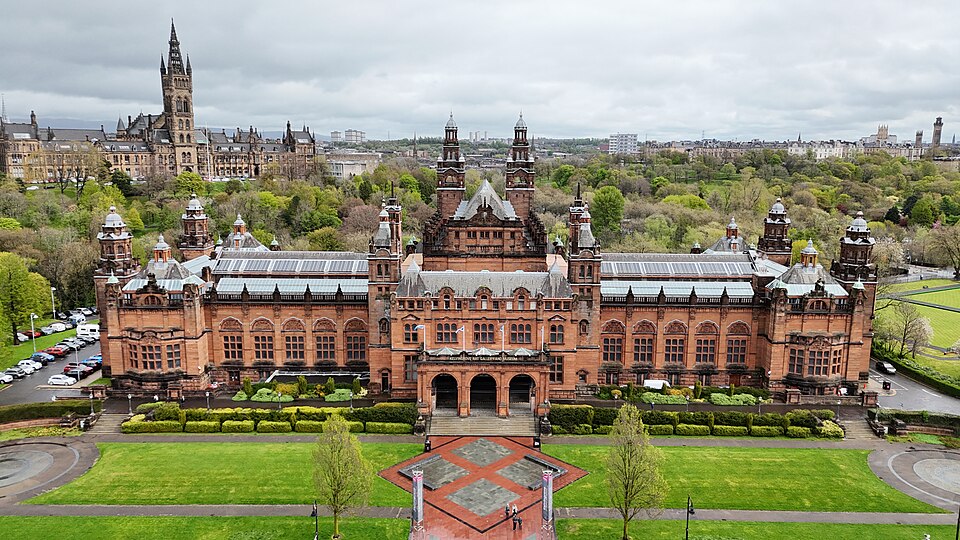
A vast red sandstone building in Kelvingrove Park with one of the most-visited collections in Britain outside London: Dalí's Christ of Saint John of the Cross, Dutch masters, Mackintosh and the Scottish Glasgow Boys, alongside stuffed animals and a Spitfire fighter plane hanging from the ceiling.

Tip: Entry is free. A free organ recital plays on the great organ at 1pm on weekdays and 3pm on Sundays. Dalí's painting is in a separate room upstairs and is often overlooked.

Admission:
free
Time needed:
2–3 h
Glasgow Cathedral

Glasgow Cathedral

Townhead

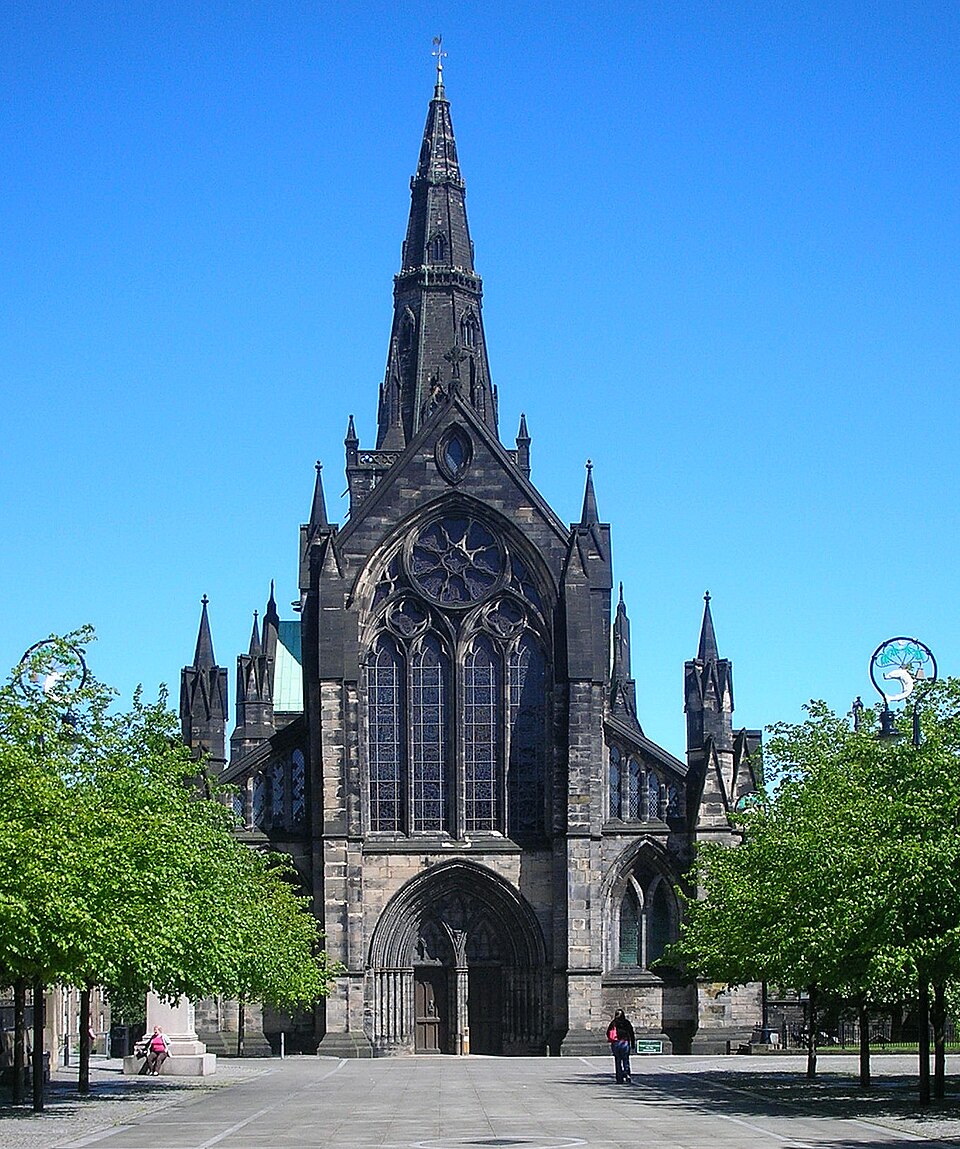
Scotland's only medieval cathedral to survive the Reformation almost unscathed, a Gothic building from the 12th and 13th centuries. The crypt holds the tomb of Saint Mungo, the city's patron saint, and its columns form a forest of vaulting.

Tip: Entry is free, and guides in blue robes are happy to show you round. The crypt is the finest part. Right behind the cathedral, a bridge leads to the Necropolis — combine the two.

Admission:
free
Time needed:
45 min
Necropolis

Necropolis

Townhead

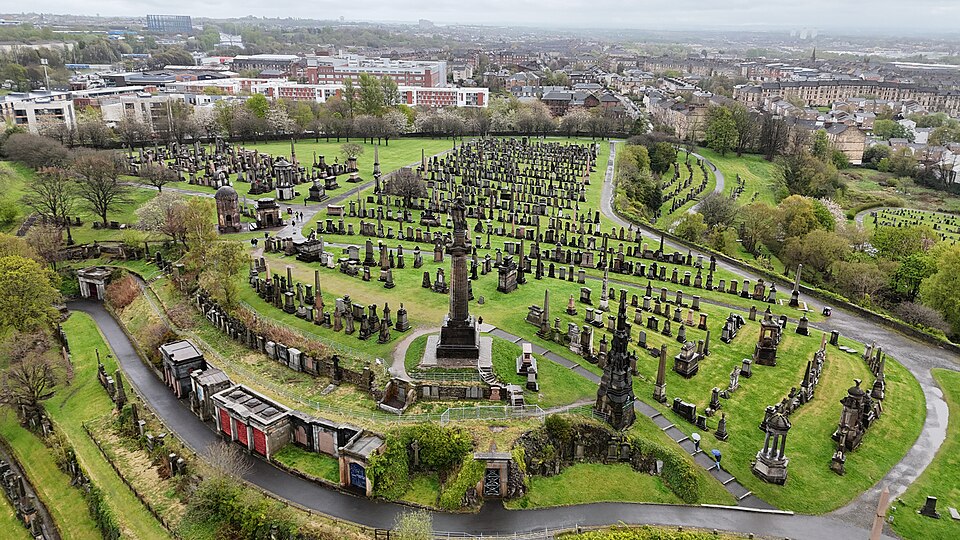
A Victorian hillside cemetery behind the cathedral, holding 50,000 burials and 3,500 tombs, monuments and mausoleums built by merchants keen to display their wealth even after death. Views over the cathedral and the city.

Tip: Walk up to the top, to the John Knox monument, for the best view. Free guided tours are run by the friends of the cemetery, with dates on their website. The gate closes at 4:30pm.

Admission:
free
Time needed:
1 h
Riverside Museum

Riverside Museum

Partick

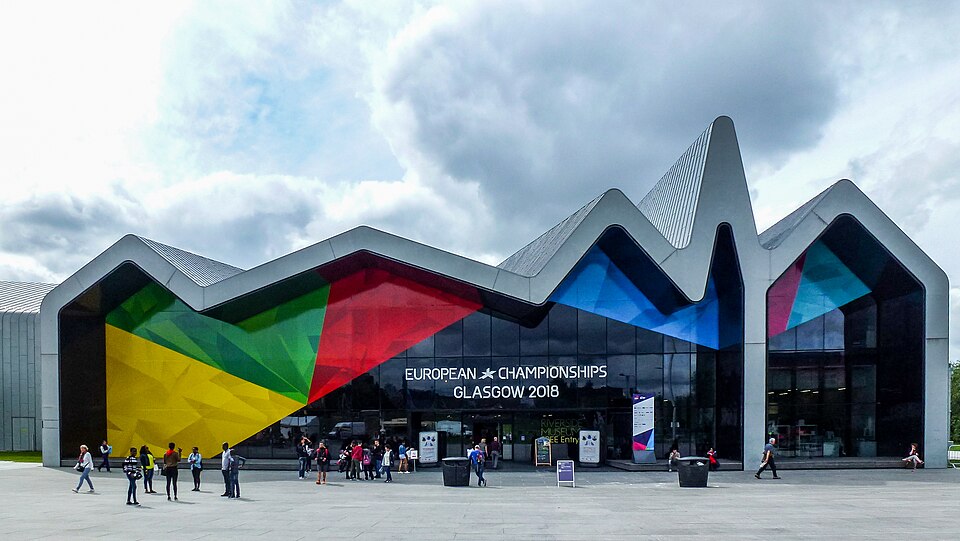
A transport museum in a wave-roofed building by Zaha Hadid on the banks of the Clyde. Locomotives, trams, cars, bikes and a reconstructed Glasgow street from 1900–1980, with shops you can walk into. The 1896 tall ship Glenlee is moored at the jetty.

Tip: Entry is free, as is boarding the sailing ship. The reconstructed street is the best part and children love it. From the centre, you can reach it by river boat; a water taxi runs in summer.

Admission:
free
Time needed:
2 h
University of Glasgow

University of Glasgow

West End

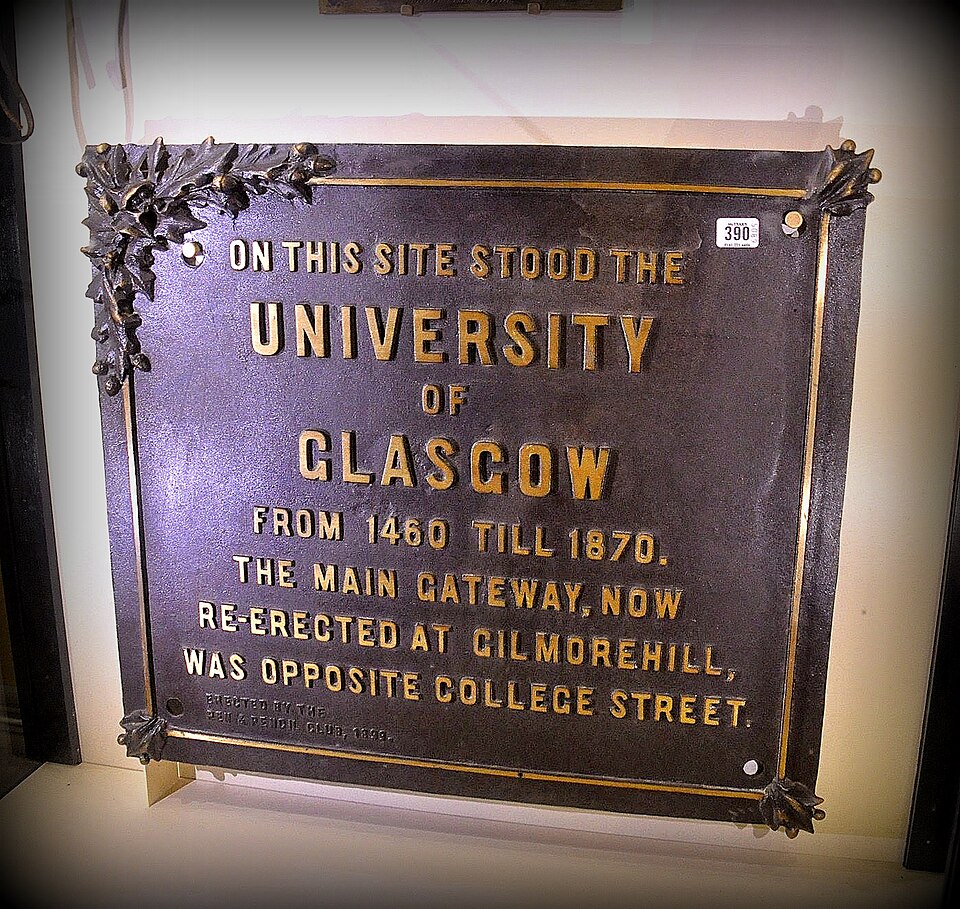
The 4th-oldest university in the English-speaking world, founded in 1451, with a neo-Gothic main building on a hill above Kelvingrove Park. The vaulted Cloisters feel like Hogwarts, and the Hunterian Museum is free.

Tip: The cloisters beneath the main building are the most photographed spot — come early on a weekend morning. The Hunterian Museum has Mackintosh's reconstructed house, ticketed separately. The campus itself is open to all.

Admission:
free
Time needed:
1–1.5 h
Burrell Collection

Burrell Collection

Pollok Park

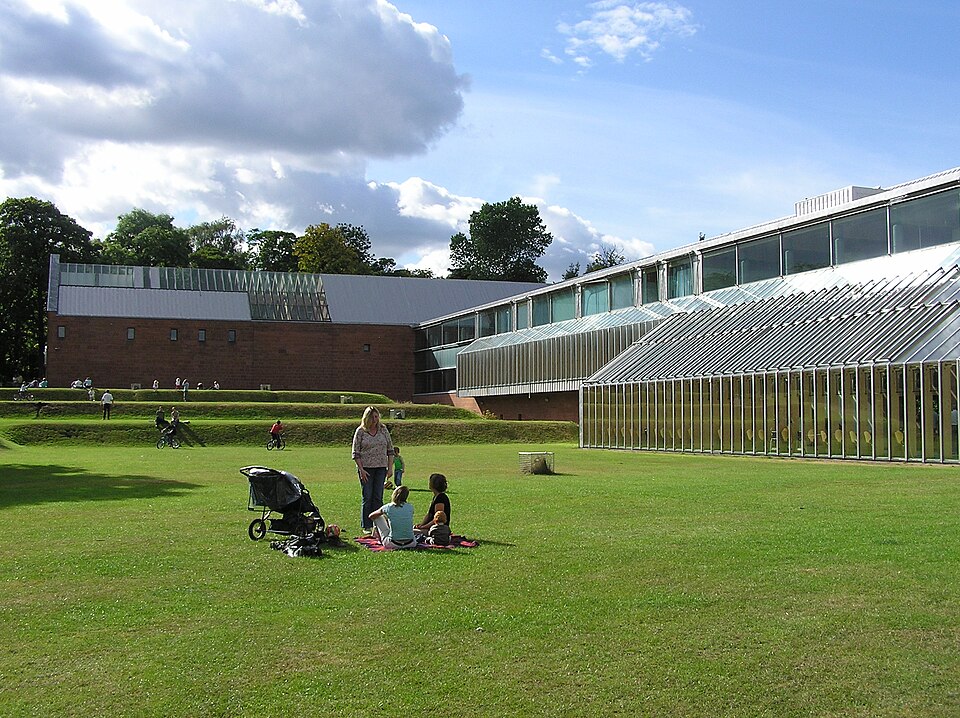
A collection of 9,000 objects donated to the city by shipping magnate William Burrell: Chinese porcelain, medieval stained glass, tapestries and paintings by Degas and Cézanne. The modern building in Pollok Country Park reopened in 2022 after renovation.

Tip: Entry is free, but it's a fair way from the centre — take the train to Pollokshaws West, then walk 10 minutes through the park. Shaggy long-horned Highland cattle graze in the park. Combine with the museum café, which has a woodland view.

Admission:
free
Time needed:
2 h
Mackintosh at the Willow

Mackintosh at the Willow

City Centre

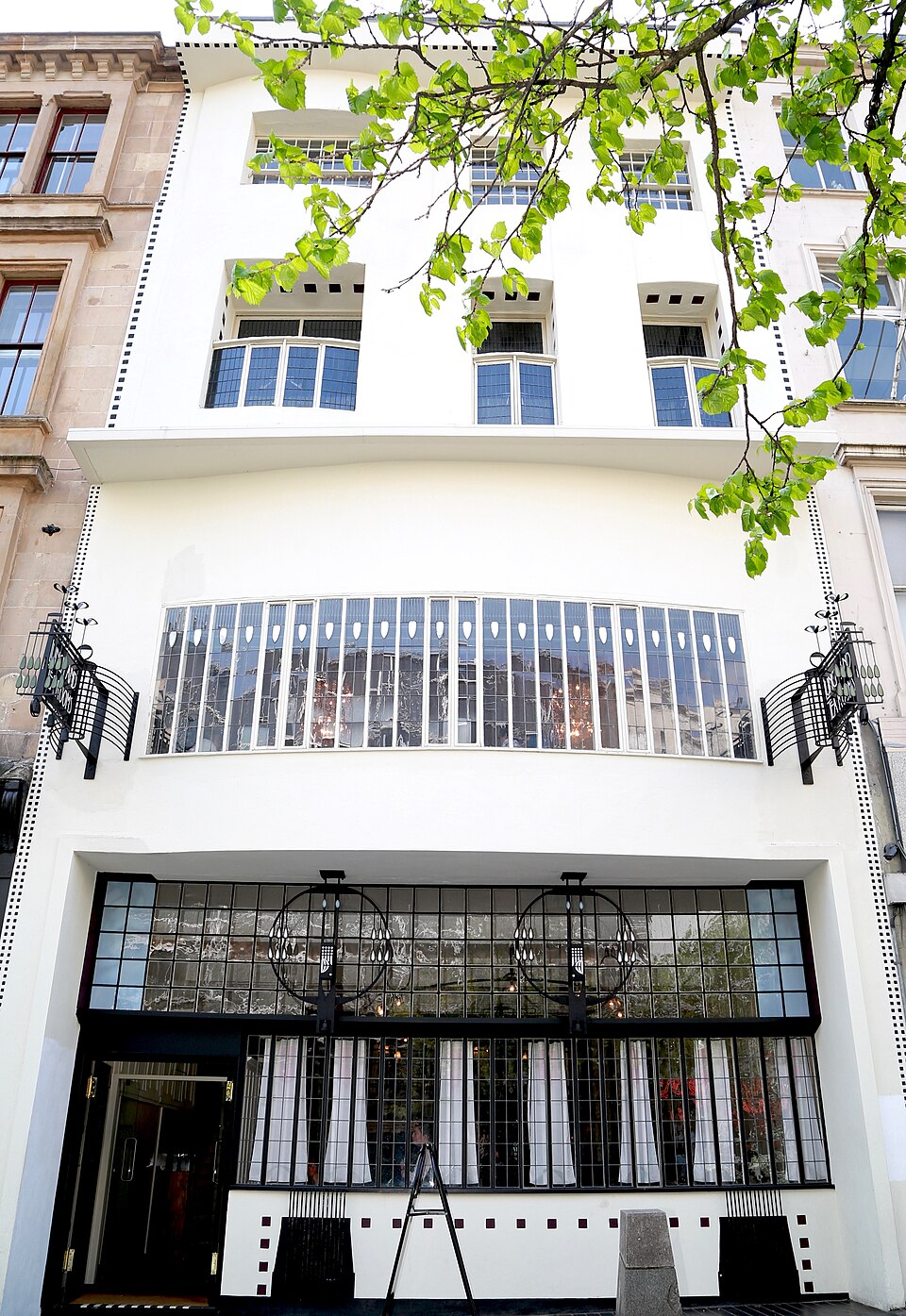
A tearoom designed down to the last detail in 1903 by Charles Rennie Mackintosh — from the façade to the high-backed chairs, cutlery and menus. Reopened after restoration in its original form, including the Salon de Luxe with its silver chairs and leaded-glass mirrors.

Tip: Booking ahead is essential for afternoon tea in the Salon de Luxe, otherwise expect a wait. If you'd rather not sit down, you can view the Mackintosh exhibition upstairs. The tearoom is on Sauchiehall Street, a 10-minute walk from Queen Street station.

Admission:
free, exhibition ticketed
Time needed:
1 h
City Chambers

City Chambers

City Centre

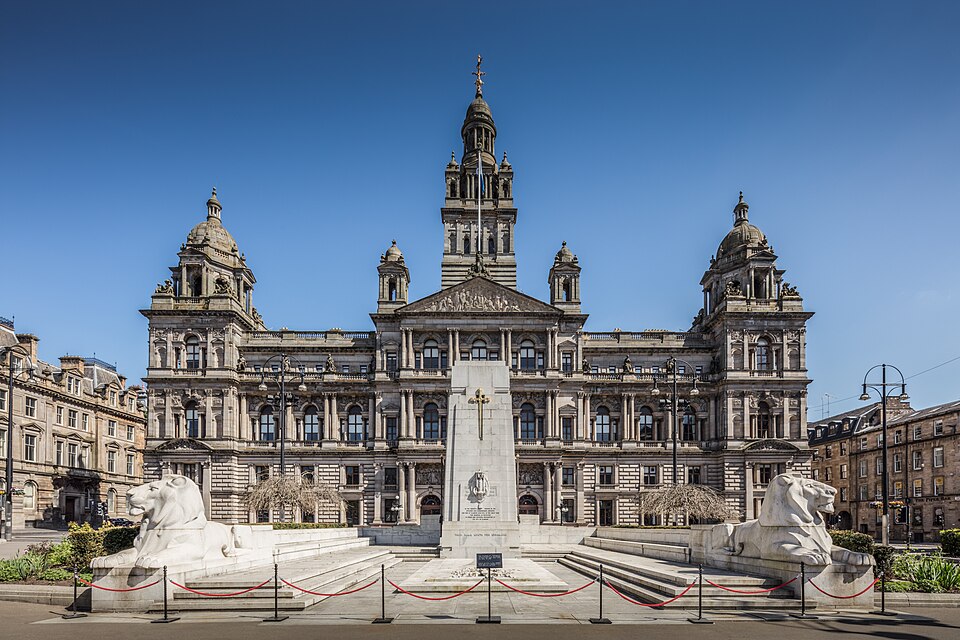
The city hall on George Square, built in 1888, a Victorian palace with marble staircases, mosaic floors and a banqueting hall with painted ceilings, built as a showcase for the richest city in the Empire. It has served as a film set standing in for both the Kremlin and the Vatican.

Tip: Free tours run on weekdays at 10:30am and 2:30pm, with limited places, so arrive 20 minutes early. The marble staircase is the finest spot. Statues of Walter Scott and Robert Burns stand on George Square in front of the building.

Admission:
free
Time needed:
1 h
Mural Trail

Mural Trail

City Centre

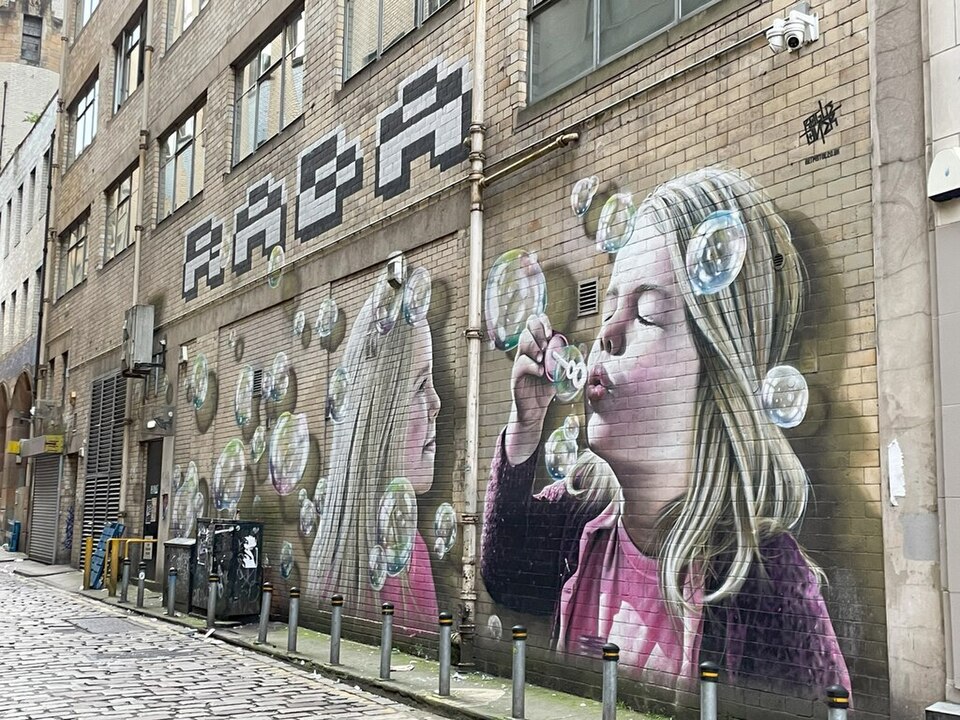
Over 30 large murals on gable ends across the centre, from Saint Mungo with a bird to a boy with a magnifying glass and a girl with a telescope. The City Centre Mural Trail winds through the whole centre.

Tip: A free route map is on the city's website, and the trail takes 2 hours. The best-known murals are St Mungo on High Street and Wind Power on Clyde Street. Murals change from time to time as new ones are added.

Admission:
free
Time needed:
2 h

Photos: Kelvingrove Art Gallery and Museum — 瑞丽江的河水 (CC BY-SA 4.0) · Glasgow Cathedral — No machine-readable author provided. Julesn84 assumed (based on copyright claims). (CC BY 3.0) · Necropolis — 瑞丽江的河水 (CC BY-SA 4.0) · Riverside Museum — Cutkiller2018 (CC BY-SA 4.0) · University of Glasgow — Osama Shukir Muhammed Amin FRCP(Glasg) (CC BY-SA 4.0) · Burrell Collection — Wikimedia Commons (CC BY-SA 3.0) · Mackintosh at the Willow — JJCMarshall (CC BY-SA 4.0) · City Chambers — Michael D Beckwith (CC0) · Mural Trail — Mrs W J Sutherland (CC BY-SA 2.0)

Where to stay

Areas and districts, matched to the kind of trip you are taking

City Centre

Best for: first-time visitors and shopping

The Victorian centre, with pedestrianised Buchanan Street, George Square and the main railway station. Hotels, shops and restaurants. Busy in the evening.

Merchant City

Best for: food and bars

The historic trading district, with restaurants, bars and galleries in former warehouses. Best in the evening. A 5-minute walk from Queen Street station.

West End

Best for: students and a quieter pace

Around the university and Kelvingrove Park, with Victorian houses, cafés and restaurants on Byres Road and along Ashton Lane. The most pleasant area to stay in.

Finnieston

Best for: dining

A former working-class riverside district, now home to the city's best restaurants and cocktail bars, close to Kelvingrove and the concert hall.

Getting around

From the airport

Glasgow Airport lies 15 km west of the centre, with the Airport Express bus running into town. Most international flights connect via major European hubs. A second airport, Prestwick, to the south, is served by Ryanair and linked by train. Since 2025, a UK electronic travel authorisation (ETA) has been required. By train, it's 4.5 hours from London Euston, and 50 minutes from Edinburgh, with departures every 15 minutes.

Glasgow Airport (GLA) · 15 km

  • Airport Express 500 bus to the centre· 25 min· £10
  • Taxi· 20 min· £30

Glasgow Prestwick (PIK) · 50 km

  • Train to Glasgow Central· 50 min· £10

Around town

The centre is compact and laid out on a grid, easily walkable. A small circular Subway, the third-oldest in the world, runs to the West End; its orange trains have earned it the nickname the Clockwork Orange. First Glasgow buses run everywhere. Trains serve the suburbs and day trips. A car isn't needed in the city.

SubwayA single loop with 15 stations, inner and outer lines. The fastest way to the West End. · £1.85
First busesA dense network, paid for contactlessly with a daily cap. · £2
ScotRail trainsFrom Queen Street and Central for day trips and to Edinburgh. · from £5
TaxiBlack cabs on the street, plus Uber. · £10 around the centre
OVO BikesApp-based shared bikes, good along the river. · £1

Useful apps: First Bus, SPT Subway, ScotRail, Uber

When to go

Glasgow is rainier than Edinburgh — it rains on almost every other day, though usually briefly. It's best from May to September, with temperatures around 18°C and long days. Festivals run in July, and August brings a buzz to the centre. Winter is damp and dark, but mild, with snow the exception rather than the rule. Thanks to its free museums and pubs, Glasgow is a good destination even in wet weather.

Best time

May to September

What to avoid

November to January, because of the rain and dark

MonthJanFebMarAprMayJunJulAugSepOctNovDec
Day7°7°9°12°15°17°19°19°16°13°9°7°
Night1°1°2°4°6°9°11°11°9°6°3°1°
Rainy days171315111112121314161617

Food & drink

Glasgow has the best food scene in Scotland at reasonable prices. Finnieston and the West End are packed with restaurants using Scottish produce, and thanks to a large South Asian community, the curries here are excellent — Glasgow claims to have invented chicken tikka masala. Pubs serve cheap lunches. Prices are lower than in Edinburgh.

What to try

Chicken tikka masala

Chicken in a creamy tomato and spice sauce. According to Glasgow legend, it was invented in the 1960s by a chef at the Shish Mahal restaurant when a customer asked for a sauce.

Haggis

Sheep offal with oats and spices, served with mashed potatoes and swede. In Glasgow it's also sold deep-fried in batter at chippies.

Deep-fried Mars bar

A Mars bar deep-fried in batter, a symbol of Scottish cuisine more than an everyday dish. Some chippies will make one on request.

Scotch pie

A small pie filled with minced mutton, eaten at half-time at football matches.

Lorne sausage

A square, skinless sausage sliced and fried, served in a breakfast roll.

Tunnock's teacake

A biscuit topped with white foam and coated in chocolate, made in Uddingston near Glasgow. A classic with tea.

Tennent's lager

Glasgow's own lager, brewed in the city since 1740. The brewery runs tours with tastings.

What it costs

Coffee

£3–3.80

Pint of beer

£5–6.50

Curry at a restaurant

£15–25

Dinner in Finnieston

£30–50 per person

Subway ticket

£1.85

Museum entry

free

Gig at a club

£10–25

Night at a 3-star hotel in the centre

£90–160

Indicative prices that change over time — treat them as a guide, not a price list.

Practical information

SocketsGBritish, three rectangular pins
Voltage230V / 50Hz
Tap waterTap water is drinkable — Tap water is drinkable throughout Britain, monitored and good-tasting — buying bottled water is unnecessary. In a restaurant, just ask for "tap water" and you'll get it free, even if the waiter offers bottled first. In older houses, cold water sometimes comes from a separate tap while hot water comes from a loft tank that isn't drinkable; this no longer applies in hotels and new buildings. Scottish water from mountain reservoirs is soft and among the cleanest in Europe.
TippingAt a table-service restaurant, the bill often carries a pre-printed 12.5% "service charge" — when it's there, nothing further is added, and it's legal to ask for it to be removed if you're unhappy. Where there's none, 10% is standard. At a pub bar, no tip is given at all: drinks are ordered and paid for at the bar, and no one expects anything. Round up for taxi drivers; give 10% to hairdressers and delivery drivers. Cafés often have a glass jar by the till, purely optional. Scottish banks print their own pound notes with a different design; they're valid throughout Britain, but some shops in England are reluctant to accept them, so spend them before you leave.
Driving on theleft
SafetyBritish cities are safe for visitors, and violent crime barely touches tourists. There are 3 real risks: pickpockets on the subway and at markets, phone theft by a passing cyclist snatching from an outstretched hand on the pavement (so don't walk around with your phone held out), and dodgy taxis outside clubs — book through an app or only take a black cab with its light on. Traffic drives on the left and cars come from the right, the most common cause of visitor accidents at crossings; pavements are often marked "look right". The emergency number is 999, for non-urgent cases 101, and the European 112 also works. In Glasgow, avoid pubs full of football fans on Celtic-Rangers derby day, and don't wear green or blue shirts.
Opening hoursShops open from 9am to 6pm, until 8pm in the centre. Scotland isn't bound by England's Sunday trading law, so large shops stay open longer on Sundays. The major national museums and galleries are free and open daily from 10am to 5pm. Pubs pour until midnight, later at weekends, though kitchens tend to close around 9pm. Local public holidays differ from England's, including 2 January and St Andrew's Day on 30 November.
Customs & etiquetteThe Scots aren't English and don't appreciate being called that — British or Scottish is correct. Queuing and ordering at the bar work the same as across Britain. The Scots are friendlier and more direct than the English, and striking up conversation at a pub comes easily. Kilts are worn to weddings and sporting events, not to work. Whisky is spelled without an "e", and a good single malt shouldn't have ice added, at most a few drops of water.
A few local wordsHello — Hello / Good morningThank you — Thank you / CheersExcuse me — Sorry / Excuse meThe bill, please — Could we get the bill, please?Cheers — CheersYes / small — Aye / wee

How to plan your days

1 day

A day in Glasgow

  1. 1Morning at the cathedral and the Necropolis.
  2. 2A walk along the murals into the centre.
  3. 3Lunch in Merchant City.
  4. 4Afternoon at Kelvingrove and the organ recital.
  5. 5Evening at the university, then curry in Finnieston.

2 days

2 days in Glasgow

  1. 1Day 1 as in the one-day plan.
  2. 2Day 2: the Riverside Museum and the tall ship Glenlee.
  3. 3Lunch in the West End on Ashton Lane.
  4. 4Afternoon tea at Mackintosh at the Willow.
  5. 5Evening: live music at King Tut's or the Barrowland.

3 days

3 days in Glasgow

  1. 1Days 1–2 as in the previous plan.
  2. 2Day 3: a train trip to Loch Lomond.
  3. 3A boat cruise on the loch from Balloch.
  4. 4Return in the afternoon, a tour of the City Chambers.
  5. 5Evening: whisky at a pub.

Day trips

Loch Lomond

35 km · 45 min by train to Balloch

Scotland's largest loch, on the edge of the Highlands, dotted with islands and ringed by mountains. Boats depart from Balloch, and Luss is a picturesque village of stone cottages. For something more energetic, climb Ben Lomond.

New Lanark

40 km · 1 h by train and bus

A late-18th-century cotton-mill village in the Clyde valley, where reformer Robert Owen introduced schools and better conditions for workers. It's now a UNESCO World Heritage Site, with the Falls of Clyde waterfalls above it.

The Kelpies and the Falkirk Wheel

40 km · 40 min by train to Falkirk

2 30-metre steel horse heads on a canal, the largest equine sculptures in the world. Nearby is the Falkirk Wheel, a rotating boat lift connecting 2 canals, with a ride lasting an hour.

Frequently asked questions

Glasgow or Edinburgh?+

Edinburgh is prettier and more touristy, Glasgow livelier, cheaper and with better music and food. They're 50 minutes apart by train, so they can easily be combined.

How many days do you need for Glasgow?+

2 days for the museums, the cathedral and the West End. A 3rd day for Loch Lomond or a trip into the Highlands.

How do I get from the airport into the centre?+

The Airport Express 500 bus takes 25 minutes. A taxi costs around £30.

Is Glasgow safe?+

The centre and the West End, yes. Just be cautious at night at weekends in the centre and on football derby days.

Where should I stay in Glasgow?+

In the centre for convenient transport, in the West End for atmosphere and cafés. The two areas are linked by the Subway in just a few minutes.

Where can I hear live music in Glasgow?+

King Tut's Wah Wah Hut, Barrowland Ballroom, Sub Club and dozens of pubs. Glasgow is a UNESCO City of Music.

What's the weather like in Glasgow?+

Rainy and changeable, but mild. Pack an umbrella and a waterproof jacket even in summer.

Can I reach the Highlands from Glasgow?+

Yes, the West Highland Line, one of the most beautiful rail routes in Europe, runs to Glencoe and Fort William. Loch Lomond and the Trossachs can be done in a day.

Visa Requirements

Check the latest visa requirements for entering this country. Some nationalities may need to apply for a visa or e-visa before travel.

Check visa requirements

Language

English

Currency

GBP

Timezone

GMT+0

Dial Code

+44

Population

67.7M

Area

243,610 km²

Voltage

230V / 50Hz

Driving Side

Left

Top Hotels in Glasgow

Live prices from 500+ properties

Loading hotels...

More destinations in United Kingdom

Planning a trip to Glasgow?

Compare hundreds of hotels, find the best price, and book with free cancellation on TravelManiac.