Birthplace of the industrial revolution, football, and British music
Manchester
LanguageEnglish
CurrencyGBP
TimezoneGMT+0
Temperature6-22 °C
Dial Code+44
Population67.7M
Area243,610 km²
SocketsType G
Tap waterDrinkable
Discover Manchester
Manchester was the world's first industrial city. In the nineteenth century, steam engines powered hundreds of cotton mills here, earning it the nickname Cottonopolis — cotton left for the whole world via its canals and the world's first intercity passenger railway. The brick warehouses and factories left behind by industrial decline are now flats, bars, and restaurants, and Manchester is England's liveliest city after London. For football fans, it's a capital city in its own right: Manchester United at Old Trafford and Manchester City at the Etihad are among the most famous clubs on earth, and the National Football Museum stands in the centre. Manchester also produced British music from Joy Division, The Smiths, and New Order to Oasis, and the Haçienda club helped launch the dance music scene. The city has excellent free museums, a neo-Gothic library that looks like a cathedral, and the Northern Quarter, full of record shops and street art. It rains often, but no more than elsewhere in the north. Liverpool and the Peak District national park are both an hour away.
What to see
The places worth your time in Manchester, and what to expect at each
John Rylands Library
Deansgate
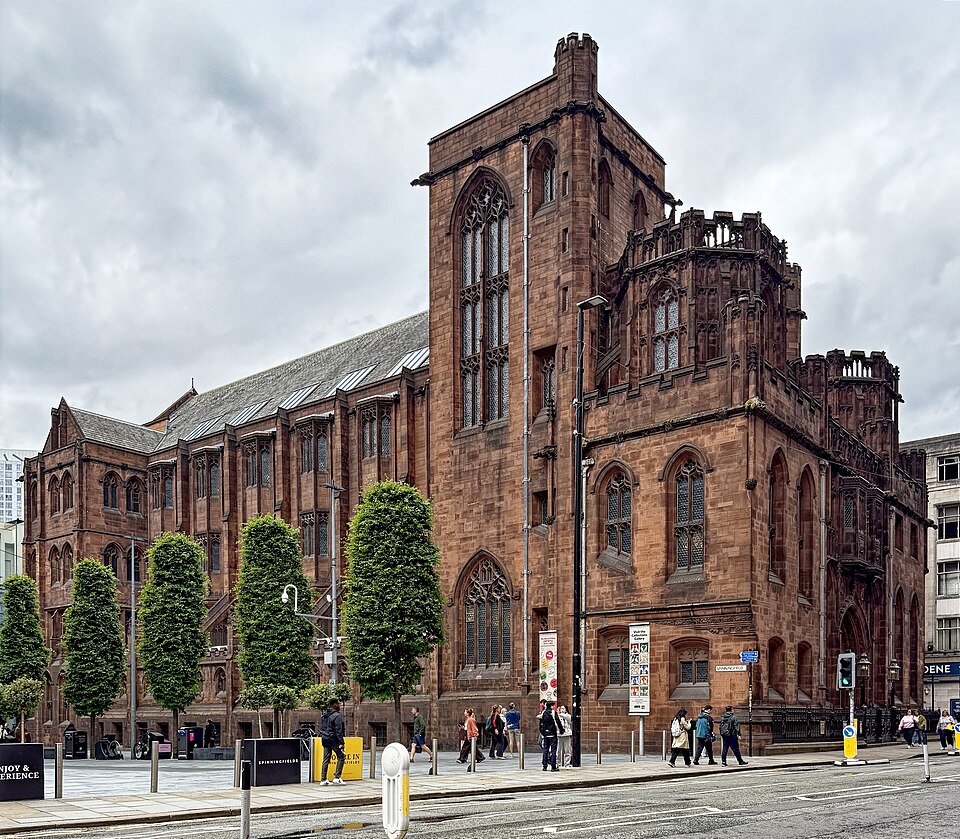
A neo-Gothic library from 1900 with a reading room that resembles a cathedral, complete with vaulting, stained glass, and statues. It holds rare manuscripts, including the oldest known fragment of the New Testament and a Gutenberg Bible.
Tip: Entry is free. The best spot is the historic reading room upstairs, quiet and lit by stained glass — visit on a weekday morning. Photography without flash is allowed. The library is on Deansgate in the centre, easy to combine with shopping.
Admission:
free
Time needed:
1 h
Science and Industry Museum
Castlefield
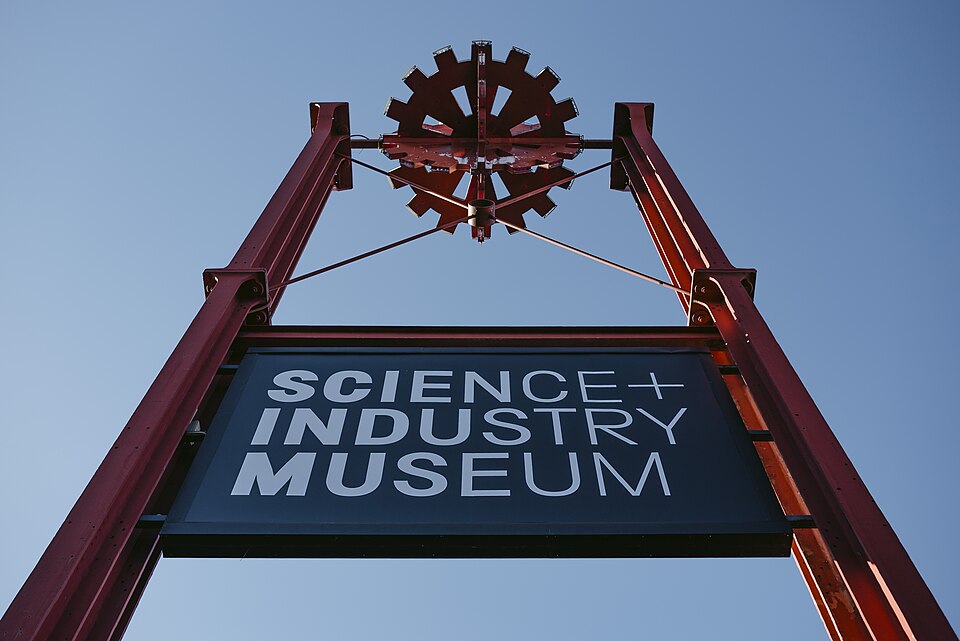
A museum of science and industry on the site of the world's oldest surviving railway station, from 1830, the terminus of the first intercity railway between Liverpool and Manchester. Steam engines, working textile machines, and the first stored-program computer, Baby.
Tip: Entry is free, but some buildings are closed for major renovation work — check the website for what's open. Textile machine demonstrations run at set times and are loud. The museum sits in Castlefield, which you can explore along the canals.
Admission:
free
Time needed:
2 h
National Football Museum
Cathedral Quarter
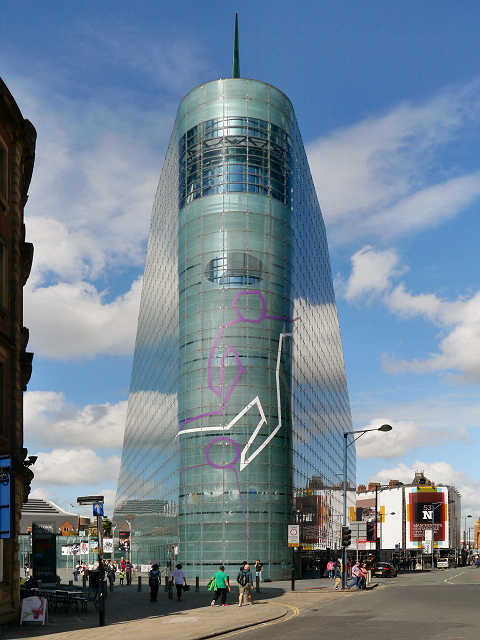
A museum of football history in the glass Urbis building next to the cathedral, with the ball from the first World Cup final, Diego Maradona's 'Hand of God' shirt, and interactive zones where you can try taking a penalty.
Tip: Tickets are valid for a year, so you can come back. The interactive Football Plus zone with penalty shootouts costs extra. The museum is neutral ground for fans of both Manchester clubs.
Admission:
admission charge
Time needed:
2 h
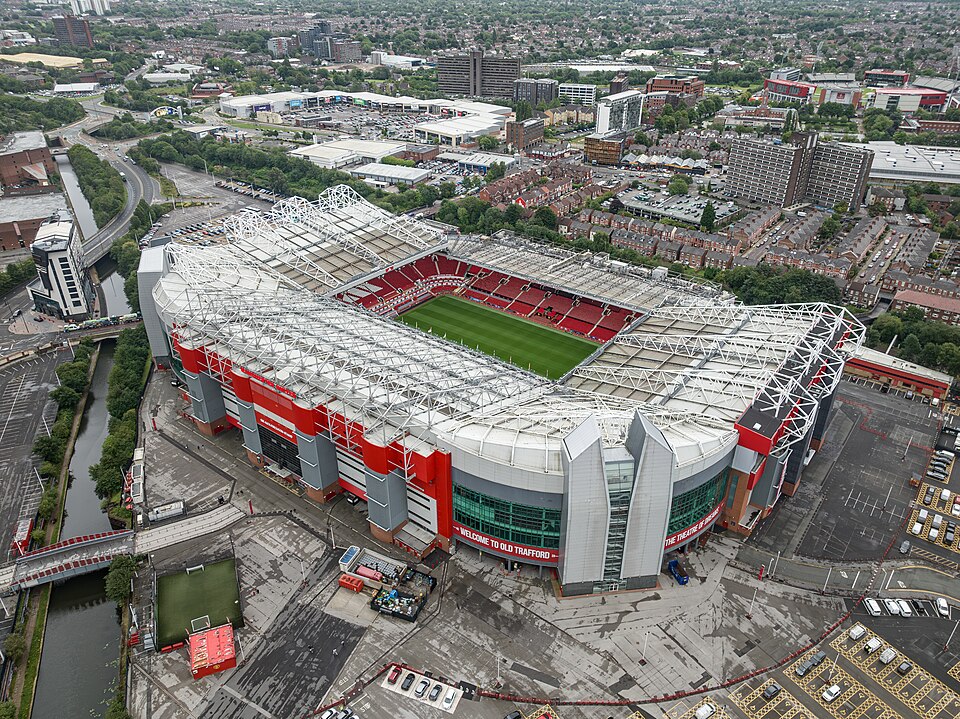
Old Trafford
Trafford
Manchester United's 74,000-seat stadium, nicknamed the Theatre of Dreams. The club museum displays trophies, and the stadium tour takes you through the changing rooms, the tunnel, and the manager's dugout.
Tip: Premier League match tickets are hard to get as a non-member — the official route is club membership. Stadium tours can be booked online and don't run on matchdays. A tram from the centre runs to Old Trafford or Exchange Quay stops.
Admission:
admission charge
Time needed:
2 h
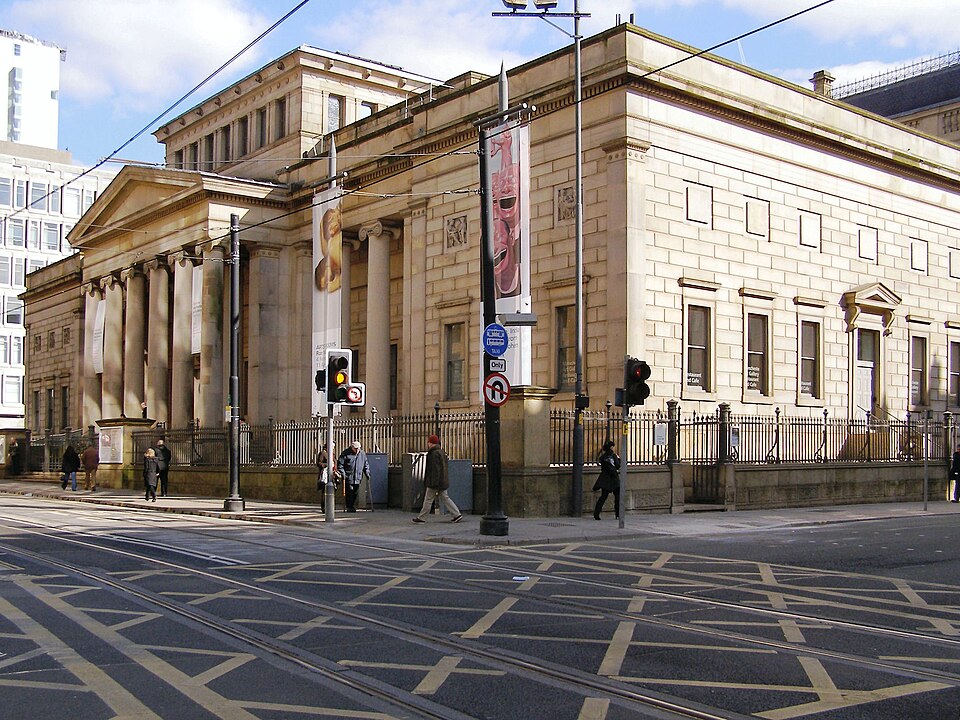
Manchester Art Gallery
City Centre
An art gallery in an 1824 building with a Pre-Raphaelite collection — Rossetti, Millais, Holman Hunt — alongside paintings by L. S. Lowry, known for his 'matchstick' figures set against Manchester's industrial landscape.
Tip: Entry is free. The Pre-Raphaelites are on the second floor, where most visitors head, but the real highlight is Lowry's paintings of the city. The café is quiet and cheaper than nearby options.
Admission:
free
Time needed:
1.5 h
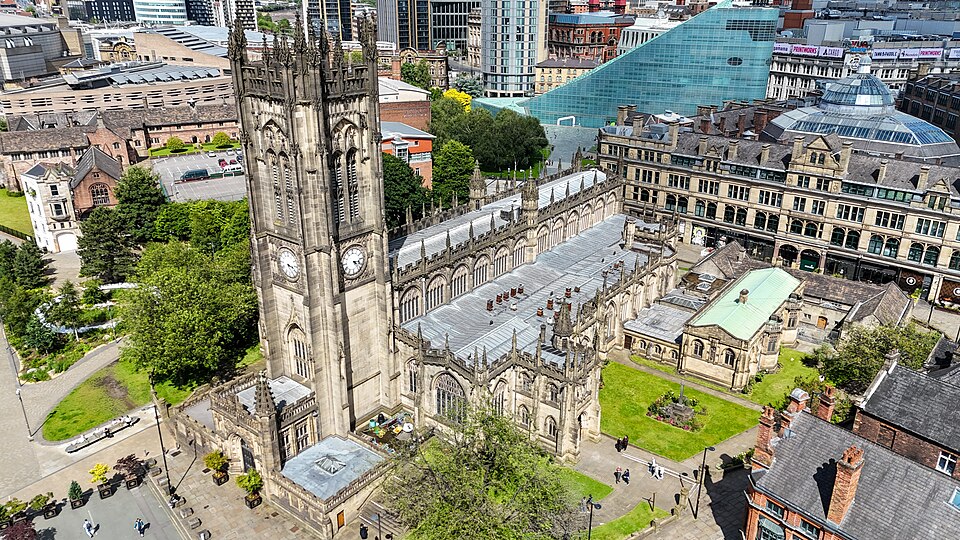
Manchester Cathedral
Cathedral Quarter
A fifteenth-century Gothic cathedral with carved choir stalls depicting animals and monks, damaged by bombing in the war and again in 1996, when the IRA detonated a bomb in the city centre. The stained glass added during restoration is modern and vividly coloured.
Tip: Entry is free, donations welcome. The carvings on the misericord seats are full of humour — look for the man riding a dragon and the rabbits cooking a hunter. The cathedral sits right next to the football museum.
Admission:
free
Time needed:
45 min
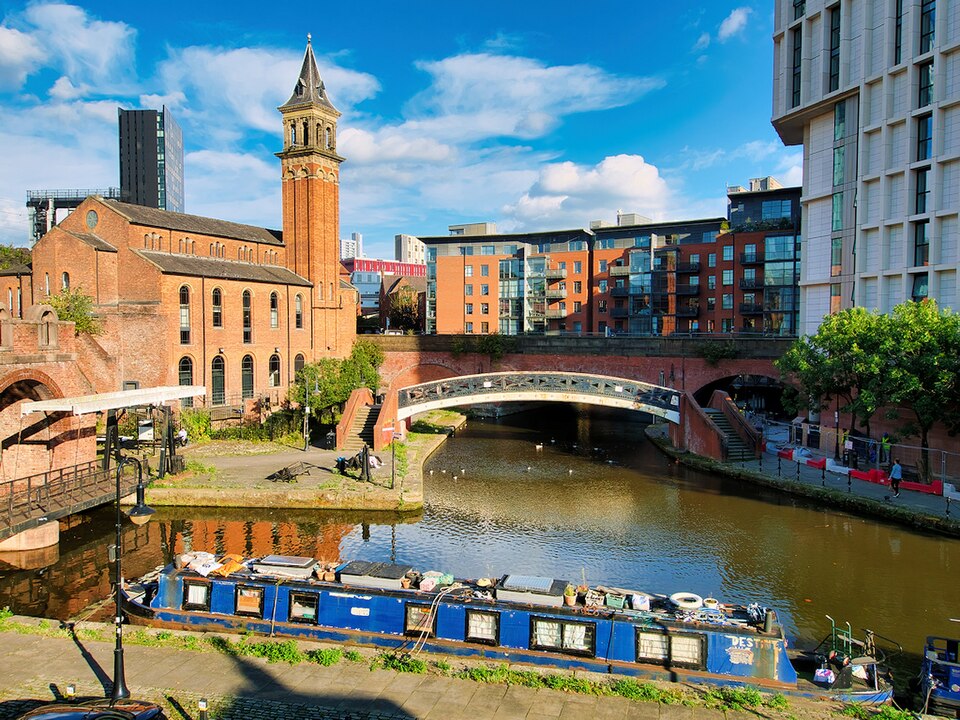
Castlefield
Castlefield
A district of canals, railway viaducts, and brick warehouses on the site of the Roman fort of Mamucium, where the Industrial Revolution began. Today it has waterside promenades, bars, and remnants of the Roman walls.
Tip: Best visited on a summer evening, when the canalside bars fill up. The Castlefield Viaduct park runs above the canals on a former railway bridge. Canal boats also run longer trips from here.
Admission:
free
Time needed:
1-1.5 h
Imperial War Museum North
Salford Quays
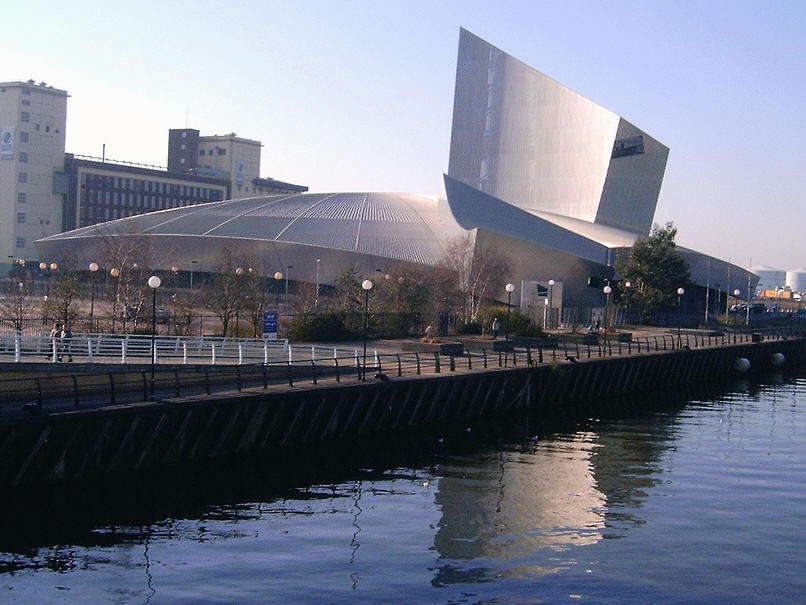
A war museum in a building by Daniel Libeskind, designed to represent a globe shattered into three shards. Inside are exhibitions on conflicts from the First World War to today, plus hourly audiovisual projections across the walls.
Tip: Entry is free. The Big Picture Show screening runs hourly and is worth watching in full. The museum sits across the footbridge from The Lowry in Salford Quays, twenty minutes from the centre by tram.
Admission:
free
Time needed:
1.5 h
The Lowry
Salford Quays
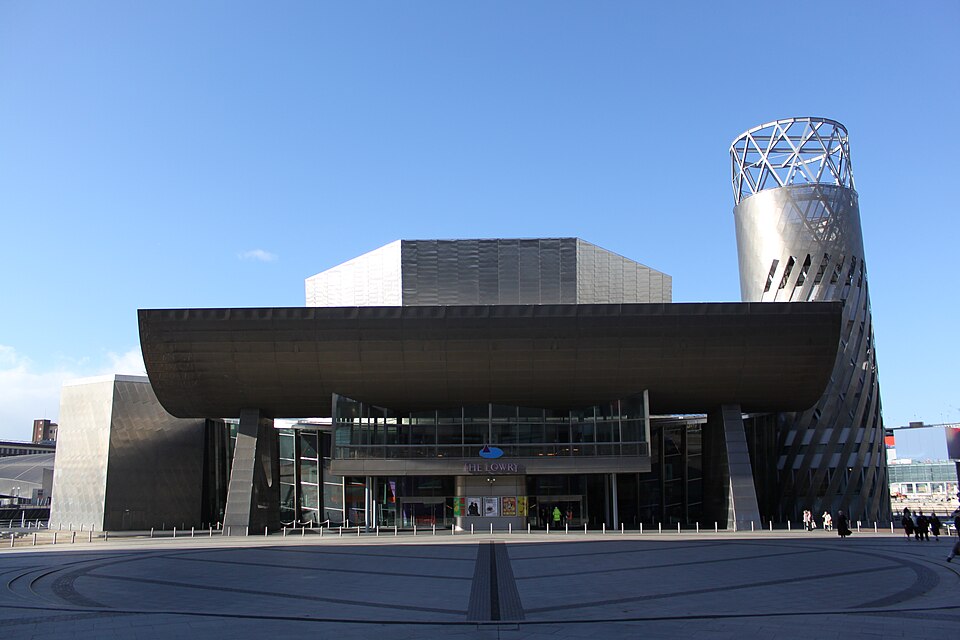
A cultural centre in Salford Quays with theatres and a gallery of paintings by L. S. Lowry, the painter of northern England's industrial landscapes. The glass-and-steel building stands beside the former docks.
Tip: The gallery is free and holds the world's largest Lowry collection. The theatre stages musicals and opera at lower prices than in London. Neighbouring MediaCityUK is home to the BBC.
Areas and districts, matched to the kind of trip you are taking
City Centre
Best for: first-time visitors
The centre, with shopping streets, Albert Square and the town hall, galleries, and hotels. Everything is within walking distance. Piccadilly station puts you close to it all.
Northern Quarter
Best for: bars and an alternative scene
Brick warehouses filled with record shops, cafés, bars, and street art. The liveliest district, often used as a filming location standing in for New York.
Ancoats
Best for: food
Former cotton mills along the canal, now home to the city's best restaurants and bakeries. A five-minute walk from the Northern Quarter.
Salford Quays
Best for: museums and waterside views
Former docks with the war museum, The Lowry, and MediaCity. Modern hotels and a tram link to the centre, twenty minutes away.
Manchester Airport is Britain's third largest and sits fifteen kilometres south of the centre. Direct low-cost flights from Prague take about two hours. From the airport, a train runs to Piccadilly station and the Metrolink tram also connects to the city. Since 2025, a UK electronic travel authorisation (ETA) is required. By train, it's two hours from London Euston and forty minutes from Liverpool.
Manchester Airport (MAN) · 15 km
Train to Piccadilly· 20 min· 5 GBP
Metrolink tram to the centre· 45 min· 4 GBP
Taxi / Uber· 25 min· 30 GBP
Around town
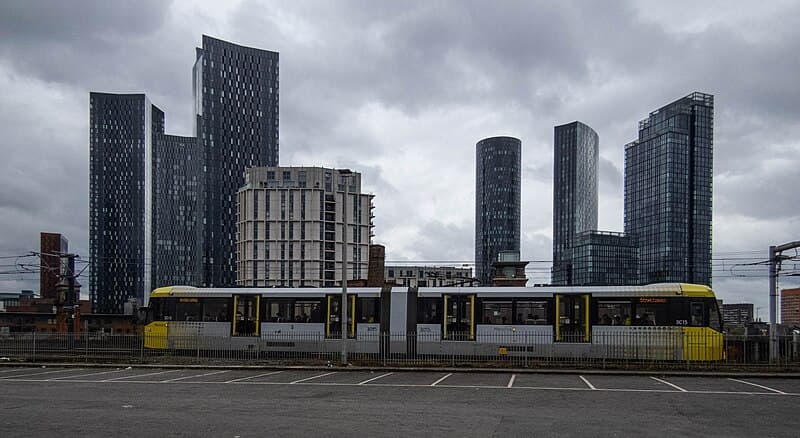
The centre is walkable in half an hour. Metrolink trams run to Salford Quays, Old Trafford, and the airport. Bee Network buses charge a flat two-pound fare, and free city-centre Free Buses also run. You won't need a car.
MetrolinkTrams to Salford Quays, Old Trafford, and the airport; pay by contactless. · 1.80 GBP
Bee Network busesFlat fare per ride with a daily cap. · 2 GBP
Free BusFree buses around the centre between the stations. · free
Northern trainsFor day trips to the Peak District and Liverpool. · from 5 GBP
Taxi / UberBlack cabs and Uber. · 10 GBP within the centre
Useful apps: Bee Network, Trainline, Uber, Google Maps
When to go
Manchester has a reputation as a rainy city, and it does rain often, though rarely heavily. May to September is best, with temperatures around 18-20°C and people sitting out in parks and along the canals. The football season runs from August to May. In December, Christmas markets fill Albert Square and much of the city centre. Winter is mild and damp.
Best time
May to September
What to avoid
November and January, for the rain and dark days
Month
Jan
Feb
Mar
Apr
May
Jun
Jul
Aug
Sep
Oct
Nov
Dec
Day
7°
8°
10°
13°
16°
19°
21°
20°
18°
14°
10°
8°
Night
2°
2°
3°
5°
8°
11°
13°
13°
11°
8°
5°
2°
Rainy days
14
11
13
11
11
11
12
12
11
14
14
14
Food & drink
Manchester has a lively food scene, from pubs to food halls to Michelin-starred restaurants. Wilmslow Road in Rusholme is the Curry Mile, with dozens of Indian and Pakistani restaurants, and the city's Chinatown is one of the largest in Britain. Prices are lower than in London. Pubs serve northern English classics.
What to try
Fish and chips
Cod or plaice in beer batter with chips, vinegar, and mushy peas. Bought from a 'chippy' and eaten out of the paper — sitting down in a restaurant costs twice as much for the same thing.
Manchester tart
A tart with a layer of raspberry jam and custard, topped with coconut. A school-dinner dessert that locals remember fondly.
Lancashire hotpot
Lamb stewed with onions under a layer of sliced potatoes, baked in a pot. A working-class dish from the northern mill towns.
Curry Mile curry
Curries in Rusholme are cheap and full of flavour. Many restaurants aren't licensed to serve alcohol, so you can bring your own beer.
Vimto
A fruit cordial invented in Manchester in 1908. Served hot in winter.
Eccles cake
A round puff-pastry cake filled with currants, originally from Eccles near Manchester. Eaten with a slice of Lancashire cheese.
Real ale and cider
Unchilled, cask-conditioned beer served via a hand pump at around 12°C. Ordered by the pint; ask for a 'half' if you want less. Cider tends to be dry rather than sweet.
What it costs
Coffee
3-3.80 GBP
Pint of beer
5-6.50 GBP
Curry in Rusholme
12-18 GBP
Dinner at a restaurant
30-50 GBP per person
Old Trafford tour
from 30 GBP
Football museum
from 15 GBP
Tram ride
1.80-4 GBP
Night at a 3-star hotel in the centre
90-160 GBP
Indicative prices that change over time — treat them as a guide, not a price list.
Practical information
SocketsGBritish, three rectangular pins
Voltage230V / 50Hz
Tap waterTap water is drinkable — Tap water is safe to drink throughout Britain, well regulated, and tastes fine — there's no need to buy bottled. At a restaurant, just ask for 'tap water' and you'll get it free, even if the server first offers bottled. In older houses, cold water may come from its own tap while hot water comes from a loft tank that isn't drinkable; this doesn't apply in hotels or newer buildings.
TippingAt a table-service restaurant, the bill often already includes a 12.5 percent 'service charge' — if it does, nothing further is expected, and it's legal to ask for it to be removed if you're unhappy with the service. Where it's not included, 10 percent is customary. At a pub bar, tipping isn't a thing at all: you order and pay at the bar, and no one expects anything extra. Round up for taxi drivers, and give hairdressers and delivery drivers around 10 percent. Cafés often have a tip jar by the till, which is entirely optional.
Driving on theleft
SafetyBritish cities are safe for visitors, and violent crime rarely affects tourists. The real risks are three: pickpockets on the metro and in markets, phone snatching by passing cyclists or moped riders (so don't walk with your phone held out at arm's length), and unlicensed taxis touting outside clubs — book through an app or take only a black cab with a lit sign. Traffic drives on the left and pedestrians look the wrong way out of habit, which is the most common cause of visitor accidents at crossings; pavements are often marked 'look right'. The emergency number is 999, for non-urgent matters 101, and the European 112 also works. On Manchester derby days, the atmosphere around the stadiums and fan pubs runs high.
Opening hoursShops are typically open from nine to six, until eight or nine in city-centre areas. Sunday trading laws apply: large shops may open for only six hours, typically eleven to five, while small shops and supermarkets under 280 square metres have no such restriction. The major museums are free and open daily roughly ten to six, with a late evening once a week. Pubs pour from midday and close at eleven, clubs later. On bank holidays the metro runs a Sunday timetable and some shops close.
Customs & etiquetteQueuing is a social institution, and jumping the queue is the one thing a Briton will comment on out loud. Stand on the right on escalators in the underground, walk on the left. Pubs don't have table service: you order and pay at the bar, and if you arrive after a group, you wait until the bartender points to you. People say 'sorry' even when someone else bumps into them. Questions about salary, rent, or politics are avoided among strangers, while the weather is always a safe topic. Keep your voice down on trains and the metro, and speakerphone calls are a faux pas. Mancunians are friendly and proud of their city; comparisons with London or Liverpool will spark a debate.
A few local wordsHello — Hello / Good morningThank you — Thank you / CheersExcuse me — Sorry / Excuse meThe bill, please — Could we get the bill, please?Cheers — Cheers
How to plan your days
1 day
A day in Manchester
1Morning at the John Rylands Library.
2The cathedral and the National Football Museum.
3Lunch in the Northern Quarter.
4Afternoon at Manchester Art Gallery.
5Evening bars in Ancoats.
2 days
Two days in Manchester
1Day one as in the one-day plan.
2Day two morning at the Science and Industry Museum.
3A walk through Castlefield and along the viaduct.
4Tram to Salford Quays for the war museum and The Lowry.
5Evening stadium tour or match at Old Trafford.
3 days
Three days in Manchester
1Two days as in the plan above.
2Day three, a train trip to Liverpool.
3Albert Dock and the Beatles museum.
4Back in the evening.
5Curry on the Curry Mile.
Day trips
Peak District and Castleton
45 km · 1.5 h by train to Hope
Britain's oldest national park, with moorland and limestone valleys. Castleton has caves once mined for Blue John stone and a ruined castle. The hike up to the Mam Tor ridge takes two hours.
Liverpool
55 km · 40 min by train
The Beatles' port city, with The Beatles Story museum at Albert Dock, the Cavern Club, and a waterfront listed as a historic heritage site. Its cathedral is the largest in Britain, and Anfield stadium offers tours.
Chester
65 km · 1 h by train
A Roman and medieval city with the most complete city walls in England and the timber-framed Rows, shopping galleries stacked on two levels. Home to Britain's oldest racecourse and its largest zoo.
Frequently asked questions
How many days are enough for Manchester?+
Two days cover the museums, football, and neighbourhoods. Add a third day for Liverpool or the Peak District.
How do I get football tickets?+
Tickets for either club's Premier League matches are mostly sold to members. The official route is buying a club membership, or getting tickets for European cup fixtures. Stadium tours are easy to book.
How do I get from the airport into the centre?+
By train to Piccadilly in twenty minutes, or by Metrolink tram in forty-five. Trains run every ten minutes.
Is Manchester safe?+
The centre, yes. On weekend nights it gets busy with drunk crowds downtown, much like any British city.
Where should I stay in Manchester?+
In the city centre or the Northern Quarter. Salford Quays is quieter and well connected by tram.
Is Manchester really rainy all the time?+
It rains often, but usually briefly. A waterproof jacket beats an umbrella. Pack layers.
What's there for music fans in Manchester?+
Walking tours tied to Joy Division, The Smiths, and Oasis, record shops in the Northern Quarter, and gigs at Albert Hall and Band on the Wall.
Do I need an ETA?+
Yes, since April 2025 EU citizens need an electronic travel authorisation (ETA), applied for through an app.
Visa Requirements
Check the latest visa requirements for entering this country. Some nationalities may need to apply for a visa or e-visa before travel.