Hotels in Hanoi

A thousand-year-old capital where phở is eaten on a plastic stool and motorbikes flow like a river

Hanoi

LanguageEnglish
CurrencyVND
TimezoneGMT+7
Temperature24-34 °C
Dial Code+84
Population99.5M
Area331,212 km²
SocketsType A / Type C / Type F
Tap waterNot drinkable

Discover Hanoi

Hanoi is the capital of Vietnam and its cultural heart — a city more than 1,000 years old, with lakes, French-era boulevards, temples and, above all, the legendary Old Quarter, where each of its 36 streets once belonged to a single trade. For the first few hours it's a shock: millions of motorbikes, honking horns, food cooked on the pavement and people sitting on low plastic stools. Those who let themselves be swept up find that Hanoi has its own rhythm. Mornings bring exercise by Hoan Kiem Lake, the day is for trading, and in the evening everyone returns to bowls of phở, bia hơi beer and conversation on the street. Unlike Ho Chi Minh City in the south, Hanoi is more traditional, calmer and more elegant, with remnants of colonial architecture and government buildings from the communist era, including Ho Chi Minh's mausoleum. It's the best place to eat in Vietnam, and the starting point for Ha Long Bay, the karst landscape of Ninh Binh, and the mountains of the north. Prices are low, and even a good hotel is inexpensive.

What to see

The places worth your time in Hanoi, and what to expect at each

Hoan Kiem Lake

Hoan Kiem Lake

Hồ Hoàn Kiếm

Hoan Kiem / city centre

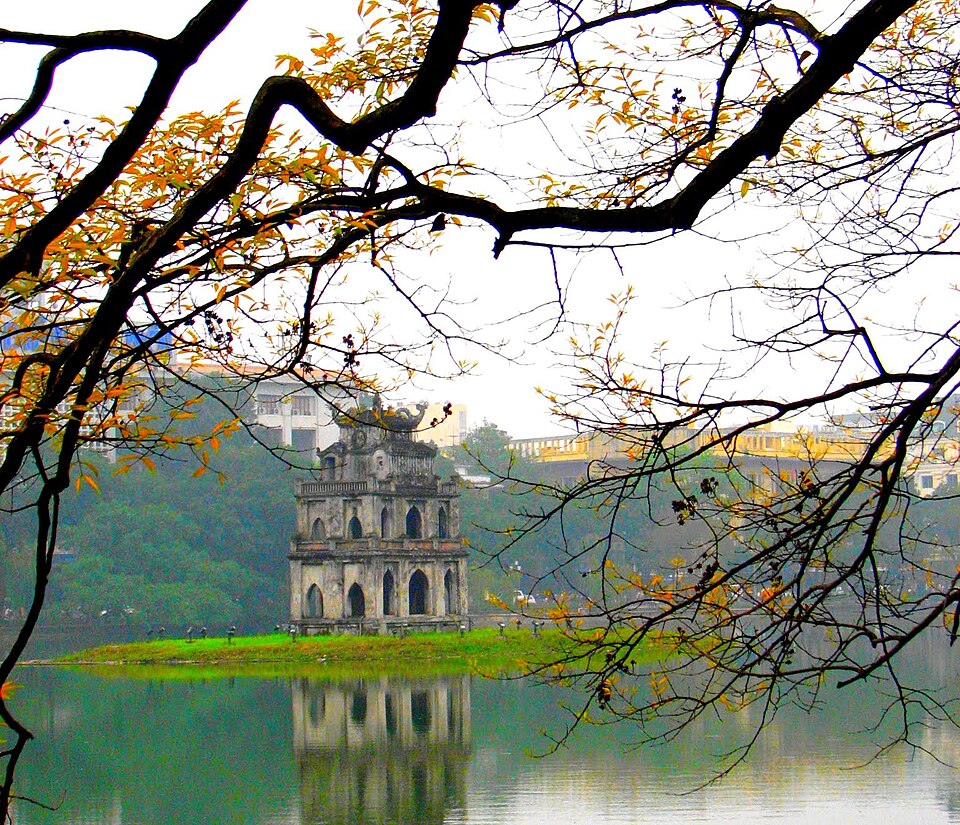
The lake at the city's centre is the heart of Hanoi. According to legend, Emperor Le Loi returned a magic sword here to a giant turtle, giving the lake its name, "Lake of the Returned Sword". Ngoc Son Temple stands on a small islet, reached by the red wooden Huc Bridge, with Turtle Tower rising from the water at its centre.

Tip: Come at 6am, when hundreds of people practise tai chi, dance and play badminton — it's the best window into Hanoi life. On weekends, from Friday evening to Sunday, the area around the lake is closed to traffic and becomes a pedestrian zone with music and games. Ngoc Son Temple charges admission, but the bridge can be photographed from outside. The lake is lit up at night.

Admission:
lake free, temple VND 50,000
Time needed:
1 h
Old Quarter

Old Quarter

Phố Cổ Hà Nội

Hoan Kiem

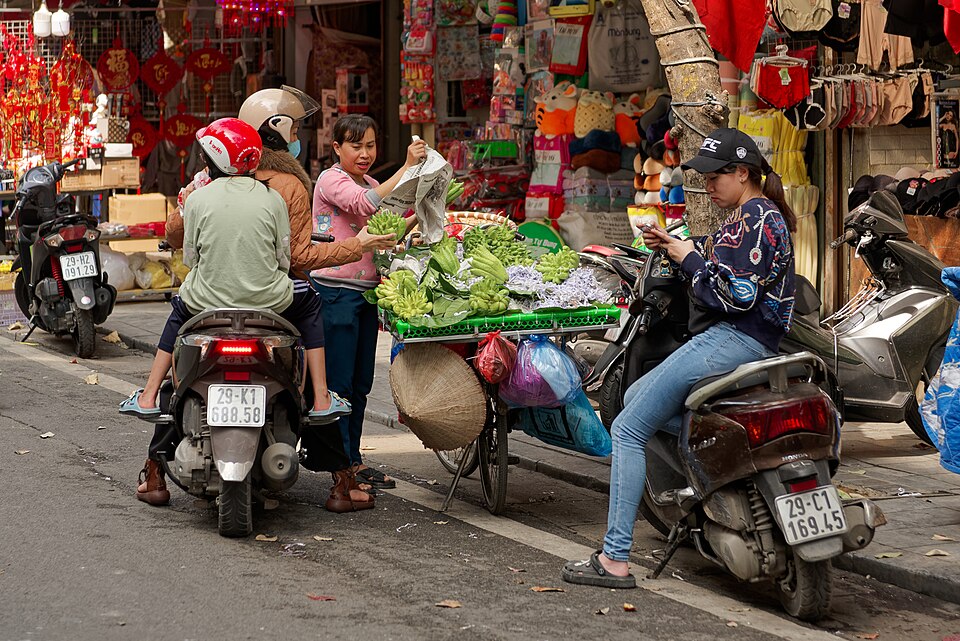
A maze of narrow streets north of the lake, where since the 13th century each street belonged to a single guild — Hang Bac to silversmiths, Hang Gai to silk merchants, Hang Ma to paper decorations. Typical are the narrow, deep tube houses, with shops on the ground floor and eateries on the pavement. This is Hanoi at its most alive.

Tip: Let yourself get lost, but stick to the crossing rule: slow and steady, and motorbikes will go around you. The house at 87 Ma May Street is open as a museum of a traditional tube house, and for a small entry fee shows how people once lived here. Ta Hien Street fills with bars and bia hơi beer on stools in the evening. The weekend night market starts on Hang Dao.

Admission:
free
Time needed:
2–3 h
Temple of Literature

Temple of Literature

Văn Miếu – Quốc Tử Giám

Dong Da

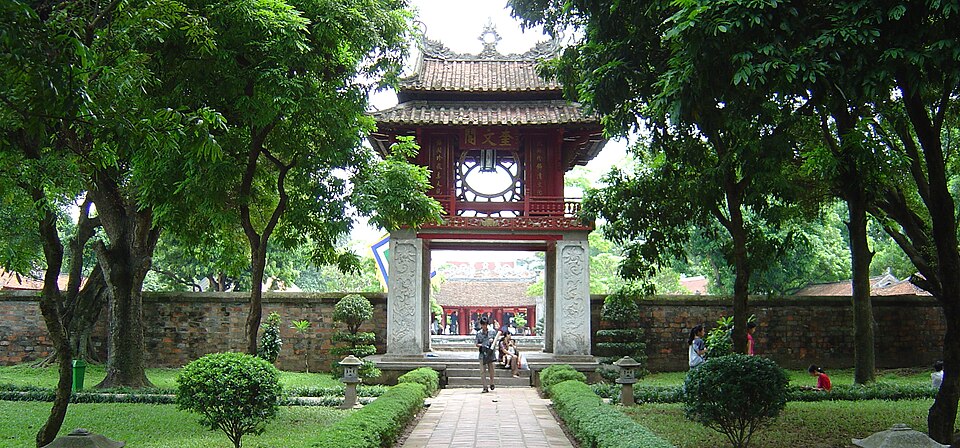
A Confucian temple from 1070 and Vietnam's first university, where officials were educated for 300 years. Across five courtyards with ponds and gates stand 82 stelae resting on stone turtles, bearing the names of successful exam graduates. It's one of the best-preserved examples of traditional Vietnamese architecture.

Tip: Come right at opening at 8am, as it later fills with school groups and students in gowns having graduation photos taken. Rubbing the turtle heads beneath the stelae is now forbidden, though students once did it for exam luck. In spring, during Tết, calligraphy markets are held here where a master will brush you a wish.

Admission:
VND 70,000
Time needed:
1 h
Ho Chi Minh Mausoleum and One Pillar Pagoda

Ho Chi Minh Mausoleum and One Pillar Pagoda

Lăng Chủ tịch Hồ Chí Minh

Ba Dinh

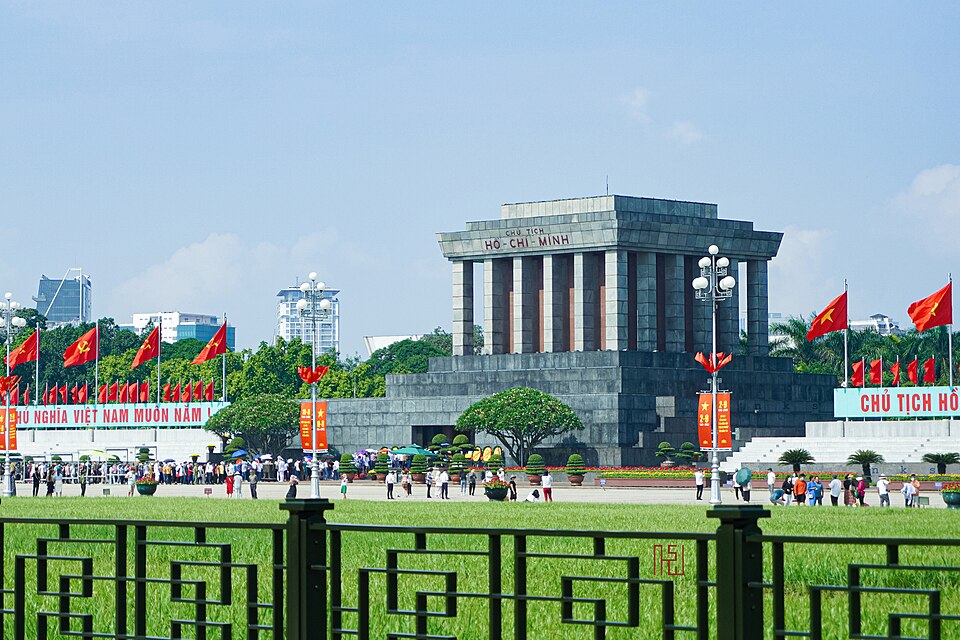
A monumental grey-marble mausoleum on Ba Dinh Square, where the embalmed body of modern Vietnam's founder is on display. The grounds include his simple stilt house, the French-era presidential palace, and the One Pillar Pagoda from 1049, standing on a single column at the centre of a small pond.

Tip: The mausoleum is only open mornings, from 7 to 11am, closed on Mondays and Fridays, and each autumn for 2 months for maintenance of the body. Covering shoulders and knees is required, and inside there's no talking, photography, or hands in pockets. Bags and phones must be left at a cloakroom. Be outside for the ceremonial changing of the guard at the start of each hour.

Admission:
mausoleum free, house and palace VND 40,000
Time needed:
1.5–2 h
Hoa Lo Prison

Hoa Lo Prison

Nhà tù Hỏa Lò

Hoan Kiem

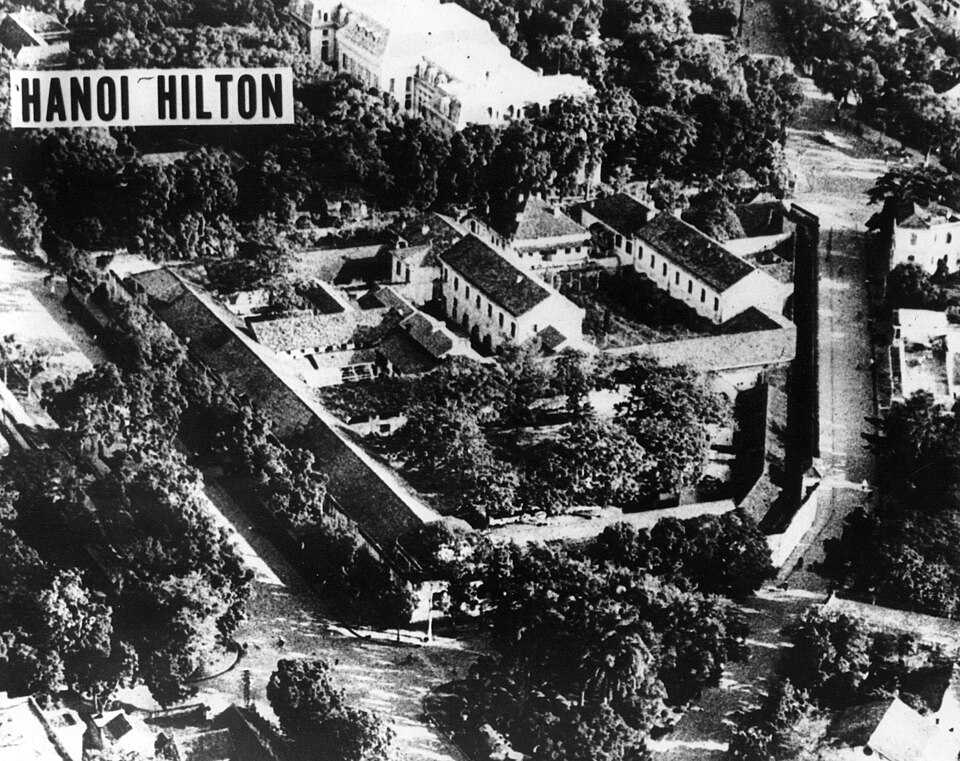
A prison built by the French in 1896 for Vietnamese political prisoners; during the Vietnam War it held American pilots, who wryly nicknamed it the "Hanoi Hilton". Only part of it survives, and the exhibits show the cells, a guillotine and prisoners' conditions under colonial rule.

Tip: The exhibits are heavily propagandistic, especially the section on American prisoners of war — take it as the Vietnamese side's perspective. Evening tours with an audio guide and lighting are held, more atmospheric and less crowded. Get the English audio guide, or much of the text will remain unintelligible.

Admission:
VND 50,000
Time needed:
1 h
Vietnam Museum of Ethnology

Vietnam Museum of Ethnology

Bảo tàng Dân tộc học Việt Nam

Cau Giay / west

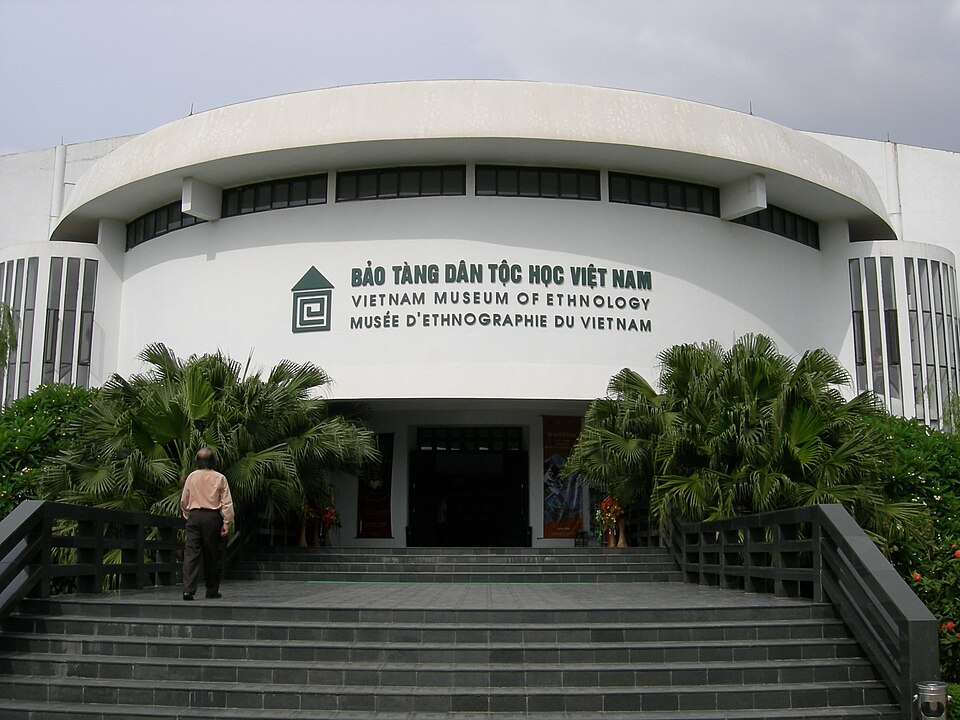
Hanoi's best museum, dedicated to Vietnam's 54 ethnic groups. Inside are costumes, tools and ritual objects; outside in the garden are genuine traditional houses transported from across the country — a long house of the Ê Đê people, a Bahnar communal house with a tall roof, or a Giarai tomb with wooden statues.

Tip: The outdoor section with the houses is the main reason to visit, and you can go inside and climb the ladders. The museum is far from the centre, a 20-minute Grab ride away. Closed on Mondays. In the afternoon, water puppets are performed in a small outdoor theatre in the garden — cheaper and less touristy than in the centre.

Admission:
VND 40,000
Time needed:
2–3 h
Tran Quoc Pagoda

Tran Quoc Pagoda

Chùa Trấn Quốc

Tay Ho

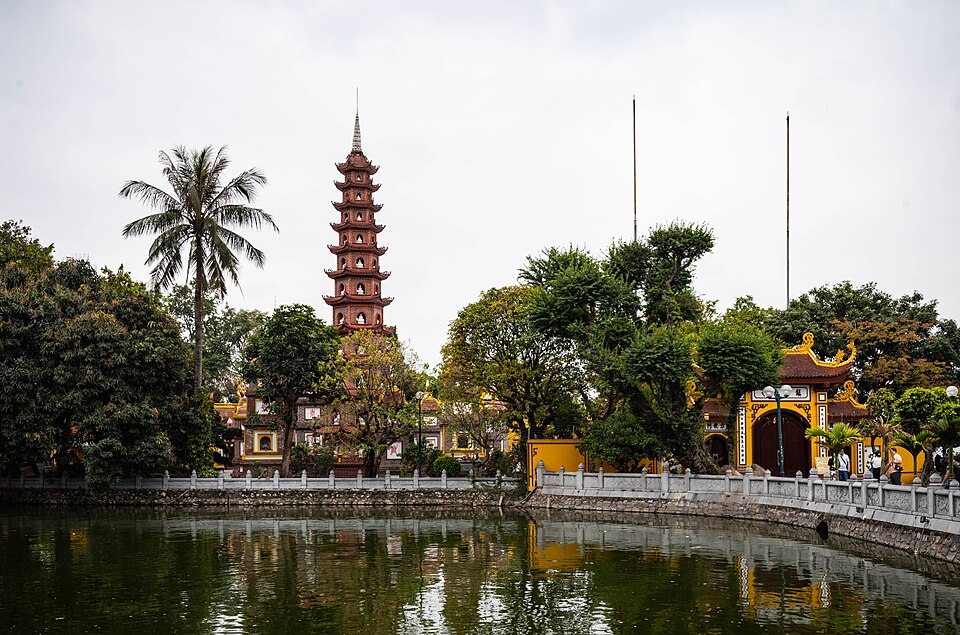
Hanoi's oldest Buddhist pagoda, founded in the 6th century. It sits on a small islet on West Lake, and its red, 11-storey tower with white Buddha statues in each window is one of the city's most beautiful sights.

Tip: It's loveliest at sunset, when the sky colours over West Lake. Thanh Nien Road runs along the lake with cafés and stalls selling bánh tôm shrimp cakes. On the first and fifteenth days of the lunar month, the pagoda fills with worshippers. Cover shoulders and knees.

Admission:
free
Time needed:
30–45 min
Long Bien Bridge

Long Bien Bridge

Cầu Long Biên

Hoan Kiem / Long Bien

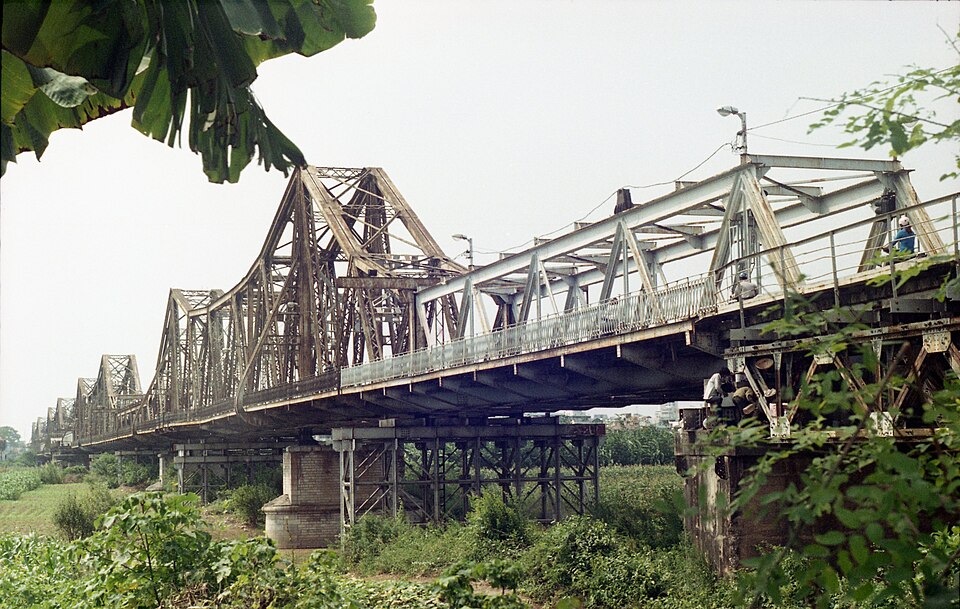
A steel railway bridge over the Red River built by the French in 1903, nearly 2.5km long. American air raids repeatedly bombed it during the war and it was always repaired; today trains, motorbikes and bicycles cross it, but not cars. You can walk across, with views of the river and banana groves on the islets.

Tip: Best is to cross the bridge at sunset along the pedestrian walkway and descend the steps to the island in the middle of the river, where vegetables are grown. Beneath the bridge is the Long Bien wholesale night market, selling fruit from midnight until morning. The well-known railway street, where trains pass between cafés, is often closed off by police — don't go without checking first.

Admission:
free
Time needed:
1 h
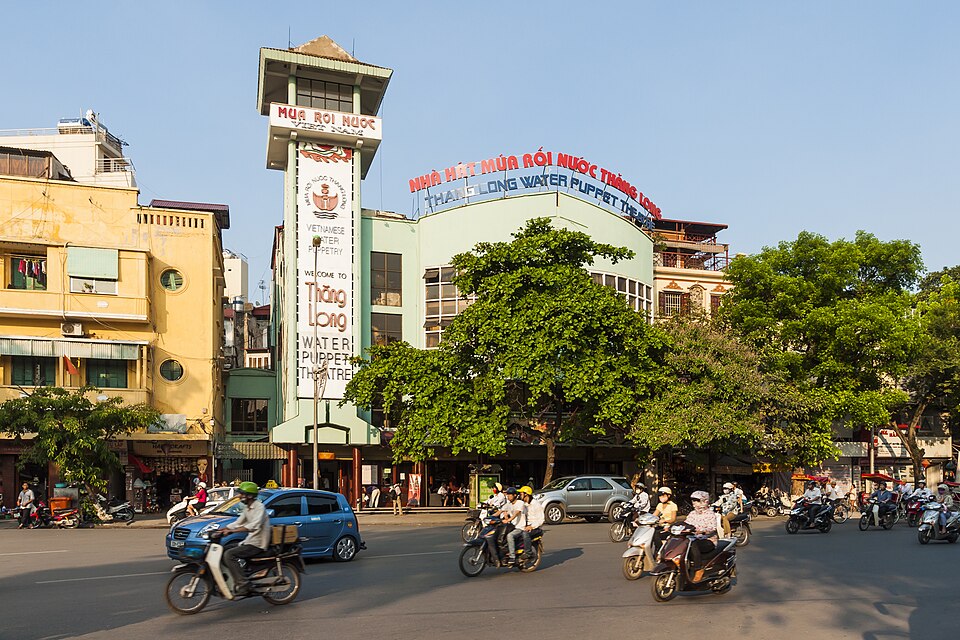
Thang Long Water Puppet Theatre

Thang Long Water Puppet Theatre

Nhà hát Múa rối Thăng Long

Hoan Kiem

Water puppetry is a 1,000-year-old tradition from the rice paddies of northern Vietnam, where puppeteers stand waist-deep in water behind a bamboo screen, controlling wooden puppets with rods beneath the surface. The show tells legends, peasant life and fishing, accompanied by a traditional orchestra and singing.

Tip: The show runs just under an hour and is performed several times a day from the afternoon onward. Buy tickets a day ahead — evening shows tend to sell out. The best seats are in the front rows at the centre, since the sides give a view behind the screen. There's an extra charge for photography. Those who'd rather skip the ticket queue in the centre can find a cheaper, smaller show at the Museum of Ethnology.

Admission:
from VND 100,000
Time needed:
1 h

Photos: Hoan Kiem Lake — Cyril Doussin from London, United Kingdom (CC BY-SA 2.0) · Old Quarter — Jakub Hałun (CC BY 4.0) · Temple of Literature — The original uploader was Chuoibk at English Wikipedia. (CC BY-SA 3.0) · Ho Chi Minh Mausoleum and One Pillar Pagoda — NKSTTSSHNVN (CC BY-SA 4.0) · Hoa Lo Prison — Wikimedia Commons (Public domain) · Vietnam Museum of Ethnology — vi:User:Rungbachduong (CC BY-SA 3.0) · Tran Quoc Pagoda — RB Photo (CC BY 4.0) · Long Bien Bridge — Phunghung (CC BY 3.0) · Thang Long Water Puppet Theatre — CEphoto, Uwe Aranas (CC BY-SA 3.0)

Where to stay

Areas and districts, matched to the kind of trip you are taking

Old Quarter

Best for: first visit, food, atmosphere

The heart of Hanoi, with cheap hotels, hostels and boutique properties in narrow buildings, and thousands of eateries and bars right outside the door. Everything essential is within walking distance, and the world's best street food starts on the pavement. It's noisy, though, well into the night and from 6am — choose a room facing a courtyard or with good windows.

French Quarter

Best for: comfort, elegance, quiet

South of Hoan Kiem Lake lie wide boulevards with colonial villas, the opera house and luxury hotels such as the Metropole, dating from 1901. It's quiet and clean, restaurants are excellent, and the Old Quarter is a 10-minute walk away. Ideal for those who want to experience Hanoi but sleep peacefully at night.

Tay Ho (West Lake)

Best for: longer stays, expats, cafés

The district around the city's largest lake, home to the expat community, with modern cafés, international restaurants and quieter streets. A cycle path runs around the lake's perimeter. It's a 15-minute taxi or Grab ride to the sights. Well suited to a longer stay or for families.

Ba Dinh

Best for: sights, government district

The government district, home to the mausoleum, the presidential palace, ministries and the Temple of Literature. The streets are wide, shaded and quiet, with fewer hotels, which tend to be business-oriented. The main sights are within walking distance, but for food and nightlife you'll need to head to the Old Quarter.

Getting around

From the airport

Hanoi is reached with one stopover via hubs such as Istanbul, Doha, Dubai or Frankfurt, with total travel time of 15–18 hours; in some seasons Vietnam Airlines flies direct from Frankfurt, Paris and London. Citizens of many European countries have been able to enter Vietnam visa-free for up to 45 days since 2025 under a temporary exemption; check before you travel to confirm it's still in effect, otherwise an e-visa is required. Noi Bai International Airport lies 30km north of the centre. Domestic flights are cheap with Vietjet and Vietnam Airlines, reaching Ho Chi Minh City in 2 hours. The Reunification Express train runs south via Hue and Da Nang over 2 days and is an experience in itself.

Hanoi Noi Bai (HAN) · 30 km

  • Bus 86 to the Old Quarter· 45–60 min· VND 45,000
  • Grab / taxi to the Old Quarter· 35–50 min· VND 250,000
  • Hotel transfer· 40 min· VND 300,000

Around town

The Old Quarter and the area around the lake are walkable, although pavements are taken up by parked motorbikes and eateries, so you'll often end up walking on the road. For longer trips, Grab or Be are best — the app shows the price upfront and a driver takes you by car or motorbike (Grab Bike), which is faster and cheaper in traffic. Only take traditional taxis from Mai Linh or G7, with a working meter. Hanoi also has its first metro lines, of limited use to tourists. Cyclos, three-wheeled pedicabs, are a tourist attraction for a short ride — agree the price and duration beforehand. Crossing the street is a skill: walk slowly and steadily, and avoid sudden movements. Renting a scooter isn't recommended without a driving licence recognised in Vietnam.

Grab / Be (car)Price shown upfront in the app; pay by card or cash. · VND 30,000
Grab Bike (motorbike)Fastest in traffic jams; a helmet is compulsory and provided. · VND 15,000
City busesCheap, but timetables are Vietnamese-only; route 86 goes to the airport. · VND 8,000
CycloA tourist ride through the Old Quarter; agree the price in advance. · VND 150,000 / h

Useful apps: Grab, Be, Google Maps, Vietnam Airlines

When to go

Unlike the south, Hanoi has 4 distinct seasons. October and November are best — dry, sunny, around 25°C and scented with milk-flower blossom in the streets. Spring, from March to April, is pleasant but often misty and drizzly. Winter, from December to February, is cool and damp at around 15°C; homes have no heating and hotels can feel chilly — bring a jumper. Summer, from May to September, is hot at over 35°C, very humid, with afternoon storms and occasional typhoons that can also affect Ha Long Bay. Avoid the week around Tết, at the turn of January and February, when the city empties out and most eateries close.

Best time

October–November, March–April

What to avoid

hot, humid summer (June–August), Tết week

MonthJanFebMarAprMayJunJulAugSepOctNovDec
Day19°20°23°27°32°33°33°32°31°29°25°22°
Night14°15°18°21°24°26°26°26°25°22°18°15°
Rainy days71115131414161714965

Food & drink

Hanoi is one of the best cities in the world for street food, and most of the best of it is eaten on low plastic stools on the pavement. Eateries specialise in a single dish they've been cooking for decades, and there's no menu to browse — you say how many portions and sit down. Morning is the time for phở, the noodle soup invented here; at midday it's bún chả, grilled pork with noodles; in the afternoon people drink egg coffee; and in the evening they head out for bia hơi draught beer with dishes to share. Hanoi's cuisine is milder and less sweet than the south's, with fewer herbs. Hygiene at eateries where food turns over quickly is usually good — eat where it's full of locals. Prices are low: a bowl of soup costs VND 40,000–60,000, a beer VND 10,000–20,000. Note that many eateries sell only until they run out and close by midday.

What to try

Phở bò

Hanoi is the birthplace of phở, and the Hanoi version is cleaner and lighter than the southern one — a clear beef-bone broth, rice noodles, slices of beef and spring onion, without a mountain of herbs. Eaten for breakfast from 6am, and the best eateries sell out by 9.

Bún chả

Grilled pork slices and patties over charcoal in a bowl of sweet-and-sour fish sauce, served with rice noodles and herbs. A Hanoi lunch that Obama and Anthony Bourdain famously ate in the Old Quarter — the eatery has sold a "combo Obama" ever since.

Chả cá Lã Vọng

Chunks of fish marinated in turmeric and galangal, fried at your table with dill and spring onion, served with noodles and peanuts. The dish an entire street in the Old Quarter is named after.

Bánh cuốn

Thin steamed rice pancakes filled with minced pork and mushrooms, topped with fried shallots. A breakfast made by women steaming the batter over a pot of boiling water right in front of you.

Cà phê trứng

Egg coffee — strong Vietnamese coffee topped with a cream of egg yolks whisked with condensed milk. It was created in the 1940s when milk was scarce, and tastes like liquid tiramisu.

Bún thang

A delicate soup with thin noodles, shredded omelette, chicken and pork sausage in a clear chicken broth. One of the most labour-intensive Hanoi dishes, once served to guests of honour.

Bánh mì

A baguette from the French era filled with pâté, meat, pickled vegetables and coriander. The best come from cart vendors and cost a fraction of a café's price.

Bia hơi

Freshly brewed draught beer with no preservatives, delivered daily and drunk on low stools by the street. It costs a couple of thousand dong and is the cheapest beer in the world.

What it costs

Phở or bún chả at an eatery

VND 40,000–70,000

Bánh mì from a stall

VND 20,000–35,000

Egg coffee

VND 35,000–60,000

Bia hơi beer

VND 10,000–20,000

Dinner at a restaurant

VND 200,000–400,000

Grab ride around the centre

VND 30,000–70,000

Water puppet theatre

from VND 100,000

Night in a 3-star hotel for 2

VND 600,000–1,200,000

Indicative prices that change over time — treat them as a guide, not a price list.

Practical information

SocketsAtwo flat pins (US/JP)CEuroplug, two round pinsFSchuko
Voltage220V / 50Hz
Tap waterDo not drink tap water — Tap water isn't drinkable — use bottled water even for brushing your teeth. A bottle costs around VND 10,000 and hotels refill it for free. Ice in drinks is safe, made centrally, and identifiable by its tube shape with a hole in the middle. Iced coffee with condensed milk is drunk everywhere and is among the best in the world.
TippingTipping isn't a Vietnamese tradition and isn't given at cheap eateries. At tourist restaurants and hotels, bills are rounded up or 5–10% is left; guides and drivers on a full-day trip are typically given VND 100,000–200,000. Watch out for the zeros — the 20,000 and 500,000 dong notes are a similar colour and it's the most common payment mistake.
Driving on theright
SafetyIn Vietnam's big cities, violent crime against tourists is rare; the typical problem is a snatch-and-grab, where a motorbike rider pulls a phone or bag from your hand while riding by — don't hold your phone near the edge of the pavement by the road, and carry your bag on the side away from traffic. Cross the street at a slow, steady pace; motorbikes will only go around you if you're predictable. Take taxis via Grab or from the branded operators Mai Linh and Vinasun — unmarked cars at the airport and station tend to overcharge. Check the dong exchange rate, as the zeros on banknotes are easily confused. The police emergency line is 113, the ambulance is 115.
Opening hoursThe city rises with the dawn: markets and street kitchens run from 6am, and the best phở sells out by 9. Shops open at 8 and close between 9 and 10pm, with smaller businesses taking a midday break. Museums close at 5, some also over lunch; the mausoleum and government offices are closed on Mondays. During the Tết holiday, at the turn of January and February, most shops and restaurants close for a week, and many for a further week after that.
Customs & etiquetteGive and receive things with both hands, especially with older people. Cover shoulders and knees when visiting temples and pagodas, and remove your shoes. Don't raise your voice or show irritation — a public argument means a loss of face for both sides. Bargaining is normal and expected at markets, but not in fixed-price shops. If you photograph a woman carrying baskets on a shoulder pole, it counts as a paid service — agree the price beforehand.
A few local wordsHello — Xin chàoThank you — Cảm ơnHow much does it cost? — Bao nhiêu tiền?The bill, please — Tính tiềnDelicious — Ngon quá

How to plan your days

1 day

Hanoi in 1 day

  1. 16am: Hoan Kiem Lake with locals exercising, then phở for breakfast.
  2. 2Ho Chi Minh Mausoleum and the One Pillar Pagoda.
  3. 3Temple of Literature and bún chả for lunch.
  4. 4Afternoon in the Old Quarter with egg coffee.
  5. 5Evening water puppets and bia hơi beer on Ta Hien.

2 days

2 days in Hanoi

  1. 1Day 1: Hoan Kiem Lake, the Old Quarter, Hoa Lo Prison.
  2. 2Day 1 evening: water puppets and a food-crawl.
  3. 3Day 2: the mausoleum, Temple of Literature, Museum of Ethnology.
  4. 4Day 2 afternoon: Tran Quoc Pagoda on West Lake.
  5. 5Day 2 evening: Long Bien Bridge at sunset.

3 days

3 days with Ninh Binh

  1. 1Day 1: the lake, the Old Quarter and water puppets.
  2. 2Day 2: a full-day trip to Ninh Binh and Tràng An.
  3. 3Day 3: the mausoleum and Temple of Literature.
  4. 4Day 3 afternoon: Museum of Ethnology and West Lake.
  5. 5Day 3 evening: Long Bien Bridge and dinner in the French Quarter.

Day trips

Ha Long Bay

170 km · 2.5 h by motorway

Nearly 2,000 limestone islets rising from an emerald sea, a UNESCO World Heritage site. Day-trip boat tours with lunch and a visit to a karst cave are on offer, but it's better to spend a night aboard — the morning mist between the cliffs is the loveliest part. The neighbouring Lan Ha and Bái Tử Long bays are calmer and less crowded. Boats don't sail during typhoons.

Ninh Binh and Tràng An

95 km · 2 h by car or train

Karst towers rising above rice paddies, often called the "Ha Long Bay on land". At Tràng An, women row bamboo boats with their feet through caves beneath the cliffs and past temples. A flight of 500 steps leads up to the Hang Múa viewpoint over the valley. You can join a guided tour, or take the train and hire a bike once in Ninh Binh.

Perfume Pagoda

60 km · 1.5 h by car + boat

A complex of Buddhist temples and shrines in the karst mountains, reached by an hour-long boat ride along the river between rice paddies, then on foot or by cable car up to Hương Tích Cave. From January to March, during the festival after Tết, hundreds of thousands of pilgrims come and it gets crowded; outside the festival it's a peaceful trip into nature.

Frequently asked questions

Do I need a visa for Vietnam?+

Since 2025, citizens of several European countries have been able to enter Vietnam visa-free for up to 45 days under a temporary exemption. Check official sources before you travel to confirm it's still in effect. For a longer stay, you can apply online for an e-visa valid for up to 90 days, which takes a few working days to process.

How many days do you need for Hanoi?+

2–3 days are enough for the city itself. Most people add a trip to Ha Long Bay with an overnight boat stay and a day in Ninh Binh, making 5 days in northern Vietnam in total. Add the mountains of Sa Pa or Ha Giang and it becomes a week to 10 days.

How do you cross the street in Hanoi?+

Slowly, steadily and predictably. Motorbikes flow constantly, but they'll go around pedestrians who keep a steady pace — don't stop halfway and don't run. Watch the driver, not raise your hand. If you're unsure, walk alongside a local who's crossing. Traffic lights help on the main boulevards, but motorbikes don't always heed them.

Is it safe to eat street food?+

In most cases, yes, as long as you eat where locals crowd and the food turns over quickly. Soups and grilled dishes are hot and safe. Be more cautious with raw herbs and salads in your first few days, and with ice at small rural stalls — in Hanoi itself, ice is made centrally and is safe.

Is a one-day trip to Ha Long Bay worth it?+

You can, but you'll spend 5 hours on a bus and 4 on a boat in the most crowded part of the bay. It's better to spend 1 night on board, reaching the more remote coves where evenings are quiet and mist drifts between the cliffs in the morning. Lan Ha Bay, reached from Cat Ba Island, is a calmer alternative. Choose boats with good reviews — cheap boats tend to be poorly maintained.

How do you pay in Vietnam?+

In cash, in Vietnamese dong, especially at eateries, markets and small shops. Hotels, better restaurants and Grab accept cards. ATMs dispense 2–5 million dong at a time, with a fee. Watch the zeros — the 20,000 and 500,000 notes are a similar blue and mixing them up is the most common tourist mistake.

When's the best weather in Hanoi?+

Best is autumn, from October to November — dry, sunny and around 25°C. Spring, from March to April, is second best. Summer is hot and very humid, with storms. Winter, from December to February, is cool at around 15°C, grey and damp — nothing like the idea of tropical Asia, so pack a jumper.

Is Hanoi safe?+

Yes, Hanoi is safe and violent crime against tourists is rare. The most common issues are phone and bag snatching from passing motorbikes, overpriced taxis without a meter, and vendors charging tourists more. Don't hold your phone near the edge of the road, use Grab, and check prices in advance.

Visa Requirements

Check the latest visa requirements for entering this country. Some nationalities may need to apply for a visa or e-visa before travel.

Check visa requirements

Language

Vietnamese

Currency

VND

Timezone

GMT+7

Dial Code

+84

Population

99.5M

Area

331,212 km²

Voltage

220V / 50Hz

Driving Side

Right

Top Hotels in Hanoi

Live prices from 500+ properties

Loading hotels...

More destinations in Vietnam

Planning a trip to Hanoi?

Compare hundreds of hotels, find the best price, and book with free cancellation on TravelManiac.