Hotels in Nha Trang

Vietnam's driest coastline, with islands within easy reach

Nha Trang

LanguageEnglish
CurrencyVND
TimezoneGMT+7
Temperature24-34 °C
Dial Code+84
Population99.5M
Area331,212 km²
SocketsType A / Type C / Type F
Tap waterNot drinkable

Discover Nha Trang

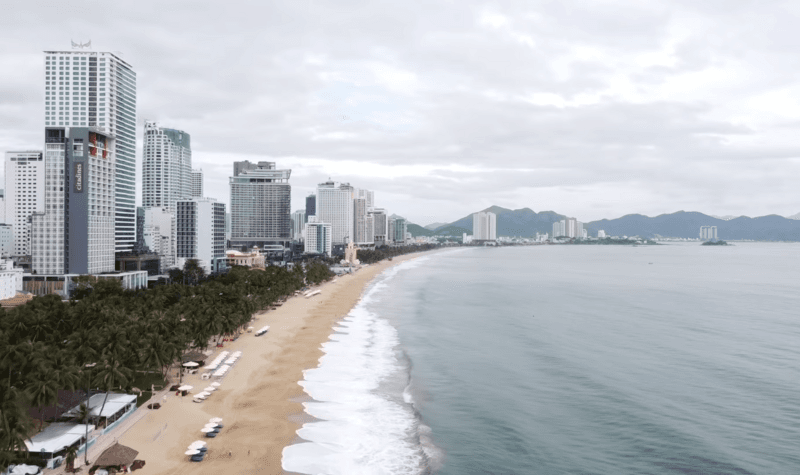
Nha Trang is Vietnam's leading beach resort, sitting in the spot with the lowest rainfall on the whole coast — the mountains behind the city catch most of the monsoon clouds, so rain mostly falls from October to December while the rest of the year stays dry. A six-kilometer beach lined with palm trees and a promenade runs the entire eastern side of the city, backed by a row of hotels and skyscrapers. Nineteen islands sit in the bay, visited for snorkeling, one of which holds the Vinpearl entertainment complex with one of the longest cable cars over water in the world. Above the city stand the older layers of history: the eighth-century Cham towers of Po Nagar, and a giant white Buddha on a hill above Long Son Pagoda. Nha Trang is also an informal Russian and Korean destination, visible in the restaurant scene and the signage.

What to see

The places worth your time in Nha Trang, and what to expect at each

Po Nagar Cham Towers

Po Nagar Cham Towers

2 km north

Four brick towers on a hill above the mouth of the Cai River, built between the eighth and eleventh centuries by the Champa kingdom. Dedicated to the goddess Po Nagar, they remain, unusually among Cham structures, in active religious use — visited by both Vietnamese and the Cham people who still live in the area.

Tip: Borrow a robe at the entrance before entering the main tower — shorts aren't allowed inside the sanctuary. Come early in the morning, when it's cooler and the bricks haven't yet started radiating heat. You'll walk barefoot on hot paving, so be prepared.

Admission:
from 30,000 VND
Time needed:
1.5 h
Long Son Pagoda

Long Son Pagoda

downtown, west

A late-nineteenth-century Buddhist monastery, above which sits a fourteen-meter white Buddha statue on a hill, built in 1963 in memory of the monks who self-immolated in protest against the persecution of Buddhists. Relief portraits of them ring the statue's base.

Tip: At the entrance, people posing as monks may approach selling amulets or collecting mandatory donations — genuine monks don't ask for money on the street. One hundred fifty steps lead up, offering a view over the whole city.

Admission:
free
Time needed:
1 h
Nha Trang Beach

Nha Trang Beach

Trần Phú, citywide

A six-kilometer sandy beach lining the whole city, with a promenade, palm trees and a row of hotels behind it. The entry into the water is gentle, lifeguards are on duty, and from May to September the sea is often as calm as a pool.

Tip: Public sections with free showers are by the Alexandre Yersin statue and Trần Phú Park; elsewhere the beach is run by hotels charging for sunbeds. From October to December the northeast monsoon whips up waves and swimming is often banned.

Admission:
free, sunbeds from 100,000 VND
Time needed:
full day
Hon Mun and Hon Tam islands

Hon Mun and Hon Tam islands

by boat from the bay

A protected marine reserve in the bay with the best underwater visibility on Vietnam's mainland coast. Around Hon Mun are coral reefs with nearly three hundred coral species; Hon Tam is closer and has a developed beach with water sports.

Tip: Snorkeling trips come in two flavors: cheap party boats with loud music and a floating bar, and quiet boats aimed at divers. The price difference is small, the experience difference huge — ask how many people the boat carries.

Admission:
trip from 500,000 VND
Time needed:
full day
Vinpearl and the sea cable car

Vinpearl and the sea cable car

Hon Tre island, by cable car

An entertainment complex on Hon Tre island, with a water park, aquarium and roller coasters, reached by a cable car over three kilometers long that crosses the sea on Eiffel-tower-shaped pylons. It's one of the longest over-water cable cars in the world.

Tip: The ticket covers the cable car and all the attractions and is valid all day, so it pays to arrive in the morning and stay. On weekdays the park is half-empty; on weekends Vietnamese visitors come from across the country and lines get long.

Admission:
from 880,000 VND
Time needed:
full day
Thap Ba mud baths

Thap Ba mud baths

3 km northwest

A Vietnamese specialty: soaking in a tub of warm mineral mud, followed by a rinse and a hot mineral pool. The springs near the Cham towers have been used for decades, and this is the most quintessential experience to have in Nha Trang.

Tip: Let the mud dry on your skin in the sun for about ten minutes before rinsing it off — otherwise you miss the point of the treatment. Wear old swimwear, since the mud stains permanently.

Admission:
from 350,000 VND
Time needed:
3 h
Christ the King Cathedral

Christ the King Cathedral

downtown, near the station

A stone neo-Gothic cathedral built by the French between 1928 and 1933 on a rocky outcrop in the middle of the city. Its windows are stained glass, and urns holding remains of people whose cemetery had to make way for the railway station are set into the walls.

Tip: Admission is free outside service times, which are usually early morning and early evening. A ramp leads up to the cathedral from the main road; the best light on the stained glass is from inside in the morning.

Admission:
free
Time needed:
45 min
Ba Ho Waterfalls

Ba Ho Waterfalls

25 km north

Three pools stacked in a forest twenty-five kilometers north of the city, linked by rapids running over granite boulders. Reaching the third and prettiest pool means scrambling over rocks, sometimes on all fours; swimming is possible in all three.

Tip: The boulders are extremely slippery when wet and are the most common site of injuries in the area — sandals won't cut it; you need shoes with non-slip soles. Don't come here after heavy rain, since the water level rises fast.

Admission:
from 50,000 VND
Time needed:
half a day
Dam Market

Dam Market

downtown, north

The city's main market, in a circular building selling fruit, dried seafood, coffee and fabric. The surrounding lanes hold the food section, with local noodle soups — the cheapest meal in the city.

Tip: The local specialty here is bún cá, a noodle soup with fish dumplings — look for the stall where Vietnamese people are eating, not the one with an English sign. Prices aren't posted and tend to be inflated for foreigners, so ask beforehand.

Admission:
free
Time needed:
2 h

Photos: Po Nagar Cham Towers — Tervlugt (CC BY 3.0) · Long Son Pagoda — Nonvolatil (CC BY-SA 3.0) · Nha Trang Beach — Kaz Ish (CC BY-SA 3.0) · Hon Mun and Hon Tam islands — Nguyen Hung Vu (CC BY 2.0) · Vinpearl and the sea cable car — Андрей Бобровский (CC BY 3.0) · Thap Ba mud baths — Unattributed author of the Nguyễn Lords period. (Public domain) · Christ the King Cathedral — Hoangvantoanajc (CC BY-SA 3.0) · Ba Ho Waterfalls — phgaillard2001 (CC BY-SA 2.0) · Dam Market — Christophe95 (CC BY-SA 4.0)

Where to stay

Areas and districts, matched to the kind of trip you are taking

Southern coast and Trần Phú

Best for: a first stay and the beach

The main hotel strip along the promenade, holding most of the accommodation, restaurants and bars. The beach is across the street, and downtown is within walking distance. The busiest and priciest part of the city, but you won't need transport for anything.

Downtown around Dam Market

Best for: food and low prices

The northern part of the city, with the market, the Cham towers in view, and the cheapest, best food. Accommodation here is noticeably cheaper than by the beach, and it's the neighborhood where the city really lives. It's a ten-minute taxi ride to the sea.

Bãi Dài (Long Beach)

Best for: resorts and quiet

Twenty kilometers south toward the airport lies a long, empty beach with large resorts and golf. Total calm and the best sand in the area, but there's nothing outside the resort compounds. The best choice if you want a resort and don't care about the city.

Hon Tre and the islands

Best for: the entertainment complex and private beaches

An island facing the city with the Vinpearl complex, hotels and private beaches, reached by the sea cable car or by boat. Staying here means being inside a closed complex — getting to the city requires the cable car, and the last one leaves in the evening.

Getting around

From the airport

Cam Ranh Airport lies thirty-five kilometers south of the city, on the site of a former US military base. Direct flights arrive from Asian hubs; from Prague it takes roughly eighteen hours with two connections. An airport bus runs along the coastal road into the center, and Grab is also available, taking about forty minutes. Nha Trang is also a stop on the coastal train line from Hanoi to Ho Chi Minh City; an overnight service from Saigon takes eight hours.

Cam Ranh International (CXR) · 35 km

  • Airport bus to the center· 50 min· 70,000 VND
  • Grab to the center· 40 min· 350,000 VND
  • Hotel transfer· 40 min· included with stay
  • Taxi to Bãi Dài· 15 min· 150,000 VND

Around town

The city is elongated along the beach, and the main street, Trần Phú, runs its whole length, so most things are reachable on foot or with a short ride. Grab covers both cars and motorbikes and is the cheapest option; taxis hailed from a stand tend to be pricier, and some drivers tamper with the meter, so the app is the safer bet. Boats to the islands leave from Cầu Đá harbor in the south of the city, or take the cable car to Hon Tre. Scooters can be rented, but the same licensing restriction applies as everywhere in Vietnam.

Grab (car and motorbike)The cheapest way around town; a motorbike costs roughly half the price of a car. · 25,000 VND
Sea cable car to Hon TreOver three kilometers above the bay; the fare is usually bundled with Vinpearl admission. · included with ticket
Island tour boatFrom Cầu Đá harbor; ask how many people the boat carries and whether it has music and a bar. · 500,000 VND
Rented scooterCheap, but illegal without a recognized international license, and uninsured without one. · 120,000 VND / day

Useful apps: Grab, Be, Google Maps, Vietnam Airlines

When to go

Nha Trang has the driest climate on the Vietnamese coast, since the mountains behind the city catch most of the monsoon clouds. The season runs from February to September, peaking March through June, when it's dry, the sea is calm, and underwater visibility is best. From October to December, the rainy season arrives with the northeast monsoon — the sea turns rough, island trips are cancelled, and swimming is often banned. January is a transitional month with a pleasant twenty-seven degrees.

Best time

March through June

What to avoid

October through December for rain and rough seas

MonthJanFebMarAprMayJunJulAugSepOctNovDec
Day27°28°29°31°32°32°32°32°31°30°29°27°
Night22°22°23°25°26°26°26°26°25°24°23°22°
Rainy days6223777810151612
Sea25°25°26°28°29°29°29°29°29°28°27°26°

Food & drink

Nha Trang is a fishing town, and its seafood is cheaper and fresher here than elsewhere in Vietnam — it's picked live from a tank and priced by weight, so have the per-kilo price written down beforehand. The local specialty is bún cá, a noodle soup with fish dumplings, and nem nướng Ninh Hòa, grilled pork balls wrapped in rice paper with herbs. The best food is around Dam Market and in the lanes behind the promenade, not at the restaurants with Russian and Korean menus on the main strip.

What to try

Nem lụi

Ground pork on a lemongrass skewer, grilled over charcoal, wrapped in rice paper with herbs and dipped in a thick peanut sauce. A central Vietnamese dish assembled at the table.

Bánh xèo

A crispy turmeric rice pancake filled with shrimp and bean sprouts, broken up, wrapped in lettuce with herbs and dipped in fish sauce. The name means "sizzling," after the sound it makes while frying.

Bánh mì

A baguette from the French colonial era filled with pâté, meat, pickled vegetables and cilantro. The best come from bicycle carts and cost a fraction of a café price.

Phở

A broth simmered overnight from beef bones, star anise and cinnamon, with rice noodles and slices of meat. Eaten at breakfast, not dinner, with fresh herbs and bean sprouts added yourself at the table.

Gỏi cuốn

Fresh, unfried rice-paper rolls with shrimp, noodles and herbs. A light, safe choice in the heat; the dip is usually peanut or fish sauce.

Mì Quảng

Wide turmeric-colored noodles in a small amount of intense broth, with shrimp, pork, peanuts and crispy rice crackers. A central Vietnamese specialty rarely done well elsewhere in the country.

Cà phê sữa đá

Strong coffee dripping through a metal filter into sweetened condensed milk, then poured over ice. Vietnam is the world's second-largest coffee producer, and this is how it's drunk here.

Bia hơi

Freshly brewed draft beer without preservatives, delivered daily and drunk on low stools by the street. It costs a few thousand dong and is one of the cheapest beers in the world.

What it costs

Bún cá noodle soup

35,000–50,000 VND

Lunch at a diner near the market

60,000–100,000 VND

Seafood dinner

300,000–600,000 VND per person

Draft beer (bia hơi)

10,000–20,000 VND

Thap Ba mud baths

from 350,000 VND

Full-day island trip

from 500,000 VND

Vinpearl admission

from 880,000 VND

Night at a 4-star hotel

1,000,000–2,200,000 VND

Indicative prices that change over time — treat them as a guide, not a price list.

Practical information

SocketsAtwo flat pins (US/JP)CEuroplug, two round pinsFSchuko
Voltage220V / 50Hz
Tap waterDo not drink tap water — Tap water isn't safe to drink; use bottled water even for brushing your teeth. A bottle costs around ten thousand dong, and hotels refill it for free. Ice in drinks is safe — it's made centrally and identifiable by its tube shape with a hole in the middle. Iced coffee with condensed milk is drunk everywhere and ranks among the best in the world.
TippingTipping isn't a Vietnamese tradition and isn't given at cheap diners. At tourist restaurants and hotels, round up or leave five to ten percent; guides and drivers on a full-day trip get one hundred to two hundred thousand dong. Watch the zeros: the twenty-thousand and five-hundred-thousand dong notes are a similar color, and mixing them up is the most common payment mistake.
Driving on theright
SafetyThe most real risk in Vietnam is traffic. Traffic is dense, motorbikes ride on sidewalks too, and crossing the street means walking at a slow, steady pace without stopping, so drivers can go around you — stopping mid-crossing is what causes collisions. Riding a scooter requires a Vietnamese or internationally recognized driving license; without one, riding is illegal and insurance won't pay out, which matters given the local accident rate. Crime is otherwise low; in larger cities, bag and phone snatching by a passing motorbike does occur. In the sea, watch for rip currents from October to December, when red flags go up on central Vietnam's beaches.
Opening hoursVietnam wakes up early: markets run from five in the morning, and the best food is gone by nine. Shops open at eight and close around nine in the evening, and many smaller businesses take a midday break from noon to two. Pho restaurants mainly serve in the morning and late morning; evenings are for street-side tables. During Tết, around the turn of January and February, nearly the whole country closes for a week, including restaurants — it's the worst possible time to travel.
Customs & etiquetteGive and receive with both hands, especially with older people. Cover shoulders and knees when entering temples and pagodas, and remove your shoes. Don't raise your voice or show irritation — a public argument means loss of face for both sides. Bargaining is normal and expected at markets, but not at fixed-price shops. If you photograph a woman carrying a shoulder pole and baskets, it counts as a paid service — agree on the price beforehand.
A few local wordsHello — Xin chàoThank you — Cảm ơnHow much does it cost? — Bao nhiêu tiền?The bill, please — Tính tiềnDelicious — Ngon quá

How to plan your days

1 day

A day in Nha Trang

  1. 1Early morning at the Po Nagar Cham towers, before the bricks heat up.
  2. 2Breakfast: bún cá near Dam Market.
  3. 3Late morning at Long Son Pagoda and the white Buddha above the city.
  4. 4Afternoon at the beach, swimming from the public stretch of the promenade.
  5. 5Evening: Thap Ba mud baths and a seafood dinner.

2 days

Two days including the islands

  1. 1Day one as above.
  2. 2Morning: boat from Cầu Đá harbor to Hon Mun.
  3. 3Snorkeling over the coral reefs in the marine reserve.
  4. 4Afternoon swimming at Hon Tam, back by early evening.
  5. 5Dinner in a lane behind the promenade, not on the main strip.

3 days

Three days including the inland trip

  1. 1The first two days as above.
  2. 2Morning at Ba Ho Waterfalls, swimming in the pools.
  3. 3Lunch on the way back in a coastal village.
  4. 4Afternoon: cable car to Hon Tre for the Vinpearl complex.
  5. 5If time allows, an extra day trip up to mountain town Da Lat.

Day trips

Da Lat

135 km · 3 h 30 min by car

A mountain town at fifteen hundred meters that the French built as a retreat from the heat — around eighteen degrees, with pine forests, villas and a lake. Coffee, strawberries and flowers are grown here. It's the fastest way to escape the tropics, but the trip is long for a single day.

Doc Let and Ninh Hoa

50 km · 1 h by car

A white-sand beach with unusually shallow water fifty kilometers north, where you can walk a hundred meters from shore and still be waist-deep. It's noticeably emptier than the city beach. On the way lies Ninh Hoa, home of nem nướng, grilled pork balls wrapped in rice paper.

Vinh Hy Bay and Ninh Chu

80 km · 1 h 45 min by car

One of the prettiest bays on the Vietnamese coast, reached by a coastal road running between mountains and sea. The surrounding area is Vietnam's driest region, with vineyards, grape fields, and the Po Klong Garai Cham towers near Phan Rang.

Frequently asked questions

When should I visit Nha Trang?+

From February to September, peaking March through June, when it's dry and the sea is calm. Nha Trang has the driest climate on the Vietnamese coast, since the mountains behind the city catch most of the monsoon clouds. October through December is rainy, the sea gets rough, and island trips are cancelled.

Is a trip to the islands worth it?+

Yes, Hon Mun has the best underwater visibility on Vietnam's mainland coast and is a protected marine reserve. The key is choosing the right boat: cheap party boats with loud music and a floating bar are a completely different experience from quiet boats aimed at divers. Ask about capacity.

What are the mud baths?+

A Vietnamese specialty: soaking in a tub of warm mineral mud, followed by a rinse and a hot mineral pool. The springs by the Cham towers have been used for decades. Let the mud dry on your skin for ten minutes before washing it off — wear old swimwear, since it stains.

Is Nha Trang suitable for families with children?+

Yes. The beach has a gentle slope and lifeguards, Hon Tre island has the Vinpearl entertainment complex with a water park and aquarium, reached by a cable car over the sea that's an attraction in itself. Doc Let beach north of the city is unusually shallow and ideal for small children.

Why are there Russian and Korean signs in Nha Trang?+

Nha Trang has long been a popular destination for Russian tourists and, in recent years, Korean ones, who arrive on direct charter flights. It shows in the restaurant scene, the menus and the signage. Vietnamese food is found behind the promenade and around Dam Market.

How do I get from the airport into town?+

The airport bus runs along the coastal road into the city center in about fifty minutes and costs a fraction of a taxi fare. Grab is more comfortable and takes forty minutes. Cam Ranh Airport is thirty-five kilometers south and lies close to the resort beach of Bãi Dài, just a quarter hour away.

Where's the best place to eat in Nha Trang?+

Around Dam Market and in the lanes behind the promenade, where food is cooked for Vietnamese diners. The local specialty is bún cá, a noodle soup with fish dumplings, and nem nướng from nearby Ninh Hoa. Seafood is picked from a tank and priced by weight — have the per-kilo price written down.

Can you take a trip to the mountains from Nha Trang?+

Yes, Da Lat is three and a half hours away by car, with temperatures around eighteen degrees, pine forests and French villas. It's a long trip for a single day, so it's worth staying overnight. Closer by is Vinh Hy Bay, with a coastal road running between mountains and sea, doable in half a day.

Visa Requirements

Check the latest visa requirements for entering this country. Some nationalities may need to apply for a visa or e-visa before travel.

Check visa requirements

Language

Vietnamese

Currency

VND

Timezone

GMT+7

Dial Code

+84

Population

99.5M

Area

331,212 km²

Voltage

220V / 50Hz

Driving Side

Right

Top Hotels in Nha Trang

Live prices from 500+ properties

Loading hotels...

More destinations in Vietnam

Planning a trip to Nha Trang?

Compare hundreds of hotels, find the best price, and book with free cancellation on TravelManiac.