Hotels in Isla Margarita

The Pearl Island in Venezuela's Caribbean

Isla Margarita

LanguageSpanish
CurrencyVES
TimezoneAmerica/Caracas
Temperature22-32 °C
Dial Code+58
Population28.4M
Area916,445 km²
SocketsType A / Type B
Tap waterNot drinkable

Discover Isla Margarita

Isla Margarita is Venezuela's largest island, lying 40 km off the mainland, and since the 1960s it has been Latin America's most popular Caribbean resort destination — a duty-free zone, long beaches and prices no one else could match. The economic crisis after 2014 changed that world fundamentally: many hotels closed, direct charter flights from Europe ended, and today the island lives mainly on domestic visitors. What hasn't changed is the geography. The island is made up of 2 parts joined by a sandy isthmus, with the mangrove lagoon of La Restinga lying between them; the eastern half is mountainous and populated, while the western Macanao Peninsula is a semi-desert of cacti and empty beaches. The coastline has more than 70 beaches, ranging from calm bays to surf breaks, and the wind at El Yaque blows so reliably that kitesurfers travel here from across the continent. The name 'Pearl Island' comes from the era when the Spanish harvested pearls here; the forts built in the 16th and 17th centuries were raised against the pirates who coveted them. Always check the current advice from your foreign ministry before travelling — Venezuela is a country where travel is currently advised against.

What to see

The places worth your time in Isla Margarita, and what to expect at each

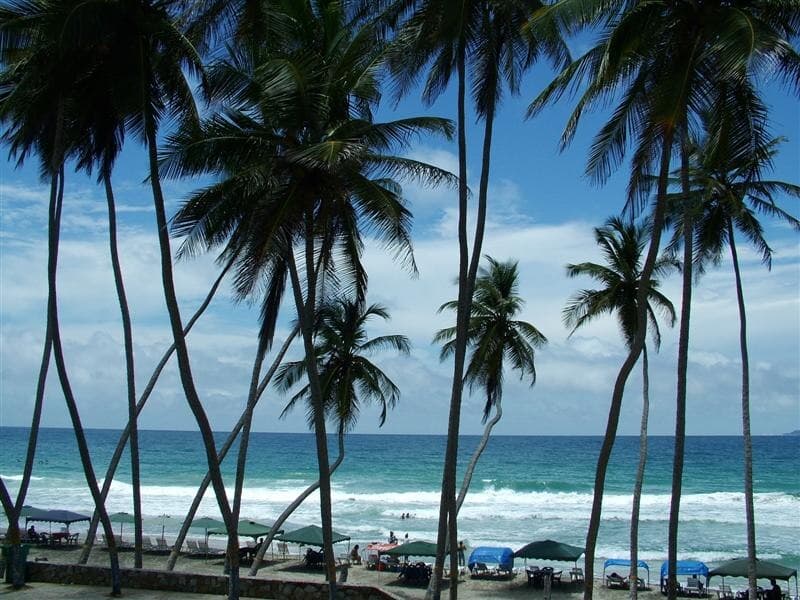
Playa El Agua

Playa El Agua

north-east

A 4 km beach on the north-east coast lined with coconut palms, historically the island's best-known beach. Waves are medium to strong, and the water deepens quickly. A row of wooden restaurants along the beach rent out sunbeds.

Tip: The waves here are real, and the alongshore current is strong — the beach has no lifeguard, and swimming in the northern half is the most dangerous. Sunbeds are free if you order food from the same establishment, which always works out cheaper than paying for rental separately.

Admission:
free
Time needed:
half day
Castillo de Santa Rosa and La Asunción

Castillo de Santa Rosa and La Asunción

La Asunción

A fort from 1682 above the island's historic capital, built against pirates. Luisa Cáceres de Arismendi, one of the heroines of Venezuelan independence, was imprisoned in a cell beneath its walls. From the ramparts there are views over the valley and out to sea.

Tip: La Asunción is a peaceful colonial town that most visitors skip — yet it has the oldest surviving cathedral in the country, from 1571, and is the most pleasant place on the island for a stroll. The fort opens in the morning and closes in the early afternoon; arrive by 11am.

Admission:
token admission fee
Time needed:
2 h
La Restinga lagoon

La Restinga lagoon

La Restinga

A national park on the sandy isthmus joining the island's 2 halves: a mangrove maze of channels toured by motorboat, home to flocks of flamingos and herons, with oysters growing right on the roots. Beyond the lagoon lies a long beach of crushed shells.

Tip: The channels are quietest and richest in birdlife early in the morning; after 10am the noise of the engines drives the birds away. Boats are charged per boat, not per person, so it's worth joining another group. There's no shade on the shell beach, so bring a sun umbrella or a hat.

Admission:
boat per group
Time needed:
3 h
Pampatar and Castillo San Carlos Borromeo

Pampatar and Castillo San Carlos Borromeo

Pampatar

A fishing town on the east coast with colourful boats in the bay and the island's best-preserved fort, from 1662, its cannons still pointed out to sea. Next to it stands the Cristo del Buen Viaje church, where fishermen pray before setting out.

Tip: In the bay in the morning, the catch is sold straight off the boats — the cheapest fish on the island — so anyone staying in an apartment should come before 8am. The fort has free or token admission, and its ramparts offer the best sunset view in the area.

Admission:
token admission fee
Time needed:
2 h
Playa Parguito and surfing

Playa Parguito and surfing

north-east

A beach south of El Agua with the strongest waves on the island and Venezuela's best surf scene. Competitions are held here, and the shore has board rental stalls and simple bars. The sand is coarser and the water cooler than on neighbouring beaches.

Tip: Parguito isn't suitable for non-swimmers or children — the waves are powerful and the undertow strong — head a few kilometres further to Playa Caribe to swim instead. The best waves are usually in the morning from December to March, before the wind picks up.

Admission:
free
Time needed:
half day
El Yaque and kitesurfing

El Yaque and kitesurfing

El Yaque

A shallow bay on the south coast near the airport, where the trade wind blows almost non-stop for 200 days a year and the water stays waist-deep for 100 metres from shore. It's one of the best places in the world for beginners in kitesurfing and windsurfing.

Tip: The wind picks up around 11am and blows until dusk; mornings are calm and suit lessons. Courses here cost a fraction of the European price. The bay is shallow and wave-free, so falls don't hurt — which is exactly why beginners come here from across the continent.

Admission:
course from $40
Time needed:
full day
Juan Griego and Fortín La Galera

Juan Griego and Fortín La Galera

Juan Griego

A port town on the north coast with a bay that faces due west, making it the island's best spot for sunset. Above it stand the ruins of the La Galera fort, where republican defenders of the island fell in 1817.

Tip: Bars on the seafront promenade raise their prices at sunset hour; ordering a drink an hour earlier gets you the same spot at the normal price. It's a 10-minute uphill walk to the little fort, from where you can see both the bay and the northern coast.

Admission:
free
Time needed:
2 h
Porlamar and duty-free shopping

Porlamar and duty-free shopping

Porlamar

The island's largest town and its commercial hub, which for decades was the main reason for visiting Margarita — its duty-free zone drew Venezuelans in search of electronics, alcohol and perfume. The Santiago Mariño boulevard and shopping centres still operate today, if on a smaller scale.

Tip: Duty-free status doesn't mean everything is cheap — imported goods are now priced in dollars and are often more expensive than in Europe. What's worth buying is Venezuelan rum, cacao and coffee. After dark, don't walk in Porlamar — use a pre-arranged vehicle instead.

Admission:
free
Time needed:
3 h
Cerro El Copey National Park

Cerro El Copey National Park

interior

The island's highest point, a 980-metre peak covered in cloud forest that, thanks to its rainfall, forms a green island amid the otherwise dry landscape. On a clear day, both halves of Margarita and the neighbouring island of Coche are visible from the summit.

Tip: You can drive most of the way up on a paved road, but the final stretch to the transmitter is closed to cars and takes a 20-minute walk. It's worth setting off early — after 9am the summit clouds over and the view disappears. It's typically 8°C cooler than on the beach.

Admission:
free
Time needed:
3 h

Photos: Playa El Agua — Antoniofermin (Public domain) · Castillo de Santa Rosa and La Asunción — Bgabel (CC BY-SA 3.0) · La Restinga lagoon — Wilfredor (CC0) · Pampatar and Castillo San Carlos Borromeo — User.The Photographer (CC0) · Playa Parguito and surfing — Andrés Jorge (CC BY-SA 3.0) · El Yaque and kitesurfing — Wilfredor (CC0) · Juan Griego and Fortín La Galera — Wilfredor (CC0) · Porlamar and duty-free shopping — Warairarepano&Guaicaipuro (CC0) · Cerro El Copey National Park — Aenovikovn (CC BY-SA 3.0)

Where to stay

Areas and districts, matched to the kind of trip you are taking

Playa El Agua and Manzanillo

Best for: beach stays

The north-east coast, with the longest beaches and the largest concentration of hotels and apartments. This is the classic beach-holiday area, with restaurants lining the sand and a constant surf. Prices are mid-range, and it's a 20-minute drive to La Asunción or Porlamar.

Porlamar and Costa Azul

Best for: shopping and the most services

The island's largest town, with shops, shopping centres, hospitals and the widest choice of hotels, including large chain properties. Costa Azul beach is urban and unremarkable. The advantage is that everything is close by; the downside is that you shouldn't walk here after dark.

Pampatar and Los Robles

Best for: quiet and family atmosphere

The east coast, with a fishing bay, a fort and calm water suited to children. Accommodation is in smaller hotels and apartments, prices are lower than in Porlamar, and it's the one place where everyday island life still revolves around boats and fish.

El Yaque

Best for: kite and windsurfing

A small settlement by the airport with a shallow bay and constant wind, around which schools and guesthouses geared entirely towards water sports have grown up. If you don't ride a board, there's little to do here — the beach is shallow, full of kites and has no shade. If you do, you won't want to stay anywhere else.

Getting around

From the airport

Santiago Mariño Airport sits by El Yaque on the south coast, 20 minutes from Porlamar. The direct charter flights from Europe that ran as recently as 2014 no longer exist — travel today involves a connection in Caracas, Panama or Bogotá, or via Madrid. An alternative is the ferry from the mainland ports of Puerto La Cruz and Cumaná, which takes 2–4 hours depending on the boat. Domestic flights within Venezuela are unreliable and cancellations common; build in a buffer.

Santiago Mariño Caribbean International Airport (PMV) · 20 km

  • Hotel transfer· 25 min· included in stay
  • Pre-arranged taxi to Porlamar· 20 min· $20
  • Taxi to Playa El Agua· 45 min· $35
  • Taxi to El Yaque· 5 min· $8

Simón Bolívar, Caracas (connecting to a domestic flight) (CCS) · 330 km

  • Domestic flight to Margarita· 45 min· $90
  • Bus and ferry from Puerto La Cruz· 9 h· $40

Around town

The island is roughly the size of a county and can be crossed by car in about 1.5 hours. Public transport exists in the form of shared minivans called 'por puesto', which run set routes for a few tens of cents, but they're inconvenient for foreigners and not advisable in the evening. The standard is a pre-arranged taxi through your hotel or via WhatsApp with a specific driver you arrange for your whole stay — it's safer and cheaper than flagging down a car on the street, which is not recommended under any circumstances. Car rental is available, and petrol is effectively free, but roads are poorly signposted and unlit at night.

Pre-arranged taxiThe standard, safest way to get around; arrange 1 driver for your whole stay via WhatsApp. · $8 short ride
Por puesto (shared minivan)The cheapest transport on main routes; not suitable in the evening or with luggage. · $0.50
Rental carFuel is nominally cheap, but roads are poorly signposted and unsafe to drive at night. · $35/day
Ferry to CocheDeparts from Punta de Piedras to the neighbouring island of Coche; the round trip takes about half an hour. · $15

Useful apps: WhatsApp, Maps.me, Google Maps

When to go

Margarita lies in a semi-arid belt and gets little rain year-round — it's one of the sunniest islands in the Caribbean. The best period is December to April, when it's dry, the sea temperature is 26°C and the trade wind eases the heat. From May to November it's more humid and warmer, but there's no real rainy season: even in November, the wettest month, less than 60 mm of rain falls. The island lies south of the hurricane corridor, so hurricanes barely affect it.

Best time

December to April

What to avoid

September to November, due to humidity and mugginess

MonthJanFebMarAprMayJunJulAugSepOctNovDec
Day30°30°31°31°32°32°32°32°33°32°32°31°
Night23°23°23°24°25°25°25°25°25°25°24°24°
Rainy days421234443566
Sea26°26°26°27°28°28°28°28°28°28°28°27°

Food & drink

Margarita eats fish and seafood, since growing crops here is barely possible because of the dryness. The classic beach-shack dish is fried fish with tostones and salad, and in the mornings, empanadas filled with cazón, a small shark found only on Venezuela's eastern coast. Arepas are the national staple, eaten morning and evening. Prices are quoted in US dollars and paid in cash; the menu is often longer than what's actually available, so always ask what's on today. Buy water and drinks at the supermarket — on the beach they cost several times more.

What to try

Arepa

A cornmeal flatbread cooked on a griddle and split open like a pocket, filled with cheese, shredded beef or avocado with salad. Eaten for breakfast and dinner, it costs around a dollar and is the most typical Venezuelan dish there is.

Pabellón criollo

The national dish: shredded beef carne mechada, black beans, white rice and fried plantain on one plate. The version topped with a fried egg is called 'a caballo', and it's a full meal that will keep you going all day.

Empanada de cazón

A fried cornmeal pastry filled with minced cazón, a small shark, a speciality of the eastern coast and Margarita. Bought fresh from a beach stall in the morning; by the afternoon it's usually just reheated.

Pescado frito a sancocho

Whole fried fish with tostones and salad is the standard beach-shack dish on Margarita. Sancocho is a thick fish or meat soup with yucca and plantain, typically cooked at the weekend.

Tostones and cachapa

Tostones are twice-fried slices of green plantain; cachapa is a sweet pancake made from young corn, folded over soft queso de mano cheese. Cachapa makes a filling breakfast that will keep hunger away until evening.

Queso guayanés and nata

A soft white cheese and a thick soured cream, both spread onto arepas. Sold by weight at the market — you won't find them at a resort, so head to the market to try them.

Santa Teresa and Diplomático rum

Venezuelan rums rank among the world's best, and at home they cost a fraction of the European price. Drunk neat or over ice; a rum and cola here is called a 'cuba libre' and is the cheapest drink at the bar.

Papelón con limón and chicha

Papelón is an iced lemonade made from raw cane sugar and lime; chicha is a thick, sweet rice drink with cinnamon. Both are sold from stalls and are the best defence against Margarita's heat.

What it costs

Arepa with cheese

$1–2

Fried fish with a side, on the beach

$8–14

Lunch at a restaurant in Porlamar

$10–20

Polar beer

$1.50–2.50

Boat to La Restinga lagoon (per boat)

$25–40

1 hour of kite lessons with an instructor

from $40

Taxi Porlamar–Playa El Agua

$25

Night in a 4-star hotel

$60–120

Indicative prices that change over time — treat them as a guide, not a price list.

Practical information

SocketsAtwo flat pins (US/JP)Btwo flat pins plus ground (US)
Voltage120V / 60Hz
Tap waterDo not drink tap water — Tap water isn't drinkable in Venezuela. On Margarita the situation is worse than on the mainland, because the island has no water source of its own — water is piped in from the mainland across the strait, supply is unreliable, and hotels rely on tanks. Bottled water is widely available; a 5-litre jug costs a couple of dollars. Ice at resorts is made from treated water, but it's best avoided at roadside stalls. Expect water and power cuts; large hotels have generators, smaller guesthouses usually don't.
TippingRestaurants usually add 10% to the bill as 'servicio'; on top of that, another 5–10% is given in cash, in dollars. The economy is effectively dollarised: prices are quoted in US dollars, paid in dollar bills, and bolívars are used only for small change. Bring small denominations — no one will give change for a $100 bill. Foreign bank cards work unreliably, and ATMs mostly reject foreign cards, so bring cash for your whole stay. Notes must be undamaged; no one will accept a torn dollar bill.
Driving on theright
SafetyVenezuela is a country the Foreign Office advises against travelling to, and that should be taken seriously — crime, unreliable healthcare, power cuts and medicine shortages are all real issues. Isla Margarita is safer than Caracas, and the resort areas function normally, but strict rules apply: don't walk anywhere after dark, don't display valuables or your phone on the street, only use hotel or pre-arranged taxis, and never a car flagged down on the street. Travel insurance must cover medical evacuation abroad, since there's no high-quality hospital care on the island. Always check the latest advice on your foreign ministry's website before travelling.
Opening hoursOpening hours follow the power supply. Shops are usually open from 9am to 6pm with a midday break; on Sundays only some open. Shopping centres in Porlamar stay open later, until 9pm, because they have generators. Restaurants serve from noon to 10pm, but the menu is often shorter than what's printed — always ask what they actually have today. ATMs are practically unusable for foreigners; hotel exchange counters are the way to go.
Customs & etiquetteVenezuelans are friendly, loud and physically close — a pat on the shoulder and a kiss on the cheek when greeting are common. Politics is a sensitive subject, so keep your opinion to yourself whichever side you lean towards. Photographing soldiers, police, airports and government buildings is forbidden and taken seriously. Bargaining is fine at markets, not in shops. If someone on the street offers you a good exchange rate, it's a scam or a trap — only exchange money at a hotel.
A few local wordsHello — Buenos díasThank you — GraciasHow much is that in dollars? — ¿Cuánto cuesta en dólares?The bill, please — La cuenta, por favorI don't speak Spanish — No hablo españolWhere is the ATM? — ¿Dónde hay un cajero?

How to plan your days

1 day

A day on Margarita

  1. 1Morning: the fort and the colonial centre of La Asunción.
  2. 2Lunch in Pampatar with fish from the morning catch.
  3. 3Afternoon: swimming at Playa El Agua.
  4. 4Move on to Juan Griego for sunset over the bay.
  5. 5Dinner on the promenade, then back to your hotel by car.

2 days

2 days with the lagoon

  1. 1Day 1 as in the plan above.
  2. 2Early morning: boat through the mangrove channels of La Restinga.
  3. 3Lunch by the lagoon, then the shell beach in the afternoon.
  4. 4Afternoon: the viewpoint from the fort in Pampatar.
  5. 5Evening: shopping in Porlamar — rum, cacao and coffee.

3 days

3 days of wind and mountains

  1. 1First 2 days as in the plan above.
  2. 2Morning: drive up to Cerro El Copey while the summit is still clear.
  3. 3Lunch in a mountain village on the way down.
  4. 4Afternoon: your first kitesurfing lesson at El Yaque.
  5. 5Last day: the empty beaches of the Macanao Peninsula.

Day trips

Coche Island

25 km · 30 min by ferry

A flat, sandy islet south of Margarita with a 10 km beach, shallow turquoise water and a steady wind that draws kitesurfers. It has only a handful of hotels and the fishing village of San Pedro; on weekdays the beach is often practically empty, making it the calmest spot in the area.

Macanao Peninsula

40 km · 1 h by car

The western half of the island beyond the La Restinga lagoon is a semi-desert of cacti, herds of wild donkeys and mountains dropping into the sea. Punta Arenas and La Pared beaches are long and empty, since almost no one comes here. There's barely any infrastructure — bring your own water and food.

Los Frailes

30 km · 1 h 30 min by boat

An uninhabited archipelago of 8 rocky islets north-east of Margarita with the clearest water in the area and the best snorkelling. Boats depart from Playa El Tirano; the islets have no shade or drinking water, the trip takes half a day, and you should bring your own supplies.

Frequently asked questions

Is it safe to travel to Isla Margarita today?+

The Foreign Office advises against travel to Venezuela, and that should be taken seriously — this includes Margarita, even though it's calmer than the mainland. If you do decide to go, strict rules apply: only move around in a pre-arranged vehicle, don't walk anywhere after dark, and don't display valuables on the street. Always check the current travel advice before you go.

How do you pay on Margarita?+

The economy is effectively dollarised: prices are quoted in US dollars and paid in dollar bills, with bolívars used only for small change. Foreign cards and ATMs mostly don't work, so you need to bring cash for your whole stay. Bring small denominations and undamaged notes — no one will accept a torn dollar bill.

Are there direct flights to Margarita from Europe?+

No. The charter flights from Europe that served the island until 2014 have been discontinued. Today's route involves a connection in Panama, Bogotá, Madrid or Caracas, and the whole journey takes over 20 hours. Domestic flights are unreliable, so allow a large buffer between connections.

Which is the best beach on Margarita?+

It depends what you're after. Playa El Agua is the best known and best equipped, but has strong waves and currents. For calm swimming with children, Playa Caribe or the bay at Pampatar are better; for surfing, Parguito; for kitesurfing, El Yaque; and for solitude, the empty beaches of the Macanao Peninsula.

When is the best weather on Margarita?+

From December to April, when it's dry and the trade wind eases the heat. The island is semi-arid and gets little rain year-round — even in November, the wettest month, less than 60 mm falls. Margarita lies south of the hurricane corridor, so hurricanes barely affect it.

Is Margarita still a duty-free zone?+

Yes, the status still stands, but its significance has changed. When imported goods are priced in dollars, they're no longer cheaper than in Europe, and the shopping tourism that once drew Venezuelans here has shrunk. It's worth buying local products instead: Santa Teresa and Diplomático rum, cacao and coffee.

How do I get to Margarita from the mainland?+

By ferry from Puerto La Cruz or Cumaná to the port of Punta de Piedras. The crossing takes 2–4 hours depending on whether it's a fast boat or a regular ferry, and tickets are bought at the port. You can bring a car too, but driving on the mainland in Venezuela is risky for foreigners.

What does the La Restinga lagoon involve?+

A national park on the sandy isthmus between the island's 2 halves, where you tour a mangrove maze by motorboat. The trip takes about an hour and ends on a beach of crushed shells. The boat is charged per boat, not per person, so it's worth joining another group; mornings are best, while the birds are still calm.

Visa Requirements

Check the latest visa requirements for entering this country. Some nationalities may need to apply for a visa or e-visa before travel.

Check visa requirements

Language

Spanish

Currency

VES

Timezone

America/Caracas

Dial Code

+58

Population

28.4M

Area

916,445 km²

Voltage

120V / 60Hz

Driving Side

Right

Top Hotels in Isla Margarita

Live prices from 500+ properties

Loading hotels...

More destinations in Venezuela

Planning a trip to Isla Margarita?

Compare hundreds of hotels, find the best price, and book with free cancellation on TravelManiac.