Hotels in Jeddah

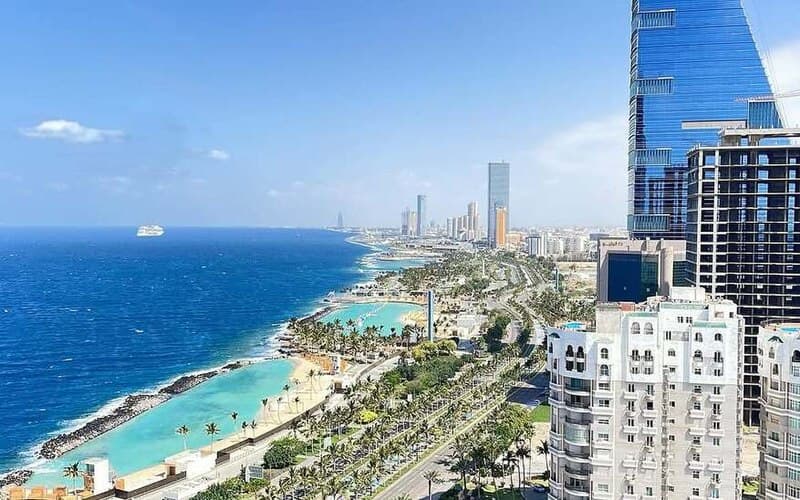
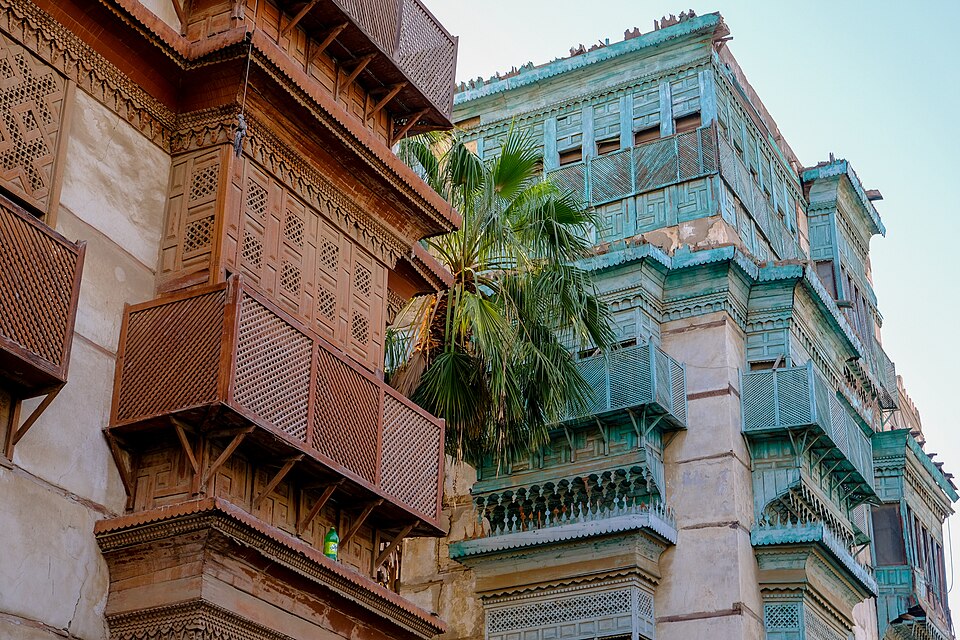
Coral houses with wooden bay windows, the world's tallest fountain, and a warm Red Sea

Jeddah

LanguageEnglish
CurrencySAR
TimezoneGMT+3
Temperature20-42 °C
Dial Code+966
Population36.4M
Area2,149,690 km²
SocketsType G / Type A / Type B / Type F
Tap waterBottled advised

Discover Jeddah

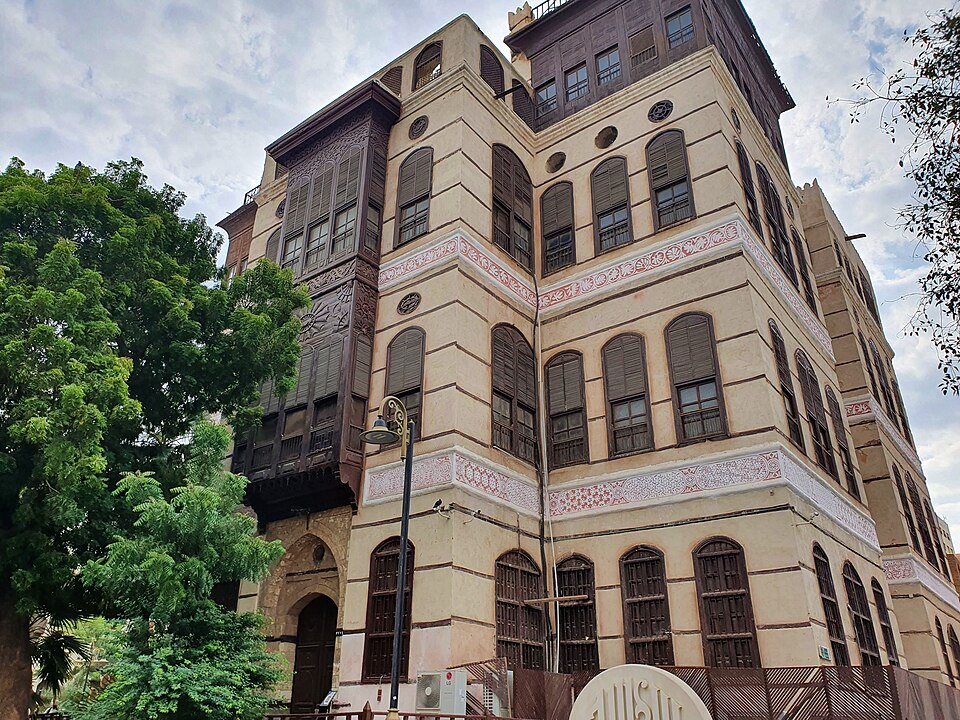
Jeddah is Saudi Arabia's oldest major city and its gateway to the sea — a Red Sea port that pilgrims travelling to Mecca, 70 kilometres away, have passed through for centuries. Because of them, Jeddah is the kingdom's most open, diverse and relaxed city, a mix of Africa, Asia and Arabia. The historic core, Al-Balad, listed as a UNESCO World Heritage Site, is made up of multi-storey coral-limestone houses with carved wooden rawashin bay windows that shade and cool the interiors. In the lanes around Souk Al-Alawi, tea is drunk, spices are sold, and during Ramadan the area celebrates until dawn. The 30-kilometre Corniche, with beaches, sculptures and parks, leads to King Fahd's Fountain, which shoots water more than 300 metres into the air. The Red Sea here is warm year-round, and coral reefs begin just a few hundred metres offshore. Jeddah is humid and hot, but pleasant in winter, and for non-Muslims it's the best place to experience the atmosphere of the pilgrimage route, even though they can't enter Mecca itself.

What to see

The places worth your time in Jeddah, and what to expect at each

Historic Jeddah (Al-Balad)

Historic Jeddah (Al-Balad)

البلد

Al-Balad

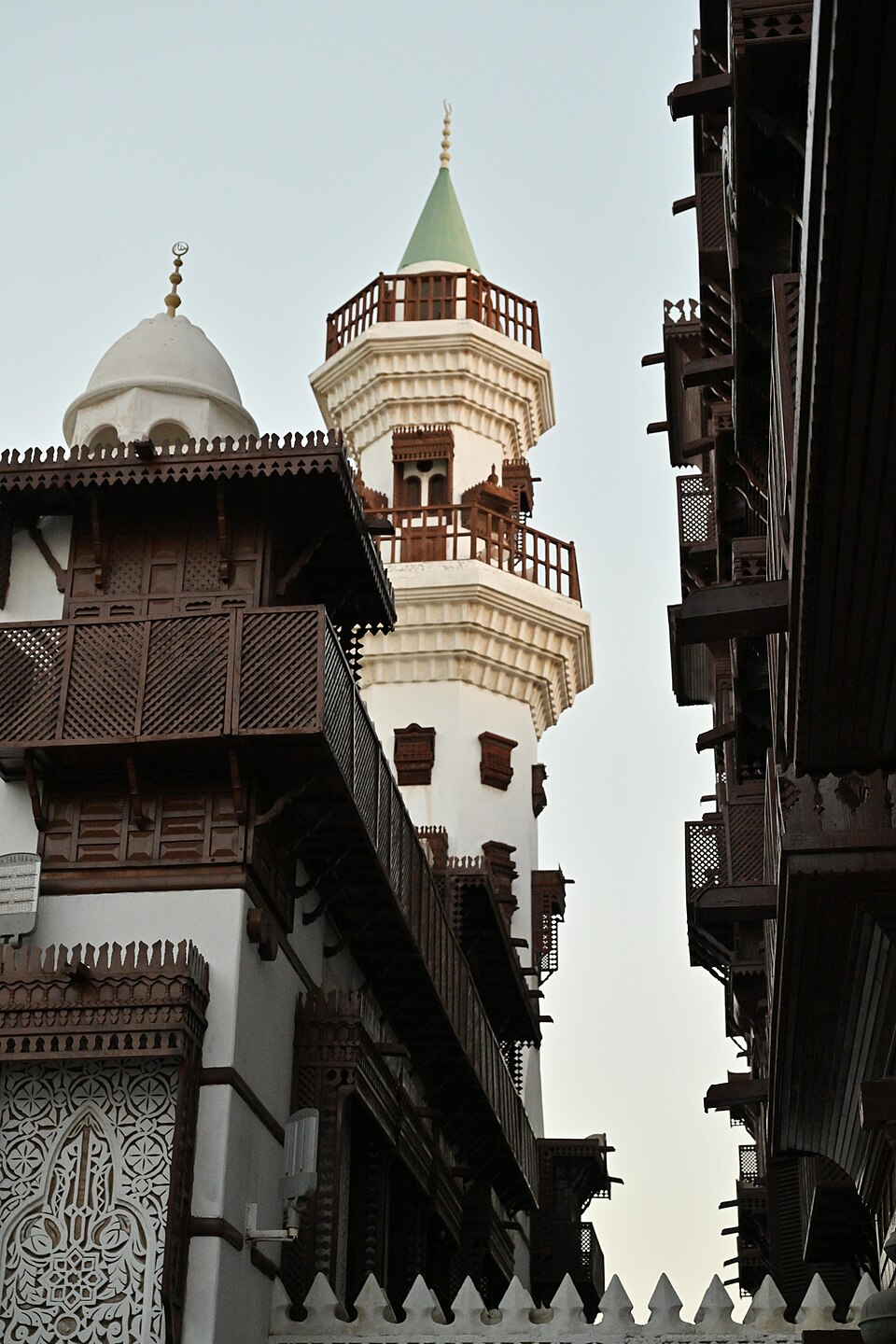
The old pre-oil town, once walled, with more than 600 traditional coral-stone houses standing 4–7 storeys tall and decorated with carved wooden rawashin bay windows. Listed as a UNESCO World Heritage Site since 2014, with major restoration under way.

Tip: The best time is after sunset, when it cools down, shops open and the lanes light up. Many houses are empty and some are crumbling while others are being restored, so the look of the quarter changes from year to year. You'll get your bearings best with a guide, found near Nasif House. Al-Balad is at its most beautiful during Ramadan, when eating and celebrating go on all night.

Admission:
free
Time needed:
2–3 h
Nasif House

Nasif House

بيت نصيف

Al-Balad

The best-known house in Al-Balad, built in 1881 for a wealthy merchant, with more than 100 rooms, ramps instead of stairs so a camel could be ridden all the way to the top, and a tree at the entrance that was long the only one in the city. King Abdulaziz stayed here in 1925.

Tip: The house is now a museum with exhibits on Jeddah's history and architecture. The ramps inside are the most interesting feature, along with the natural ventilation system built into the rawashin. The roof offers a view over the whole of Al-Balad. Opening hours are irregular, and it's closed on Friday mornings.

Admission:
free–SAR 20
Time needed:
45 min
Souk Al-Alawi

Souk Al-Alawi

سوق العلوي

Al-Balad

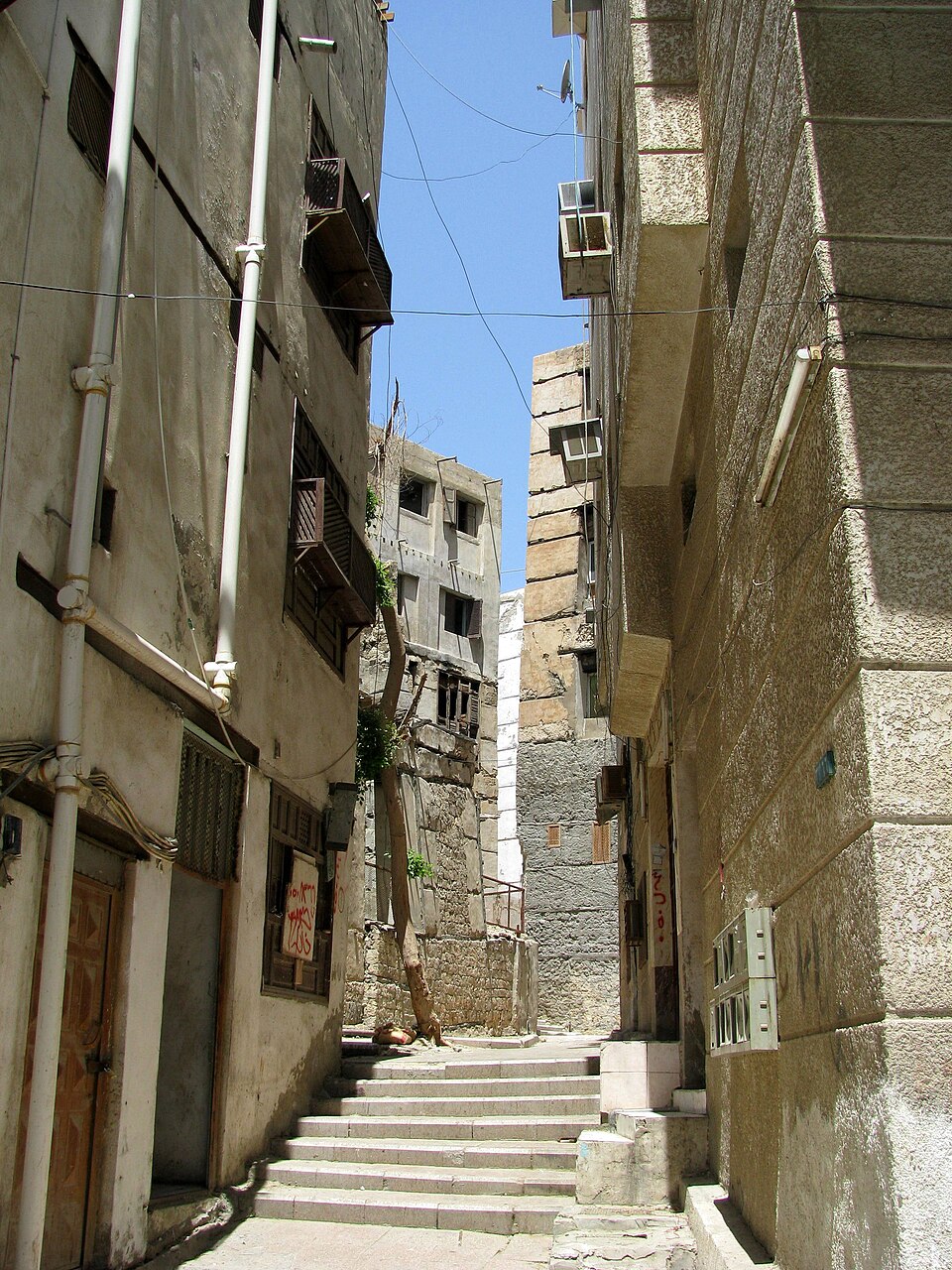
Jeddah's oldest market, a long narrow street running through Al-Balad from the sea toward Mecca, once walked by pilgrims. It sells spices, incense, dates, gold, fabrics, misbaha prayer beads and pilgrimage clothing.

Tip: Best visited in the evening after the Maghrib prayer, when the market fills up. Stalls selling Jeddah sweets and tea houses line the end of the market. Incense and oud are chosen by scent, and vendors will burn a sample for you. Bargaining is possible, but prices are already reasonable. Keep an eye on your belongings in the crowds.

Admission:
free
Time needed:
1 h
King Fahd's Fountain

King Fahd's Fountain

نافورة الملك فهد

Corniche

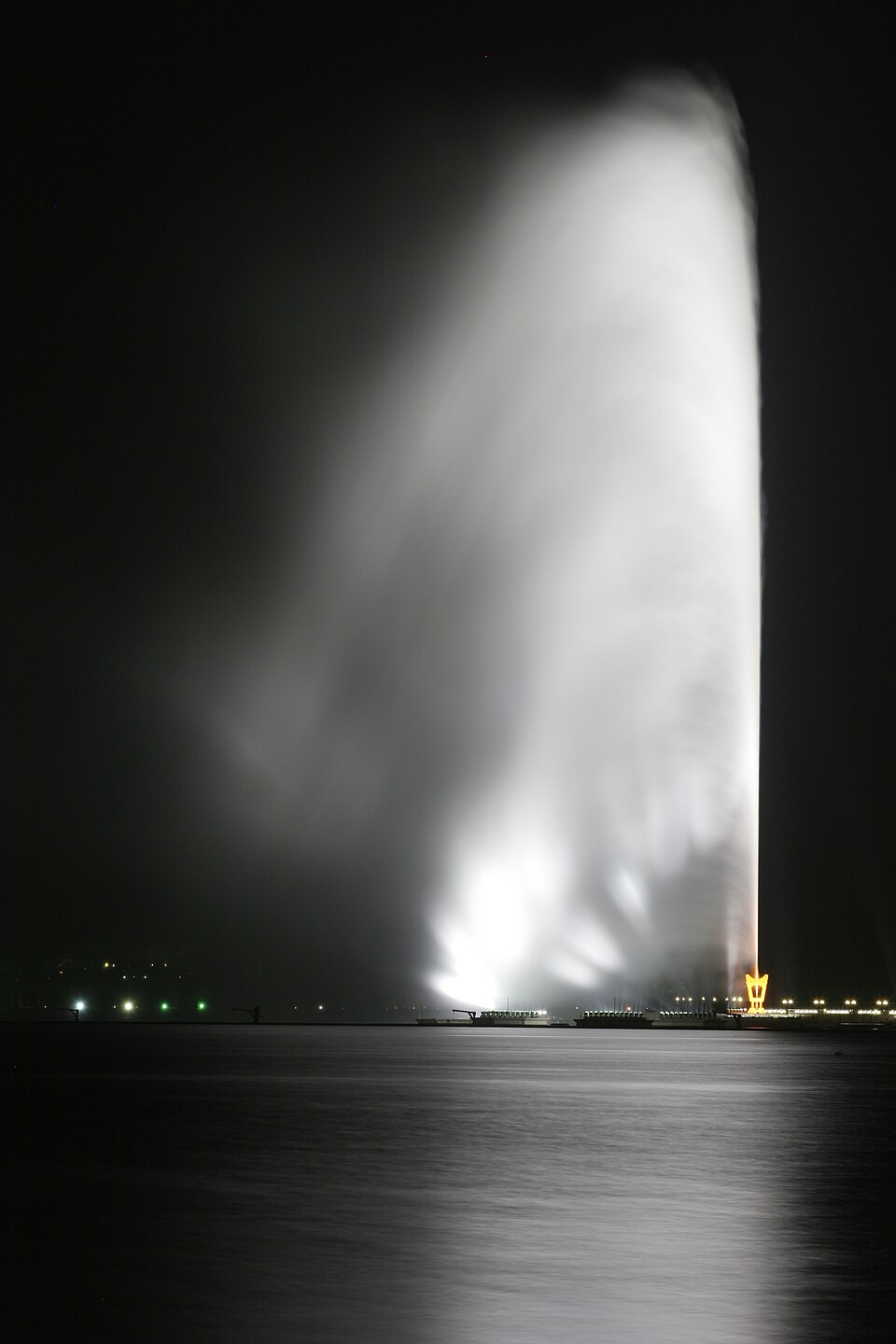
The tallest fountain in the world, shooting Red Sea water up to 312 metres high at speeds of over 300 km/h since 1985. It's lit up at night and visible from across the city.

Tip: The fountain runs in the evening and at night, and is sometimes switched off during the day; the water column is best seen from the Corniche or the park by the floating mosque. The finest view is from hotel rooms in the southern part of the Corniche. When the wind blows, spray can reach pedestrians. You'll need a wide-angle lens for photos.

Admission:
free
Time needed:
30 min
The Corniche and Waterfront

The Corniche and Waterfront

كورنيش جدة

Corniche

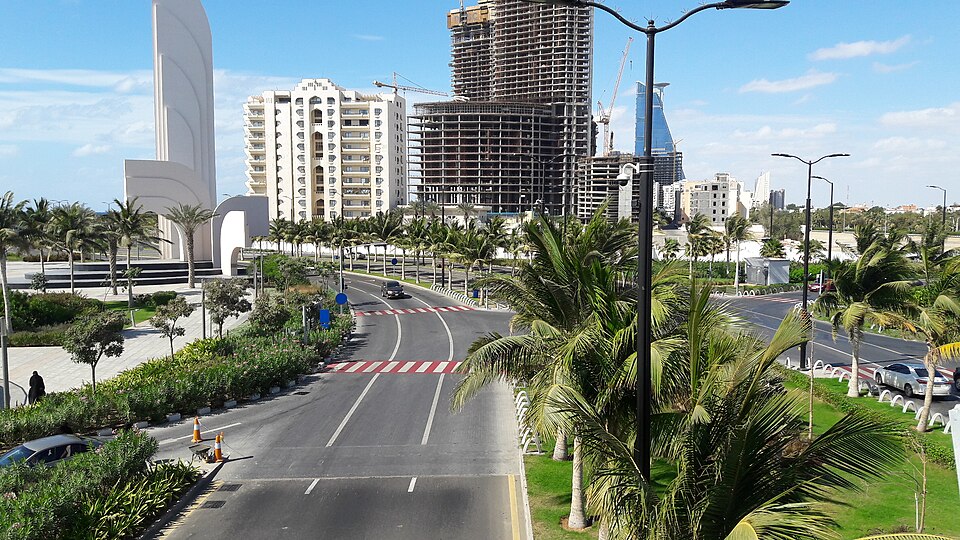
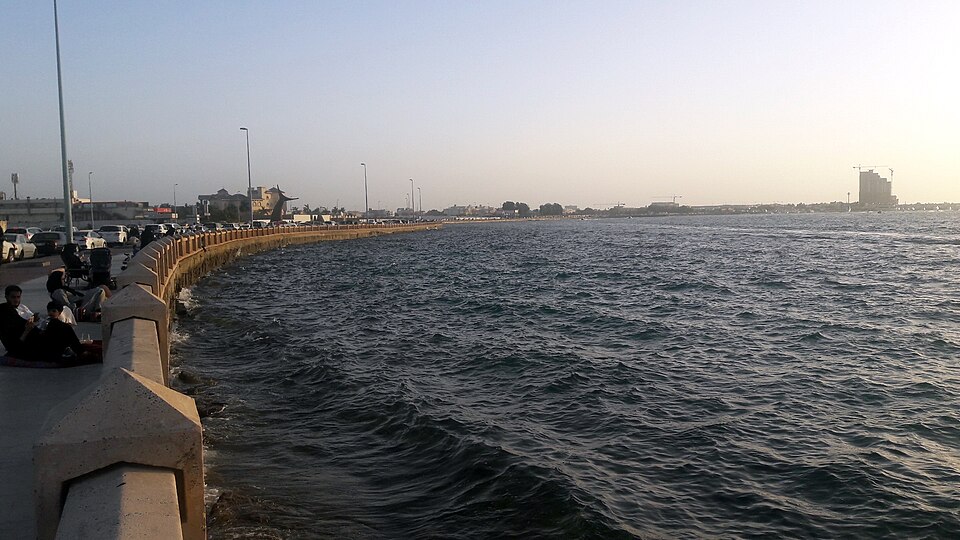
A 30-kilometre coastal promenade with parks, sculptures, playgrounds and a pier. The most modern section, Jeddah Waterfront, has beaches, restaurants, a cycle path and swimming zones. More than 400 sculptures are scattered along the whole Corniche, including works by Henry Moore and Joan Miró.

Tip: Only the Waterfront section can be walked in full; the rest is best explored by bike or car. In the evening, once it cools down, families come here to picnic. The beaches on the Waterfront are public and free, but swimming is only allowed in designated zones. The sculptures are best seen by car, driving slowly along Corniche Road.

Admission:
free
Time needed:
2 h
Ar-Rahma Floating Mosque

Ar-Rahma Floating Mosque

مسجد الرحمة

Corniche

A white mosque built on stilts over the sea, so that at high tide it appears to float on the water. Built in 1985, with a turquoise dome and sea views. Non-Muslims may enter the surrounding area.

Tip: The best photos are at sunset, when the white walls turn pink and the mosque reflects in the sea. A promenade around the mosque is where locals gather. Dress modestly when visiting; it gets busy during prayer times. It's a 10-minute drive south from the Waterfront.

Admission:
free
Time needed:
30 min
Tayebat Museum

Tayebat Museum

متحف الطيبات

Al Fayha

A private museum in a complex of buildings in traditional Hejazi style with rawashin windows, housing thousands of items from Arabian and Islamic history — manuscripts, coins, weapons, jewellery, clothing, furniture and ceramics. It also includes a reconstruction of an old Jeddah house.

Tip: The museum is large and sprawls across several floors, so allow 2 hours. The rooms with traditional interiors and the coin collection are the highlights. Opening hours are irregular and it's closed on Fridays, so call ahead. It's outside the centre, so take a taxi.

Admission:
around SAR 50
Time needed:
2 h
Hayy Jameel

Hayy Jameel

حي جميل

Al-Muhammadiyah

An arts centre that opened in 2021 in a modern building, with contemporary art galleries from across the Arab world, a cinema, a library, workshops and cafes. It's a symbol of Jeddah's new cultural scene.

Tip: The exhibition programme changes, so check what's on beforehand. Hikayat Cinema screens independent films with English subtitles. Local artists gather in the cafes. An ideal afternoon stop in the heat, as everything is indoors and air-conditioned.

Admission:
free
Time needed:
1–1.5 h
Snorkelling in Obhur

Snorkelling in Obhur

أبحر

Obhur

A bay north of the city with beach clubs and coral reefs, where the Red Sea looks the way it does in Egypt — colourful fish, coral and clear water. You can snorkel, dive and swim here year-round.

Tip: The best reefs can only be reached from beach clubs or by boat; public beaches are shallow and coral-free. Entry to a beach club costs SAR 100–300 a day and includes a lounger and reef access. Diving centres offer boat trips to reefs further offshore. The water is 25–30°C.

Admission:
beach club from SAR 100
Time needed:
half a day

Photos: Historic Jeddah (Al-Balad) — Francisco Anzola (CC BY 2.0) · Nasif House — Richard Mortel from Riyadh, Saudi Arabia (CC BY 2.0) · Souk Al-Alawi — Peter Dowley from Dubai, United Arab Emirates (CC BY 2.0) · King Fahd's Fountain — Ferdinand Reus from Arnhem, Holland (CC BY-SA 2.0) · The Corniche and Waterfront — Tahir mq (CC BY-SA 4.0) · Ar-Rahma Floating Mosque — Rept0n1x (CC BY-SA 3.0) · Tayebat Museum — Saudi press Agency (SPA) (CC BY-SA 4.0) · Hayy Jameel — Original author is Osamaeid (Public domain) · Snorkelling in Obhur — Tahir mq (CC BY-SA 4.0)

Where to stay

Areas and districts, matched to the kind of trip you are taking

Corniche and Waterfront

Best for: sea, beaches

International hotels along the Corniche with sea views and views of King Fahd's Fountain. Close to the Waterfront and the floating mosque. The best spot for combining sea and city. Al-Balad is a 15-minute drive away.

Al-Balad and the centre

Best for: history, atmosphere

Hotels on the edge of the historic quarter, often with views of the coral-stone houses. Walking distance to the souk and Al-Balad. The liveliest area in the evening. Hotels are still few, but new boutique options are opening.

Al-Hamra and Al-Rawdah

Best for: modern centre, shopping

Modern districts with shopping malls, restaurants and international chain hotels, well connected to both the airport and Al-Balad. Suitable for business trips.

Obhur

Best for: beach resorts

Resorts and beach clubs to the north by Obhur Bay, with their own reefs. Best for a beach-focused stay. It's 30 minutes to central Jeddah and 20 minutes to the airport.

Getting around

From the airport

Jeddah is reached with a single stopover from most parts of Europe, commonly via Istanbul, Cairo, Dubai or Doha, with total travel time of 7–9 hours. Saudia's main hub is at King Abdulaziz International Airport. Most nationalities need a tourist e-visa. The Haramain high-speed train runs between Jeddah, Mecca and Medina and has a stop right at the airport — non-Muslims can take it to Medina, but not to Mecca.

King Abdulaziz International (JED) · 25 km

  • Uber/Careem to the city centre· 30–40 min· SAR 60
  • Taxi from the airport· 30–40 min· SAR 80
  • Hotel transfer· 35 min· SAR 150

Around town

Jeddah is sprawling and public transport is weak — buses run, but aren't practical. Uber and Careem are cheap and widely available, along with metered taxis. Walking works in Al-Balad, the Waterfront and shopping malls. Renting a car is easy, but traffic is chaotic and drivers can be aggressive. For a trip to Taif or the beaches in Obhur, it's worth hiring a car with a driver.

Uber/CareemThe most practical option, with the fare fixed in advance. · SAR 15
TaxiMetered. · SAR 20
Haramain train to MedinaHigh-speed train from the airport and Sulaimaniyah station. · from SAR 100
Car with driver for the dayFor trips to Taif or Obhur. · SAR 500

Useful apps: Uber, Careem, Tawakkalna, Darb, Visit Saudi

When to go

The best time is from November to March, with daytime temperatures around 30°C, nights around 20°C and bearable humidity. The sea is warm year-round, around 25°C in winter. From May to September the heat tops 35°C with very high humidity, turning Jeddah into a steam bath. The Red Sea Film Festival takes place around the turn of the year. Ramadan and the Hajj pilgrimage month bring millions of pilgrims to the city, with hotels sold out and the airport packed.

Best time

November–March

What to avoid

June–September because of humid heat, and the Hajj period

MonthJanFebMarAprMayJunJulAugSepOctNovDec
Day29°29°30°33°35°36°38°37°36°35°33°30°
Night19°19°20°22°24°25°27°28°26°24°22°20°
Rainy days100000000011
Sea26°25°25°27°29°30°31°31°31°30°28°27°

Food & drink

Jeddah is Saudi Arabia's most gastronomically diverse city, thanks to pilgrims and traders from every corner of the Islamic world. Traditional Hejazi cuisine is lighter and spicier than the cooking of the desert Najd region, with Red Sea fish, beans, and influences from Yemen, India and Africa. The best place for traditional food is Al-Balad, where street food is sold at night, and the Bangala fish market in the south, where you pick a fish and have it cooked for you. Alcohol is banned. Jeddah has a rich cafe scene and the famous fast-food chain Al Baik, whose fried chicken is a national obsession.

What to try

Kabsa

The national dish: long-grain rice cooked with chicken or lamb, tomatoes, dried lime and baharat spice, topped with almonds and raisins. Portions are usually huge and eaten from a shared tray.

Mandi

Lamb or chicken slow-roasted in an underground oven over rice that soaks up the fat and smoke. A Yemeni dish eaten in Saudi Arabia at restaurants with floor seating.

Mutabbak

Thin dough filled with minced meat, egg and leek, fried on a griddle and cut into squares. Street food from the Hejaz, best eaten at night in the old quarters.

Saudi coffee and dates

Light coffee with cardamom and sometimes saffron, served in small cups with dates. Saudi Arabia is one of the world's biggest date growers, and markets sell dozens of varieties.

Sayadiyah

Red Sea fish cooked with rice, cumin and caramelised onion, which turns the rice a deep brown. A dish typical of Jeddah, best eaten at the fish market.

Ful and tamees

Stewed fava beans with cumin, lemon and oil, served with Afghan tamees bread baked in a clay oven. Jeddah's typical breakfast.

Al Baik

Saudi fast-food chain serving fried chicken in garlic sauce, founded in Jeddah in 1974. It's cheap, quick, and Saudis swear by it — a serving costs SAR 15.

What it costs

Arabic coffee and dates

SAR 10–20

Al Baik meal

SAR 15–25

Fish at the Bangala market

SAR 50–100

Dinner at a restaurant

SAR 150–300

Uber across town

SAR 20–50

Beach club in Obhur

SAR 100–300

Entry to the Tayebat Museum

around SAR 50

Night in a 4-star hotel for 2

€100–200

Indicative prices that change over time — treat them as a guide, not a price list.

Practical information

SocketsGBritish, three rectangular pinsAtwo flat pins (US/JP)Btwo flat pins plus ground (US)FSchuko
Voltage220V / 60Hz
Tap waterTap water is treated, bottled is common — Tap water in Saudi Arabia is mostly desalinated and isn't used for drinking; locals and hotels rely on bottled water, which is very cheap — around 1 riyal for half a litre at any convenience store. Drink water regularly even in winter, as the air is very dry. On desert trips, bring more water than you think you'll need.
TippingTipping isn't compulsory, but 10–15% is customary in restaurants, since service staff are mostly low-paid workers from Asia. Round up for Uber and Careem drivers, and give porters and valet staff SAR 5–10. Cards and Apple Pay work almost everywhere; cash is only needed at traditional markets.
Driving on theright
SafetySaudi Arabia is safe for tourists, and street crime is very low. The risks are legal: alcohol, drugs and pork are banned and strictly punished, as are insults to religion, the royal family or the state, including on social media. Don't photograph government buildings, police or local women. Non-Muslims may not enter Mecca or central Medina. Traffic is dangerous, with fast and reckless driving. Heatstroke is a risk in summer. The emergency number is 911.
Opening hoursThe weekend falls on Friday and Saturday. Shops and malls open around 10am and stay open until midnight, with life happening in the evening and at night. During the 5 daily prayer times, some smaller shops and cafes close for 20–30 minutes — a prayer-times app helps you plan your shopping. Friday mornings are quiet. During Ramadan, eating and drinking in public during the day is not done; restaurants open after sunset and stay open until dawn.
Customs & etiquetteTourists don't need to wear an abaya, but clothing should cover the shoulders and knees — loose and non-see-through for women; shorts and vests aren't worn in public. A headscarf is only needed inside a mosque. Men and women don't touch in public, and you shouldn't shake a woman's hand unless she offers it first. Accept coffee and dates offered to you with your right hand. It's not a good idea to discuss religion or politics with locals.
A few local wordsHello — As-salámu alejkumReply to a greeting — Wa alejkum as-salámThank you — ŠukranHow much does this cost? — Kam hádha?God willing — InšalláhGoodbye — Ma'a salama

How to plan your days

1 day

Jeddah in 1 day

  1. 1Morning at the Tayebat Museum.
  2. 2Afternoon at the Waterfront and the floating mosque at sunset.
  3. 3Evening in Al-Balad, Nasif House and Souk Al-Alawi.
  4. 4Late evening at King Fahd's Fountain.

2 days

2 days in Jeddah

  1. 1Day 1: Al-Balad in the morning, Hayy Jameel in the afternoon.
  2. 2Day 1 evening: Souk Al-Alawi and dinner in Al-Balad.
  3. 3Day 2: snorkelling in Obhur.
  4. 4Day 2 evening: the Corniche, floating mosque and fountain.

3 days

3 days with the mountains

  1. 1Day 1: Al-Balad and the souk.
  2. 2Day 2: Taif — mountains, roses and markets.
  3. 3Day 3: Obhur and the sea.
  4. 4Day 3 evening: the Corniche and fountain.

Day trips

Taif

170 km · 2.5 h by car

A mountain town at an elevation of 1,700 metres, where Saudis escape the summer heat. It's famed for rose plantations, from which expensive rose oil is distilled in March and April, and for its fruit markets. The route follows the Al Hada mountain road, with viewpoints and baboons. Non-Muslims must take a bypass route around Mecca.

Medina

420 km · 2.5 h by train

Islam's second-holiest city, where the Prophet Muhammad is buried. Since 2021, non-Muslims have been allowed to visit the city outside the sacred precinct of the Prophet's Mosque, including museums and historic sites. The Haramain high-speed train runs from Jeddah in 2.5 hours. For non-Muslims it's more of a curiosity stop.

King Abdullah Economic City

120 km · 1 h by train

A newly built coastal city with beaches, golf, a port and a marina. Quieter than Jeddah, with better beaches and coral. The Haramain train gets there in under an hour, or you can drive along the coastal road. Good for a relaxed beach day.

Frequently asked questions

Do I need a visa for Saudi Arabia?+

Yes. Most visitors apply for a tourist e-visa online via the Visit Saudi portal, and it is usually issued within minutes to a few days. It costs around SAR 530 including mandatory health insurance, is valid for a year, and allows multiple stays of up to 90 days. The visa does not cover the Hajj pilgrimage.

Can non-Muslims visit Mecca?+

No, non-Muslims are barred from entering Mecca, and there are checkpoints and signs marking bypass routes for non-Muslims. For non-Muslims, Jeddah is the closest you can get to the pilgrimage experience — in Al-Balad and at the airport you'll see pilgrims in white ihram garments.

How many days do you need for Jeddah?+

2 days for Al-Balad, the Corniche and the sea. Add snorkelling and a trip to Taif for 3–4 days. Jeddah is often combined with Riyadh and AlUla on a wider Saudi itinerary.

Can you swim in the sea in Jeddah?+

Yes, the Red Sea is warm year-round. The public beaches on the Waterfront are free but have no coral. The best reefs are reached from beach clubs in Obhur or by boat. Women can swim in swimsuits at beach clubs; on public beaches, more modest coverage is expected.

What should I wear in Jeddah?+

Jeddah is Saudi Arabia's most relaxed city, but covered shoulders and knees are still expected. Women don't need to wear an abaya or headscarf. Dress more conservatively in Al-Balad and the souk. Beach clubs and hotels follow normal rules.

When is the best weather in Jeddah?+

From November to March, around 30°C during the day with lower humidity. In summer it's over 35°C with extreme humidity. The sea is warm year-round. Watch out for the Hajj and Ramadan periods, when the city fills with pilgrims.

Where's the best place to eat in Jeddah?+

Traditional food in Al-Balad, fish at the Bangala market, cheap eats at Al Baik and at Yemeni and Afghan diners. Modern restaurants and cafes are in Al-Rawdah and on the Waterfront. Alcohol is banned everywhere.

Is Jeddah safe?+

Yes, crime is low and tourists are welcome. Watch out for legal rules — alcohol, drugs, photographing people without permission, and insulting religion. Traffic is dangerous, and in summer there's a risk of heatstroke and dehydration.

Visa Requirements

Check the latest visa requirements for entering this country. Some nationalities may need to apply for a visa or e-visa before travel.

Check visa requirements

Language

Arabic

Currency

SAR

Timezone

GMT+3

Dial Code

+966

Population

36.4M

Area

2,149,690 km²

Voltage

220V / 60Hz

Driving Side

Right

Top Hotels in Jeddah

Live prices from 500+ properties

Loading hotels...

More destinations in Saudi Arabia

Planning a trip to Jeddah?

Compare hundreds of hotels, find the best price, and book with free cancellation on TravelManiac.