Hotels in Mecca

Islam's holiest city, for pilgrims heading to the Kaaba

Mecca

LanguageArabic
CurrencySAR
TimezoneAsia/Riyadh
Temperature20-42 °C
Dial Code+966
Population36.4M
Area2,149,690 km²
SocketsType G / Type A / Type B / Type F
Tap waterBottled advised

Discover Mecca

Mecca, in Arabic Makkah al-Mukarramah, lies in a desert valley in the Hejaz mountains about eighty kilometres inland from the Red Sea, and is the holiest city in Islam. It is home to the Masjid al-Haram and the Kaaba, the direction every Muslim faces in prayer, and every year millions of pilgrims come for Hajj and for Umrah, which can be performed at any time. Mecca is closed to non-Muslims: checkpoints on the approach roads check religious affiliation, and a foreigner who enters faces deportation and a fine. This guide is therefore written for Muslim pilgrims and the people who arrange their travel. It explains how Umrah works and how long it takes, where to stay in relation to the Haram, how to get from Jeddah airport, which visa and Nusuk permits you need, and when the city is quietest. Expect heat, crowds and extensive construction around the mosque — and note that in Mecca a hotel's distance from the Haram is measured in minutes to a gate, not in kilometres.

What to see

The places worth your time in Mecca, and what to expect at each

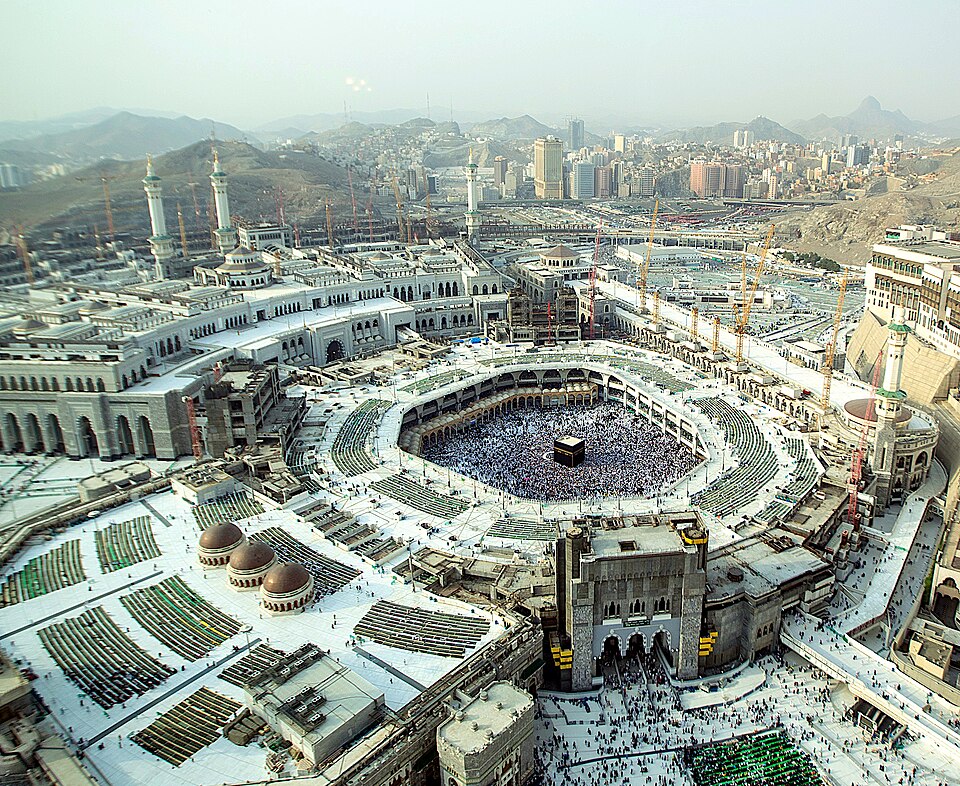
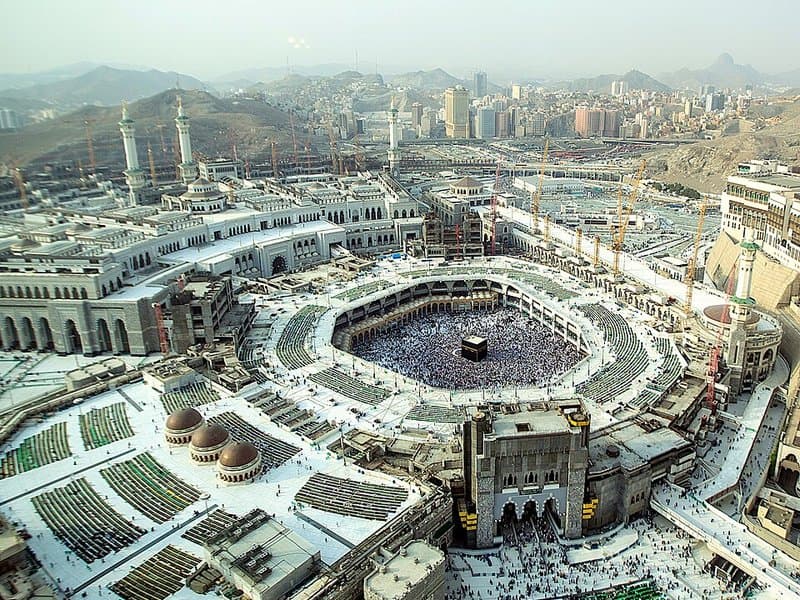
Masjid al-Haram

Masjid al-Haram

central Mecca

The Grand Mosque is the largest mosque in the world and surrounds the Kaaba with the courtyard known as the mataf. After several expansions it can hold more than a million worshippers at once, and it is open around the clock every day of the year. The courtyard and the roof are both used for circumambulation, and several air-conditioned halls are numbered by gate, which is how hotels describe their location.

Tip: It is quietest on weekdays in the hottest hours around midday and fullest on Fridays after the midday prayer. The roof and upper floors are calmer than the courtyard, though the circuit is longer.

Admission:
free
Time needed:
depending on the rite
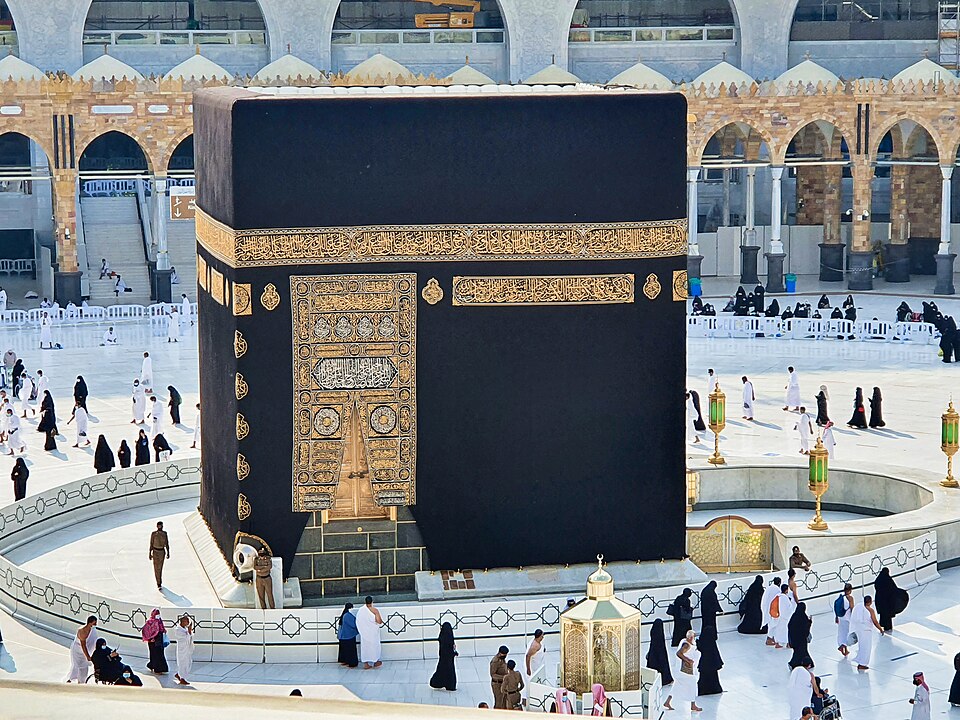
The Kaaba

The Kaaba

Masjid al-Haram

A cube-shaped structure at the heart of the mosque, about thirteen metres high and draped in a black silk cloth, the kiswah, embroidered with gold verses. Muslims face it in prayer wherever they are, and during Umrah circle it seven times counter-clockwise. The Black Stone is set into its eastern corner and pilgrims try to reach it.

Tip: Do not push towards the Black Stone — greeting it with a raised hand from a distance is enough, kissing it is not obligatory and crowds cause injuries. The calmest circuits are between prayers, not straight after them.

Admission:
free
Time needed:
1–2 hrs for the circuit
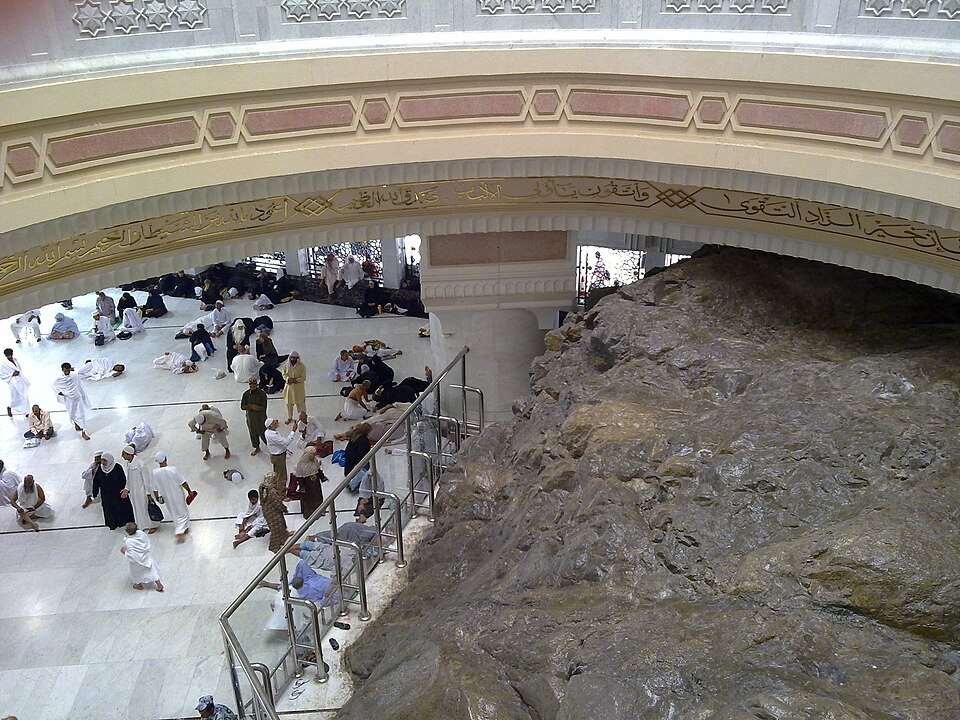
Safa and Marwa

Safa and Marwa

Masjid al-Haram

Two hillocks inside the mosque, between which pilgrims perform sa'i during Umrah, seven crossings of roughly 450 metres each. The route is roofed, air-conditioned and split over several floors, with separate lanes for wheelchairs and slower walkers. The whole walk is about 3.5 kilometres and usually takes one to one and a half hours.

Tip: Plan a drink between two crossings — cups of Zamzam water stand at stations along the route. Elderly or less mobile pilgrims should arrange an electric wheelchair for the separate lane on the spot.

Admission:
free
Time needed:
1–1.5 hrs
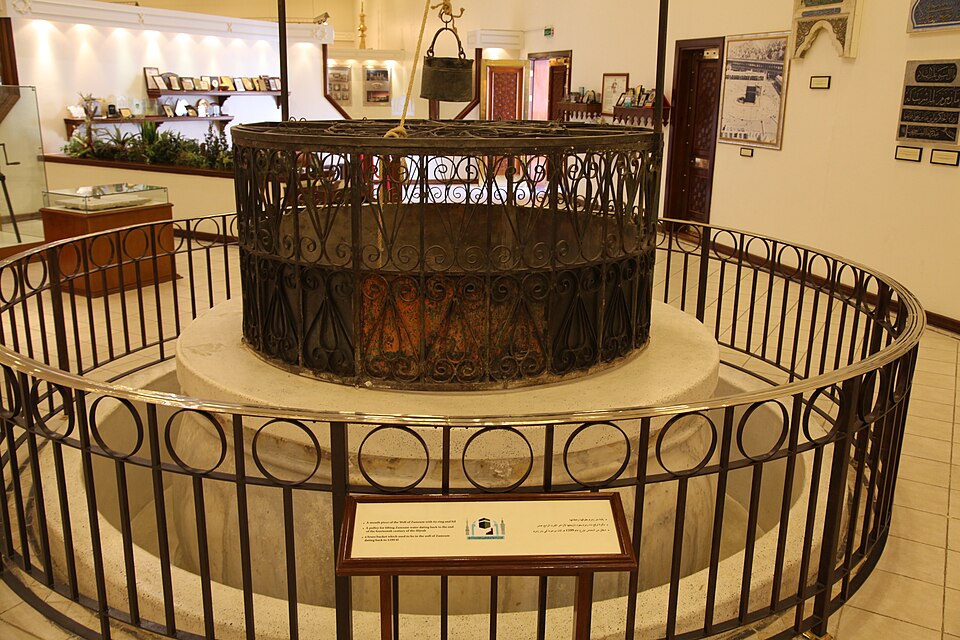
Zamzam Well

Zamzam Well

Masjid al-Haram

A well about twenty metres from the Kaaba, from which, according to tradition, water sprang for Hagar and the infant Ishmael. The water is now pumped and piped into cooled dispensers throughout the mosque. The mataf above the well is covered, but the water is available at every turn and drinking it is part of the rite — standing, with a wish, after Umrah.

Tip: Buy sealed packs of Zamzam at official shops and check the baggage allowance with your airline before flying, as limits vary by carrier. Take a chilled bottle back to your room from the mosque rather than the minibar.

Admission:
free
Time needed:
5 min
Abraj Al Bait Clock Towers

Abraj Al Bait Clock Towers

next to the Haram

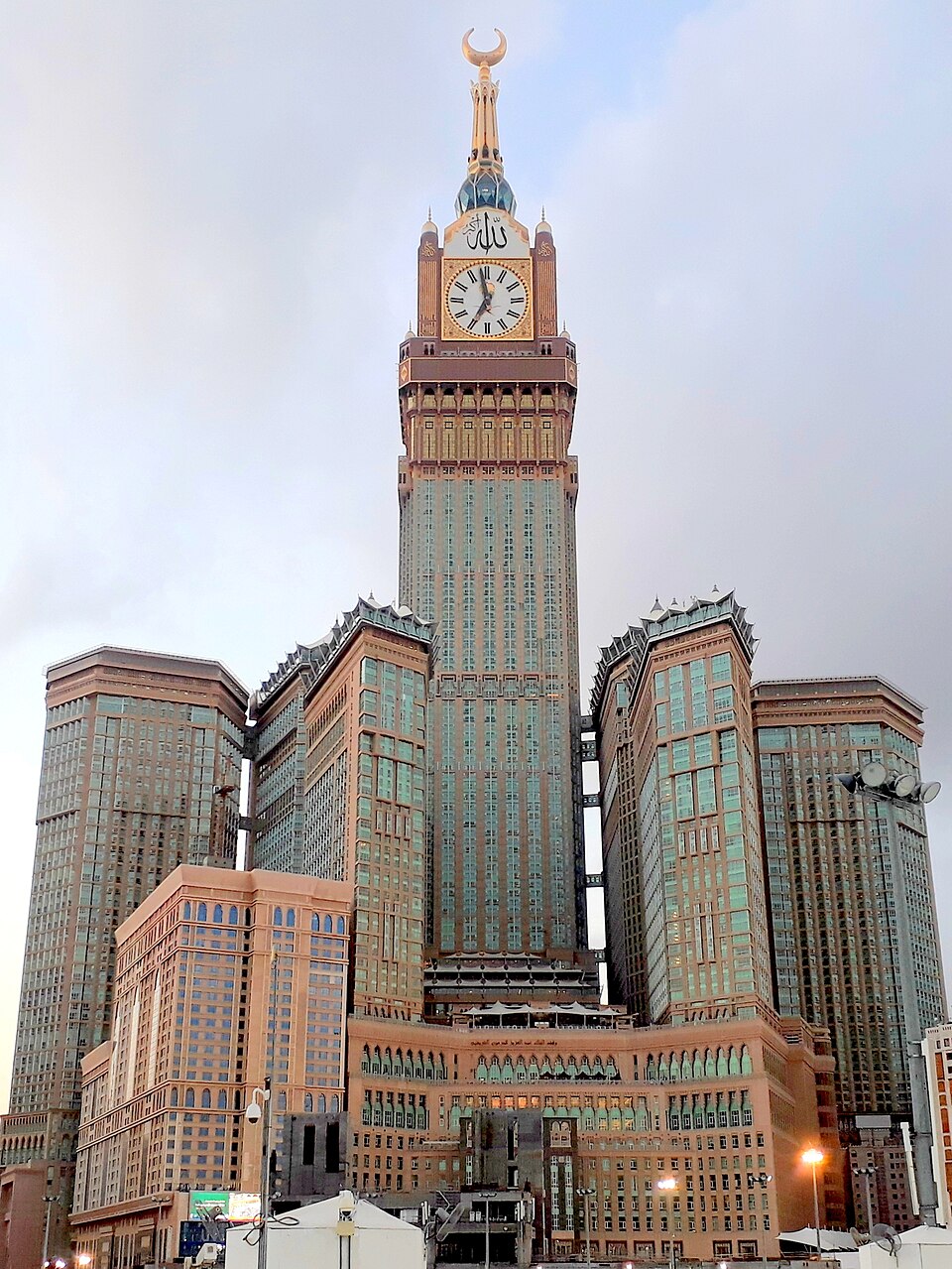
The Abraj Al Bait complex, with a 601-metre tower that is one of the tallest buildings in the world, rose right beside the mosque in 2012. Its giant clock face, about forty-three metres across, can be seen from across the city, and the towers hold hotels, shopping centres and restaurants. It offers the accommodation closest to the Haram — from some entrances the mataf is five minutes' walk away.

Tip: Ask at booking which gate the hotel counts as nearest and whether the entrance is separate from the shopping centre. Prices rise several hundred per cent in Ramadan, but hotels around eight hundred metres out are cheaper and only a ten-minute walk.

Admission:
free
Time needed:
1 hr
Jabal al-Nour and the Cave of Hira

Jabal al-Nour and the Cave of Hira

north of the city

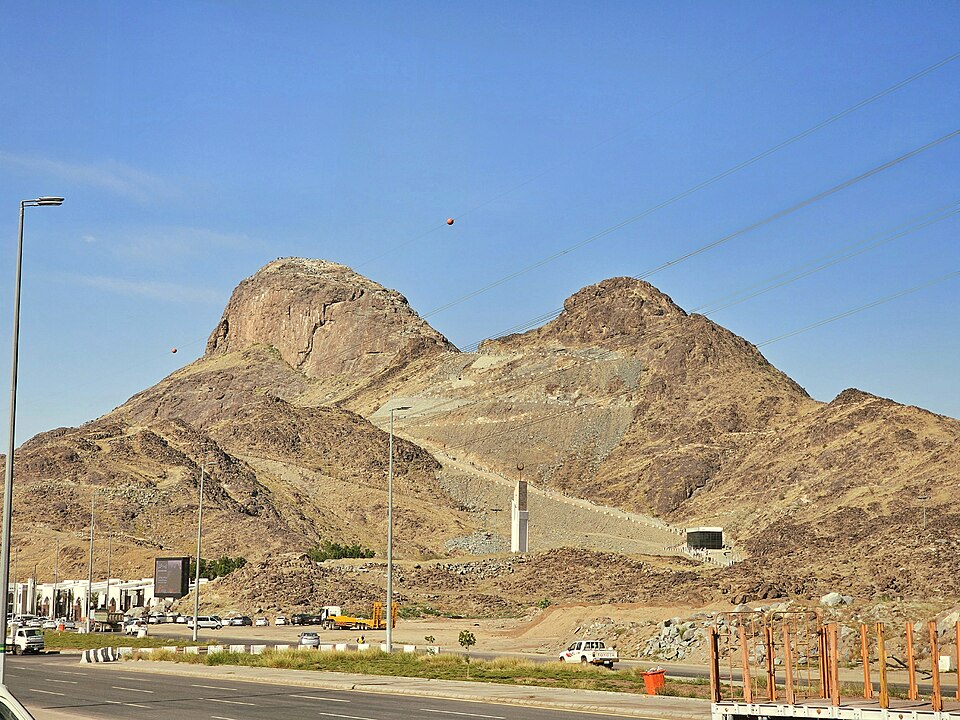
A mountain about five kilometres north of the Haram, with a cave near its summit where, according to tradition, the Prophet Muhammad received his first revelation. The climb up the steps takes roughly one and a half to two hours with several rest stops selling refreshments. The visit is not part of the Umrah rites and many scholars do not recommend it as an obligation.

Tip: Start straight after the dawn prayer, as by noon it is over 40°C. Take two litres of water, sturdy shoes and do not expect silence — the cave is small and there is a queue at weekends.

Admission:
free
Time needed:
3–4 hrs
Arafat and the Mount of Mercy

Arafat and the Mount of Mercy

east of Mecca

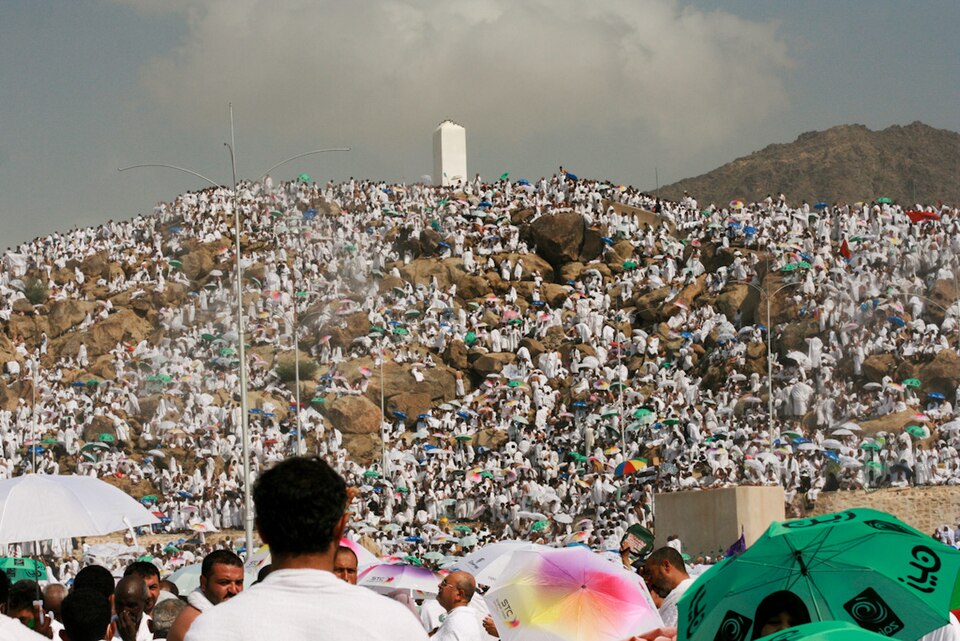
A plain about twenty kilometres east of Mecca with the hill of Jabal ar-Rahma, where pilgrims spend the afternoon of the ninth day of Hajj in prayer. Outside Hajj the area is open and empty, with the Namira Mosque at its foot. Standing at Arafat is the essence of Hajj, and without it the pilgrimage does not count.

Tip: Arrange an off-season visit through your tour operator — independent trips are limited by checkpoints. Go in the morning, as on the shadeless plain it can reach 45°C in the afternoon.

Admission:
free
Time needed:
2–3 hrs

Mina

east of Mecca

A narrow valley about seven kilometres east of the Haram where pilgrims spend several nights during Hajj and where the symbolic stoning of the devil takes place at the Jamarat Bridge. The valley is filled with tens of thousands of fireproof air-conditioned tents that stand all year and are assigned to pilgrims by group during the season.

Tip: Outside Hajj, Mina is an empty tent city, and photos or visits are normally possible only with an official guide. During Hajj do not plan to walk independently — transport is controlled and the walkways are one-way.

Admission:
depends on the organiser
Time needed:
1–2 hrs
Jabal Thawr

Jabal Thawr

south of the city

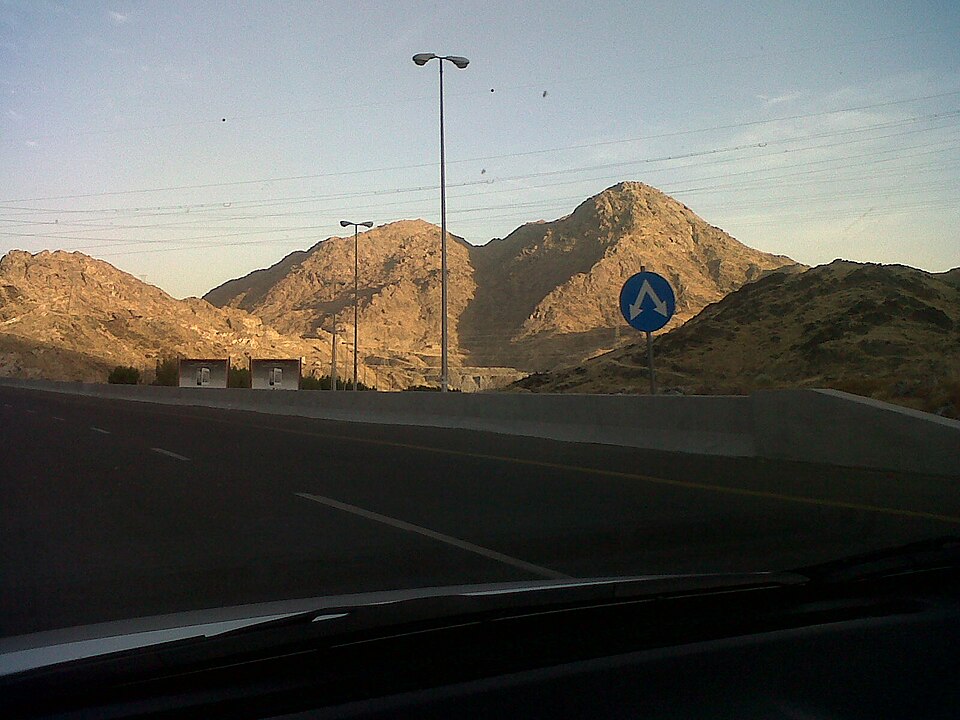
A mountain about five kilometres south of the Haram, with a cave near the summit where, according to tradition, the Prophet Muhammad and Abu Bakr hid from their pursuers during the Hijra. The climb takes an hour to an hour and a half, and the upper path is steeper than at Hira, with no railings. Many pilgrims skip it.

Tip: If you decide to go, wear sturdy shoes and set off before nine, while the valley is still bearable. Check first with your organiser whether the trail is open at the moment.

Admission:
free
Time needed:
2–3 hrs

Photos: Masjid al-Haram — Saudipics.com (CC BY-SA 4.0) · The Kaaba — Richard Mortel (CC BY 2.0) · Safa and Marwa — Swerveut (talk) (CC BY-SA 3.0) · Zamzam Well — Mohammad Bahareth (CC BY-SA 2.0) · Abraj Al Bait Clock Towers — King Eliot (CC BY-SA 4.0) · Jabal al-Nour and the Cave of Hira — Kaliper1 (CC BY-SA 4.0) · Arafat and the Mount of Mercy — Al Jazeera English (CC BY-SA 2.0) · Jabal Thawr — Abdul Razzaq Phulpot… (CC BY-SA 3.0)

Where to stay

Areas and districts, matched to the kind of trip you are taking

Haram gates (within 500 m)

Best for: the shortest walk to the mosque

Hotels five to fifteen minutes' walk from the Haram, mostly in the towers and along Ibrahim al-Khalil Road. A view of the Kaaba costs extra, but above all you have the mosque doors beneath your windows. In Ramadan and during Hajj prices rise several times over and rooms fill months ahead.

Ajyad and Jarwal

Best for: quieter stays within walking distance

Districts southwest and north of the Haram with hotels roughly seven hundred metres to a kilometre from the mosque. Rooms are cheaper, restaurants plentiful, and the walk to the entrance runs through an air-conditioned tunnel. Good for families and older pilgrims.

Rusayfah and Nawwariyah

Best for: cheaper stays with shuttle service

Outer districts two to four kilometres from the Haram. Hotels run shuttle buses to the mosque, rates are lower and in season they are about half those of the central towers. Expect queues for the bus before the main prayers.

Az-Zahir and the city edge

Best for: budget stays for groups

A peripheral area around the third ring road, often used for larger groups. Prices are lowest, but getting to the Haram takes half an hour or more because of traffic. Suitable only if the group programme includes a coach.

Getting around

From the airport

The nearest major airport is King Abdulaziz International in Jeddah (JED), about eighty kilometres from Mecca. From Europe there are connecting flights via Istanbul, Doha or Dubai, and direct services open seasonally. From the airport you take the Haramain high-speed train, which has linked Jeddah, Mecca and Medina since 2018, or a taxi and your hotel's shuttle. Umrah permits and bookings are handled through the Nusuk app, and without them you cannot enter the mosque.

Jeddah – King Abdulaziz International Airport (JED) · 80 km

  • Haramain train from Jeddah Airport· 45 min
  • Taxi from the airport to a hotel near the Haram· 1–1.5 hrs· SAR 250
  • Organiser's coach or hotel shuttle· 1.5–2 hrs

Around town

The Haram and its surroundings are covered on foot: tunnels and streets around the mosque are air-conditioned, and a ban on cars near the gates keeps traffic away from pilgrims. Hotels further out run shuttle buses to the mosque, public buses and taxis serve the city, and the Uber and Careem apps work. Holy sites outside the Haram — Arafat, Mina, Muzdalifah — are reached as directed by the organiser; the Mashair train line runs during Hajj.

On footHotels within a kilometre of the mosque; air-conditioned tunnels and walkways.
Hotel shuttle busFrom hotels in outer districts to the main gates before prayers.
Taxi and UberAround the city and to holy sites outside the Haram; agree the fare in advance. · SAR 15
Haramain trainFrom Mecca via Jeddah Airport to Medina, book at hhr.sa or in the app.

Useful apps: Nusuk, Tawakkalna, Uber, Careem, Google Maps

When to go

Mecca has a desert climate with a very hot summer and a short cooler winter. From June to September it is above 40°C in the shade, in winter around 30°C with nights near 20°C. Rain is rare, but when it comes it causes flash floods. Umrah is performed all year except in the weeks before and during Hajj; the city is quietest after Ramadan and in summer, and fullest in Ramadan and during school holidays.

Best time

November to February (pleasant temperatures)

What to avoid

the weeks before Hajj (Umrah is not issued) and the last ten days of Ramadan (most crowded)

MonthJanFebMarAprMayJunJulAugSepOctNovDec
Day31°32°35°39°42°44°43°43°43°40°36°32°
Night19°19°22°26°29°31°31°31°30°26°23°20°
Rainy days211100110022

Food & drink

Eating in Mecca is simple and done in volume: around the Haram stand food courts serving kebab, rice and chicken, and the streets sell fresh bread and fruit. Hejazi cuisine is mildly spiced, built on legumes, lamb and dates — the best local food is in restaurants and buffets outside the towers. Alcohol is banned and not sold in the city.

What to try

Kabsa

The backbone of Saudi cooking: long-grain rice with chicken or lamb cooked in a spiced stock with a dried lime leaf. In Mecca it is served in simple restaurants and hotel buffets alike.

Mandi

Lamb or chicken slow-cooked in a pit over hot charcoal, soft and smoky. The classic dish for a celebratory table and for Fridays.

Saleeg

A Hejazi speciality: rice cooked in milk and stock, served with chicken. Gentler than kabsa, often served at weddings and in family restaurants.

Mutabbak

A fried stuffed flatbread with meat, egg and onion, sold on the street and in cafés. A cheap lunch for twenty to thirty riyals.

Ful and bread

Fava bean dip with olive oil and lemon, served at breakfast with warm bread. In Mecca you can get it before dawn in small cafeterias by the Haram.

Sobia

A Hejazi drink made from fermented oats and milk with sugar, served in Ramadan to break the fast. Sweet and mildly sour.

Dates and Arabic coffee

Madinah dates (ajwa) are sold on every corner, with cardamom coffee, gahwa, served alongside. A small cup is poured half full and refilled once.

What it costs

1.5 L bottled water in a shop

SAR 2–3

Espresso in a café

SAR 12–18

Lunch in a local restaurant

SAR 25–45

Dinner in a hotel restaurant

SAR 80–150

Taxi from Jeddah airport to a hotel

SAR 200–300

3★ hotel within a kilometre of the Haram (night)

SAR 300–700

5★ hotel in the Clock Towers (night)

SAR 900–3,000

Sealed 5 L Zamzam

SAR 10–20

Indicative prices that change over time — treat them as a guide, not a price list.

Practical information

SocketsGBritish, three rectangular pinsAtwo flat pins (US/JP)Btwo flat pins plus ground (US)FSchuko
Voltage220V / 60Hz
Tap waterTap water is treated, bottled is common — Tap water in Mecca is not for drinking — bottled water is cheap and Zamzam is given out free in the mosque. Carry chilled bottles back to your room; in the heat drink two to three litres a day and do not wait until you are thirsty.
TippingTipping is not obligatory, but taxi drivers and hotel staff are given a rounded-up fare or ten to twenty riyals. Begging is prohibited and only tolerated occasionally — give to official collections instead.
Driving on theright
SafetyMecca is generally safe, and the commonest risks are heat, dehydration and crowds. Do not carry valuables into crowds and always have your passport or Nusuk, hotel details and the organiser's number with you. Avoid unofficial transport from the airport — unlicensed drivers charge several times the fare. The emergency number is 911, ambulance 997.
Opening hoursThe Haram is open around the clock, and shops nearby close during prayers — five times a day for about thirty minutes. Most restaurants and shops stay open to midnight, and in Ramadan until dawn. Friday afternoon is the busiest.
Customs & etiquetteMecca is for Muslims. Take off your shoes at the Haram (shoe bags at the entrances), keep the body covered and silence your phone. Men in ihram wear two white unstitched cloths, women long loose clothing and a headscarf. Do not push in the crowd, do not photograph people at prayer and do not approach the Black Stone unless there is space.
A few local wordsPeace be upon you — As-salamu alaykumThank you — ShukranPlease — Min fadlak / Min fadlikHow much is it? — Bikam?Where is the Haram? — Ayna al-Haram?Can you help me? — Hal tastati' musa'adati?Yes / no — Na'am / La

How to plan your days

1 day

Umrah in one day

  1. 1On arrival in Mecca, wash and put on ihram if you have not done so already.
  2. 2Begin the circumambulation of the Kaaba (tawaf) — seven circuits counter-clockwise.
  3. 3Two rak'ahs at the Station of Ibrahim or anywhere in the mosque, and drink Zamzam.
  4. 4Sa'i between Safa and Marwa — seven crossings.
  5. 5Shave or trim the hair, which completes Umrah.

2 days

Two days: Umrah and the holy sites

  1. 1Day one: Umrah as above.
  2. 2Day two after the dawn prayer, Jabal al-Nour and the Cave of Hira.
  3. 3Afternoon rest at the hotel, evening prayers at the Haram.
  4. 4Optionally a short visit to Jabal Thawr, as agreed with your organiser.

3 days

Three days: Mecca and surroundings

  1. 1Day one: Umrah.
  2. 2Day two: Arafat and Mina with a guide, afternoon rest.
  3. 3Day three: Jabal Thawr, buy Zamzam and dates, and say farewell at the mosque — tawaf al-wada' (the farewell circuit).
  4. 4Transfer by Haramain train or coach to Jeddah or Medina.

Frequently asked questions

Can non-Muslims enter Mecca?+

No. Mecca is closed to non-Muslims and the approach roads are guarded by checkpoints that check religious affiliation. A non-Muslim foreigner who enters faces deportation and a fine. A bypass for travelling to Jeddah or Taif exists, but check the route, as GPS apps often lead through a checkpoint.

How do I arrange Umrah and a visa?+

Muslim foreign visitors can perform Umrah on the tourist e-visa or a dedicated Umrah visa, requested through Nusuk or an authorised service provider. The Nusuk app is mandatory for all foreign pilgrims in 2026, and without a permit you cannot reach the mataf or the Rawdah in Medina. Rules change, so always verify them on the official Ministry of Hajj and Umrah pages.

When is the best time for Umrah?+

The most pleasant temperatures are from November to February, when it is around thirty degrees. It is quietest after Ramadan and in summer, busiest in the last ten days of Ramadan and in school holidays. Umrah is not issued in the weeks before Hajj, so if you are planning a spring date, check the current rules.

How close to the Haram should I stay?+

For a first Umrah it is worth staying within five hundred metres of the gates, especially when travelling with an older family member. Hotels within a kilometre are cheaper and acceptable for fit pilgrims. Beyond two kilometres you depend on a shuttle and waiting, which stretches by half an hour at prayer times.

How do I get from Jeddah airport to Mecca?+

The easiest way is the Haramain train directly from the airport, which reaches Mecca station in about forty-five minutes, or an organised coach from your tour operator. A taxi costs roughly two hundred to three hundred riyals and takes an hour to an hour and a half depending on traffic. Do not use the unlicensed drivers who approach you in the arrivals hall.

What should I pack for Umrah?+

Ihram for men (two white unstitched cloths), comfortable sandals or lace-free shoes, personal items in a small backpack and a bottle for Zamzam. Women pack loose long-sleeved clothing and a headscarf. For the heat, bring an umbrella, water and sun protection, plus travel insurance and copies of your documents stored separately.

Can a woman go on Umrah without a mahram?+

Since 2021 women may travel for Umrah without a male guardian, provided they meet the conditions of the organiser or group and hold a valid permit through Nusuk. The rules are updated from time to time, so confirm the current wording with your organiser or the Saudi embassy.

How long should I stay in Mecca?+

Umrah itself takes a few hours, but most pilgrims stay three to five nights so they can pray in the Haram at a calm pace. Together with Medina the usual plan is ten to fourteen days, depending on the train and hotel bookings. Leave a buffer for delays at checkpoints and for rest in the heat.

Visa Requirements

Check the latest visa requirements for entering this country. Some nationalities may need to apply for a visa or e-visa before travel.

Check visa requirements

Language

Arabic

Currency

SAR

Timezone

Asia/Riyadh

Dial Code

+966

Population

36.4M

Area

2,149,690 km²

Voltage

220V / 60Hz

Driving Side

Right

Top Hotels in Mecca

Live prices from 500+ properties

Loading hotels...

More destinations in Saudi Arabia

Planning a trip to Mecca?

Compare hundreds of hotels, find the best price, and book with free cancellation on TravelManiac.