Hotels in Lanzarote

A black volcanic landscape that one man turned into a gallery

Lanzarote

LanguageSpanish
CurrencyEUR
TimezoneAtlantic/Canary
Temperature12-32 °C
Dial Code+34
Population47.6M
Area505,990 km²
SocketsType C / Type F
Tap waterDrinkable

Discover Lanzarote

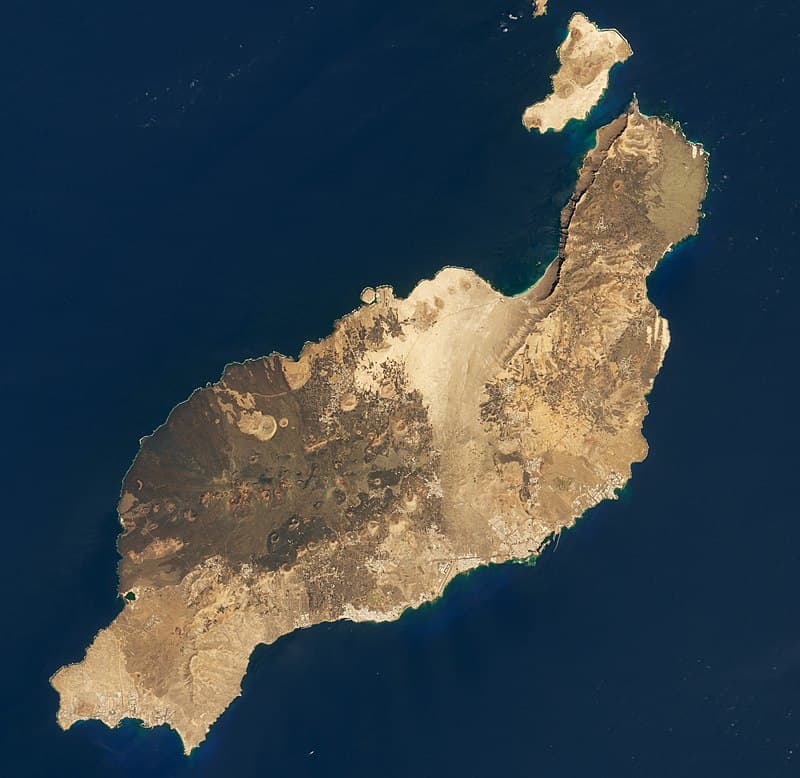
Lanzarote looks unlike any other European island because much of it is younger than many European cities. Between 1730 and 1736, over 30 volcanoes opened up here; the lava buried a quarter of the island, including its most fertile villages, and left behind a black plain that has barely grown back since. The second thing that made the island what it is was a single person: painter and architect César Manrique, who in the 1960s pushed through a ban on high-rise buildings and advertising billboards, kept houses white with blue or green windows, and turned caves, a cactus garden and a clifftop viewpoint into works of art. The result is an island that embraced tourism without letting it take over — nowhere on Lanzarote will you find a hotel taller than a palm tree. People come here on holiday for reliable sun, beaches in the south, and a landscape with no equal in Europe. The season runs all year, the island is small, and with a car you can cover the whole of it in 3 days.

What to see

The places worth your time in Lanzarote, and what to expect at each

Timanfaya National Park

Timanfaya National Park

west

50 square kilometres of bare lava from the eruptions of 1730 to 1736, where the temperature 1m below the surface exceeds 400°C. Guides demonstrate this with a bush that spontaneously ignites in a pit, and a geyser made by pouring water down a pipe. The only way through the landscape is the Ruta de los Volcanes bus tour.

Tip: Arrive right after 9am or after 3pm, otherwise a queue of cars can back up for an hour at the entrance, and admission closes at midday once capacity is reached. Walking anywhere in the park is banned except on 1 route with a pre-booked guide.

Admission:
from €12
Time needed:
2–3 h
Jameos del Agua

Jameos del Agua

northeast

A collapsed stretch of a 6km lava tube, which Manrique turned into his most famous work: an underground lake with tiny white blind crabs found nowhere else on Earth, a white pool set among palm trees, and a cave concert hall with near-perfect acoustics.

Tip: Tour groups come here mainly in the afternoon, so it's quietest right at opening at 10am. Swimming in the pool isn't allowed — it's part of the architecture, not a place to bathe. The blind crabs react to coins, which damage their environment, so nothing should be thrown into the lake.

Admission:
from €15
Time needed:
1.5 h
Cueva de los Verdes

Cueva de los Verdes

northeast

Another stretch of the same lava tube, left in its natural state. A kilometre of accessible passage with colourful minerals, where islanders hid from pirates for centuries. The tour ends with one of the best optical illusions any cave has to offer — but explaining it would spoil it.

Tip: Visits are guided and group-only, with queues in season — arrive in the first or last hour. Inside it's a constant 19°C and damp, so bring a jumper and shoes with grip.

Admission:
from €13
Time needed:
1 h
Mirador del Río

Mirador del Río

north

A viewpoint built into the cliff face 400m above the El Río strait, carved by Manrique so it's invisible from outside. Inside are 2 domed rooms with enormous windows and a view over the island of La Graciosa and the Salinas del Río salt pans.

Tip: The viewpoint is best in the morning, when the sun lights up La Graciosa; in the afternoon you're shooting into the light. Anyone who'd rather skip the entry fee will find a free viewpoint 100m before it, with practically the same view, minus the architecture.

Admission:
from €10
Time needed:
1 h
Jardín de Cactus

Jardín de Cactus

north, Guatiza

Manrique's last work, from 1990, built in a disused volcanic-gravel quarry. A terraced amphitheatre holding nearly 5,000 cacti from 450 species, topped by a working windmill, with an 8-metre metal cactus at the entrance.

Tip: Photographs work best late in the afternoon, when the shadows of the spines stretch long across the terraces. The upstairs café overlooks the whole garden and can be entered without a ticket to the grounds.

Admission:
from €8
Time needed:
1 h
La Geria vineyards

La Geria vineyards

centre

The most unusual wine landscape in Europe: thousands of semicircular stone walls, each sheltering a single vine planted in a funnel-shaped hollow. The volcanic gravel condenses moisture at night, standing in for rain, which is practically absent here. The malvasía grape produces a dry, mineral white wine.

Tip: Bodegas along the LZ-30 road offer tastings for a few euros with no booking needed; you'll come by car, so agree in advance who's driving. The most photogenic stretch is between Uga and Masdache, with parking areas along the way.

Admission:
free, tastings from €6
Time needed:
2 h
Papagayo beaches

Papagayo beaches

south

7 sheltered coves of fine pale sand and turquoise water at the island's southern tip, within the Los Ajaches nature park. There are no hotels or promenades here, just cliffs, sand and a single snack bar above the main beach.

Tip: A dirt road leads in, with a €3-per-car toll — passable in an ordinary car, but drive slowly. Water and toilets are minimal, so bring supplies. The alternative is a water taxi from Playa Blanca, running hourly.

Admission:
€3 vehicle entry
Time needed:
full day
Teguise

Teguise

centre

The island's former 15th-century capital, tucked inland away from pirates, with a convent, the church of Nuestra Señora de Guadalupe, and Santa Bárbara Castle atop a volcanic cone above the town. The Sunday market on the square is the biggest weekly event on the whole island.

Tip: The Sunday market runs from 9am to 2pm; park at the entrance to town, or you'll simply turn around and leave. On other days Teguise is nearly empty and makes for the island's finest stroll; the castle above the town is freely viewable from outside.

Admission:
free, pirate museum €3
Time needed:
2–3 h
Fundación César Manrique in Taro de Tahíche

Fundación César Manrique in Taro de Tahíche

Tahíche

The house Manrique built on a 1736 lava flow, its lower floor made of 5 interconnected lava bubbles with a pool and a tree at their centre. It's now a museum holding his paintings and the modern art collection he gathered.

Tip: This is the best place to understand why Lanzarote looks unlike other islands — visit on day 1, not your last. His second house, in Haría, where he actually lived, is kept just as he left it in 1992, and is quieter.

Admission:
from €12
Time needed:
1.5 h

Photos: Timanfaya National Park — MiljenkoSuljic (CC BY-SA 4.0) · Jameos del Agua — Frank Vincentz (CC BY-SA 3.0) · Cueva de los Verdes — Lviatour (CC BY-SA 3.0) · Mirador del Río — Original uploader was Christian Freiherr von der Rop at en.wikipedia (Public domain) · Jardín de Cactus — Pjt56 (CC BY-SA 4.0) · La Geria vineyards — Nikodem Nijaki (CC BY-SA 3.0) · Papagayo beaches — Lviatour (CC BY-SA 3.0) · Teguise — Vulcano (CC BY-SA 3.0) · Fundación César Manrique in Taro de Tahíche — H. Zell (CC BY-SA 3.0)

Where to stay

Areas and districts, matched to the kind of trip you are taking

Puerto del Carmen

Best for: a first visit and the widest choice

The island's oldest and largest resort, 10 minutes from the airport, with 6km of promenade, the Avenida de las Playas, running along the sandy Playa Grande. It has the most restaurants, bars and rental outlets on the island, and it's the only place you can spend an evening out without a car. The trade-off is that it's also the busiest.

Playa Blanca

Best for: families, and a base for Papagayo and Fuerteventura

The youngest and southernmost resort, with a marina, a paved promenade and 3 sheltered coves with calm water. The ferry to Fuerteventura leaves from here, and it's the closest base to the Papagayo beaches. It's warmer and quieter than Puerto del Carmen, but 40km from the airport.

Costa Teguise

Best for: windsurfing and lower prices

A resort on the east coast built in the 1970s, with Las Cucharas beach, the island's main windsurfing spot. The choice of restaurants is more modest than in Puerto del Carmen and the wind stronger, but hotel prices tend to be lower, and it's a quarter of an hour from the airport.

Haría and the north

Best for: peace and quiet, and the landscape

A valley of 1,000 palms in the island's north, greener, cooler, and free of hotel complexes. Accommodation is in converted country houses, evenings are early, and the nearest big beach is half an hour by car. For anyone who came for the landscape and Manrique's work, it's the best base on the island.

Getting around

From the airport

César Manrique Airport lies 5km from the capital, Arrecife, and is closest to the resort of Puerto del Carmen, just 10 minutes away. Costa Teguise is a quarter of an hour away, and Playa Blanca is 40km, around half an hour. In winter, charter flights serve the island directly from several European cities; outside that season, connections typically route through Madrid or another Canary island. The ferry from Playa Blanca to Fuerteventura takes 35 minutes, and boats to La Graciosa leave from Órzola in the north.

Lanzarote (César Manrique) (ACE) · 5 km

  • Bus 22 to Puerto del Carmen· 20 min· €1.40
  • Bus 23 to Arrecife· 15 min· €1.40
  • Taxi to Puerto del Carmen· 10 min· €18
  • Hotel transfer· 10–45 min depending on resort· included in stay

Around town

Intercity Bus Lanzarote services link the airport, Arrecife and all 3 resorts and are cheap, though they don't reach Timanfaya, the vineyards or Papagayo. The island runs 60km end to end, and the roads are quiet and in excellent condition, making a car the most comfortable way to see everything that matters — 3 days is enough. Anyone who'd rather not drive can book organised tours covering the main Manrique sites and Timanfaya. Parking is free everywhere except central Arrecife.

Intercity busesRoutes between the airport, Arrecife and the resorts; fares are paid to the driver, with services south running roughly hourly. · €1.40
Rental carThe simplest way to tour the island. Local rental firms tend to be cheaper than international chains, and will deliver the car to your hotel. · €25 / day
Water taxi, Playa Blanca–PapagayoRuns hourly in season and saves the dusty drive by car. · €12 return
Ferry to Playa BlancaTo Fuerteventura from the island's south, several sailings a day, cars included. · €25

Useful apps: Google Maps, Moovit, Cabify, El Tiempo AEMET

When to go

Lanzarote can be visited any time of year — January averages 21°C and August 29°C, so the gap between winter and summer is just 8 degrees. Winter is the main European season and also the most expensive; the best balance of weather and price comes in May, June, September and October, when the sea is above 20°C and the island is less crowded. It rains around 20 days a year, almost entirely between November and February. The trade wind blows year-round, but it's noticeably calmer in the south of the island and in the Papagayo bays than on the northern coast.

Best time

May, June, September and October; winter for the sunshine

What to avoid

Christmas and New Year for the prices, August for the crowds

MonthJanFebMarAprMayJunJulAugSepOctNovDec
Day21°21°22°23°24°26°28°29°28°26°24°22°
Night14°14°14°15°16°18°20°21°20°19°17°15°
Rainy days432100001234
Sea19°18°18°18°19°20°21°22°23°22°21°20°

Food & drink

Lanzarote cooks in the Canarian style, but the island adds 2 things of its own: wine grown in volcanic hollows, and unusually good fish, thanks to the deep water surrounding the island. The best value comes from fish restaurants in El Golfo, Arrieta and the harbour at La Santa, where you order from the display case and pay by weight. In the hotel zone around Puerto del Carmen the menu turns international and prices rise. Eating out here means driving, and it's part of the itinerary, not just a stop between sights.

What to try

Papas arrugadas con mojo

Small potatoes boiled in very salty water until their skins wrinkle, served with red mojo picón made from peppers and green mojo made from coriander. Served with everything, skins included.

Malvasía volcánica

A dry white wine from grapes grown in hollows dug into volcanic gravel. It tastes mineral and smoky, and is barely sold outside the Canary Islands.

Queso asado con mojo

Grilled goat's cheese with mojo, the most common Canarian starter. On Fuerteventura and Lanzarote it's made from majorero, a goat's cheese with its own protected designation of origin.

Pescado a la espalda

A whole fish split along the spine and grilled with garlic and oil, typically vieja or cherne. Charged by weight — ask the price per kilo before ordering.

Gofio

Roasted maize or wheat flour, the Canary Islands' number-one staple since before the Spanish arrived. Stirred into broth, into milk at breakfast, or made into the dessert gofio escaldado.

Ropa vieja

Shredded meat with chickpeas, potatoes and peppers, the Canarian version of Sunday lunch. It began as a second life for meat left over from broth, and it's the most filling dish on the islands.

Barraquito

Layered coffee with sweetened condensed milk, Licor 43 liqueur, lemon zest and cinnamon. Ordered in the afternoon, and it's more of a dessert than a coffee.

Sancocho canario

Salted cherne fish with potatoes, sweet potatoes and mojo, alongside a ball of gofio. Traditionally an Easter dish, served on Lanzarote year-round.

What it costs

Cortado coffee

€1.30–2

Menu del día (set lunch)

€10–14

Dinner at a restaurant

€20–30 per person

Beer, 0.33 l

€2–3

Entry to Timanfaya

€12

Combined ticket for 6 centres

€35

Car rental per day

from €25

Night in a 4* hotel

€90–150

Indicative prices that change over time — treat them as a guide, not a price list.

Practical information

SocketsCEuroplug, two round pinsFSchuko
Voltage230V / 50Hz
Tap waterTap water is drinkable — Tap water comes from desalination plants and is safe, but has a noticeable mineral taste. Practically everyone, locals included, drinks bottled water, which costs around 20 cents a litre and a half in supermarkets.
TippingTipping isn't obligatory, and Spaniards themselves tip little — loose change at a café, or a rounded-up bill or an added 5% at a restaurant. 10% is the upper limit, given in cash, since card machines usually have no tip option.
Driving on theright
SafetyLanzarote is very safe, crime is low, and walking the promenade at night poses no real concern. The risks are natural: the north and west coasts have strong surf and rip currents with no lifeguard present, so swim only at flagged beaches. In Timanfaya, staying on the marked path is essential, as the crust over the hot cavities is thin in places. The sun is more deceptive here than in the Mediterranean because of the constant wind — sunburn is possible even on a cool day.
Opening hoursShops are typically open from 10am to 8pm, later and through weekends in the resorts. The Manrique centres, including Jameos del Agua and Timanfaya, admit last entries an hour before closing and shut as early as 5pm in winter. In inland villages, almost everything closes on Sundays except restaurants near the market in Teguise.
Customs & etiquetteLunch is around 2pm, dinner after 9pm; restaurants often haven't opened their kitchen yet before 8pm. Swimwear belongs on the beach, not in town. Canary Islanders consider themselves Canarian rather than mainland Spanish, and appreciate that distinction being recognised. Greeting people on entering a shop or bar is standard practice here.
A few local wordsHello — Buenos díasThank you — GraciasPlease — Por favorThe bill, please — La cuenta, por favorCheers — Salud

How to plan your days

1 day

A day with the volcanoes

  1. 1Morning, right after opening, at Timanfaya National Park.
  2. 2The Ruta de los Volcanes bus tour with commentary.
  3. 3Lunch in El Golfo overlooking the green Charco de los Clicos lagoon.
  4. 4Afternoon at the La Geria vineyards and a tasting at a bodega.
  5. 5Return via Yaiza, one of the island's prettiest white villages.

2 days

2 days with Manrique

  1. 1Day 1 as above.
  2. 2Day 2, the Fundación in Taro de Tahíche right after opening.
  3. 3Jardín de Cactus, then lunch by the sea in Arrieta.
  4. 4Afternoon at Jameos del Agua and Cueva de los Verdes.
  5. 5Early evening at Mirador del Río, overlooking La Graciosa.

3 days

3 days including the beaches

  1. 1The first 2 days as above.
  2. 2Day 3, morning at the Papagayo beaches while the coves are still empty.
  3. 3Lunch on the promenade in Playa Blanca.
  4. 4Afternoon in Teguise, Santa Bárbara Castle and the viewpoint over the island.
  5. 5With a 4th day, take a boat to La Graciosa.

Day trips

La Graciosa

30 km · 25 min by boat from Órzola

The smallest inhabited island in the archipelago, with no paved roads — off-road taxis and bikes replace cars. Home to 700 residents, empty beaches like Playa de las Conchas, and the single village of Caleta de Sebo, where sand stands in for streets. Boats run several times a day from Órzola, and the crossing over the strait can be choppy.

Fuerteventura

15 km · 35 min by ferry from Playa Blanca

The ferry to Corralejo runs several times a day, and a single day is enough for the dunes at Corralejo and a swim at Grandes Playas. Taking a car costs more, but makes more sense, since you won't get far on the other side without one. The neighbouring island is flat and sandy, the opposite of Lanzarote.

Haría and the Valle de las Mil Palmeras

30 km · 35 min by car

A green valley in the north with thousands of palm trees, the least volcanic spot on the island. Haría holds Manrique's second house, where he actually lived, kept just as he left it in 1992. A craft market runs on Saturdays, and it pairs well with a trip to the Mirador del Río.

Frequently asked questions

Is Lanzarote just black wasteland?+

Far from it, even though lava fields cover a quarter of the island. The south has the pale sandy beaches of Papagayo, the north a green valley of palms around Haría, and the centre vineyards set in volcanic gravel. It's precisely the contrast between the black surface and the turquoise water that keeps people coming back to Lanzarote.

Who was César Manrique, and why is he everywhere?+

A painter and architect born in Arrecife, who in the 1960s pushed through a ban on high-rise buildings and billboards and designed most of the island's major attractions — Jameos del Agua, Mirador del Río, Jardín de Cactus. Thanks to him, Lanzarote never got the concrete coastal strip found at so many other Mediterranean resorts.

Do I need a car on Lanzarote?+

For 2 to 3 days, yes. Buses link the airport, Arrecife and the resorts, but not Timanfaya, the vineyards or Papagayo. The island is small and the roads quiet, so even a driver unused to southern Europe can get around without stress. Organised tours are an alternative that cover the main sights.

Which resort should I choose?+

Puerto del Carmen has the most restaurants and is 10 minutes from the airport, but it's the busiest. Playa Blanca in the south is quieter, warmer, and closest to Papagayo and the Fuerteventura ferry. Costa Teguise is the cheapest and windiest, which suits surfers. Families most often choose Playa Blanca.

Is the combined ticket for the Manrique centres worth it?+

Yes, if you're planning at least 3 stops. Individual entries cost €8–15, while a combined ticket for 6 centres costs €35 and is valid for several days. It's sold at the ticket office of any of the centres. Timanfaya is included, and it's the single most expensive entry.

When is the sea warmest?+

In September and October, when it reaches 22–23°C, a touch warmer than August. It's coldest in March and April, at 18°C. The Atlantic is cooler year-round than the Mediterranean, and even in summer getting in can feel bracing, especially when the wind is up.

Is Lanzarote suitable for young children?+

Yes, but choose your beach by the waves. The sheltered coves at Playa Blanca and Playa Dorada have calm water and a shallow entry, as do parts of the Papagayo bays. The north and west coasts, by contrast, have strong surf. Distances are short, so day trips by car are easier to manage with kids than on larger islands.

Is there nightlife on Lanzarote?+

Modest, and concentrated in Puerto del Carmen, where a strip of bars and a few clubs sit at the end of the promenade. The island has neither a club scene like Ibiza nor the hotel entertainment of Turkish resorts — an evening out here usually means dinner and a stroll along the seafront. Elsewhere on the island, things close up after 11pm.

Visa Requirements

Check the latest visa requirements for entering this country. Some nationalities may need to apply for a visa or e-visa before travel.

Check visa requirements

Language

Spanish

Currency

EUR

Timezone

Atlantic/Canary

Dial Code

+34

Population

47.6M

Area

505,990 km²

Voltage

230V / 50Hz

Driving Side

Right

Top Hotels in Lanzarote

Live prices from 500+ properties

Loading hotels...

Planning a trip to Lanzarote?

Compare hundreds of hotels, find the best price, and book with free cancellation on TravelManiac.