Hotels in Mallorca

Tramuntana mountains above turquoise coves

Mallorca

LanguageSpanish
CurrencyEUR
TimezoneEurope/Madrid
Temperature12-32 °C
Dial Code+34
Population47.6M
Area505,990 km²
SocketsType C / Type F
Tap waterDrinkable

Discover Mallorca

Mallorca has a reputation as a mass-tourism destination that it only really earns in two or three spots — the rest of the island is mountainous, agricultural, and surprisingly quiet. The UNESCO-listed Serra de Tramuntana mountain range in the northwest rises to 1,500 metres and drops into the sea in hundred-metre cliffs, sheltering stone villages surrounded by terraced olive groves between them. The eastern coast is cut into dozens of narrow coves called calas, the south is flat with long sandy beaches, and Palma is a real city with a cathedral, museums, and a strong food scene, not just a resort town. The island is ninety kilometres wide, so from almost any hotel you can reach anywhere else within two hours. The season runs from May to October.

What to see

The places worth your time in Mallorca, and what to expect at each

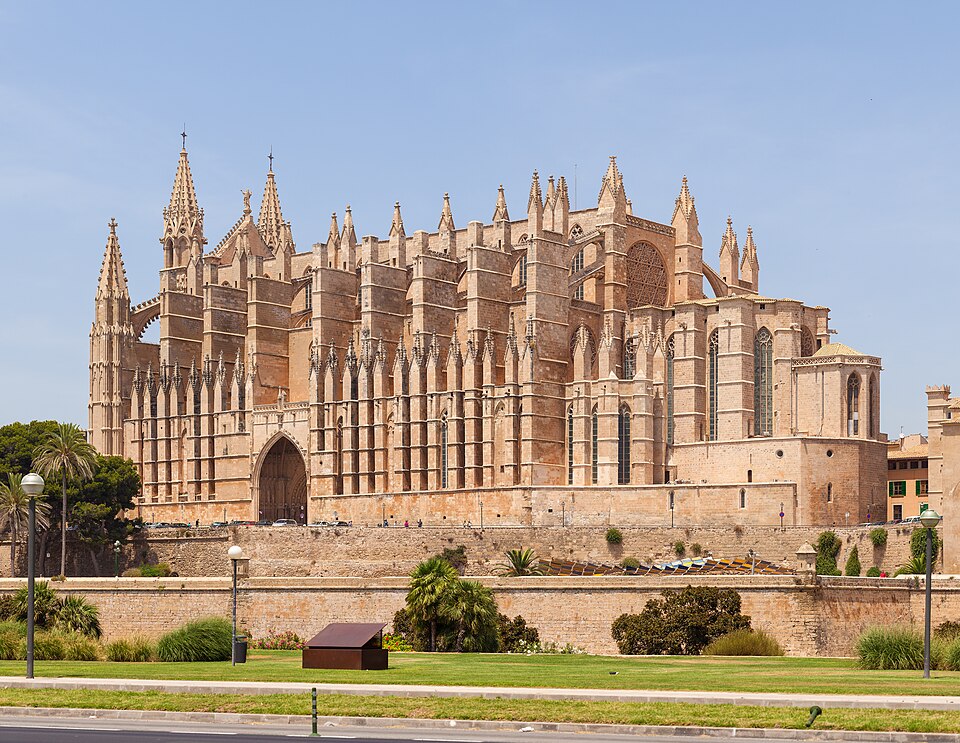
La Seu Cathedral in Palma

La Seu Cathedral in Palma

Catedral de Santa María de Palma

Palma

This Gothic cathedral right above the sea has the tallest nave of any Gothic church in Europe and the largest rose window in the world, nearly thirteen metres across. The interior was reworked by Antoni Gaudí, and the Blessed Sacrament chapel was covered in ceramic work by Miquel Barceló.

Tip: Twice a year, in February and November, the rose window casts its image precisely onto the opposite window — a spectacle that draws crowds from across the island.

Admission:
from 10 €
Time needed:
1.5 h
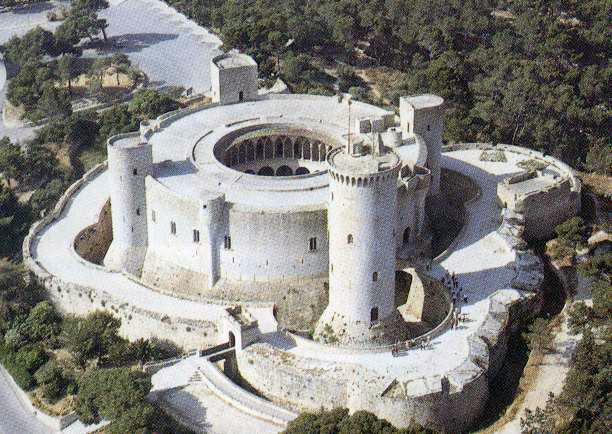
Bellver Castle

Bellver Castle

Castell de Bellver

Palma

This 14th-century Gothic castle on a hill above Palma is one of the few circular castles in Europe. It served as both a royal residence and a prison, and today houses the city museum. From the ramparts there's a view over the whole bay of Palma and the cathedral.

Tip: A steep forest path climbs up from Plaça Gomila — thirty minutes on foot, or bus 50 takes you all the way to the top.

Admission:
from 4 €
Time needed:
1.5 h
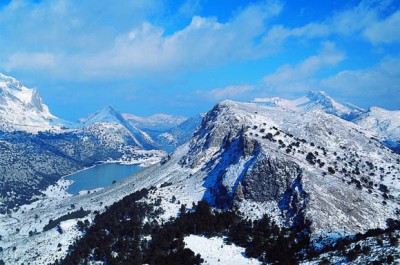
Serra de Tramuntana mountains

Serra de Tramuntana mountains

northwest of the island

A ninety-kilometre-long, UNESCO-listed mountain range along the northwest coast, with terraced fields, dry-stone walls, and hairpin roads high above the sea. The Ma-10 road from Andratx to Pollença is one of the most beautiful scenic drives in the Mediterranean.

Tip: Head out early for the hairpin roads to the Sa Foradada lighthouse and Sa Calobra — after 10am they fill up with tour buses and cyclists.

Admission:
free
Time needed:
full day by car
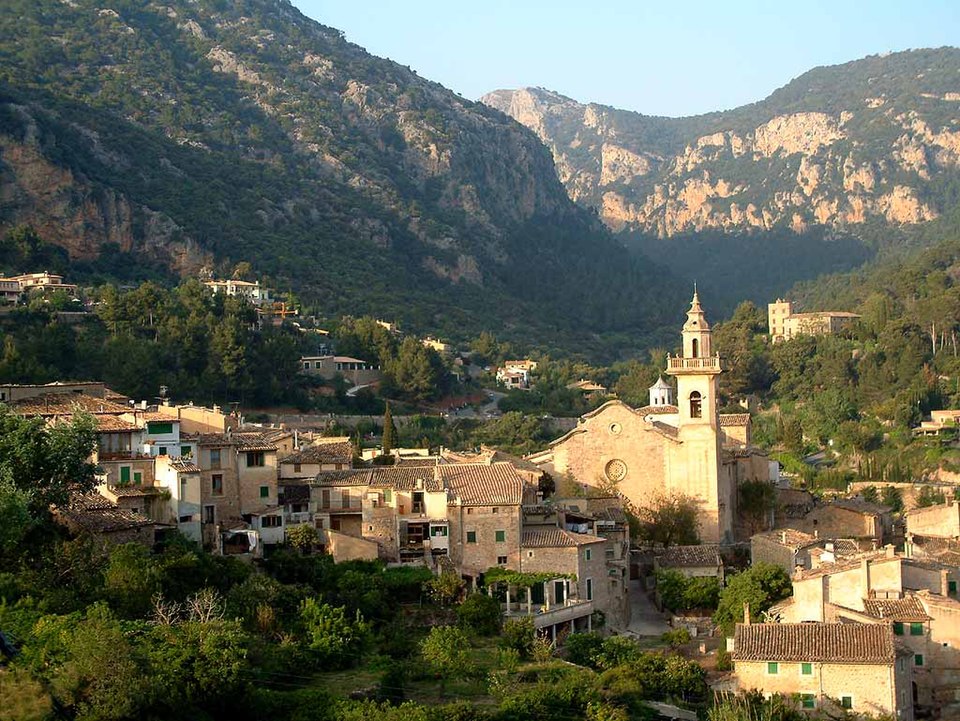
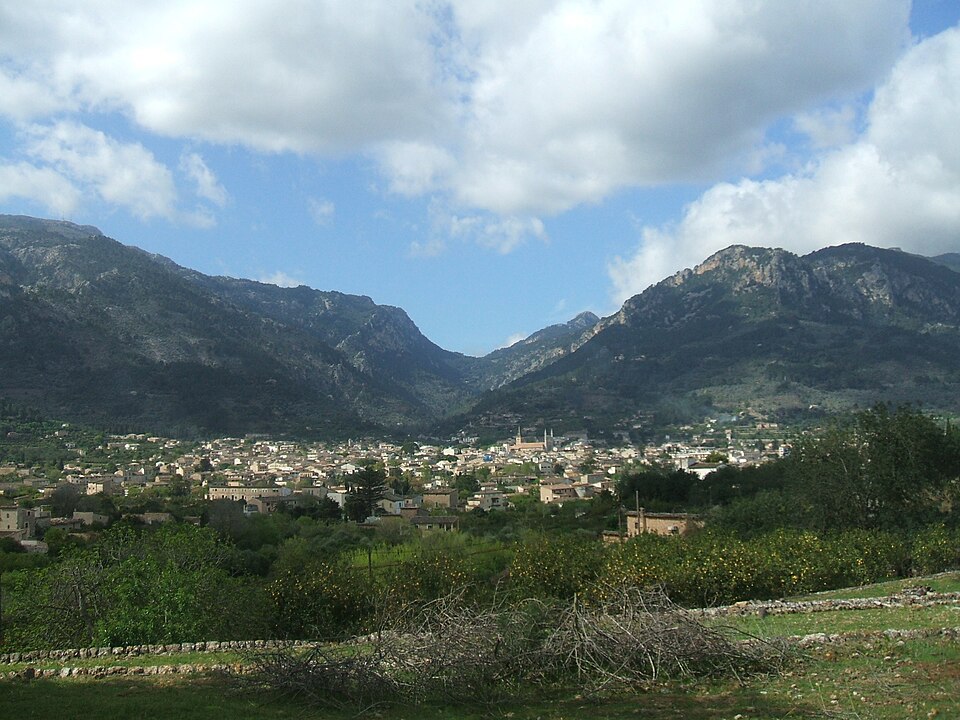
Valldemossa

Valldemossa

17 km north of Palma

A stone village in the mountains where Frédéric Chopin stayed with George Sand during the winter of 1838, in the cells of a former Carthusian monastery. The flower-decked, shuttered alleys are among the most photographed on the island, and the monastery is now a museum housing Chopin's piano.

Tip: Try the local coca de patata, a sweet potato pastry made only here — you won't find it elsewhere on the island.

Admission:
monastery from 9.50 €
Time needed:
2-3 h
Sóller and its historic tram

Sóller and its historic tram

30 km north of Palma

A town in an orange-grove valley reached from Palma by a wooden narrow-gauge train from 1912 that passes through thirteen mountain tunnels. From Sóller, an open-air tram from 1913 continues down to the horseshoe-shaped bay at Port de Sóller.

Tip: Buy a one-way train ticket and return by bus instead — the train costs several times more and loses its novelty the second time round.

Admission:
train from 25 € one way
Time needed:
half a day
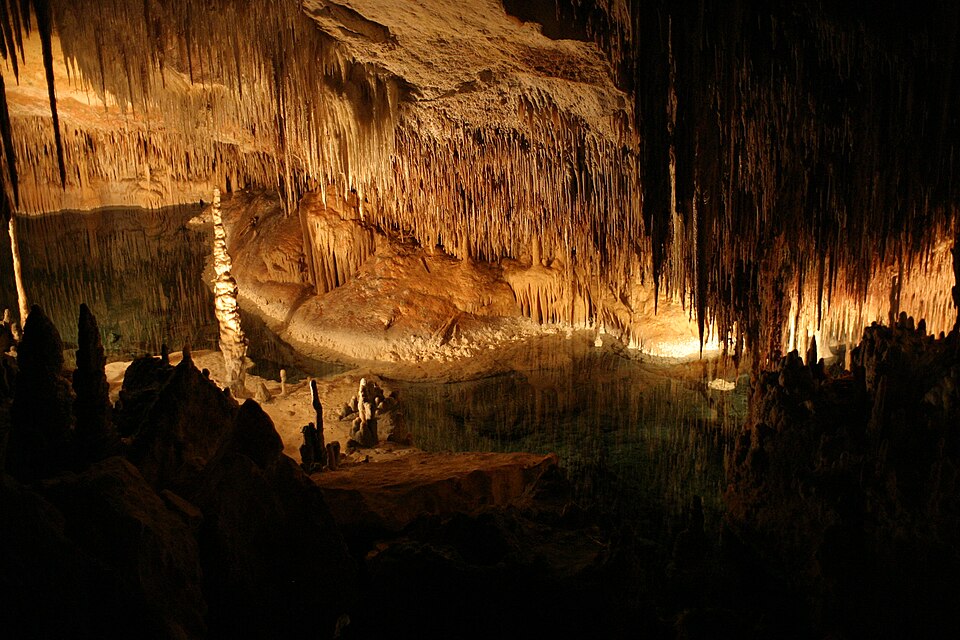
Caves of Drach

Caves of Drach

Coves del Drac

Porto Cristo, 60 km east

A system of limestone caves on the east coast containing one of the largest underground lakes in the world. The tour ends with a classical music concert performed by musicians on three boats gliding across the lake in the dark, after which visitors can take a boat ride themselves.

Tip: Tickets are for a fixed time slot and sell out in season — book online at least a day ahead.

Admission:
from 17 €
Time needed:
1.5 h
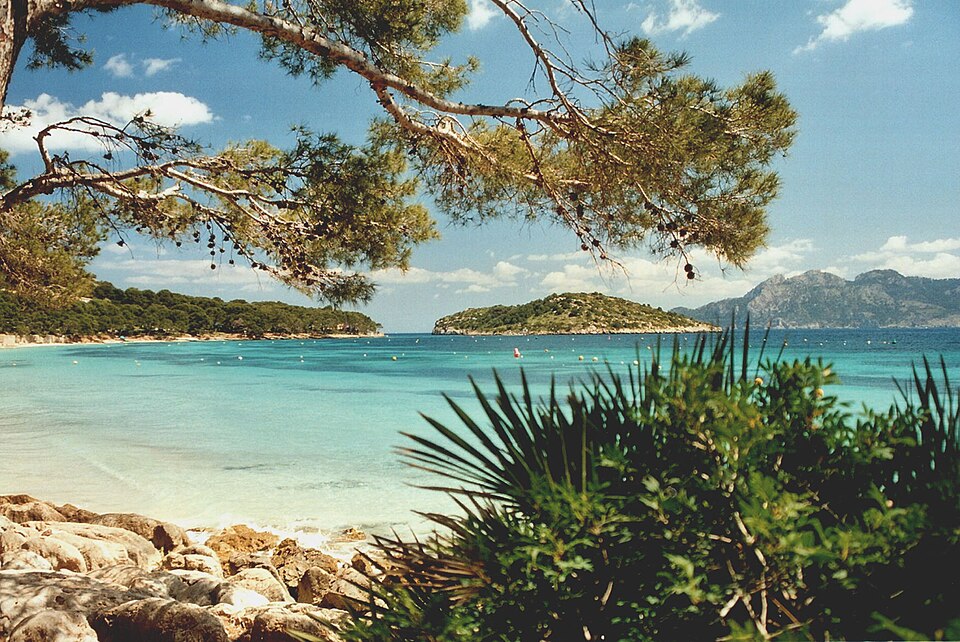
Cap de Formentor

Cap de Formentor

northern tip

A rocky headland at the island's northernmost point, with a lighthouse at the end of a twenty-kilometre road full of hairpin turns and viewpoints. The cliffs here drop three hundred metres into the sea, and the Mirador Es Colomer viewpoint offers the most dramatic view on Mallorca.

Tip: During peak summer the road to the cape is closed to cars during the day, with only a shuttle bus running — plan for this and check the current arrangement.

Admission:
free
Time needed:
half a day
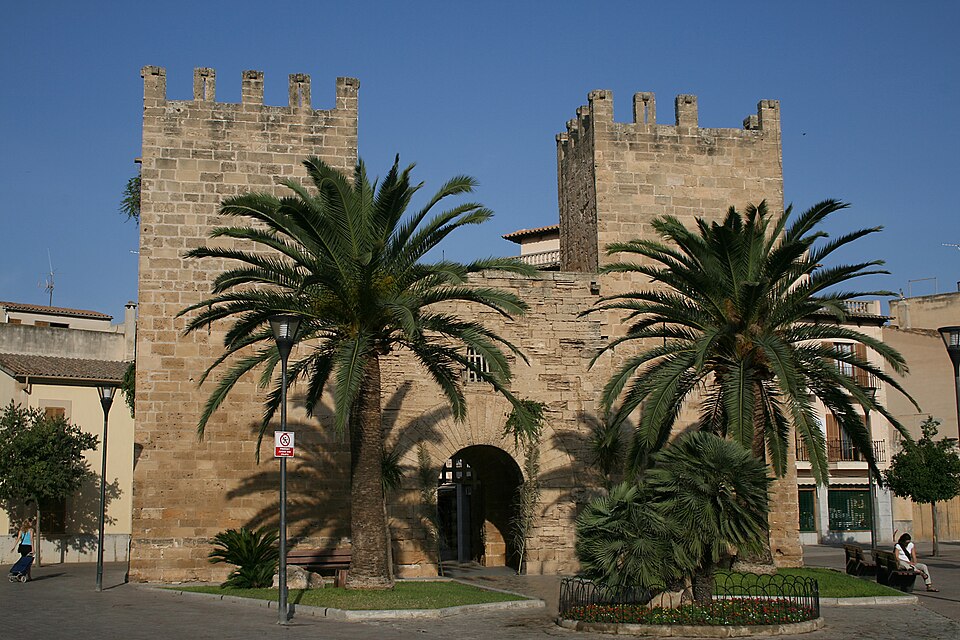
Alcúdia

Alcúdia

55 km northeast

A medieval town in the north, encircled by well-preserved walls you can walk along the top of. Inside is a Sunday market, and nearby lie the remains of the Roman city of Pollentia, including a theatre. The nearby Platja d'Alcúdia is the island's longest sandy beach.

Tip: The beach has shallow water far from shore, ideal for small children — the best family combination on Mallorca.

Admission:
town free, Pollentia from 4 €
Time needed:
half a day
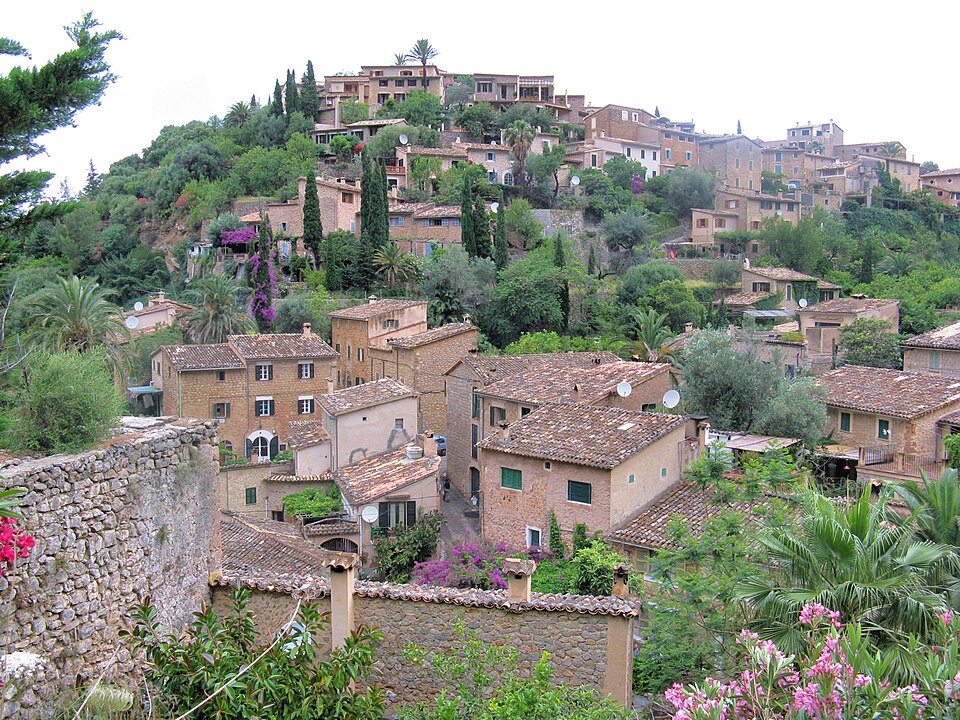
Deià

Deià

27 km north of Palma

A village of ochre stone houses clinging to a hillside above the sea, which has drawn writers and musicians since the 1950s. Robert Graves lived here, and his house is now a museum. A thirty-minute path leads down to the pebble cove of Cala Deià.

Tip: Parking in Deià is nearly impossible and fines are handed out diligently — leave your car in the paid car park at the edge of the village.

Admission:
free
Time needed:
2-3 h

Photos: La Seu Cathedral in Palma — Thomas Wolf, www.foto-tw.de (CC BY-SA 3.0 de) · Bellver Castle — Poniol60 (Public domain) · Serra de Tramuntana mountains — No machine-readable author provided. Cybertoni assumed (based on copyright claims). (Public domain) · Valldemossa — No machine-readable author provided. Kork~commonswiki assumed (based on copyright claims). (Public domain) · Sóller and its historic tram — Top Cat 14 (Public domain) · Caves of Drach — no (CC BY 2.0) · Cap de Formentor — Wikimedia Commons (CC BY-SA 3.0) · Alcúdia — Mike Lehmann, Mike Switzerland 15:53, 5 November 2006 (UTC) (CC BY-SA 3.0) · Deià — Photographed by Adrian Pingstone (Public domain)

Where to stay

Areas and districts, matched to the kind of trip you are taking

Palma

Best for: city life, food, and year-round stays

The only place on the island that keeps running outside the season. Cathedral, museums, tapas bars, and shopping, plus the city beach at Can Pastilla close to the centre. The best choice if you don't just want to lie by the sea and want to get around without a car.

Alcúdia and Playa de Muro

Best for: families with young children

The north of the island, with the longest sandy beach and exceptionally shallow water that stretches dozens of metres from shore. Quieter than the south, with plenty of family-friendly hotels. It's an hour's drive to Palma, so factor in travel time for day trips.

Port de Sóller and Deià

Best for: mountains, hiking, and quiet

The northwest, beneath the Tramuntana mountains, where the coves are pebbly and the sea deeper. A base for hiking and scenic drives along the Ma-10. Accommodation is pricier and choice more limited, but it's the most beautiful part of the island.

Cala d'Or and the eastern coves

Best for: small coves and calmer swimming

The east coast, cut into dozens of narrow coves with white sand and pine trees reaching down to the water. Smaller resorts, shallow sheltered water, and less wind than in the north. The beaches, though, are small and fill up quickly in August.

Getting around

From the airport

Mallorca has one of the busiest airports in Spain, about eight kilometres east of Palma. In season, both charter and low-cost flights operate from Prague. A direct bus runs from the airport into central Palma and to the main resorts in the south; reaching more distant parts of the island requires a change at the bus station in Palma. Car rental desks are located right at the terminal, and booking ahead is strongly worthwhile in season.

Palma de Mallorca (PMI) · 8 km

  • Bus A1 to central Palma· 20 min· 5 €
  • Bus to southern resorts· 30-60 min· 8 €
  • Taxi to Palma· 15 min· 25 €
  • Hotel transfer· 20-90 min depending on resort· included in stay

Around town

The TIB bus network covers the whole island and is cheap, but connections between resorts often route through Palma, so getting from the east to the north can take up to three hours. Two rail lines run from Palma into the interior, plus the historic train to Sóller. If you want to explore the Tramuntana and the eastern coves, a car is practically essential — the roads are excellent, just narrow and busy with cyclists in the mountains. In Palma itself, you won't need a car, and parking is expensive.

TIB busesCover the whole island, but often require a change in Palma. Pay by card or cash on board. · 2-9 € depending on distance
Sóller trainA historic narrow-gauge railway from 1912, more of an attraction than a transport option. · 25 € one way
Rental carThe best way to see the island. Book months ahead for July and August. · 40 € / day
EMT city buses in PalmaA dense network across all of Palma, including the beaches and Bellver Castle. · 2 €

Useful apps: TIB, Moovit, Google Maps

When to go

May, June, and September are best: warm at around 25-27°C, the sea pleasant, and the island still or already free of crowds. July and August are hot, above 30°C, beaches are packed, and accommodation prices peak. April and October suit hiking in the Tramuntana, though the sea is still too cool for swimming. In winter Mallorca is green and calm, but most resorts close and only Palma keeps running.

Best time

May, June, and September

What to avoid

August, for the crowds and prices

MonthJanFebMarAprMayJunJulAugSepOctNovDec
Day15°15°17°19°23°27°30°30°27°23°19°16°
Night4°4°6°8°11°15°18°19°16°13°8°6°
Rainy days655542125766
Sea15°14°14°16°18°22°25°26°25°22°19°17°

Food & drink

Mallorcan cuisine is rustic and quite different from mainland Spanish food: plenty of pork, pulses, and bread made with lard. Lunch is around 2pm, dinner after 9pm, with tapas in between. The island produces its own wine in the Binissalem and Pla i Llevant regions, which is barely exported, so you can really only taste it here. Tourist resorts mostly serve international food — head to the inland villages for genuine Mallorcan cooking.

What to try

Sobrasada

A soft, cured sausage made from pork and paprika, spread on bread. The most iconic Mallorcan product.

Ensaïmada

A spiral-shaped sweet pastry made with puff dough and lard, the classic breakfast and the most common souvenir.

Pa amb oli

Bread rubbed with tomato and olive oil, topped with cheese or ham — the simplest and most common Mallorcan dish.

Tumbet

Layered baked potatoes, eggplant, and peppers with tomato sauce, Mallorca's answer to ratatouille.

Frit mallorquí

A mix of fried potatoes, peppers, and offal with fennel. A hearty dish found mostly in the countryside.

Hierbas

A herbal liqueur made from anise and local herbs, served chilled as a digestif after meals.

What it costs

Coffee and an ensaïmada

4-6 €

Set lunch menu (menu del día)

14-18 €

Dinner at a restaurant

25-40 € per person

Beer, 0.33 l

3-4 €

Sunbed and parasol

12-20 € for two sunbeds

Car rental per day

from 40 €

Bus Palma-Alcúdia

8 €

Night at a 4-star hotel

120-200 €

Indicative prices that change over time — treat them as a guide, not a price list.

Practical information

SocketsCEuroplug, two round pinsFSchuko
Voltage230V / 50Hz
Tap waterTap water is drinkable — Tap water on Mallorca is safe to drink, but because of the high calcium content and salty taste in coastal areas, bottled water is common practice.
TippingNot mandatory. At restaurants, people round up or leave 5-10 percent; at bars, small change is enough.
Driving on theright
SafetyMallorca is very safe. The main risks are pickpockets in central Palma and on crowded beaches, strong sun, and narrow mountain roads shared with cyclists in the Tramuntana. On the eastern coves, watch for hidden rocks when jumping into the water.
Opening hoursShops are typically open 9:30am-1:30pm and 5pm-8pm; siesta is still common inland. In resorts and shopping centres, hours run all day. Villages tend to close on Sundays.
Customs & etiquetteSwimwear belongs on the beach, not in town — walking around Palma shirtless is subject to fines. Lunch is served late, and restaurants are often not yet open before 8pm. Catalan is the local language on Mallorca, but Spanish is universally understood.
A few local wordsGood day — Bon diaThank you — GràciesPlease — Si us plauThe bill, please — El compte, si us plauCheers — Salut

How to plan your days

1 day

A day in Palma

  1. 1Morning at La Seu Cathedral and the Arab Baths.
  2. 2A stroll through the old town and the courtyards of its historic mansions.
  3. 3Lunch at the Mercat de l'Olivar market.
  4. 4Afternoon at Bellver Castle for the bay view, evening tapas in the Santa Catalina district.

2 days

Two days with the mountains

  1. 1Day one as above.
  2. 2Day two by train or car to Valldemossa and Deià.
  3. 3Lunch in Sóller among the orange groves, then tram down to the port.
  4. 4Return along the Ma-10 road, stopping at viewpoints above the sea.

3 days

Three days including the north and east

  1. 1Days one and two as above.
  2. 2Day three, morning at Cap de Formentor and the Es Colomer viewpoint.
  3. 3Lunch inside the walls of Alcúdia and a walk along the ramparts.
  4. 4Afternoon swimming at Platja d'Alcúdia.
  5. 5If time allows, head east to the Caves of Drach.

Day trips

Sa Calobra and Torrent de Pareis

60 km · 1.5 h by car

A hairpin road with a 360-degree turn winds down to a cove wedged between cliffs, where the island's deepest gorge meets the sea. The drive itself is an experience, though in season it's often clogged with tour buses.

Menorca Island

40 km · 1 h 30 min by fast ferry

A quieter neighbouring island with wild beaches and prehistoric stone monuments. It's a tight squeeze as a day trip — ideally spend at least one night there.

Pollença and the Calvary steps

50 km · 50 min by car

A small town at the foot of the Tramuntana with 365 steps leading from the main square up to a hilltop chapel. The Sunday market on the main square is one of the best on the island.

Frequently asked questions

Do I need a car on Mallorca?+

Only if you want to explore the Tramuntana mountains, the eastern coves, or the inland villages. Buses run reliably, but connections between resorts often go through Palma, so getting from the east to the north can take up to three hours. If you're staying in Palma, you won't need a car.

When is the sea warmest?+

In August and September, when the sea reaches 25-26°C. Swimming is comfortable from June to early October. In May the sea is still only 18°C, which feels cold to most people.

Which part of the island is best for families?+

The north, around Alcúdia and Playa de Muro, home to the island's longest sandy beach with exceptionally shallow water that stretches dozens of metres from shore. The eastern coves are also sheltered, but small and quick to fill up in August.

Is Mallorca expensive?+

More expensive than mainland Spain, but cheaper than the French or Italian Riviera. A midday set menu (menu del día) costs 14-18 euros, dinner 25-40. You'll save the most away from the main resorts, in the inland villages.

Can you swim on Mallorca outside the main season?+

Yes, in October the sea is still 22°C. From November to May it drops below 20°C and most people find it too cold. Winter, though, is ideal for hiking in the Tramuntana, with a pleasant 15°C and green mountains.

How do I get to Cap de Formentor?+

By car, along a 20-kilometre winding road from Port de Pollença. During peak summer the road to the cape is often closed to private cars during the day, with only a shuttle bus running, so check the current arrangement before you go.

Is the train to Sóller worth it?+

As an experience, yes — it's a historic railway from 1912 that passes through thirteen mountain tunnels. It's pricey though, at 25 euros one way. It's worth taking the train one way and returning on the cheaper bus, which follows a scenic road.

Is Spanish spoken on Mallorca?+

Yes, but the official and everyday language is Catalan, in its Mallorcan form. Signs and menus are often in Catalan, though you'll get by in Spanish, English, and German at any tourist-facing business.
Visa Requirements

Check the latest visa requirements for entering this country. Some nationalities may need to apply for a visa or e-visa before travel.

Check visa requirements

Language

Spanish

Currency

EUR

Timezone

Europe/Madrid

Dial Code

+34

Population

47.6M

Area

505,990 km²

Voltage

230V / 50Hz

Driving Side

Right

Top Hotels in Mallorca

Live prices from 500+ properties

Loading hotels...

Planning a trip to Mallorca?

Compare hundreds of hotels, find the best price, and book with free cancellation on TravelManiac.