Hotels in Mostar

An Ottoman bridge over the Neretva and a town that joins cultures

Mostar

LanguageBosnian / Croatian / Serbian
CurrencyBAM
TimezoneEurope/Sarajevo
Temperature2-28 °C
Dial Code+387
Population3.2M
Area51,197 km²
SocketsType C / Type F
Tap waterDrinkable

Discover Mostar

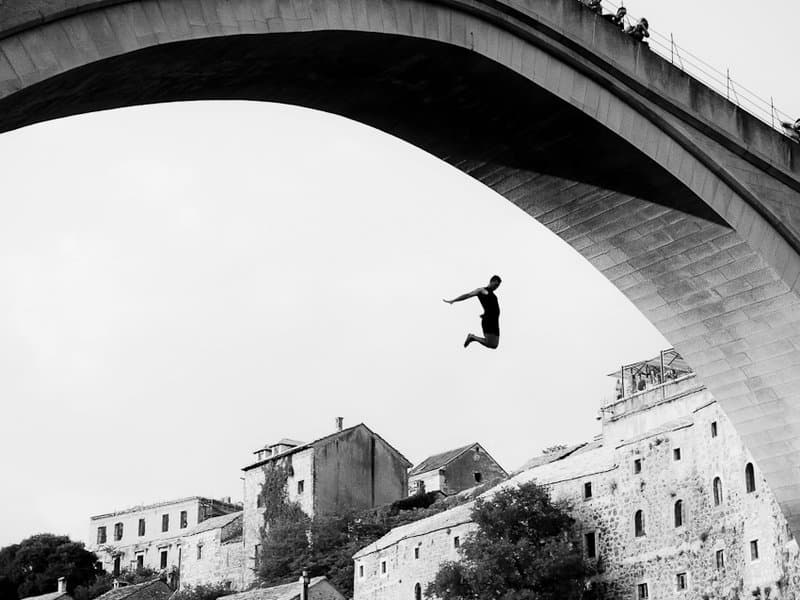
Mostar is the capital of Herzegovina on the Neretva river and its symbol is the Old Bridge of 1566, an arched stone bridge twenty-four metres high that was brought down by shelling in 1993 during the war and faithfully rebuilt in 2004. The bridge has been a UNESCO site since 2005 and beneath it young divers leap into the river in a tradition more than four hundred years old. The old town with its cobbled streets and the Kujundžiluk bazaar, mosques with minarets and Ottoman houses feels like a piece of the Orient in the middle of Europe and contrasts with the Catholic churches and colourful houses on the other bank. Mostar lies about a hundred and thirty kilometres from Dubrovnik and Sarajevo and is most often visited on a day trip, but it is worth staying overnight because in the evening, when the groups leave, it is calm. The surroundings offer the pilgrimage site Medjugorje, the dervish monastery of Blagaj, the fortified town of Počitelj and the Kravica waterfalls. EU citizens need no visa and you pay in the Bosnian mark.

What to see

The places worth your time in Mostar, and what to expect at each

The Old Bridge (Stari Most)

old town

An arched stone bridge of 1566 over the Neretva, built by the architect Mimar Hayruddin in the Ottoman period, twenty-nine metres long and twenty-four high. It was destroyed in 1993 and rebuilt in 2004 from the same stone. It is a UNESCO site and a symbol of reconciliation.

Tip: Come early in the morning or in the evening, when the groups have left and lamps light the bridge. From the tower on the east bank the view is loveliest; entry costs about five euros.

Admission:
free
Time needed:
1 hr
The Bridge Jumpers

The Bridge Jumpers

Old Bridge

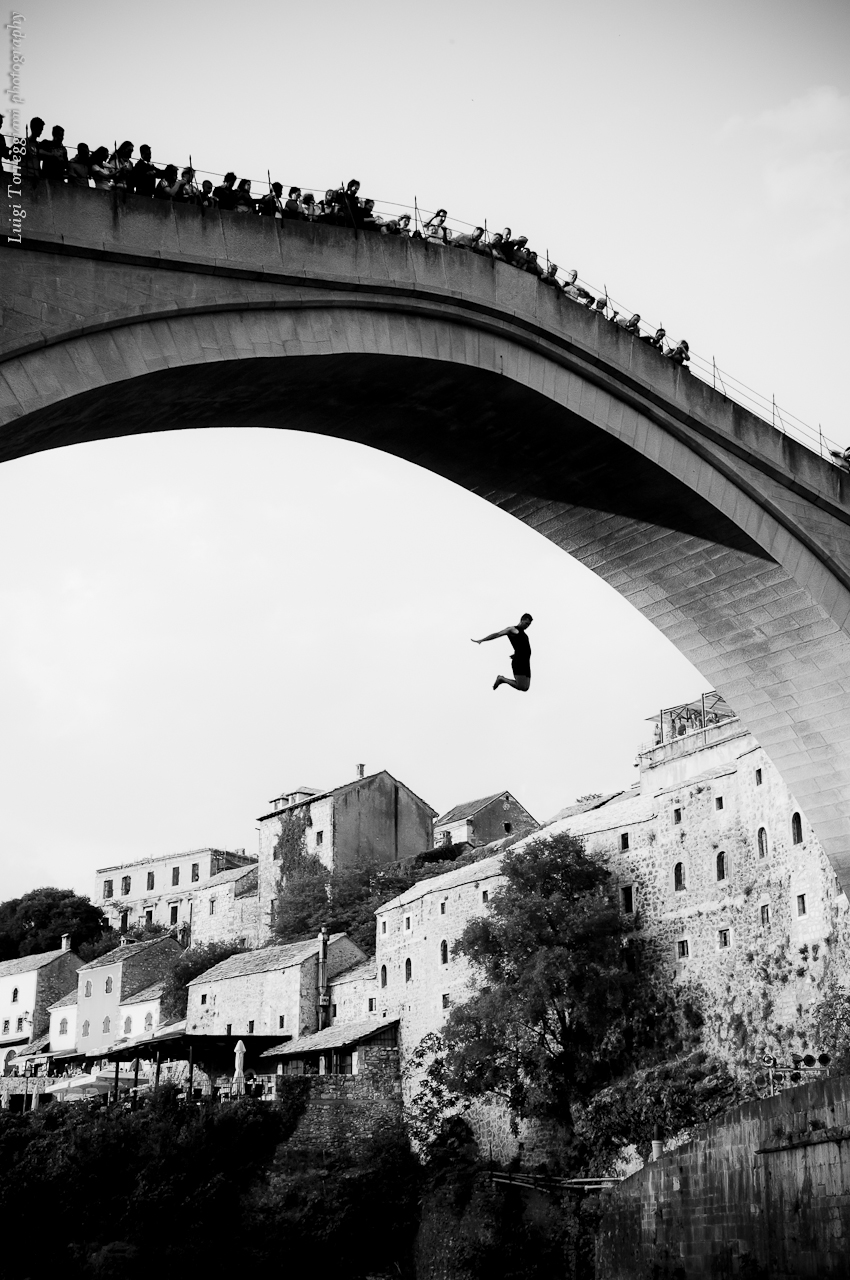
A tradition of leaping from the bridge into the icy Neretva that has lasted more than four hundred years. Young members of the diving club jump from twenty-four metres once enough money has been collected from spectators. In July a jumping competition is held.

Tip: The jump is paid by a voluntary contribution, usually around twenty euros, and takes place several times a day in season. Photograph from the bank below the bridge; the club looks after the jumpers, the rest is improvisation.

Admission:
contribution ~€20
Time needed:
30 min
The Kujundžiluk Bazaar

The Kujundžiluk Bazaar

old town

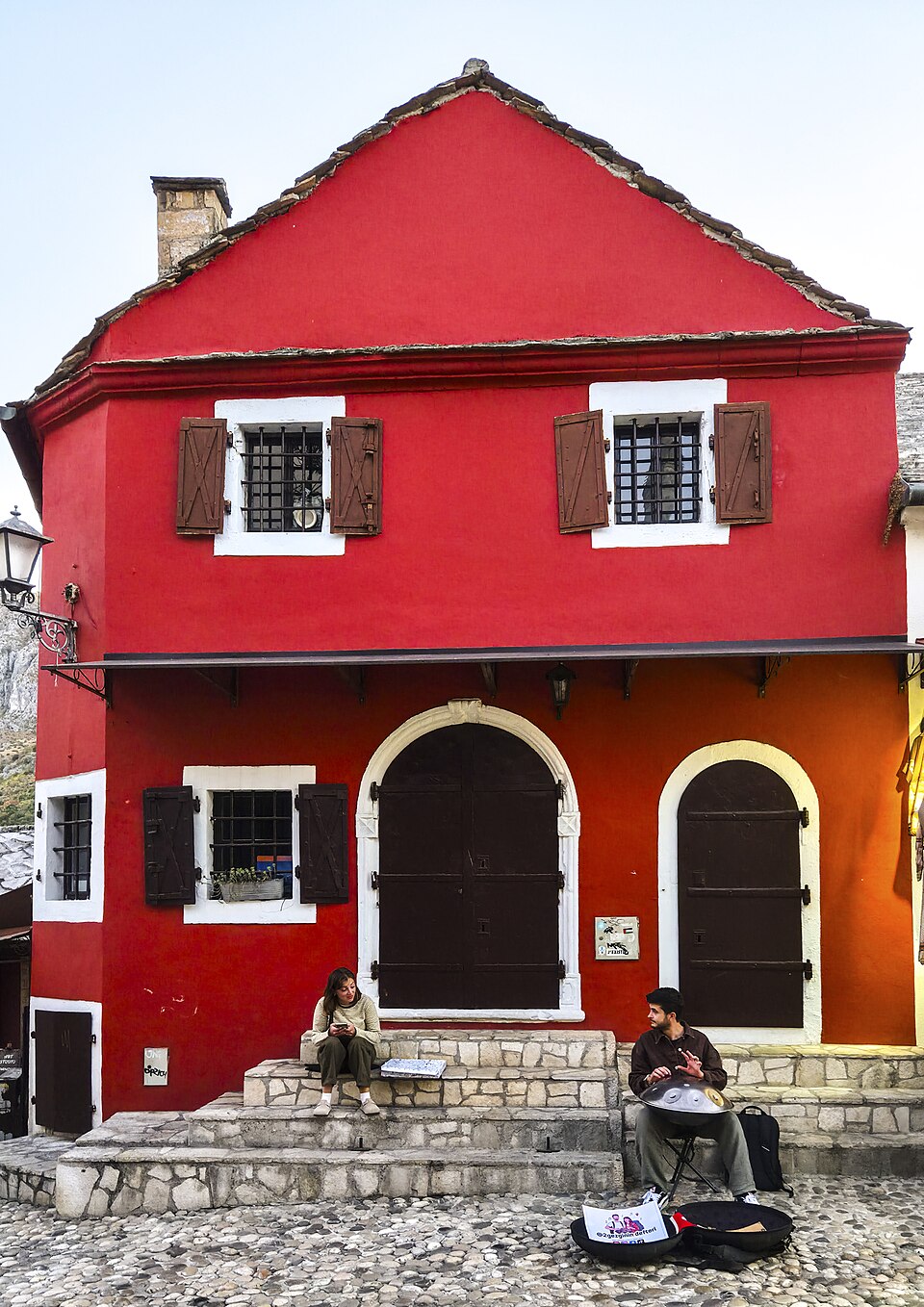
A narrow cobbled street by the Old Bridge lined with shops selling copper, ceramics, handmade jewellery and souvenirs. The name means 'street of the goldsmiths'. It is the best place to buy souvenirs and taste Bosnian coffee.

Tip: Prices are bargained; start from half. Buying handmade copper coffee pots is worthwhile, but find out the origin, as much of the stock comes from Turkey.

Admission:
free
Time needed:
1–2 hrs
Koski Mehmed Pasha Mosque

Koski Mehmed Pasha Mosque

old town

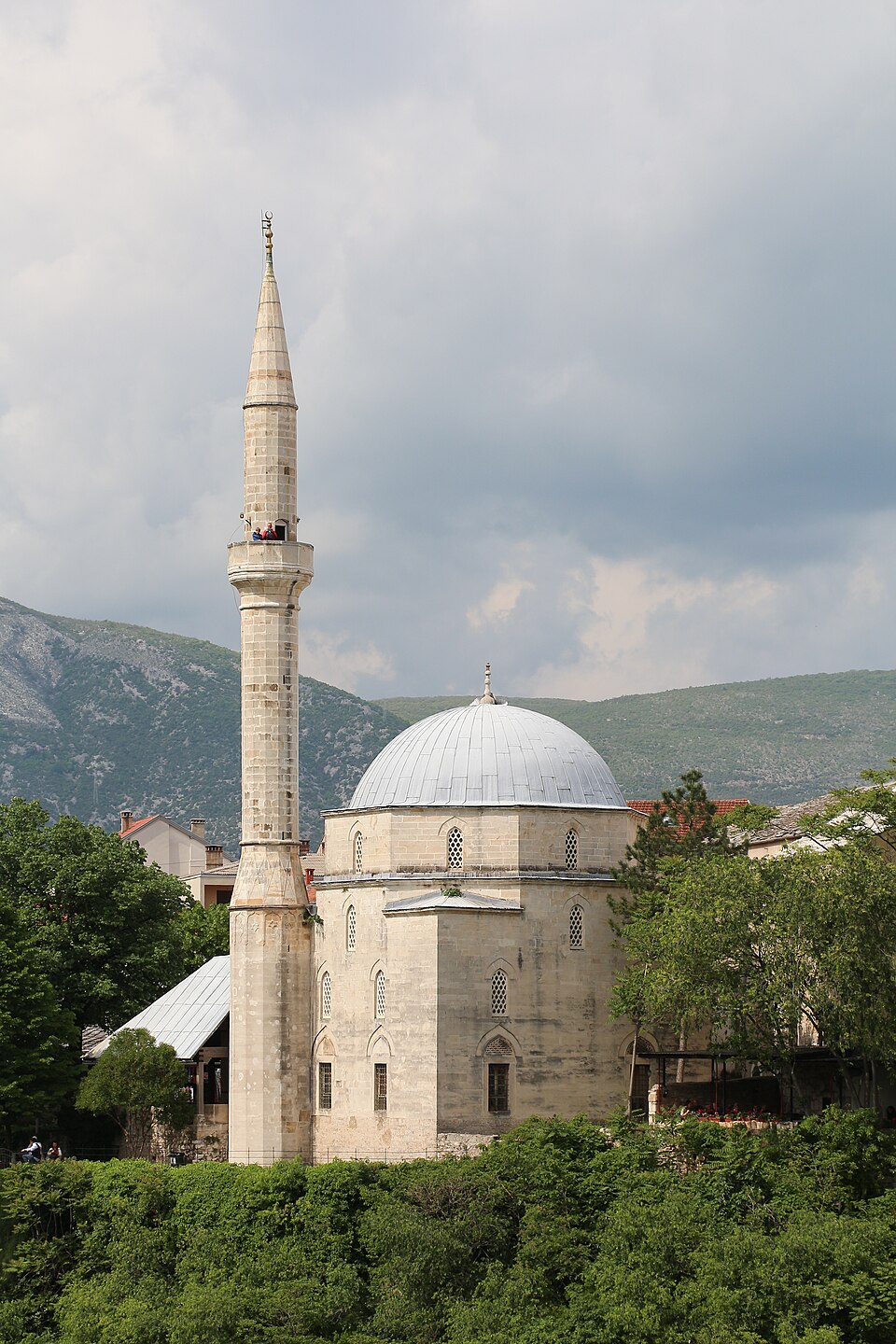
An Ottoman mosque of 1618 by the river, whose minaret gives the finest view of the Old Bridge and the town. It is open to visitors and serves coffee on its terrace. It is one of the best-preserved mosques in the region.

Tip: Entry to the mosque costs a few euros and the minaret is climbed by narrow steps; if you do not go up, go to the terrace. Shoulders and knees must be covered.

Admission:
about €6
Time needed:
30 min
Karađoz Bey Mosque

Karađoz Bey Mosque

old town

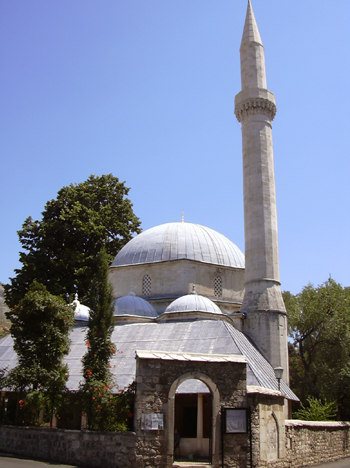
The largest mosque in the city from 1557, an Ottoman building with a dome and a garden. During the war it was damaged and restored in 2004. It is a calm place, unlike the crowds at the bridge.

Tip: Entry costs a few euros and the mosque is usually open in the morning. Respect prayers and cover shoulders and knees.

Admission:
about €3
Time needed:
30 min
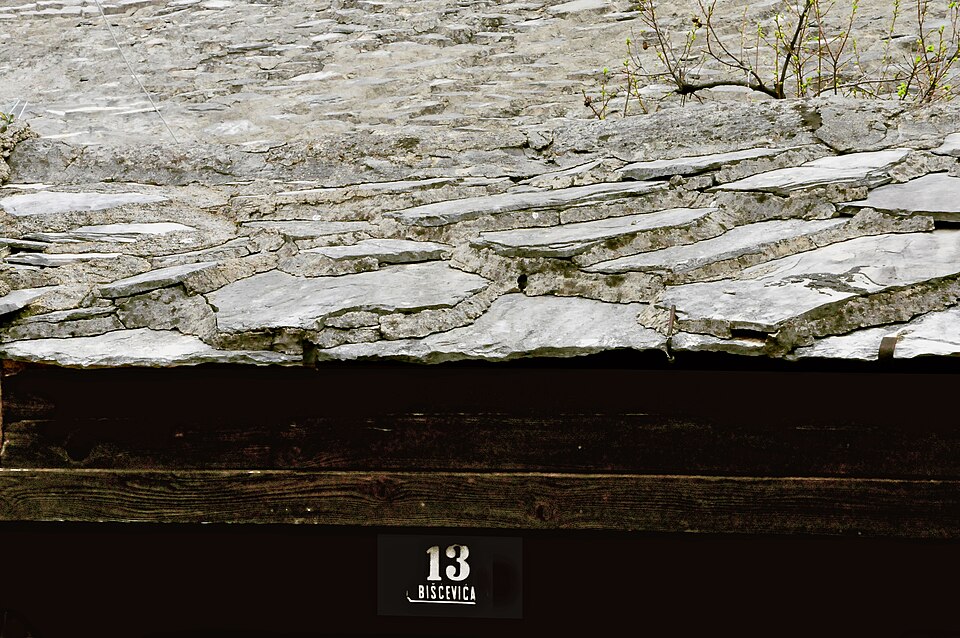
The Biščević House

The Biščević House

old town

An Ottoman house of the seventeenth century on the Neretva bank with a courtyard, a fountain and original furnishings. It shows how wealthy families lived in Ottoman Mostar. The house is a small museum and a calm contrast to the streets.

Tip: It is cheap and little visited. Ask about opening hours, as in winter it is often closed.

Admission:
about €5
Time needed:
30 min

Blagaj and the Dervish Monastery

Blagaj

A sixteenth-century dervish monastery at the source of the Buna river, which flows from a cave beneath a cliff. The white building beneath the rock above the green stream is one of the most photogenic places in Bosnia. A visit includes the interior.

Tip: Take off your shoes before entering and cover shoulders and knees. It is best to arrive in the morning; after lunch in season there is a queue. Across the river is a trout restaurant.

Admission:
about €5
Time needed:
1–2 hrs
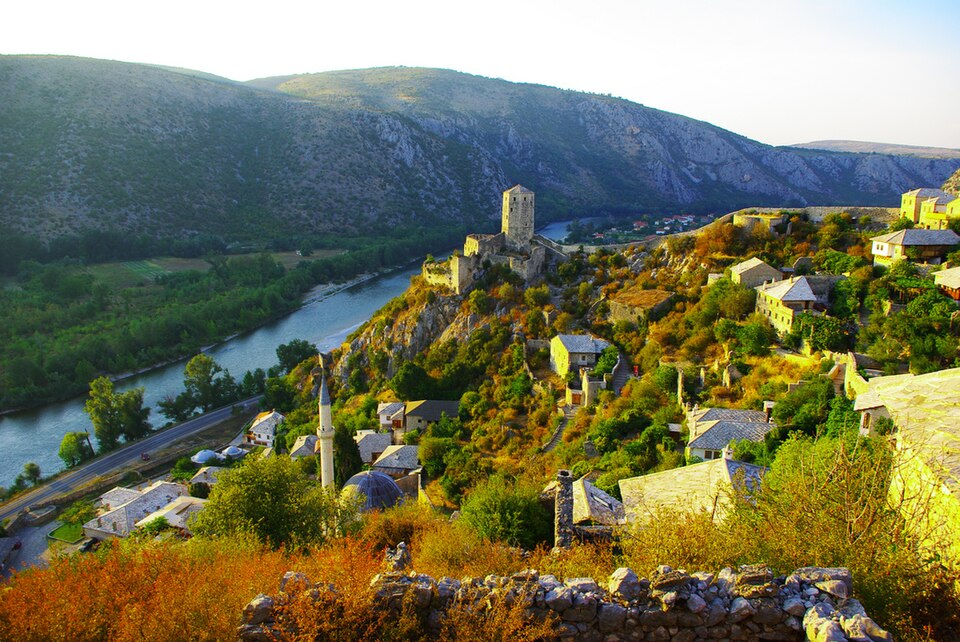
Počitelj

Počitelj

south of Mostar

A fortified town of the fifteenth century on a slope above the Neretva, with stone houses, a mosque and a tower. A steep path leads down and you climb up by steps. The Ottoman atmosphere is preserved and crowds are few.

Tip: Bring good shoes and water; at midday it is hot. From the tower there is a view of the river and valley, reached by narrow stairs.

Admission:
free
Time needed:
1–2 hrs
Kravica Waterfalls

Kravica Waterfalls

40 km from Mostar

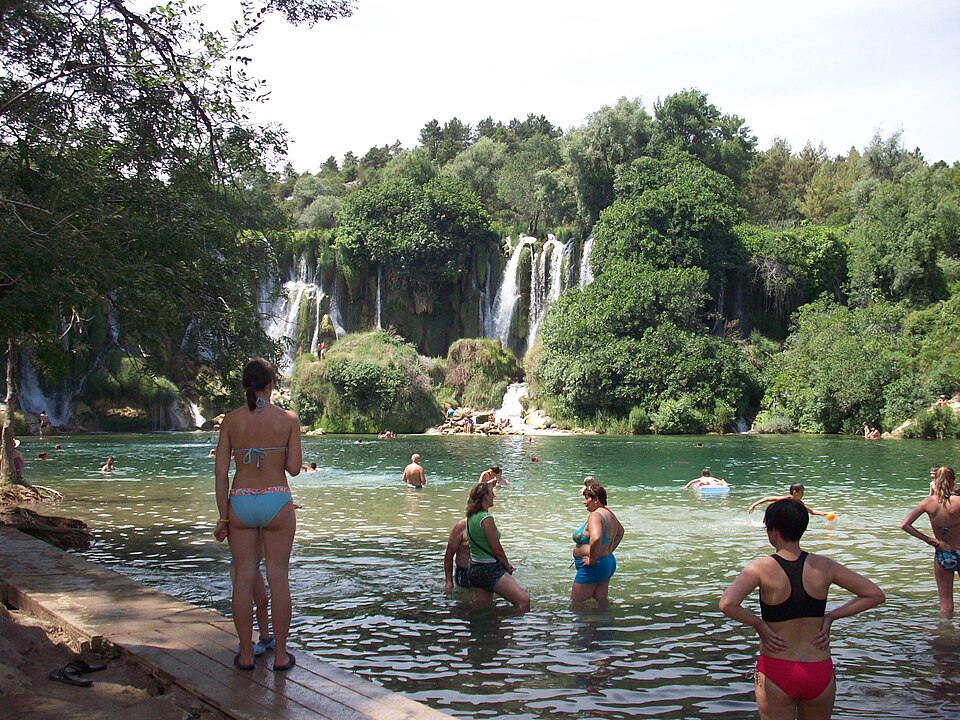
A cascade of waterfalls on the Trebižat river, twenty-five metres high, with a pool at the foot where you can swim. It is one of the loveliest places in the country, ringed by forest. There are a restaurant and a paid car park.

Tip: In summer people swim and it is crowded; come in the morning. The water is cold and in winter access is limited. Entry costs around ten euros.

Admission:
about €10
Time needed:
2–3 hrs

Photos: The Bridge Jumpers — Luigi Torreggiani from Arezzo, Italia (CC BY 2.0) · The Kujundžiluk Bazaar — Minja Klarić (CC BY-SA 4.0) · Koski Mehmed Pasha Mosque — Bernard Gagnon (CC BY-SA 4.0) · Karađoz Bey Mosque — visitmostar (Public domain) · The Biščević House — LBM1948 (CC BY-SA 4.0) · Počitelj — Dimitri Gasulla (CC BY 2.0) · Kravica Waterfalls — old_s (CC0)

Where to stay

Areas and districts, matched to the kind of trip you are taking

Old town (east bank)

Best for: monuments and atmosphere

The area around the Old Bridge with Ottoman houses, mosques and restaurants. It has the largest choice of small hotels and guesthouses, but at midday crowds of tourists. Best for a first visit.

West bank (Croatian part)

Best for: churches and modern life

The Croatian part of the city with Spanish Square, cafés and shops. It is calmer and cheaper than by the bridge. A good choice for families and for a car.

Blagaj

Best for: calm by the spring

A village at the source of the Buna river, ten kilometres from the city, with guesthouses and restaurants. It is calm and green. Suits those who want to get to know the region.

Near the airport and main road

Best for: cheap accommodation

Hotels by the main roads and the airport. Prices are lowest, but you drive into the city. Suits transit.

Getting around

From the airport

Mostar Airport (OMO) is small, with flights from several European cities, mostly seasonal. Most visitors arrive from Dubrovnik (130 kilometres) or Split (170 kilometres) by coach or on a day trip, and from Sarajevo by train or bus. From the Czech Republic it is about a thousand kilometres by car through Austria and Croatia. The border with Croatia often has queues in season.

Mostar Airport (OMO) · 7 km

  • Taxi to the centre· 10 min· €15

Dubrovnik Airport (DBV) · 130 km

  • Dubrovnik–Mostar bus· 3 hrs· €20
  • Private transfer· 2 hrs 30 min· €130

Around town

The old town can be walked in an hour, but the hills and cobbles are demanding. A bus and taxi run to Blagaj, while for Kravica and Počitelj a car or organised trip is useful. Taxis are cheap. Full-day tours run from Dubrovnik and Split.

On footThe old town is walkable.
Bus to BlagajSeveral times a day. · €2
TaxiAround town and to Blagaj. · €10
Car rentalFor Kravica and Počitelj. · €40

Useful apps: Google Maps, Bolt, Maps.me, Flixbus

When to go

Mostar has a Mediterranean climate with an extremely hot summer and a mild winter. In July and August it is around thirty-two degrees and in the valley often over thirty-five. The best months are April to June and September to October. Winter is rainy and cool.

Best time

April to June and September to October

What to avoid

July and August (heat above 35°C)

MonthJanFebMarAprMayJunJulAugSepOctNovDec
Day9°11°15°19°24°28°32°32°27°21°14°10°
Night0°1°4°8°12°15°17°17°13°9°5°2°
Rainy days1110111211855791212

Food & drink

Bosnian cooking is Ottoman and Balkan: grilled minced meats, pies with meat and cheese and sweet desserts. Food is cheap and portions large; lunch costs six to twelve euros. With meals people drink Bosnian coffee and yoghurt.

What to try

Ćevapi

Small sausages of minced beef and lamb, grilled and served in lepinja bread with onion and kajmak. The most popular dish in the country.

Burek

Filo pastry filled with minced meat; the cheese version is sirnica, the spinach one zeljanica. Breakfast and snack for a few euros.

Bosnian coffee

Strong coffee brewed in a džezva and served with a sugar cube and Turkish delight. Sipped slowly and not stirred.

Baklava

Pastry of filo, nuts and syrup, a Turkish dessert. Found in every cake shop.

Tufahija

An apple cooked in syrup, stuffed with walnuts and served with cream. A traditional Bosnian dessert.

Dolma and sarma

Peppers or cabbage leaves stuffed with minced meat and rice. A home dish eaten in families.

Blagaj trout

Trout from the spring of the Buna river, grilled or fried, served with potatoes. Best by the water.

What it costs

Coffee

KM 1.5–2.5

Ćevapi

KM 7–10

Burek

KM 3–5

Lunch in a restaurant

KM 12–25

Old Bridge tower

KM 10

Blagaj

KM 10

3★ hotel (night)

KM 80–180

Bus from Dubrovnik

KM 40

Indicative prices that change over time — treat them as a guide, not a price list.

Practical information

SocketsCEuroplug, two round pinsFSchuko
Voltage230V / 50Hz
Tap waterTap water is drinkable — Tap water in Mostar is usually safe, but most tourists drink bottled. Bottled water is cheap.
TippingTipping is customary, ten per cent in a restaurant or rounding up. For taxi drivers rounding up is enough.
Driving on theright
SafetyMostar is safe, but in the surroundings there are unexploded mines — keep to marked paths. Do not go into unmarked terrain. In the centre watch for pickpockets. The emergency number is 112.
Opening hoursShops are open from nine to eight, closed on Sunday. Mosques close at prayer times. Restaurants run until ten in the evening.
Customs & etiquetteMosques are entered without shoes and with shoulders and knees covered. On Friday Muslims pray. Mostar is a mixed city, so be considerate. Do not photograph people without permission.
A few local wordsGood day — Dobar danThank you — HvalaPlease — MolimHow much is it? — Koliko košta?Cheers — ŽivjeliThe bill, please — Račun, molimWhere is the toilet? — Gdje je WC?

How to plan your days

1 day

A day in Mostar

  1. 1Morning the Old Bridge and the jumpers.
  2. 2The Kujundžiluk bazaar and the mosques.
  3. 3Lunch with ćevapi.
  4. 4Afternoon the Biščević House.
  5. 5Evening a stroll over the lit bridge.

2 days

Two days: Mostar and Blagaj

  1. 1Day one as above.
  2. 2Day two morning Blagaj and the monastery.
  3. 3Afternoon Počitelj.
  4. 4Evening trout by the river.

3 days

Three days: Mostar and Kravica

  1. 1Days one and two as above.
  2. 2Day three the Kravica waterfalls.
  3. 3Afternoon Medjugorje or swimming.
  4. 4Evening return.

Frequently asked questions

Is Mostar suitable for a day trip from Dubrovnik?+

Yes, it is the commonest way. The trip takes three hours each way and often includes Blagaj and Počitelj. It is better to stay overnight, as in the evening the streets are calm with no groups.

Do I need a visa for Bosnia?+

EU citizens do not need a visa for a stay of up to ninety days and may enter with a passport or an ID card. The passport must be valid. Conditions change, so check with your foreign ministry.

What do you pay with in Mostar?+

The convertible mark (BAM, KM), which is pegged to the euro at roughly two marks to the euro. Tourist places take euros but give change in marks. Cards are accepted in hotels and restaurants.

When is the best time to visit?+

April to June and September to October. In summer it is over thirty-five degrees and hot in the narrow lanes. In winter it is rainy, but calm.

Is Mostar safe?+

Yes, the centre is safe and tourists are welcome. In the surroundings there are unexploded mines, so keep to marked paths. Do not go into unmarked terrain.

How do I get from Mostar to Sarajevo?+

By train in about two and a half hours and by bus in three. The train ride runs through the scenic Neretva valley. A ticket costs around ten marks.

What should I buy in Mostar?+

Copper coffee pots, ceramics and handmade jewellery in Kujundžiluk. Bargain the price and ask about the origin. Bosnian coffee also makes a good souvenir.

Is Mostar expensive?+

It is cheap: lunch costs six to twelve euros, a hotel eighty to a hundred and eighty marks. Cheapest are ćevapi and burek. You pay in marks.

Visa Requirements

Check the latest visa requirements for entering this country. Some nationalities may need to apply for a visa or e-visa before travel.

Check visa requirements

Language

Bosnian / Croatian / Serbian

Currency

BAM

Timezone

Europe/Sarajevo

Dial Code

+387

Population

3.2M

Area

51,197 km²

Voltage

230V / 50Hz

Driving Side

Right

Top Hotels in Mostar

Live prices from 500+ properties

Loading hotels...

More destinations in Bosnia and Herzegovina

Planning a trip to Mostar?

Compare hundreds of hotels, find the best price, and book with free cancellation on TravelManiac.