Hotels in Dubrovnik

The republic that bought its freedom for 500 years

Dubrovnik

LanguageEnglish
CurrencyEUR
TimezoneGMT+1
Temperature8-28 °C
Dial Code+385
Population3.9M
Area56,594 km²
SocketsType C / Type F
Tap waterDrinkable

Discover Dubrovnik

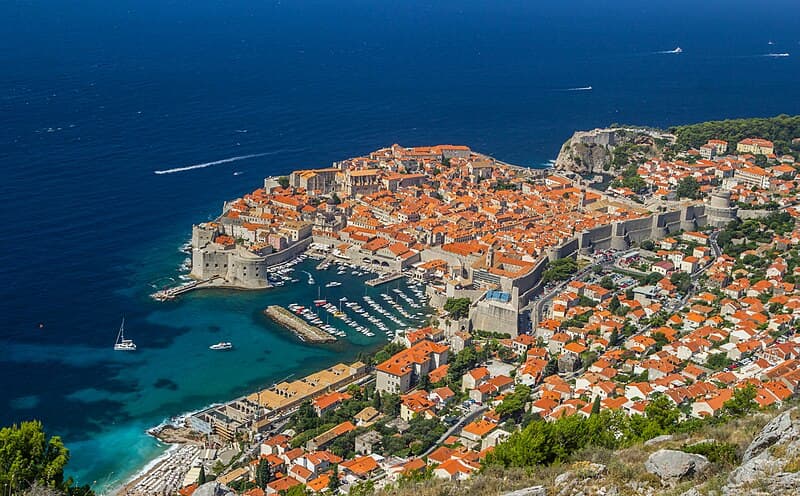
Dubrovnik was never part of Venice or the Ottoman Empire — for 5 centuries the Republic of Dubrovnik bought its peace with diplomacy and money, and so outlasted its entire neighbourhood. The result is a town that has barely changed since the 16th century: 2km of walls, a single main street of polished limestone, and a district of houses all built to the same cornice height, because the law demanded it. Both the 1667 earthquake and the 1991 shelling damaged the town, and each time it was rebuilt to its original form. The drawback is success: the Old Town covers under half a square kilometre, and in summer more than 10,000 people pass through it a day, mostly from cruise ships. Arrive in May or October and you'll see a completely different town from the one that greets visitors at 11am in August. The beaches are pebbly, and most hotels sit on the Lapad and Babin Kuk peninsulas.

What to see

The places worth your time in Dubrovnik, and what to expect at each

City Walls

City Walls

Old Town

2km of fortifications encircling the entire Old Town, walkable as a one-way loop up to 25 metres high. The path alternates between views over the sea and over rooftops, whose colour reveals which houses needed re-roofing after the 1991 shelling.

Tip: The walk is one-way and has no shade. Go at 8am right when it opens, or 2 hours before closing; at midday the walls hit over 30°C and the queue at the Pile entrance can be 30 minutes.

Admission:
from €35
Time needed:
1.5–2 h
Stradun

Stradun

Old Town

The 300-metre main street, paved with limestone polished to a shine by generations of footsteps. It runs from the Pile Gate to the Sponza Palace, lined with houses built after the 1667 earthquake to a single uniform design — all with identical doors and windows, so the town could be rebuilt fast and cheap.

Tip: Try walking the Stradun after 7pm, once the cruise ships have sailed: 80% of the crowds vanish, and the lit-up limestone looks its best at this hour. Before 9am has the same effect.

Admission:
free
Time needed:
1 h
Fort Lovrijenac

Fort Lovrijenac

Pile

A fortress on a 37-metre rock outside the walls, said to have been built by the people of Dubrovnik in just 3 months to beat the Venetians to it. Above the entrance is an inscription declaring that freedom is not for sale, not even for all the gold in the world. Summer performances of Hamlet are staged inside.

Tip: Entry is included in the city walls ticket and valid for 3 days, but you must arrive with it — it isn't honoured retroactively. The best photo of the whole Old Town is from here, not from the walls.

Admission:
included in city walls ticket
Time needed:
45 min
Srđ Cable Car

Srđ Cable Car

Srđ

A cable car that climbs in 4 minutes to the 412-metre hill above the town. At the top is a viewing terrace over the whole Old Town and the Elafiti Islands, a restaurant, and Napoleon's Fort Imperial with a museum on the 1991 defence of Dubrovnik.

Tip: Buy a one-way ticket up and walk down the zigzag path in 45 minutes — it's marked but shadeless, so it suits early evening better. Go up for sunset, and expect a queue.

Admission:
from €27 return
Time needed:
2 h
Rector's Palace

Rector's Palace

Old Town

The residence of the republic's elected rector, who had to live here throughout his 1-month term and couldn't leave without permission. A Gothic and Renaissance building with a courtyard used for concerts, today serving as the city museum, with original furniture and clocks.

Tip: The Dubrovnik Pass covers the palace, museums and the walls, and pays off for a stay longer than a day. The courtyard with its chapel can be visited without a ticket during a Summer Festival concert.

Admission:
from €18
Time needed:
1 h
Franciscan Monastery and Pharmacy

Franciscan Monastery and Pharmacy

Old Town

A monastery just inside the Pile Gate with a Romanesque cloister from 1317, whose columns each have a different capital. On the ground floor is the Male Braće pharmacy, one of the oldest still operating in Europe, open to the public since 1317.

Tip: The pharmacy sells creams made to old monastery recipes — the best souvenir from Dubrovnik that doesn't look like one. The quiet cloister is a refuge at midday, when the Stradun is impassable.

Admission:
from €6
Time needed:
45 min
Lokrum

Lokrum

island, 600m from the harbour

A wooded island 10 minutes by boat from the old harbour, home to a Benedictine monastery, a botanical garden with peacocks, and the Dead Sea — a small saltwater lake linked to the sea by an underground channel. Overnight stays aren't allowed; the last boat leaves in the evening.

Tip: Admission is included in the boat ticket and paid once. The peacocks are used to people and will steal food from your bag. The rocky beaches on the south side are nudist; a calm bay for families lies just behind the monastery.

Admission:
from €27 including boat
Time needed:
half a day
Cathedral and Church of St Blaise

Cathedral and Church of St Blaise

Old Town

A Baroque cathedral built after the earthquake over an older Romanesque church, traditionally said to have been funded by Richard the Lionheart in thanks for surviving a shipwreck. The treasury holds a reliquary containing the head of St Blaise, the city's patron saint, whose statue stands over every city gate.

Tip: The treasury has a separate charge, and it's the only part really worth seeing for the goldsmith's work. The Feast of St Blaise on 3 February brings a procession and a packed town even in winter.

Admission:
cathedral free, treasury from €5
Time needed:
45 min
Banje Beach and the Buža bars

Banje Beach and the Buža bars

Ploče, outside the walls

A pebble beach just outside the walls with views of the Old Town and Lokrum, part paid with loungers, part free. Built into the walls above the sea are also 2 Buža bars, reached through a hole in the wall, where you sit on a rock above a 10-metre drop.

Tip: Buža is for a drink, not a meal, and it's cash only. Cliff jumping is allowed, but the water is only deep enough at one marked spot — watch where the locals jump.

Admission:
free, loungers from €25
Time needed:
half a day

Photos: City Walls — Miroslav.vajdic (CC BY-SA 4.0) · Stradun — Pudelek (Marcin Szala) (CC BY-SA 3.0) · Fort Lovrijenac — Raki_Man (CC BY 3.0) · Srđ Cable Car — Andrzej Harassek (CC BY-SA 3.0) · Rector's Palace — Américo Toledano (CC BY-SA 4.0) · Franciscan Monastery and Pharmacy — Bernard Gagnon (CC BY-SA 4.0) · Lokrum — Diego Delso (CC BY-SA 3.0) · Cathedral and Church of St Blaise — Sailko (CC BY 3.0) · Banje Beach and the Buža bars — Martin Falbisoner (CC BY-SA 4.0)

Where to stay

Areas and districts, matched to the kind of trip you are taking

Old Town

Best for: a first visit and atmosphere

Staying inside the walls means stepping out onto the Stradun and hearing the church bells in the morning. Accommodation is the priciest in Croatia, cars can't reach the houses, and you'll carry your suitcase up steps. Worth it for 2–3 nights, not for a week-long beach holiday.

Ploče

Best for: views of the walls and luxury hotels

A hillside east of the Old Town with the town's best hotels and Banje and Sveti Jakov beaches. It's a 10-minute walk into the centre along the waterfront, but uphill on the way back. This is where the classic photo of the walls and Lokrum is taken.

Lapad

Best for: family holidays and more reasonable prices

A peninsula 4km from the centre with a pedestrian promenade, the shallow Sunset Beach bay and mid-range hotels. Bus 6 runs to the Old Town every 10 minutes. The best balance of price and calm if you're staying a week and want to swim.

Gruž and Babin Kuk

Best for: ferries, the market and apartments

A harbour district with the ferry terminal, bus station and a morning market where locals shop. The cheapest accommodation within reach of town, and the only place with decent parking. Boats to the Elafiti Islands, Mljet and Bari leave from here.

Getting around

From the airport

Dubrovnik Airport lies near the village of Čilipi, 20km southeast of the town, with seasonal charter and low-cost flights from many European cities, including major hubs such as Munich, Vienna and Frankfurt. The Atlas airport bus runs into town, stopping at the Pile Gate and the bus station in Gruž, timed to flight arrivals. A taxi costs around €40. By car, note that Dubrovnik is cut off from the rest of Croatia by a narrow strip of Bosnian territory at Neum — since 2022 the Pelješac Bridge bypasses it, so no border crossing is needed.

Dubrovnik (Čilipi) (DBV) · 20 km

  • Atlas airport bus· 30 min· €12
  • Taxi to the Old Town· 25 min· €40
  • Hotel transfer· 25–40 min· included in stay
  • Rental car from the airport· 25 min· €45/day

Around town

The Old Town is closed to cars and gets around entirely on foot up and down steps — hard going with a pushchair and practically impassable by wheelchair outside the Stradun. Libertas city buses link Pile with Lapad, Babin Kuk and Gruž, running every 10 minutes until midnight. Parking near the walls costs over €5 an hour, so cars are best left in a garage in Gruž or at the hotel. Boats to Lokrum and the Elafiti Islands leave from the old harbour and from Gruž.

Libertas busLine 6 runs from Pile to Lapad and Babin Kuk every 10 minutes; tickets are cheaper bought at a newsagent. · €2
Boat to LokrumEvery half hour from the old harbour; the ticket includes admission to the island. · €27
Srđ cable car4 minutes up; you can walk down the path for free in 45 minutes. · €27 return
Taxi and BoltBolt operates and is significantly cheaper than the taxi rank at the Pile Gate. · €6

Useful apps: Google Maps, Jadrolinija, Bolt, Arriva Croatia

When to go

Dubrovnik has the mildest winter in Croatia — January stays above 10°C, and the town runs year-round. The swimming season lasts from June to early October. The best months are May, early June and the second half of September: warm, everything open, and free of the cruise-ship crowds, with as many as 5 ships docking a day in August. July and August bring 30°C, packed walls and the country's highest accommodation prices. The Summer Festival in the second half of July fills the town even in the evenings.

Best time

May, early June and the second half of September

What to avoid

July and August, for the crowds and prices

MonthJanFebMarAprMayJunJulAugSepOctNovDec
Day13°13°15°18°23°27°30°30°26°22°17°14°
Night6°6°8°11°15°19°22°22°19°15°11°8°
Rainy days1110101086347101313
Sea15°14°14°16°19°23°25°26°24°22°19°17°

Food & drink

Southern Dalmatia cooks differently from the rest of the coast: more seafood, more tomatoes, and the influence of Italian cuisine from across the Adriatic. Dubrovnik's specialities are rožata and šporki makaruli, macaroni in a beef ragù once cooked for the feast of St Blaise. Nearby lies Ston Bay with its oysters, and the Pelješac peninsula with Croatia's best red wine. Prices in the Old Town are high and quality uneven — you'll eat best in Gruž by the market or in the villages outside town.

What to try

Ston oysters

Oysters from Ston Bay, farmed there since Roman times. Buy them straight from the growers on the jetty — they're cheaper here than anywhere else in the Mediterranean.

Rožata

A caramel custard flavoured with rose-petal liqueur, Dubrovnik's take on crème caramel. It's on almost every menu in southern Dalmatia.

Crni rižot (black risotto)

Risotto with octopus or cuttlefish, coloured black with cuttlefish ink. It tastes of the sea and reliably stains your teeth — best eaten without a white T-shirt on.

Škampi na buzaru

Prawns braised in white wine, garlic and breadcrumbs, eaten with your hands. Order it somewhere that puts a shell bowl and a wet wipe on the table — a sign they do it properly.

Plavac Mali

A powerful red wine from southern Dalmatia, related to zinfandel. The best vineyards are Dingač and Postup on Pelješac and Sveta Nedjelja on Hvar; it often runs over 15%.

Peka

Meat and potatoes slow-cooked for 3 hours under a cast-iron bell covered in hot embers. Arguably Croatia's best dish, but it must be ordered a day ahead and for at least 2 people.

Pršut and Pag cheese

Dry-cured ham from Dalmatia or Istria, and hard sheep's cheese from the island of Pag, where the sheep graze on grass salted by the bura wind. A standard cold starter to have with a glass of wine.

Brudet

A thick fish stew made from several kinds of fish with tomatoes, served with polenta. Originally a fisherman's dish made from whatever didn't sell that day, so it's a little different every time.

What it costs

Coffee on the Stradun

€4–5

Lunch at a bistro outside the walls

€12–18

Dinner at a restaurant in the Old Town

€40–60 per person

Half-litre of beer

€5–6

City walls walk

from €35

Srđ cable car return

from €27

Sun lounger on Banje beach

from €25 for 2

Night in a 4-star hotel

€180–300

Indicative prices that change over time — treat them as a guide, not a price list.

Practical information

SocketsCEuroplug, two round pinsFSchuko
Voltage230V / 50Hz
Tap waterTap water is drinkable — Tap water is safe to drink throughout Croatia and tastes good — on the coast it comes from karst springs. There's no need to buy bottled water; just fill a bottle at your apartment in the morning. In restaurants, though, tap water isn't offered as standard, and you'll be charged for bottled.
TippingTipping is customary but modest: round up at a café, and leave around 10% at a restaurant for good service. Card terminals usually don't have a tip option, so it helps to carry a few coins in cash. In taxis, just round up.
Driving on theright
SafetyViolent crime is rare and towns are safe even at night. The only real risk is pickpocketing in the crush on the main street and near the cruise-ship disembarkation point. Watch out for bills at places with a tout on the street — overpriced items with no listed price are the most common tourist gripe in coastal towns, so ask the price up front. Don't park in centres without a paid zone; tow trucks operate reliably.
Opening hoursShops are open roughly from 8am to 8pm, shopping centres until 9pm. By law, most shops close on Sundays, with exceptions for bakeries, newsagents and outlets at stations and petrol stations. Museums close on Mondays; many extend their hours into the evening during high season. Cafés on the square open at 7am and close around midnight.
Customs & etiquetteSwimwear belongs on the beach — walking through the centre in swimwear or without a shirt is fined under municipal bylaw in Croatia, and Dubrovnik, Split and Hvar do actually collect the fines, starting at €100. Cover your shoulders and knees to enter churches. Croatians are proud to be Croatian, not "former Yugoslavia" — don't be the one to bring up the 1990s war. Breakfast is light, lunch is around 2pm, and dinner after 8pm.
A few local wordsHello — Dobar danThank you — HvalaPlease — MolimThe bill, please — Račun, molimCheers — Živjeli

How to plan your days

1 day

A day in the Old Town

  1. 18am: walk the city walls while it's still shaded and cool.
  2. 2Franciscan Monastery and pharmacy, then the Stradun.
  3. 3Lunch in Gruž by the market, not inside the walls.
  4. 4Afternoon: Rector's Palace and the cathedral treasury.
  5. 5Before sunset, the Srđ cable car; in the evening, a drink at Buža.

2 days

2 days with an island

  1. 1Day 1 as above.
  2. 2Morning boat to Lokrum, the monastery and the salt lake.
  3. 3Lunch on the island or back in Ploče.
  4. 4Afternoon swim at Banje beach with views of the walls.
  5. 5Evening stroll along the empty Stradun once the cruise ships have sailed.

3 days

3 days including Pelješac

  1. 1The first 2 days as above.
  2. 2Morning: drive over the Pelješac Bridge to Ston.
  3. 3Oyster tasting right on the jetty in Ston Bay.
  4. 4Afternoon: a winery in Dingač or Postup.
  5. 5Return in the early evening, dinner in Lapad.

Day trips

Elafiti Islands

15 km · 45 min by ferry

3 islands — Koločep, Lopud and Šipan — with no cars, reached by scheduled ferry from Gruž. Lopud has the only sand beach near Dubrovnik: Šunj, on the far side of the island, a 30-minute walk over the hill or a short ride by electric buggy.

Ston and Pelješac

55 km · 1 h by car

Ston has 5km of walls, the second-longest in Europe, built to protect the salt pans that have operated since medieval times. Next door is Ston Bay with its oysters, and the Pelješac peninsula with the Dingač and Postup vineyards on steep slopes above the sea.

Kotor, Montenegro

90 km · 2 h by car

A fortified town at the end of the Bay of Kotor, a fjord-like inlet between mountains. A wall climbs above the town to the Fortress of St John — the 1,030-step climb takes an hour. You'll cross a border outside the Schengen zone, so bring your passport and allow extra time for queues.

Frequently asked questions

How much does it cost to walk the city walls, and is it worth it?+

Tickets start at €35 and include Fort Lovrijenac, valid for 3 days. It's the single most expensive sight in Croatia, but the 2km walk along the walls above the rooftops and sea is the main reason people come to Dubrovnik. Go right when it opens.

How do I avoid the cruise-ship crowds?+

Cruise ships typically dock from 9am to 6pm. The Old Town is therefore almost empty before 9am and after 7pm. Walk the walls at 8am, swim or take a trip to Lokrum around midday, and come back into town in the evening — it's a different city.

Is Dubrovnik good for a week-long beach holiday?+

Yes, but stay in Lapad or Babin Kuk, not inside the walls. The beaches there are pebbly and small, but you're within easy reach of the Elafiti Islands, Mljet and Pelješac. If you mainly want to lie on a beach for less money, you'll be happier on the Makarska Riviera.

Do I need a car in Dubrovnik?+

No. The Old Town is pedestrian-only, Libertas buses run every 10 minutes, and parking costs over €5 an hour. A car only makes sense for a trip to Pelješac or Montenegro, and it's cheaper to hire one for a single day than for the whole stay.

Do I have to cross Bosnia to get to Dubrovnik?+

Not since the Pelješac Bridge opened in 2022. The motorway and bridge bypass the Bosnian corridor at Neum, so the whole route stays inside Croatia with no border crossing. The route through Neum is still possible and shorter, but the border will slow you down.

Where can you swim in Dubrovnik?+

The closest option is pebbly Banje beach just outside the walls, with views of the Old Town; further along in Ploče is the quieter Sveti Jakov below its steps. In Lapad, the shallow Uvala bay suits children. For actual sand, head to Šunj bay on the island of Lopud.

How many days are enough for Dubrovnik?+

2 days for the Old Town alone, 3 with Lokrum and Srđ. A longer stay only makes sense with day trips — the Elafiti Islands, Ston and Pelješac, Mljet or Kotor. The town is small, and you can cover all of it, museums included, in 2 days.

Can you visit Montenegro from Dubrovnik?+

Yes, Kotor is 2 hours by car and day trips run there too. Montenegro is outside the Schengen zone, so you'll need a passport and should allow for a border queue that can reach an hour on summer mornings. Car rental companies require permission to take the vehicle out of the country.

Visa Requirements

Check the latest visa requirements for entering this country. Some nationalities may need to apply for a visa or e-visa before travel.

Check visa requirements

Language

Croatian

Currency

EUR

Timezone

GMT+1

Dial Code

+385

Population

3.9M

Area

56,594 km²

Voltage

230V / 50Hz

Driving Side

Right

Top Hotels in Dubrovnik

Live prices from 500+ properties

Loading hotels...

Planning a trip to Dubrovnik?

Compare hundreds of hotels, find the best price, and book with free cancellation on TravelManiac.