Hotels in Seville

Orange trees, Moorish gardens, flamenco in Triana, and Europe's warmest spring

Seville

LanguageEnglish
CurrencyEUR
TimezoneGMT+1
Temperature12-32 °C
Dial Code+34
Population47.6M
Area505,990 km²
SocketsType C / Type F
Tap waterDrinkable

Discover Seville

Seville is the capital of Andalusia on the Guadalquivir River, and for many the most quintessentially Spanish city in the country — this is where flamenco was born, home to the oldest bullring, and where Holy Week and the April Feria are the biggest celebrations in Spain. The Moors ruled here for five hundred years, leaving behind the Giralda, a minaret turned bell tower, and the Royal Alcázar with its courtyards, fountains and gardens, still used to house the Spanish king today. After the discovery of the Americas, Seville held a monopoly on trade with the New World, and with that wealth built the largest Gothic cathedral in the world, home to the tomb of Christopher Columbus. The lanes of the old Jewish quarter of Santa Cruz are so narrow the balconies almost touch, and the streets smell of orange trees, of which the city has more than forty thousand. Seville is Europe's hottest major city: spring and autumn are ideal, while summer climbs past 40°C. Tapas are eaten standing at the bar, and dinner starts after ten.

What to see

The places worth your time in Seville, and what to expect at each

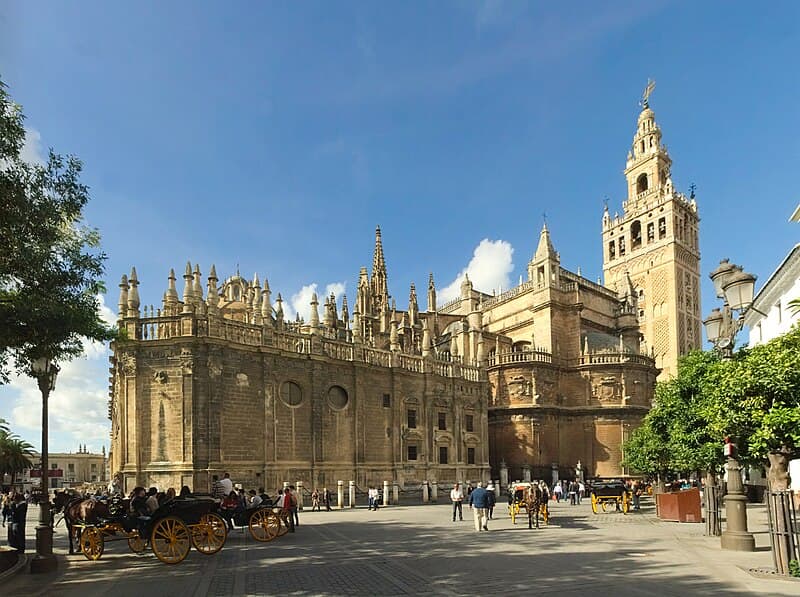
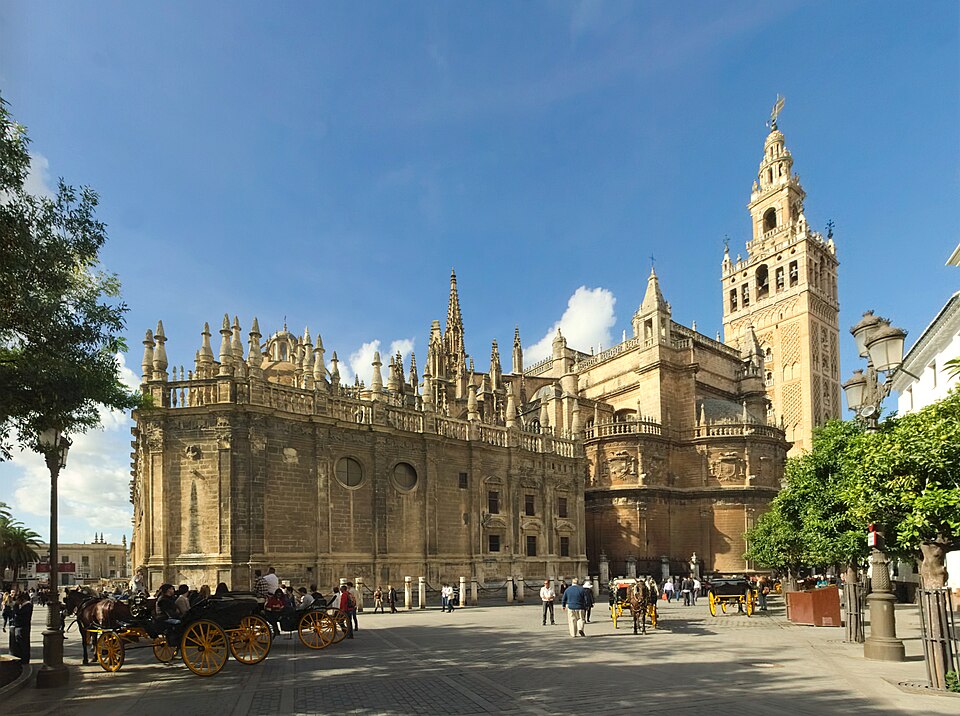
Cathedral and the Giralda

Cathedral and the Giralda

Catedral de Sevilla y La Giralda

Santa Cruz

The largest Gothic cathedral in the world, built between 1401 and 1506 on the site of a mosque, with a main altarpiece covered in gold and the tomb of Christopher Columbus, carried by four kings. The Giralda bell tower, originally a twelfth-century minaret, stands ninety-seven meters tall.

Tip: You don't climb the Giralda by stairs but by thirty-five ramps, built so the muezzin could ride up on horseback — the climb is easy going. Buy tickets online, as queues are long. The Orange Tree Courtyard at the entrance is the mosque's original courtyard. Monday afternoons are sometimes free with a reservation, though slots are scarce.

Admission:
around 13 €
Time needed:
1.5–2 h
Royal Alcázar

Royal Alcázar

Real Alcázar de Sevilla

Santa Cruz

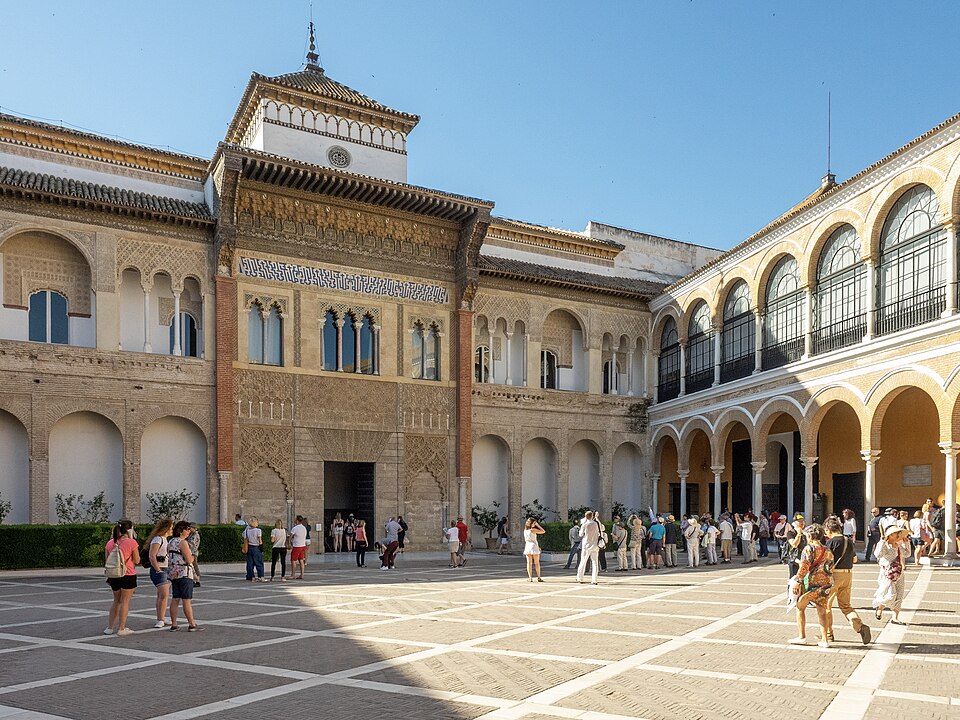
A royal palace built by Christian kings in Mudéjar style on the site of a Moorish fortress, with the Courtyard of the Maidens, the Hall of Ambassadors with its golden dome, and expansive gardens with fountains and peacocks. It is the oldest royal palace in Europe still in use.

Tip: Tickets are timed and sell out, so book a week ahead. The first morning slot is the calmest. The upper royal chambers are toured separately with a guide, for an extra fee. Save the gardens for last — the Baths of María de Padilla and the Pavilion of Charles V are there. Game of Thrones filmed here as Dorne.

Admission:
around 15 €
Time needed:
2–3 h
Plaza de España

Plaza de España

Parque de María Luisa

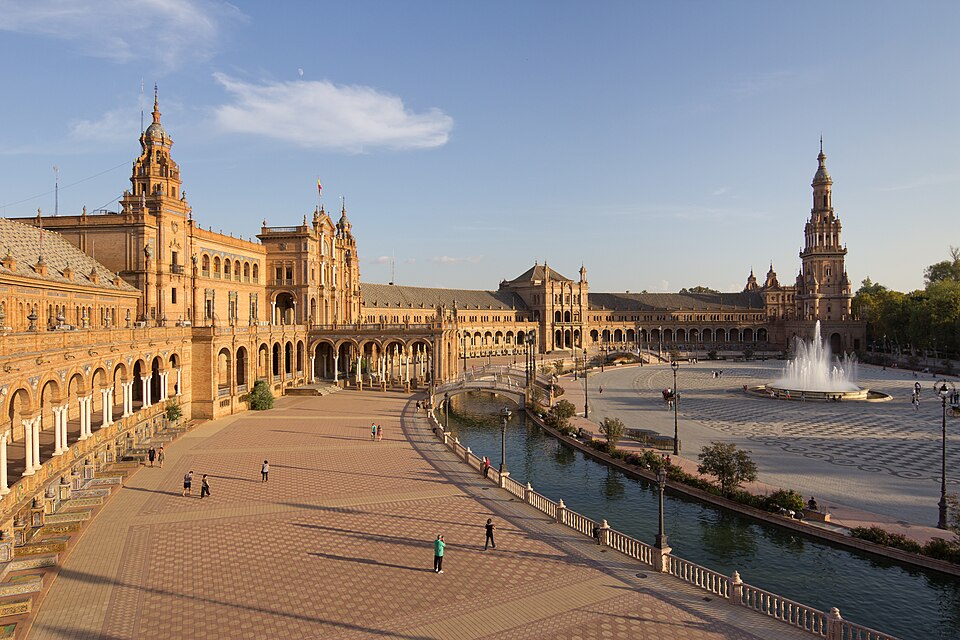
A monumental semicircular square built for the 1929 Ibero-American Exposition, with a canal, four bridges, and benches decorated with tiled scenes representing every Spanish province. It combines Renaissance, Moorish and Art Deco elements.

Tip: Find the bench for your favorite province — they're arranged alphabetically. Rowboats can be rented on the canal. The best light is in the early evening. In summer the square is scorching at midday with no shade. Flamenco dancers often perform under the arcades for tips.

Admission:
free
Time needed:
1 h
María Luisa Park

María Luisa Park

Parque de María Luisa

Parque de María Luisa

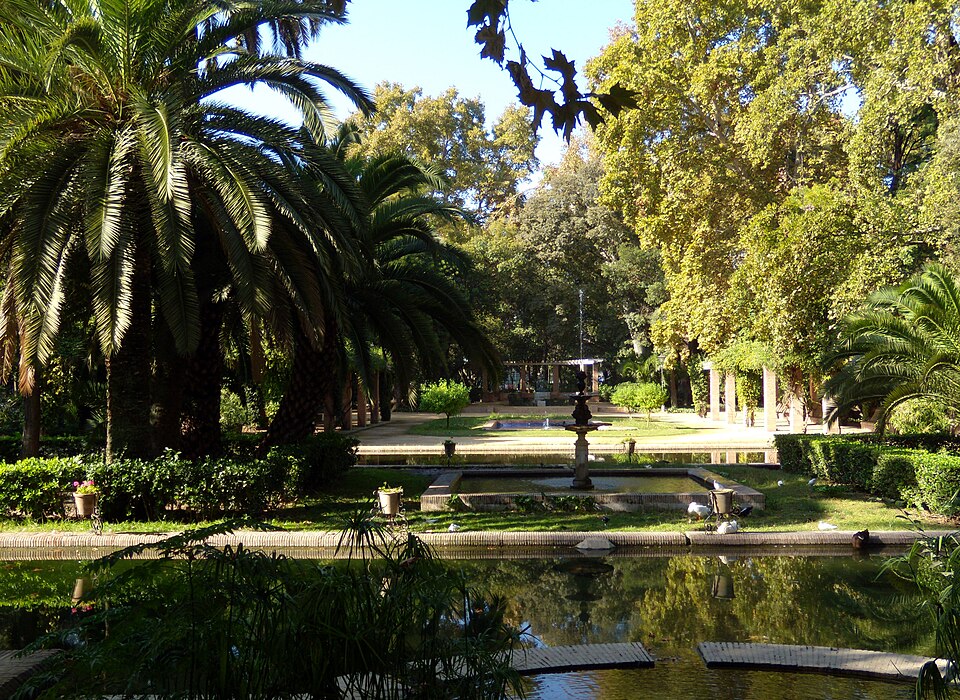
Seville's main park, with palm trees, orange trees, fountains, pavilions from the 1929 exposition, and tiled benches. The park also holds the archaeological museum and the museum of popular arts.

Tip: In summer this is the only place downtown with dense shade — allow an hour for a stroll. Bikes and four-wheeled pedal carts can be rented at the entrance. The duck island with its pavilion is the prettiest part. The park connects directly to Plaza de España, right next door.

Admission:
free
Time needed:
1 h
Santa Cruz quarter

Santa Cruz quarter

Barrio de Santa Cruz

Santa Cruz

The former Jewish quarter between the cathedral and the Alcázar, a maze of whitewashed lanes, small squares with orange trees, tiled inscriptions and flower-filled patios. Its narrowest alley is called the Street of the Kiss, since the balconies on opposite sides almost touch.

Tip: Get lost without a map — that's the point. Plaza Doña Elvira and Plaza Santa Cruz are the prettiest squares. Mornings and evenings are quiet; daytime brings tour groups. Bars on Calle Mateos Gago serve tapas with a view of the Giralda. Casa de Murillo, the painter's former home, is in the quarter and admission is cheap.

Admission:
free
Time needed:
1.5 h
Las Setas – Metropol Parasol

Las Setas – Metropol Parasol

Las Setas de Sevilla

Encarnación

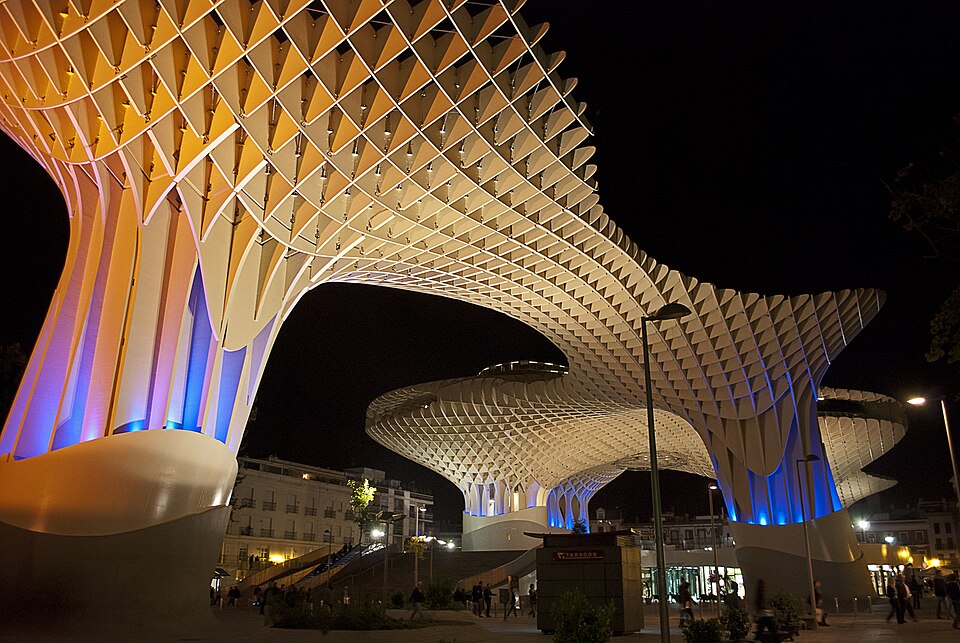
A giant mushroom-shaped wooden structure from 2011, considered by some measures the largest wooden structure in the world. On top is a wavy rooftop walkway with views, below is a market, and underground are Roman and Moorish excavations.

Tip: Best visited at sunset, when Seville turns orange and the cathedral lights up. Rooftop tickets are timed and sold online. The Antiquarium museum underneath, with Roman mosaics, is worth a visit and cheap. Excellent tapas bars surround the Setas.

Admission:
around 15 €
Time needed:
1 h
Triana

Triana

Triana

A neighborhood on the west bank of the Guadalquivir, traditionally home to potters, sailors and flamenco dancers. Ceramic workshops with azulejo tiles, a market on the site of a former inquisition castle, and bars where flamenco singing breaks out spontaneously in the evening.

Tip: Cross the Isabel II bridge and head for the Mercado de Triana with its bars and stalls. Buy ceramics on Calle Alfarería and Callao, and stop at the small Ceramics Center museum. Calle Betis along the river has the best view of Seville and the Torre del Oro. For flamenco, seek out a local peña, more authentic than tourist-oriented shows.

Admission:
free
Time needed:
2 h
Torre del Oro

Torre del Oro

Arenal

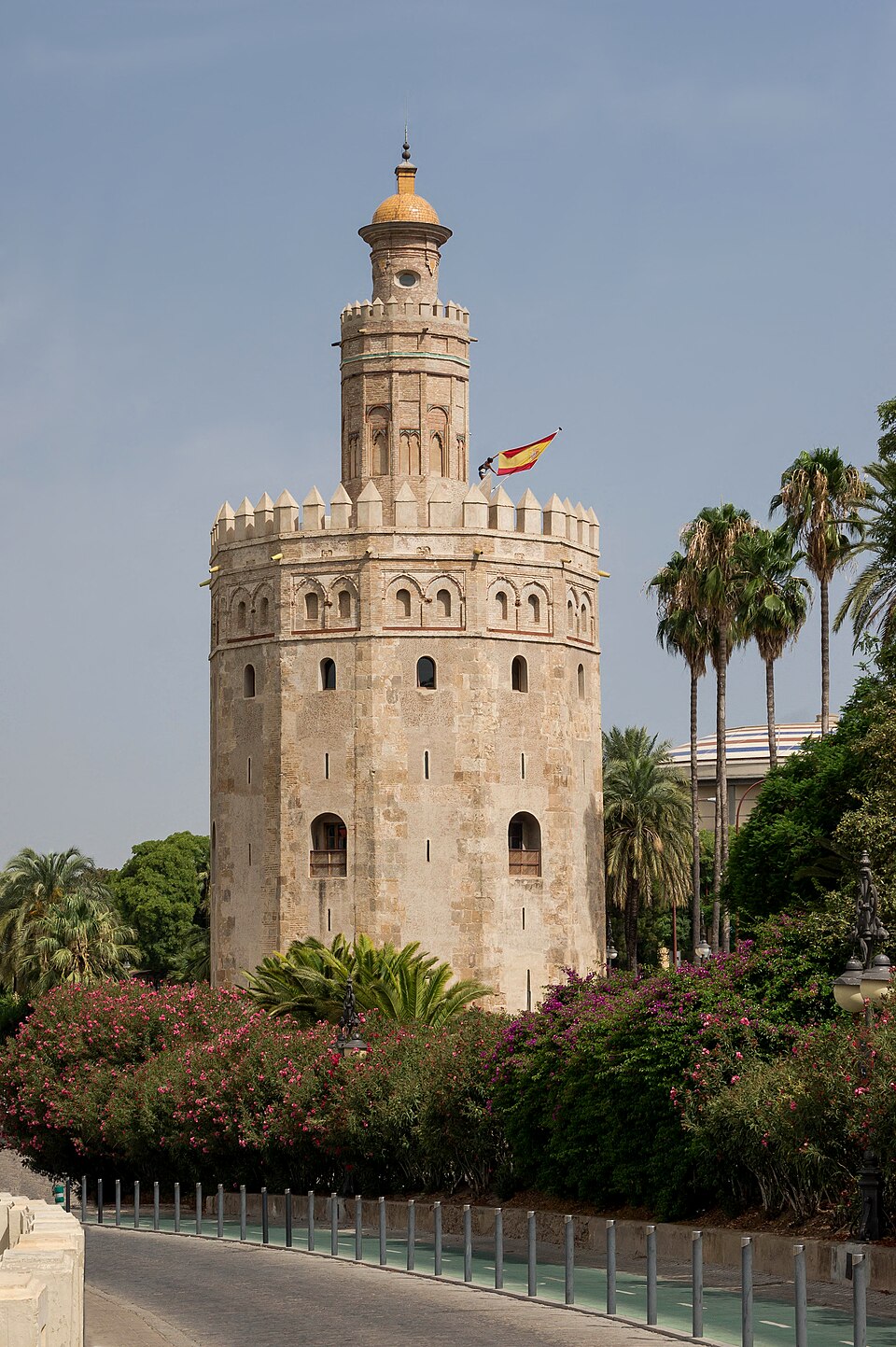
A twelve-sided thirteenth-century Moorish watchtower on the bank of the Guadalquivir, which once guarded the harbor with a chain stretched across the river. Its name, the Golden Tower, comes from the shine of its original cladding. Inside is a small maritime museum.

Tip: The museum is small and cheap, free on Mondays. The upper terrace has views over the river and Triana. Boats leave from here for an hour-long cruise on the Guadalquivir. A riverside promenade runs from here, ten minutes on foot or by bike to Plaza de España.

Admission:
around 3 €
Time needed:
30 min
Casa de Pilatos

Casa de Pilatos

San Bartolomé

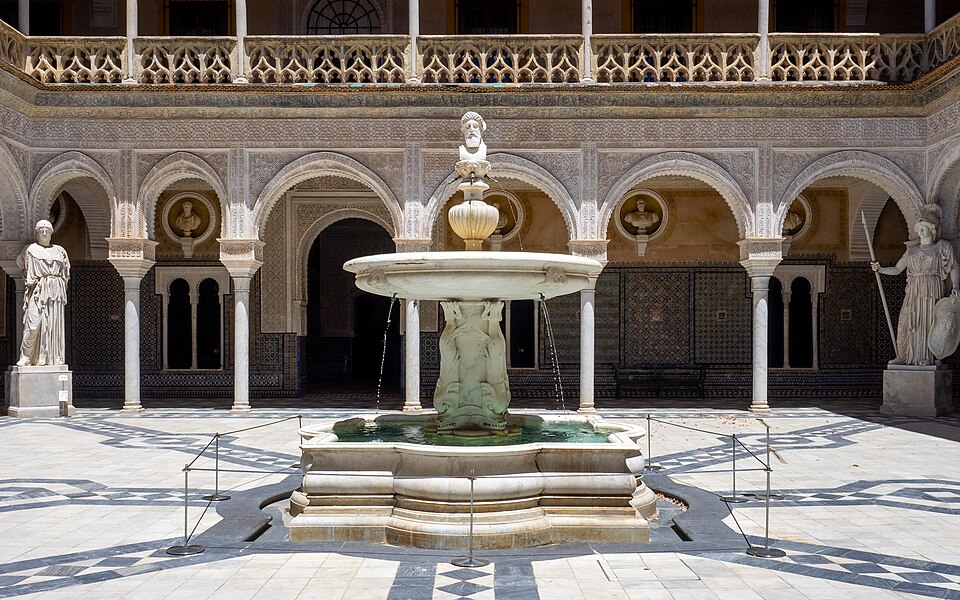
A sixteenth-century Andalusian palace combining Mudéjar, Gothic and Renaissance styles, with a central patio covered in azulejo tiles, Roman statues, and gardens. It still belongs to the Dukes of Medinaceli, who live in part of the palace today.

Tip: This is the lesser-known Alcázar, without the crowds — the ground floor is self-guided, the upper floor requires a guide. Its tiled walls form the largest single collection of azulejos in one house. Films including Kingdom of Heaven were shot here. The palace is a ten-minute walk from the cathedral.

Admission:
around 12 €
Time needed:
1 h

Photos: Cathedral and the Giralda — Ingo Mehling (CC BY-SA 4.0) · Royal Alcázar — Ajay Suresh from New York, NY, USA. Edited by MenkinAlRire (CC BY 2.0) · Plaza de España — Carlos Delgado (CC BY-SA 4.0) · María Luisa Park — Gzzz (CC BY-SA 4.0) · Santa Cruz quarter — H. Zell (CC BY-SA 3.0) · Las Setas – Metropol Parasol — Anual (CC BY-SA 3.0) · Triana — Ajay Suresh from New York, NY, USA (CC BY 2.0) · Torre del Oro — Jebulon (CC0) · Casa de Pilatos — Ajay Suresh from New York, NY, USA (CC BY 2.0)

Where to stay

Areas and districts, matched to the kind of trip you are taking

Santa Cruz and the cathedral

Best for: atmosphere, walkability

Hotels in whitewashed houses with patios in the oldest quarter, walking distance to the cathedral, the Alcázar and tapas bars. Streets are pedestrian-only, so taxis can't reach the door. The best base for a first visit.

Arenal and the center

Best for: shopping, dining

A quarter between the cathedral and the river, home to the Maestranza bullring, the shopping streets Sierpes and Tetuán, and some of the best tapas bars. Everything is within walking distance.

Alameda and Macarena

Best for: nightlife, local feel

The northern old town, centered on Plaza Alameda de Hércules, packed with bars and restaurants favored by locals. Cheaper and livelier at night. A twenty-minute walk to the cathedral.

Triana

Best for: flamenco, authenticity

A neighborhood across the river known for ceramics, its market and flamenco. Hotels and apartments are cheaper, with views back across the river to Seville. Ten minutes over the bridge to the center.

Getting around

From the airport

From Prague to Seville there are seasonal direct low-cost flights taking about three and a half hours, otherwise connections run via Madrid or Barcelona. Spain is in the Schengen area, so Czech travelers can enter with a national ID card. San Pablo Airport is ten kilometers from the center. The AVE high-speed train runs from Santa Justa station to Madrid in two and a half hours and to Córdoba in forty-five minutes.

Seville San Pablo (SVQ) · 10 km

  • EA bus to the center· 35 min· around 5 €
  • Taxi (fixed rate)· 20 min· around 25 €
  • Bolt / Uber· 20 min· 18 €

Around town

Seville's old town is compact and best explored on foot. The Metrocentro tram runs along the main avenue from Plaza Nueva to San Bernardo station, and a single metro line serves the suburbs. The city is flat with over a hundred kilometers of bike lanes, and the Sevici bike-share system is cheap. Tussam buses cover the whole city. Taxis are white with a yellow stripe. Day trips to Córdoba go by AVE train, and to Cádiz by regional train.

Tussam bus and tramTicket or contactless payment. · 1.40 €
SeviciBike-share, weekly registration. · 15 € per week
TaxiWhite with a yellow stripe. · 4 €
AVE train to CórdobaFrom Santa Justa station. · from 15 €

Useful apps: Google Maps, Moovit, Cabify, El Tiempo AEMET

When to go

The best time to visit is March to May and October to November, with temperatures of 20–28°C and plenty of sun. Spring is peak season: orange blossoms scent the whole city, Holy Week before Easter brings processions with enormous floating altars, and two weeks later the Feria de Abril arrives with horses, flamenco dresses and marquee tents — hotel prices triple during this time. Summer, from June to September, is extremely hot, topping 40°C in July and August, when the city all but shuts down during the day. Winter is mild, around 16°C, with occasional rain.

Best time

March–May, October–November

What to avoid

July–August because of the heat

MonthJanFebMarAprMayJunJulAugSepOctNovDec
Day16°18°22°24°28°33°36°36°32°26°20°17°
Night6°7°10°12°15°19°21°21°19°15°10°7°
Rainy days655641002567

Food & drink

Seville is the tapas capital. You eat standing at the bar or at a barrel outside, ordering one dish at a time and moving between bars — this bar-hopping is called tapeo. Classics include espinacas con garbanzos, pescaíto frito, jamón and montaditos. Lunch starts at two and dinner after ten; arrive at seven and you'll find the kitchen closed. In summer people eat gazpacho and salmorejo, and drink tinto de verano and chilled fino from Jerez or manzanilla from Sanlúcar. Prices are lower than in Madrid and Barcelona — a tapa costs three to five euros.

What to try

Tapas

Small portions ordered one at a time and shared, meant to accompany a drink. In many Andalusian bars they come free with your drink; on the eastern coast they're charged separately.

Salmorejo

A thick, cold soup of tomatoes, bread, garlic and olive oil, topped with ham and egg. It originated in Córdoba, but in Seville it's on every summer menu.

Pescaíto frito

Small fish, squid and cuttlefish coated in flour and fried in olive oil, sold by weight in paper cones. Best in Triana.

Espinacas con garbanzos

Spinach with chickpeas, cumin and paprika, thickened with bread — a Moorish legacy of Seville and the cheapest tapa in the old-school bars.

Jamón ibérico

Cured ham from black pigs fed on acorns, hand-sliced into paper-thin slices. The gap between cheap serrano and ibérico de bellota is huge — spring for the pricier one.

Tinto de verano

Red wine with lemon soda and ice — what locals order at lunch, while tourists reach for sangria. Cheaper and lighter.

Churros with chocolate

Fried dough sticks dipped in thick hot chocolate. In Spain they're eaten for breakfast or after midnight, not as a dessert after a meal.

Fino and manzanilla

Dry pale sherries from Jerez and Sanlúcar, served chilled with tapas and fish. Bars pour them straight from the barrel for two to three euros.

What it costs

Coffee and toast

2.50–4 €

Tapa at a bar

3–5 €

Lunch menu

12–18 €

Dinner at a restaurant

25–40 €

Draft beer (caña)

2–3 €

Alcázar ticket

around 15 €

Flamenco show

25–45 €

Night in a 3-star hotel for two

90–160 €

Indicative prices that change over time — treat them as a guide, not a price list.

Practical information

SocketsCEuroplug, two round pinsFSchuko
Voltage230V / 50Hz
Tap waterTap water is drinkable — Tap water in Spain is safe to drink and hygienically fine, but in the south and along the coast it's quite hard and tastes of chlorine, so even locals routinely buy bottled water. In restaurants, tap water must be provided free on request — it's called "agua del grifo."
TippingTipping isn't mandatory and Spaniards themselves tip little — spare change at a café, rounding up or adding five percent at a restaurant. Ten percent is the upper limit and is given in cash, since card terminals usually have no tip option.
Driving on theright
SafetyThe main risk is pickpocketing, and it's real — in crowded metro cars, at markets and on restaurant terraces where bags are hung on the back of a chair. Keep documents and cash separate, and don't leave your phone on the table. Evenings are safe even downtown; just avoid the deserted industrial areas near the port. The emergency number is the standard European 112, and operators speak English.
Opening hoursSmall shops close for a midday siesta, roughly from half past one to five, while chains and malls run continuously until nine in the evening. Museums are closed on Mondays, and many offer free admission for the last two hours on Sunday. Restaurant kitchens open at two for lunch and eight for dinner.
Customs & etiquetteLunch is eaten between two and four, dinner after nine — arrive at a restaurant at seven and you'll find an empty room, often with the kitchen still closed. Swimwear belongs on the beach: walking around town shirtless or in a swimsuit is fined in most coastal towns, and fines are actually enforced. Greetings are a handshake, or two cheek kisses between acquaintances. Spaniards speak loudly — it's not an argument.
A few local wordsHello / good morning — Buenos díasThank you — GraciasPlease — Por favorThe bill, please — La cuenta, por favorCheers — Salud

How to plan your days

1 day

Seville in one day

  1. 1Morning: the Alcázar at opening time.
  2. 2The cathedral and the Giralda.
  3. 3Lunch and tapas in Santa Cruz.
  4. 4Afternoon: Plaza de España and María Luisa Park.
  5. 5Evening: sunset at Las Setas, then a flamenco show.

2 days

Two days in Seville

  1. 1Day 1: Alcázar, cathedral, Santa Cruz.
  2. 2Day 1 evening: flamenco show.
  3. 3Day 2: Plaza de España and the park.
  4. 4Day 2 afternoon: Torre del Oro and Triana.
  5. 5Day 2 evening: Las Setas and tapas in Alameda.

3 days

Three days including Córdoba

  1. 1Day 1: Alcázar, cathedral and Santa Cruz.
  2. 2Day 2: AVE train to Córdoba for the Mezquita.
  3. 3Day 3: Plaza de España, Casa de Pilatos.
  4. 4Day 3 afternoon: Triana and a tapas crawl.

Day trips

Córdoba

140 km · 45 min by AVE train

The Mezquita, a vast eighth-century mosque with a forest of eight hundred striped columns and a cathedral built right in its center, ranks among the most astonishing buildings on earth. Around it lies the old Jewish quarter with patios full of flowers, and in May the city holds a contest for the prettiest patio. The AVE high-speed train from Seville takes forty-five minutes.

Cádiz

120 km · 1 h 45 min by train

The oldest continuously inhabited city in Western Europe, founded by the Phoenicians, sitting on a peninsula surrounded by the ocean. It has a cathedral with a golden dome, a fish market, beaches right in the city, and fried fish served in paper cones. The train stops in Jerez along the way, where you can visit a sherry cellar.

Carmona

35 km · 40 min by car

A white hilltop town overlooking the plains, with a Roman necropolis, Moorish gates and a parador set in the former castle of King Peter, with sweeping views of the countryside. Quiet and small — good for half a day. Buses leave Seville every hour.

Frequently asked questions

How many days do you need for Seville?+

Two to three days for the cathedral, the Alcázar, Plaza de España, Santa Cruz and Triana. A fourth day for Córdoba or Cádiz. Seville is often combined with Granada and Córdoba for a week-long trip through Andalusia.

When is the best time to visit Seville?+

Spring from March to May and autumn from October to November. April brings Holy Week and the Feria — the most beautiful but also the most expensive time. Summer sees temperatures above 40°C. Winter is mild and quiet.

Where can I see authentic flamenco?+

In Triana, at local peñas and bars where singing happens spontaneously, or at smaller venues like Casa de la Memoria. The Flamenco Museum in Santa Cruz hosts evening performances. Big dinner shows are more touristy and pricier.

Do I need to book the Alcázar in advance?+

Yes, timed tickets sell out a week or more in advance in high season. Buy only through the official website — resellers charge more. Monday evenings are free, but slots fill up fast.

Is Seville expensive?+

Moderately. It's cheaper than Madrid and Barcelona — a tapa costs three to five euros, a beer two to three. Hotels get pricier during Holy Week and the Feria. Cathedral and Alcázar admission runs around fifteen euros.

Where is Christopher Columbus buried?+

In Seville Cathedral, in a tomb carried by four figures representing the kings of Castile, León, Aragon and Navarre. Genetic testing has confirmed the remains are his, though the Dominican Republic long disputed the claim.

How do I get from the airport to the center?+

By the EA bus, thirty-five minutes to Plaza de Armas, or by taxi at a fixed rate of around twenty-five euros. Bolt and Uber are cheaper. The airport is ten kilometers from downtown.

How do you survive summer in Seville?+

Go out before eleven in the morning and after eight in the evening, and spend the middle of the day in air-conditioned museums or your hotel. Drink plenty of water and wear a hat. Locals take a siesta and eat dinner after ten, once it cools down.

Visa Requirements

Check the latest visa requirements for entering this country. Some nationalities may need to apply for a visa or e-visa before travel.

Check visa requirements

Language

Spanish

Currency

EUR

Timezone

GMT+1

Dial Code

+34

Population

47.6M

Area

505,990 km²

Voltage

230V / 50Hz

Driving Side

Right

Top Hotels in Seville

Live prices from 500+ properties

Loading hotels...

Planning a trip to Seville?

Compare hundreds of hotels, find the best price, and book with free cancellation on TravelManiac.