Hotels in Tenerife

Spain's tallest mountain rising above the Atlantic

Tenerife

LanguageSpanish
CurrencyEUR
TimezoneAtlantic/Canary
Temperature12-32 °C
Dial Code+34
Population47.6M
Area505,990 km²
SocketsType C / Type F
Tap waterDrinkable

Discover Tenerife

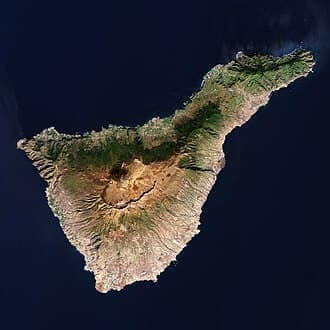
Tenerife is an island of two entirely different worlds, split by the volcano Teide, which at 3,715 meters is Spain's highest peak. The south is arid and sunny, home to all the big resorts with imported sand beaches. The north is green, damp, and far more authentic — banana plantations, colonial towns, and a mist that settles on the Anaga ridge every day. That contrast makes Tenerife the most varied of the Canary Islands: in two hours you can drive from a 30°C beach to a lunar landscape above the cloud line, where snow settles in winter. The island is a year-round destination, with temperatures holding between 20 and 29°C throughout the year. Without a car, though, you'll barely scratch the surface of what it offers.

What to see

The places worth your time in Tenerife, and what to expect at each

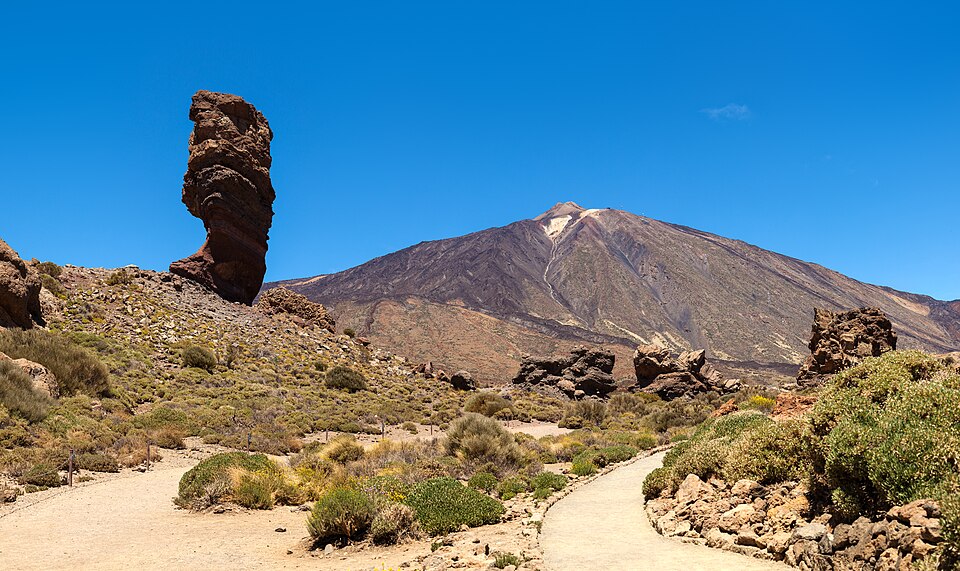
Mount Teide

Mount Teide

Teide National Park

Spain's tallest mountain and the world's third-largest volcano measured from the seafloor. The cable car climbs to 3,555 meters; the final 163 meters to the true summit require a permit, bookable months ahead and free of charge.

Tip: The free summit permit from the national park's website gets booked out two to three months ahead — arrange it before you even book your flight.

Admission:
cable car from €40
Time needed:
half a day
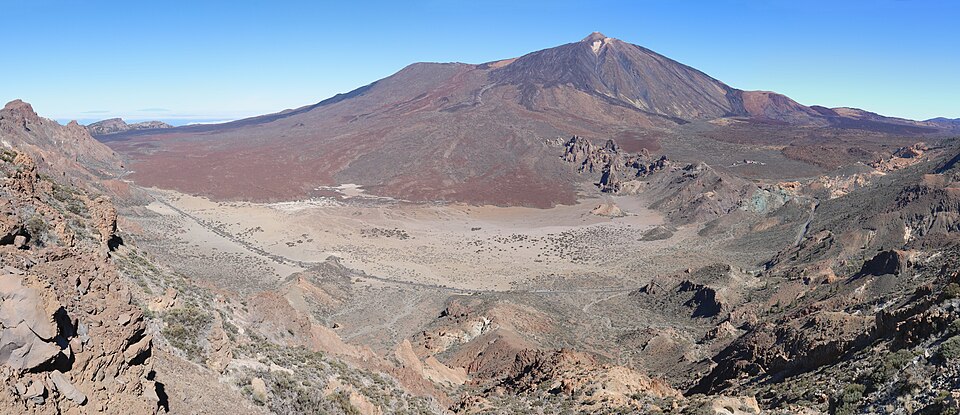
Teide National Park

Teide National Park

Center of the island

A caldera sixteen kilometers across at 2,000 meters elevation, with lava fields, the towering rock spires of Roques de García, and colors ranging from black to ochre. Spain's most visited national park, and one of the best stargazing spots in the world.

Tip: Thanks to the dry air and zero light pollution, the night sky above the caldera is exceptional — an evening stargazing trip is well worth it.

Admission:
free
Time needed:
full day
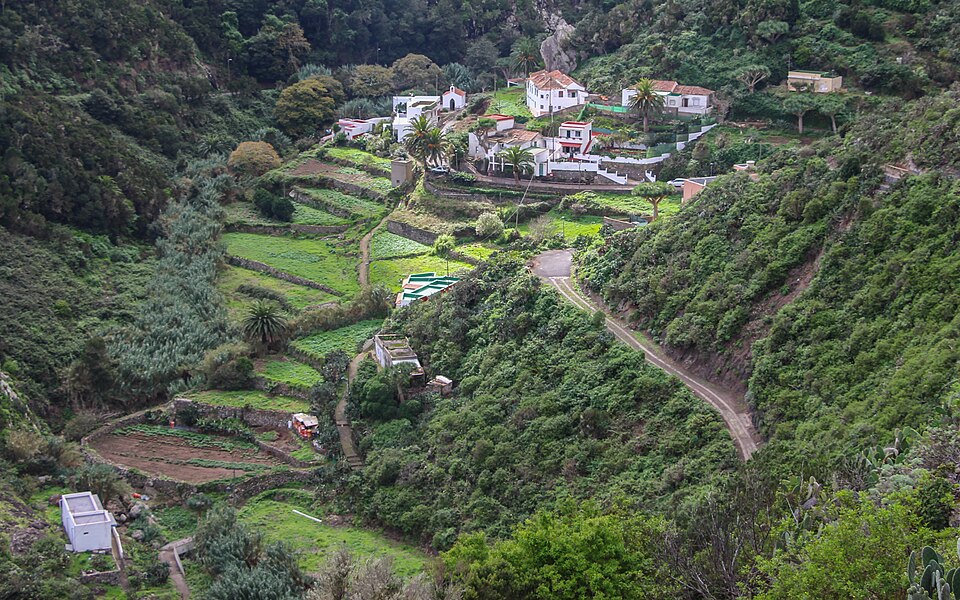
The Anaga Mountains

The Anaga Mountains

Northeast

The island's oldest region, in the northeast, a UNESCO biosphere reserve home to a laurel forest that survived the ice age. Fog-wrapped ridges, deep valleys, and villages that until recently had no road access at all.

Tip: The switchbacks here are narrow and fog rolls in without warning — don't drive it after dark, and expect the crossing to take twice as long as your GPS suggests.

Admission:
free
Time needed:
full day
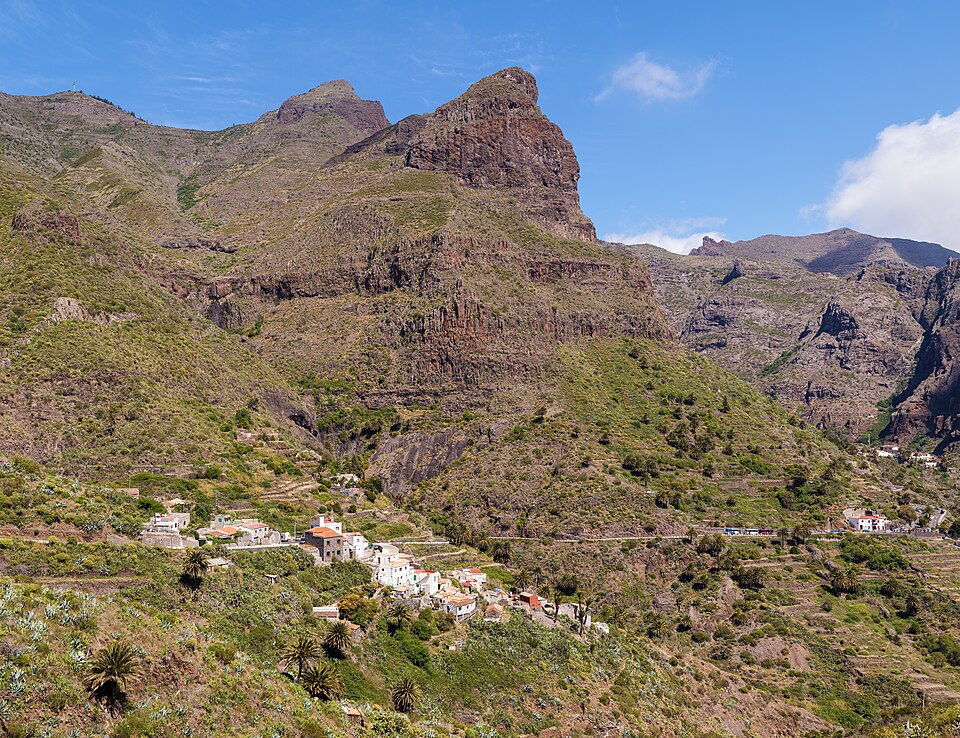
Masca Gorge

Masca Gorge

Northwest

A mountain village in a saddle above a deep ravine, reached by one of the island's narrowest roads. Hiking down the gorge to the sea was once one of the Canaries' most popular treks; access is now regulated and requires a booking.

Tip: Don't head into the ravine without a reservation and helmet — access is limited, and rangers will turn back anyone without a permit.

Admission:
village free, gorge descent from €28
Time needed:
half day to full day
Los Gigantes

Los Gigantes

West coast

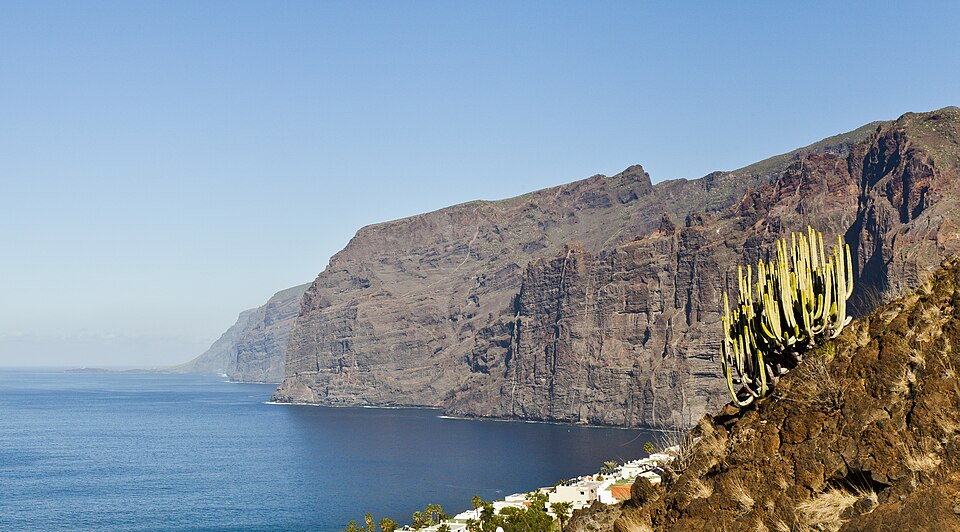
Cliffs up to six hundred meters tall dropping straight into the Atlantic on the west coast. Boats depart from the harbor below for whale- and dolphin-watching trips — the resident pilot whale population here is one of the few year-round colonies in Europe.

Tip: Take a whale-watching trip in the morning, when the water is calmer; by afternoon the trade winds pick up and the ride gets rough.

Admission:
whale-watching trip from €25
Time needed:
half a day
La Laguna

La Laguna

San Cristóbal de La Laguna

North

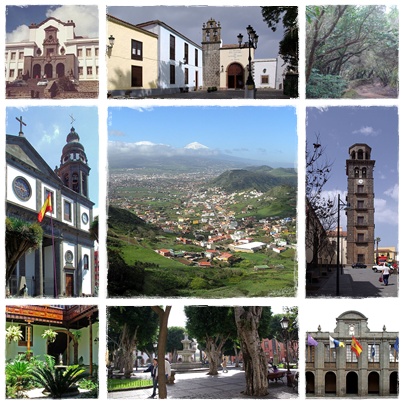
The island's original capital, UNESCO-listed, whose grid layout served as the model for colonial city planning across Latin America. Colorful townhouses with wooden balconies, a university, and the best tapas bars on Tenerife.

Tip: La Laguna sits at five hundred meters and runs about five degrees cooler and mistier than the coast — bring a sweater.

Admission:
free
Time needed:
half a day
Santa Cruz de Tenerife

Santa Cruz de Tenerife

Northeast

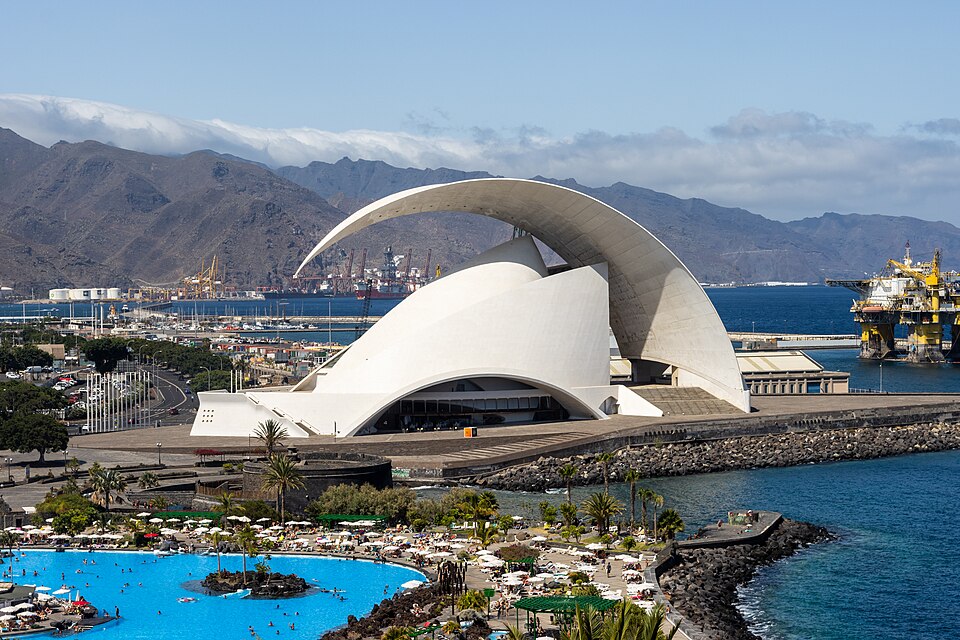
The island's capital, home to Santiago Calatrava's wave-shaped Auditorio, the Nuestra Señora de África market, and the city beach of Las Teresitas, its sand shipped in from the Sahara. In February it hosts the world's second-largest carnival after Rio.

Tip: Las Teresitas is the only beach on Tenerife with golden sand and calm water behind a breakwater — every other beach on the island is black volcanic sand.

Admission:
free
Time needed:
half a day
Loro Parque

Loro Parque

Puerto de la Cruz

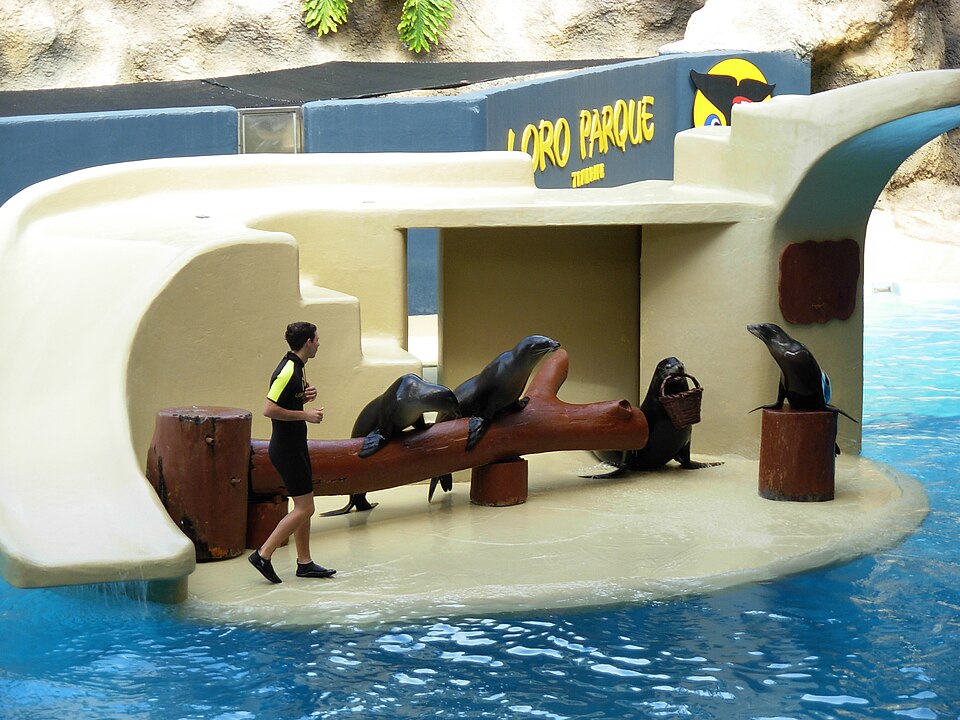
A zoo in Puerto de la Cruz with the world's largest parrot collection, orcas, penguins, and an extensive aquarium. One of the Canary Islands' most visited attractions, and the main reason many families head north.

Tip: A combined ticket with Siam Park in the south costs considerably less than two separate admissions.

Admission:
from €42
Time needed:
full day
Garachico

Garachico

North

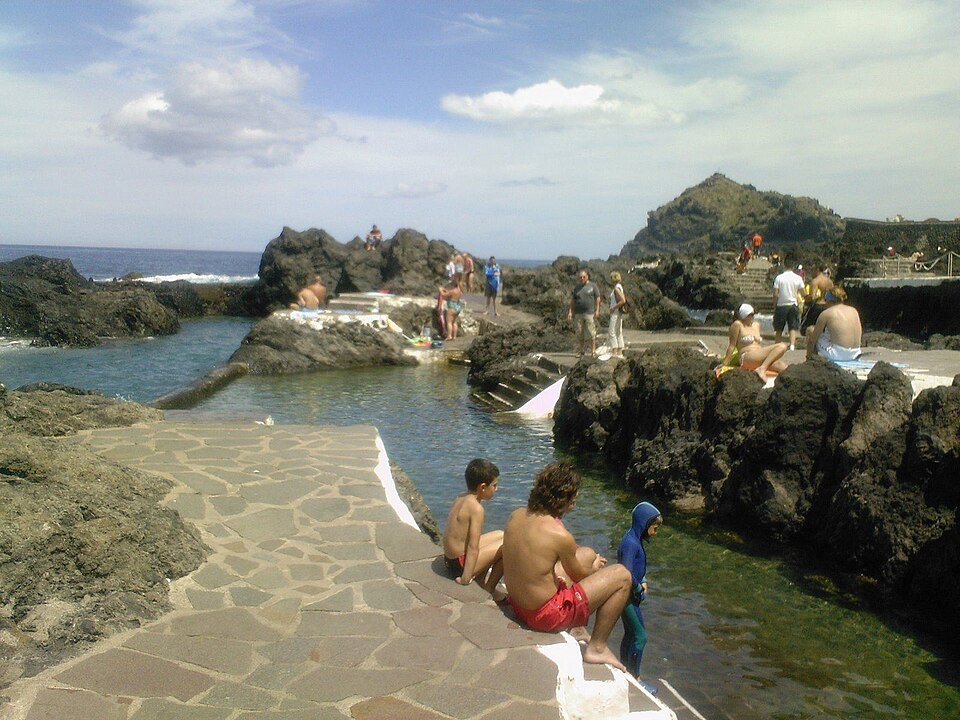
A northern harbor town buried by a volcanic eruption in 1706. Lava filled the harbor and formed the El Caletón natural pools, now popular for swimming. The historic core, with its monastery and fortress, survived the eruption intact.

Tip: The natural pools are only safe to swim in when the sea is calm — in rough weather the Atlantic surges over them and swimming turns dangerous.

Admission:
free
Time needed:
half a day

Photos: Mount Teide — Thomas Wolf, www.foto-tw.de (CC BY-SA 3.0 de) · Teide National Park — Ingo Mehling (CC BY-SA 4.0) · The Anaga Mountains — Michal Klajban (CC BY-SA 4.0) · Masca Gorge — Thomas Wolf, www.foto-tw.de (CC BY-SA 3.0 de) · Los Gigantes — Diego Delso (CC BY-SA 3.0) · La Laguna — La_Laguna.jpg: Jens Steckert; La_Laguna_BW_1.JPG: Berthold Werner; UniversityLaLaguna.JPG: Edub; La_Laguna_BW_10.JPG: Berthold Werner (CC BY-SA 3.0) · Santa Cruz de Tenerife — Photograph by Mike Peel (www.mikepeel.net). (CC BY-SA 4.0) · Loro Parque — myself (User:Piotrus) (CC BY-SA 3.0) · Garachico — Alcide (CC BY-SA 3.0)

Where to stay

Areas and districts, matched to the kind of trip you are taking

Costa Adeje and Playa de las Américas

Best for: reliable sun and families

The main resort strip in the south, with the highest concentration of hotels, the Siam Park water park, and the most reliable weather on the island. Beaches are man-made and the sea is calm. It's also the least authentic part of Tenerife, where you'll hear more English than Spanish.

Los Cristianos

Best for: a calmer south and easy access

A former fishing village that grew into a resort with a more genuine center than neighboring Las Américas. Ferries to La Gomera and buses across the island depart from here. Good for older visitors and those without a car.

Puerto de la Cruz

Best for: the green north and exploring

The island's oldest resort, with a colonial center, botanical garden, and Loro Parque. Weather here is more changeable and beaches are black volcanic sand, but La Laguna, Anaga, and Teide are all close by. Prices run lower than in the south.

Santa Cruz and La Laguna

Best for: city life, food, and a longer stay

The twin cities of the northeast, where the real Tenerife lives. The island's best restaurants, tapas bars, and culture, plus the golden-sand beach of Las Teresitas. Few tourists, but this is a city, not a resort.

Getting around

From the airport

Tenerife has two airports. The southern Tenerife South (TFS) handles charter and international flights and sits twenty kilometers from the main resorts — this is where the vast majority of European visitors land. The northern Tenerife North (TFN), near La Laguna, mainly serves domestic and inter-island routes. It's an hour's drive between the two airports. Direct bus service runs from both, though a transfer or taxi is more convenient with luggage.

Tenerife South–Reina Sofía (TFS) · 20 km

  • TITSA bus 111 to Los Cristianos· 30 min· €5
  • Taxi to Costa Adeje· 25 min· €35
  • Hotel transfer· 25–45 min· included with package

Tenerife North–Ciudad de La Laguna (TFN) · 65 km

  • TITSA bus 102 to Santa Cruz· 25 min· €2.80
  • Taxi to Puerto de la Cruz· 30 min· €45

Around town

The TITSA bus network covers the whole island and is cheap, especially with the rechargeable tenmás card, which roughly halves the fare. Services between the south and north run frequently, but few reach the mountains or Teide, and it's easy to get caught out waiting for a return bus. If Teide, Anaga, and Masca are on your list, a car is essentially required. Roads are excellent, though narrow and winding in the mountains, and fog rolls in without warning in the north. A tram connects Santa Cruz and La Laguna.

TITSA busesCover the whole island. Fares run roughly half price with a tenmás card. · €1.50–15 depending on distance
Santa Cruz–La Laguna tramConnects the two cities every few minutes, the easiest way to travel between them. · €1.35
Rental carThe best way to see the island. Fuel is notably cheaper in the Canaries than on the mainland. · €30 / day
Teide cable carClimbs to 3,555 m in eight minutes. Book online — same-day tickets often sell out. · €40

Useful apps: TITSA, Moovit, Google Maps

When to go

Tenerife calls itself the island of eternal spring, and it lives up to the name: temperatures hold between 21 and 29°C year-round, and the sea never drops below 19°C. April to June and September-October are most pleasant. Summer is hot and windy in the south, while winter is Europe's main season here thanks to a comfortable 22°C. The north stays a few degrees cooler year-round and considerably damper, and snow can settle on Teide in winter.

Best time

April to June, September and October

What to avoid

August, for wind and high prices; the north in winter, for fog

MonthJanFebMarAprMayJunJulAugSepOctNovDec
Day21°21°22°23°24°26°28°29°28°26°24°22°
Night15°15°15°16°17°19°20°21°21°19°18°16°
Rainy days543210001356
Sea19°19°19°19°20°21°22°23°23°23°22°20°

Food & drink

Canarian cuisine is built on potatoes, fish, and mojo sauces. Its foundation is papas arrugadas — small potatoes boiled in heavily salted water until they shrivel and take on a salty crust — served with red mojo made from peppers and green mojo made from cilantro. The fish is local Atlantic catch, not imported. The island grows wine on Europe's highest vineyards, up to 1,700 meters, along with bananas that are smaller and sweeter than mainland varieties.

What to try

Papas arrugadas con mojo

Potatoes boiled in their skins in seawater, served with two sauces. The classic Canarian side to everything.

Ropa vieja

Stewed beef or chicken with chickpeas and potatoes, literally 'old clothes.' A staple of countryside restaurants.

Vieja sancochada

Boiled parrotfish with potatoes and mojo, a traditional Sunday dish in coastal villages.

Queso de cabra asado

Grilled goat cheese with mojo or palm honey, the island's most common starter.

Barraquito

A layered coffee with condensed milk, Licor 43 liqueur, and lemon zest. A Tenerife specialty.

Vino de Tacoronte

Red wine from the northern slopes; the local Canarian grape varieties survived phylloxera and no longer grow anywhere else in Europe.

What it costs

Cortado coffee

€1.30–2

Menu del día (set lunch)

€10–14

Restaurant dinner

€20–30 per person

Beer, 0.33 l

€2–3

Teide cable car

€40

Rental car per day

from €30

Bus, south–north

€10–15

Night in a 4-star hotel

€90–160

Indicative prices that change over time — treat them as a guide, not a price list.

Practical information

SocketsCEuroplug, two round pinsFSchuko
Voltage230V / 50Hz
Tap waterTap water is drinkable — Tap water on Tenerife is desalinated or drawn from underground galleries and is safe to drink, but it has a noticeable taste. Nearly everyone drinks bottled water instead, which is very cheap here.
TippingNot obligatory. At a restaurant, round up or leave around five percent; at bars, small change is enough.
Driving on theright
SafetyTenerife is very safe. The main risks are natural: strong currents and waves on unprotected northern beaches, sudden weather changes and fog in the mountains, and underestimating altitude on Teide, where the air is noticeably thinner.
Opening hoursShops typically run 10 a.m.–8 p.m., later in resort areas. Siesta is observed less here than on the mainland. Inland villages tend to close on Sundays, while tourist centers stay open as usual.
Customs & etiquetteLunch is around two p.m., dinner after nine. Swimwear belongs on the beach, not in town. Canary Islanders consider themselves Canarian rather than mainland Spanish, and appreciate visitors who recognize the distinction.
A few local wordsHello — Buenos díasThank you — GraciasPlease — Por favorThe check, please — La cuenta, por favorCheers — Salud

How to plan your days

1 day

A day at Teide

  1. 1Early morning departure for the national park, while skies are clear.
  2. 2The Teide cable car with a booked slot, then the viewing trail at the top.
  3. 3Lunch in Vilaflor, Spain's highest-altitude village.
  4. 4Descend through the pine forests and return to the coast by early evening.

2 days

Two days including the north

  1. 1Day 1 as above.
  2. 2Day 2 morning: La Laguna and its colonial center.
  3. 3Lunch at a tapas bar, afternoon in Santa Cruz and Las Teresitas beach.
  4. 4Early evening: return via Anaga, stopping at the Mirador Cruz del Carmen viewpoint.

3 days

Three days including the west

  1. 1The first two days as above.
  2. 2Day 3 morning: a whale-watching boat trip from Los Gigantes.
  3. 3Lunch at the harbor beneath the cliffs.
  4. 4Afternoon: the mountain village of Masca and the switchbacks above the gorge.
  5. 5Return via Garachico for a swim in the lava pools.

Day trips

La Gomera island

35 km · 50 min by ferry from Los Cristianos

The best-preserved Canary Island, home to the UNESCO-listed Garajonay laurel forest and the whistled language of silbo, used to communicate across its valleys. It's a tight but doable day trip.

Siam Park

10 km · 15 min by car

A Thai-themed water park near Costa Adeje, repeatedly named the best in the world. For families with older kids it's the south's headline attraction, and a combined ticket with Loro Parque is worthwhile.

Tacoronte and Orotava vineyards

50 km · 50 min by car

Northern slopes home to Europe's highest-altitude vineyards, and the town of La Orotava, with the island's finest example of a traditional Canarian house. Most wineries offer tastings by prior arrangement.

Frequently asked questions

South or north Tenerife?+

The south has more reliable sun, warmer sea, and all the big resorts, but it's arid and less authentic. The north is green, more interesting, and cheaper, though the weather is changeable and often overcast. Choose the south for a classic beach holiday, the north for exploring.

Do I need a permit for Teide's summit?+

Yes, if you want the final 163 meters above the upper cable-car station. The permit is free from the national park's website, but slots are typically booked out two to three months ahead. Without one, you can still reach 3,555 meters, which is still spectacular.

Are there sandy beaches on Tenerife?+

Natural beaches are black volcanic sand. Golden sand only appears on artificially imported beaches at the southern resorts and at Las Teresitas near Santa Cruz, where the sand was shipped in from the Sahara. The black beaches are perfectly pleasant, though they heat up considerably by midday.

Do I need a car on Tenerife?+

If you want to see Teide, Anaga, and Masca, yes. TITSA buses cover the coast reliably, but few routes reach the mountains, and it's easy to get stranded waiting for a return bus. If you're staying put at a resort, you don't need one.

When is the best time to visit?+

Almost year-round — temperatures hold between 21 and 29°C. April to June and September-October are the most pleasant. Winter stays a comfortable 22°C, which makes Tenerife Europe's leading winter-sun destination.

Can you swim on Tenerife in winter?+

Yes, the sea stays at 19°C even in the coldest month. That's chilly for a long swim for most people, but a quick dip is entirely normal. Hotel pools are usually heated in winter.

Is a day trip to La Gomera worth it?+

Yes, if you have at least a week to spare. The ferry from Los Cristianos takes fifty minutes, and the island feels completely different — the UNESCO-listed Garajonay laurel forest and deep ravines. It's a tight squeeze as a single day; staying overnight is the better option.

Is Tenerife expensive?+

Cheaper than mainland Spain, since the Canary Islands have lower taxes. A set lunch menu runs €10–14, a beer €2–3. The southern resorts are priciest; the cheapest meals are in La Laguna and inland villages.

Visa Requirements

Check the latest visa requirements for entering this country. Some nationalities may need to apply for a visa or e-visa before travel.

Check visa requirements

Language

Spanish

Currency

EUR

Timezone

Atlantic/Canary

Dial Code

+34

Population

47.6M

Area

505,990 km²

Voltage

230V / 50Hz

Driving Side

Right

Top Hotels in Tenerife

Live prices from 500+ properties

Loading hotels...

Planning a trip to Tenerife?

Compare hundreds of hotels, find the best price, and book with free cancellation on TravelManiac.