Hotels in Tirana

Albania's colourful capital of bunkers and cafés

Tirana

LanguageAlbanian
CurrencyALL
TimezoneEurope/Tirane
Temperature10-30 °C
Dial Code+355
Population2.8M
Area28,748 km²
SocketsType C / Type F
Tap waterNot drinkable

Discover Tirana

Tirana is the capital of Albania and, with about four hundred and twenty thousand people, its largest city. Until 1920 it was a small Ottoman town; it took its present shape under Mussolini and then under communism, which left it with broad boulevards, bunkers and the pyramid of Enver Hoxha. After 1991 the grey capital became a colourful, busy and inexpensive European destination: mayor Edi Rama had facades painted and cafés, galleries and restaurants sprang up. Tirana is a good base for day trips to Durrës, Krujë and Berat and works as a stay in its own right for three or four days. The centre can be walked, a cable car lifts you to Mount Dajti with views over the country, and the communist-era bunkers tell the story of the isolation Albanians lived through. The currency is the lek, but euros are accepted almost everywhere and prices are lower than in Croatia or Greece.

What to see

The places worth your time in Tirana, and what to expect at each

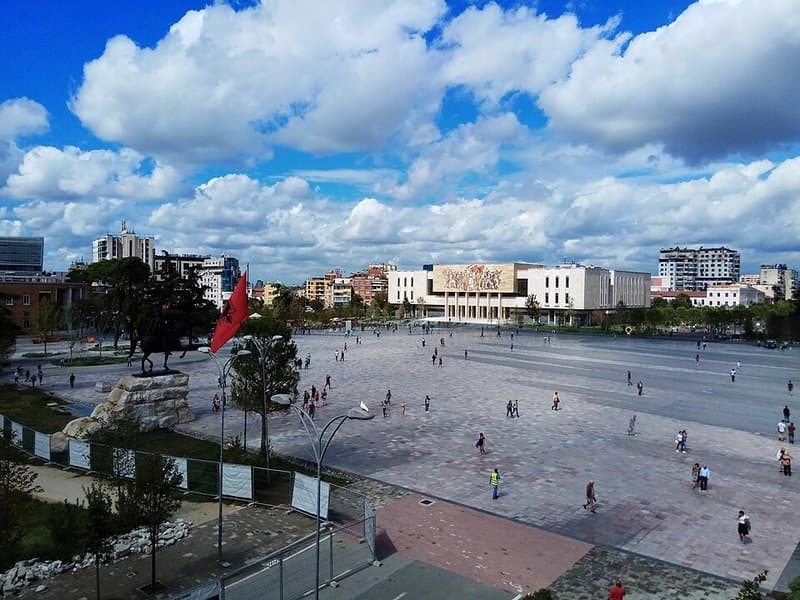
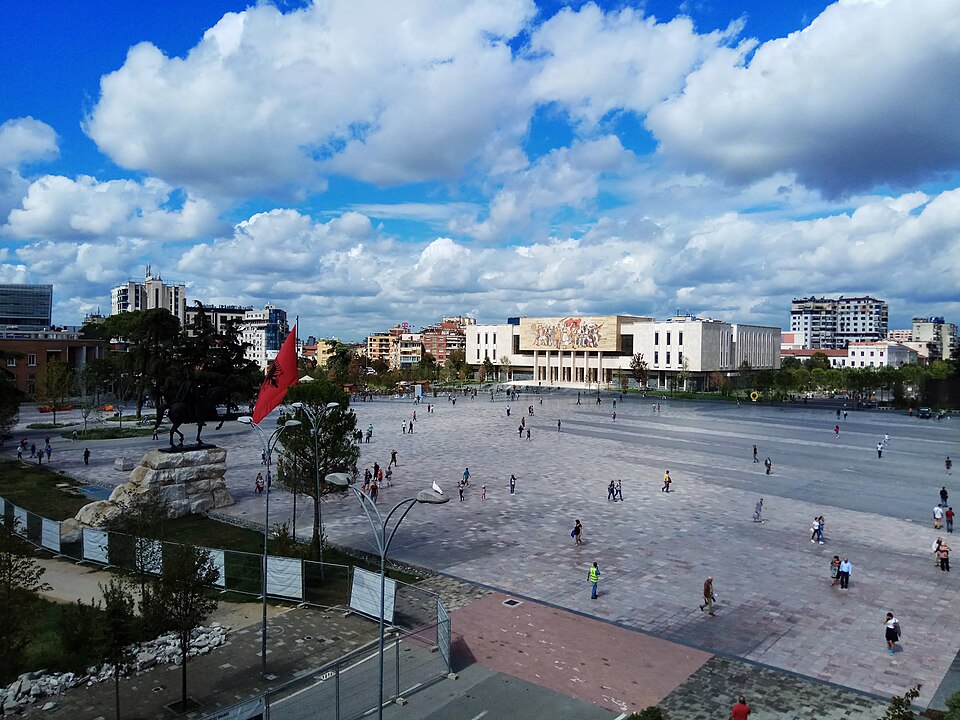
Skanderbeg Square

Skanderbeg Square

centre

The main square of the city, with an equestrian statue of the national hero Skanderbeg, rebuilt in 2017 as a pedestrian zone paved with Albanian stone. It is ringed by the National History Museum with its 'Albania' mosaic on the facade, the Opera, the Et'hem Bey Mosque and the clock tower. It is a meeting place and the start of every tour.

Tip: Come after sunset, when the square is lit and the heat has gone, and look at the mosaic by the museum too. Do not cut across the square by car — it is a pedestrian zone.

Admission:
free
Time needed:
45 min
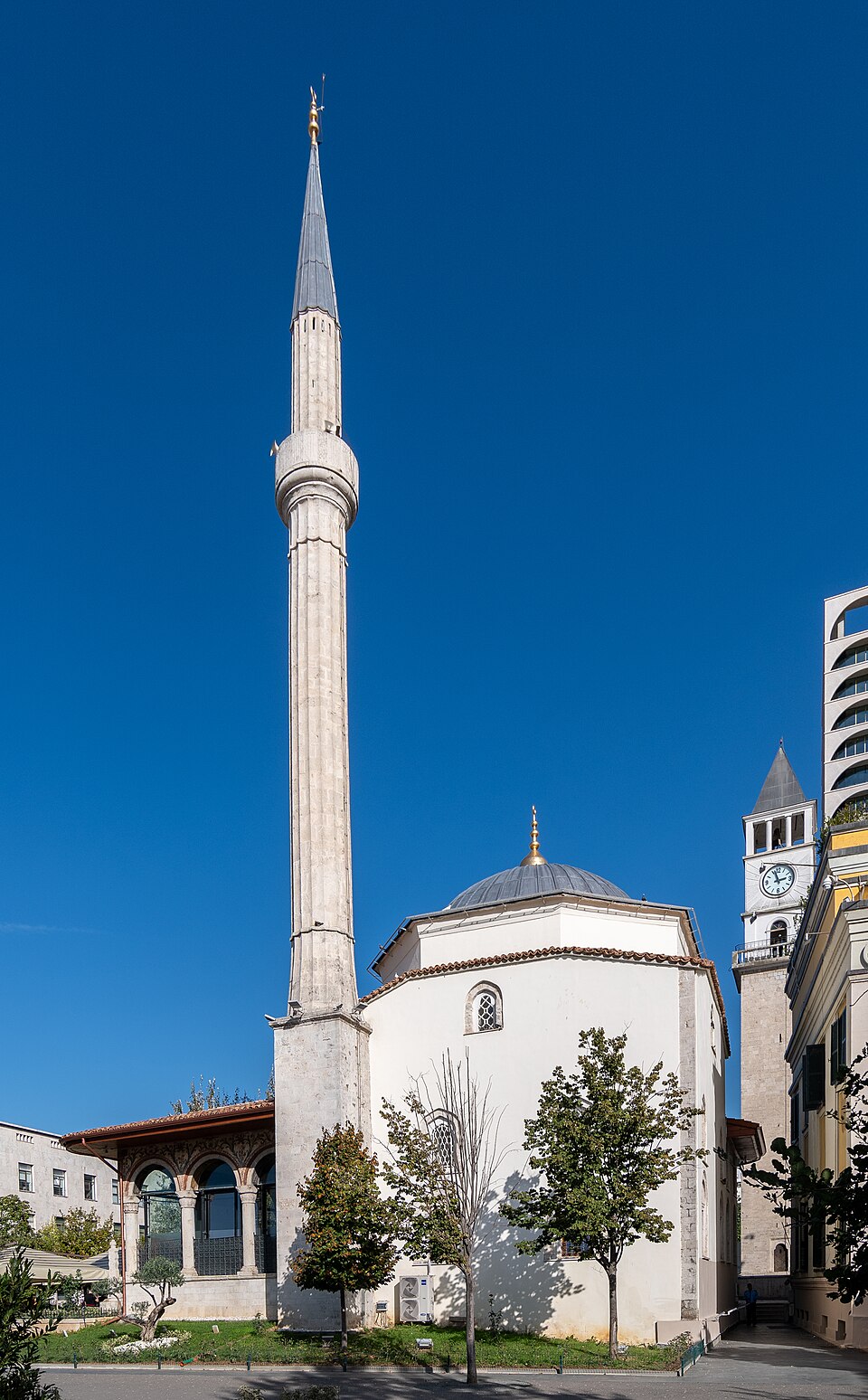
Et'hem Bey Mosque

Et'hem Bey Mosque

centre

A mosque from 1821 on Skanderbeg Square, decorated inside with paintings of trees, bridges and waterfalls — unusual in Islamic art. It was closed under communism and became a symbol of the return of religion after 1991. It is small and open to visitors outside prayer times.

Tip: Entry is free but come outside prayers (especially Friday around midday). Shoes come off and women should bring a scarf and cover shoulders and knees.

Admission:
free
Time needed:
20 min
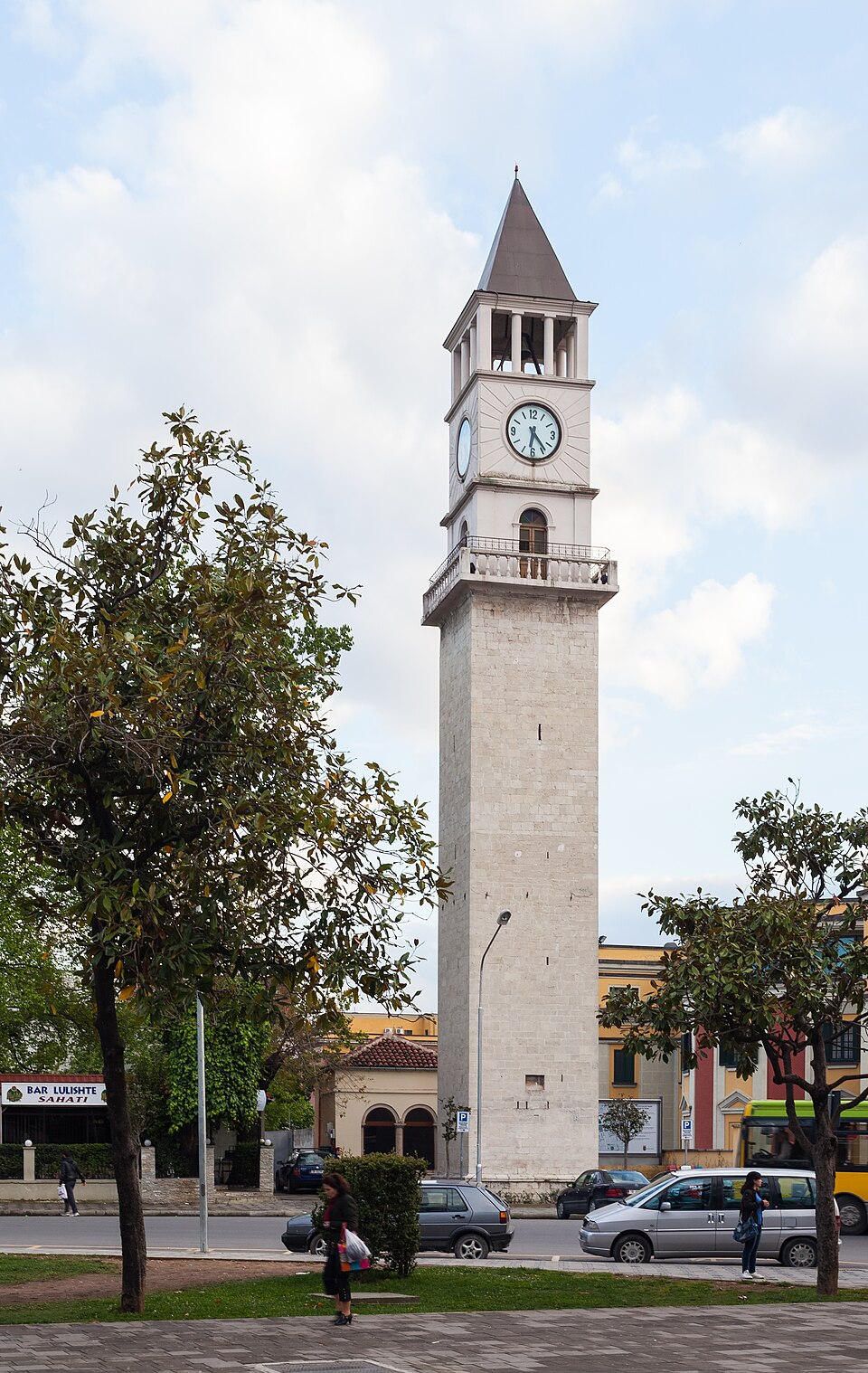
Clock Tower

Clock Tower

centre

A tower thirty-five metres high from 1822, standing next to the mosque and for a long time the tallest structure in the city. You can climb the stairs to a viewing platform with views of the square and of Dajti. Today it is surrounded by tall buildings, so it looks smaller than it is.

Tip: The tower costs a few hundred lek to enter and is open from morning to late afternoon. The best light is in the morning, when the square is photographed from the east.

Admission:
a few hundred lek
Time needed:
30 min
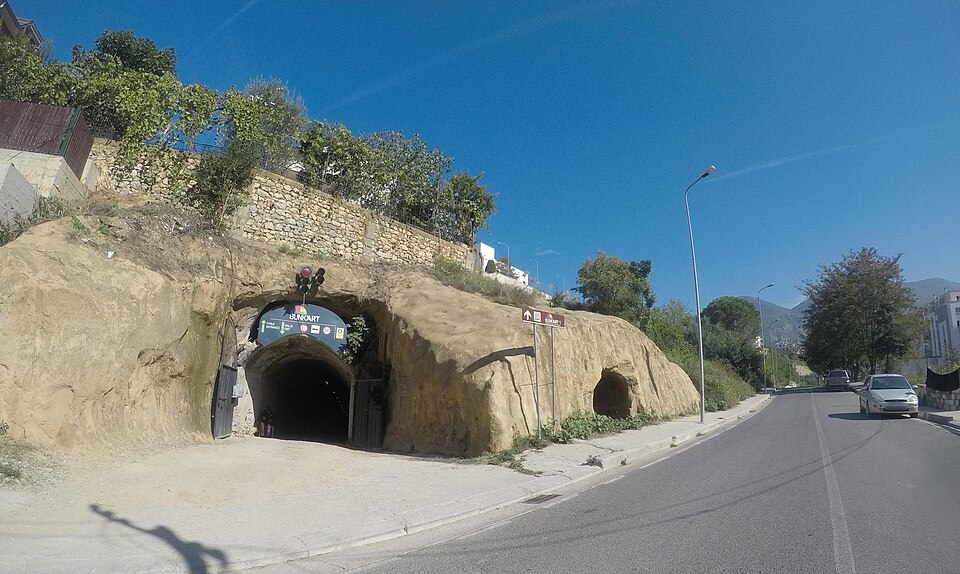
Bunk'Art 1

Bunk'Art 1

east of the centre

A huge nuclear bunker from the 1970s, about five kilometres from the centre, now a museum of the communist era. It has a hundred and seventy rooms on five levels in the rock and displays documents, uniforms and objects from the dictatorship. It is the biggest bunker in the country and the most important museum for understanding twentieth-century Albania.

Tip: Expect a temperature of about fifteen degrees all year, so bring a sweatshirt. It takes about twenty minutes from the centre by bus or taxi and combines well with Bunk'Art 2.

Admission:
about 700 lek
Time needed:
1.5–2 hrs
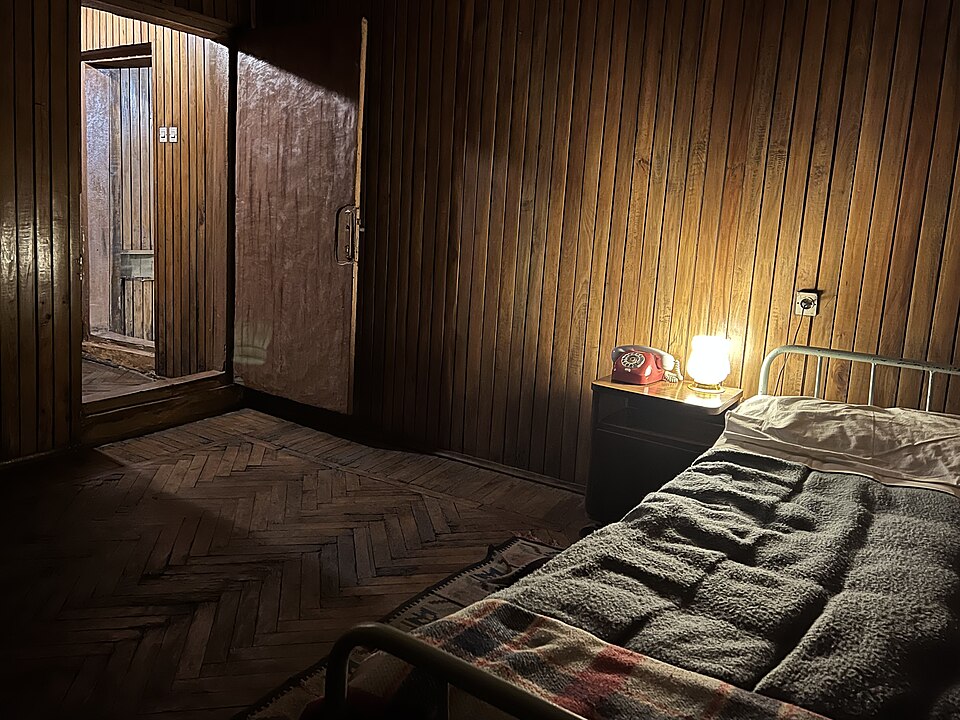
Bunk'Art 2

Bunk'Art 2

centre

A smaller bunker in the city centre beneath the former Ministry of the Interior, devoted to the police and the Sigurimi secret service. It displays methods of surveillance, interrogation and imprisonment under communism. The entrance is directly opposite the National Museum, so it fits easily into a city walk.

Tip: Ask at the ticket desk for an audio guide or English captions. It is cool even when it is forty degrees outside, so it suits midday.

Admission:
about 500 lek
Time needed:
1 hr
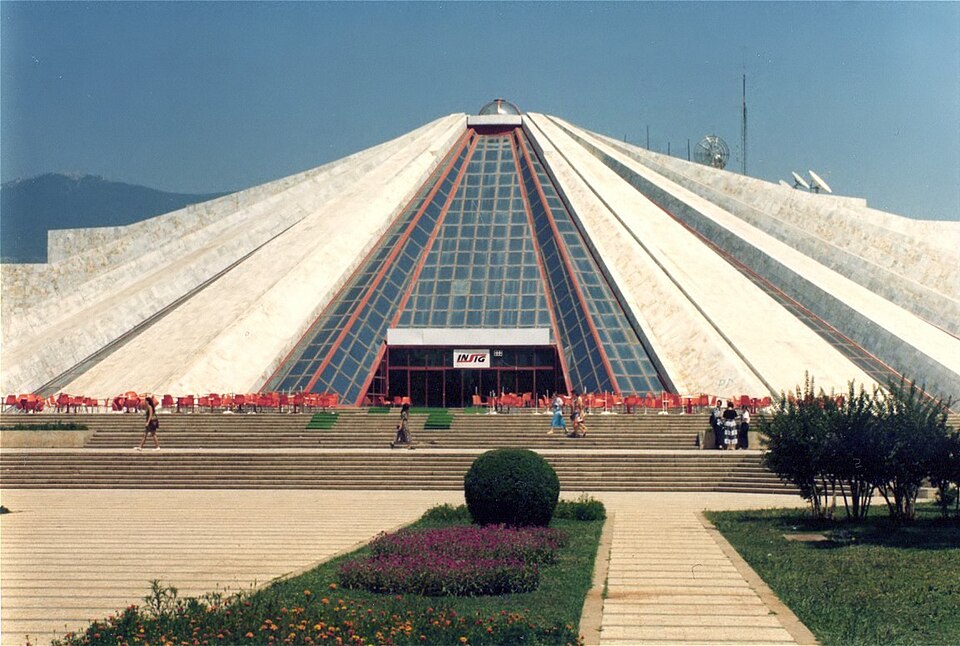
Pyramid of Tirana

Pyramid of Tirana

Blloku

A pyramid built in 1988 as a museum for the dictator Enver Hoxha, now a cultural centre and learning space for young people. You can climb to the top — it has been refurbished for the public in recent years. It is a symbol of what remained after communism.

Tip: The climb to the roof is free and the view of Blloku and Dajti is good at sunset. The pyramid changes, so check the current operation on the spot.

Admission:
free
Time needed:
30–45 min
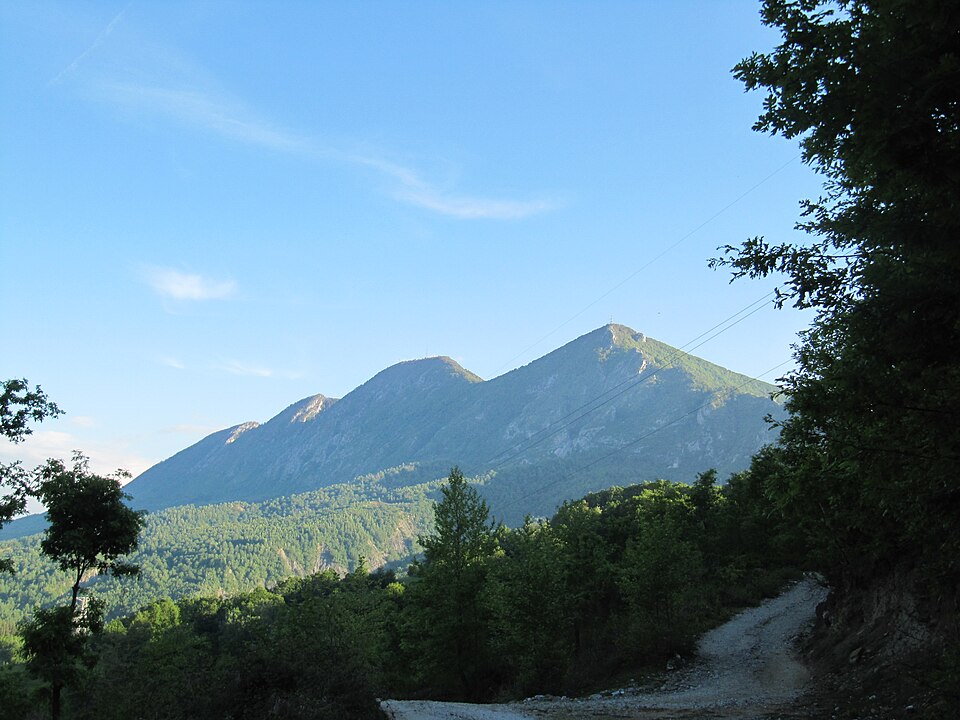
Dajti Ekspres Cable Car

Dajti Ekspres Cable Car

east of Tirana

A gondola from the edge of Tirana up Mount Dajti, one of the longest in the Balkans, which in fifteen minutes carries you to an upper station about a thousand and fifty metres above sea level. At the top are a viewpoint, a restaurant and trails in beech forest, and outside summer it is noticeably cooler than in town.

Tip: Tickets are bought on the spot or online, and in summer there is a queue before noon. Bring a jacket — it is ten degrees cooler at the top than below.

Admission:
about 2,000 lek
Time needed:
half a day
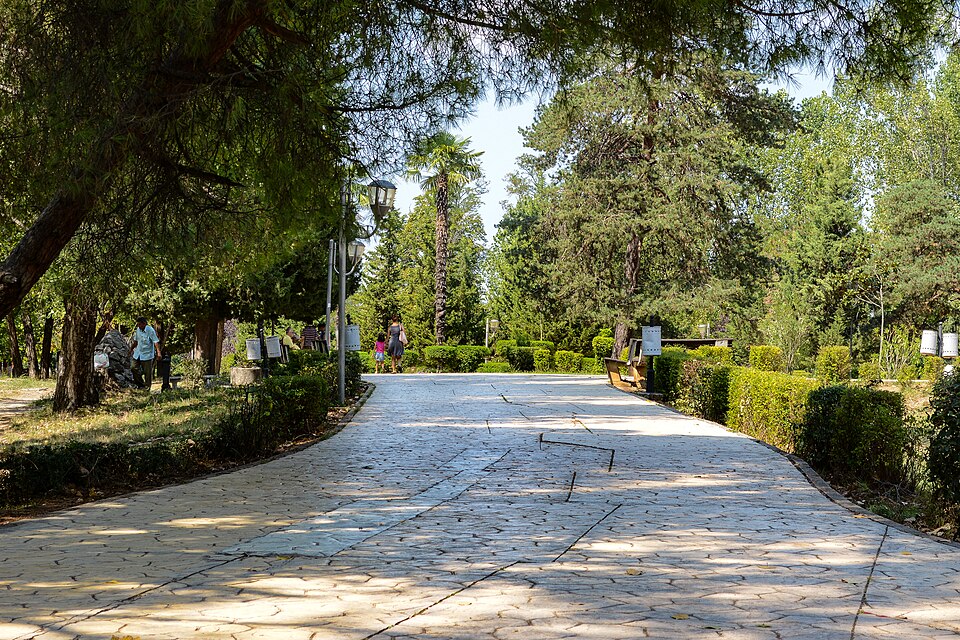
Grand Park of Tirana

Grand Park of Tirana

south of the centre

A large park south of the centre around an artificial lake, which is the green lung of the city. There are paths, playgrounds, cafés and a memorial to the victims of communism. At weekends families and runners meet here.

Tip: The best time is early evening, when it is cooler by the lake. Bike rental is cheap, but in summer the late morning is already hot.

Admission:
free
Time needed:
1–2 hrs
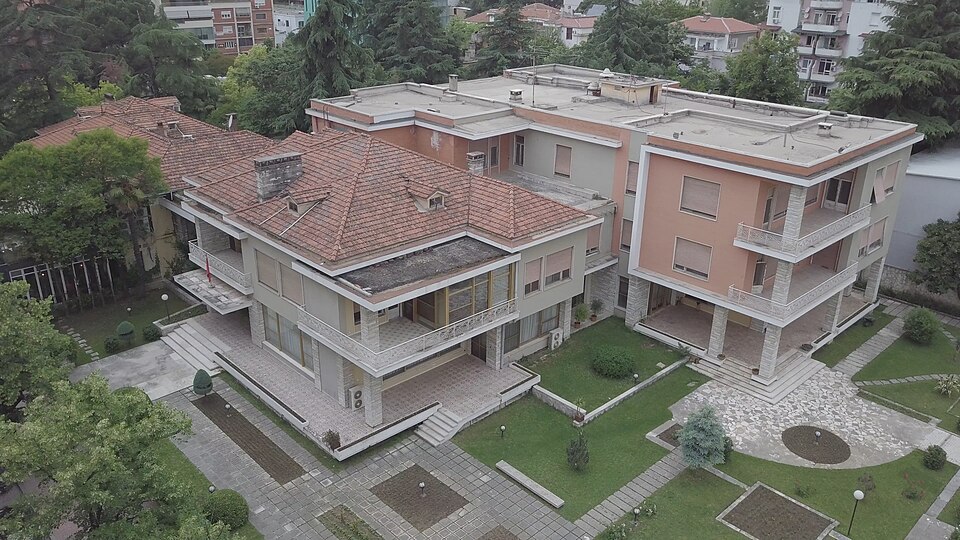
Blloku

Blloku

Blloku

A former closed district where the communist elite lived and to which only the chosen had access. Today it is the liveliest part of the city, with bars, restaurants, galleries and shops. Enver Hoxha's villa is a few steps away, no longer closed.

Tip: In the evening you can walk it in an hour, and dinner is pricier than in the centre. The cheapest food is a few streets away.

Admission:
free
Time needed:
1–2 hrs

Photos: Skanderbeg Square — Leeturtle (CC BY-SA 3.0) · Et'hem Bey Mosque — Steffen Schmitz (more photos) (CC BY-SA 4.0) · Clock Tower — Diego Delso (CC BY-SA 3.0) · Bunk'Art 1 — kobykarin @ Mapillary.com (CC BY-SA 4.0) · Bunk'Art 2 — Sharon Hahn Darlin (CC BY 2.0) · Pyramid of Tirana — Brosen (CC BY 2.5) · Dajti Ekspres Cable Car — Edvini (CC BY-SA 4.0) · Grand Park of Tirana — Photo: Chris Walts (CC BY-SA 2.0) · Blloku — Kleidieski (CC0)

Where to stay

Areas and districts, matched to the kind of trip you are taking

Qendra (centre)

Best for: first visit and sights

The area around Skanderbeg Square, with the main sights, hotels of every category and good transport. It has the widest choice of accommodation and restaurants and everything is within walking distance. The main drawback is traffic noise along the main boulevards.

Blloku

Best for: bars, restaurants and nightlife

The trendiest district, with cafés, galleries and bars open late into the night. Hotels are stylish and a little pricier, and the streets are noisy in the evening. Suits couples and younger travellers.

Pazari i Ri

Best for: markets and local food

The area around the restored market, with restaurants serving home cooking at good prices. It is the centre of weekend life and a good place to taste Albania. Accommodation is cheaper than in Blloku.

By the lake and park

Best for: calm and greenery

The southern part of the city around the Grand Park and the artificial lake, with more calm and greenery. Hotels here are new, prices lower and the centre is a few minutes by taxi. Good for longer stays and for families.

Getting around

From the airport

Tirana's Mother Teresa International Airport (TIA) is about seventeen kilometres northwest of the centre. Direct flights from across Europe are common in season. A bus runs into the centre for a few hundred lek and a taxi costs about two and a half thousand lek. From Durrës and the coast, minibuses and buses run every twenty minutes.

Tirana – Mother Teresa Airport (TIA) · 17 km

  • Rinas Express bus to the centre· 35 min· 400 lek
  • Taxi to the centre· 25–30 min· 2,500 lek
  • Minibus from Durrës· 1 hr· 250 lek

Around town

The centre of Tirana can be walked. City buses run with a flat fare of around forty lek, so keep cash. Taxis are cheap and Bolt works reliably. For excursions, minibuses leave from the bus stations as they fill.

City busMost districts, pay the conductor. · 40 lek
Taxi and BoltAround the centre and to Bunk'Art 1. · 400 lek
Minibus for day tripsFrom the station to Durrës, Krujë and Berat. · 250 lek
On footThe centre, Blloku and Pazari i Ri are all within three kilometres.

Useful apps: Bolt, Google Maps, Maps.me, Taxi Tirana

When to go

Tirana has a Mediterranean climate with a hot summer and a mild, wet winter. In July and August it is around 32°C, in winter around 13°C. The best months are May, June and September, when it is pleasant and not crowded. November and December are wet with short days, but hotel prices fall.

Best time

April to June and September

What to avoid

July and August (heat above 30°C) and November

MonthJanFebMarAprMayJunJulAugSepOctNovDec
Day12°13°16°20°25°29°32°32°28°22°17°13°
Night3°4°6°9°13°17°19°19°16°12°8°5°
Rainy days101010109633581111

Food & drink

Tirana's cooking is central Albania on one plate: cheese, vegetables, lamb and meatballs. A main dish in a restaurant costs around eight hundred to fifteen hundred lek, and portions are large. Albanians drink a lot of coffee and raki.

What to try

Fërgesë

A baked mixture of peppers, tomatoes and curd cheese or cheese, often with liver. A Tirana speciality served in a clay dish with bread, and good for vegetarians.

Tavë kosi

Lamb baked with rice under a yoghurt crust — regarded as the national dish. In Tirana you get it in the traditional restaurants of Pazari i Ri.

Byrek

Filo pastry filled with cheese, spinach or meat, the most common breakfast and snack. A piece from a bakery costs a hundred to a hundred and fifty lek.

Qofte

Grilled meatballs of lamb or beef with spices, served with bread and tomatoes. The best are from charcoal.

Japrak

Vine leaves stuffed with rice and spices, served cold or warm. A staple of Albanian starters.

Trileçe

A sponge dessert soaked in three kinds of milk with a caramel topping. The most popular sweet in Albania.

Raki

Albanian grape brandy, forty to fifty per cent, served with food. It is sipped slowly and one does not refuse it.

What it costs

Espresso in a café

100–150 lek

Byrek from a bakery

100–150 lek

Main course in a restaurant

800–1,500 lek

A beer in a pub

200–350 lek

City bus ticket

40 lek

Bunk'Art 1

700 lek

3★ hotel (night)

€50–90

Taxi from the airport to the centre

2,500 lek

Indicative prices that change over time — treat them as a guide, not a price list.

Practical information

SocketsCEuroplug, two round pinsFSchuko
Voltage230V / 50Hz
Tap waterDo not drink tap water — Tap water in Albania is not recommended for drinking. Bottled water is cheap and hotels often provide it free.
TippingTips are expected in Albania and given in cash. In a café you round up, in a restaurant leave around ten per cent.
Driving on theright
SafetyTirana is safe for tourists, and the main risk is the chaotic traffic. Cross only at crossings and avoid renting a car if you do not have to. Pickpockets appear on buses. The emergency number is 112, police 129.
Opening hoursCafés open as early as seven. Shops and supermarkets are open daily from eight to ten at night, and museums are often closed on Mondays. Restaurants serve dinner from seven to midnight.
Customs & etiquetteAlbanians are hospitable and invite you for coffee and raki. Gestures are often reversed: older people nod up and down for 'no'. Shoes come off in mosques.
A few local wordsGood day — MirëditaThank you — FaleminderitPlease — Ju lutemHow much is it? — Sa kushton?Cheers — GëzuarOne coffee — Një kafeWhere is...? — Ku është...?

How to plan your days

1 day

A day in Tirana

  1. 1Morning at Skanderbeg Square, the Et'hem Bey Mosque and the clock tower.
  2. 2Bunk'Art 2 in the centre and lunch in Pazari i Ri.
  3. 3Afternoon at the pyramid and a stroll in the Grand Park.
  4. 4Evening in Blloku and dinner with tavë kosi.

2 days

Two days: the city and Mount Dajti

  1. 1Day one as above.
  2. 2Day two morning by cable car up Dajti, lunch at the top.
  3. 3Afternoon at Bunk'Art 1.
  4. 4Evening beer in Blloku.

3 days

Three days: Tirana and Berat

  1. 1Days one and two as above.
  2. 2Day three a full-day trip to Berat, the city of a thousand windows, with its castle and the Onufri museum.
  3. 3Return to Tirana in the evening.

Day trips

Durrës

35 km · 1 hr by bus

A seaside city with a Roman amphitheatre and the longest beach in the country. Minibuses and buses run from Tirana every twenty minutes, so it can be done in half a day.

Krujë

40 km · 1 hr by car

A mountain town with the castle where Skanderbeg had his seat. Below the castle is a covered bazaar and a museum. It suits half a day and combines with Durrës.

Berat

120 km · 2 hrs by bus

The city of a thousand windows, a UNESCO site, with Ottoman houses on the hillside and a castle. Buses and minibuses run from Tirana, but it makes for a long day.

Frequently asked questions

Is Tirana good for a weekend?+

Yes, three or four days is enough for the centre, the bunkers and the Dajti cable car. It also works as a base for trips to Durrës and Berat. Hotels are cheap and the transfer from the airport is simple.

How do I get from the airport to the centre?+

The Rinas Express bus takes about thirty-five minutes to the centre and costs around four hundred lek. A taxi costs about two and a half thousand lek. Use the Bolt app or agree the price in advance.

When is the best time to visit?+

April to June and September, when it is pleasant and not crowded. In summer it is around 32°C, and in winter it is wet. In November and December hotels are cheapest.

Is Tirana safe?+

Yes, violent crime against tourists is rare. The main risk is the traffic, which is chaotic. Watch for pickpockets on buses and be careful at crossings.

Do you pay in euros in Tirana?+

No, the currency is the Albanian lek, but hotels and many shops accept euros and give change in lek. It is better value to withdraw lek from an ATM. Cards are accepted in hotels and restaurants.

What can I visit outside Tirana?+

Closest are Durrës with its beach and amphitheatre, Krujë with its castle and Berat with Ottoman houses. Buses and minibuses run from Tirana. The Dajti cable car needs half a day.

How long should I stay in Tirana?+

Three days is enough for all the main sights and the bunkers. If you want to add Durrës, Krujë and Berat, plan five days. Book accommodation ahead in season.

Do I need a visa for Albania?+

Citizens of the EU do not need a visa for stays of up to ninety days and may enter with a passport or an ID card. Check the current rules with your foreign ministry to be sure. A green card is needed for a car.

Visa Requirements

Check the latest visa requirements for entering this country. Some nationalities may need to apply for a visa or e-visa before travel.

Check visa requirements

Language

Albanian

Currency

ALL

Timezone

Europe/Tirane

Dial Code

+355

Population

2.8M

Area

28,748 km²

Voltage

230V / 50Hz

Driving Side

Right

Top Hotels in Tirana

Live prices from 500+ properties

Loading hotels...

More destinations in Albania

Planning a trip to Tirana?

Compare hundreds of hotels, find the best price, and book with free cancellation on TravelManiac.