Hotels in Delhi

Mughal tombs, Old Delhi bazaars and British boulevards in one giant city

Delhi

LanguageEnglish
CurrencyINR
TimezoneGMT+5:30
Temperature20-40 °C
Dial Code+91
Population1.43B
Area3,287,263 km²
SocketsType C / Type D / Type M
Tap waterNot drinkable

Discover Delhi

Delhi is India's capital and, at the same time, 7 cities built on top of one another over 1,000 years. In the south stands the 12th-century Qutb Minar; in the centre, Humayun's Tomb, which served as the model for the Taj Mahal; and in the north, the Red Fort and the maze of Old Delhi, where spices, silver and wedding saris are sold in lanes barely 2 metres wide. The British added New Delhi to this, with its wide avenues, the circular Connaught Place and India Gate. For a European, it's a shock: noise, traffic, beggars and luxury hotels side by side, and in winter, smog that blocks out the sun. Anyone who sticks it out for 2 days finds the city more manageable than it looks — the metro is modern, air-conditioned and cheap, an app-based taxi costs a few hundred rupees, and there are peaceful gardens between the monuments. Delhi is also the starting point of the Golden Triangle: it's under 2 hours by high-speed train to the Taj Mahal in Agra, and 4 to pink Jaipur.

What to see

The places worth your time in Delhi, and what to expect at each

Red Fort

Red Fort

लाल क़िला

Old Delhi

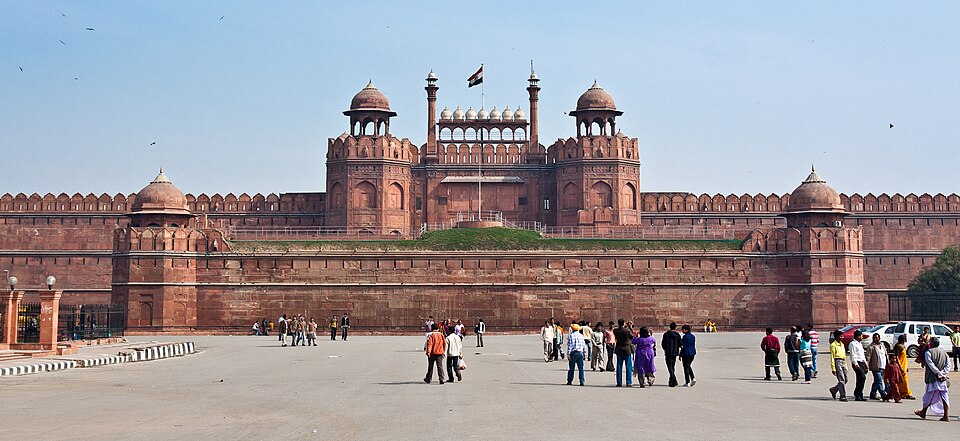
A huge red sandstone fort built in the mid-17th century by the Mughal emperor Shah Jahan, the same emperor who built the Taj Mahal. Its walls run over 2 km, and inside are audience halls with marble columns, palaces and gardens. The Indian prime minister delivers the Independence Day speech from its ramparts every year.

Tip: The fort is closed on Mondays, and it's best right at opening, when the marble halls of the Diwan-i-Khas are still in shade. Buy the ticket online on the ASI website — there's a queue and a higher price at the counter. Combine it with Old Delhi: it's a 10-minute walk from the main gate to Chandni Chowk and 20 to Jama Masjid. Evening sound-and-light shows are held, with the English version usually at 8pm.

Admission:
around INR 500–600 (foreigners)
Time needed:
1.5–2 h
Humayun's Tomb

Humayun's Tomb

हुमायूँ का मक़बरा

Nizamuddin

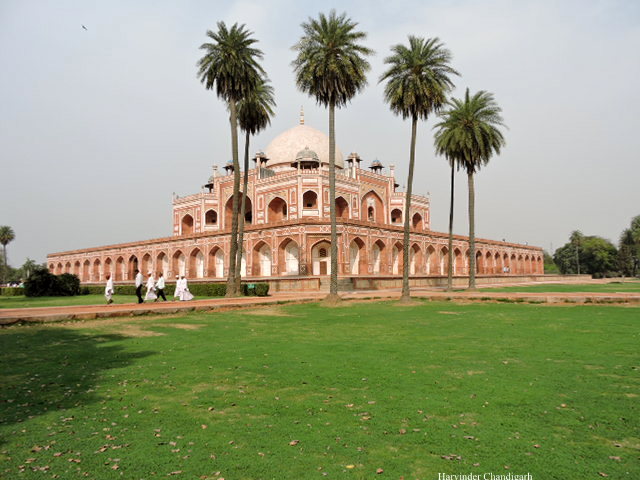
The mausoleum of the second Mughal emperor, from 1570, is India's first great garden tomb and a direct forerunner of the Taj Mahal — the same symmetry, dome and garden divided into 4 by water channels. Unlike the Taj, it's built of red sandstone with white marble, and tends to be nearly empty. Several smaller tombs and mosques stand within the grounds.

Tip: Go in the late afternoon, when the setting sun turns the sandstone orange and the crowds thin out. For a view across the dome, stand on the mausoleum terrace rather than in the garden. Right next door is the Nizamuddin neighbourhood with its Sufi shrine, where qawwali is sung on Thursday evenings after sunset — free entry, shoes off and cover your head.

Admission:
around INR 600 (foreigners)
Time needed:
1–1.5 h
Qutub Minar

Qutub Minar

क़ुतुब मीनार

Mehrauli

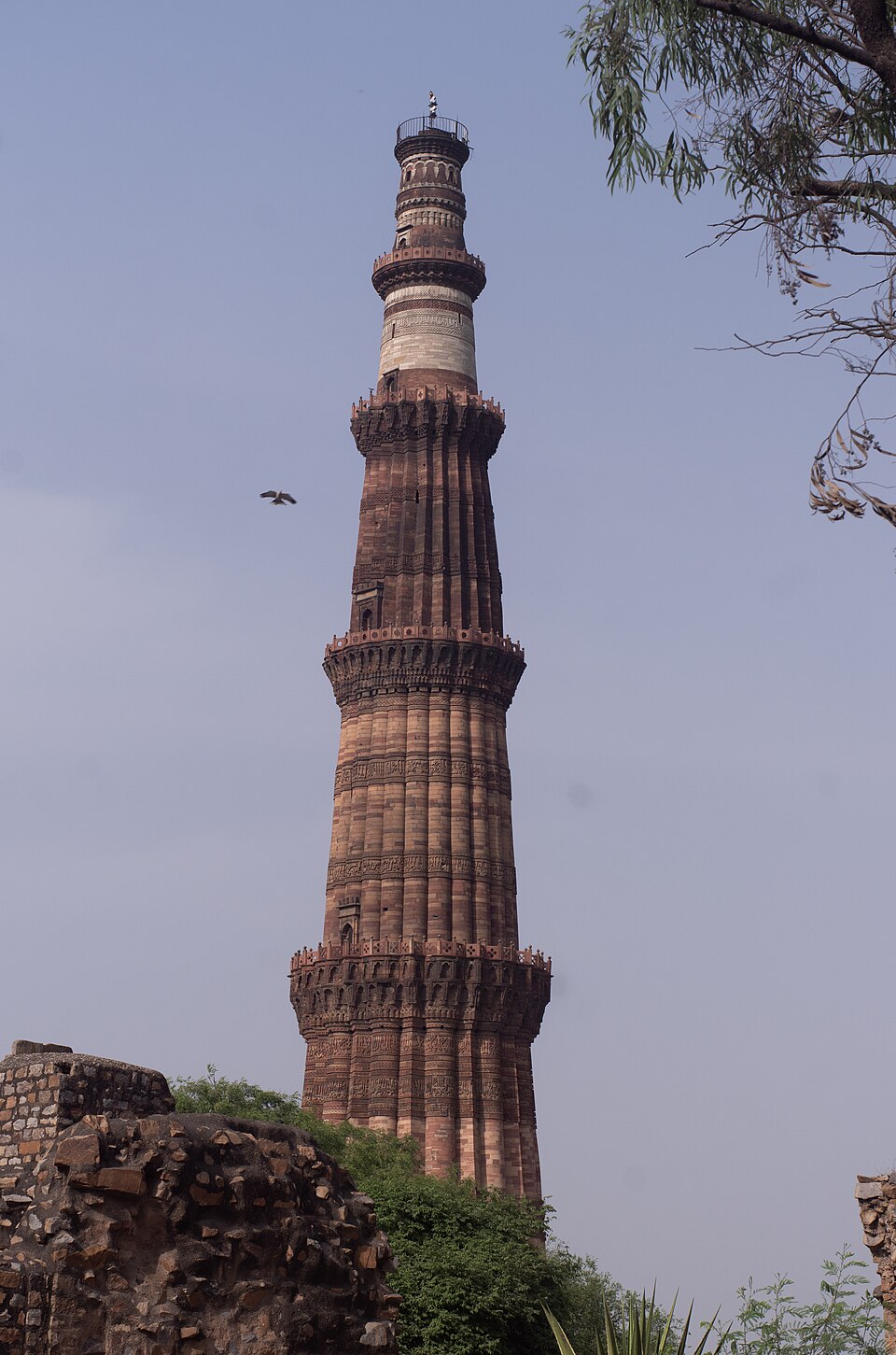
A 72-metre-high minaret begun by Delhi's first sultan around 1200 to celebrate victory over Hindu kings. Its 5 storeys of red sandstone are covered with carved verses from the Quran. The complex also holds northern India's oldest mosque, built from the pillars of demolished temples, and a mysterious iron pillar that hasn't rusted in 1,600 years.

Tip: The complex is in the south of the city, on the Yellow metro line at Qutub Minar station, and from there it's an auto-rickshaw ride for 100 rupees. The best light for a photo of the minaret is before 10am, when it's lit from the side. You can't go inside the minaret. Combine it with the Mehrauli Archaeological Park right next door, with dozens of ruins and almost no tourists.

Admission:
around INR 600 (foreigners)
Time needed:
1–1.5 h
Jama Masjid Mosque

Jama Masjid Mosque

जामा मस्जिद

Old Delhi

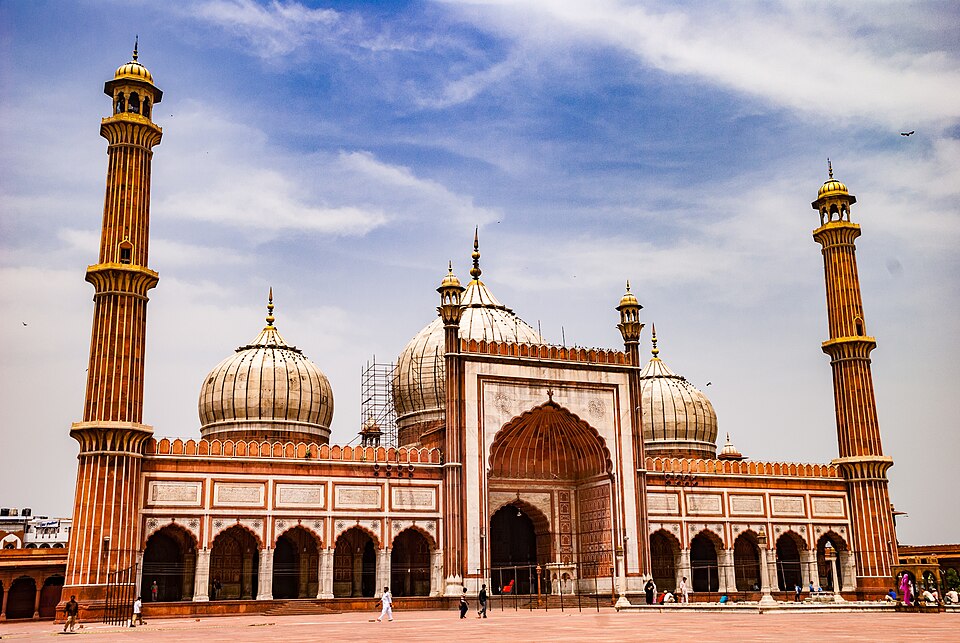
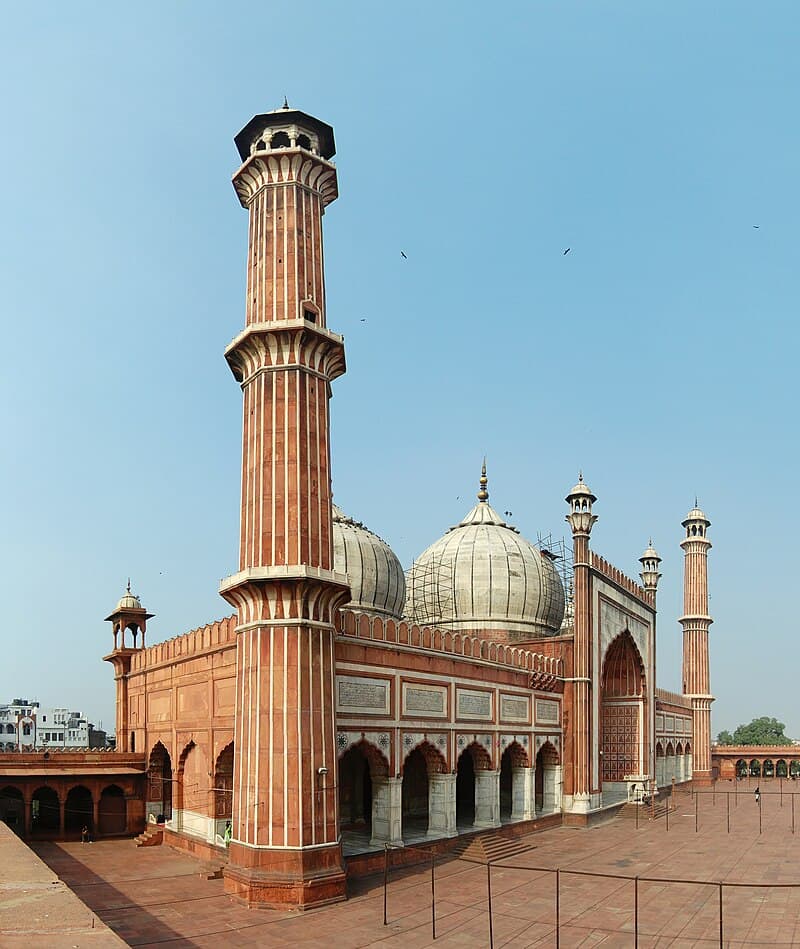
India's largest mosque, from 1656, holds 25,000 worshippers in its courtyard. 3 large white marble domes and 2 minarets, 40 metres tall, stand on a raised platform above Old Delhi, reached by broad stairways. The southern minaret has a view over the bazaar rooftops and the Red Fort.

Tip: Outside prayer times entry is free; there's a fee for a camera or phone, and men and women in shorts are given a robe at the entrance. Visitors can't get in during Friday midday prayers. Climbing the minaret costs extra, and women may only go up accompanied. Afterwards, head to the alley behind gate number 1 for mutton curry at Karim's, which has been cooking there since 1913.

Admission:
free, camera fee applies
Time needed:
45 min – 1 h
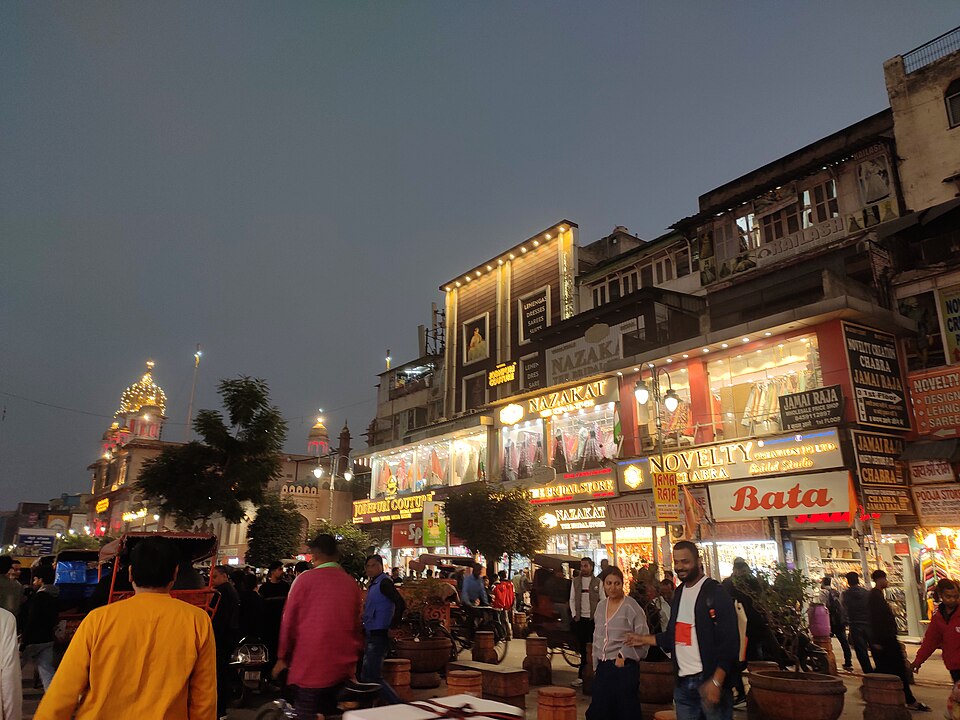
Chandni Chowk and the Old Delhi bazaars

Chandni Chowk and the Old Delhi bazaars

चाँदनी चौक

Old Delhi

Old Delhi's main street, founded in the 17th century, is now India's densest shopping district. Specialised lanes branch off it: spices at Khari Baoli, wedding goods at Kinari Bazaar, silver at Dariba Kalan, and fried flatbreads at Paranthe Wali Gali. Hindu temples, a Sikh gurdwara and mosques stand among the stalls.

Tip: A cycle-rickshaw ride is best: agree an hour for 300–400 rupees in advance — at rush hour, walking is faster. Spices at Khari Baoli are bought by the kilo, and climbing the narrow stairs to the roof of the Gadodia Market building gives you a view over the whole market from above. The lanes are partly closed on Sundays. Keep your wallet in a front pocket.

Admission:
free
Time needed:
2–3 h
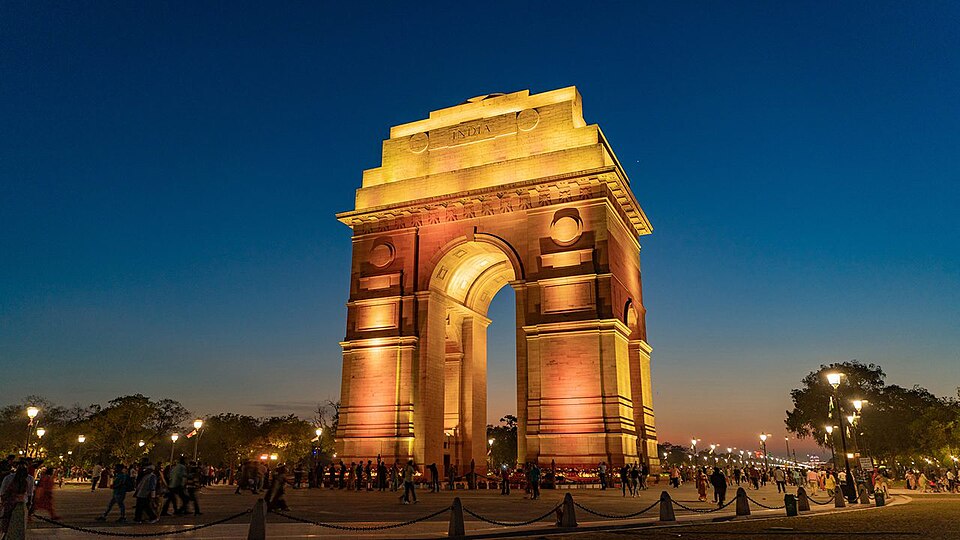
India Gate and Kartavya Path

India Gate and Kartavya Path

इंडिया गेट

New Delhi

A 42-metre-high triumphal arch commemorating 80,000 Indian soldiers who died in the First World War, their names carved into the stone. It stands at the end of the 2-km Kartavya Path boulevard, formerly Rajpath, which leads to the Rashtrapati Bhavan presidential palace. The whole axis was designed by British architect Edwin Lutyens.

Tip: Come after dark, when the gate is floodlit and Delhi families come out for a walk and ice cream — it's the best place to see the city's ordinary evening life. On weekdays there are changing-of-the-guard ceremonies at the presidential palace, and a grander one on Saturday mornings that requires online registration. Around 26 January the area is closed for the Republic Day parade.

Admission:
free
Time needed:
45 min – 1 h
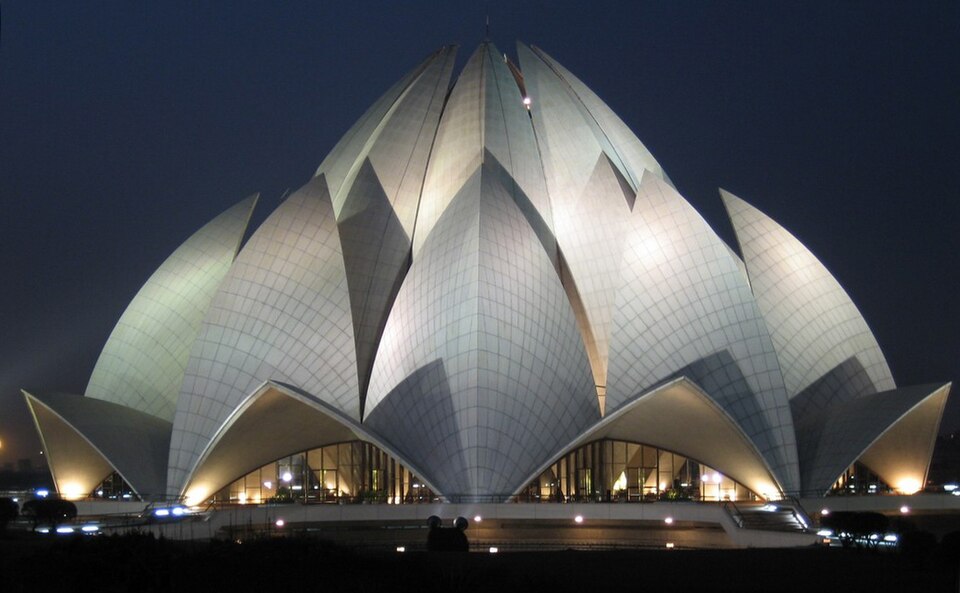
Lotus Temple

Lotus Temple

लोटस टेम्पल

Kalkaji

A Baháʼí house of worship from 1986, shaped like a blossoming lotus made of 27 marble petals. Inside there's no altar or image, just benches beneath the dome where it's silent and people of any faith can pray. The building is one of the most visited in the world.

Tip: Entry is free, it's closed on Mondays, and there's no talking or photography inside. Shoes come off in the queue and are left at a cloakroom. It's most pleasant in the morning, when the pools around the temple are still uncrowded; in the afternoon the wait to get in can take an hour. Kalkaji Mandir metro station is a 10-minute walk.

Admission:
free
Time needed:
45 min
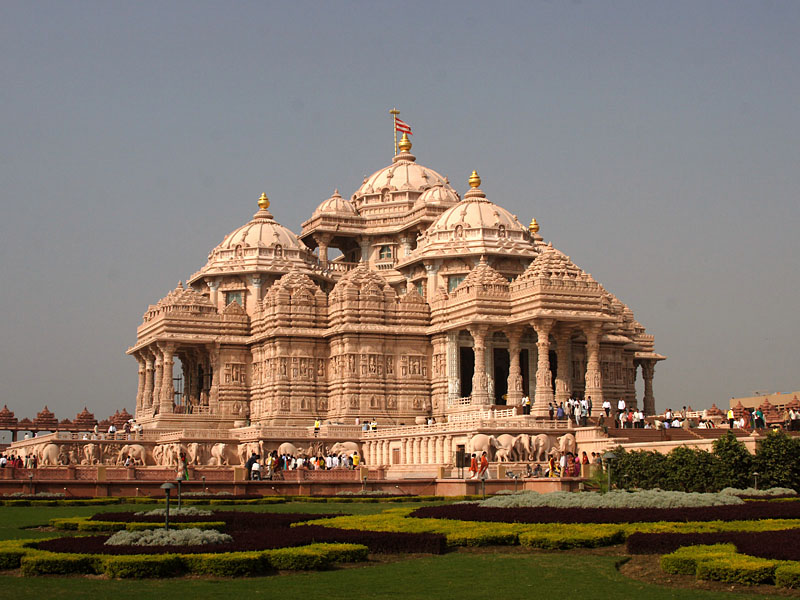
Akshardham

Akshardham

अक्षरधाम

east Delhi

A huge Hindu temple complex completed in 2005, with a main shrine of pink sandstone and white marble covered with 200,000 carved figures. Around it are gardens, exhibitions on Hindu tradition, a boat ride through Indian history, and an evening fountain show.

Tip: No phones, cameras, electronics or bags are allowed inside — everything goes into a cloakroom at the entrance, so if you're keeping track of family members by phone, plan a meeting point in advance. Closed on Mondays. Entry to the temple is free; only the exhibitions and the after-sunset fountain show are paid. Akshardham metro station on the Blue Line is right by the gate.

Admission:
free, exhibitions and show extra
Time needed:
2–3 h
Gurudwara Bangla Sahib

Gurudwara Bangla Sahib

गुरुद्वारा बंगला साहिब

Connaught Place

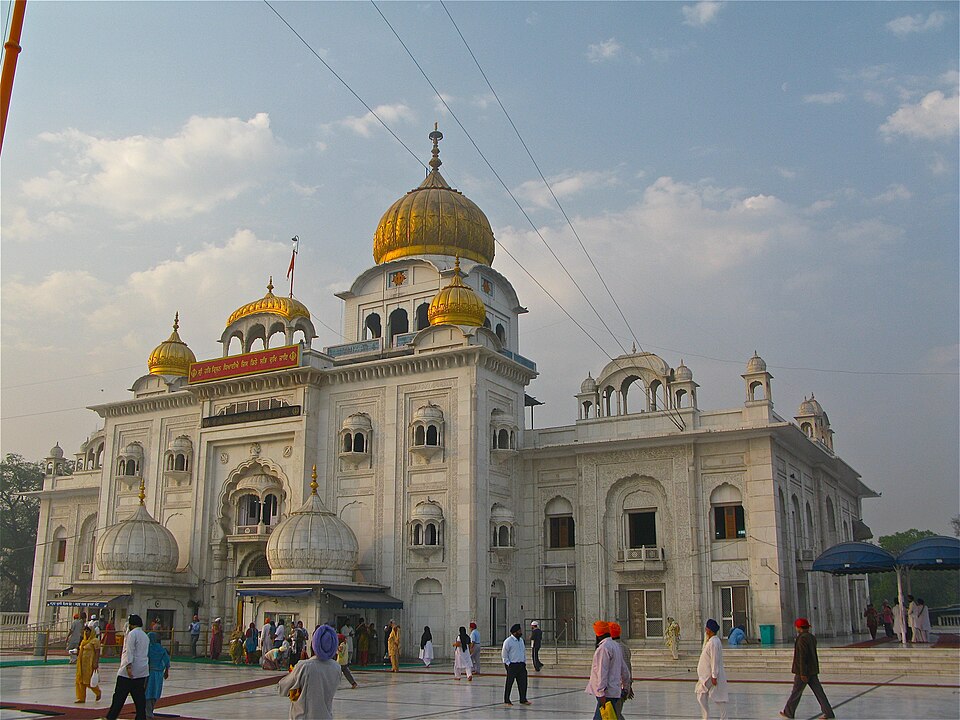
Delhi's most important Sikh temple, with a golden dome and a large sacred pool. Every day volunteers cook and give away free food to tens of thousands of people regardless of religion or background — the langar tradition of a shared kitchen. The temple is open around the clock and lies a few minutes from Connaught Place.

Tip: Bring a headscarf (free ones are also lent at the entrance), take off your shoes and wash your feet in the shallow channel at the entrance. In the langar dining hall, you sit on the floor in a row and volunteers serve lentil dal, rice and flatbread; it's polite to finish everything and leave a few rupees in the donation box. Visitors can also look into the kitchen, where lentils are cooked in giant pots for thousands of people.

Admission:
free
Time needed:
1 h

Photos: Red Fort — PerSona77 (CC BY-SA 3.0) · Humayun's Tomb — Harvinder Chandigarh (CC BY-SA 4.0) · Qutub Minar — Wasir kasab (CC BY 4.0) · Jama Masjid Mosque — Bikashrd (CC BY-SA 4.0) · Chandni Chowk and the Old Delhi bazaars — Goutam1962 (CC BY-SA 4.0) · India Gate and Kartavya Path — Incredible India Portal (CC0) · Lotus Temple — Vandelizer (CC BY 2.0) · Akshardham — Swaminarayan Sanstha (CC BY-SA 3.0) · Gurudwara Bangla Sahib — Ken Wieland from Philadelphia, USA (CC BY-SA 2.0)

Where to stay

Areas and districts, matched to the kind of trip you are taking

Connaught Place and Janpath

Best for: a first visit, transport, restaurants

A circular 1930s plaza with white colonnades, the commercial heart of New Delhi. Restaurants, bars and cafés fill it and its surroundings, along with Rajiv Chowk metro interchange, from where you can reach anywhere. Hotels are mid-priced and the area is safe even in the evening. The downside is noise and touts working the inner ring.

Paharganj

Best for: budget travel, backpackers

The busy Main Bazaar street opposite New Delhi station, with cheap hotels, hostels, clothing shops and rooftop restaurants. Most practical for train departures to Agra or Jaipur, but it's dirty, noisy and full of touts. Choose a hotel with good reviews — rooms at around 2,000 rupees vary hugely.

South Delhi (Hauz Khas, Lodhi, Defence Colony)

Best for: calm, dining, a longer stay

Green, middle-class residential districts with parks, boutique hotels and cafés. Hauz Khas Village has bars and restaurants over a medieval reservoir and ruins; Lodhi Colony is full of murals, and people jog around the Lodhi Gardens in the morning. The sights are close, and Old Delhi is half an hour away by metro.

Aerocity

Best for: a short stopover, an early departure

A hotel district by the airport with international chains, restaurants and its own airport-express metro station. Ideal for a layover or a night before an early flight, but isolated from the city, with nowhere to go in the evening besides hotel bars. It's 20 minutes to the centre by Airport Express metro.

Getting around

From the airport

Delhi is reached from Europe with a single connection, most commonly via Dubai, Doha, Abu Dhabi or Istanbul; total journey time is typically 11–14 hours. Air India and IndiGo also offer direct flights from Vienna, Frankfurt, London and other European cities. Most nationalities need a visa; the simplest option is the electronic e-Visa, processed online via the official government portal, ideally applied for at least 4 days before travel — watch out for fraudulent websites that charge a high handling fee. Indira Gandhi International Airport is modern and lies 16 km southwest of downtown. Trains run from Delhi to every part of India; the Gatimaan Express and Vande Bharat are the most comfortable options to Agra.

Delhi Indira Gandhi (DEL) · 16 km

  • Airport Express metro to New Delhi Station· 20 min· INR 60
  • Uber or Ola to Connaught Place· 35–60 min· INR 450
  • Prepaid taxi from the arrivals-hall counter· 40–60 min· INR 600

Around town

The Delhi Metro is the best way to get around the city — clean, air-conditioned, cheap and signed in English. 10 lines cover all the main sights; only Old Delhi and its lanes require an auto-rickshaw or cycle-rickshaw. The first carriage of every train is reserved for women. Entry involves an airport-style security check, and queues build up at rush hour. Tickets are bought as a QR code in the app or from a machine; a card is worth it for multiple journeys. Uber and Ola are cheap and avoid haggling; agree a price with a street auto-rickshaw in advance, as drivers won't switch on the meter. Walking is difficult — pavements are missing and crossings don't exist.

MetroFare by distance; QR code in the DMRC app or tokens from a machine. · INR 11
Uber / OlaCar or auto-rickshaw via the app, price set in advance, cash or card. · INR 100
Auto-rickshawOn the street, agree the price in advance; cheaper via Uber. · INR 50
Cycle-rickshawOnly in Old Delhi and around metro stations; a short ride for a few tens of rupees. · INR 30

Useful apps: Uber, Ola, DMRC Momentum (metro), Google Maps, Zomato

When to go

The best period is mid-October to mid-March, with daytime temperatures of 20–30°C and dry weather. December and January have cold mornings around 8°C and thick fog that disrupts morning flights and trains. The key factor is smog: from late October to January, when stubble is burned in surrounding fields and firework smoke from Diwali adds to it, the air quality index regularly tops 300 and authorities close schools. February and March are better for sensitive people and children. From April to June, Delhi is unbearable, with temperatures topping 45°C in May. The monsoon, from July to September, brings heavy downpours and flooded streets, but it's green and cheap.

Best time

mid-February–March, mid-October–November

What to avoid

May–June (heat over 40°C), smog in November and December

MonthJanFebMarAprMayJunJulAugSepOctNovDec
Day21°24°30°36°40°39°35°34°34°33°28°23°
Night8°11°16°22°26°28°27°27°25°19°13°8°
Rainy days23323613137111

Food & drink

Delhi is the capital of North Indian cuisine and Mughal recipes, cooked in a tandoor and with cream rather than coconut as in the south. The best food is, fittingly, the cheapest: in Old Delhi's narrow lanes, paratha flatbreads are fried, mutton nihari simmers in giant pots, and savoury chaat snacks are sold on the street. The rule is simple — eat where locals are queuing and the food is cooked in front of you. For a first visit to the street-food markets, it's worth going with a guide on a food walk, which costs around 2,000 rupees and can save your stomach. New Delhi, on the other hand, has excellent restaurants serving modern Indian cuisine and hotel establishments where dinner comes to 2,000–5,000 rupees per person. Alcohol is sold in bars and liquor stores, but a dry day applies on public holidays.

What to try

Butter chicken

Tandoor-cooked chicken in a sauce of tomato, butter and cream, invented in Delhi after 1947 by refugees from Punjab needing to use up leftover chicken. Eaten with naan bread; at the restaurants that dispute who invented it, it costs around 600 rupees.

Chole bhature

Puffed fried bread (bhatura) with spicy chickpeas, a classic Delhi breakfast and the most filling dish going, at 150 rupees. Best in the morning, before the oil goes stale.

Paratha

Stuffed fried flatbreads made from wholewheat flour — with potato, paneer cheese, cauliflower or radish, and in Old Delhi even sweet ones with banana. Paranthe Wali Gali lane has been frying them since the 19th century.

Chaat

An umbrella term for savoury street snacks served with sweet tamarind and green mint sauce. Pani puri are crispy shells filled with spicy water, eaten whole in one bite; aloo tikki are fried potato patties.

Nihari and kebabs

Mutton simmered overnight and minced-meat kebabs are dishes of the Muslim quarter around Jama Masjid. They're best after Friday prayers and during Ramadan after sunset, when the street comes alive with stalls until midnight.

Kulfi

A dense milk ice cream with cardamom and pistachio, not scooped into a cone but sold cone-shaped on a stick or sliced onto a small plate. In Old Delhi it's even served stuffed inside a hollowed-out mango.

Masala chai

Tea brewed in milk with ginger, cardamom and sugar, sold for 20 rupees in clay cups that are smashed after drinking. Best in the morning from a corner stall.

Thali

A metal tray with rice, several bowls of curry, dal and bread, with refills of the sides included until you're full. The cheapest way to eat well in India, usually around 150 rupees.

What it costs

Masala chai at a stall

INR 20–30

Chole bhature or thali at a diner

INR 150–300

Dinner at a good restaurant

INR 1,500–3,000

Metro ride

INR 11–60

Uber across town

INR 250–500

Entry to a major monument (foreigners)

INR 500–600

Beer at a bar

INR 350–600

Night in a 3-star hotel for 2

INR 3,500–7,000

Indicative prices that change over time — treat them as a guide, not a price list.

Practical information

SocketsCEuroplug, two round pinsDthree round pins (India)MSouth African, large pins
Voltage230V / 50Hz
Tap waterDo not drink tap water — Never drink tap water in Delhi, and don't even use it to brush your teeth or add it to drinks. Bottled water costs around 20 rupees a litre — check the seal is intact when buying, as refilled bottles are a common scam in India. Only trust ice in drinks at hotels and established venues.
TippingTipping is expected and part of the budget. 10% at restaurants if service isn't already charged, 50 rupees per bag for porters, 300–500 rupees for drivers on a full-day trip. Keep small change handy, since there's often nothing to give as change and you'll be overcharged without it.
Driving on theleft
SafetyViolent crime against tourists is low in India's big cities; the real problems are scams and traffic. Touts hang around stations and the airport with a story that your hotel has burned down or the "tourist office" is closed, then take you to an agency that sells an overpriced tour — don't trust anyone off the street, and use Uber or a prepaid taxi. Cross the road with locals, since cars don't stop even at crossings. Women shouldn't take a night taxi hailed on the street alone, and should use the women-only carriage on a crowded metro. Stomach trouble hits almost everyone; eat where turnover is high and food is cooked in front of you. The emergency number is 112. In Delhi, from November to January, check the air quality index in an app and bring an FFP2 mask.
Opening hoursCity shops open late, around 11am, and close 9–10pm; shopping malls run 11am to 10pm every day. Bazaars each have 1 closing day a week that varies by neighbourhood. Monuments run by the Archaeological Survey of India are open from sunrise to sunset, and foreigner tickets cost considerably more than for Indian citizens — buying online via the ASI website is usually 50 rupees cheaper than at the counter. Banks are closed on the second and fourth Saturday of the month. During Diwali and Holi, cities grind to a halt and traffic is unpredictable.
Customs & etiquetteShoes come off before entering a temple, mosque or private home, and photography is banned in many temples. The left hand is considered unclean — pass food, money and gifts with the right. Outside beaches and resorts, covered clothing is expected, especially shoulders and knees for women; Goa is more relaxed than the rest of the country, but it still applies in a church or village. Cows are sacred and have right of way everywhere, including on the road. Shaking the head side to side means agreement, not disagreement.
A few local wordsHello — NamasteThank you — DhanjavádHow much does that cost? — Kitne ká hai?Not spicy, please — Mirči nahíThe bill, please — Bil dídžije

How to plan your days

1 day

Delhi in a day

  1. 1Morning: the Red Fort right at opening.
  2. 2Cycle-rickshaw through Chandni Chowk and the spice bazaar.
  3. 3Lunch by Jama Masjid and a visit to the mosque.
  4. 4Afternoon: Humayun's Tomb in the late light.
  5. 5Evening: India Gate and dinner near Connaught Place.

2 days

2 days: Old and New Delhi

  1. 1Day 1: Red Fort, Old Delhi, Jama Masjid.
  2. 2Day 1 evening: langar at Gurudwara Bangla Sahib.
  3. 3Day 2: Qutub Minar and the ruins in Mehrauli Park.
  4. 4Day 2 afternoon: Lotus Temple and Humayun's Tomb.
  5. 5Day 2 evening: qawwali in Nizamuddin (Thursday) or bars in Hauz Khas.

3 days

3 days with the Taj Mahal

  1. 1Day 1: Old Delhi and the Red Fort, evening at India Gate.
  2. 2Day 2: morning high-speed train to Agra for the Taj Mahal and Agra Fort.
  3. 3Day 2 evening: return to Delhi.
  4. 4Day 3: Qutub Minar, the Lodhi Gardens and Humayun's Tomb.
  5. 5Day 3 evening: Akshardham with the fountain show.

Day trips

Agra and the Taj Mahal

230 km · 1 h 40 min by high-speed train

The Taj Mahal, the white marble mausoleum Shah Jahan had built for his late wife, can't be skipped from Delhi. The Gatimaan Express high-speed train leaves Hazrat Nizamuddin station in the morning and reaches Agra in under 2 hours, so you can fit in the Taj, Agra Fort and Itimad-ud-Daulah's tomb and be back by evening. The Taj Mahal is closed on Fridays. The foreigner ticket includes entry to the mausoleum itself and is bought online.

Jaipur

280 km · 4–4.5 h by train

The capital of Rajasthan, with the pink houses of the old town, the hilltop Amber Fort, the Hawa Mahal (Palace of the Winds) and the Jantar Mantar observatory. It's a long way for a single day; it's better to stay overnight and continue on the Golden Triangle to Agra. The Vande Bharat and Shatabdi trains leave Delhi in the morning, and tickets need to be bought weeks ahead via the IRCTC app or a travel agent.

Vrindavan and Mathura

150 km · 2.5–3 h by car

Sacred towns where, according to tradition, the god Krishna was born and grew up, with thousands of temples chanting and ringing bells from dawn. Vrindavan is liveliest around the Holi festival of colours in March, when celebrations stretch over a week and visitors leave covered head to toe in colour. They lie on the way to Agra, so can be combined in a single day with a driver.

Frequently asked questions

Is Delhi safe for tourists?+

Yes, for anyone taking normal precautions. Violence against tourists is rare; the most common problems are scammers near stations and the airport, pickpockets in crowds, and overpriced rickshaws. Women travelling alone are advised to use Uber rather than a street taxi at night, and to dress with shoulders and knees covered.

How bad is the smog in Delhi?+

From late October to January, air quality is among the worst in the world, with the AQI regularly above 300 and up to 500 on the worst days. For healthy adults this isn't dangerous for a few days, but an FFP2 mask is worth wearing and hotels have air purifiers. Asthmatics and families with children should aim for February–March instead.

Do I need a visa for India?+

Yes. The simplest option is the electronic tourist e-Visa, processed on the official government portal, with approval usually taking 2–4 working days. Avoid fraudulent websites that look official and charge several times the fee. Print it out and carry it on arrival.

How many days are enough for Delhi?+

2 full days are enough for the main sights. Most people cover the Golden Triangle — Delhi, Agra, Jaipur — in 6–8 days, with Delhi at the start or end. More time is worthwhile for anyone who wants to explore the food and neighbourhoods off the tourist trail.

How do I handle transport from the airport?+

The fastest option is the Airport Express metro, which runs from Terminal 3 to New Delhi station in 20 minutes and costs 60 rupees. For a hotel in south Delhi, Uber or a prepaid taxi from the counter in the arrivals hall is more comfortable — don't take offers from drivers who approach you outside.

Will I get sick from the food?+

Plenty of visitors to India get some stomach trouble, but it can be limited. Drink only bottled water, skip ice from the street, and avoid raw vegetables and peeled fruit from stalls. Street food is safe where it's fried or cooked in front of you with high turnover. Bring probiotics and activated charcoal from home.

What should I wear?+

Lightweight long-sleeved clothing and trousers in cotton or linen. Women will appreciate a loose tunic and a scarf to cover their hair at a temple or mosque. Shoes that slip on and off easily, since you'll be removing them at every shrine. For December and January, bring a jumper and jacket for cold mornings.

When is the Taj Mahal closed?+

Every Friday, which is reserved for Muslim prayers at the mosque inside the complex. It opens half an hour before sunrise, and the best time to arrive is right at dawn. Around the full moon there are a few nights a month with a night tour with a limited number of tickets.

Visa Requirements

Check the latest visa requirements for entering this country. Some nationalities may need to apply for a visa or e-visa before travel.

Check visa requirements

Language

Hindi / English

Currency

INR

Timezone

GMT+5:30

Dial Code

+91

Population

1.43B

Area

3,287,263 km²

Voltage

230V / 50Hz

Driving Side

Left

Top Hotels in Delhi

Live prices from 500+ properties

Loading hotels...

More destinations in India

Planning a trip to Delhi?

Compare hundreds of hotels, find the best price, and book with free cancellation on TravelManiac.