Hotels in Larnaca

Palm trees, flamingos and a wreck that draws divers here

Larnaca

LanguageEnglish
CurrencyEUR
TimezoneGMT+2
Temperature14-34 °C
Dial Code+357
Population1.3M
Area9,251 km²
SocketsType G
Tap waterDrinkable

Discover Larnaca

For most visitors to Cyprus, Larnaca is the first and last place they see on the island, since it's home to the main airport — and few notice that it's also the island's oldest continuously inhabited city. Beneath today's streets lies ancient Kition, founded by the Achaeans three thousand years ago, which also yielded a temple precinct with Phoenician inscriptions. Lazarus, the biblical figure raised from the dead, is buried in the city; tradition holds that after his resurrection he sailed to Cyprus and became its first bishop, and his tomb lies beneath the church that bears his name. Larnaca is smaller and calmer than Limassol, and lives off its airport, its port and the people who actually live there — tourism is just one layer of the city. The coast is sandy and shallow, the Finikoudes promenade with its avenue of palms runs for a kilometre, and south of the city lies a salt lake where flamingos winter from November to March. Just off the coast, on the seabed, lies the wreck of the ferry Zenobia, one of the best dive sites in the Mediterranean.

What to see

The places worth your time in Larnaca, and what to expect at each

Church of Saint Lazarus

Church of Saint Lazarus

Centre

A Byzantine church from the late ninth century built over the tomb of Lazarus, whom the Gospel says Jesus raised from the dead and who, according to Cypriot tradition, then lived for thirty years as bishop of Kition. Inside is a carved, gilded eighteenth-century iconostasis, and steps beneath the altar lead down to the empty sarcophagus in the crypt.

Tip: The crypt closes earlier than the church and is often locked at midday — the safest time is between 8am and noon. On Saturday evening there's a sung service you can attend as an observer. In the courtyard is a small icon museum that most visitors never reach.

Admission:
free, museum from €2
Time needed:
1 h
Salt Lake and flamingos

Salt Lake and flamingos

4 km southwest

A system of four connected lakes south of the city, which dry into a salt flat in summer and fill with rainwater in winter. From November to March, several thousand greater flamingos and over 80 other bird species winter here; a shaded path runs around the lake.

Tip: The flamingos are only here for the winter half of the year, and the best viewing is in the morning from the causeway by the mosque, as they move to the middle of the lake during the day. Binoculars are worth bringing, as you can't get closer than 300 metres. In summer the lake dries out and dust rises off the salt flat.

Admission:
free
Time needed:
2 h
Hala Sultan Tekke

Hala Sultan Tekke

5 km southwest

A domed mosque with a minaret on the shore of the Salt Lake, built over the tomb of Umm Haram, a relative of the Prophet Muhammad, who according to tradition died here during the Arab invasion of 649. It's one of the most important Islamic pilgrimage sites in the Mediterranean, standing amid a grove of palm and cypress trees.

Tip: Admission is free and it's open to non-Muslim visitors too; shoes come off at the door and women cover their hair — scarves are available at the entrance. It's the shadiest spot around the lake, and in summer the only place you can stand to be outdoors at midday.

Admission:
free
Time needed:
1 h
Finikoudes Promenade

Finikoudes Promenade

Centre

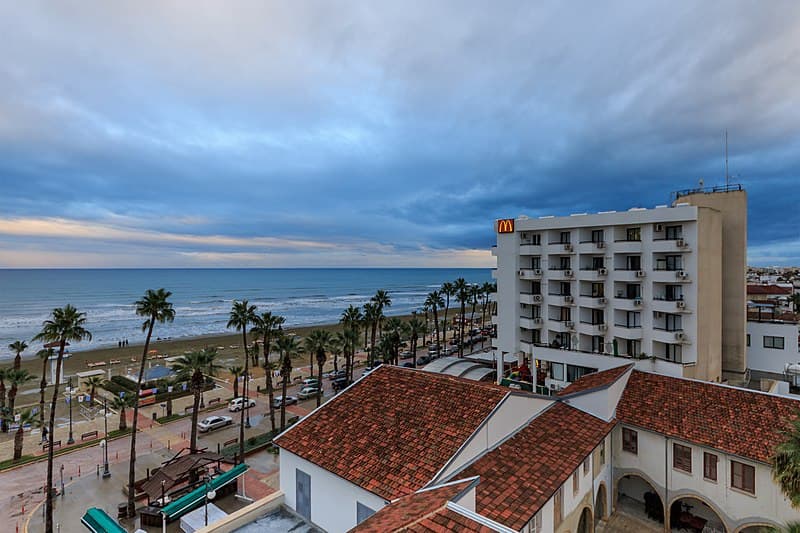
A kilometre-long coastal avenue along the city beach, lined with an avenue of date palms planted in the 1930s that also gives it its name — finikoudes means "little palms". At one end is the marina, at the other the castle, and along its full length are restaurants, cafés and sunbeds on the sand.

Tip: The beach is wide and sandy, but packed by ten in high season; it's quieter at neighbouring Mackenzie by the airport, a 20-minute walk away. The best time for the promenade is after 7pm, when all of Larnaca comes out and the lights come on among the palms. Park behind the restaurants, not by the beach.

Admission:
free, sunbeds from €10
Time needed:
2 h
Larnaca Castle

Larnaca Castle

Centre

An Ottoman fortress at the southern end of the promenade, built in its present form in 1625 on the site of an earlier Lusignan structure. Under British rule it served as a prison, with a gallows once standing in the courtyard. Today it houses a medieval museum with finds from the surrounding area, and the courtyard hosts summer performances.

Tip: The visit takes 40 minutes, and the best part is the sea wall, from which you can see the whole promenade. In summer, concerts and theatre are staged in the courtyard, with tickets sold on site. Just behind the castle begins the Turkish quarter, with the Kebir Mosque and the cheapest cafés in the centre.

Admission:
from €2.50
Time needed:
45 min
Choirokoitia

Choirokoitia

33 km southwest

A Neolithic settlement from the ninth millennium BC on a slope above the Maroni River, listed by UNESCO. It's one of the best-preserved prehistoric sites in the eastern Mediterranean: circular houses of stone and clay, a defensive wall, and burials right beneath the floors of the dwellings.

Tip: At the entrance stand five reconstructed houses at full size that you can walk into — this is the main reason to come, as the excavations themselves are just foundations. The hill is climbed by stairs in full sun, so go early morning. The site closes earlier in the afternoon than you might expect.

Admission:
from €2.50
Time needed:
1.5 h
Zenobia wreck

Zenobia wreck

1.5 km from the harbour

A Swedish ferry that capsized and sank on its maiden voyage in June 1980, a kilometre and a half from Larnaca harbour, with its cargo of lorries still aboard. It lies on its port side at a depth of 16–42 metres, is over 170 metres long, and ranks among the best wreck-diving sites in the world.

Tip: Even beginners with an Open Water certification dive the wreck, seeing the upper part of the deck at 20 metres; entering the cargo hold requires wreck specialty certification. The water stays above 18 degrees even in winter, so people dive here year-round. Two dives in a day work out cheaper than two separate trips.

Admission:
dive from €60
Time needed:
half a day
Pano Lefkara

Pano Lefkara

42 km northwest

A mountain village of silversmiths' workshops and lefkaritika lace, embroidered here by women since Venetian times and listed on UNESCO's Intangible Cultural Heritage list. According to local tradition, Leonardo da Vinci bought an altar cloth here for Milan Cathedral.

Tip: The village lives off sales, and you'll be approached at every other house on the main street; handmade lace costs tens to hundreds of euros, and cheap pieces in shop windows are machine-made, which you can simply ask about. The prettiest part is the upper village above the church, which tour groups rarely reach. Park at the entrance below.

Admission:
free
Time needed:
2–3 h
Kamares Aqueduct

Kamares Aqueduct

3 km west

An Ottoman aqueduct from 1747, commissioned by governor Bekir Pasha to bring drinking water into Larnaca from springs 10 km away. Over 70 arches survive in three rows, and the structure remained in use until 1939.

Tip: The aqueduct stands by the road out to Limassol and is floodlit, so it's worth visiting after dark — by day it's just a bridge by the road. You can park right beneath the arches on a gravel patch. It's five minutes by car from the Salt Lake, so the two make an easy single stop.

Admission:
free
Time needed:
45 min

Photos: Church of Saint Lazarus — Chris06 (CC BY-SA 4.0) · Salt Lake and flamingos — Aantoniou at English Wikipedia (CC BY-SA 3.0) · Hala Sultan Tekke — Dickelbers (CC BY-SA 3.0) · Finikoudes Promenade — Viaggiamocela (CC BY-SA 4.0) · Larnaca Castle — Dickelbers (CC BY-SA 3.0) · Choirokoitia — Ophelia2 (CC BY-SA 3.0) · Zenobia wreck — RToncic1 (CC BY-SA 4.0) · Pano Lefkara — Leonid Mamchenkov (CC BY 2.0) · Kamares Aqueduct — Shirazibustan (CC BY-SA 4.0)

Where to stay

Areas and districts, matched to the kind of trip you are taking

Finikoudes and the centre

Best for: first-time visitors and walking distance

The area around the palm-lined promenade between the marina and the castle, home to most of the hotels, restaurants and cafés. The beach, the Church of Saint Lazarus and the market are all within ten minutes on foot, and airport buses stop right on the waterfront. It's the noisiest and priciest part of the city, but the most practical for a short stay without a car.

Mackenzie

Best for: beach, evening venues and the airport

A stretch of beach and beach bars south of the marina, right by the runway — planes overhead are part of the view here, and while it puts some people off, others come precisely because of it. The beach is wider and sandier than Finikoudes, and the venues are modern. It's a 20-minute walk along the coast to the centre, or five minutes by car.

Dhekelia and Pyla

Best for: large hotels and a quieter stay

A coastal strip 15 km northeast of the city, where most of the large hotel resorts sit along the road to Ayia Napa. The beaches here are emptier and the sea calmer, but without a car or bus you're reliant on the hotel. It's a 20-minute drive to central Larnaca.

Turkish quarter and Skala

Best for: cheaper accommodation and craft workshops

A historic quarter behind the castle with the Kebir Mosque, pottery workshops and low houses. Accommodation here is in apartments and notably cheaper than on the promenade, while still just five minutes from the beach. Restaurants cook for locals and fill up at lunchtime with people from nearby offices.

Getting around

From the airport

Larnaca Airport is the main gateway to Cyprus and lies 5 km from the centre, so the transfer takes 10 minutes and a taxi costs around €15. Buses 425 and 429 run into town every half hour for €1.50 and stop right on the Finikoudes promenade. Direct airport buses also depart from here to Ayia Napa, Limassol and Nicosia. Paphos Airport is 140 km away, a 1.5-hour drive on the motorway. Anyone renting a car picks it up in the arrivals hall and heads straight into driving on the left.

Larnaca (LCA) · 5 km

  • Bus 425 or 429· 15 min· €1.50
  • Taxi from the airport· 10 min· €15
  • Hotel transfer· 10 min· included in stay
  • Rental car· 10 min· €32/day

Paphos (PFO) · 140 km

  • Rental car· 1 h 30 min· €32/day
  • Intercity bus via Limassol· 3 h· €11

Around town

Larnaca's centre can be covered on foot in an hour, and it's a ten-minute walk from the Church of Saint Lazarus to the end of the promenade. City buses run from the waterfront to the Salt Lake, the airport and the Dhekelia hotel zone roughly every half hour; a day ticket costs €5. The flat terrain makes cycling pleasant, and the coastal path continues past Mackenzie. A car is needed for Lefkara, Choirokoitia and trips to Troodos — intercity buses run there only a few times a day and mostly not at all on Sundays.

City busesFrom Finikoudes to the airport, the Salt Lake and Dhekelia roughly every 30 minutes. · €1.50/ride, €5/day
Rental carNeeded for Lefkara, Choirokoitia and Troodos; driving is on the left, and the centre has paid parking zones. · €32/day
BicycleA flat coastal path from the marina past Mackenzie; rental shops in the centre. · €10/day
Intercity busDirect services to Nicosia, Limassol and Ayia Napa from the waterfront terminal. · €5–9

Useful apps: Google Maps, Bolt, Cyprus By Bus, Nextbike Cyprus

When to go

Larnaca is the driest and, in summer, the muggiest place on the south coast, since it's sheltered by the mainland and the sea breeze reaches it more weakly than the capes. Swimming is good from May to early November, with the sea at its warmest in August and September. April, May and October are best for the town, Choirokoitia and Lefkara. Winter is mild, and flamingos are on the salt lake from November to March — the one time of year worth a visit even without swimming.

Best time

May, June and October

What to avoid

August, due to mugginess in the city

MonthJanFebMarAprMayJunJulAugSepOctNovDec
Day17°18°20°24°28°31°33°33°31°28°23°19°
Night8°8°9°12°16°19°22°22°20°17°13°10°
Rainy days1086321001469
Sea18°17°17°19°22°25°27°28°27°25°22°20°

Food & drink

Larnaca is a city where you can eat well and cheaply, because most places serve locals rather than one-off visitors. On the Finikoudes promenade you pay for the view and quality is average; 2 streets inland, in the Turkish quarter and around the market, prices are a third lower. Fish taverns are worth the trip to Zygi, 30 km west, and to the harbour at Pervolia. A local speciality is ttavas, lamb baked with rice in a clay dish in the communal oven, and in Lefkara you can buy preserves called glyko tou koutaliou. Have fish weighed and priced per kilogram before you order.

What to try

Meze

Not a starter, but a whole way of eating: staff bring out 15–30 small dishes one after another for as long as you keep going. It's ordered for the whole table, for at least two people, and expect a three-hour dinner — pace yourself, as meat always comes last.

Halloumi

A Cypriot cheese made from sheep's and goat's milk that doesn't melt and grills to a crisp. It has held protected status since 2021, and you'll recognise it by its salty flavour and slight squeak between the teeth. Eaten with melon at breakfast, or grilled with lemon alongside a beer.

Ttavas

Lamb or goat with rice, tomatoes and cumin, baked in a clay dish in the communal oven. It's a Sunday dish in the villages around Larnaca and rarely found elsewhere on the island.

Sheftalia

Minced pork with onion and parsley wrapped in lamb caul fat, which melts on the grill and bastes the meat. Best in a pitta with tahini and tomatoes as street food for a couple of euros; with halloumi it's the island's cheapest filling dinner.

Koupepia

Vine leaves stuffed with rice, minced meat, tomatoes and cinnamon. The Cypriot version is bolder with spice than the Greek one, and is eaten warm with yoghurt. In a meze they arrive right after the dips and are often homemade.

Grilled fish and octopus

Barbounia (red mullet), tsipoura (sea bream) and grilled octopus are charged by weight — ask the price per kilogram beforehand, typically €60–80. Cheaper and just as good is maridha, small fried fish eaten whole.

Tahini and talattouri

Tahini is sesame paste thinned with lemon and garlic; talattouri is the Cypriot version of tzatziki, made with mint instead of dill. They arrive at the table with warm pitta as the first thing, and are free only in taverns, not in tourist restaurants on the promenade.

Glyko tou koutaliou

"Spoon sweet": fruit or nuts preserved in thick syrup, served with a glass of cold water as a welcome to guests. In mountain villages you'll be offered it in every other house, and it's sold in jars as the best souvenir.

What it costs

Coffee on Finikoudes

€3–4.50

Lunch at a tavern off the promenade

€10–15

Dinner at a fish tavern

€25–35 per person

Meze for two

€42–58

0.5 l beer

€3.50–5

Two sunbeds and a parasol

€10–15

Dive on the Zenobia wreck

from €60

Night at a 4* hotel in August

€130–210

Indicative prices that change over time — treat them as a guide, not a price list.

Practical information

SocketsGBritish, three rectangular pins
Voltage240V / 50Hz
Tap waterTap water is drinkable — Tap water in Cyprus is safe to drink and hygienically fine, but it's very hard and, in the south, largely comes from desalination plants, giving it a bland, chalky taste. Most people filter it or buy bottled water instead — a half-litre costs around 30 cents in a supermarket, over a euro at a beach bar. In the mountain villages the water comes from springs and is excellent.
TippingRestaurants in Cyprus commonly add a 10% service charge to the bill — before leaving a tip, check whether there's already a "service" line. If there is, rounding up with small change is enough. If not, 10% is standard. Round up for taxis, and leave €1–2 a day for housekeeping.
Driving on theleft
SafetyViolent crime is rare and towns are safe even at night. Tourists' most common problems are traffic-related: driving on the left, strict and genuinely enforced penalties for drink-driving and using a phone at the wheel, and paid blue zones with towing. In nightlife areas, watch out more for inflated bills at venues with a tout at the door. Photographing military sites and the buffer zone is banned and taken seriously.
Opening hoursTraditional opening hours apply in towns: shops from 9am to 7pm, with an afternoon break roughly from 2pm to 5pm in July and August, when the heat is unbearable. Smaller shops outside tourist areas are often closed on Wednesday and Saturday afternoons. Supermarkets and shopping centres run without a break until 9pm, and until 7pm on Sundays. Museums close on Mondays and extend their hours into the evening in summer.
Customs & etiquetteCyprus is Orthodox, and covered shoulders and knees are expected in churches and monasteries; at monasteries like Kykkos a wrap is lent at the entrance. Swimwear belongs on the beach, not in shops or taverns. Lunch is eaten between 1pm and 3pm, dinner after 8pm, and people linger long over meals in taverns — the waiter won't bring the bill unprompted, so you need to ask for it. Cypriots aren't Greek and dislike being mistaken for them; the island's 1974 division is a sensitive subject best not raised first.
A few local wordsHello — Jasas (Γεια σας)Thank you — EfcharistóPlease — ParakalóThe bill, please — To logariasmó, parakalóCheers — JamasGoodbye — Andío

How to plan your days

1 day

A day in Larnaca

  1. 1Morning: the Church of Saint Lazarus and its crypt, while it's still open.
  2. 2The market and Turkish quarter behind the castle.
  3. 3Lunch at a tavern two streets from the promenade.
  4. 4Afternoon: a swim at Finikoudes or Mackenzie.
  5. 5Evening: a stroll beneath the palms and the Kamares Aqueduct after dark.

2 days

2 days with the lake

  1. 1Day one as above.
  2. 2Morning at the Salt Lake, for the flamingos in winter.
  3. 3Hala Sultan Tekke mosque in its palm grove by the shore.
  4. 4Lunch in Pervolia or Kiti and the Byzantine church of Angeloktisti.
  5. 5Afternoon on the beach at Dhekelia, which tends to be quiet.

3 days

3 days with the interior

  1. 1First two days as above.
  2. 2Morning at the Neolithic settlement of Choirokoitia and its reconstructed houses.
  3. 3Drive to the mountain village of Pano Lefkara for lace and silver.
  4. 4Lunch at a tavern above the village and a loop through the upper part.
  5. 5Divers can spend the third day on the Zenobia wreck instead of the excursion.

Day trips

Nicosia

50 km · 40 min by car on the motorway

Europe's last divided capital, where you cross the buffer zone on foot along Ledra Street with just an ID card. The south has Venetian walls, the Cyprus Museum with finds from across the island, and a medieval quarter; the north has the Büyük Han caravanserai and the Gothic cathedral converted into the Selimiye Mosque.

Ayia Napa and Cavo Greco

45 km · 40 min by car or airport bus

The island's whitest sand at Nissi Beach, a Venetian monastery at the heart of the resort, and a national park on Cape Cavo Greco with white cliffs, sea caves and trails above the water. It can be done as a full-day trip even without a car, as a direct bus runs from Larnaca.

Troodos

80 km · 1 h 20 min by car

A mountain massif with the island's highest peak, Mount Olympus, pine forests, and UNESCO-listed Byzantine churches whose shingled roofs protect twelfth-century frescoes. In summer it's ten degrees cooler here than on the coast, and several marked trails set off from here, including one around the Kaledonia waterfall.

Frequently asked questions

Is it worth staying in Larnaca, or heading further to the coast?+

Larnaca is Cyprus's cheapest city, has a sandy beach right in the centre, and the airport is just 5 km away, so you lose no time on a transfer. The beaches at Ayia Napa and Protaras are prettier, but cost more and are a 40-minute drive away. For a short stay and exploring the island, Larnaca is the more practical choice.

When are the flamingos on the salt lake?+

From November to March, when the lake fills with rainwater and the birds arrive to winter here. In summer the lake is a dried-out salt flat and the flamingos are gone. The best viewing is in the morning from the causeway by the Hala Sultan Tekke mosque; bring binoculars, as you can't get closer than 300 metres.

Can I dive the Zenobia as a beginner?+

Yes, with an Open Water certification you'll see the upper part of the deck at a depth of around 20 metres. Entering the cargo holds and interior corridors of the wreck requires wreck specialty certification and a matching number of logged dives. The water stays above 18 degrees even in winter, so people dive here year-round, and a 2-dive trip works out cheaper than 2 separate ones.

How do I get from the airport to the centre?+

Buses 425 and 429 run from the terminal to the Finikoudes promenade roughly every half hour, take a quarter of an hour and cost €1.50. A taxi costs around €15 and gets you there in 10 minutes. Direct buses also run from the airport to Ayia Napa, Limassol and Nicosia, so you can reach anywhere in the south of the island via Larnaca.

Is the tomb of Saint Lazarus genuine?+

Beneath the church is an empty marble sarcophagus, and in 1972 human remains were found in it that the church regards as part of Lazarus's. According to Cypriot tradition, Lazarus sailed here after his resurrection and spent 30 years as bishop of Kition. It can't be historically confirmed, but the ninth-century church and its iconostasis are worth visiting regardless.

Do the planes bother people at Mackenzie Beach?+

The beach sits right beneath the flight path, and planes pass low overhead every few minutes. Some people mind, others come here because of it. The noise is brief, and most people stop noticing it under a parasol within an hour; anyone wanting quiet should head to Finikoudes or further northeast to Dhekelia.

Is Lefkara worth visiting?+

Yes, if you're interested in lace and silver, or a mountain village with stone lanes. Expect the village to live off sales — you'll be approached at every other house. Handmade lefkaritika lace costs tens to hundreds of euros; cheap pieces in shop windows are machine-made, and you can simply ask about the origin. The upper part of the village above the church is the prettiest and quietest.

How many days are enough for Larnaca?+

2 days for the town itself. With trips to the salt lake, Choirokoitia, Lefkara and Nicosia, allow 4–5 days. As a base for exploring the south of the island, Larnaca is a good choice, since Ayia Napa, Limassol and the capital are all within an hour's drive, and the airport is right around the corner.

Visa Requirements

Check the latest visa requirements for entering this country. Some nationalities may need to apply for a visa or e-visa before travel.

Check visa requirements

Language

Greek / Turkish

Currency

EUR

Timezone

GMT+2

Dial Code

+357

Population

1.3M

Area

9,251 km²

Voltage

240V / 50Hz

Driving Side

Left

Top Hotels in Larnaca

Live prices from 500+ properties

Loading hotels...

More destinations in Cyprus

Planning a trip to Larnaca?

Compare hundreds of hotels, find the best price, and book with free cancellation on TravelManiac.