Hotels in Marsa Alam

Egypt's southernmost resort, where you snorkel straight off the beach

Marsa Alam

LanguageArabic
CurrencyEGP
TimezoneAfrica/Cairo
Temperature18-38 °C
Dial Code+20
Population104M
Area1,001,450 km²
SocketsType C / Type F
Tap waterNot drinkable

Discover Marsa Alam

Marsa Alam lies three hundred kilometres south of Hurghada on the Tropic of Cancer, and it's the youngest and least developed stretch of Egypt's Red Sea coast. Until 2003, when an international airport opened here, only a single road led in and a handful of fishermen lived along the shore. Today it's a strip of hotels scattered across a hundred kilometres of coastline between Port Ghalib in the north and Hamata in the south, with desert and empty bays in between. The main draw is what's below the surface: the reefs typically start just twenty to fifty metres from shore, so you can snorkel straight from the beach without a boat. Dugongs and green turtles graze in Abu Dabbab bay, a resident pod of dolphins holds at Sataya, and Elphinstone Reef ranks among the world's best places to see oceanic whitetip sharks. Above the waterline, Marsa Alam is bare desert and mountains — which is also the main reason to skip it if you're expecting a town, shops, and nightlife.

What to see

The places worth your time in Marsa Alam, and what to expect at each

Abu Dabbab Bay

Abu Dabbab Bay

30 km north

A shallow sandy bay thirty kilometres north where dugongs graze on seagrass beds and large green turtles linger. The water is only a few metres deep, and you can snorkel straight from the beach, no boat or diving course required.

Tip: Dugongs appear most often early in the morning, before the tour groups reach the beach. Keep at least three metres away and don't swim directly above one — it startles easily and heads for deeper water where you won't see it again.

Admission:
beach access from 150 EGP
Time needed:
half a day
Marsa Mubarak

Marsa Mubarak

5 km north

A bay five kilometres north of town with seagrass beds, coral blocks, and permanent residents — turtles, dugongs, and a school of barracuda. Smaller and less visited than Abu Dabbab, with access directly off the coastal road.

Tip: There's only one entry point into the water, in the middle of the bay — elsewhere the reef is shallow and you'd damage it. Stick to the floating markers, and water shoes here are a necessity, not a suggestion.

Admission:
from 100 EGP
Time needed:
3 h
Elphinstone Reef

Elphinstone Reef

12 km offshore

An underwater ridge three hundred metres long, twelve kilometres offshore, its walls dropping hundreds of metres, where oceanic whitetip sharks, hammerheads, and large schools of mackerel hold in the current. One of the Red Sea's best-known dive sites.

Tip: This is a site for experienced, certified divers with at least fifty logged dives — currents are strong and depths considerable. Snorkellers have no business here. The best months are September to November, when visibility exceeds thirty metres.

Admission:
dive from 1,200 EGP
Time needed:
half a day
Sataya and the dolphins

Sataya and the dolphins

80 km south

A wide horseshoe-shaped reef roughly eighty kilometres south near Hamata, its lagoon home to a resident pod of spinner dolphins. The boat anchors in the shallows and snorkelling happens in the lagoon, where the water is turquoise and only a few metres deep.

Tip: The dolphins rest in the lagoon during the day — swim calmly and let them approach you; chasing them is prohibited and pointless anyway. The drive from hotels near Marsa Alam takes two hours, and the boat trip fills a whole day.

Admission:
trip from 1,500 EGP
Time needed:
full day
Wadi El Gemal National Park

Wadi El Gemal National Park

45 km south

Seven thousand square kilometres of desert, mountains, mangroves, and reefs south of town — the largest protected area on Egypt's coast. Home to gazelles, ibex, and over forty species extinct elsewhere in Egypt, with Ababda Bedouin still moving through the valleys.

Tip: The park can only be entered with a registered guide, and the fee is paid at the gate on the coastal road. Best done as a full-day trip with a Bedouin lunch — driving straight through without stopping has little to offer.

Admission:
entry from 200 EGP
Time needed:
full day
Port Ghalib

Port Ghalib

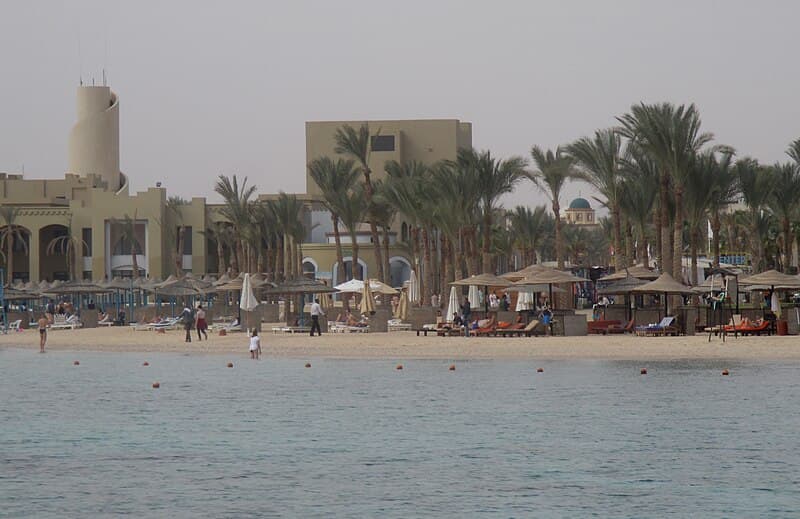
Port Ghalib, by the airport

A built marina town next to the airport, with berths for three hundred boats, a promenade, shops, and a mosque with white minarets. It's the only place nearby that feels like a town — and the only one where you can walk around in the evening outside a hotel compound.

Tip: The marina is open to guests from hotels further south too, and a taxi from Marsa Alam runs about three hundred pounds. Waterfront restaurants charge European prices; shops for water and basics sit on the back street and cost a fraction as much.

Admission:
free
Time needed:
half a day
Qulaan mangroves and islets

Qulaan mangroves and islets

65 km south

A cluster of low islets and mangrove stands inside the national park, where salt water and sand give way to root systems sheltering juvenile fish, with herons and storks standing watch around them. One of the few places in Egypt where mangroves grow at all.

Tip: The water here is shallow and warm enough to wade in, but don't step among the roots — the growth is protected and took decades to establish. The Bedouin tea house on the shore at Qulaan is the cheapest spot in the south for tea with desert herbs.

Admission:
included in park entry
Time needed:
3 h
Sharm El Luli

Sharm El Luli

70 km south

A bay seventy kilometres south with white sand and pale turquoise shallows, widely considered Egypt's finest Red Sea beach. There's essentially no infrastructure, which is exactly why it stays empty even in season.

Tip: There's no shade, no lifeguard, and no shop — bring water, food, and a parasol. Snorkelling is best at the right-hand edge of the bay, where the reef rises close to the surface; the middle is just sand.

Admission:
from 150 EGP
Time needed:
full day
Sikait emerald mines

Sikait emerald mines

90 km southwest

The remains of a Roman mining settlement in the Eastern Desert mountains, the only source of emeralds in the entire Roman Empire. Rock-cut temples, workers' dwellings, and shafts you can still peer into survive here. The approach follows a dry riverbed.

Tip: You can't reach this site without a 4x4 and a guide, and there's no signage at all. It's visited as part of full-day trips into Wadi El Gemal — don't expect to find any emeralds, the deposit was mined out two thousand years ago.

Admission:
included in park trip
Time needed:
full day

Photos: Abu Dabbab Bay — Wusel007 (CC BY-SA 3.0) · Marsa Mubarak — Marc Ryckaert (MJJR) (CC BY 3.0) · Elphinstone Reef — Alexander Vasenin (CC BY-SA 4.0) · Sataya and the dolphins — טל שמע (CC BY-SA 4.0) · Wadi El Gemal National Park — Wusel007 (CC BY-SA 3.0) · Port Ghalib — Marc Ryckaert (CC BY-SA 4.0) · Qulaan mangroves and islets — Mahahelmy (CC BY-SA 4.0) · Sharm El Luli — Yoori2k17 (CC BY-SA 4.0) · Sikait emerald mines — Roland Unger (CC BY-SA 4.0)

Where to stay

Areas and districts, matched to the kind of trip you are taking

Port Ghalib

Best for: first-time visitors and comfort

The northernmost and most developed part of the area, right by the airport, around an artificial marina. The transfer from the plane takes ten minutes, hotels are new, and you can stroll the promenade among shops and restaurants in the evening. The best reefs, though, are further south, since the local beach is largely artificial.

Coraya Bay and Madinat Coraya

Best for: shore snorkelling

An enclosed bay roughly twenty kilometres south of the airport, ringed by several hotels sharing a single reef. Access to the water is via a jetty, and coral starts just a few dozen metres from shore, the main reason people come. Beyond the hotels, there's nothing here at all.

Marsa Alam town and the southern coast

Best for: divers and quiet

The original fishing village and a strip of hotels running south to Hamata. This is the wildest stretch of coast — kilometres of empty desert lie between hotels, shops are a rarity, and there's nowhere to go in the evening. In return, this is the closest base for Sataya, Sharm El Luli, and the national park.

El Quseir and the north

Best for: a bit of extra history

An old port town a hundred and forty kilometres north, from which pilgrims sailed to Mecca for centuries, with an Ottoman fortress and low coral-stone houses. Hotels around it are quiet and the house reefs good. The trip to the southern sites, though, is long — three and a half hours to Sataya.

Getting around

From the airport

Marsa Alam Airport lies sixty kilometres north of town, right by Port Ghalib, so the transfer runs from ten minutes to ninety depending on how far south the hotel sits. Charter flights from Prague take just under five hours. The alternative is flying into Hurghada and driving down the coastal road, a trip of three to four hours — only worth it for a significantly cheaper flight. From Luxor, a desert road through Edfu covers two hundred and eighty kilometres, served by both buses and tour minibuses.

Marsa Alam International (RMF) · 60 km

  • Hotel transfer· 20-90 min· included in stay
  • Taxi to Port Ghalib· 10 min· 200 EGP
  • Taxi to Marsa Alam town· 50 min· 700 EGP

Hurghada (HRG) · 270 km

  • Private transfer· 3 h 30 min· 2,500 EGP
  • Go Bus coach· 4 h 30 min· 250 EGP

Around town

Public transport is essentially non-existent here — a single road runs along the coast, and hotels sit tens of kilometres apart. Getting around means a hotel transfer, a taxi arranged at reception, or a tour minibus. Taxis are expensive precisely because of the distances: from a hotel near Marsa Alam to Port Ghalib runs about three hundred pounds, and the driver usually waits, since the return trip would otherwise be empty. A rental car only pays off if you want to explore the bays independently; police checkpoints dot the roads and you must carry your passport.

Hotel transferThe standard way to get from the airport and on excursions. The hotel sets a fixed price. · included in stay
Taxi from receptionPrices are negotiated upfront and run high because of the distances; meters aren't used. · 200 EGP
Tour minibusRuns to Sataya, Wadi El Gemal, and Luxor. Picks up directly from the hotel, early in the morning. · 1,000 EGP
Rental carThere's just one straight road, but night driving isn't advisable — camels and unlit trucks. · 1,500 EGP / day

Useful apps: Google Maps, Uber

When to go

Marsa Alam is a year-round destination, and winter is its main advantage: in December and January the air sits at 24°C and the sea at 25°C, warmer than in Hurghada three hundred kilometres north. Summer, by contrast, is extreme — July and August bring daytime highs past 37°C and water at 30°C, no longer refreshing. The best diving window runs from September to November, when visibility peaks and the sea is calm. Rain is virtually unheard of, but from March to May a northerly wind picks up, raising waves and cancelling boat trips.

Best time

October and November, also September for diving

What to avoid

July and August, for the heat

MonthJanFebMarAprMayJunJulAugSepOctNovDec
Day23°24°26°30°34°36°37°37°35°32°28°24°
Night12°12°15°18°22°25°26°27°25°22°18°14°
Rainy days000000000000
Sea24°23°23°25°26°28°29°30°30°28°27°25°

Food & drink

In Marsa Alam, eating happens almost entirely inside hotels, since there's nothing much in between them — restaurants outside the resorts are found only in Port Ghalib, in Marsa Alam town itself, and in El Quseir. Hotel buffets here tend to be weaker than in Hurghada, since supplies travel three hundred kilometres along a single road; fish and fruit, on the other hand, are fresh. In town there are a few places serving koshary and grilled fish at a tenth of hotel prices, and Bedouin tea houses to the south serve tea with desert herbs and bread baked in the sand.

What to try

Koshary

Rice, lentils, pasta, and chickpeas topped with fried onion and tomato sauce — the national dish and the cheapest lunch in the country.

Ta'ameya

Egyptian falafel made from fava beans instead of chickpeas, fried until green inside, eaten in a bread pocket for breakfast.

Grilled fish

At harbourside places, you pick your fish from a display case and pay by weight; served with tahini and bread.

Molokhia

A thick green soup made from jute leaves and garlic, served with rice and chicken. A very distinctive flavour.

Karkade

A hibiscus flower infusion, drunk both cold and hot. Egypt's most common non-alcoholic drink.

Umm Ali

A warm dessert of puff pastry baked in milk with nuts and raisins, Egypt's answer to bread pudding.

Fatta

Layers of rice, toasted bread, and meat topped with garlic vinegar and tomatoes. A festive dish rarely found at tourist places.

Sajadeya

Fish stewed with cumin and caramelised onion, served over rice coloured with fish stock. A speciality of the Red Sea coast and the Nile Delta.

What it costs

Tea at a Bedouin tea house

30-60 EGP

Koshary in Marsa Alam town

60-90 EGP

Dinner in Port Ghalib

500-900 EGP per person

Beer, 0.5 l

100-150 EGP

Beach access at Abu Dabbab

from 150 EGP

Full-day trip to Sataya

from 1,500 EGP

Boat dive with a guide

from 1,200 EGP

Guided day trip to Luxor

from 3,000 EGP

Indicative prices that change over time — treat them as a guide, not a price list.

Practical information

SocketsCEuroplug, two round pinsFSchuko
Voltage220V / 50Hz
Tap waterDo not drink tap water — Don't drink the tap water, and don't use it to brush your teeth. Bottled water is very cheap and usually included at all-inclusive resorts.
TippingTipping, known as baksheesh, is expected in Egypt for almost every service — porters, housekeeping, drivers. Keep small notes handy; ten to twenty pounds is usually enough.
Driving on theright
SafetyRed Sea resorts are safe and well monitored. The main risks are stomach upsets from food or ice, strong sun, and coral reefs that cut skin easily. Wear water shoes and never touch the coral — it's prohibited and fines apply.
Opening hoursShops in tourist zones open from morning until midnight, including Fridays. During Ramadan, the daily rhythm shifts and many businesses don't open until after sunset.
Customs & etiquetteSwimwear is fine at the resort, but dress modestly beyond it — shoulders and knees covered for women. Alcohol is barely sold outside hotels. Don't photograph local people without asking, and it's forbidden around military sites.
A few local wordsHello — As-salamu alaykumThank you — ShukranNo, thank you — La, shukranHow much is this? — Bikam?Too expensive — Ghali awi

How to plan your days

1 day

A day at the reef

  1. 1Early morning snorkelling on the house reef, while the water is calm.
  2. 2Late morning transfer to Marsa Mubarak bay for the turtles.
  3. 3Afternoon rest at the hotel, when the sun is strongest.
  4. 4Evening at the Port Ghalib marina and dinner outside the resort.

2 days

Two days with the dugongs

  1. 1Day one as above.
  2. 2Day two, morning at Abu Dabbab right as the beach opens.
  3. 3Snorkel over the seagrass beds for dugongs and turtles.
  4. 4Afternoon rest, hotel in the evening.

3 days

Three days including the south

  1. 1Days one and two as above.
  2. 2Day three, leave at 4am for a full-day trip to Sataya.
  3. 3Snorkel with dolphins in the lagoon, lunch on the boat.
  4. 4Stop at the Qulaan mangroves on the way back.
  5. 5If a day remains, add Wadi El Gemal with a Bedouin lunch, or Luxor.

Day trips

Luxor

280 km · 4 h by car

Karnak, the Valley of the Kings, and the Hatshepsut temple, facing each other across the Nile. From Marsa Alam you travel in convoy from 3am and return late at night — it's the toughest but also the most rewarding trip you can make from here.

Hurghada and Giftun Island

270 km · 3 h 30 min by car

The Red Sea's largest resort town, with a marina, a market, and boat trips to Giftun Island's white beaches. Too far for a day trip to make much sense, but worthwhile when changing airports or on a longer stay.

El Quseir

140 km · 1 h 45 min by car

The oldest port on Egypt's Red Sea coast, with an Ottoman fortress, an old cemetery, and low coral-limestone houses. No hotels or beaches in the centre, but the only place nearby where history rises above the waterline.

Frequently asked questions

Is Marsa Alam worth it if I don't dive or snorkel?+

Probably not. The whole area is built around what's below the waterline; above it there's desert, hotels spread far apart, and the only place worth an evening out is Port Ghalib. Anyone wanting shops, markets, and bustle will be happier in Hurghada. For a quiet beach and shore snorkelling, though, this is Egypt's best option.

How far is it from the airport to the hotel?+

It depends on where the hotel sits. Port Ghalib is ten minutes from the airport, Coraya Bay twenty, hotels around Marsa Alam town itself fifty minutes, and the southernmost ones near Hamata up to two hours. Ask about the distance before booking — the coast stretches over a hundred kilometres and transfer times vary hugely.

Where can I see a dugong?+

Most reliably in Abu Dabbab bay, thirty kilometres north of town, and at Marsa Mubarak, five kilometres north. Both feed on seagrass beds in shallow water, so a snorkel is all you need. Chances are best early in the morning, before the tour groups arrive. It's never guaranteed — these are wild animals, not an aquarium.

When is the best time to visit?+

October and November: air temperatures of 28-32°C, sea at 28°C, and the best underwater visibility of the year. Winter is mild too, with the sea still at 24°C in January, so swimming is possible. July and August run hot, past 37°C, while spring brings a northerly wind that cancels boat trips.

Is Marsa Alam suitable for families with children?+

For families with older children who snorkel, it's ideal. Less so with toddlers — many hotels access the sea over a reef via a jetty, and a shallow play area is often hard to find. If travelling with young children, choose a hotel with a sandy lagoon and ask specifically about water access, not just the beach.

Do I need a visa for Egypt?+

Yes. It's bought on arrival at Marsa Alam airport before passport control, costs twenty-five dollars, and is valid for thirty days; pay in cash, in dollars or euros. Your passport must be valid for six more months. With a package tour, a rep usually handles it and the fee is often included.

Can I bring home a shell or piece of coral?+

No. Exporting coral, shells, starfish, or anything from the reef is illegal in Egypt and checked at the airport — fines are steep. Touching coral in the water and feeding fish are also banned. Buy souvenirs in shops, not on the beach.

Can Luxor be done as a day trip from Marsa Alam?+

Yes, but it's a seventeen-hour day. You leave at 3am, the drive takes four hours each way, and you spend roughly six hours in Luxor, usually covering Karnak, the Valley of the Kings, and the Hatshepsut temple. It's tough on older travellers and young children; a two-day trip with an overnight stay is the alternative.

Visa Requirements

Check the latest visa requirements for entering this country. Some nationalities may need to apply for a visa or e-visa before travel.

Check visa requirements

Language

Arabic

Currency

EGP

Timezone

Africa/Cairo

Dial Code

+20

Population

104M

Area

1,001,450 km²

Voltage

220V / 50Hz

Driving Side

Right

Top Hotels in Marsa Alam

Live prices from 500+ properties

Loading hotels...

More destinations in Egypt

Planning a trip to Marsa Alam?

Compare hundreds of hotels, find the best price, and book with free cancellation on TravelManiac.